Montana Amendment of Lease Package
What is this form package?
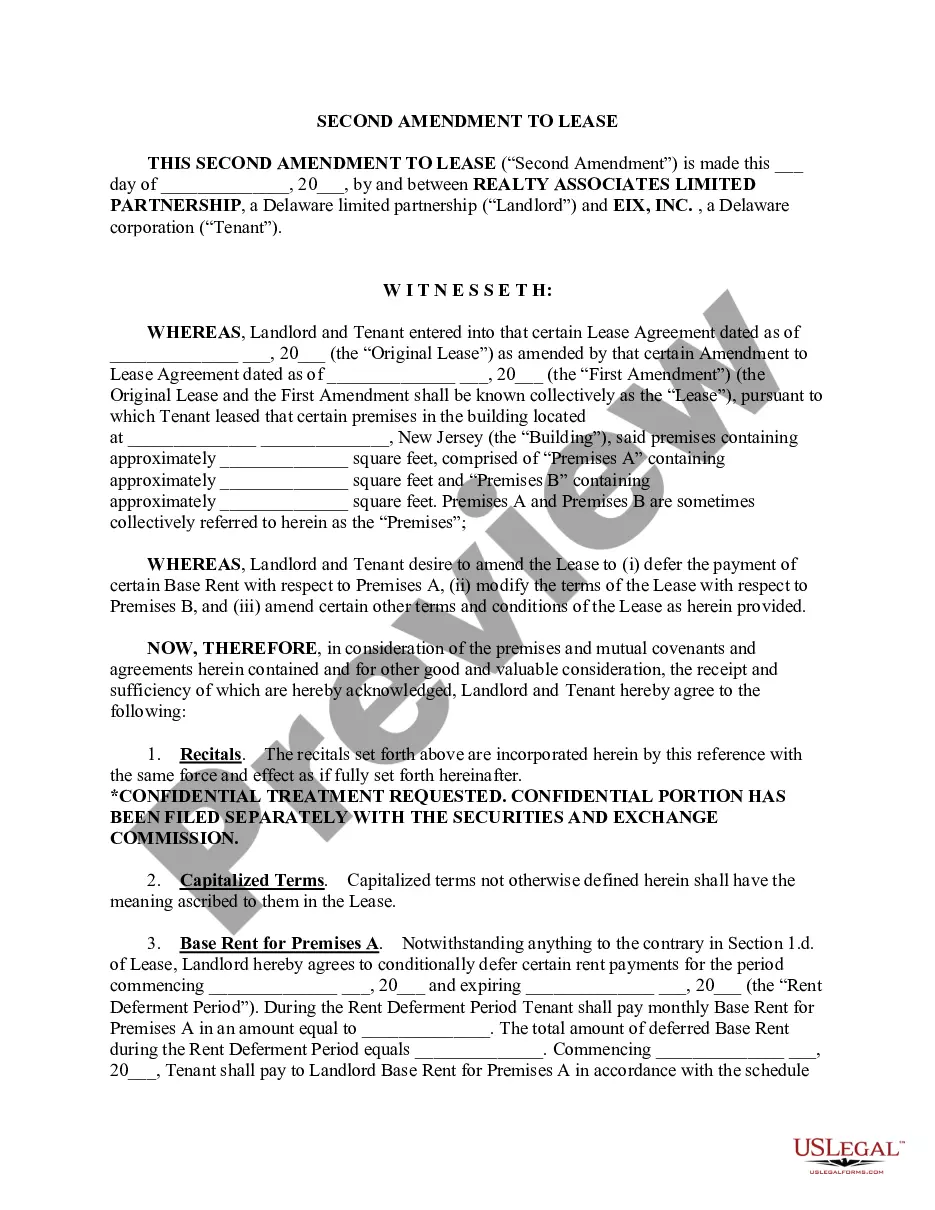
The Montana Amendment of Lease Package provides essential forms for modifying lease agreements in compliance with state law. This package is specifically designed to help landlords and tenants document changes to their lease terms, reducing potential disputes. By offering tailored forms that reflect Montana's lease modification requirements, this package stands out from generic templates available elsewhere.
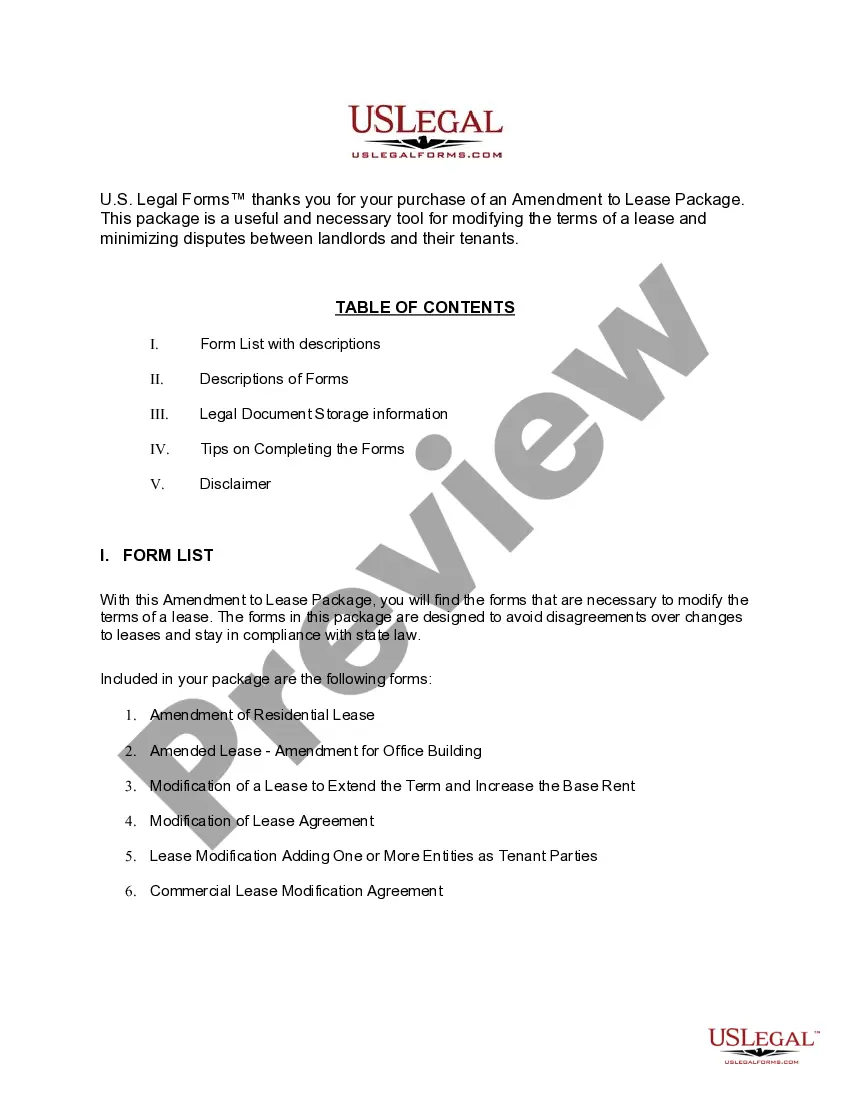
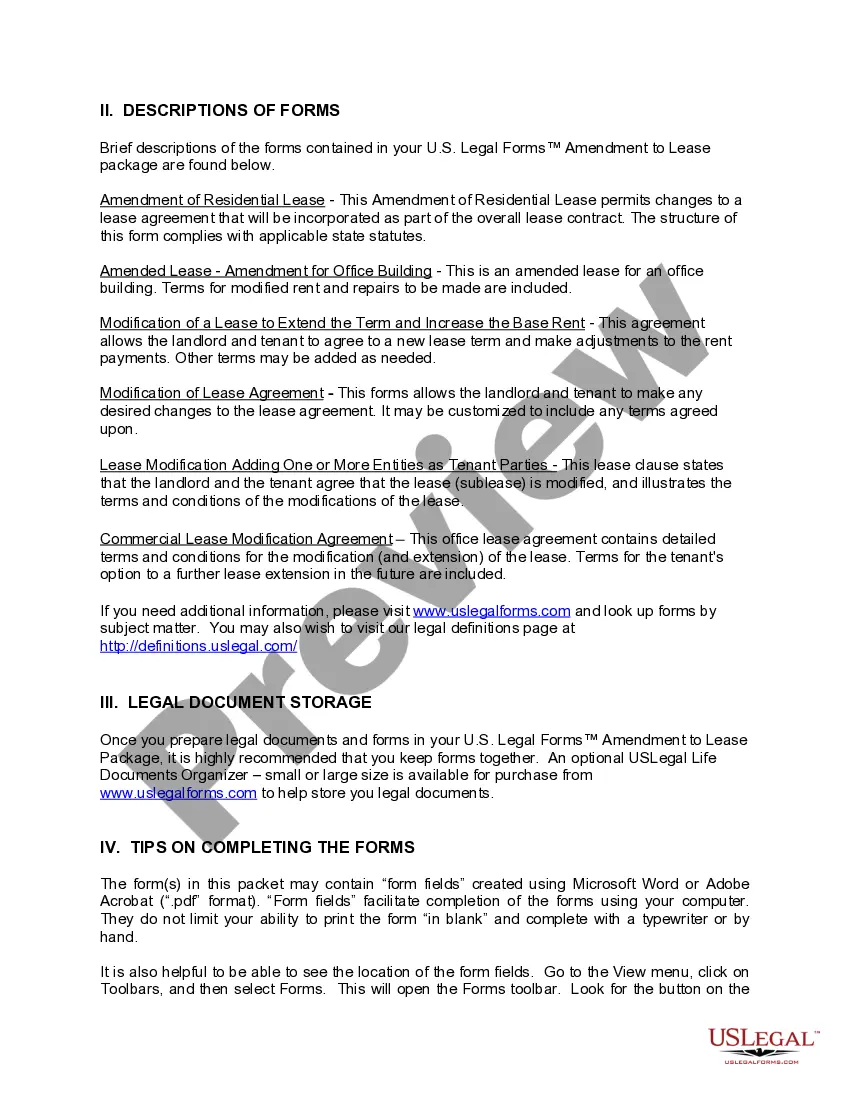
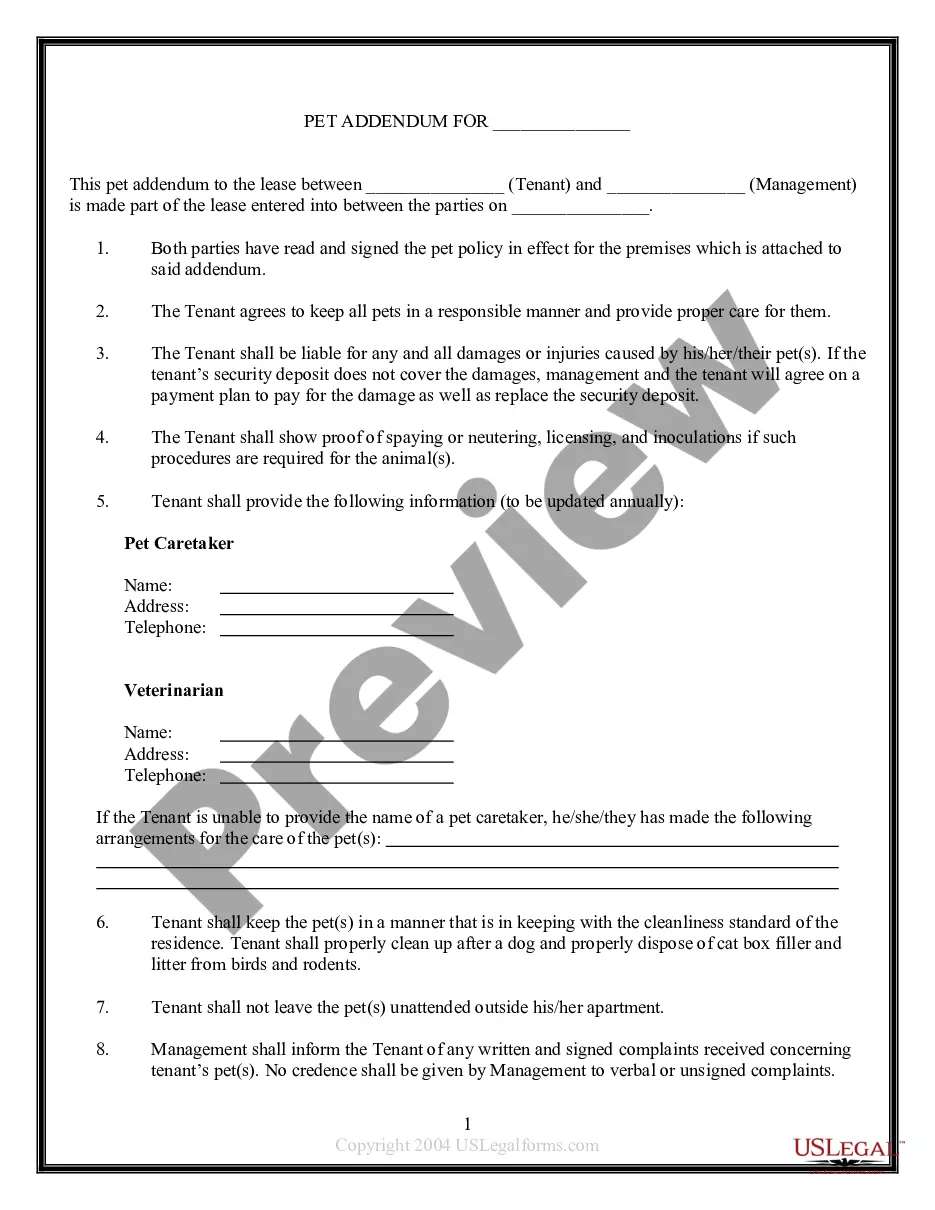
Forms provided in this package
When to use this document
This form package is particularly useful in situations such as:
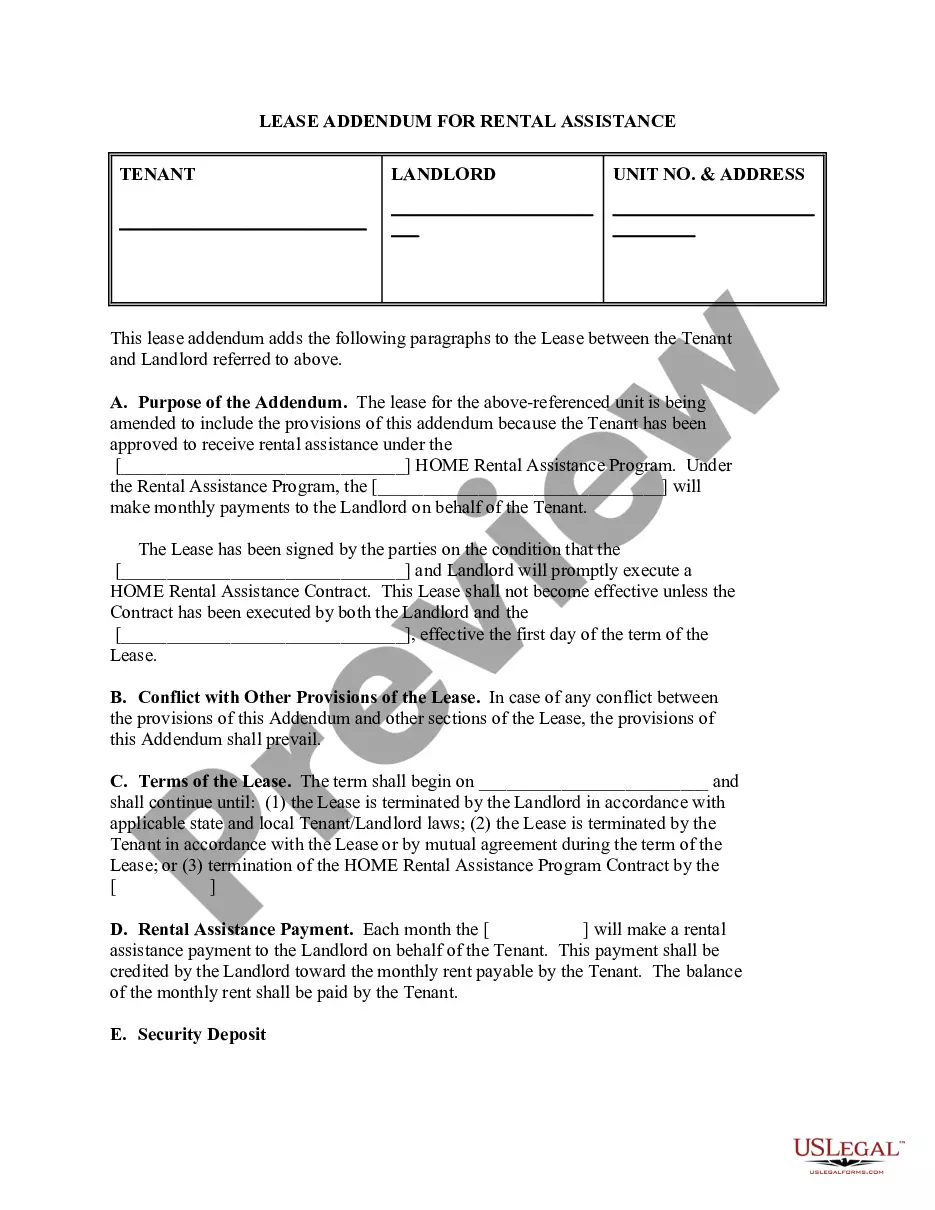
- When a tenant needs to defer rental payments due to financial hardship.
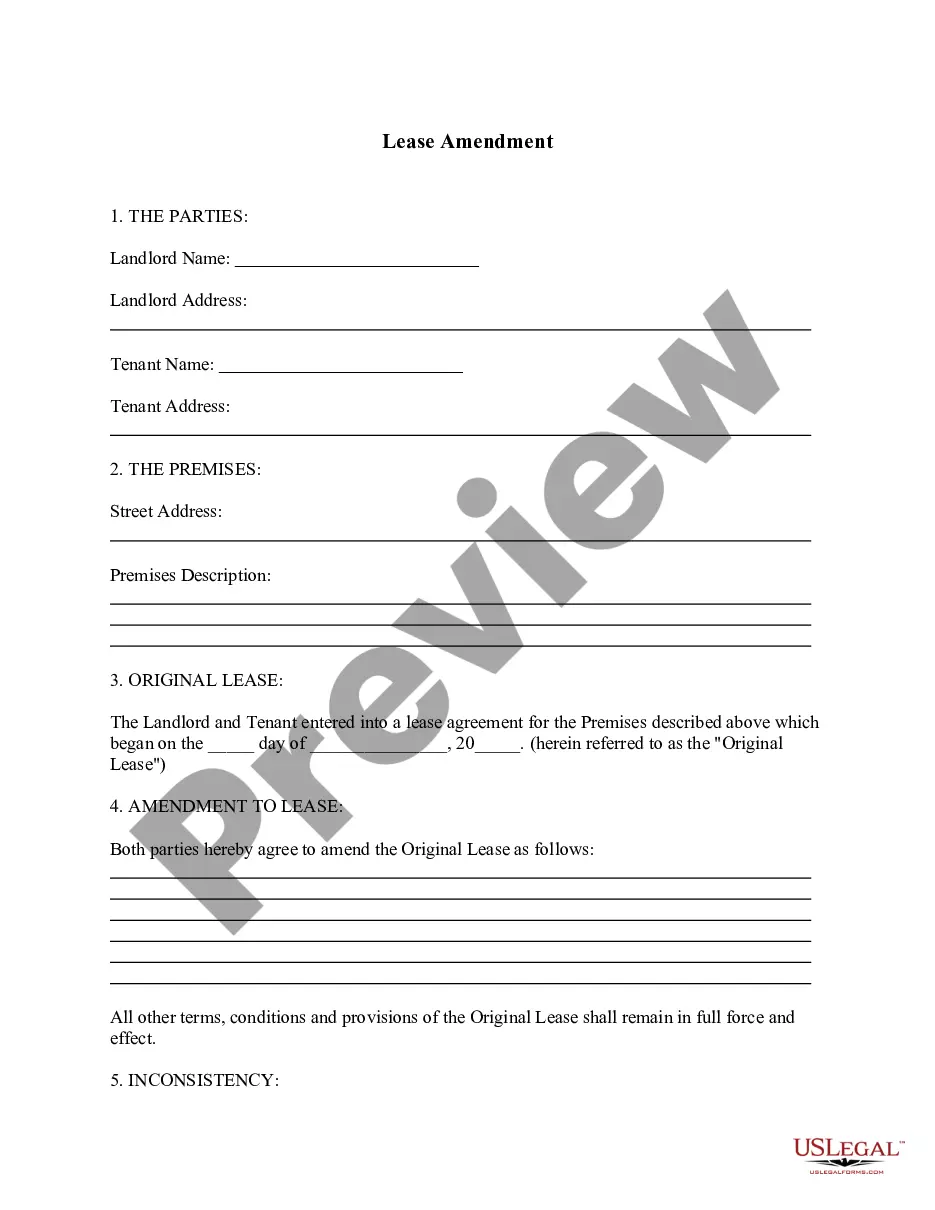
- When landlords and tenants agree to extend the lease term or modify rental terms.
- When it becomes necessary to add additional parties to the lease agreement.
- When communicating lease amendments to tenants in writing before the lease expiration.
Who should use this form package
- Landlords looking to amend existing lease agreements.
- Tenants who need to request changes to their lease terms.
- Property management companies overseeing rental properties in Montana.
- Attorneys or legal professionals assisting clients with lease modifications.
How to prepare this document
- Review the included forms to understand the options available for your specific situation.
- Identify the tenants and landlords involved and their respective responsibilities.
- Fill in the necessary details, including dates, rental amounts, and specific amendments being made.
- Have all parties review the completed amendments to ensure accuracy and agreement.
- Sign and date the completed forms to make the amendments official.
Notarization guidance for this package
Forms in this package typically do not require notarization unless required by local law. However, it is important to check with legal counsel or local regulations to ensure compliance.
Get your form ready online
Our built-in tools help you complete, sign, share, and store your documents in one place.
Make edits, fill in missing information, and update formatting in US Legal Forms—just like you would in MS Word.
Download a copy, print it, send it by email, or mail it via USPS—whatever works best for your next step.
Sign and collect signatures with our SignNow integration. Send to multiple recipients, set reminders, and more. Go Premium to unlock E-Sign.
If this form requires notarization, complete it online through a secure video call—no need to meet a notary in person or wait for an appointment.
We protect your documents and personal data by following strict security and privacy standards.

Make edits, fill in missing information, and update formatting in US Legal Forms—just like you would in MS Word.

Download a copy, print it, send it by email, or mail it via USPS—whatever works best for your next step.

Sign and collect signatures with our SignNow integration. Send to multiple recipients, set reminders, and more. Go Premium to unlock E-Sign.

If this form requires notarization, complete it online through a secure video call—no need to meet a notary in person or wait for an appointment.

We protect your documents and personal data by following strict security and privacy standards.
Common mistakes to avoid
- Failing to clearly specify the changes to the lease terms.
- Not obtaining signatures from all parties involved.
- Overlooking deadlines for providing notice of lease amendments.
- Not complying with Montana's specific legal requirements for lease modifications.
Why complete this package online
- Convenient access to legally vetted forms that can be downloaded and filled from home.
- Editable forms allow for customization based on individual lease terms and circumstances.
- Reliable source of attorney-drafted documents that comply with Montana law.
Legal use & context
- This package provides legally enforceable documents that can be used in court if necessary.
- Proper completion of these forms ensures compliance with Montana lease modification laws.
- Using these documents helps clarify expectations between landlords and tenants, reducing potential conflicts.
What to keep in mind
- The Montana Amendment of Lease Package includes essential forms for modifying lease agreements.
- Using these forms can help prevent misunderstandings and disputes about lease terms.
- Review each form carefully to ensure they meet your needs and comply with state law.
- This package is an excellent resource for landlords and tenants alike in Montana.
Looking for another form?
Form popularity
FAQ
Collect each party's information. Include specifics about your property. Consider all of the property's utilities and services. Know the terms of your lease. Set the monthly rent amount and due date. Calculate any additional fees. Determine a payment method. Consider your rights and obligations.
The Lease Must be in Writing It does not matter if the lease is handwritten or typed. If the lease is for more than one year, it must be in written form and contain the following terms.
The Lease Must be in Writing It does not matter if the lease is handwritten or typed.
Step 1: Obtain a Written Request. Invite the tenant to submit in writing the request to add another person to the lease. Step 2: Check the Property's Occupancy Limit. Step 3: Acquire a Completed Rental Application. Step 4: Make a Decision. Step 5: Review the Details With the Tenants.
A written agreement can act as a roadmap for the landlord-tenant relationship, especially if a dispute arises. Also, real estate (land) leases for more than one year must be in writing. If a lease for over one year is not in writing, it will generally not be enforceable in court.
The lease becomes legally binding when all parties have signed: the landlord and all tenants living in the unit who are 18 and older. If you're worried about situations where a lease needs to end early, learn about breaking a lease and grounds for eviction.
A landlord and tenant can mutually agree to end a lease arrangement at any time. If you have a written lease, the termination of that lease must also be in writing. Even if you do not have a written lease agreement, putting the termination in writing will protect both parties.
Your tenancy is your home, so you're allowed to have other people live with you. You should let your landlord know if someone is going to be moving into your home, but you don't need permission.If you want to add a person to your tenancy, you need your landlord's permission.
The rental property address, including unit number (if applicable) The names of all tenants on the lease agreement. The date the lease violation notice was written. The specific reason for the notice. The time and date the violation occurred (if applicable)