Mississippi Warning of Default on Commercial Lease
Overview of this form
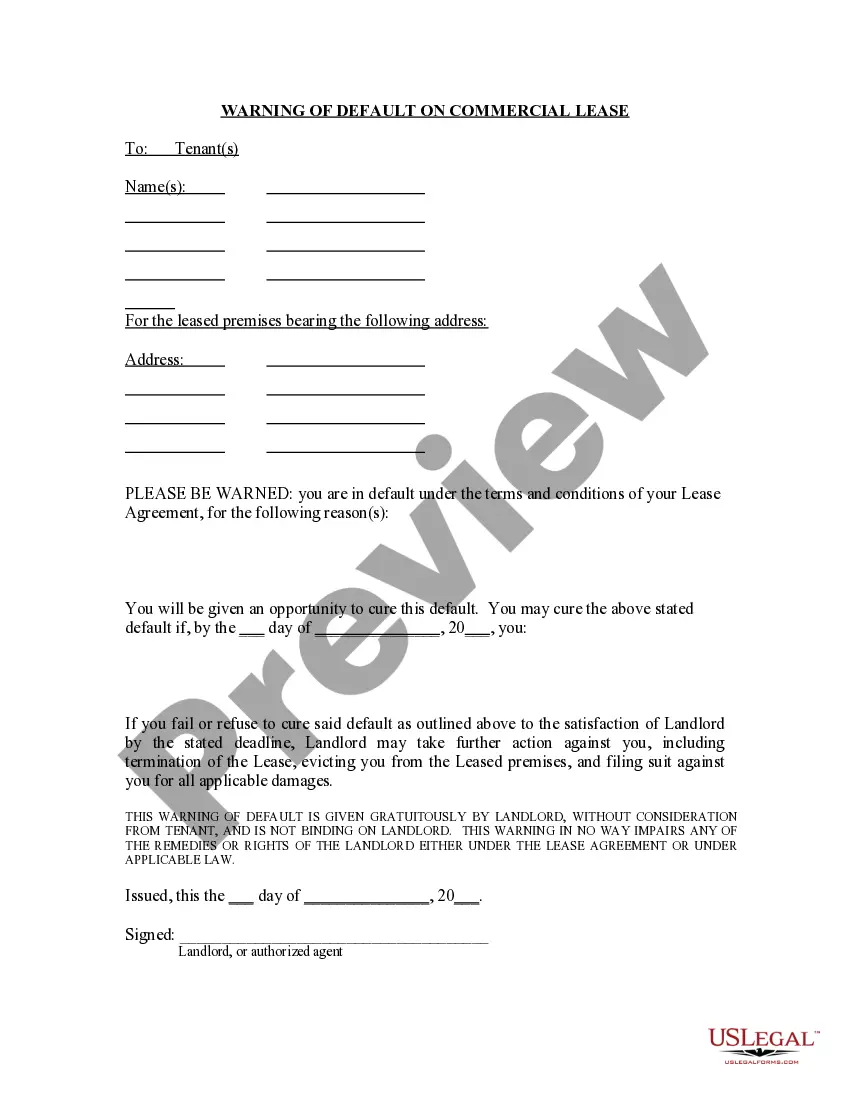
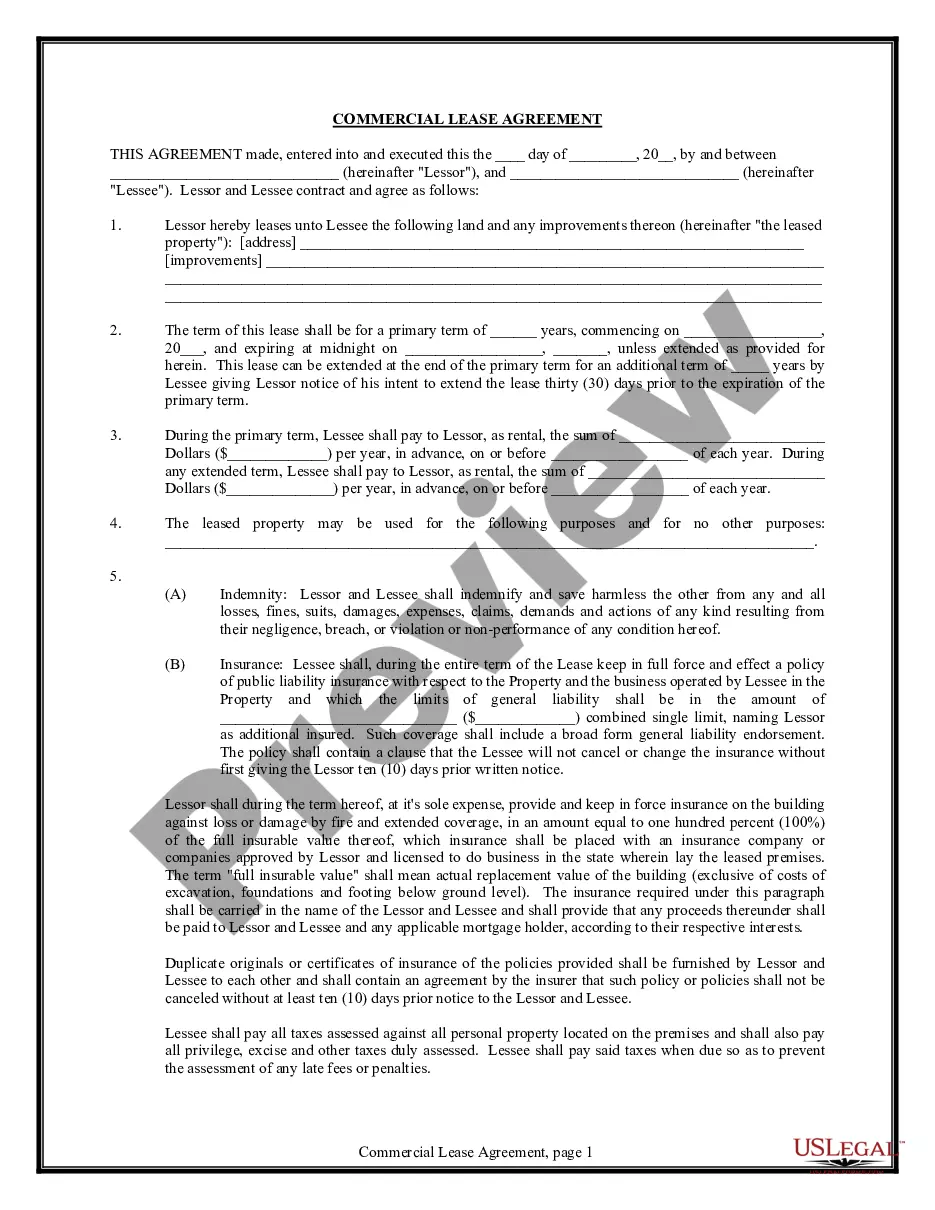
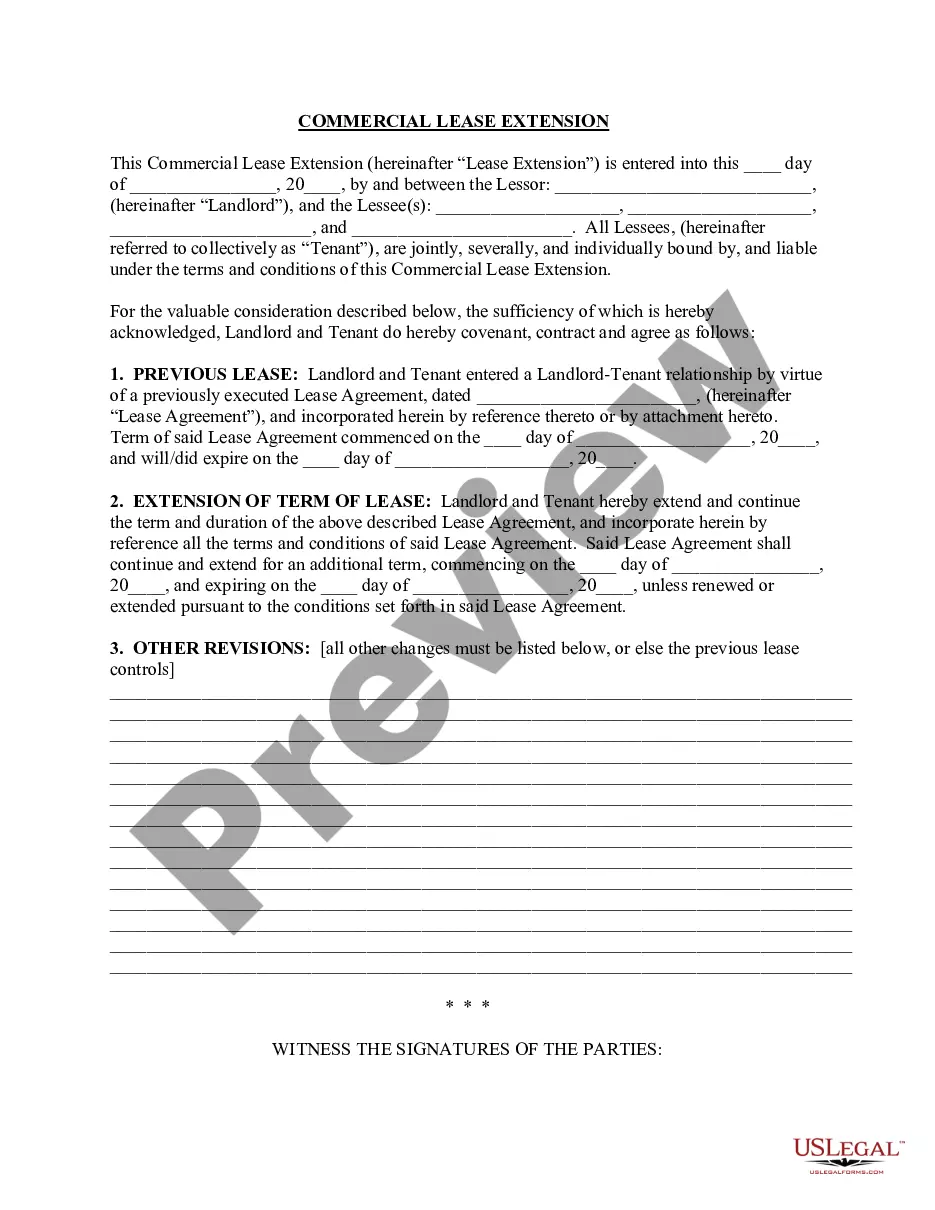
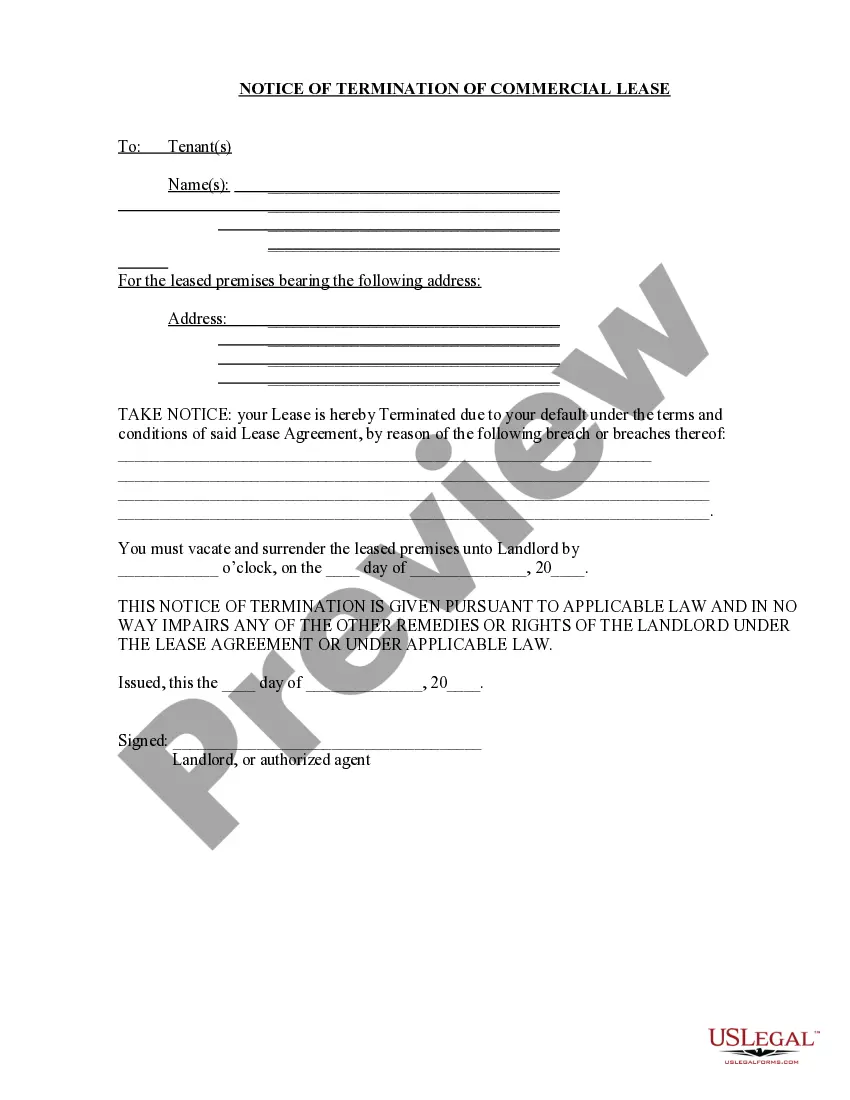
The Warning of Default on Commercial Lease is a letter from the landlord to the tenant that indicates concern over potential lease violations. This form serves to formally notify the tenant that they may be in default due to issues such as late rent payments. Unlike other forms that may initiate eviction proceedings, this warning provides the tenant an opportunity to remedy the situation before further action is taken.
Key components of this form
- Date of issuance
- Landlord's signature
- Tenant information
- Default conditions
- Statement of non-binding nature
Situations where this form applies
This form should be used when a landlord believes that a tenant is in default under the commercial lease, usually related to non-payment of rent or other lease obligations. It is an essential step prior to initiating eviction proceedings, allowing the tenant to address the issues outlined before further legal actions occur.
Who needs this form
- Landlords of commercial properties
- Property management companies
- Individuals renting commercial space
- Lawyers representing landlords in lease matters
Instructions for completing this form
- Identify the date of the warning.
- Clearly specify tenant details, including name and contact information.
- Outline the conditions that constitute the default.
- Have the landlord or authorized agent sign the form.
- Provide a copy to the tenant, keeping a record for future reference.
Does this form need to be notarized?
In most cases, this form does not require notarization. However, some jurisdictions or signing circumstances might. US Legal Forms offers online notarization powered by Notarize, accessible 24/7 for a quick, remote process.
Get your form ready online
Our built-in tools help you complete, sign, share, and store your documents in one place.
Make edits, fill in missing information, and update formatting in US Legal Forms—just like you would in MS Word.
Download a copy, print it, send it by email, or mail it via USPS—whatever works best for your next step.
Sign and collect signatures with our SignNow integration. Send to multiple recipients, set reminders, and more. Go Premium to unlock E-Sign.
If this form requires notarization, complete it online through a secure video call—no need to meet a notary in person or wait for an appointment.
We protect your documents and personal data by following strict security and privacy standards.

Make edits, fill in missing information, and update formatting in US Legal Forms—just like you would in MS Word.

Download a copy, print it, send it by email, or mail it via USPS—whatever works best for your next step.

Sign and collect signatures with our SignNow integration. Send to multiple recipients, set reminders, and more. Go Premium to unlock E-Sign.

If this form requires notarization, complete it online through a secure video call—no need to meet a notary in person or wait for an appointment.

We protect your documents and personal data by following strict security and privacy standards.
Common mistakes
- Failing to provide clear details about the default conditions.
- Not dating the warning notice properly.
- Using vague language that does not specify the violations clearly.
- Neglecting to have the form signed by the landlord or authorized agent.
Benefits of using this form online
- Convenience of downloading and filling out the form at any time.
- Editability allows landlords to customize the warning based on specific situations.
- Reliability, knowing the form is drafted by licensed attorneys.
Legal use & context
- The warning must comply with state landlord-tenant laws to be enforceable.
- Failure to follow proper notice procedures may impact eviction proceedings.
Key takeaways
- The Warning of Default on Commercial Lease is crucial for addressing potential lease violations before eviction.
- This form provides a formal notice that offers tenants a chance to rectify their default.
- Use this form correctly to ensure compliance with the applicable state laws.
Looking for another form?
Form popularity
FAQ
If the commercial tenant is a shell corporation and/or does not have any assets of value, the commercial tenant may choose to walk away from its commercial lease obligations.Often the landlord will require guarantees in order to prevent a commercial tenant from walking away from its lease obligations.
CALGARY -- The province says commercial landlords will no longer be allowed to evict business tenants without first applying for rental relief from the government.
For example, the lease may provide that in case of default, the landlord can recover late fees and interest. If the lease is a net lease, it may provide for the landlord to recover such things as property taxes, insurance, utilities, maintenance and repairs.
A default is a failure to comply with a provision in the lease. Curing or remedying the default means correcting the failure or omission. A common example is a failure to pay the rent on time.Typically a lease will give the parties adequate notice and time to fix the problem before more drastic action is taken.
A break-early fee is a lump sum payment. The amount of the break-early fee will vary greatly depending upon the commercial tenant's specific circumstances. In exchange for the break-early fee, the landlord will agree to release the commercial tenant from all of its obligations under the commercial lease.
A lease is automatically void when it is against the law, such as a lease for an illegal purpose. In other circumstances, like fraud or duress, a lease can be declared void at the request of one party but not the other.
One option for getting out of your commercial lease early is to approach your landlord and request to surrender the lease. A surrender of lease is when both you and the landlord agree to end the lease.However, if the landlord agrees to surrender your lease, you will often have to pay their legal costs.
Paying the remainder of the rent still owed on the lease in full; Paying a specified amount of liquidated damages as outlined in the contract terms; Paying an additional amount of punitive damages, dependent on local state laws; and/or.
Your lease agreement will state what constitutes a default of the lease as well as if there is any grace period in making lease payments. Not making a contractually required monthly payment will normally be a breach of the lease and the lessor can then repossess the vehicle from you.