Mississippi Financial Statement
Understanding this form
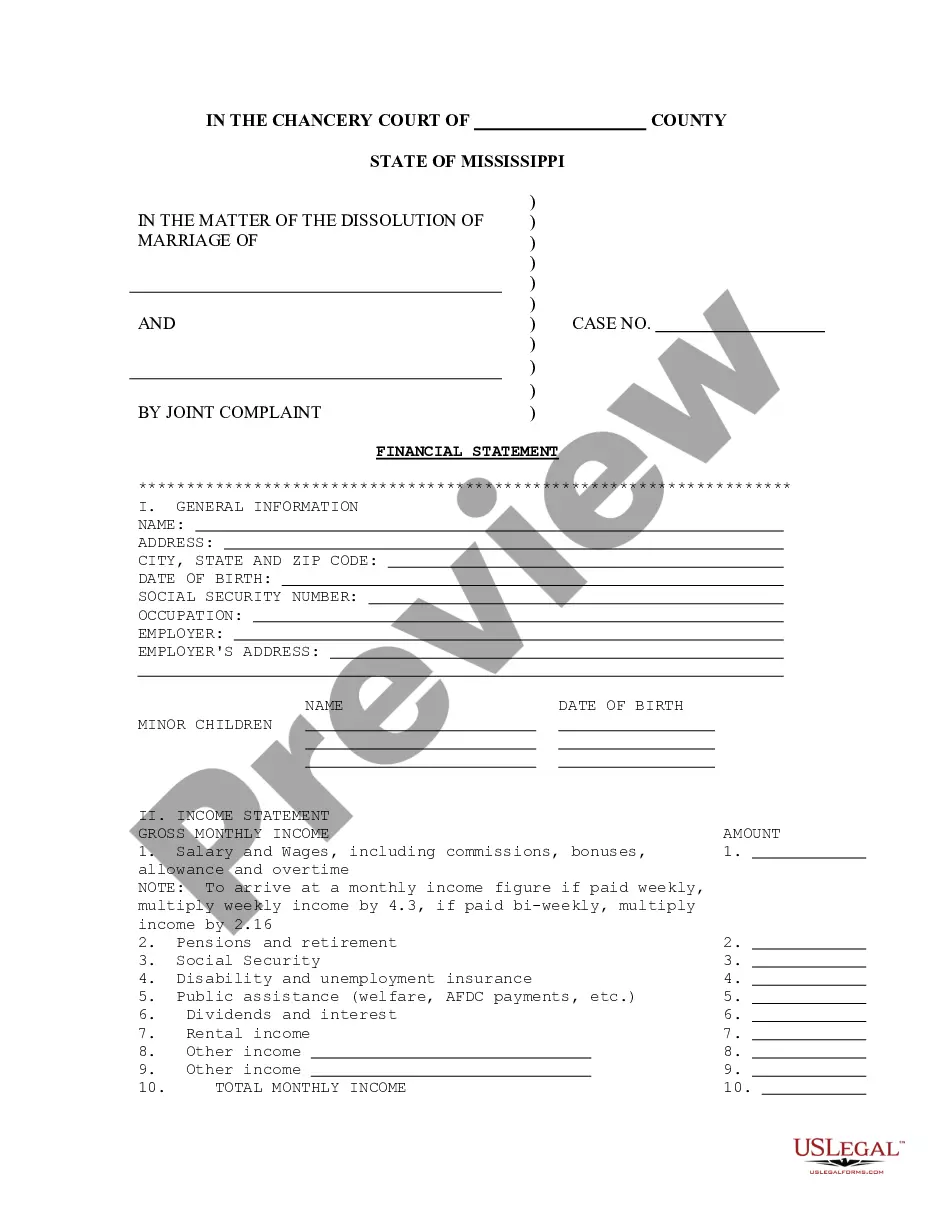
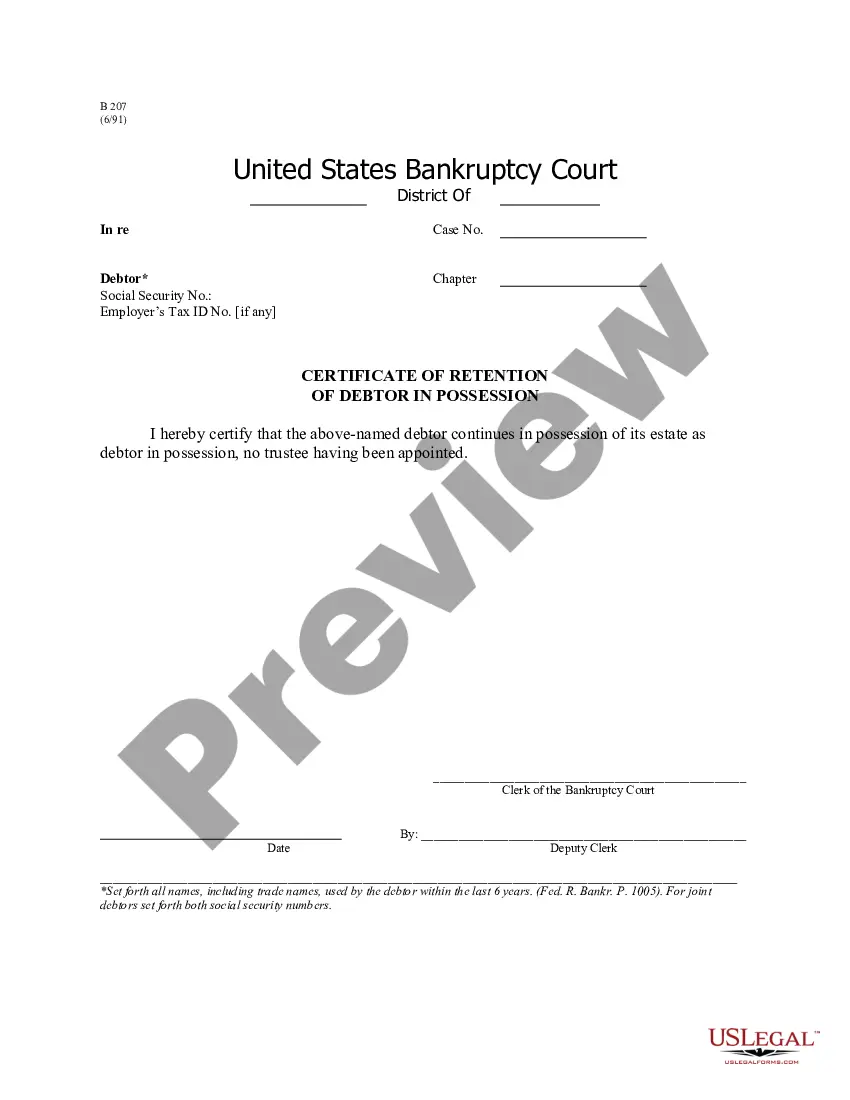
The Financial Statement is a legal document required in family law cases to disclose an individual's financial situation, including assets, debts, and income. It serves to inform both the court and opposing counsel about the financial aspects of the parties involved, ensuring transparency during legal proceedings. Unlike other financial documents, the Financial Statement is specifically tailored for family law matters, making it crucial for divorce, custody, or asset division cases.
Key parts of this document
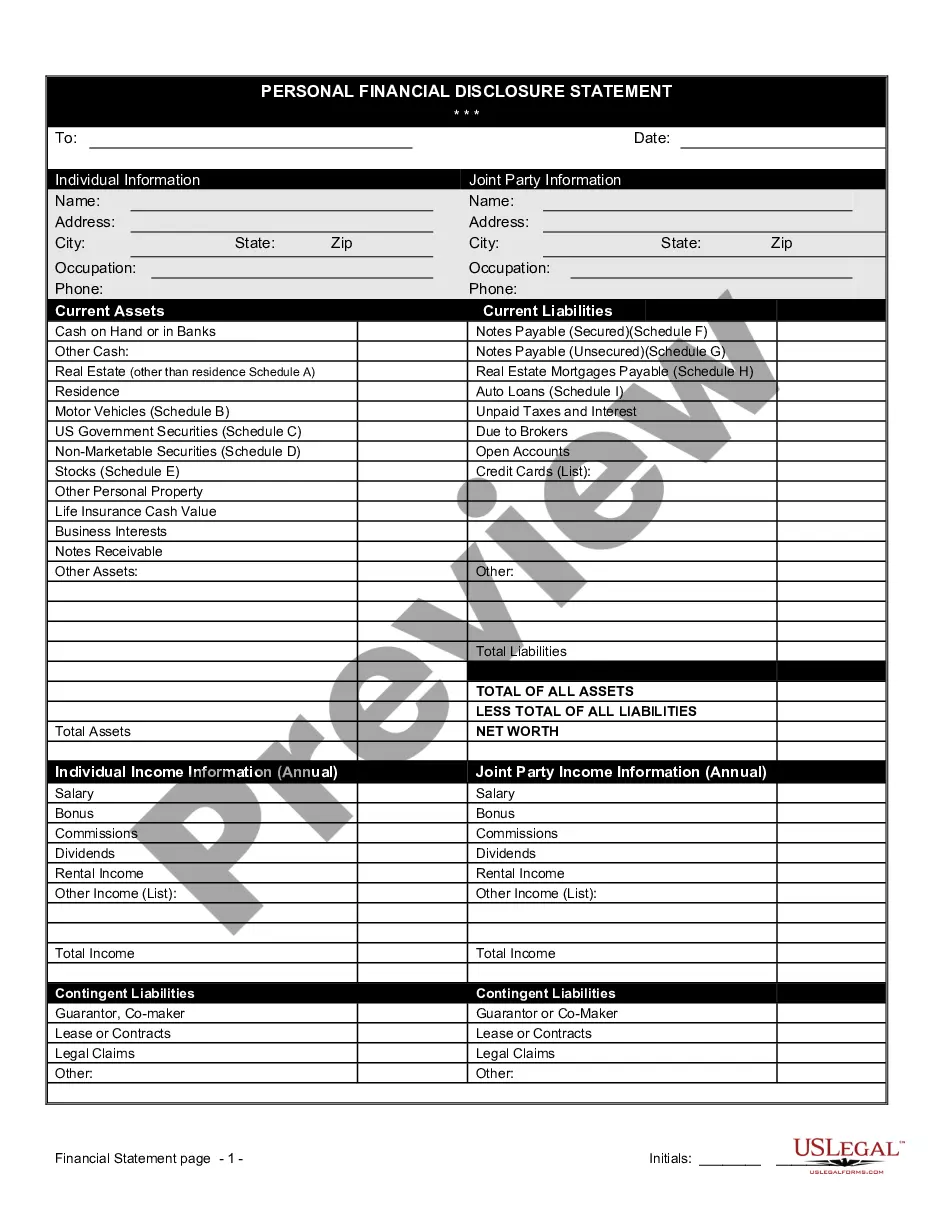
- Personal information: Includes the names, addresses, and contact details of the parties involved.
- Income details: Provides a comprehensive overview of monthly income from all sources.
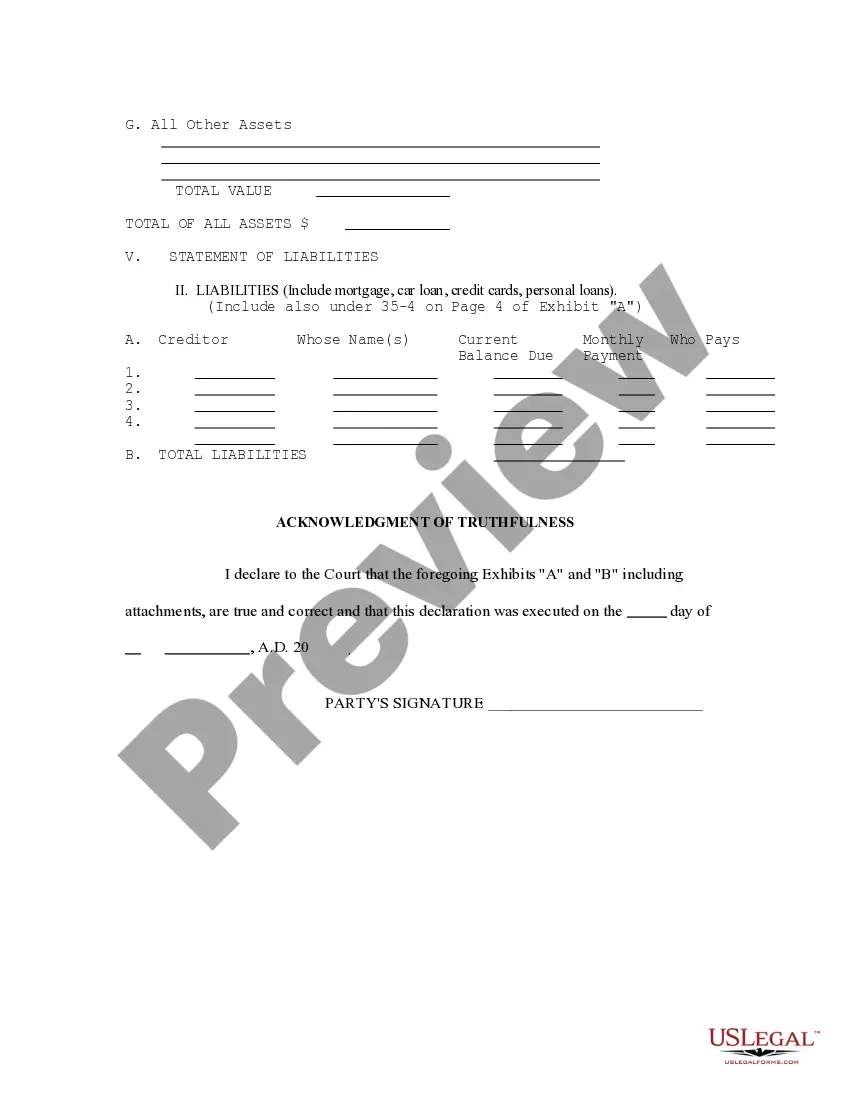
- Asset listing: Details all assets owned, including properties, bank accounts, and investments.
- Debt disclosure: Lists all existing debts, such as loans, credit card balances, and mortgages.
- Monthly expenses: Summarizes recurring expenses, including housing, utilities, and childcare costs.



Common use cases
The Financial Statement should be used when you are involved in a family law case, such as divorce, child custody disputes, or any situation where financial information is necessary for litigation. It helps establish financial responsibilities and entitlements, making it a critical component during negotiations and court hearings.
Intended users of this form
This form is intended for:
- Individuals involved in divorce proceedings.
- Parties seeking child custody or support.
- Anyone contesting financial matters in family law cases.
- Lawyers representing clients in family law disputes.
How to complete this form
Follow these steps to complete the Financial Statement:
- Identify the parties involved by entering their full names and contact information.
- Gather and input all income sources, including salary, bonuses, and side jobs.
- List all assets, providing detailed descriptions and estimated values.
- Enumerate all debts along with owed amounts and creditors.
- Document monthly expenses to give a complete overview of your financial obligations.
Notarization requirements for this form
This form does not typically require notarization unless specified by local law. Always verify your stateâs legal requirements to ensure compliance.
Get your form ready online
Our built-in tools help you complete, sign, share, and store your documents in one place.
Make edits, fill in missing information, and update formatting in US Legal Forms—just like you would in MS Word.
Download a copy, print it, send it by email, or mail it via USPS—whatever works best for your next step.
Sign and collect signatures with our SignNow integration. Send to multiple recipients, set reminders, and more. Go Premium to unlock E-Sign.
If this form requires notarization, complete it online through a secure video call—no need to meet a notary in person or wait for an appointment.
We protect your documents and personal data by following strict security and privacy standards.

Make edits, fill in missing information, and update formatting in US Legal Forms—just like you would in MS Word.

Download a copy, print it, send it by email, or mail it via USPS—whatever works best for your next step.

Sign and collect signatures with our SignNow integration. Send to multiple recipients, set reminders, and more. Go Premium to unlock E-Sign.

If this form requires notarization, complete it online through a secure video call—no need to meet a notary in person or wait for an appointment.

We protect your documents and personal data by following strict security and privacy standards.
Avoid these common issues
- Not including all sources of income, which can lead to incomplete disclosures.
- Omitting significant assets or debts, risking penalties for inaccuracies.
- Failing to update the form with recent changes in financial circumstances.
- Using outdated figures instead of current estimates, which may misrepresent the financial status.
Benefits of using this form online
- Convenience: Access the Financial Statement online at any time for easy completion.
- Editability: Fill out the form digitally, allowing for easy revisions and updates.
- Reliability: The form is drafted by licensed attorneys, ensuring legal compliance and accuracy.
- Accessibility: The digital format allows for quick submission to the court or sharing with counsel.
Summary of main points
- A Financial Statement is essential for transparency in family law cases.
- Complete accuracy is vital to avoid legal issues.
- Use the form to clearly outline your financial status during legal proceedings.
Definitions you should know
- Assets: Resources owned with economic value.
- Liabilities: Financial obligations or debts owed.
- Income: Money received on a regular basis from various sources.
- Monthly expenses: Regular costs incurred every month.
Looking for another form?

Form popularity
FAQ
Balance Sheet. Income Sheet. Statement of Cash Flow. Step 1: Make A Sales Forecast. Step 2: Create A Budget for Your Expenses. Step 3: Develop Cash Flow Statement. Step 4: Project Net Profit. Step 5: Deal with Your Assets and Liabilities.
List your assets (what you own), estimate the value of each, and add up the total. Include items such as: List your liabilities (what you owe) and add up the outstanding balances. Subtract your liabilities from your assets to determine your personal net worth.
A complete set of financial statements is made up of five components: an Income Statement, a Statement of Changes in Equity, a Balance Sheet, a Statement of Cash Flows, and Notes to Financial Statements. This chapter of the Accounting 101: The Basics course presents the components of a financial statements package.
There are four main financial statements. They are: (1) balance sheets; (2) income statements; (3) cash flow statements; and (4) statements of shareholders' equity. Balance sheets show what a company owns and what it owes at a fixed point in time.
The statement of financial position is formatted like the accounting equation (assets = liabilities + owner's equity). Thus, the assets are always listed first.
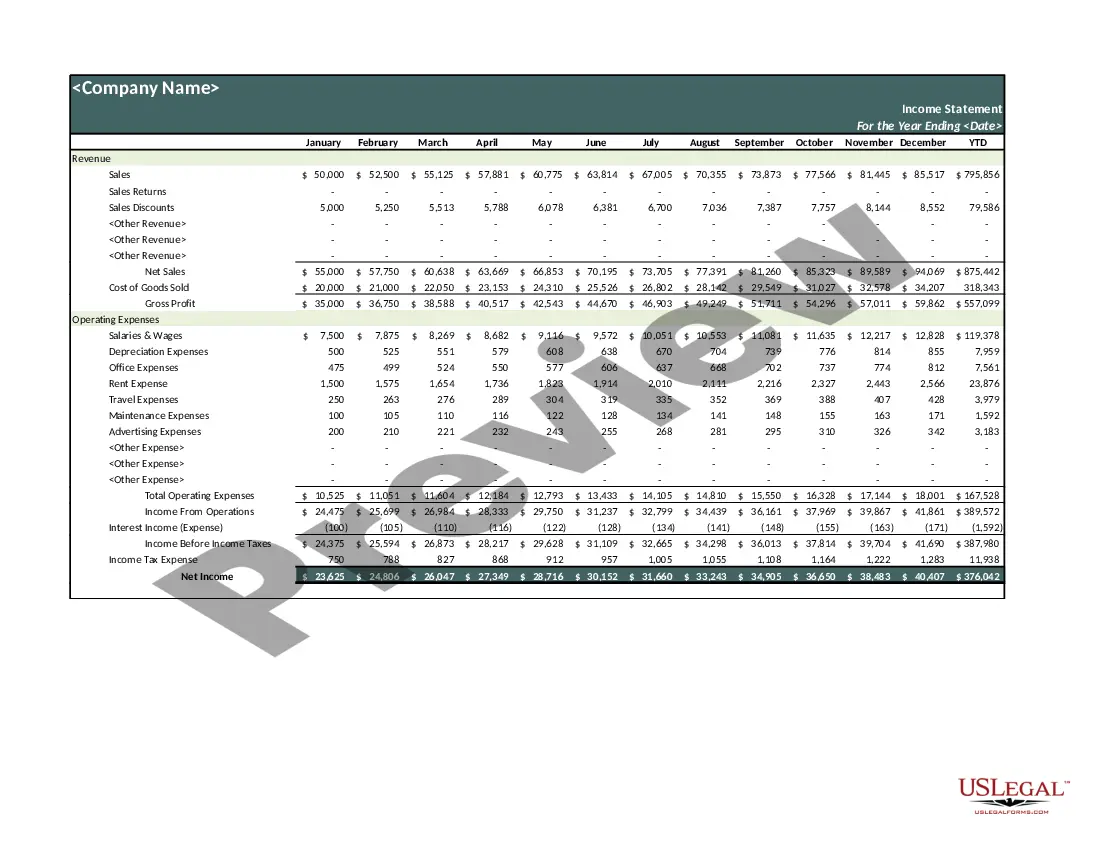
The basic format for an income statement states revenues first, followed by expenses. The expenses are subtracted from the revenue to calculate the net income of the business.
For example, if you have a house and a car with a value of $100,000, and you have a mortgage and car loan for $75,000, your net worth is $25,000. Net worth for an individual is similar to owner's equity for a business. Therefore, a personal financial statement is similar to a business's balance sheet.
Statement of Cash Flows. A cash flow statement is one of the most important planning tools you have available. Income Statement. Like a cash flow statement, an income statement is one of the most important and valuable financial statements at your disposal. Balance Sheet. Statement of Changes in Equity.
Calculate your income carefully. Be sure to include all income. Be sure to also include all expenses. Do not double dip. Only include your income. Only include your expenses. Gather all appropriate documentation. Don't forget to designate separate property.