Missouri Correction Statement and Agreement
Overview of this form
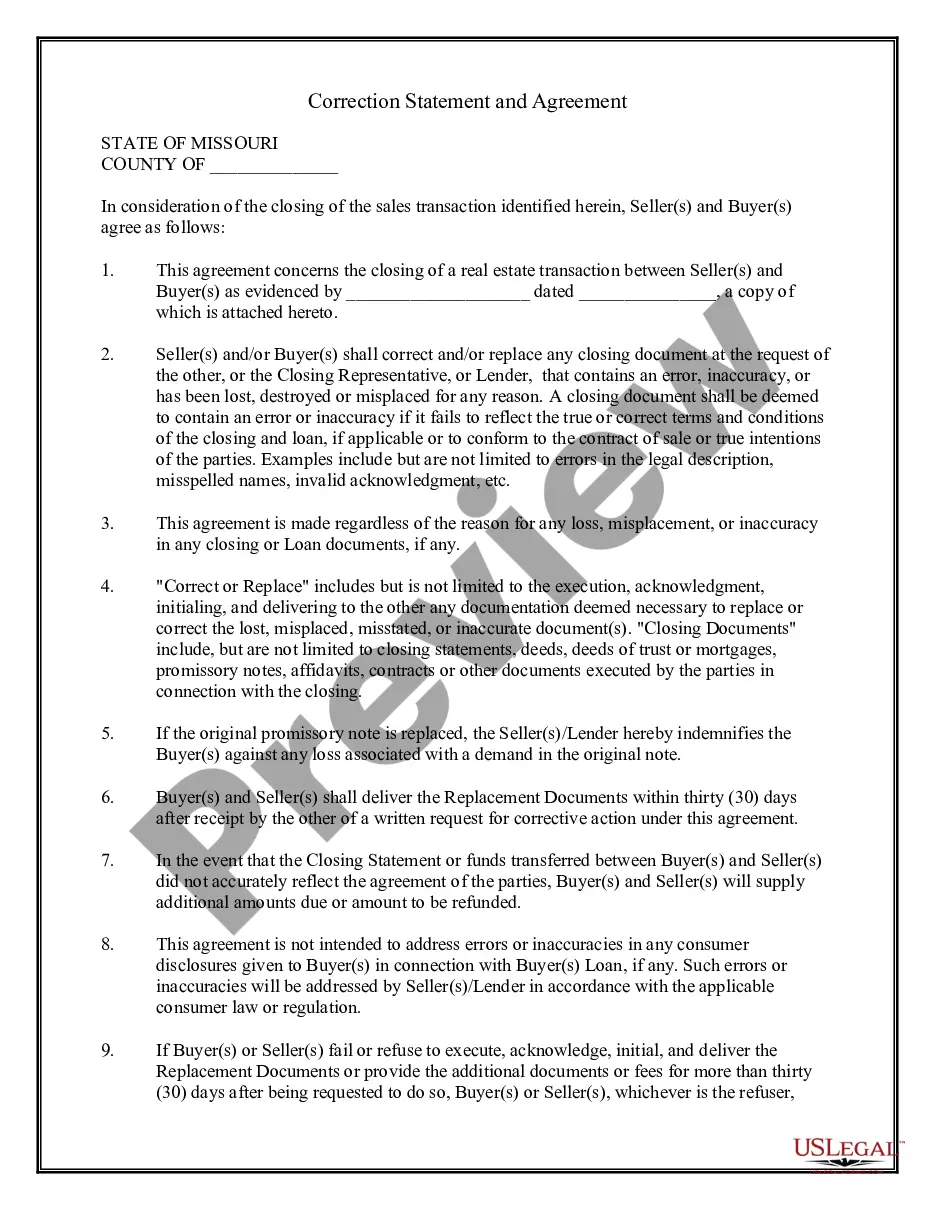
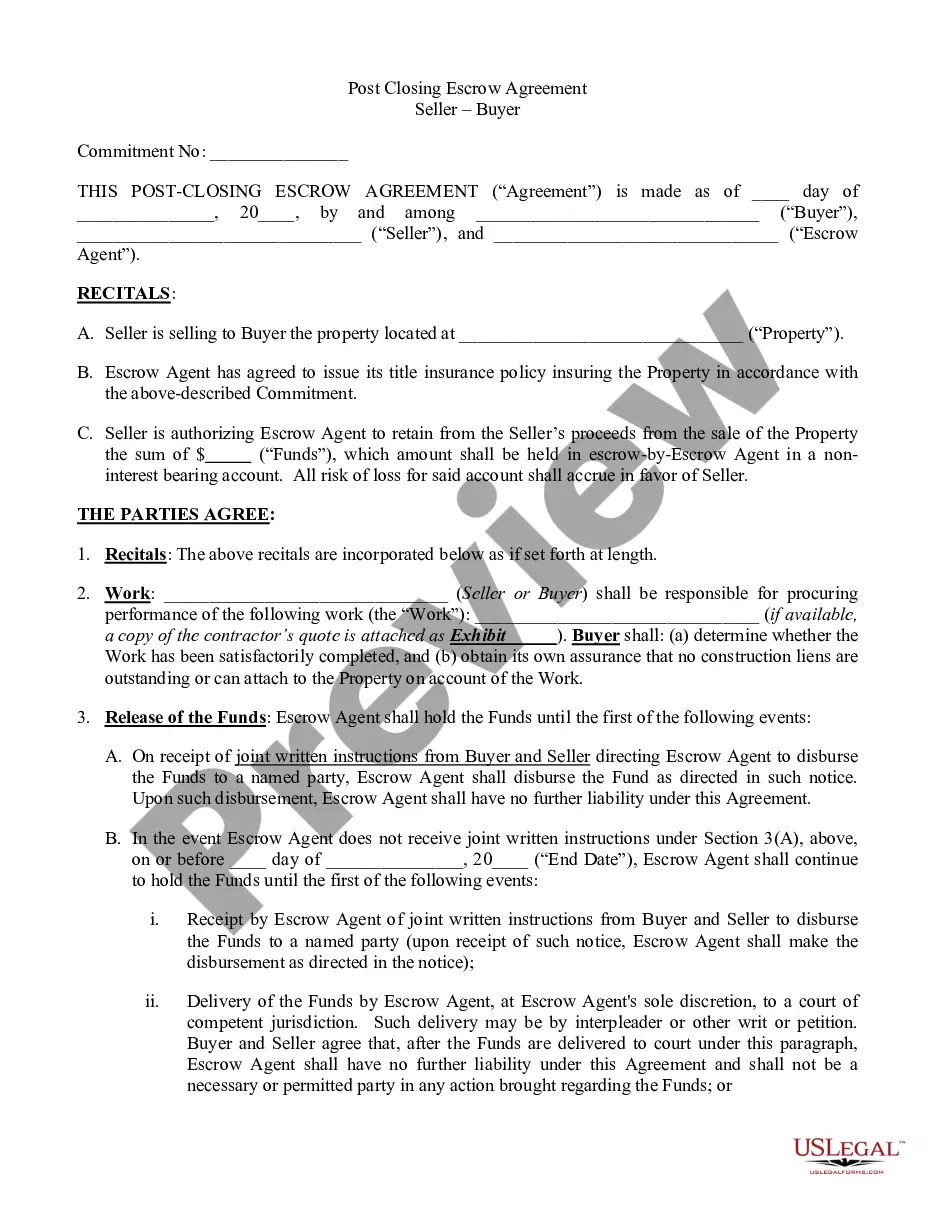
The Correction Statement and Agreement is a legal document designed for buyers and sellers involved in a real estate transaction. This form serves the purpose of allowing both parties to agree on making corrections to any closing documents that may contain errors or have been misplaced. Unlike other real estate forms, this agreement specifically addresses the execution of corrective actions after the initial transaction has been finalized. It ensures that both parties can rectify inaccuracies swiftly, maintaining the integrity of the closing process.
Form components explained
- Identification of the Buyer(s) and Seller(s) involved in the transaction.
- A clause specifying the types of errors that necessitate correction, such as inaccuracies in legal descriptions or misspelled names.
- Obligations for both parties to replace or correct any closing documents within a specified timeframe.
- Provisions for indemnification in case of loss associated with the replacement of promissory notes.
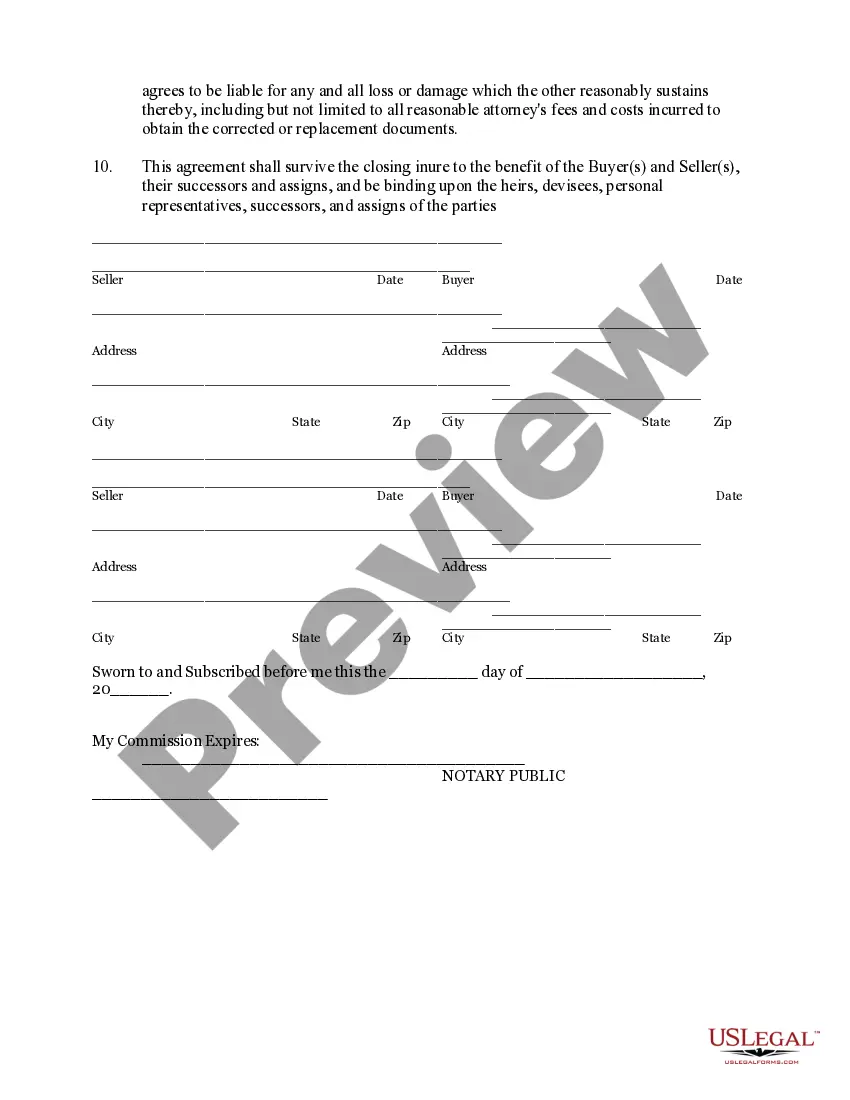
- Signatures and addresses of the Buyer(s) and Seller(s), along with a coordination for notarization.

When this form is needed
This form should be used during or after the closing of a real estate transaction when errors in documents are identified or when any vital documents have been lost or misplaced. It is particularly useful for clarifying responsibilities and processes related to correcting or replacing closing documents to their original intended accuracy.
Who this form is for
- Homebuyers and sellers who have completed a property transaction.
- Real estate agents or brokers representing either party.
- Closing representatives or lenders involved in the transaction.
- Anyone needing a formal agreement for correcting documentation errors post-closing.
How to complete this form
- Identify the parties by entering the names and addresses of the Buyer(s) and Seller(s).
- Specify the transaction date and attach any relevant documents or contracts.
- Clearly indicate any errors or inaccuracies that need correction.
- Provide signatures of all parties, including dates to confirm agreement.
- Ensure notarization by having a notary public witness the signatures, if required.
Is notarization required?
Notarization is required for this form to take effect. Our online notarization service, powered by Notarize, lets you verify and sign documents remotely through an encrypted video session, available 24/7.
Get your form ready online
Our built-in tools help you complete, sign, share, and store your documents in one place.
Make edits, fill in missing information, and update formatting in US Legal Forms—just like you would in MS Word.
Download a copy, print it, send it by email, or mail it via USPS—whatever works best for your next step.
Sign and collect signatures with our SignNow integration. Send to multiple recipients, set reminders, and more. Go Premium to unlock E-Sign.
If this form requires notarization, complete it online through a secure video call—no need to meet a notary in person or wait for an appointment.
We protect your documents and personal data by following strict security and privacy standards.
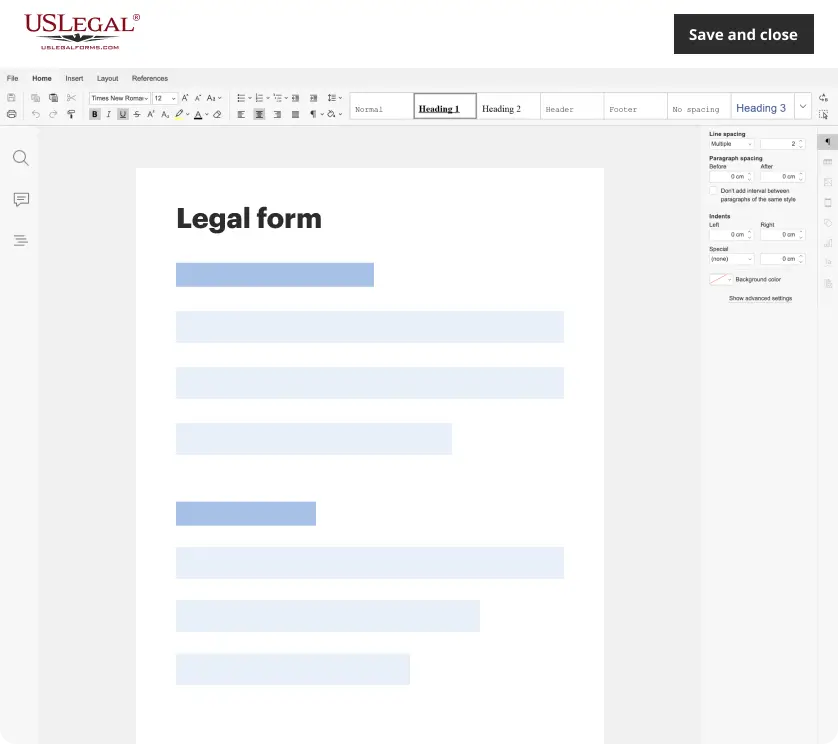
Make edits, fill in missing information, and update formatting in US Legal Forms—just like you would in MS Word.
Download a copy, print it, send it by email, or mail it via USPS—whatever works best for your next step.
Sign and collect signatures with our SignNow integration. Send to multiple recipients, set reminders, and more. Go Premium to unlock E-Sign.
If this form requires notarization, complete it online through a secure video call—no need to meet a notary in person or wait for an appointment.
We protect your documents and personal data by following strict security and privacy standards.
Mistakes to watch out for
- Failing to identify all parties involved correctly.
- Not attaching the necessary documents, such as the original contract.
- Leading to errors or omissions in the specified corrections.
- Neglecting to obtain notarization if it is necessary under local law.
Why complete this form online
- Convenience of downloading and filling out the form anytime.
- Editability allows for easy corrections before finalizing the document.
- Reliability of templates drafted by licensed attorneys for legal compliance.
Legal use & context
- This agreement is legally binding and remains enforceable even after the closing.
- It protects both parties by addressing potential discrepancies post-transaction.
- Failure to comply with the agreement can lead to liability for damages, including legal fees.
Main things to remember
- The Correction Statement and Agreement is crucial for correcting errors in real estate transactions.
- Timely completion and signatures ensure the enforceability of the agreement.
- Understanding state-specific regulations is essential for proper execution.
Looking for another form?
Form popularity
FAQ
A UCC statement acts as a public notice of a secured party's interest in a debtor's assets, helping to establish priority among creditors. When filed, it protects the creditor's rights to the specified collateral in case of non-payment. This document plays a significant role in lending practices and bankruptcy proceedings. To navigate this process effectively, consider utilizing the Missouri Correction Statement and Agreement to keep your filings accurate.
Yes, you can use the Missouri Secretary of State’s (MO SOS) website to check the status of business licenses. The online portal provides access to various business records, including license statuses. This tool enables you to verify if a business is operating legally and is compliant with state regulations. In conjunction with the Missouri Correction Statement and Agreement, you can ensure that your business filings remain in good standing.
To search business filings in Missouri, you can visit the Missouri Secretary of State's website. There, you can access their business entity search tool, which allows you to look up corporations, limited liability companies, and partnerships. Simply enter the business name or identification number to find relevant filing information. Utilizing the Missouri Correction Statement and Agreement can ensure your filings are accurate and up to date.
Unlike the buyer, who may have to attend the closing to sign original loan documents delivered by the lender to the closing, you, as the seller, may or may not need to attend. For either a conventional escrow closing or a table closing, you may be able to pre-sign the deed and other transfer documents.
Who Attends the Closing of a House? Depending on where you live, those at your closing appointment might include you (the buyer), the seller, the escrow/closing agent, the attorney (who might also be the closing agent), a title company representative, the mortgage lender, and the real estate agents.
It's not necessary for either the buyer or the seller to be present during a real estate closing. A real estate attorney or title agent designated by the buyer may handle all necessary paperwork and verify monetary transactions. The real estate agents who facilitated the sale may or may not attend.
When there is a loan involved, the lender's attorney must handle the closing. For this reason there will often be three real estate attorneys involved in the sale of property, one representing the buyer, another the seller, and the third representing the mortgage lender.
Closing costs refer to the expenses a buyer and a seller must pay when property ownership transfers from one party to the other. In Missouri, some closing costs are paid by the seller. If the seller's mortgage loan is not paid off, she must satisfy the remaining balance at closing.
Alabama. Connecticut. Delaware. District of Columbia. Florida. Georgia. Kansas. Kentucky.
Several states have laws on the books mandating the physical presence of an attorney or other types of involvement at real estate closings, including: Alabama, Connecticut, Delaware, District of Columbia, Florida, Georgia, Kansas, Kentucky, Maine, Maryland, Massachusetts, Mississippi, New Hampshire, New Jersey, New