Missouri Letter from Tenant to Landlord containing Request for permission to sublease
What is this form?
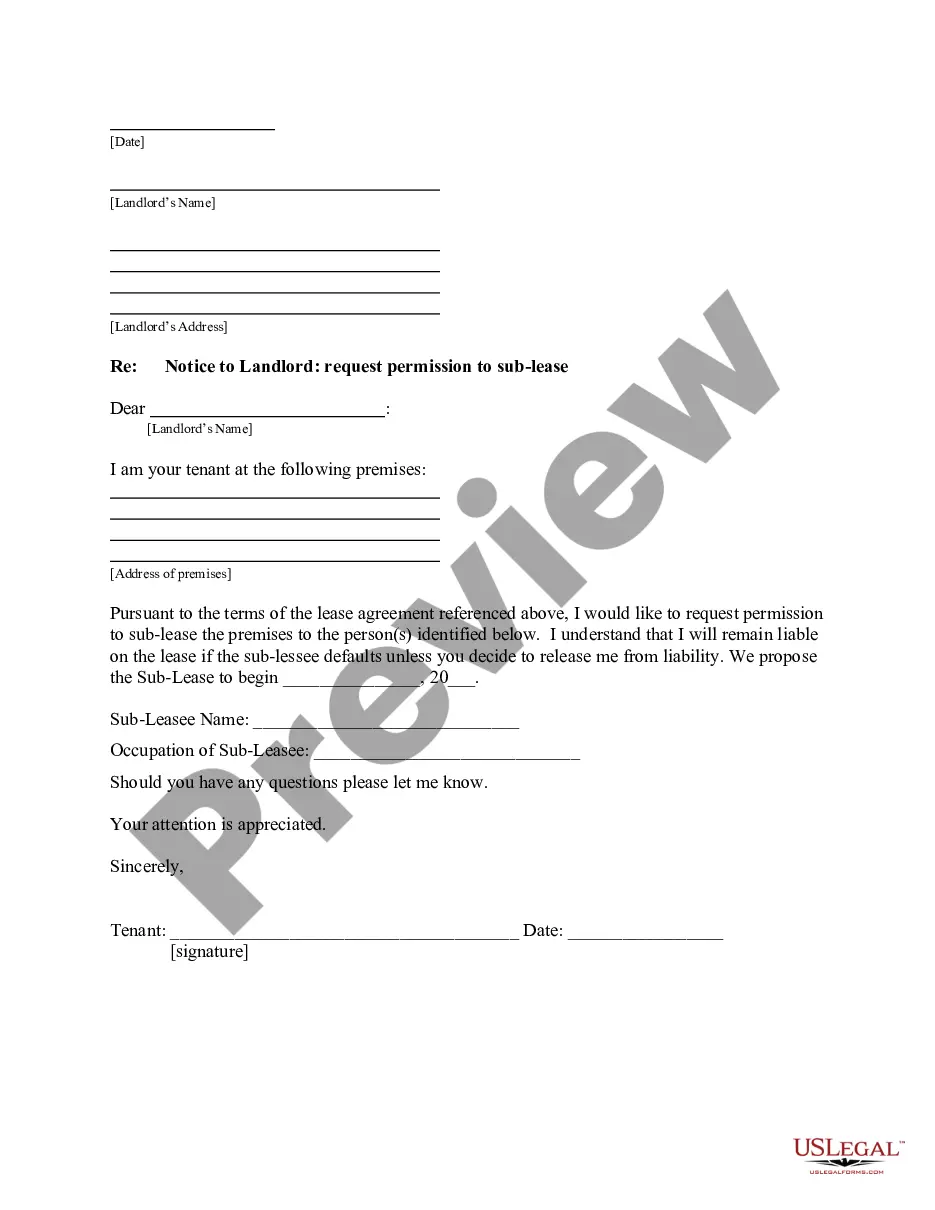
This form is a letter from a tenant to their landlord, requesting permission to sublease the rental property. The letter specifies the identity of the proposed subtenant and acknowledges the tenant's ongoing liability under the original lease agreement. This form differs from a standard lease agreement, as it focuses specifically on seeking consent for subletting rather than outlining the terms of a rental agreement.
Key components of this form
- Sub-Leasee Name: Identification of the person to be subletting the property.
- Occupation of Sub-Leasee: Understanding the employment or purpose of the subtenant.
- Request for permission: A formal request to the landlord regarding the sublease.
- Signature and date: Confirmation from the tenant, indicating the acknowledgment of responsibilities.
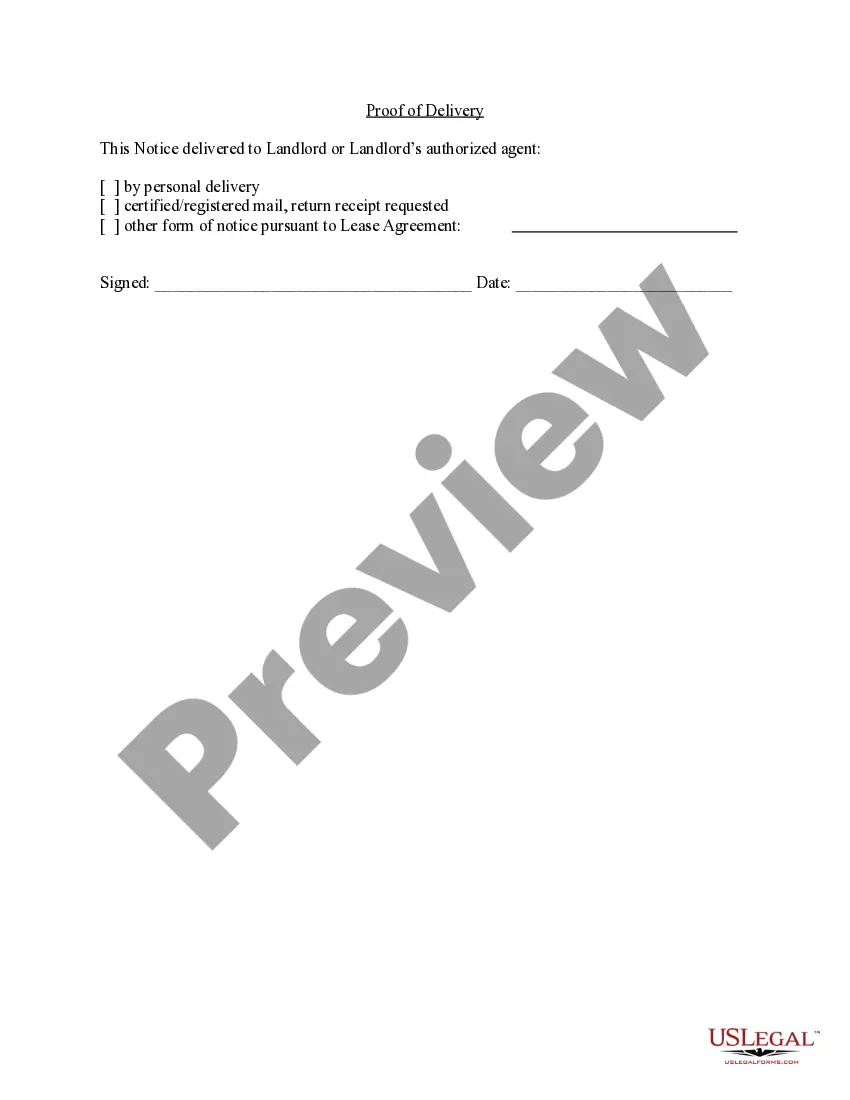
- Proof of delivery: Documentation of how the letter was delivered to the landlord.
When to use this document
This form is used when a tenant wishes to sublease their rental unit to another individual and needs the landlord's permission. Common scenarios include a tenant temporarily relocating for work or personal reasons, being unable to afford the rent alone, or needing to move in with family while maintaining their rental rights. In such cases, obtaining explicit consent from the landlord is essential to avoid potential breach of lease agreements.
Who should use this form
- Current tenants wishing to sublet their rental unit.
- Individuals who have confirmed their lease allows subleasing.
- Tenants looking for formal documentation to request the landlord's permission.
Steps to complete this form
- Identify the sub-leasee: Fill in the name and occupation of the individual who will be subletting the property.
- Draft the request: Clearly state your request for permission to the landlord.
- Sign and date the letter: Provide your signature and the date to validate your request.
- Deliver the letter: Ensure it is delivered to the landlord or their authorized agent through the chosen method.
- Keep a copy: Retain a copy of the delivered letter for your records.
Does this document require notarization?
In most cases, this form does not require notarization. However, some jurisdictions or signing circumstances might. US Legal Forms offers online notarization powered by Notarize, accessible 24/7 for a quick, remote process.
Get your form ready online
Our built-in tools help you complete, sign, share, and store your documents in one place.
Make edits, fill in missing information, and update formatting in US Legal Forms—just like you would in MS Word.
Download a copy, print it, send it by email, or mail it via USPS—whatever works best for your next step.
Sign and collect signatures with our SignNow integration. Send to multiple recipients, set reminders, and more. Go Premium to unlock E-Sign.
If this form requires notarization, complete it online through a secure video call—no need to meet a notary in person or wait for an appointment.
We protect your documents and personal data by following strict security and privacy standards.

Make edits, fill in missing information, and update formatting in US Legal Forms—just like you would in MS Word.

Download a copy, print it, send it by email, or mail it via USPS—whatever works best for your next step.

Sign and collect signatures with our SignNow integration. Send to multiple recipients, set reminders, and more. Go Premium to unlock E-Sign.

If this form requires notarization, complete it online through a secure video call—no need to meet a notary in person or wait for an appointment.

We protect your documents and personal data by following strict security and privacy standards.
Common mistakes to avoid
- Failing to check the lease for specific subletting clauses.
- Not including important information about the sub-leasee.
- Omitting the date or signature, which invalidates the request.
- Delivering the letter without ensuring it reaches the landlord.
Benefits of completing this form online
- Immediate access to a legally vetted template.
- Ability to edit and customize the form to fit your specific situation.
- Convenient downloading options for direct use.
Legal use & context
- This form helps tenants document their request, providing a legal basis for the subleasing arrangement.
- A properly completed letter can prevent disputes regarding the obligations of both tenant and sub-leesee.
Summary of main points
- The letter is essential for formalizing the request to sublease.
- Tenants retain responsibility under the original lease.
- Following local laws and provisions in the lease can avoid potential disputes.
Looking for another form?

Form popularity
FAQ
In Missouri, the rules for subleasing can vary based on the lease agreement, but generally, tenants must obtain the landlord's written consent. The tenant remains responsible for the lease obligations, even with a subtenant. It is wise to include all terms and conditions in a sublease agreement. For assistance, consider using resources like uslegalforms, which can help you create a Missouri Letter from Tenant to Landlord containing Request for permission to sublease.
A consent to sublet letter is a formal document that a landlord provides to approve a tenant's request to sublease their rental unit. This letter usually outlines the terms of the sublease and may require the subtenant to meet certain criteria. By obtaining this consent, you protect yourself and ensure that all parties are aware of their responsibilities. Utilizing a Missouri Letter from Tenant to Landlord containing Request for permission to sublease can streamline this process.
Yes, a landlord can deny a sublease request based on several factors, including the terms of the lease and the tenant's rental history. If the lease does not allow subletting, or if the landlord has concerns about the new tenant, they may refuse the request. It's important to communicate openly and understand the landlord's perspective. A Missouri Letter from Tenant to Landlord containing Request for permission to sublease can help clarify your intentions and support your case.
To ask your landlord for permission to sublet, start by reviewing your lease agreement for any specific clauses related to subleasing. Next, draft a Missouri Letter from Tenant to Landlord containing Request for permission to sublease, clearly stating your intention and reasons for subletting. Make sure to include details about the prospective subtenant and their background. This formal approach shows respect for the landlord's decision-making process.
Name the parties. A simple rental agreement form needs to name the parties signing the lease and where they live. Describe the premises. Define the term of the lease. Set how much rent is owed. Assign a security deposit amount. Finalize the lease.
Subleasing occurs when the tenant transfers a part of their legal tenancy to a third-party as a new tenant.That means that if a new subtenant does not pay rent for three months, the original tenant that subleased the property is liable to the landlord for the overdue rent amount and any late fees.
Record a liability calculated as the present value of the remaining minimum lease payments due under the original (head) lease, reduced by the present value of any estimated sublease income, Write off the deferred rent from the original lease, and. Record a loss on the income statement for the difference.
Get your logistics together. Don't give your landlord much extra work (if any at all). Let your landlord know you're going to thoroughly screen applicants. Communicate with your landlord about how things are going with the subtenant.
Writing Your Sublease. State the name of the parties and the date of the contract. Identify the full names of each party and what their role is in the contract. The original leaseholder of the property is the Tenant and the person subletting the property is the Subtenant.
To show landlords that you care about the same things they care about, find ways to show them that you can truly afford the rent, that you can take care of their place and keep it in good shape, and that you aren't the kind of person to cause problems with other tenants or neighbours.