Missouri Quitclaim Deed from Husband and Wife to Corporation
What is this form?
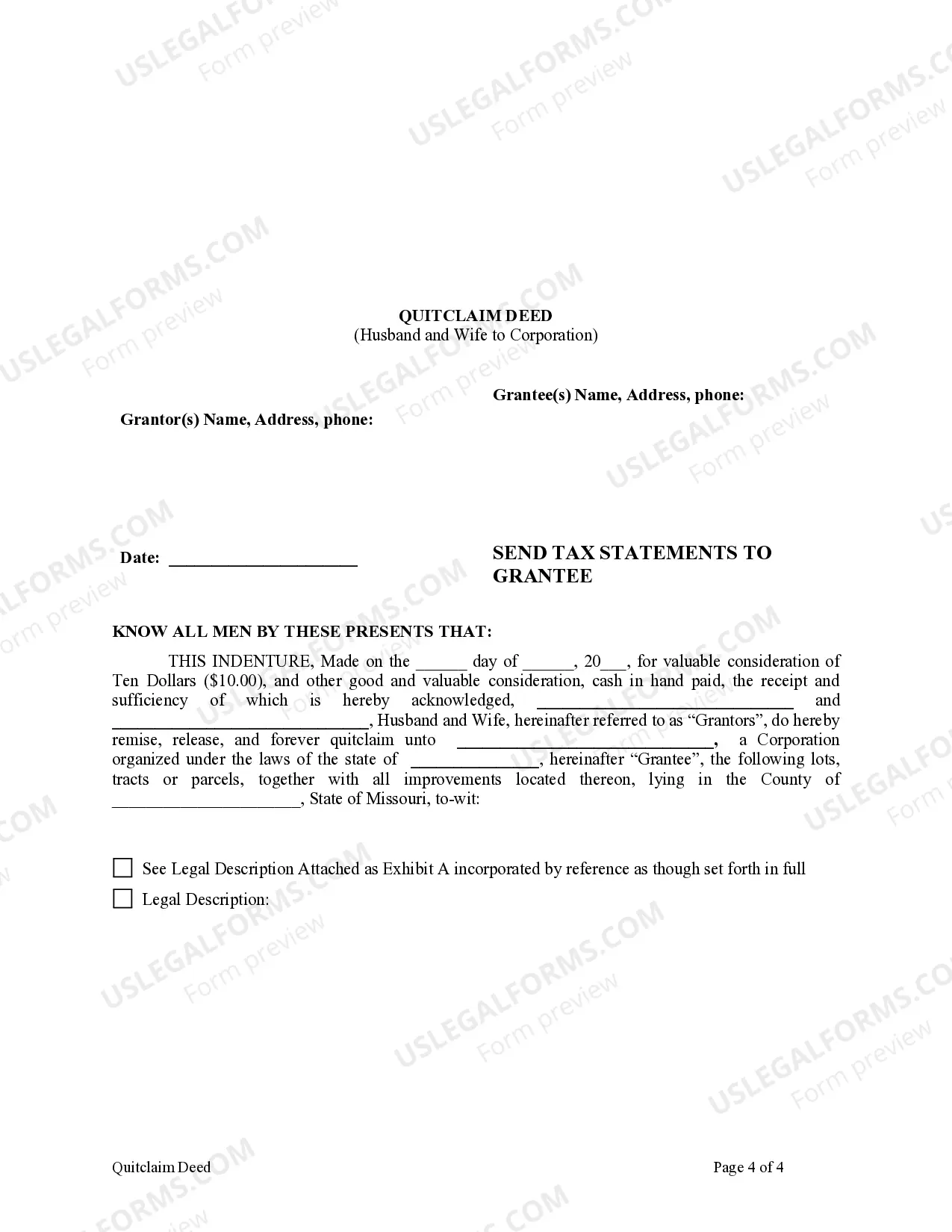
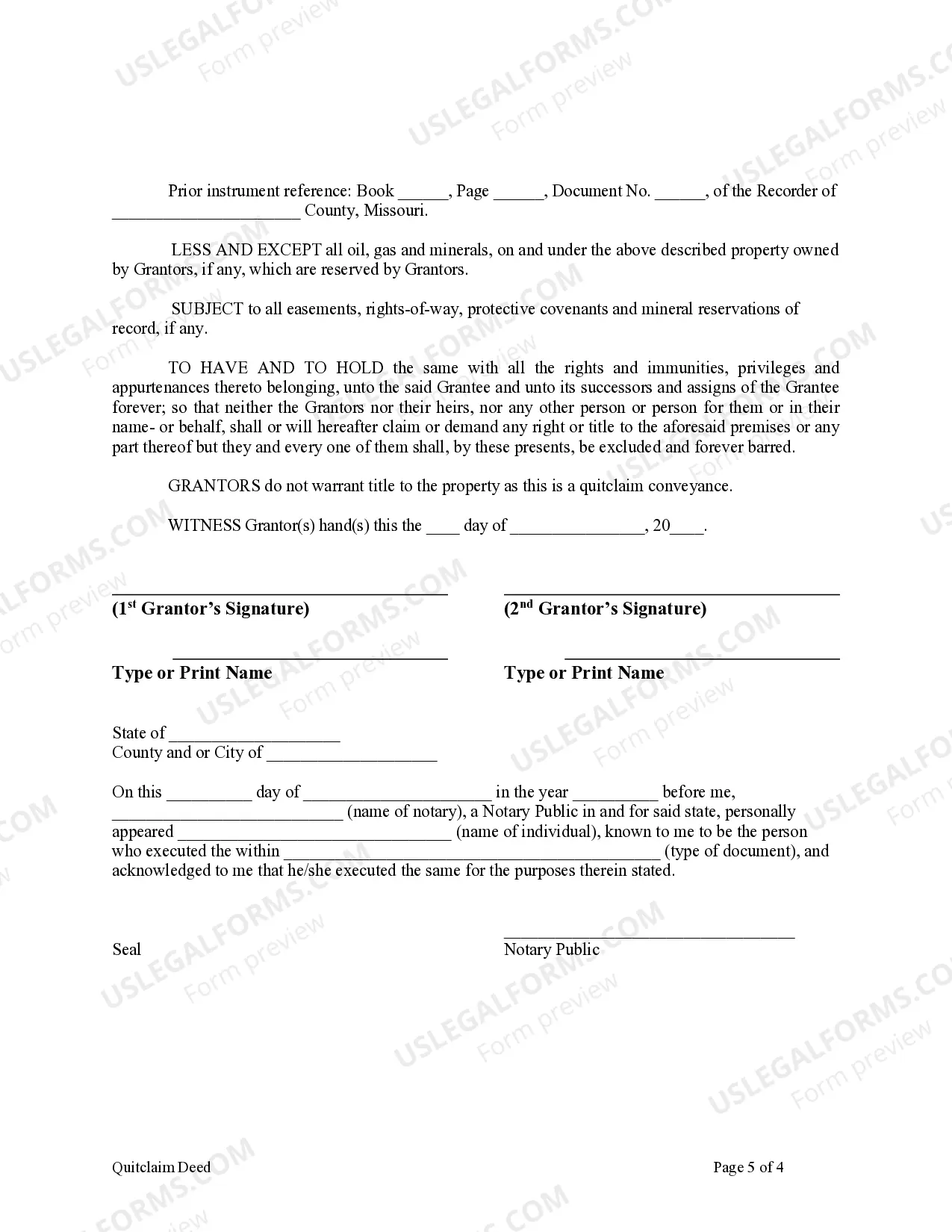
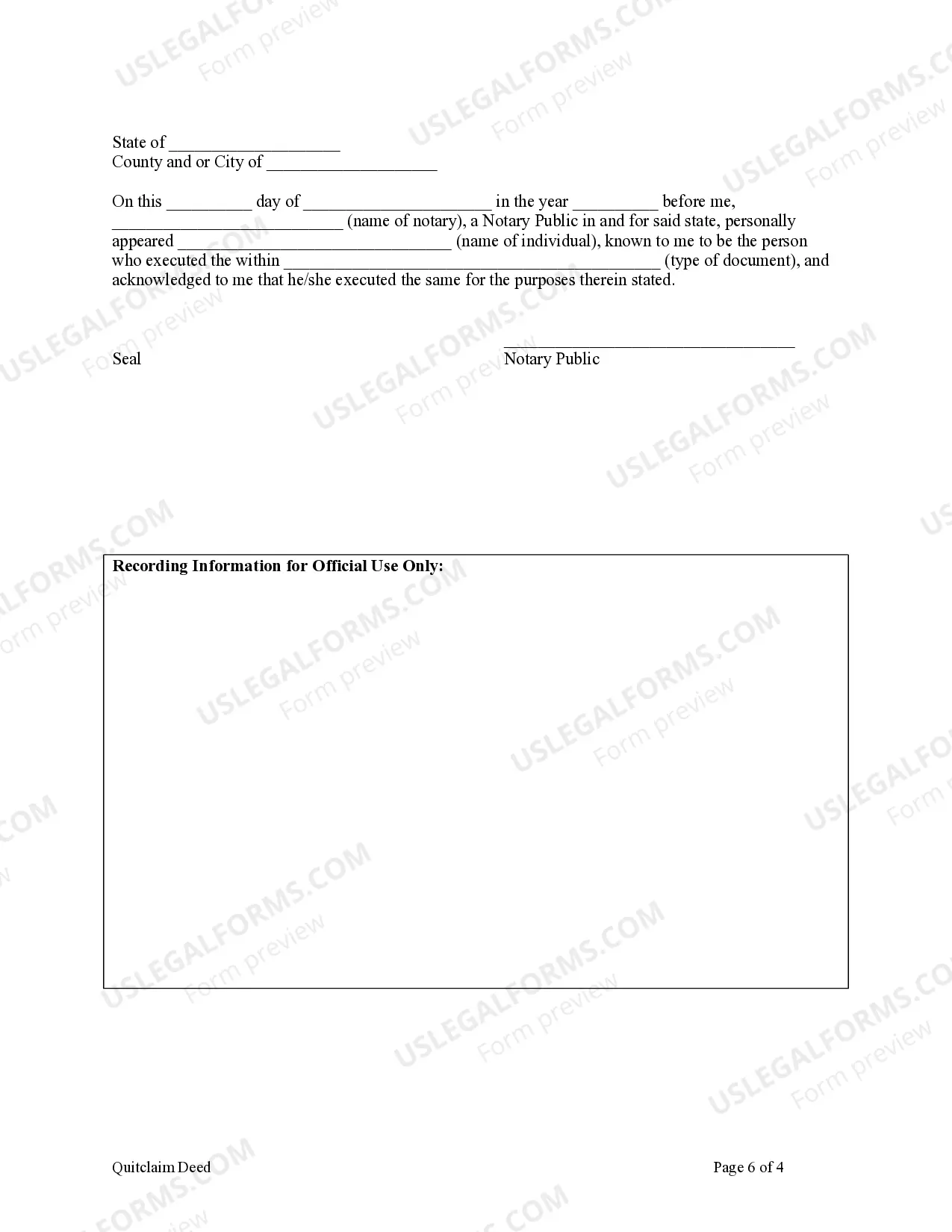
The Quitclaim Deed from Husband and Wife to Corporation is a legal document used to transfer property ownership from a couple (the grantors) to a corporation (the grantee). It is a specific type of quitclaim deed that allows the husband and wife to release any interest they have in the property without making any guarantees about the title. This distinguishes it from warranty deeds, which assure the grantee of clear title. This form is particularly useful in situations such as transferring personal property into a business entity for liability protection or tax purposes.
Key components of this form
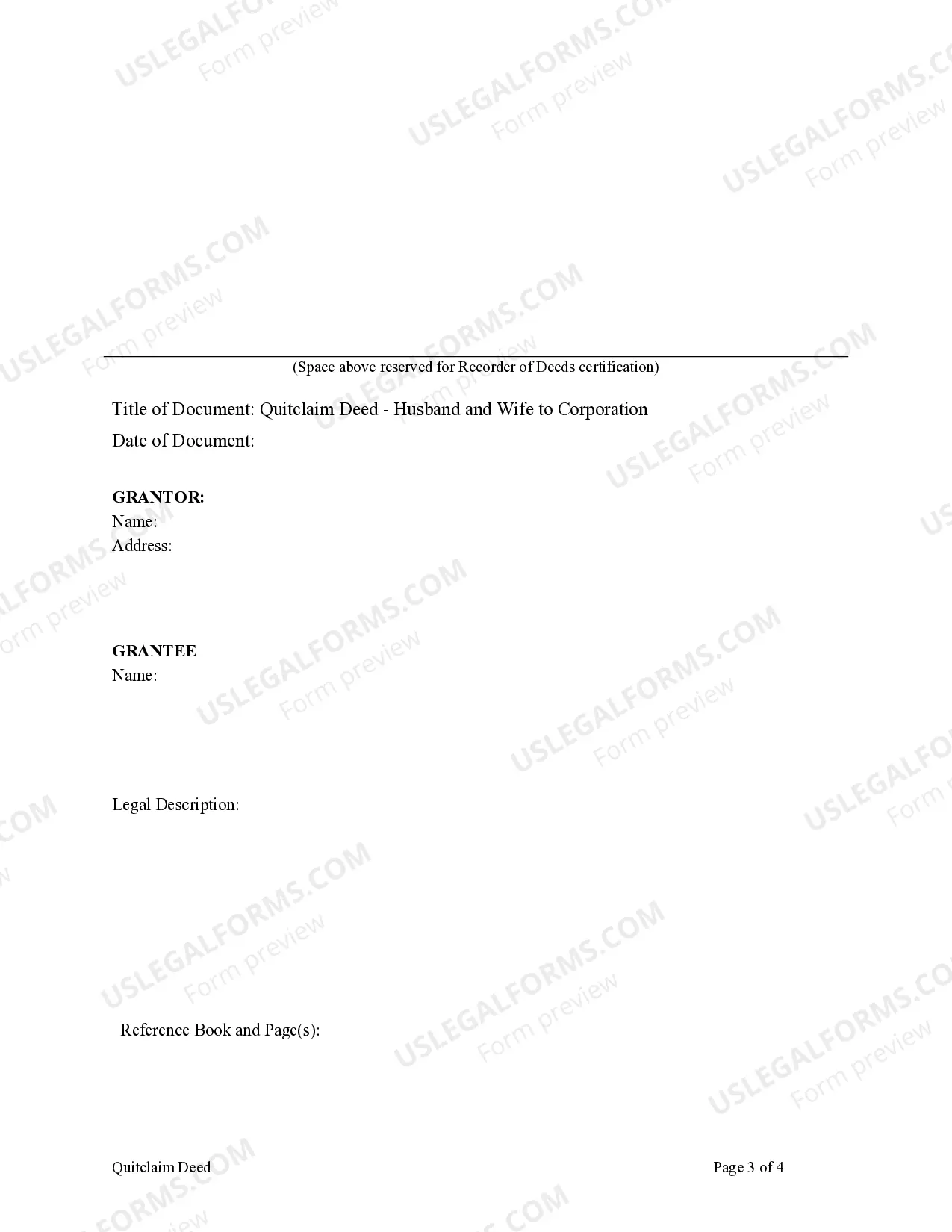
- Identification of grantors (husband and wife) and their relationship.
- Identification of the grantee (the corporation).
- Legal description of the property being transferred.
- Statement of reservation regarding oil, gas, and minerals.
- Signatures of the grantors to finalize the transfer.





Common use cases
This form is typically used when a husband and wife wish to transfer their joint ownership of a property to a corporation. This situation may arise when couples want to formalize the business ownership of a property, transfer real estate into a partnership, or minimize personal liability associated with property ownership. It is also useful when both spouses agree to relinquish their rights to the property in favor of a corporation.
Intended users of this form
This form is suitable for:
- Couples who jointly own real estate and wish to transfer it to a corporation.
- Business owners looking to convert personal property into their company's name.
- Individuals needing to manage property ownership among business partners.
Steps to complete this form
- Identify the parties involved: both grantors (husband and wife) and the grantee (corporation).
- Clearly describe the property being transferred, including its legal description.
- Specify any reservations regarding mineral rights as needed.
- Sign and date the document where indicated, ensuring both grantors execute it.
- Check local regulations for any additional requirements before filing.
Does this form need to be notarized?
This document requires notarization to meet legal standards. US Legal Forms provides secure online notarization powered by Notarize, allowing you to complete the process through a verified video call, available 24/7.
Get your form ready online
Our built-in tools help you complete, sign, share, and store your documents in one place.
Make edits, fill in missing information, and update formatting in US Legal Forms—just like you would in MS Word.
Download a copy, print it, send it by email, or mail it via USPS—whatever works best for your next step.
Sign and collect signatures with our SignNow integration. Send to multiple recipients, set reminders, and more. Go Premium to unlock E-Sign.
If this form requires notarization, complete it online through a secure video call—no need to meet a notary in person or wait for an appointment.
We protect your documents and personal data by following strict security and privacy standards.

Make edits, fill in missing information, and update formatting in US Legal Forms—just like you would in MS Word.

Download a copy, print it, send it by email, or mail it via USPS—whatever works best for your next step.

Sign and collect signatures with our SignNow integration. Send to multiple recipients, set reminders, and more. Go Premium to unlock E-Sign.

If this form requires notarization, complete it online through a secure video call—no need to meet a notary in person or wait for an appointment.

We protect your documents and personal data by following strict security and privacy standards.
Avoid these common issues
- Failing to accurately describe the property being transferred.
- Not including the required reservations regarding mineral rights.
- Omitting the signatures of both grantors.
- Not complying with local filing requirements.
Benefits of completing this form online
- Convenient downloadable format for easy access and completion.
- Editable fields allow for straightforward input of specific details.
- Templates are drafted by licensed attorneys, ensuring legal compliance.
Looking for another form?
Form popularity
FAQ
A Missouri Quitclaim Deed from Husband and Wife to Corporation can have several disadvantages. First, it does not provide any warranties, meaning the corporation receives the property without guarantees regarding its title or any liens attached. This lack of protection can lead to potential future disputes or financial liabilities. Additionally, once the deed is executed, you cannot reverse the transfer easily, which may limit your options if you change your mind later.
In Missouri, anyone can prepare a quitclaim deed, including the individuals involved in the transaction. However, to ensure accuracy and compliance with state laws, many choose to work with legal professionals or use reputable online platforms like US Legal Forms. These services offer ready-made templates and expert guidance, making it easier for you to prepare your Missouri Quitclaim Deed from Husband and Wife to Corporation correctly.
While a Missouri Quitclaim Deed from Husband and Wife to Corporation can be quick and straightforward, there are downsides to consider. This type of deed does not guarantee clear title, which means the grantee may encounter issues with ownership in the future. Furthermore, it does not provide warranties against future claims, leaving the grantee potentially vulnerable. It’s wise to evaluate these factors carefully before proceeding.
A Missouri Quitclaim Deed from Husband and Wife to Corporation must include specific information for it to be valid. You need to include the names of the grantors and the grantee, a legal description of the property, and the signatures of both spouses. Additionally, it’s essential to have the deed notarized to make it legally binding. Using US Legal Forms can help you gather all the necessary details efficiently.
Yes, you can file a Missouri Quitclaim Deed from Husband and Wife to Corporation without an attorney. However, it is advisable to seek legal guidance to ensure that you meet all requirements and avoid potential issues. By using an online service like US Legal Forms, you can access templates and instructions that simplify the process. This way, you can confidently complete the deed on your own.
Yes, you can prepare your own quitclaim deed in Missouri, including a Missouri Quitclaim Deed from Husband and Wife to Corporation. However, it's essential to ensure that the deed meets all legal requirements to avoid future complications. While DIY solutions are available, using platforms like USLegalForms can provide you with the necessary templates and guidance, ensuring that your deed is legally sound and properly executed.
A married couple may choose to use a Missouri Quitclaim Deed from Husband and Wife to Corporation for various reasons, such as simplifying property ownership or transferring assets for financial planning. This approach allows couples to move property into a corporation, which can offer liability protection and tax benefits. Additionally, it can help in estate planning by designating how property should be managed after one spouse passes away. Utilizing USLegalForms can provide clarity and efficiency in this process.
When using a Missouri Quitclaim Deed from Husband and Wife to Corporation, you may encounter issues related to title disputes or unclear ownership. Since a quitclaim deed transfers only the interest the grantors have in the property, it does not guarantee that the title is clear. This lack of warranty can lead to future legal complications if someone claims ownership. To avoid these problems, consider consulting with a legal expert or using resources like USLegalForms to ensure proper documentation.