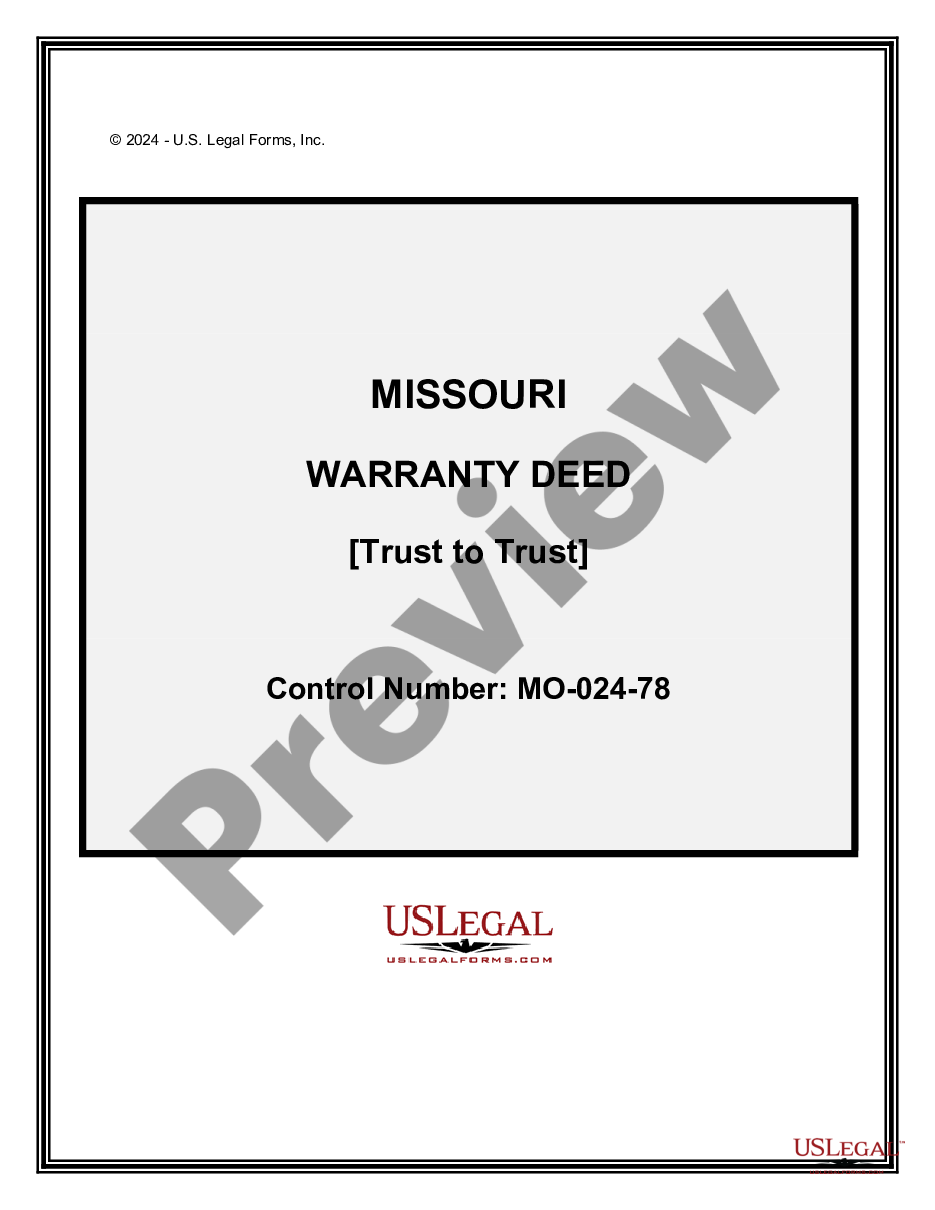
Missouri Warranty Deed - Trust to Trust
What is this form?
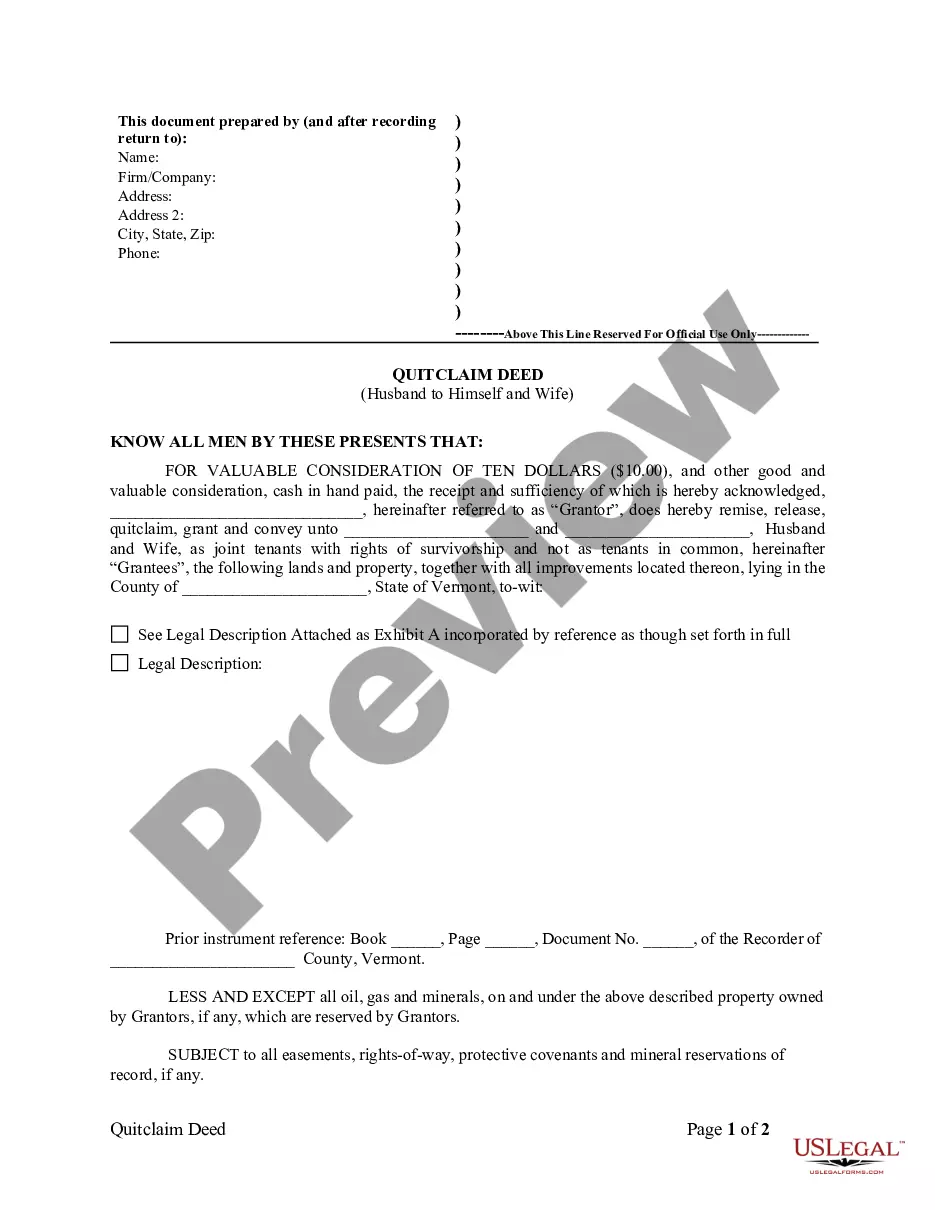
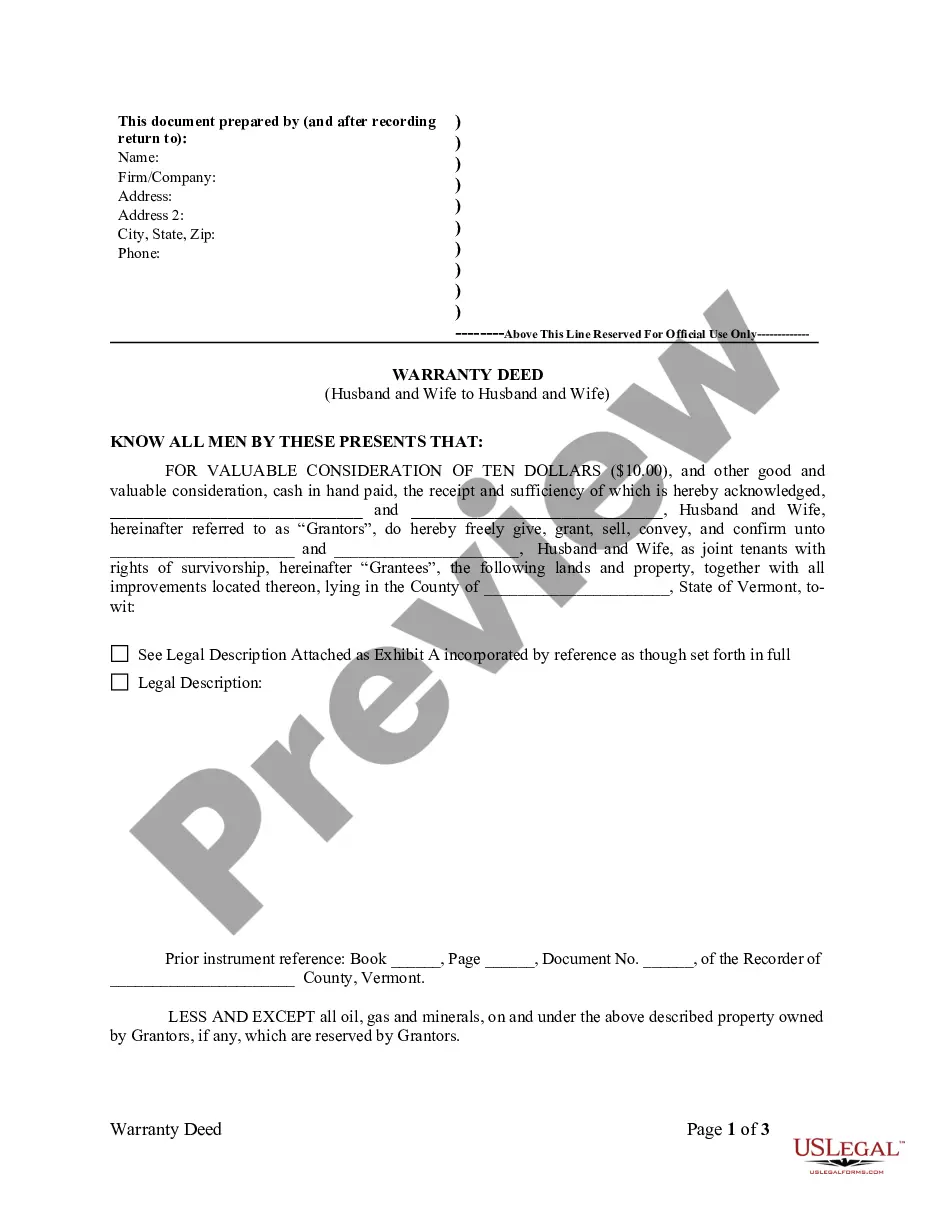
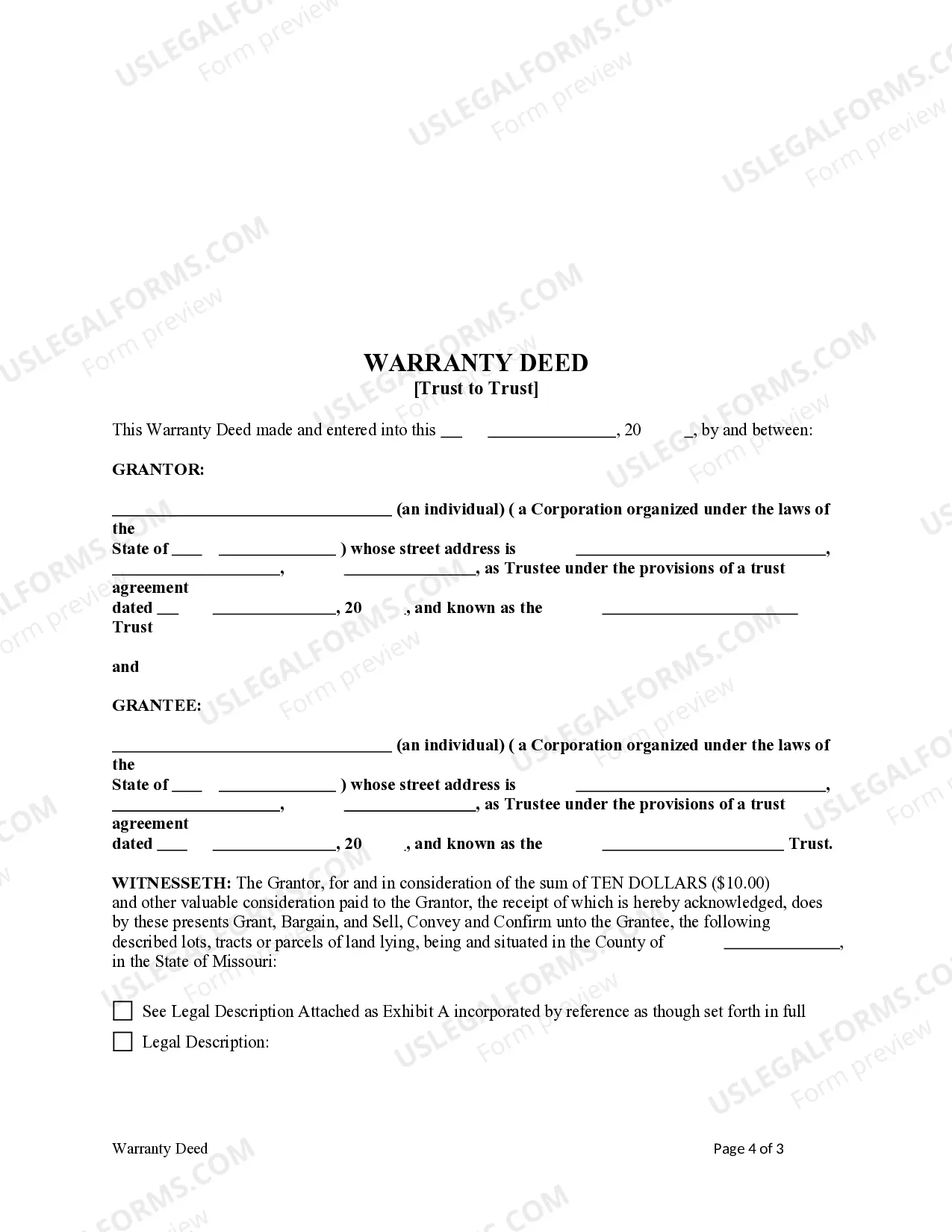
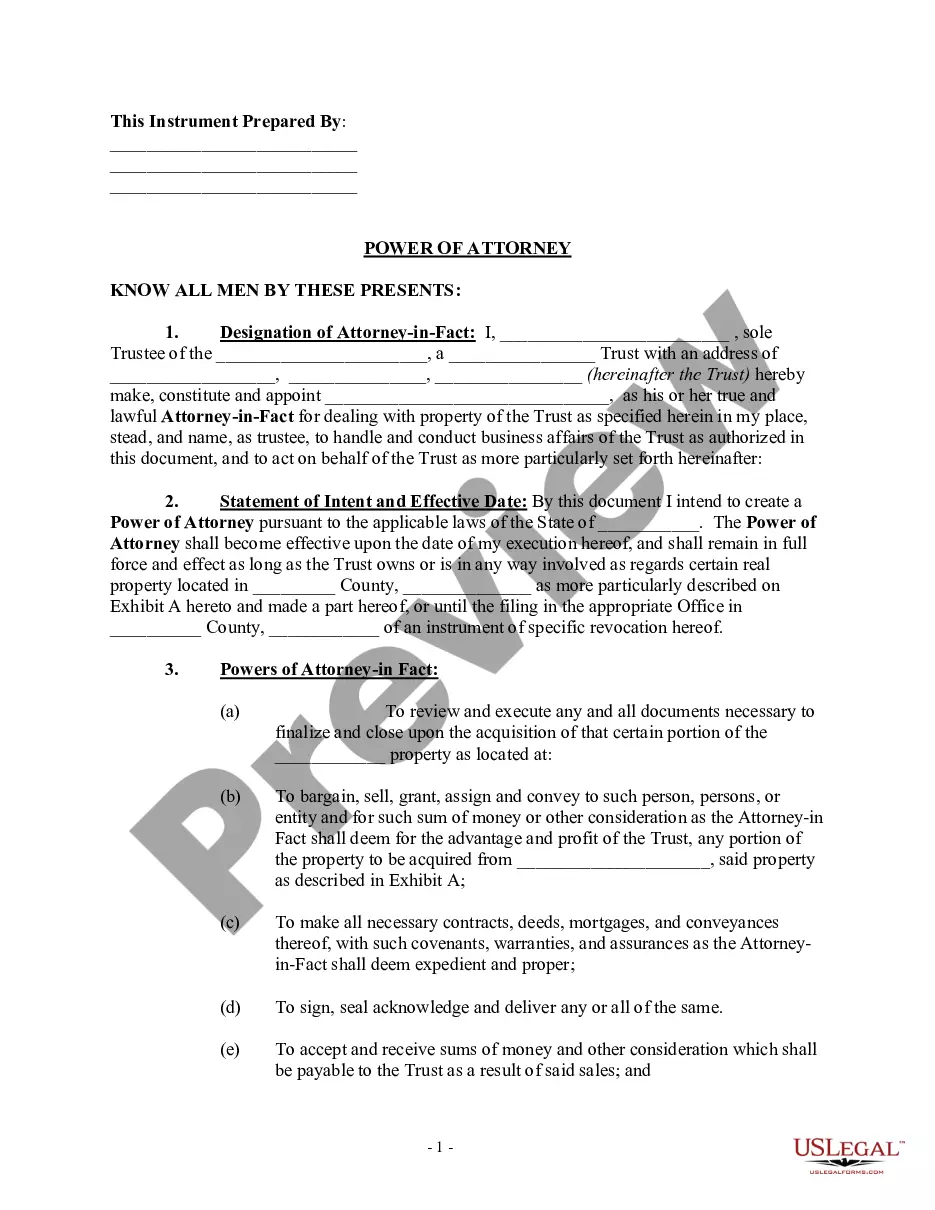
The Warranty Deed - Trust to Trust is a legal document that allows a Grantor, who is a Trust, to convey property ownership to a Grantee that is also a Trust. This form is crucial for the transfer of property between trusts, ensuring that legal ownership is properly documented and complies with state laws. Unlike standard deeds, this specific form addresses situations involving trusts, which often have unique requirements and considerations in real estate transactions.
Key components of this form
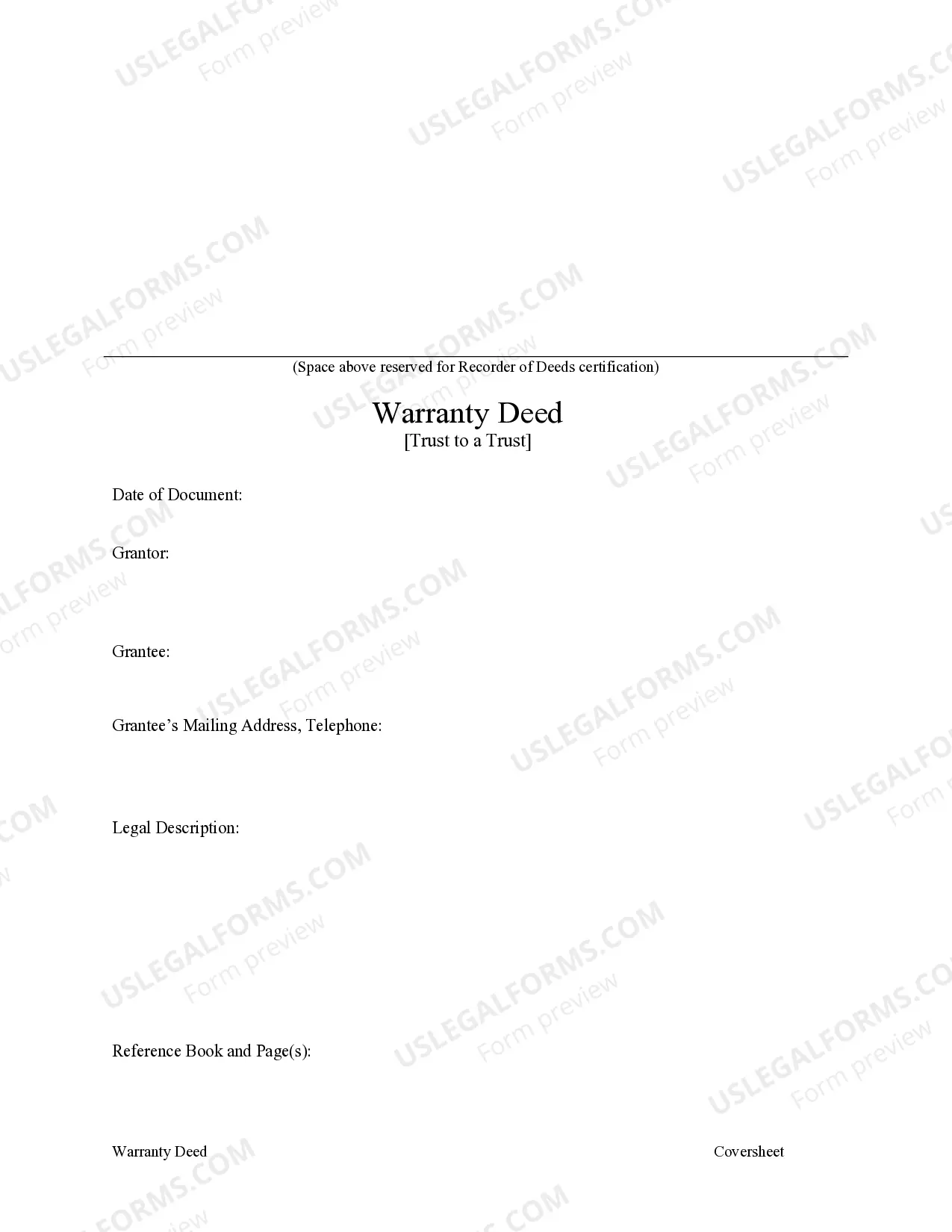
- The identity of the Grantor (Trust) and the Grantee (Trust).
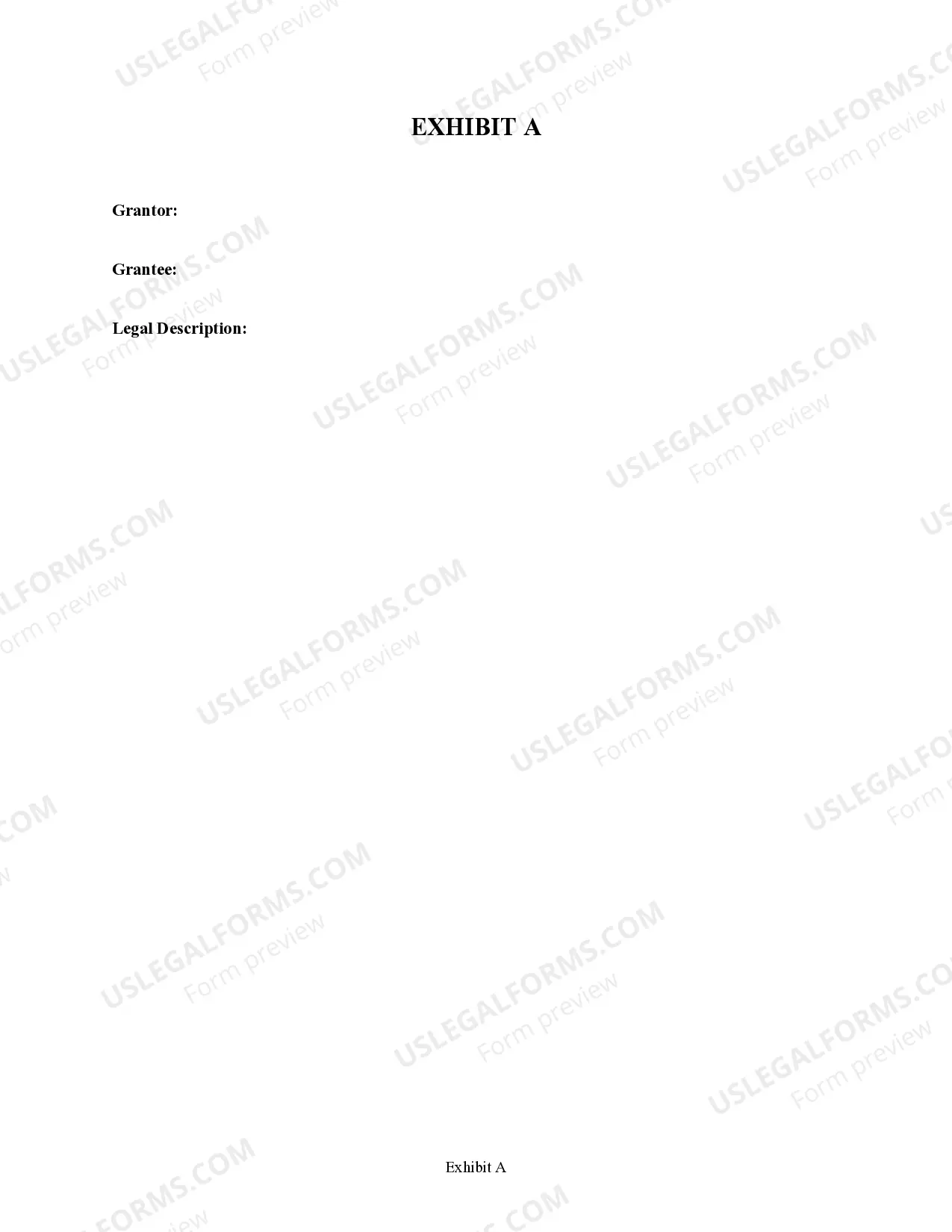
- A description of the property being conveyed.
- Warranties regarding the title of the property.
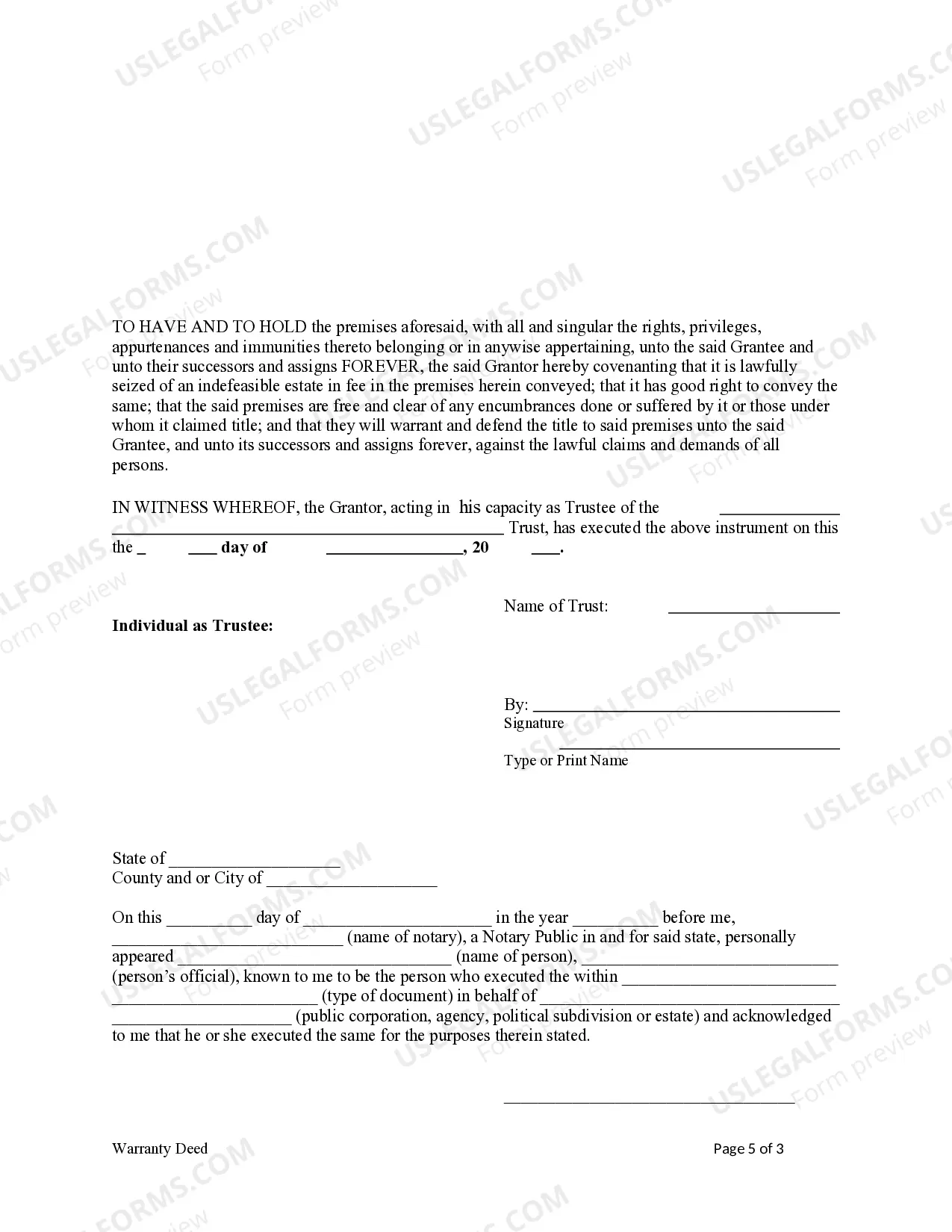
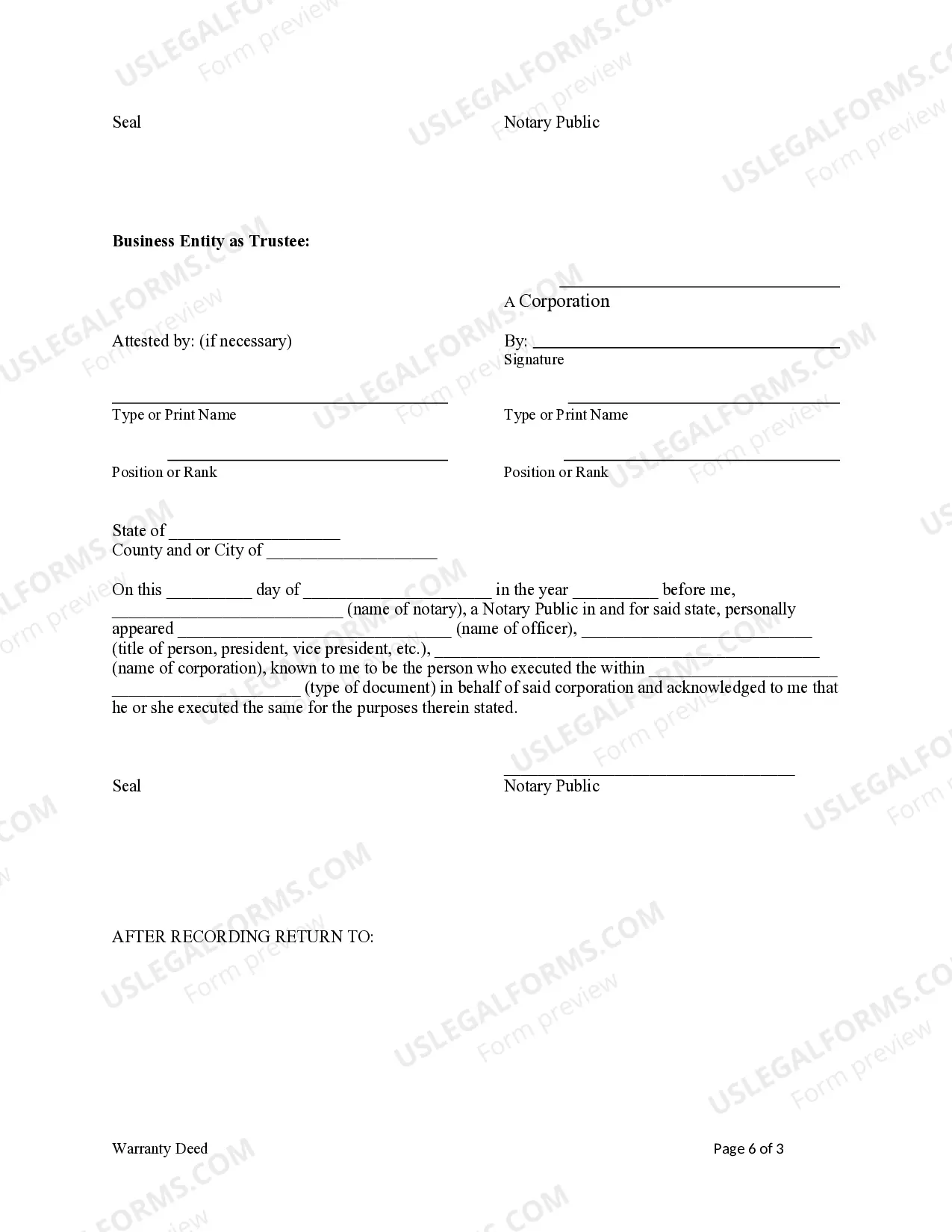
- Signature lines for trustees or authorized representatives.
- Notary acknowledgment section for legal validation.




When this form is needed
This form is needed when a property owned by one trust is being transferred to another trust. It is commonly used in estate planning, asset protection, or when changing the management of trust-held properties. Utilizing this form helps ensure that the property transfer adheres to legal requirements, avoiding future disputes over ownership or intent.
Who can use this document
- Trustees managing property on behalf of a trust.
- Individuals involved in transferring property between trusts.
- Estate planners advising clients on property transfers.
How to prepare this document
- Identify the Grantor and Grantee, ensuring both are accurately represented as trusts.
- Provide a full legal description of the property being conveyed.
- Include the date of the deed and sign where indicated.
- Verify that all necessary trustees are signing in accordance with their authority.
- Obtain a notarization to validate the deed legally.
Is notarization required?
Notarization is required for this form to take effect. Our online notarization service, powered by Notarize, lets you verify and sign documents remotely through an encrypted video session, available 24/7.
Get your form ready online
Our built-in tools help you complete, sign, share, and store your documents in one place.
Make edits, fill in missing information, and update formatting in US Legal Forms—just like you would in MS Word.
Download a copy, print it, send it by email, or mail it via USPS—whatever works best for your next step.
Sign and collect signatures with our SignNow integration. Send to multiple recipients, set reminders, and more. Go Premium to unlock E-Sign.
If this form requires notarization, complete it online through a secure video call—no need to meet a notary in person or wait for an appointment.
We protect your documents and personal data by following strict security and privacy standards.

Make edits, fill in missing information, and update formatting in US Legal Forms—just like you would in MS Word.

Download a copy, print it, send it by email, or mail it via USPS—whatever works best for your next step.

Sign and collect signatures with our SignNow integration. Send to multiple recipients, set reminders, and more. Go Premium to unlock E-Sign.

If this form requires notarization, complete it online through a secure video call—no need to meet a notary in person or wait for an appointment.

We protect your documents and personal data by following strict security and privacy standards.
Avoid these common issues
- Failing to provide the complete legal description of the property.
- Not obtaining notarization, which may be required for the deed to be valid.
- Signing without proper authority, which can invalidate the deed.
Why complete this form online
- Convenience of filling out the form on a computer or device.
- Editability allows for easy correction of mistakes before finalizing.
- Immediate downloadable access, saving time on legal preparations.
Legal use & context
A Warranty Deed - Trust to Trust is enforceable under the laws governing property transfers and trusts. It serves as a crucial documentation method to protect both the grantor and grantee in property transactions. However, parties involved should seek legal counsel to ensure compliance with specific requirements and implications of the transfer.
What to keep in mind
- This form is essential for transferring property between trusts.
- Accurate completion and notarization are critical for its validity.
- Consider local laws and requirements specific to your state.
Looking for another form?
Form popularity
FAQ
Statute 442.450 in Missouri pertains to the execution and recording of deeds, including warranty deeds. This statute outlines the requirements for a valid deed and ensures that property transfers are legally recognized. When dealing with a Missouri Warranty Deed - Trust to Trust, familiarity with this statute can help you navigate the legalities involved in your property transaction. You can find more detailed information and templates on the US Legal Forms website.
Transferring a warranty deed involves several steps to ensure the process is legal and effective. First, you will need to prepare a new warranty deed that includes the details of the new owner, along with a description of the property. Utilize platforms like US Legal Forms for templates and guidance on completing the transfer. Once the new deed is prepared and signed, file it with the local county recorder's office to officially record the change and update your Missouri Warranty Deed - Trust to Trust.
The Tod rule, or Transfer on Death deed rule, allows property owners in Missouri to transfer their real estate to beneficiaries upon their death without going through probate. This legal tool simplifies the transfer process and ensures your Missouri Warranty Deed - Trust to Trust is handled according to your wishes. To create a Tod deed, you must follow specific guidelines, which you can learn more about through resources like US Legal Forms. They provide the necessary forms and guidance for a smooth transition.
Filing a trust in Missouri involves several key steps. You must create a written trust document that outlines the terms and beneficiaries of the trust. After drafting the document, you will need to fund the trust with assets, including property transfers using a Missouri Warranty Deed - Trust to Trust. Utilizing US Legal Forms can simplify the creation and filing of your trust, ensuring that you have all necessary legal documents ready for submission.
To transfer a property deed in Missouri, you need to complete a Missouri Warranty Deed - Trust to Trust form. First, ensure that the current deed is clear of any liens or encumbrances. Next, fill out the required information accurately, sign the deed in the presence of a notary, and file it with the local county recorder’s office. Using a reliable platform like US Legal Forms can help streamline this process with easy-to-follow templates.
How To Establish A Trust. You will need to retain an estate attorney to draft and execute your trust document. For a simple revocable or irrevocable trust, it may cost anywhere from $2,000 $5,000.
Yes, there are key differences between the two. With a deed, you transfer the ownership of the property to one party. In contrast, a deed of trust does not mean the holder owns the property. In an arrangement involving a deed of trust, the borrower signs a contract with the lender with details regarding the loan.
Determine the Current Title and Vesting to Your Property. Prepare a Deed. Be Aware of Your Lender and Title Insurance. Prepare a Preliminary Change of Ownership Report. Execute Your Deed. Record Your Deed. Wait for the Deed to be Returned. Keep the Property in the Trust.
Party information: names and addresses of the trustor(s), trustee(s), beneficiary(ies), and guarantor(s) (if applicable) Property details: full address of the property and its legal description (which can be obtained from the County Recorder's Office)
The advantages of placing your house in a trust include avoiding probate court, saving on estate taxes and possibly protecting your home from certain creditors. Disadvantages include the cost of creating the trust and the paperwork.