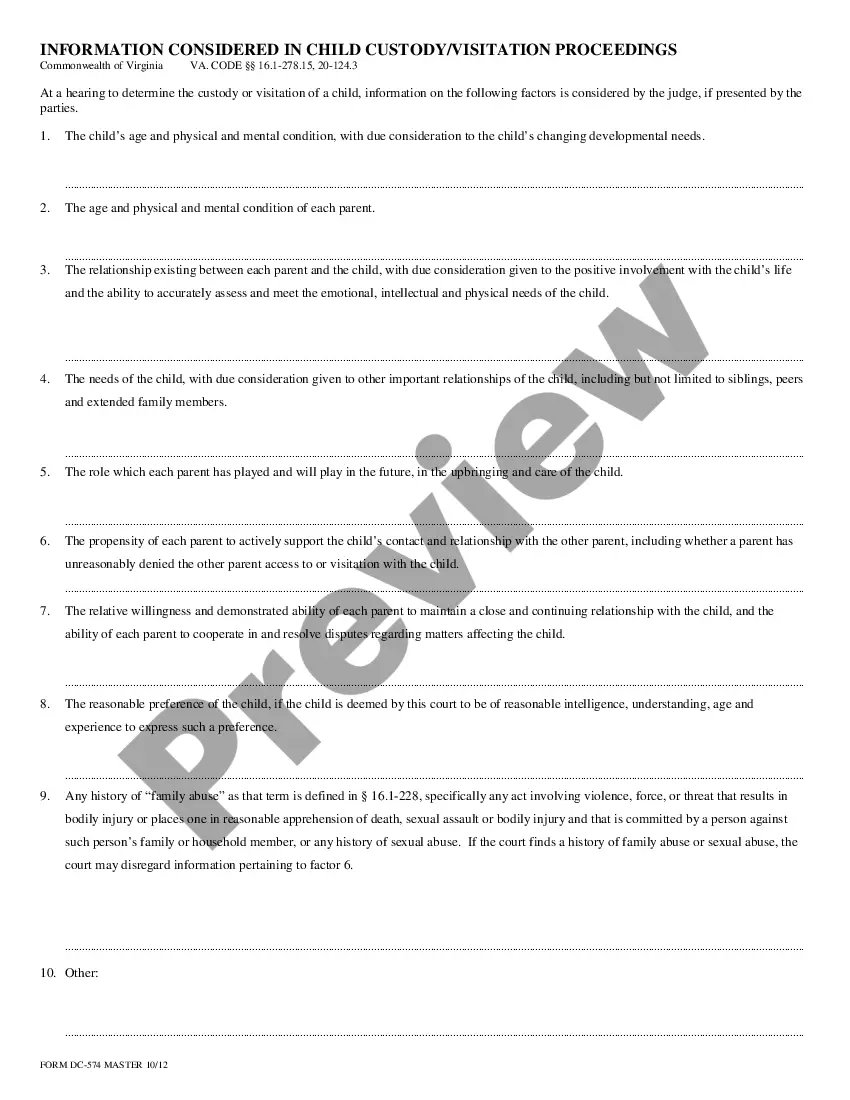
Minnesota Last Will and Testament for Widow or Widower with Minor Children
What this document covers
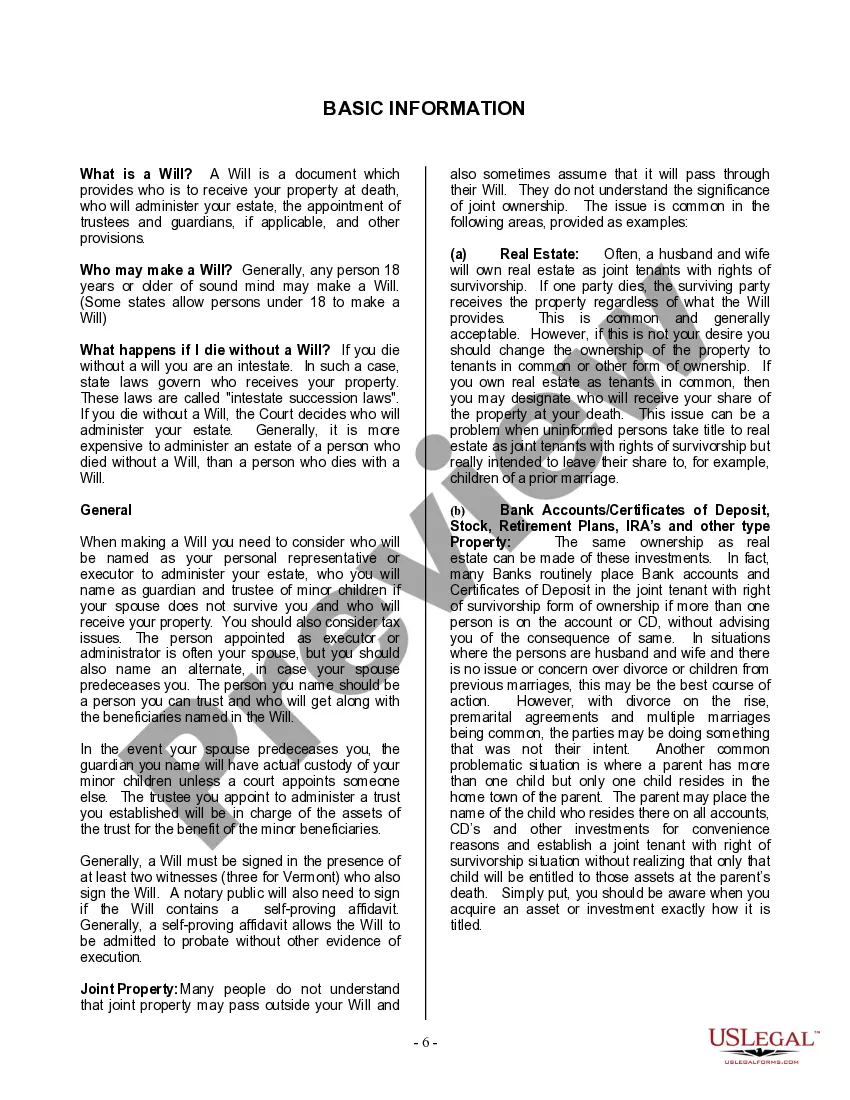
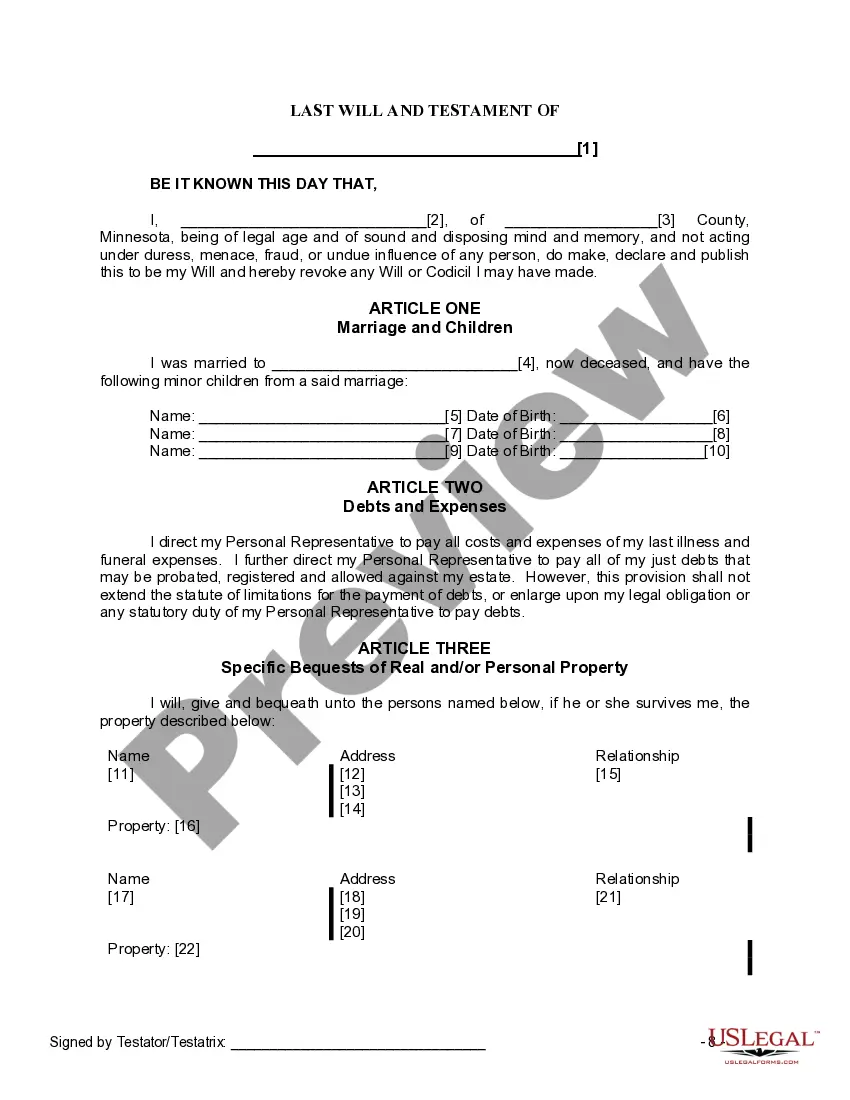
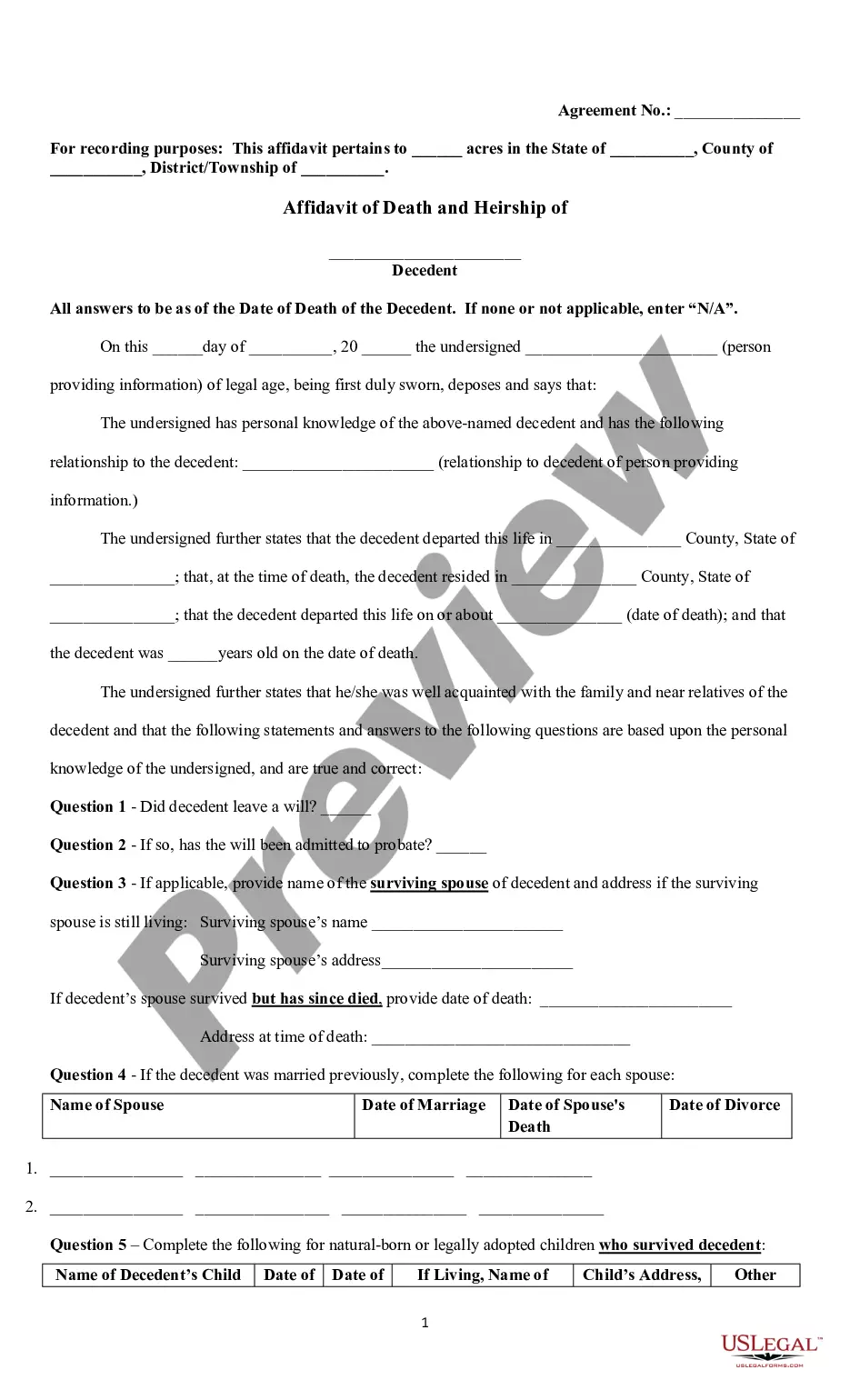
This Last Will and Testament for Widow or Widower with Minor Children is a legal document that allows a widow or widower to outline how they wish their assets to be distributed upon their death, particularly if they have minor children. This form appoints a personal representative (executor) and addresses the care of minor beneficiaries, ensuring their financial security by including provisions for a trustee. It differs from regular wills by specifically addressing the unique needs of individuals who are widowed and have dependents.
Key components of this form
- Appointment of a personal representative or executor.
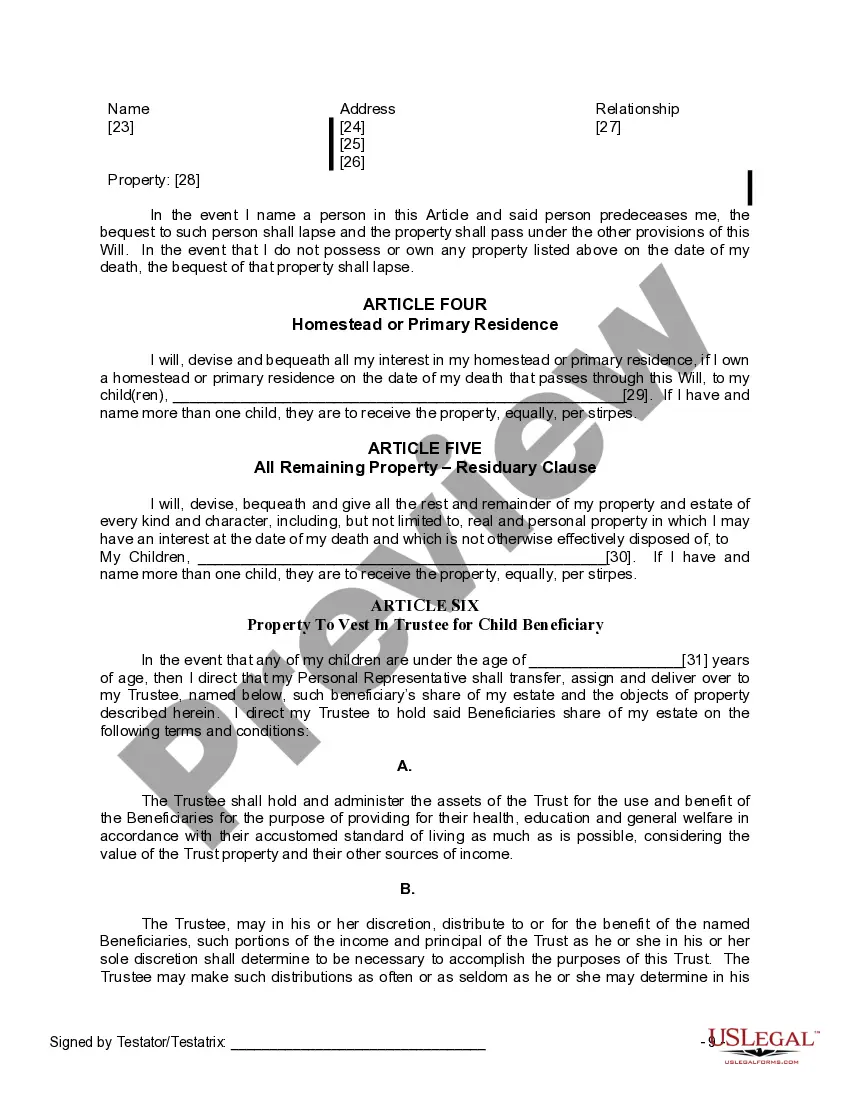
- Designations for property distribution among heirs.
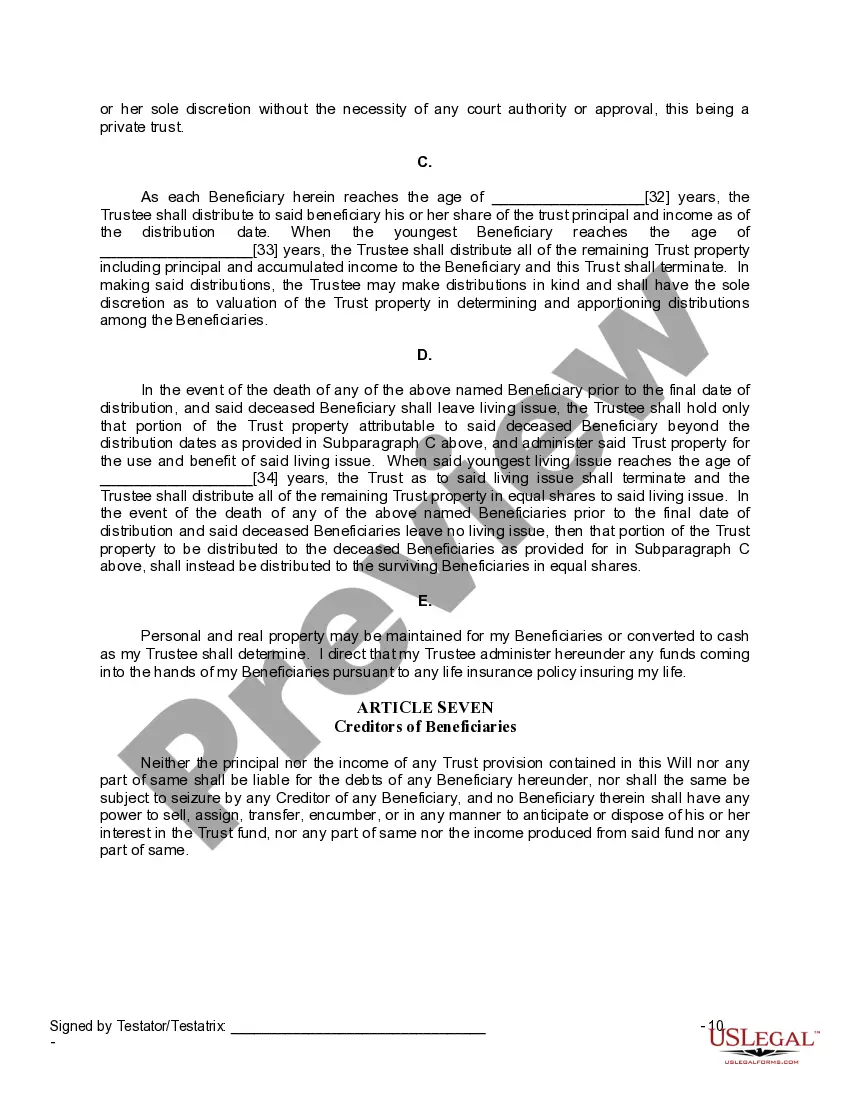
- Provisions for appointing a trustee for assets meant for minor children.
- Creation of a guardianship for minor children if necessary.
- Instructions for signatory requirements and witness signatures.




When this form is needed
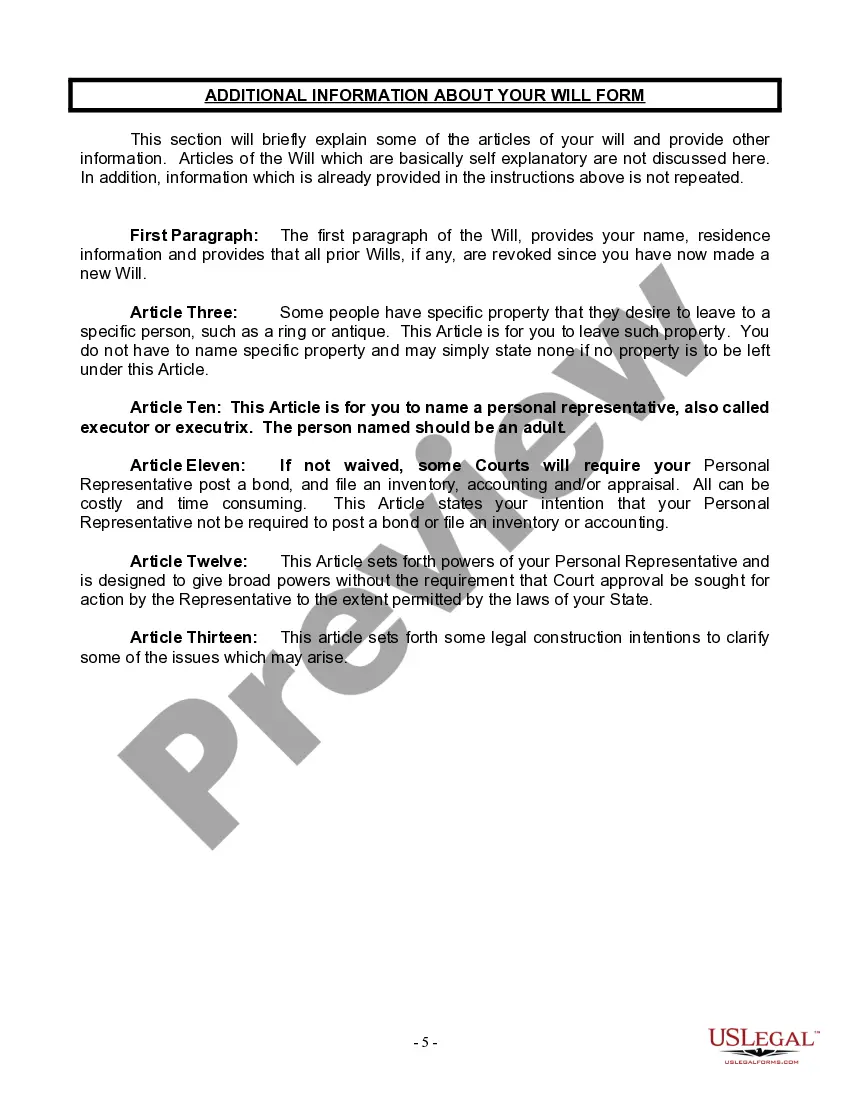
This form should be used when a widow or widower wishes to ensure that their estate is handled according to their wishes after their passing. It is particularly important if they have minor children, as it allows them to establish care arrangements and financial provisions for their children's upbringing. Use this form to avoid potential disputes and to provide clear directions for asset distribution and guardianship.
Who can use this document
- Individuals who are widowed and have minor children.
- People seeking to ensure their specific wishes regarding asset distribution.
- Those wanting to appoint guardians and trustees for their minor beneficiaries.
- Anyone who is 18 years or older and of sound mind looking to create or update their will.
How to prepare this document
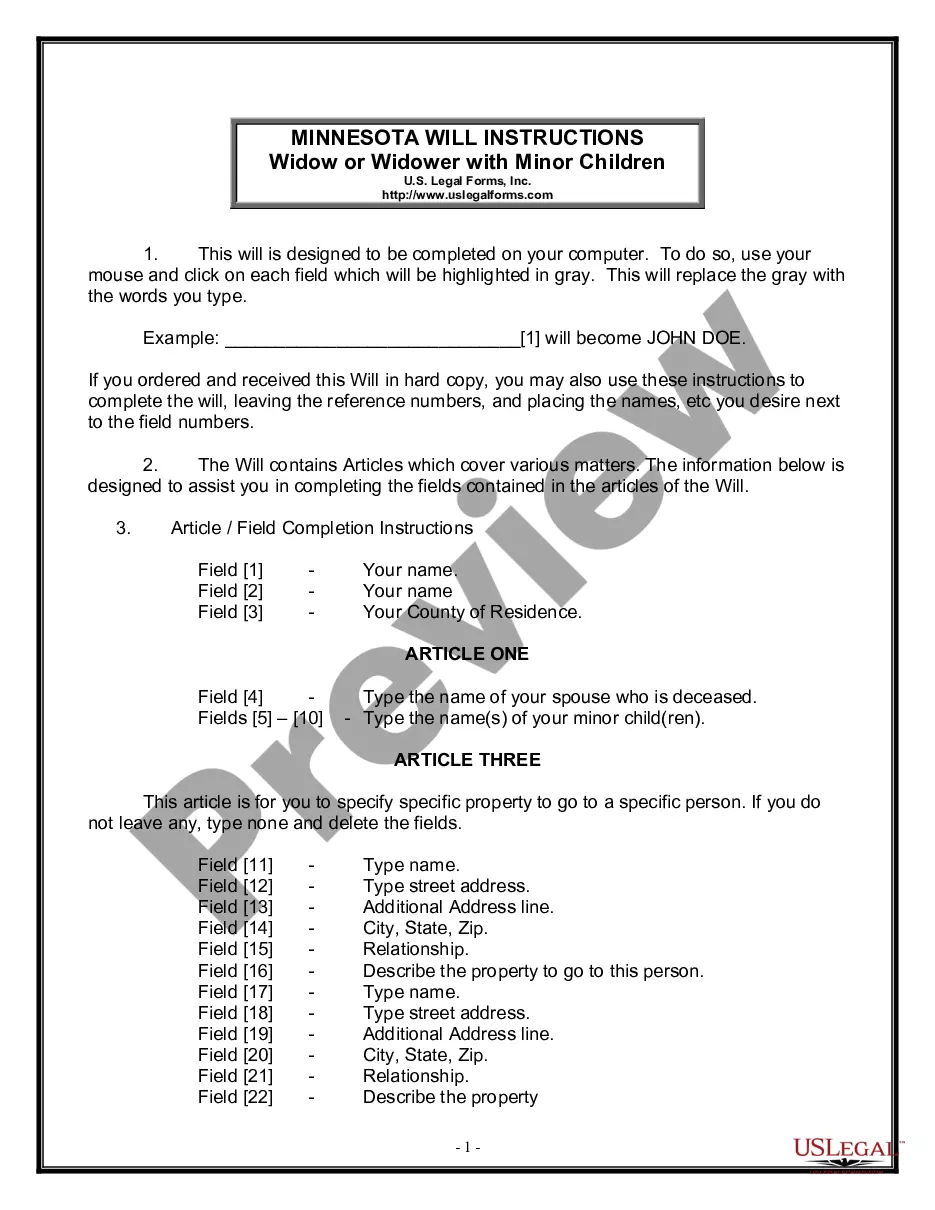
- Input your full name and county of residence at the beginning of the document.
- Provide the full names of your deceased spouse and minor children as outlined in the respective fields.
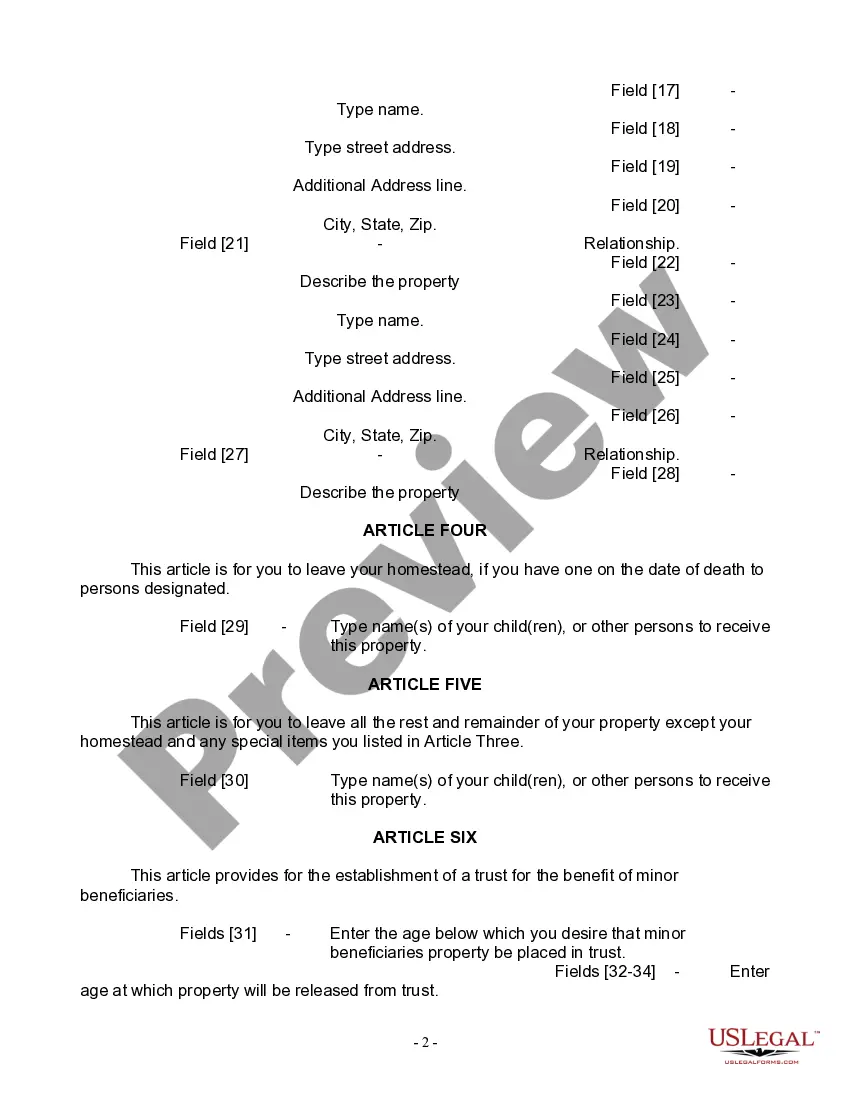
- Designate specific property to individuals using the designated sections for bequests.
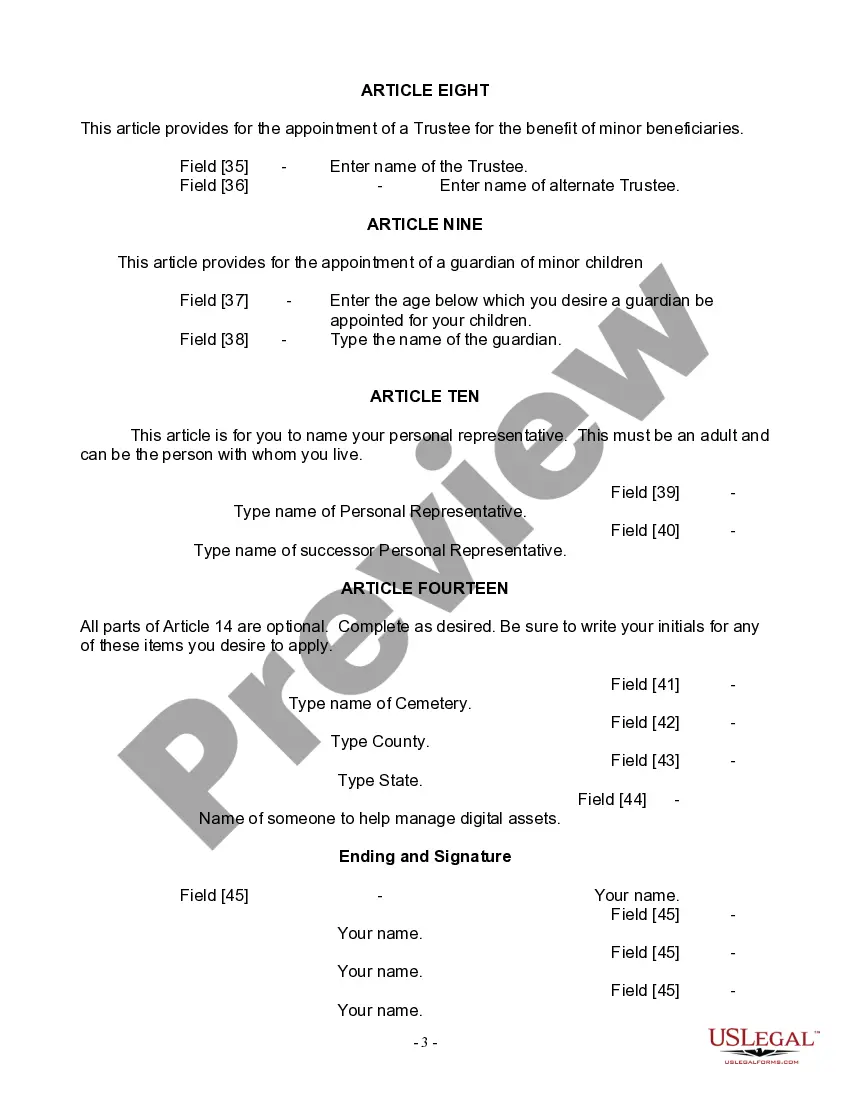
- Appoint a trustee for your minor beneficiaries and specify the age at which the minor's property will be released from trust.
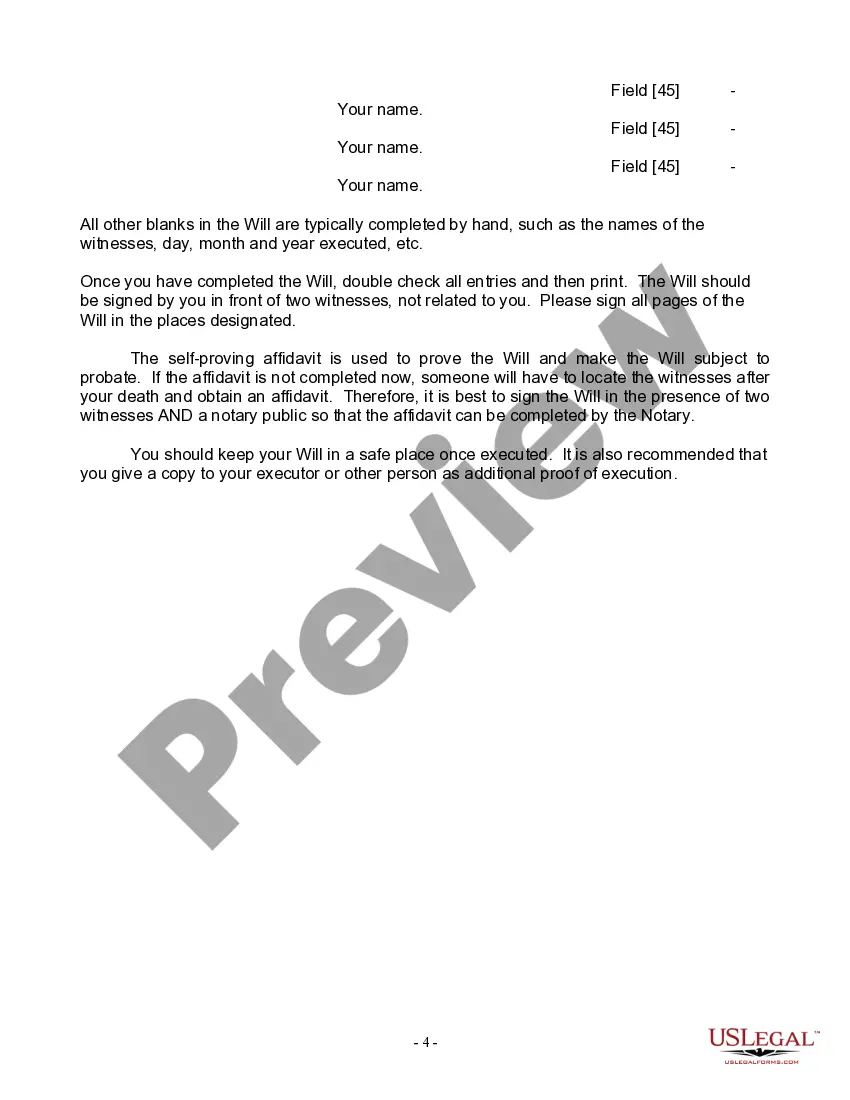
- Sign the document in front of two disinterested witnesses and, if applicable, a notary public for a self-proving affidavit.
Notarization requirements for this form
Yes, this form must be notarized to be legally valid if it includes a self-proving affidavit. This ensures that witnesses can verify the testator's identity and the authenticity of the will. US Legal Forms offers integrated online notarization services, allowing you to securely complete this process via a video call, without leaving your home.
Get your form ready online
Our built-in tools help you complete, sign, share, and store your documents in one place.
Make edits, fill in missing information, and update formatting in US Legal Forms—just like you would in MS Word.
Download a copy, print it, send it by email, or mail it via USPS—whatever works best for your next step.
Sign and collect signatures with our SignNow integration. Send to multiple recipients, set reminders, and more. Go Premium to unlock E-Sign.
If this form requires notarization, complete it online through a secure video call—no need to meet a notary in person or wait for an appointment.
We protect your documents and personal data by following strict security and privacy standards.

Make edits, fill in missing information, and update formatting in US Legal Forms—just like you would in MS Word.

Download a copy, print it, send it by email, or mail it via USPS—whatever works best for your next step.

Sign and collect signatures with our SignNow integration. Send to multiple recipients, set reminders, and more. Go Premium to unlock E-Sign.

If this form requires notarization, complete it online through a secure video call—no need to meet a notary in person or wait for an appointment.

We protect your documents and personal data by following strict security and privacy standards.
Common mistakes
- Failing to include the names of all minor children.
- Not having the will signed in front of required witnesses.
- Omitting the appointment of a guardian for minor children.
- Leaving out essential details about property and asset distribution.
Advantages of online completion
- Convenience of completing the will from home at your own pace.
- Editability allows for easy adjustments as circumstances change.
- Access to attorney-drafted templates ensures legal compliance.
- Immediate download availability saves time compared to traditional methods.
What to keep in mind
- Your Last Will and Testament ensures your wishes regarding your minor children and property are legally documented.
- Appointing guardians and trustees can help secure your children's future.
- Execute your will with the required witnesses and notarization to ensure it is valid.
Looking for another form?
Form popularity
FAQ
You do not necessarily need a lawyer to make a will in Minnesota, but consulting one can provide valuable insight and ensure your wishes are correctly documented. Creating a will can be straightforward, especially with the help of online resources. Utilizing platforms like US Legal Forms can simplify the process, particularly for a Minnesota Last Will and Testament for Widow or Widower with Minor Children. This way, you can ensure your loved ones are protected and your wishes are honored.
In Minnesota, a spouse does not automatically inherit everything if their partner dies without a will. However, under Minnesota law, the surviving spouse typically receives a significant portion of the estate, especially when there are minor children involved. The distribution may depend on whether there are surviving children from the marriage or from previous relationships. For clarity on a Minnesota Last Will and Testament for Widow or Widower with Minor Children, consult resources like US Legal Forms.
Yes, you can write your own will in Minnesota and have it notarized, but it must meet specific legal requirements to be valid. Your will should clearly state your intentions regarding your assets and name guardians for your minor children. While notarization can help, it is essential to ensure that the will complies with Minnesota laws to avoid future disputes. For a comprehensive Minnesota Last Will and Testament for Widow or Widower with Minor Children, explore the templates available on US Legal Forms.
To avoid probate in Minnesota without a will, you can consider using joint ownership or beneficiary designations. Properties held jointly with right of survivorship pass directly to the surviving owner, while accounts with named beneficiaries transfer outside of probate. Additionally, establishing a trust can help manage your assets effectively, especially for those with minor children. For guidance on creating a Minnesota Last Will and Testament for Widow or Widower with Minor Children, consider using US Legal Forms.
In Minnesota, a will does not need to be filed with the court until after the testator's death. However, if you want to ensure that your Minnesota Last Will and Testament for Widow or Widower with Minor Children is recognized, you may choose to file it with the probate court. This process helps to establish its validity and provides a clear directive for the distribution of your assets. Utilizing platforms like USLegalForms can simplify the creation and filing of your will, making it easier for you to focus on what matters most.
To create a valid Minnesota Last Will and Testament for Widow or Widower with Minor Children, your will must meet three basic requirements. First, you must be of legal age, which is 18 years or older in Minnesota. Second, you need to be of sound mind, meaning you understand the nature of your actions when making the will. Lastly, the will must be in writing and signed by you, with two witnesses who also sign it, ensuring it meets Minnesota's legal standards.
You can either download a template (many are free) and write your Will at your own pace offline using your word processor, or tell us your wishes in our online questionnaire and let us write it for you.
Create the initial document. Start by titling the document Last Will and Testament" and including your full legal name and address. Designate an executor. Appoint a guardian. Name the beneficiaries. Designate the assets. Ask witnesses to sign your will. Store your will in a safe place.
No, in Minnesota, you do not need to notarize your will to make it legal. However, Minnesota allows you to make your will "self-proving" and you'll need to go to a notary if you want to do that. A self-proving will speeds up probate because the court can accept the will without contacting the witnesses who signed it.
You can make your own will in Minnesota, using Nolo's do-it-yourself will software or online will programs. However, you may want to consult a lawyer in some situations. For example, if you think that your will might be contested or if you want to disinherit your spouse, you should talk with an attorney.