Minnesota Landlord Agreement to allow Tenant Alterations to Premises
About this form
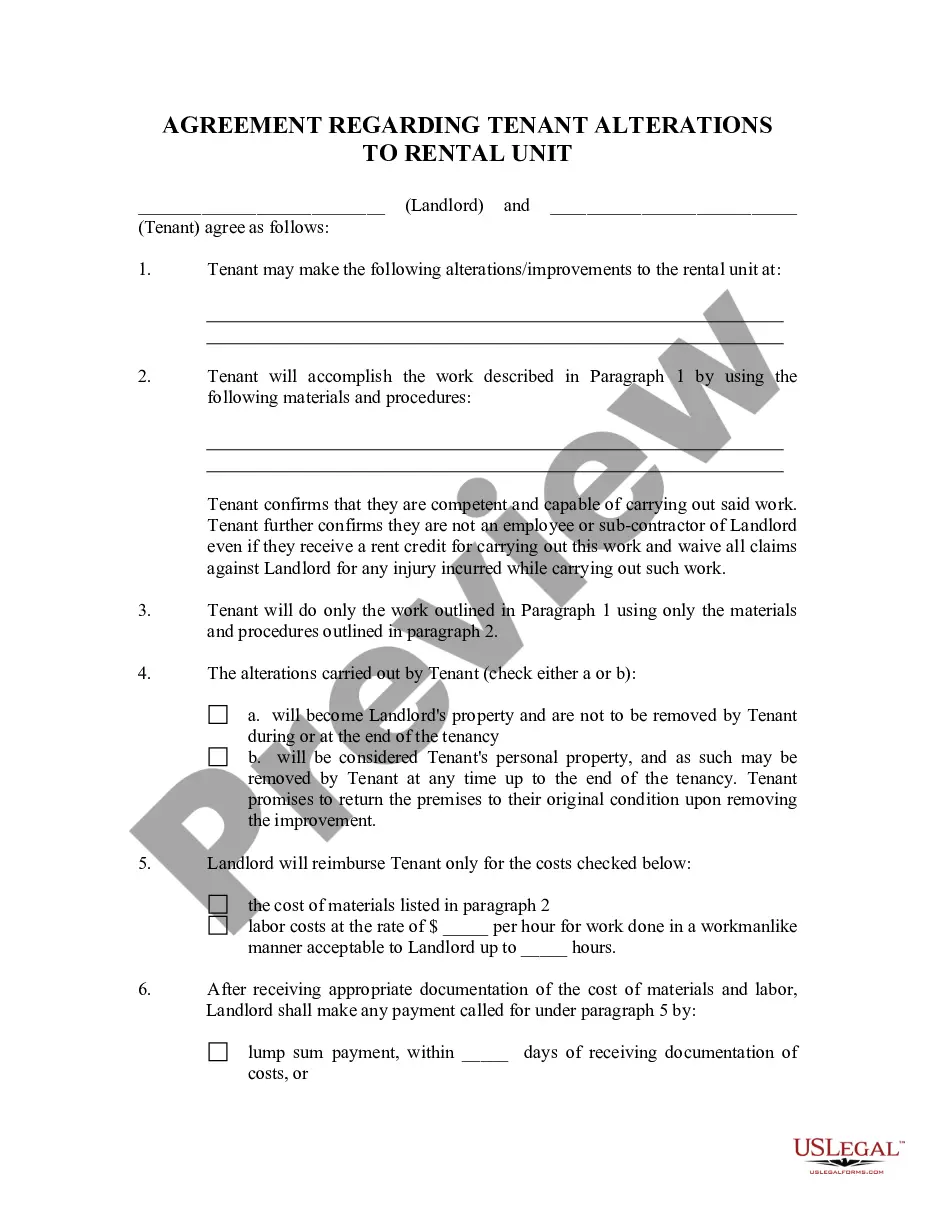
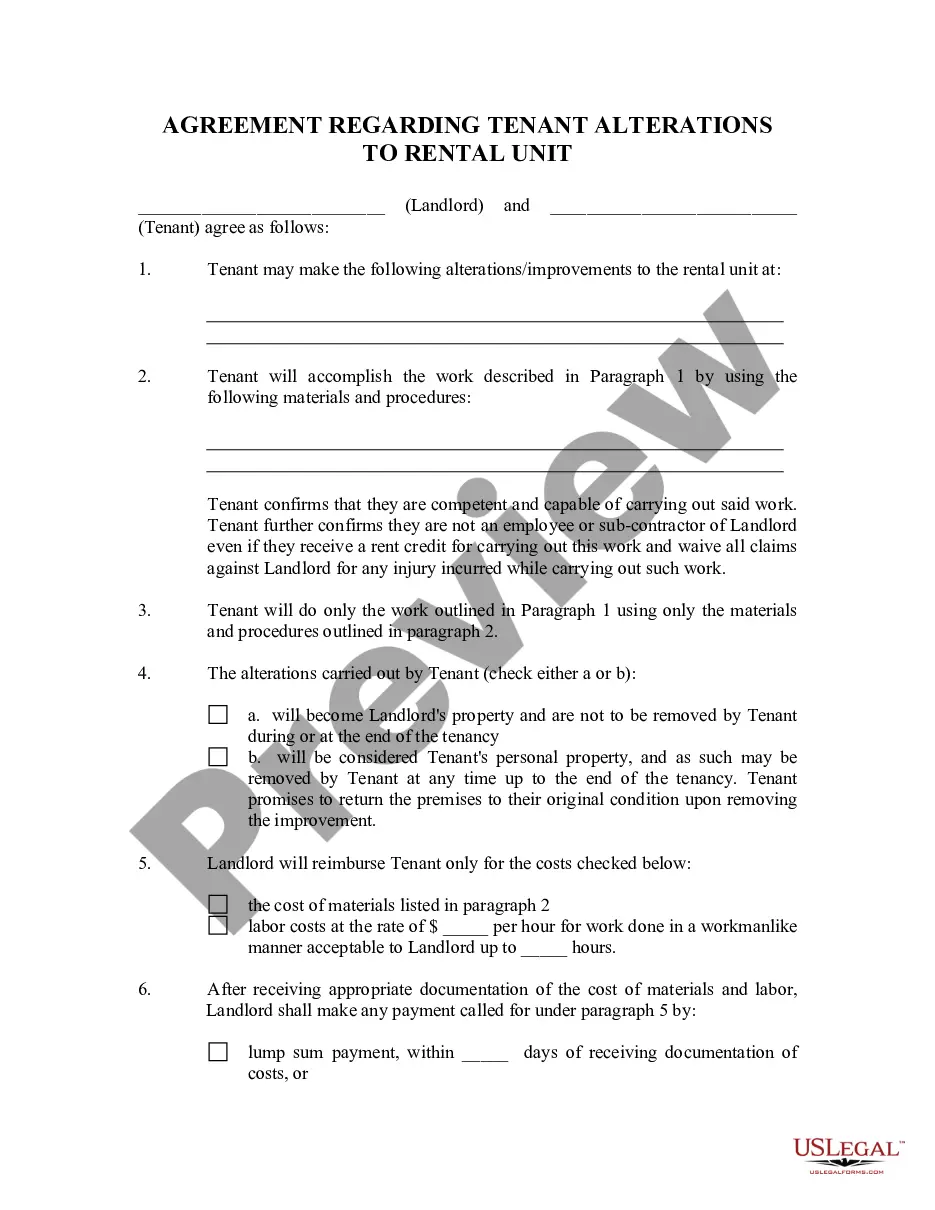
The Landlord Agreement to allow Tenant Alterations to Premises is a legal document designed to establish a mutual agreement between a landlord and a tenant regarding any alterations the tenant wishes to make to a rental property. This form helps clarify responsibilities, such as who will pay for the improvements and what ownership rights pertain to the changes. It serves to prevent misunderstandings and outlines the process for any alterations made during the tenancy, distinguishing it from other rental agreements by focusing specifically on tenant improvements.
Main sections of this form
- Identification of the landlord and tenant.
- Details on the specific alterations or improvements allowed.
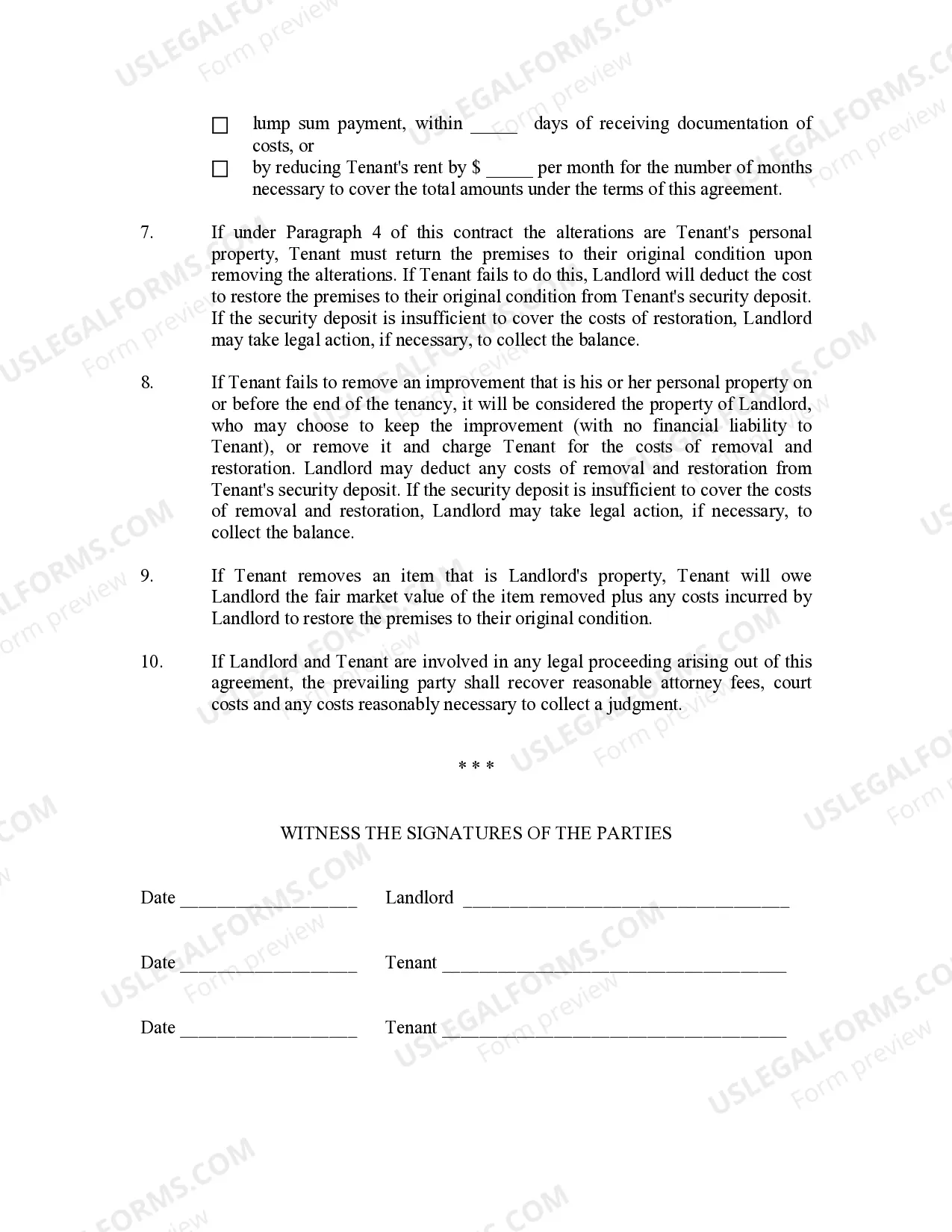
- Terms outlining ownership of the improvements.
- Reimbursement provisions for the tenant's costs.
- Requirements for restoring the rental premises to original condition.
- Legal ramifications if the agreement is breached.
When this form is needed
This form should be used when a tenant wishes to make modifications or enhancements to a rental property that require landlord approval. Scenarios may include renovating a kitchen, adding shelving, or making other physical changes to improve the living space. Having a signed agreement eliminates potential disputes by outlining clear expectations regarding the alterations.
Who should use this form
- Landlords who want to establish clear guidelines for tenant alterations.
- Tenants planning to make changes to rented premises and needing permission from the landlord.
- Property managers seeking to standardize procedures for tenant modifications.
How to prepare this document
- Identify the parties involved, including the landlord and tenant names.
- Specify the alterations or improvements the tenant wishes to make.
- Determine ownership rights by checking whether alterations will remain with the landlord or become the tenant's personal property.
- Outline reimbursement details, including costs for materials and labor.
- Ensure all parties date and sign the agreement, indicating their acceptance of the terms.
Does this form need to be notarized?
In most cases, this form does not require notarization. However, some jurisdictions or signing circumstances might. US Legal Forms offers online notarization powered by Notarize, accessible 24/7 for a quick, remote process.
Get your form ready online
Our built-in tools help you complete, sign, share, and store your documents in one place.
Make edits, fill in missing information, and update formatting in US Legal Forms—just like you would in MS Word.
Download a copy, print it, send it by email, or mail it via USPS—whatever works best for your next step.
Sign and collect signatures with our SignNow integration. Send to multiple recipients, set reminders, and more. Go Premium to unlock E-Sign.
If this form requires notarization, complete it online through a secure video call—no need to meet a notary in person or wait for an appointment.
We protect your documents and personal data by following strict security and privacy standards.
Make edits, fill in missing information, and update formatting in US Legal Forms—just like you would in MS Word.
Download a copy, print it, send it by email, or mail it via USPS—whatever works best for your next step.
Sign and collect signatures with our SignNow integration. Send to multiple recipients, set reminders, and more. Go Premium to unlock E-Sign.

If this form requires notarization, complete it online through a secure video call—no need to meet a notary in person or wait for an appointment.
We protect your documents and personal data by following strict security and privacy standards.
Avoid these common issues
- Failing to specify the exact alterations allowed, leading to disputes later.
- Not clearly defining payment responsibilities for improvements.
- Overlooking the requirement to restore the premises to original condition.
- Not having all parties sign and date the agreement.
Why complete this form online
- Convenience of downloading immediately for individual use.
- Editability allows customization based on specific tenant-landlord agreements.
- Access to legal forms drafted by licensed attorneys enhances reliability.
Legal use & context
- Establishing a written agreement can provide evidence in case of disputes.
- Clearly outlining rights and responsibilities may help prevent misunderstandings.
- Enforceability of the agreement may depend on adherence to local landlord-tenant laws.
Quick recap
- A landlord agreement for tenant alterations is essential for clear communication between landlords and tenants regarding modifications.
- This form outlines critical components like ownership, reimbursement, and restoration responsibilities.
- Utilizing this form can save time and reduce conflicts between parties.
Looking for another form?
Form popularity
FAQ
Alterations to a property can include any structural changes, such as removing or adding walls, changing electrical systems, or modifying plumbing. Additionally, cosmetic changes like paint or flooring upgrades may also be considered alterations depending on the lease agreement. It is crucial for tenants to know what alterations they can make without breaching their lease. A Minnesota Landlord Agreement to allow Tenant Alterations to Premises can help clarify these boundaries.
Minnesota's statute 504b applies to various aspects of landlord-tenant relationships, including rental agreements, eviction processes, security deposits, and property maintenance. These regulations aim to protect both parties' rights and ensure fair treatment. Being aware of these statutes can help tenants understand their rights regarding alterations. A Minnesota Landlord Agreement to allow Tenant Alterations to Premises can serve as a practical tool to navigate these laws.
In a rented property, tenants can often make minor changes such as painting walls or hanging pictures, but major alterations usually require landlord approval. Examples of significant changes include remodeling bathrooms or kitchens. It's essential to communicate with your landlord regarding any intended modifications. A Minnesota Landlord Agreement to allow Tenant Alterations to Premises can outline permissible changes and streamline the approval process.
An alteration to a property typically includes any physical changes that affect the structure or appearance of the space. For instance, installing new fixtures, changing flooring, or adding partitions can all be considered alterations. Understanding these definitions is crucial for both landlords and tenants. A Minnesota Landlord Agreement to allow Tenant Alterations to Premises can provide specific examples of what constitutes an alteration.
Yes, a landlord can amend a tenancy agreement, often with the consent of the tenant. This may involve adding clauses or modifying existing terms, such as allowing certain tenant alterations. For a smooth process, it’s advisable to document any changes formally. Utilizing a Minnesota Landlord Agreement to allow Tenant Alterations to Premises can help establish clear guidelines for these amendments.
Tenant alterations refer to any changes or modifications that a tenant makes to a rental property. These can include painting walls, installing shelving, or even remodeling a kitchen. It is important to note that, in most cases, tenants need permission from the landlord before making these changes. A Minnesota Landlord Agreement to allow Tenant Alterations to Premises can clarify what alterations are acceptable.
Red flags in a lease agreement can include vague language regarding alterations, excessive fees for changes, or lack of clarity about maintenance responsibilities. Additionally, watch for clauses that seem to limit your rights excessively or require you to waive important protections. Identifying these red flags early can save you from issues later, making it crucial to review any Minnesota Landlord Agreement to allow Tenant Alterations to Premises carefully.
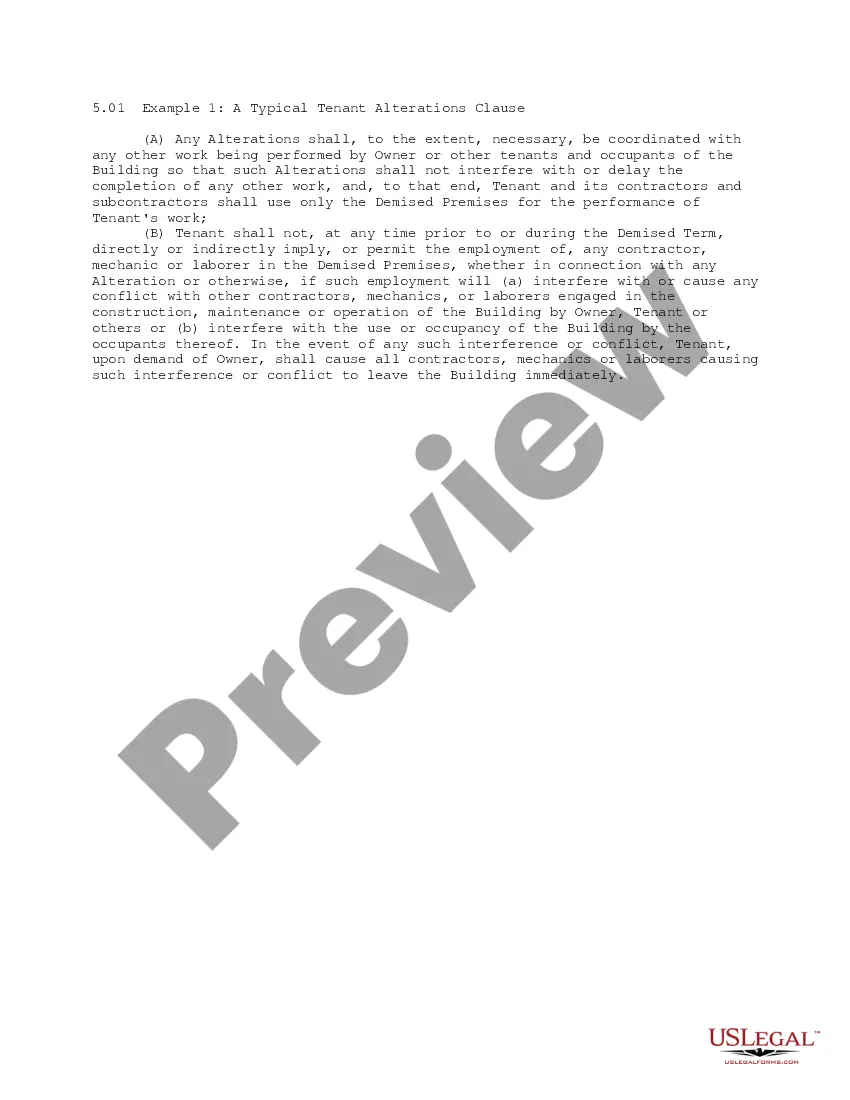
An alteration clause is a provision in a lease that defines how and when a tenant can modify the rental property. This clause may require tenants to restore the property to its original state upon moving out, ensuring the landlord's interests are protected. Incorporating a comprehensive alteration clause in a Minnesota Landlord Agreement to allow Tenant Alterations to Premises is essential for clarity and legal protection.
The lease alterations clause specifies the conditions under which tenants may make changes to the property. It typically includes details such as the need for landlord approval and the process to follow for requesting alterations. Including a clear lease alterations clause in a Minnesota Landlord Agreement to allow Tenant Alterations to Premises helps prevent misunderstandings and ensures compliance.
In Minnesota, landlords cannot discriminate against tenants based on race, gender, religion, or other protected categories. Additionally, landlords must provide reasonable notice before entering a rental unit and cannot retaliate against tenants for asserting their legal rights. Understanding these limitations is vital when creating a Minnesota Landlord Agreement to allow Tenant Alterations to Premises.