Minnesota Letter from Landlord to Tenant as Notice to remove unauthorized pets from premises
Understanding this form
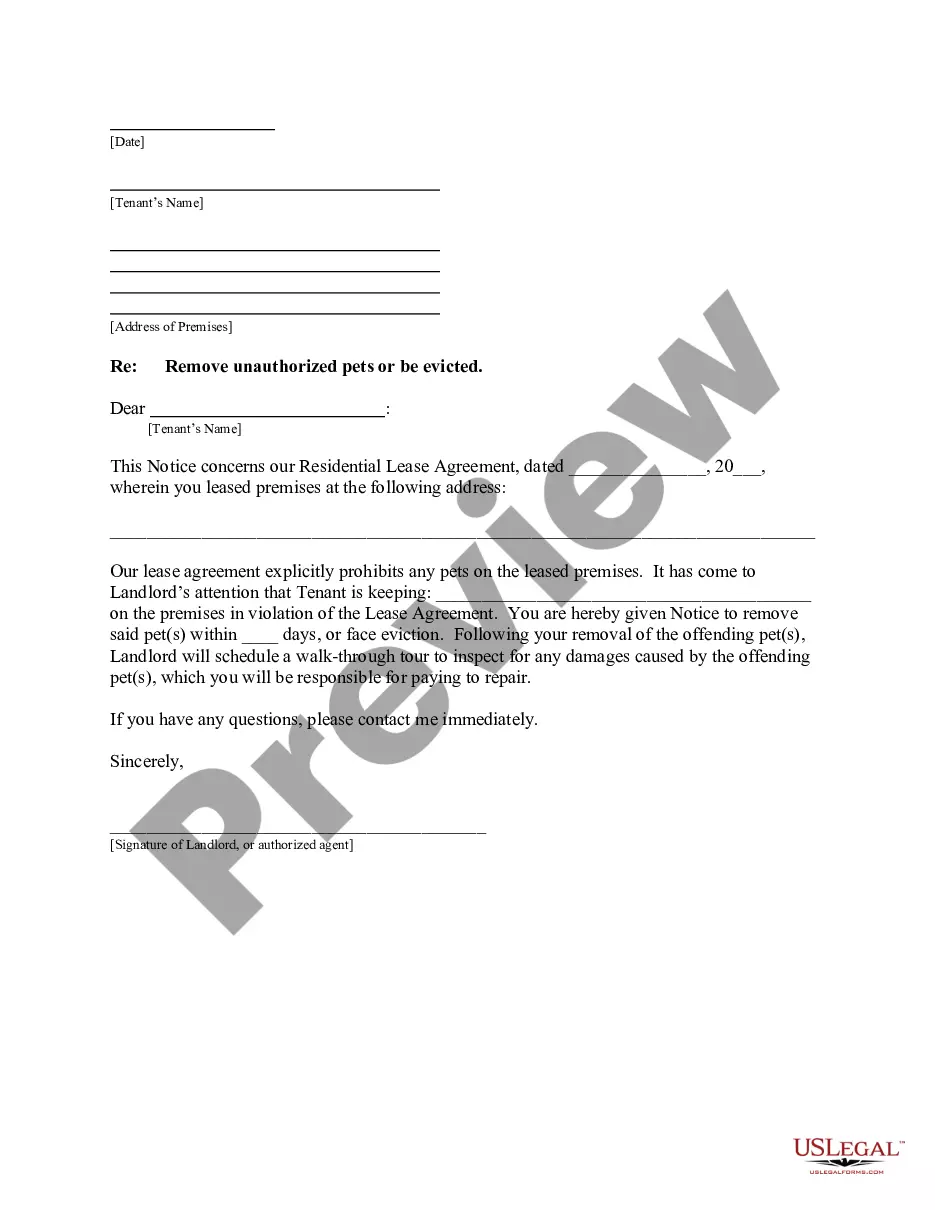
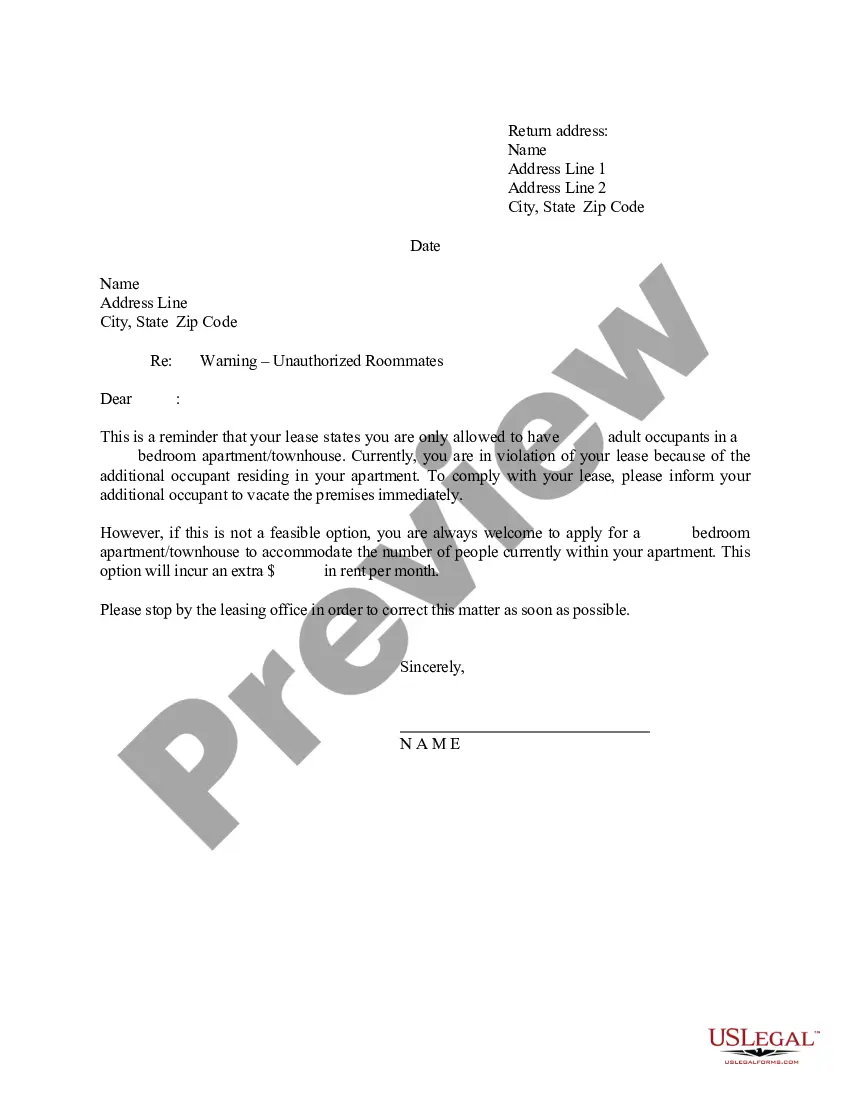
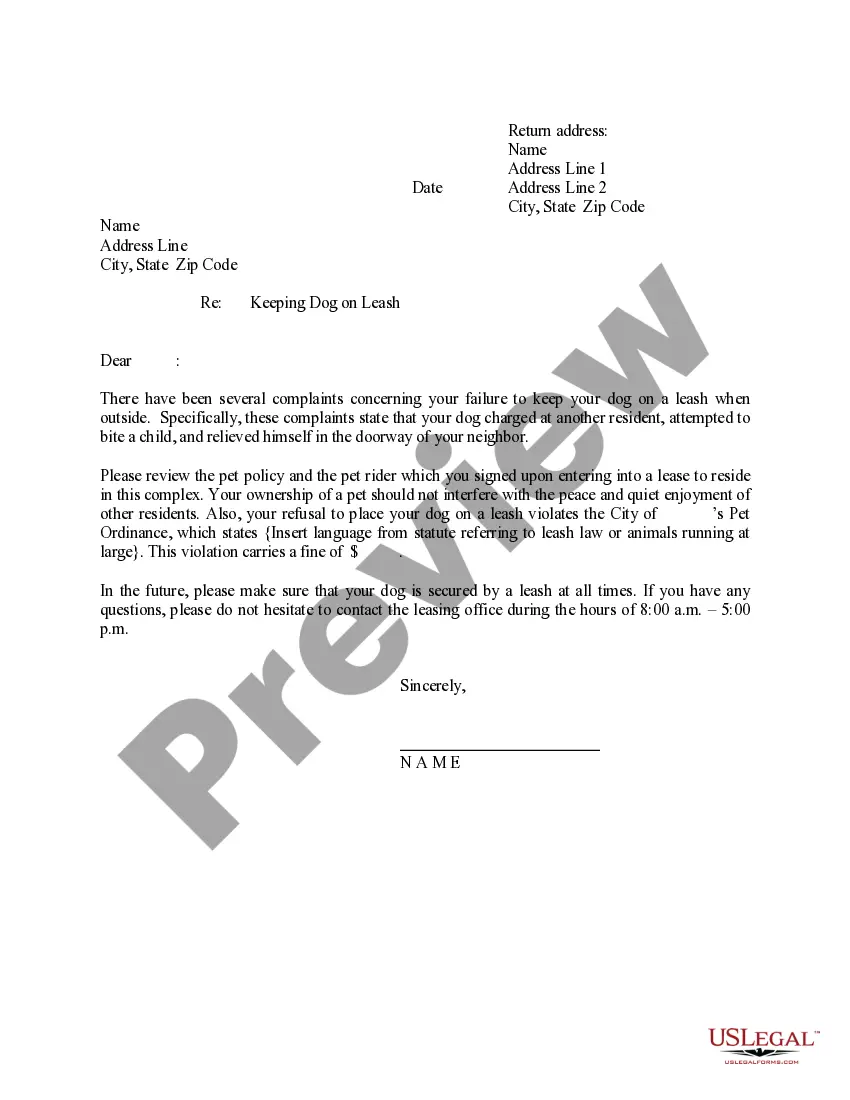
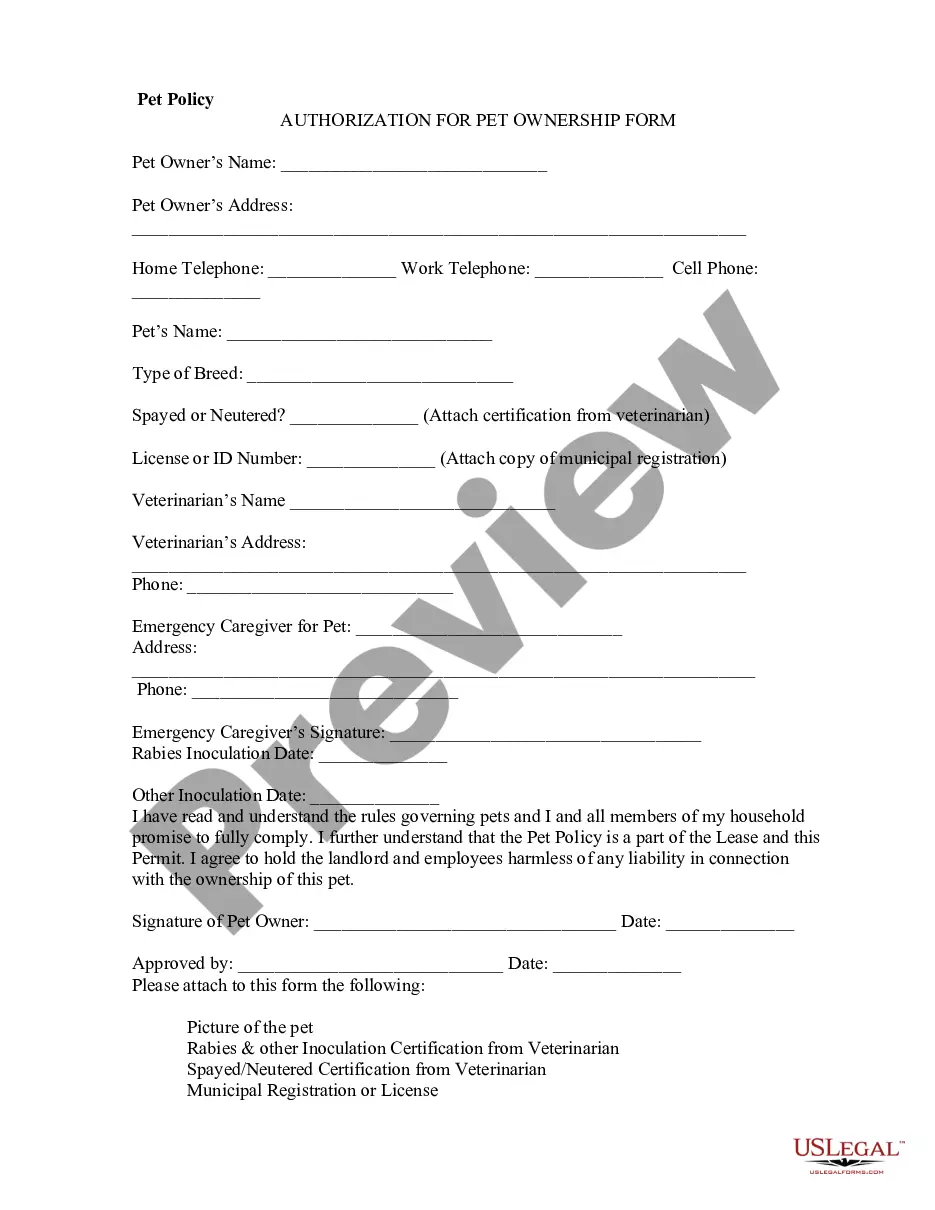
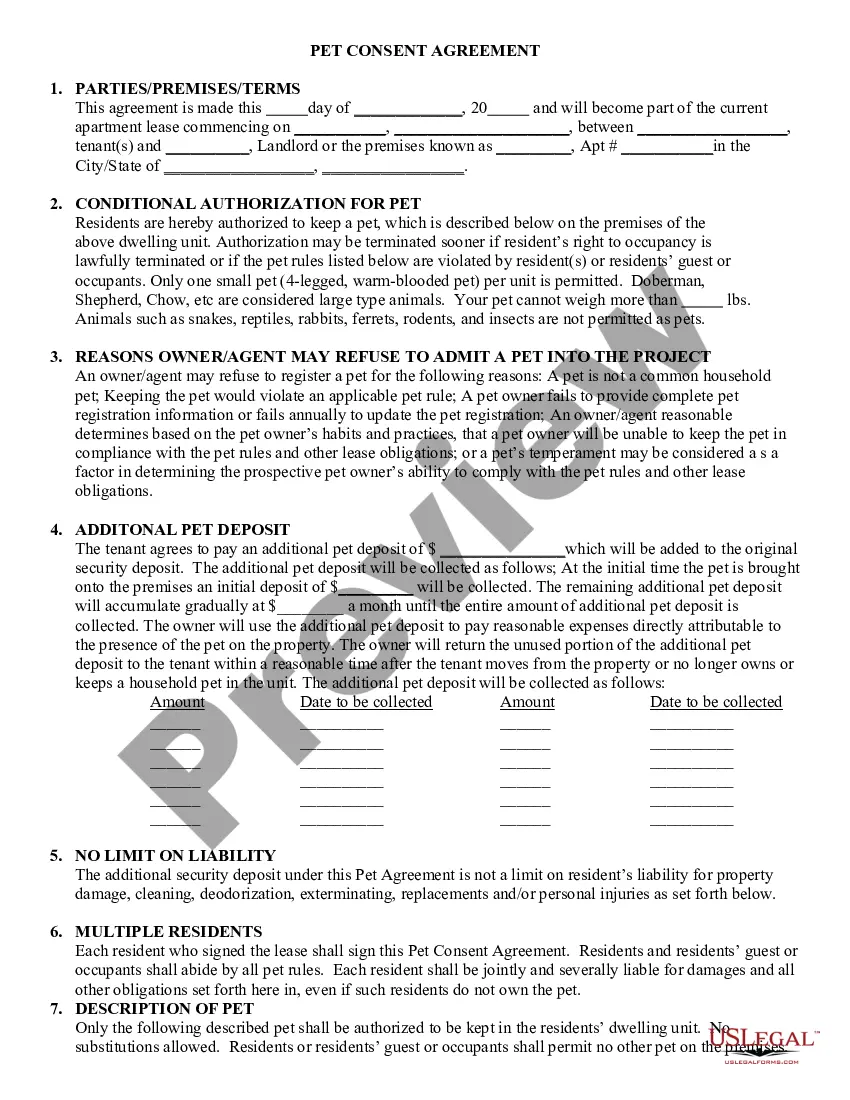
This form is a notice from a landlord to a tenant regarding unauthorized pets on the leased premises. It serves as a formal demand for the tenant to remove any pets that violate the terms of the Residential Lease Agreement. By using this notice, the landlord clearly communicates the potential consequences of continued non-compliance, including eviction or legal action. This form is essential for landlords who need to enforce lease provisions regarding pet restrictions.
Form components explained
- Date of the Residential Lease Agreement.
- Property address where the violation has occurred.
- Description of the unauthorized pet(s) being kept on the premises.
- Time frame in which the tenant must remove the pets (e.g., days from the notice).
- Provision for a follow-up property inspection after pet removal.
- Contact information for the landlord or authorized agent.
When to use this form
This form should be used when a landlord discovers that a tenant is keeping pets on the rental property in violation of their lease agreement. It is a necessary step for landlords who wish to address the issue promptly and formally, allowing the tenant a chance to rectify the situation. Utilizing this form helps in documenting the notice, which is important for any future legal actions, such as eviction proceedings.
Intended users of this form
- Landlords who have a no-pet policy in their residential leases.
- Property management representatives tasked with enforcing lease agreements.
- Tenants who have been notified of unauthorized pets by their landlord.
How to prepare this document
- Identify the parties involved by entering the landlord's and tenant's names.
- Specify the property address in the designated field.
- Fill in the date of the Residential Lease Agreement.
- Clearly describe the unauthorized pet(s) being kept.
- Set a deadline for pet removal that complies with local laws.
- Sign the notice to formalize its delivery and enforceability.
Notarization guidance
In most cases, this form does not require notarization. However, some jurisdictions or signing circumstances might. US Legal Forms offers online notarization powered by Notarize, accessible 24/7 for a quick, remote process.
Get your form ready online
Our built-in tools help you complete, sign, share, and store your documents in one place.
Make edits, fill in missing information, and update formatting in US Legal Forms—just like you would in MS Word.
Download a copy, print it, send it by email, or mail it via USPS—whatever works best for your next step.
Sign and collect signatures with our SignNow integration. Send to multiple recipients, set reminders, and more. Go Premium to unlock E-Sign.
If this form requires notarization, complete it online through a secure video call—no need to meet a notary in person or wait for an appointment.
We protect your documents and personal data by following strict security and privacy standards.

Make edits, fill in missing information, and update formatting in US Legal Forms—just like you would in MS Word.

Download a copy, print it, send it by email, or mail it via USPS—whatever works best for your next step.

Sign and collect signatures with our SignNow integration. Send to multiple recipients, set reminders, and more. Go Premium to unlock E-Sign.

If this form requires notarization, complete it online through a secure video call—no need to meet a notary in person or wait for an appointment.

We protect your documents and personal data by following strict security and privacy standards.
Common mistakes
- Failing to clearly specify the type and number of unauthorized pets.
- Not providing sufficient time for pet removal as per local laws.
- Omitting the landlord's signature, which can invalidate the notice.
- Using informal language that may undermine the formality of the notice.
Advantages of online completion
- Convenient access to a legally vetted template.
- Easy customization to fit specific situations.
- Quick download and printing options for immediate use.
- Supports proper documentation of tenant communications.
Legal use & context
- This notice serves as a formal communication to inform tenants of lease violations.
- Failure to remove unauthorized pets may result in legal actions, including eviction.
- Maintaining proper documentation of this notice can be beneficial in any potential disputes.
Summary of main points
- The notice is essential for compliance with lease agreements regarding pet ownership.
- Landlords must document and communicate unauthorized pet situations clearly.
- Understanding state-specific requirements is crucial for enforceability.
Looking for another form?
Form popularity
FAQ
Landlords have the right to refuse pets based on their rental policies or specific lease terms. If your lease does not allow pets, the landlord can enforce this rule. In such cases, a Minnesota Letter from Landlord to Tenant as Notice to remove unauthorized pets from premises can help navigate the situation effectively. For assistance, consider using uslegalforms, which provides templates to ensure compliance and clarity in communication.
Yes, a landlord can require tenants to remove pets if they are unauthorized or if they violate lease agreements. The landlord must typically provide written notice, often through a Minnesota Letter from Landlord to Tenant as Notice to remove unauthorized pets from premises. This letter serves as an official communication, outlining the reasons for the request and the timeline for compliance.
Landlords may refuse pets for various reasons, including property damage concerns, potential noise disturbances, or allergies among other tenants. Additionally, some landlords enforce strict policies to maintain a specific environment in the building. When facing this situation, a Minnesota Letter from Landlord to Tenant as Notice to remove unauthorized pets from premises can clarify expectations and provide a formal record.
While it may be tempting to find ways around a no-pets policy, it’s essential to respect the lease agreement. Open communication with your landlord might lead to a compromise, such as a pet deposit. If unauthorized pets are discovered, the landlord may send a Minnesota Letter from Landlord to Tenant as Notice to remove unauthorized pets from premises, so consider solutions that comply with the lease.
Yes, a landlord can revoke permission for pets at any time. If the lease allows pets but includes stipulations, the landlord may issue a Minnesota Letter from Landlord to Tenant as Notice to remove unauthorized pets from premises. This letter will clarify the reasons for revoking permission and outline the next steps for the tenant.
To write a notice letter to a tenant, start with a clear subject line and address the tenant by name. Include the date, a brief explanation of the issue, and reference the lease terms regarding unauthorized pets. Finally, mention that this notice serves as a Minnesota Letter from Landlord to Tenant as Notice to remove unauthorized pets from premises.
Yes, a landlord can evict a tenant due to unauthorized pets. If your lease specifically prohibits pets, the landlord may issue a Minnesota Letter from Landlord to Tenant as Notice to remove unauthorized pets from premises. This letter serves as a formal warning and outlines the steps you need to take to avoid eviction.
Yes, your landlord can ask you to leave if you have unauthorized pets in your rental property. In Minnesota, a landlord may issue a Minnesota Letter from Landlord to Tenant as Notice to remove unauthorized pets from premises. This notice gives you a chance to comply with the lease agreement or face potential eviction.
Yes, your landlord can ask you to remove unauthorized pets from the premises. If you have not received permission for your pets, they may issue a Minnesota Letter from Landlord to Tenant as Notice to remove unauthorized pets from premises. This notice serves as a formal request for you to comply with the lease terms. It’s important to review your lease agreement for any specific pet policies and act accordingly.