Michigan Last Will for a Widow or Widower with no Children
What is this form?
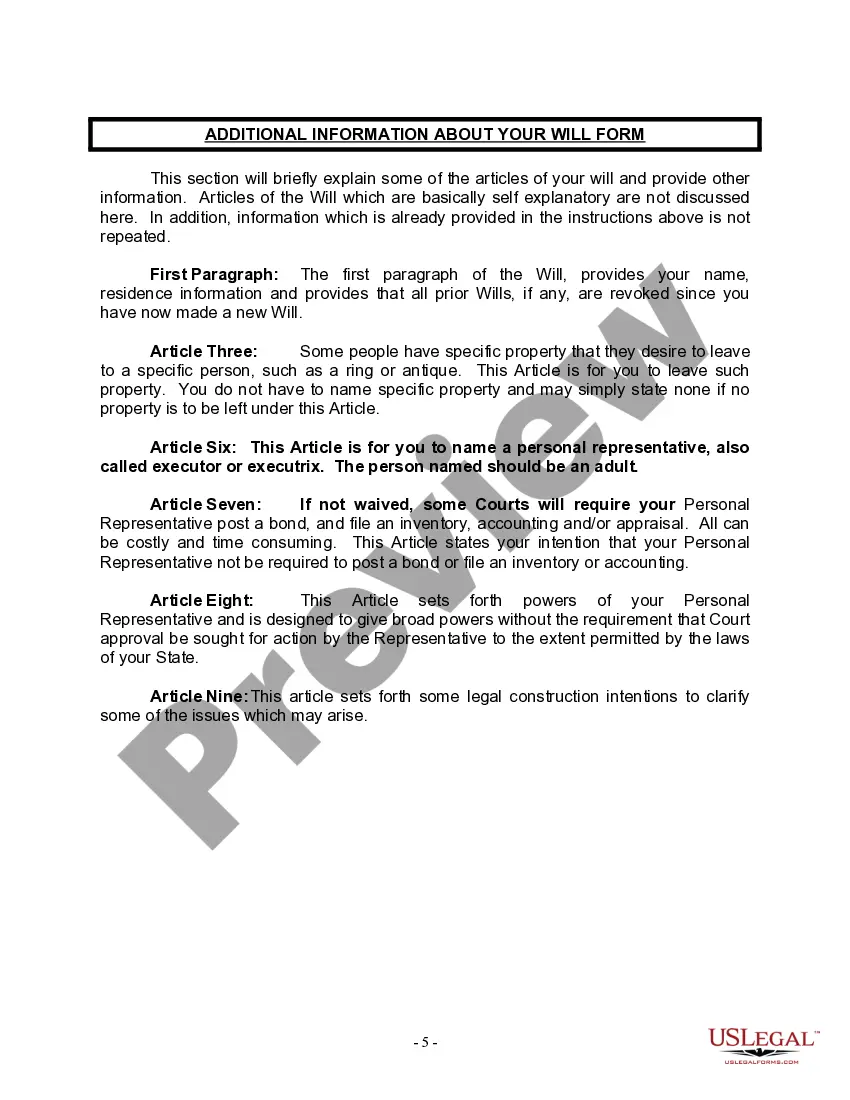
This Last Will for a Widow or Widower with no Children is a legal document that specifies how your assets will be distributed upon your death. Specifically designed for individuals who have lost a spouse and do not have children, this form allows you to appoint an executor, designate beneficiaries, and make important decisions regarding your estate. Unlike other wills that may accommodate children or dependents, this form simplifies the process for those in a unique situation, ensuring your assets are handled according to your wishes.
What’s included in this form
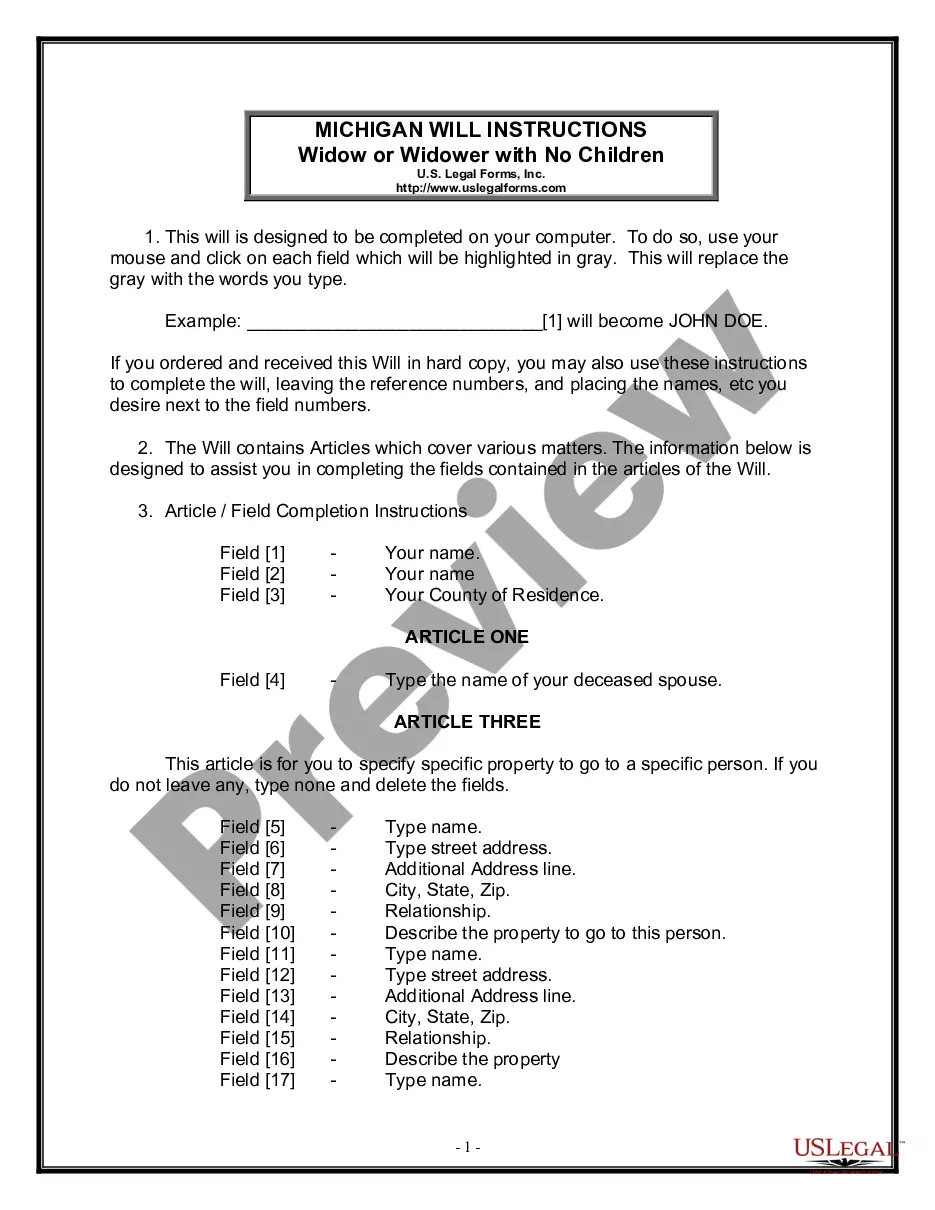
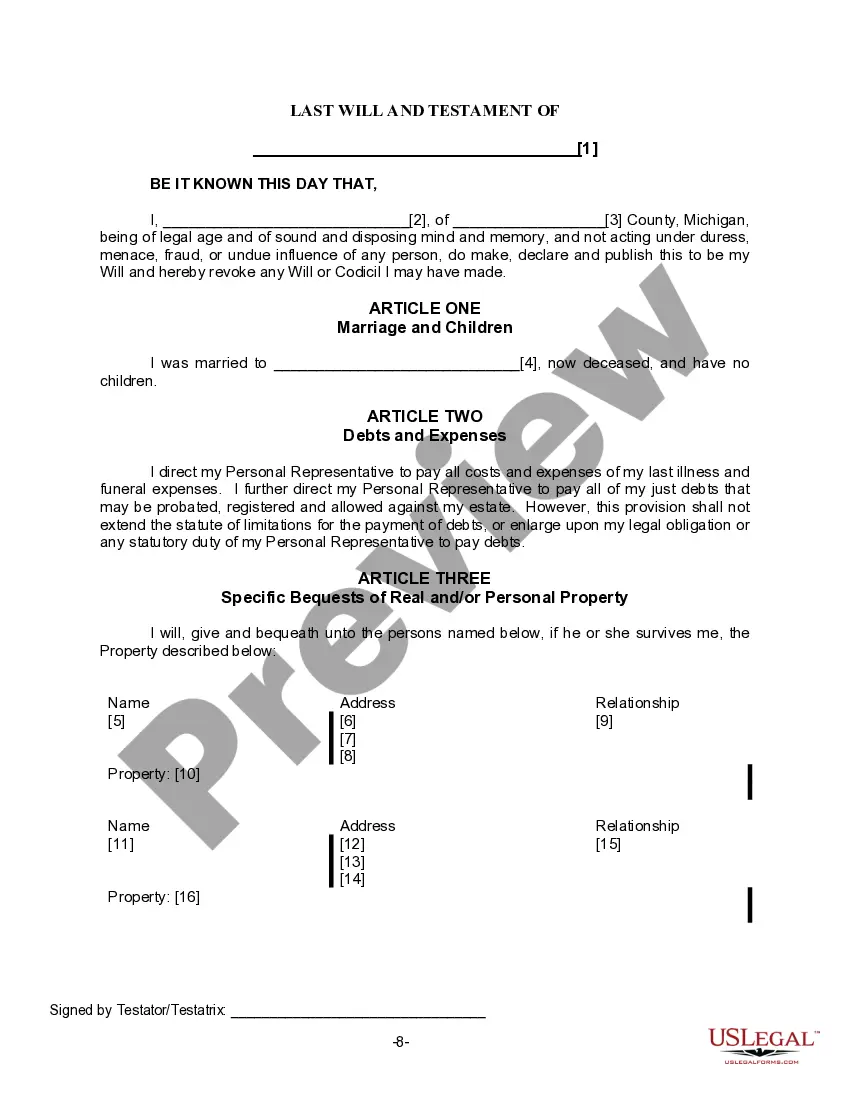
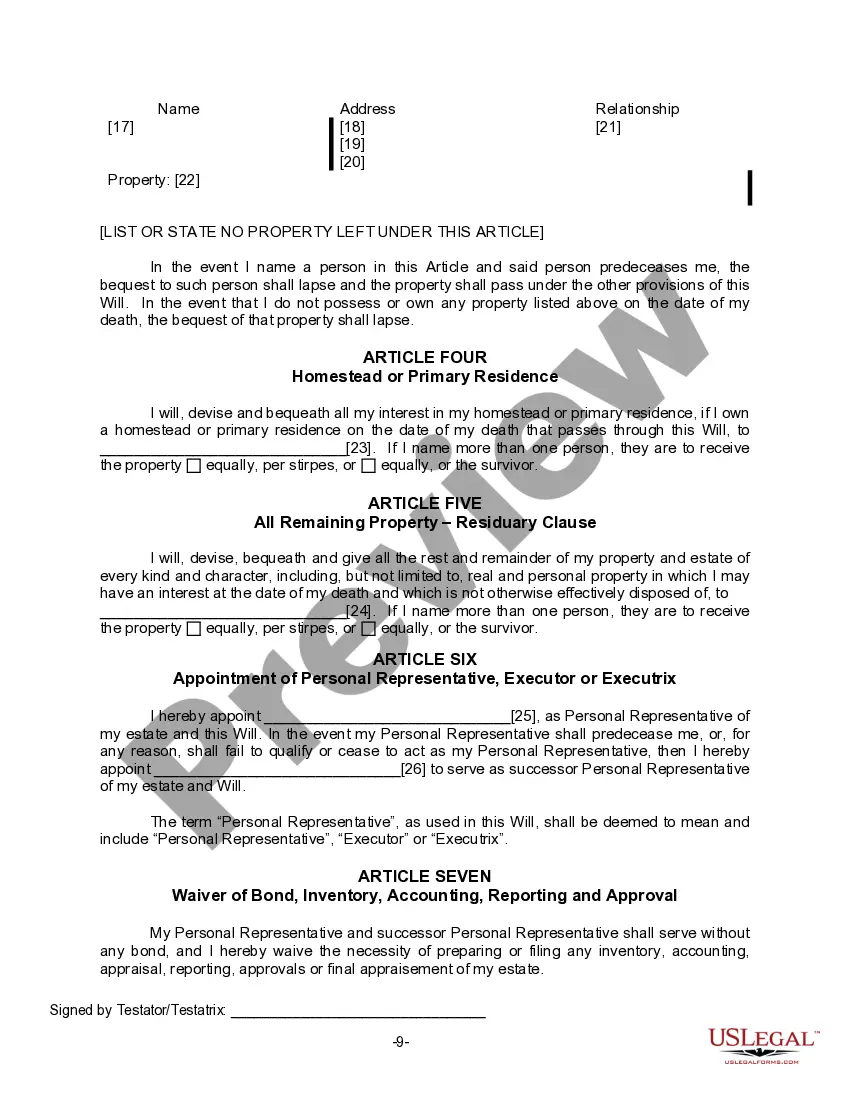
- Personal information: Your name, county of residence, and the name of your deceased spouse.
- Specific bequests: Items or property you wish to leave to specific individuals.
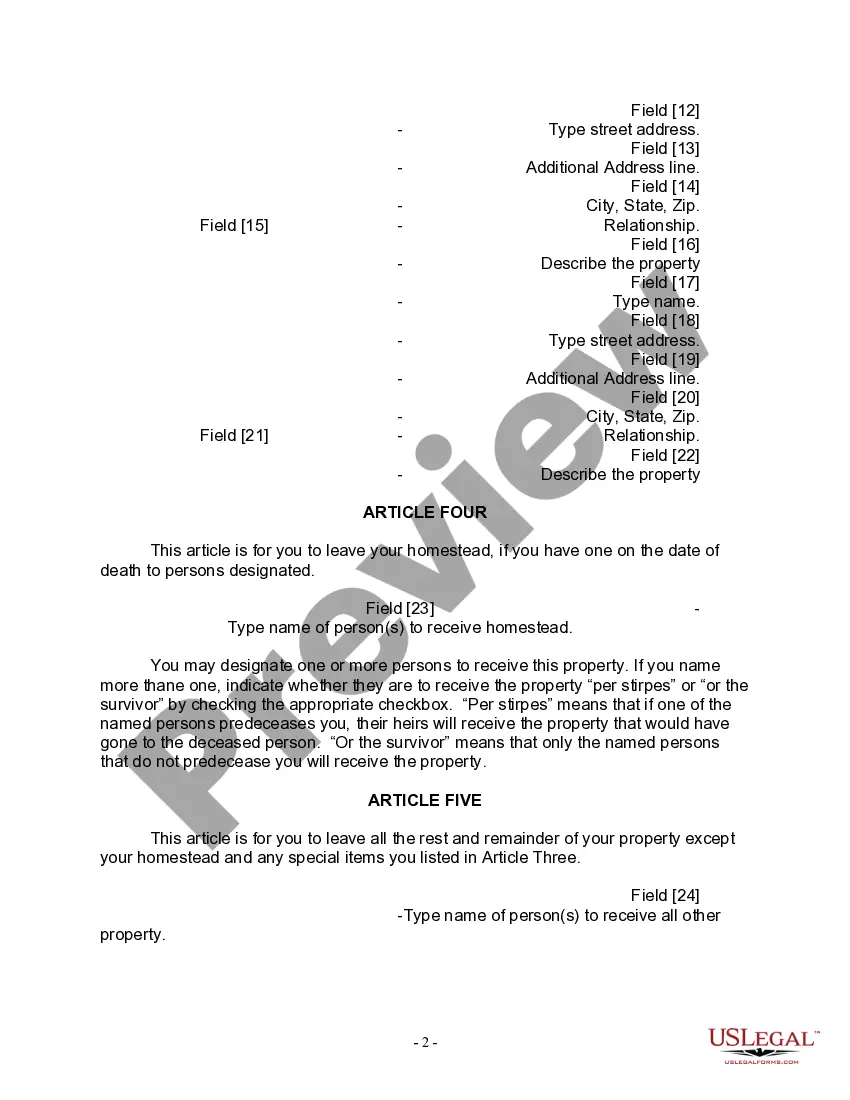
- Homestead designation: Indicates who will receive your primary residence if applicable.
- Residual clause: Specifies who will inherit the remainder of your estate.
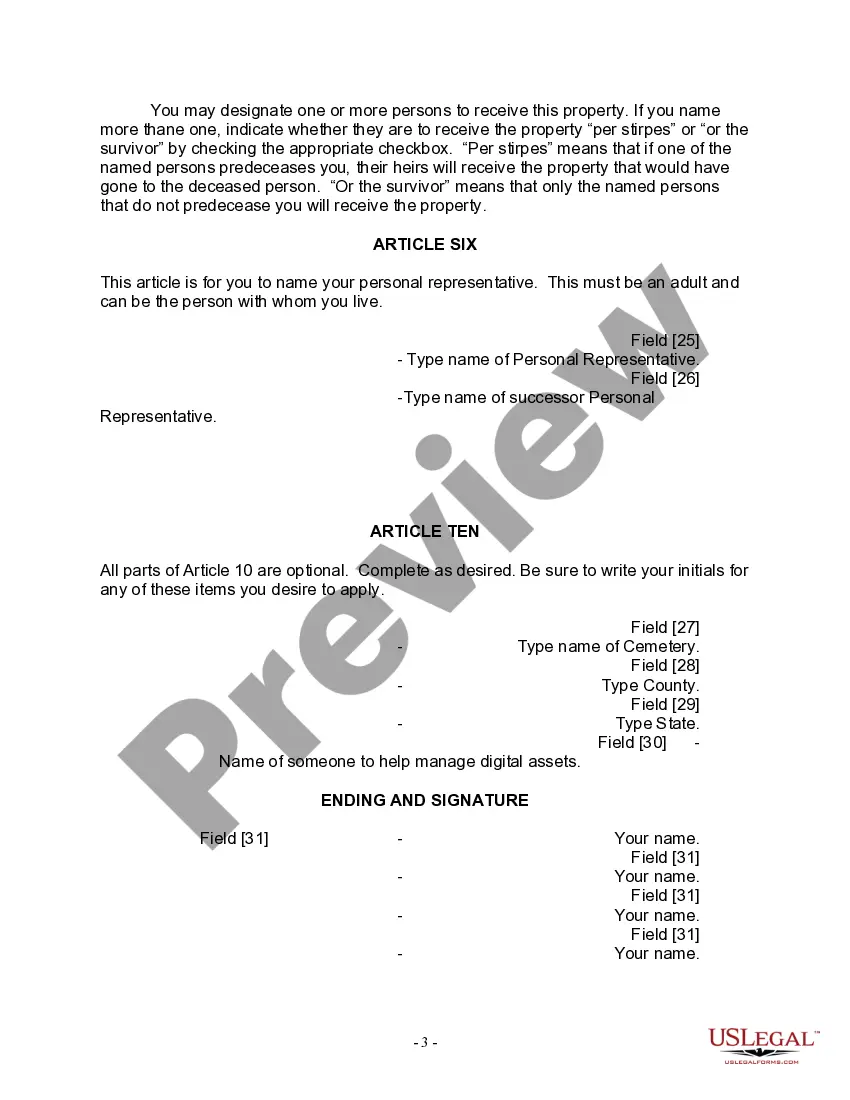
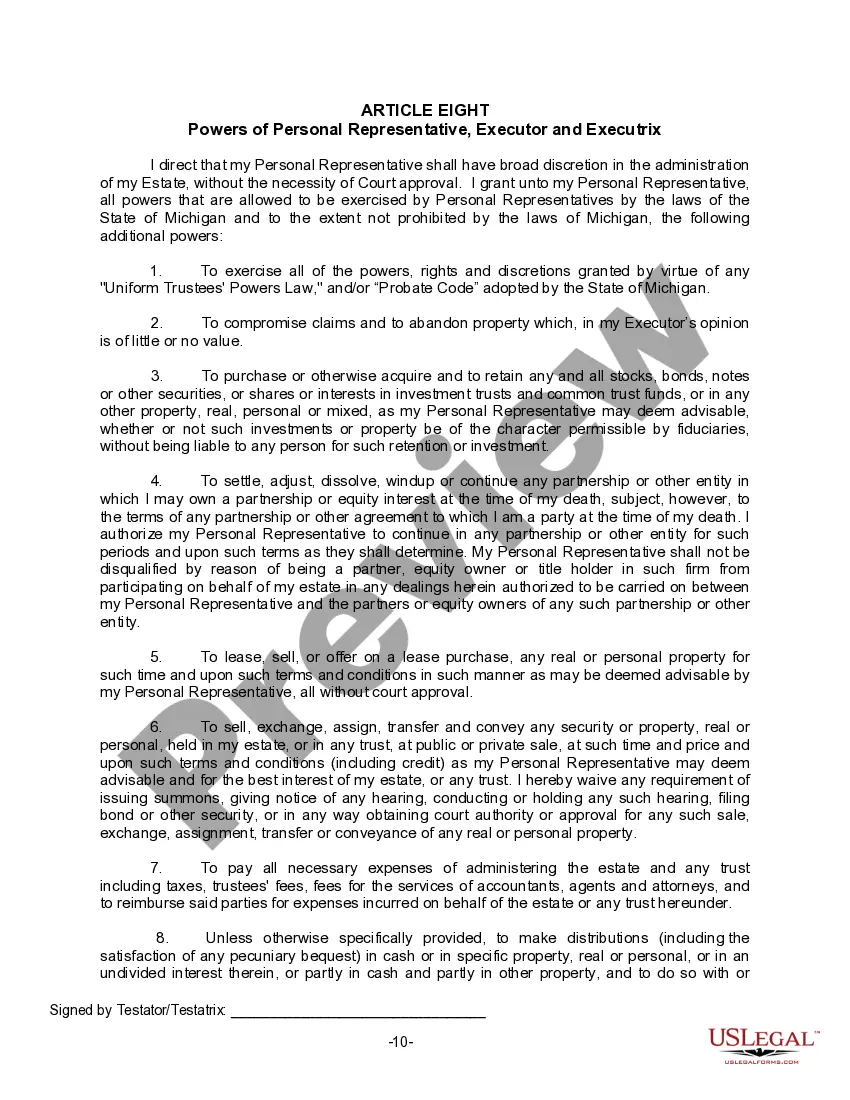
- Executor appointment: Names a personal representative to manage your estate.
- Optional provisions: Additional instructions regarding burial or cremation wishes.




When to use this form
This form should be used when a widow or widower, having no children, needs to legally document their wishes regarding asset distribution after death. It is particularly relevant if you have specific items or property you wish to leave to others or if you want to ensure that someone you trust will handle your estate affairs. Having a will in place can prevent disputes and streamline the probate process for your loved ones.
Who should use this form
- Individuals who are widows or widowers without children.
- Those who want to specify how their estate should be distributed.
- Persons looking to simplify the management of their estate after death.
- Individuals desiring to appoint a trusted person to manage estate affairs.
Completing this form step by step
- Enter your name and county of residence in the designated fields.
- Specify the name of your deceased spouse and any specific property you wish to bequeath.
- Identify your homestead and the designated beneficiary for this property.
- Appoint a personal representative to manage your estate.
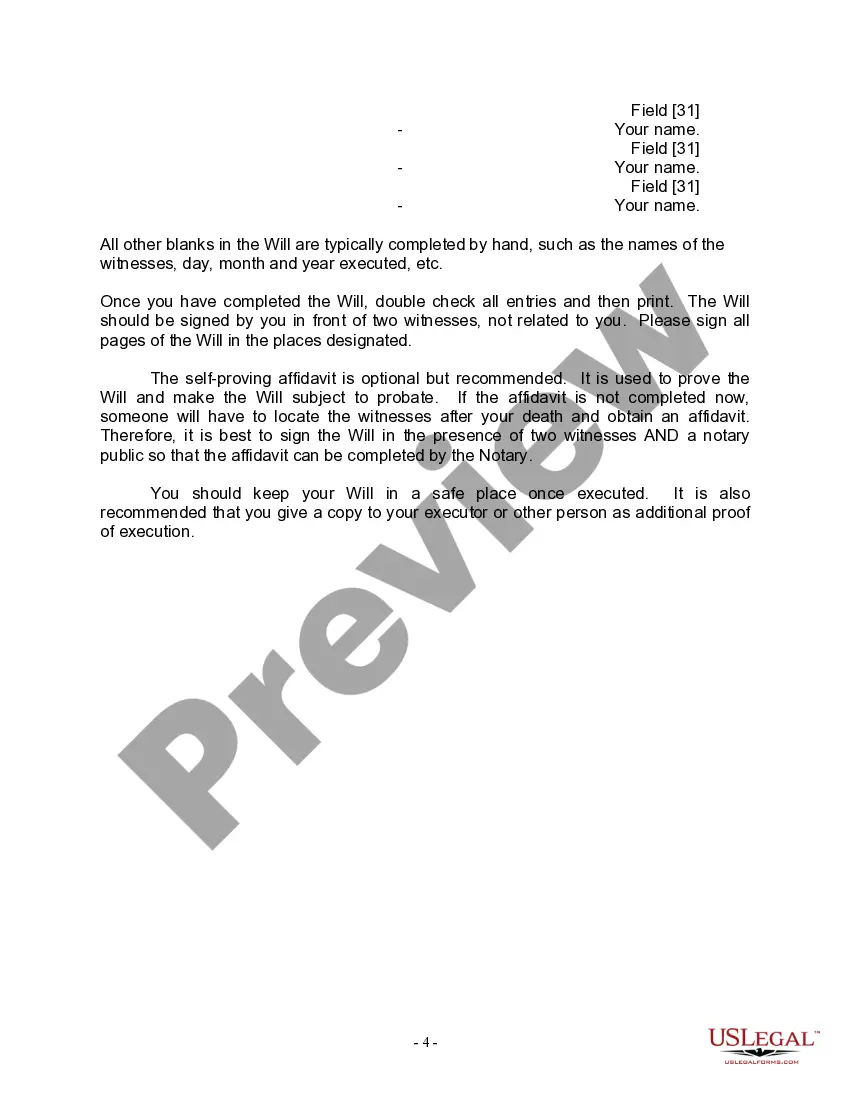
- Ensure to sign the document in the presence of two witnesses and a notary if using a self-proving affidavit.
Notarization requirements for this form
This document requires notarization to meet legal standards. US Legal Forms provides secure online notarization powered by Notarize, allowing you to complete the process through a verified video call, available 24/7.
Get your form ready online
Our built-in tools help you complete, sign, share, and store your documents in one place.
Make edits, fill in missing information, and update formatting in US Legal Forms—just like you would in MS Word.
Download a copy, print it, send it by email, or mail it via USPS—whatever works best for your next step.
Sign and collect signatures with our SignNow integration. Send to multiple recipients, set reminders, and more. Go Premium to unlock E-Sign.
If this form requires notarization, complete it online through a secure video call—no need to meet a notary in person or wait for an appointment.
We protect your documents and personal data by following strict security and privacy standards.

Make edits, fill in missing information, and update formatting in US Legal Forms—just like you would in MS Word.

Download a copy, print it, send it by email, or mail it via USPS—whatever works best for your next step.

Sign and collect signatures with our SignNow integration. Send to multiple recipients, set reminders, and more. Go Premium to unlock E-Sign.

If this form requires notarization, complete it online through a secure video call—no need to meet a notary in person or wait for an appointment.

We protect your documents and personal data by following strict security and privacy standards.
Typical mistakes to avoid
- Not signing the will in front of the required witnesses.
- Failing to include a self-proving affidavit when necessary.
- Leaving out specific property, which can lead to confusion.
- Designating a personal representative without ensuring they are willing to serve.
- Incorrectly assuming oral wishes are legally binding without written documentation.
Why use this form online
- Convenience: Complete the form from anywhere, at any time.
- Editability: Easily make changes and adjustments to your will as needed.
- Reliability: Forms are drafted by licensed attorneys to comply with legal standards.
- Accessibility: Downloadable formats allow for easy printing and distribution.
Legal use & context
- The will serves as a legally binding document to ensure your wishes are followed after your death.
- It prevents intestacy, where your assets would be distributed according to state laws rather than your wishes.
- Allowed provisions can minimize disputes among surviving relatives about your intentions.
Quick recap
- This form is specifically for widows and widowers with no children.
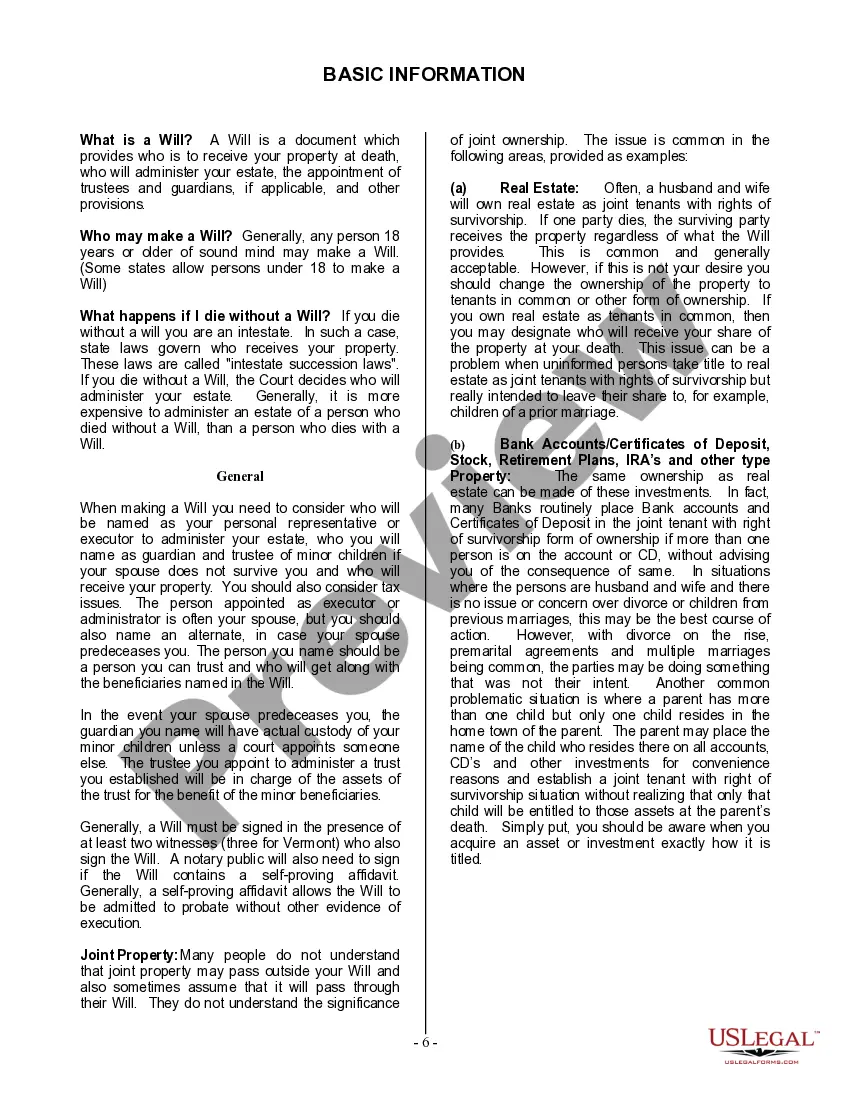
- A will is essential for detailing how your estate is managed and distributed.
- Proper witnessing and notarization can streamline the probate process.
- Using this form online offers flexibility and ensures legal compliance.
Looking for another form?
Form popularity
FAQ
A surviving spouse in Michigan has significant inheritance rights, especially if there are no children involved. Under intestacy laws, the widow or widower is entitled to the entire estate if there is no will. Furthermore, a Michigan Last Will for a Widow or Widower with no Children typically reinforces these rights, ensuring the surviving spouse receives their fair share. Utilizing platforms like USLegalForms can help in creating a will that clearly defines these rights.
Inheritance distribution timelines can vary. In Michigan, the probate process typically takes several months to a year, depending on the complexity of the estate. Once a Michigan Last Will for a Widow or Widower with no Children is validated, the assets can be distributed according to the terms of the will. It's essential to work with an attorney to navigate this process efficiently and ensure timely inheritance.
To be valid in Michigan, a will must be written, signed by the testator, and witnessed by at least two individuals. The witnesses must not be beneficiaries of the will to avoid any conflicts of interest. Additionally, the testator must be at least 18 years old and of sound mind. Ensuring these requirements are met is crucial in creating a Michigan Last Will for a Widow or Widower with no Children.
In Michigan, if a husband passes away without children, his wife typically inherits the entire estate under a Michigan Last Will for a Widow or Widower with no Children. This includes all assets, property, and financial accounts. However, if there are any specific provisions in the will that outline different distributions, those instructions will take precedence. It's always wise to consult with a legal expert to understand the implications fully.
Yes, wills must be filed with the court in Michigan to begin the probate process. If you have created a Michigan Last Will for a Widow or Widower with no Children, filing it ensures that your estate is settled according to your wishes. The court will review the will to validate it and allow for the proper distribution of assets. To make this process easier, you can leverage the resources available on US Legal Forms.
Yes, a will must be filed in Michigan after the testator's death for it to be valid. This process allows the Michigan Last Will for a Widow or Widower with no Children to be recognized by the court. Filing the will with the probate court ensures that the deceased's wishes are legally upheld. Using a platform like US Legal Forms can streamline the drafting and filing process for your will.
In Michigan, a surviving spouse does not automatically inherit everything if there are no children. The distribution of assets will depend on the terms outlined in the Michigan Last Will for a Widow or Widower with no Children. If a will exists, it dictates the distribution of assets. If there is no will, Michigan intestacy laws will determine the inheritance. For clarity and peace of mind, consider crafting a will through US Legal Forms.
No, you do not have to register a will with the courts in Michigan while the testator is still alive. However, once they pass away, the Michigan Last Will for a Widow or Widower with no Children must be submitted to the probate court to be validated. This validation process ensures that the will is recognized and can be enforced. Consider using US Legal Forms to create a valid will that meets all necessary legal requirements.
In Michigan, wills are typically filed with the probate court in the county where the deceased lived. This ensures that the wishes outlined in the Michigan Last Will for a Widow or Widower with no Children are honored. You can visit the local probate court to inquire about filing procedures and requirements. Utilizing platforms like US Legal Forms can simplify the process of preparing and filing your will.