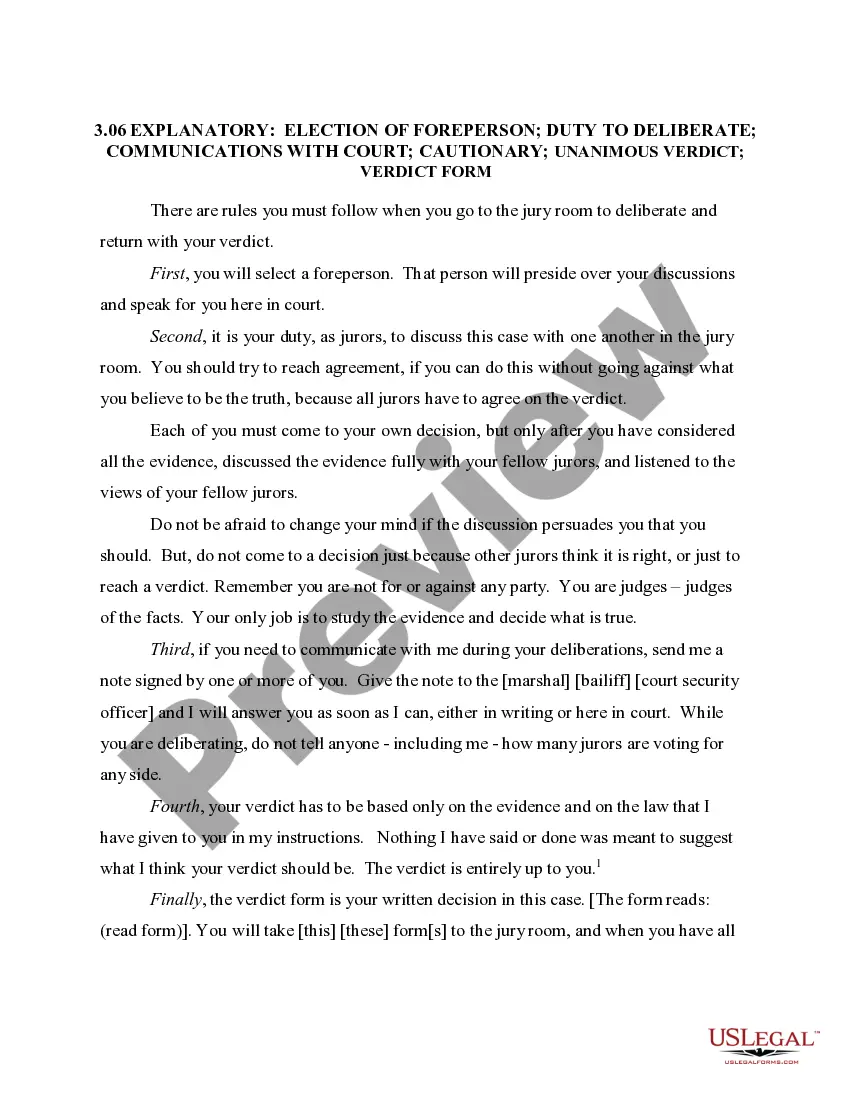
Michigan Last Will and Testament for Widow or Widower with Minor Children
Understanding this form
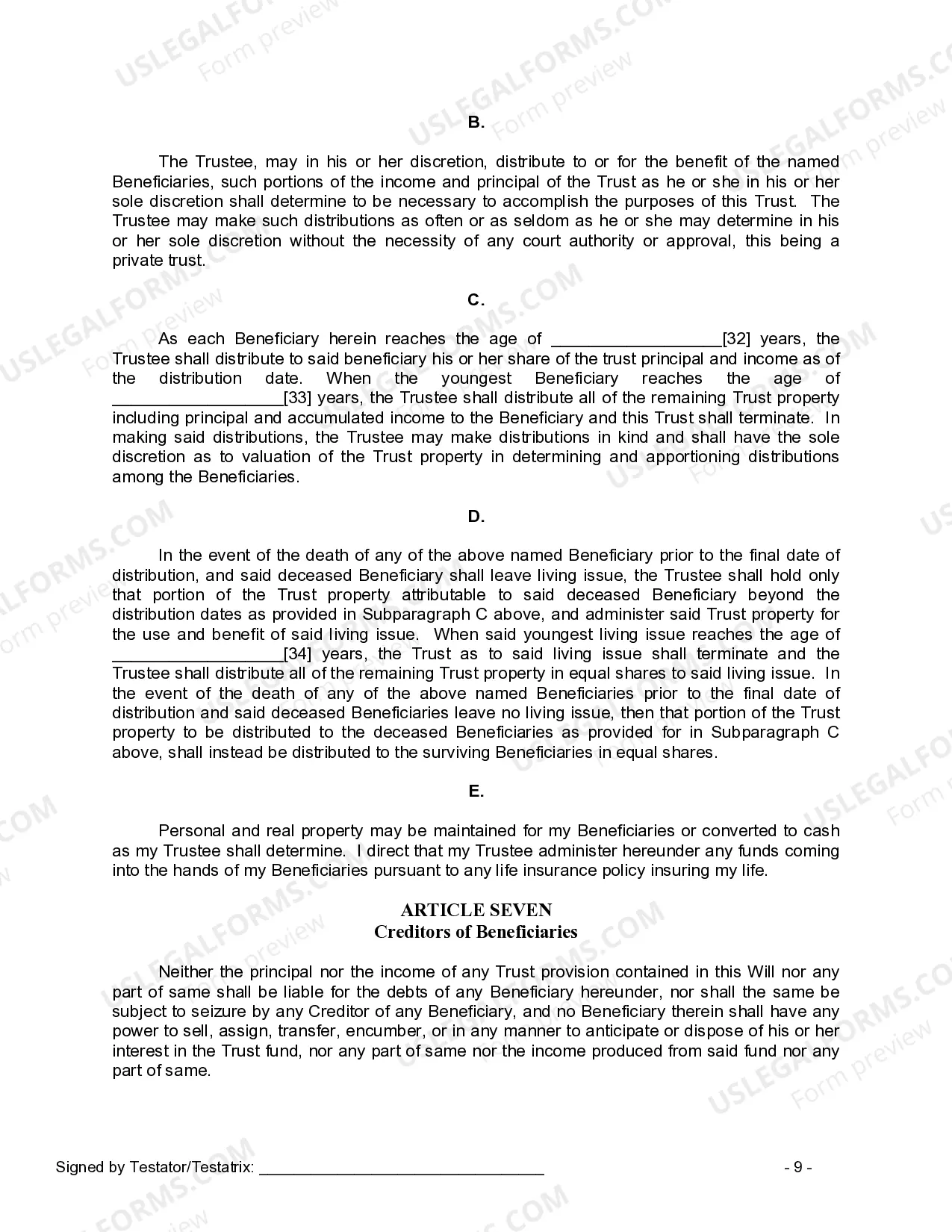
The Last Will and Testament for Widow or Widower with Minor Children is a legal document designed for individuals who have lost a spouse and have minor children. This form allows you to designate who will manage your estate, specify how your assets will be distributed, and appoint a guardian for your children if needed. It is tailored to meet the unique circumstances of widowed individuals, ensuring that your wishes are clearly articulated and legally binding, unlike standard wills that may not address the complexities of minor beneficiaries.
Main sections of this form
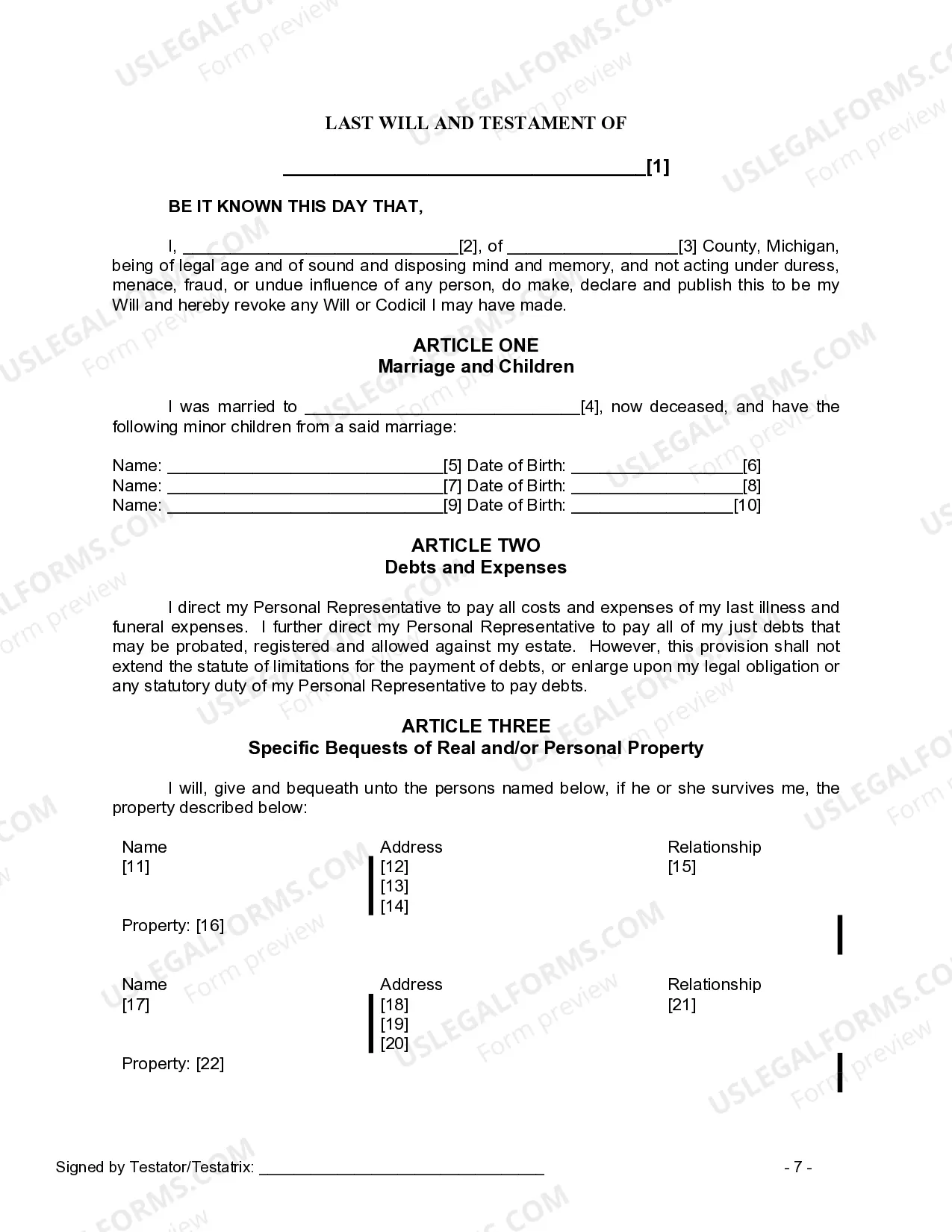
- Appointment of a personal representative or executor to manage the estate.
- Designations of beneficiaries, including minor children.
- Instructions for paying debts and expenses associated with the estate.
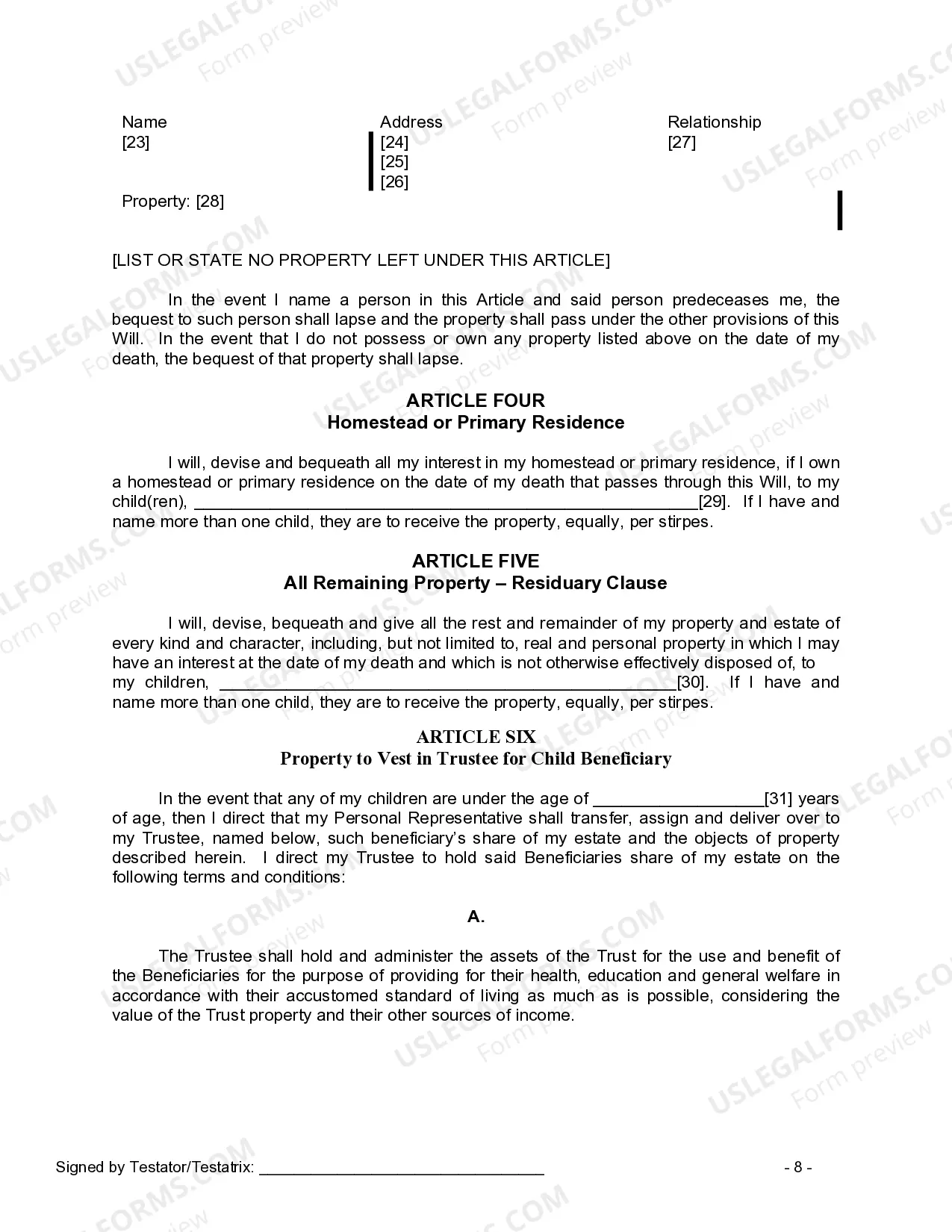
- Provisions for specific bequests of property.
- Clauses addressing the management of assets for minor children through a trustee.
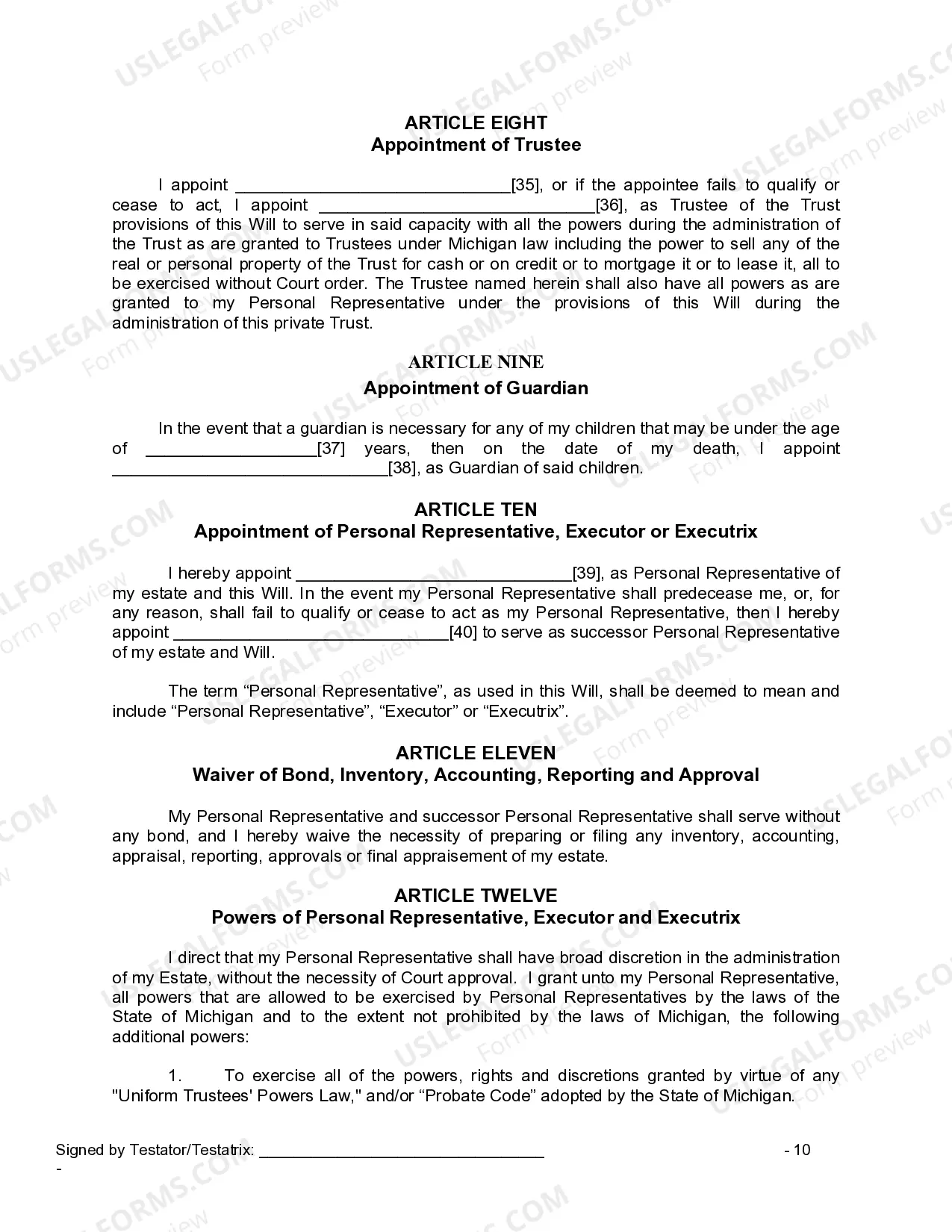
- Appointment of a guardian for minor children.

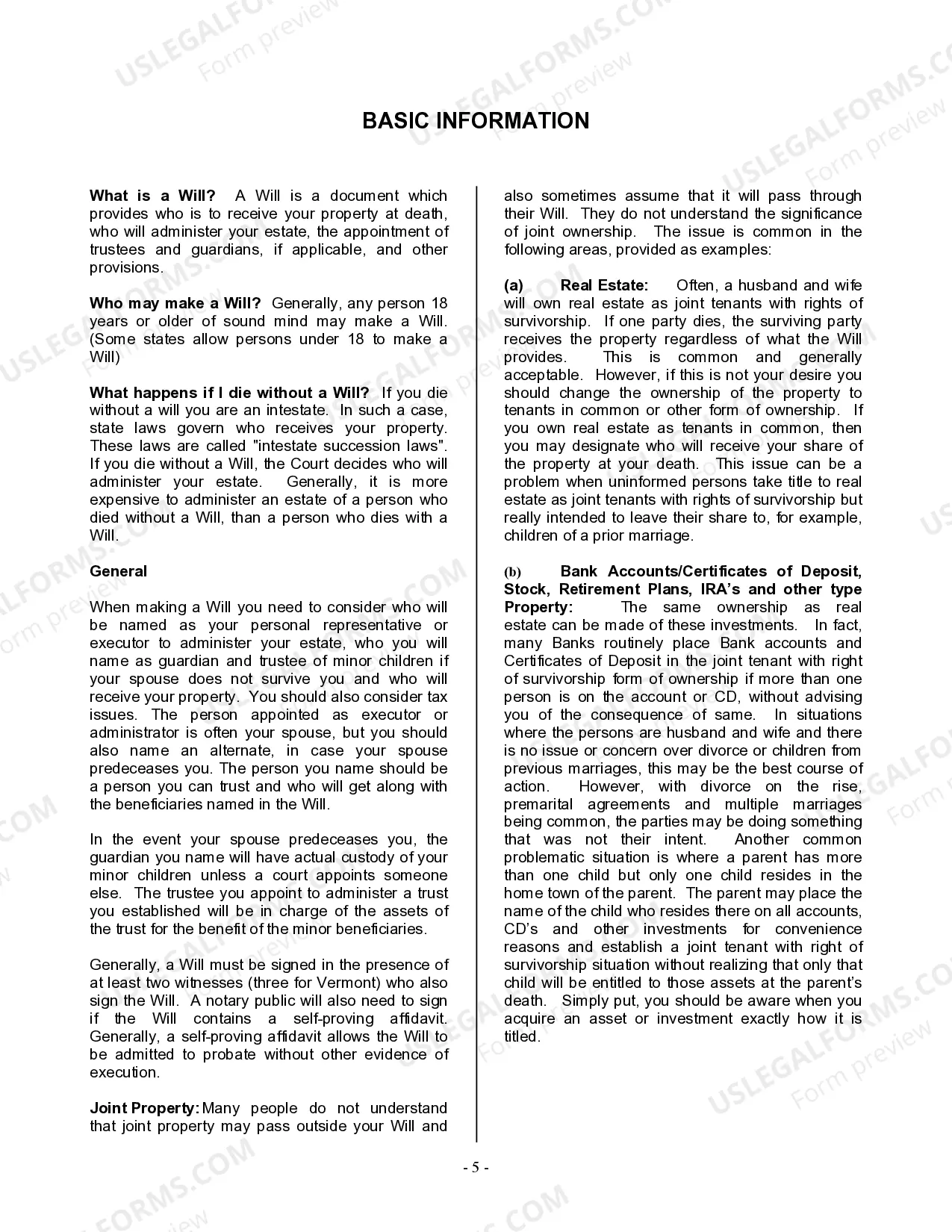




When to use this document
This form is crucial when a widowed person wishes to ensure that their minor children are provided for after their passing. It is used in situations where the individual wants to clearly state their wishes regarding asset distribution, the appointment of guardians, and management of trusts for minors. It is particularly important for those with specific family structures and financial arrangements that need to be formalized through a will.
Intended users of this form
- Widows or widowers who have minor children.
- Individuals seeking to ensure their children's welfare and education through a trust.
- Anyone wanting to clarify asset distribution and guardianship preferences.
- People wanting to execute a will that reflects their unique family situation following the loss of a spouse.
How to prepare this document
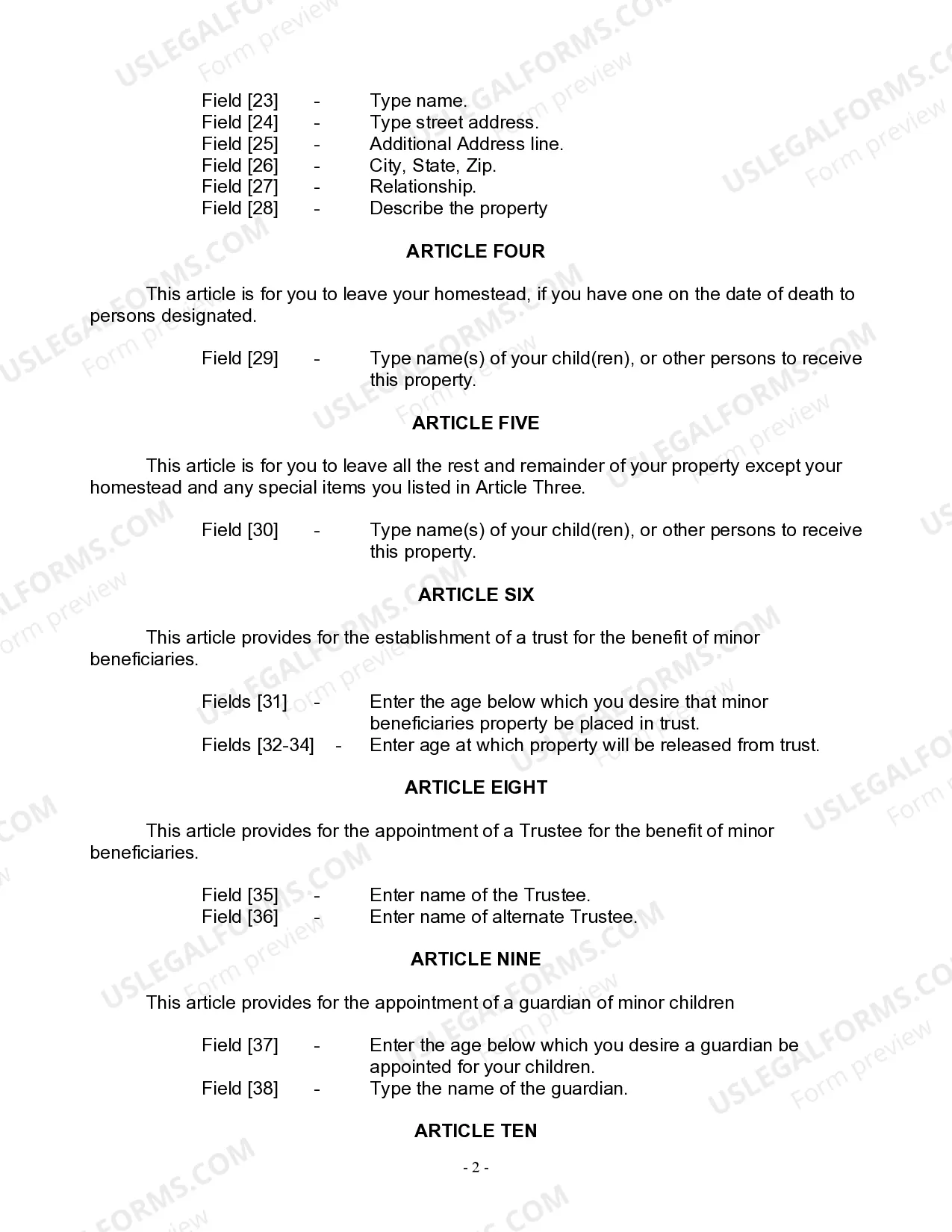
- Identify yourself as the testator and provide your personal information.
- List your children and any specific bequests you wish to make to individuals.
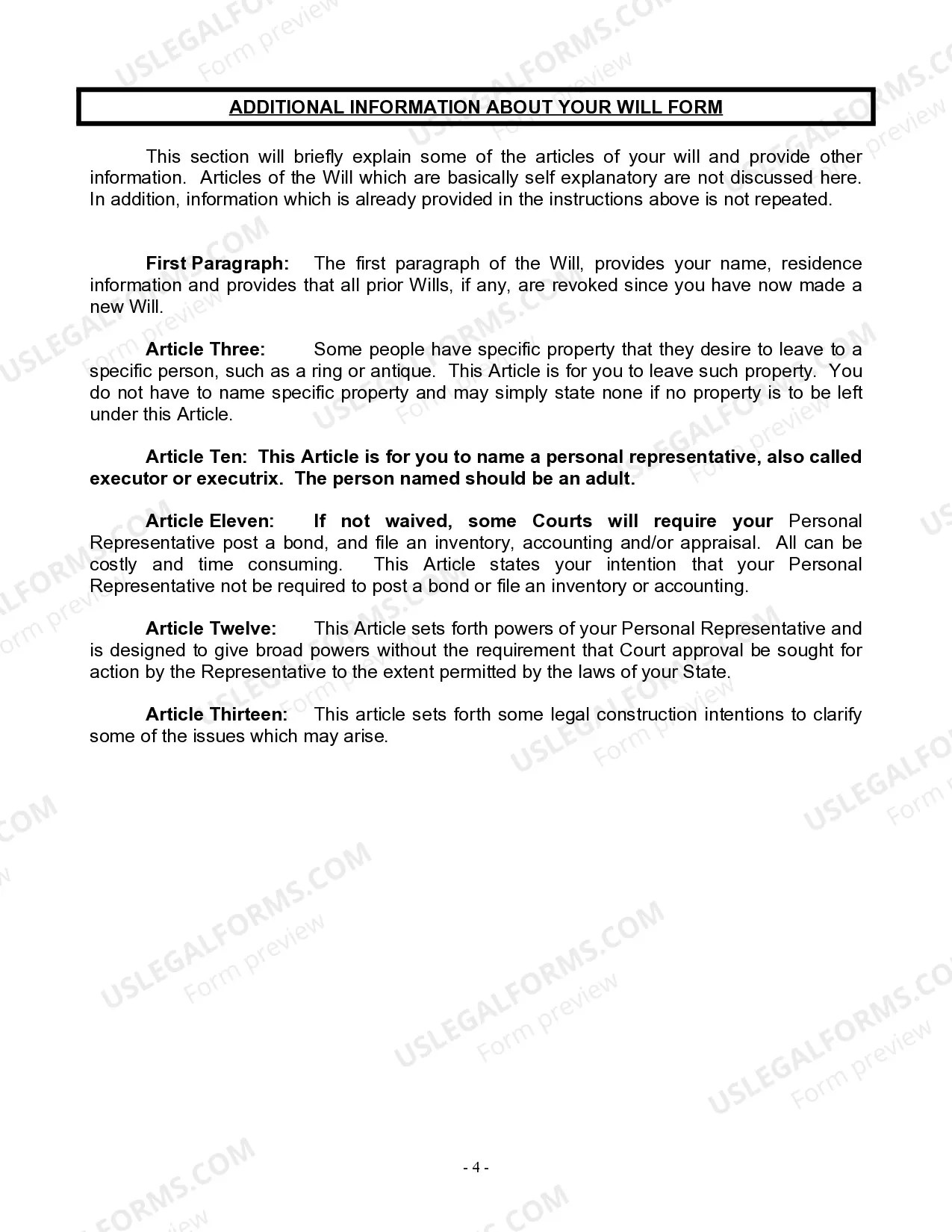
- Appoint a personal representative and, if necessary, a guardian for your minor children.
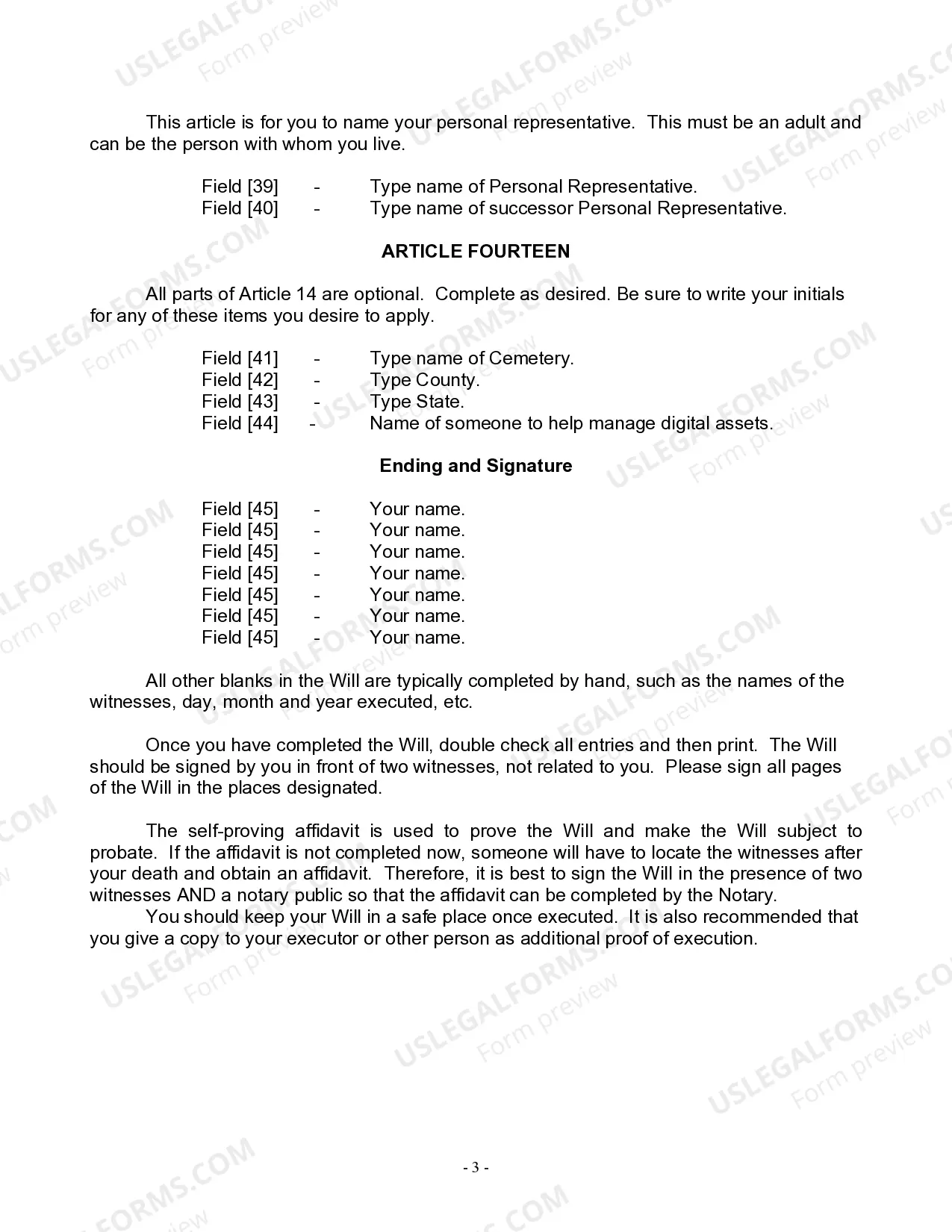
- Ensure that the form is signed in the presence of two witnesses who are not beneficiaries.
- If applicable, include a self-proving affidavit and have it notarized to enhance the validity of the Will.
Is notarization required?
Yes, this form must be notarized to be legally valid in Michigan. Notarization serves to protect against fraud and confirms the identities of the parties involved. US Legal Forms offers integrated online notarization services, making it easy to complete this requirement securely and conveniently.
Get your form ready online
Our built-in tools help you complete, sign, share, and store your documents in one place.
Make edits, fill in missing information, and update formatting in US Legal Forms—just like you would in MS Word.
Download a copy, print it, send it by email, or mail it via USPS—whatever works best for your next step.
Sign and collect signatures with our SignNow integration. Send to multiple recipients, set reminders, and more. Go Premium to unlock E-Sign.
If this form requires notarization, complete it online through a secure video call—no need to meet a notary in person or wait for an appointment.
We protect your documents and personal data by following strict security and privacy standards.

Make edits, fill in missing information, and update formatting in US Legal Forms—just like you would in MS Word.

Download a copy, print it, send it by email, or mail it via USPS—whatever works best for your next step.

Sign and collect signatures with our SignNow integration. Send to multiple recipients, set reminders, and more. Go Premium to unlock E-Sign.

If this form requires notarization, complete it online through a secure video call—no need to meet a notary in person or wait for an appointment.

We protect your documents and personal data by following strict security and privacy standards.
Common mistakes to avoid
- Failing to sign the will in front of the required witnesses.
- Not updating the will after significant life changes.
- Overlooking the appointment of a guardian for minor children.
- Neglecting to clearly specify assets and distributions, leading to disputes.
Why use this form online
- Convenient and quick access to legally valid documents.
- Editable fields allow for personal customization based on your needs.
- Peace of mind knowing that the form is drafted by licensed attorneys.
- Immediate download, which facilitates timely execution of your wishes.
Legal use & context
- This will serves as a binding legal document that specifies how your estate is to be managed after death.
- It addresses the complexities of providing for minor children and appointing guardians, which is vital for secure family planning.
- Wills that meet the statutory requirements of the state are generally valid and enforceable in probate court.
Main things to remember
- The form is specifically designed for widowed individuals with minor children.
- It ensures that your children are taken care of according to your wishes.
- Proper execution involves witnesses and potentially notarization.
- Using an online service can simplify the process and ensure legal compliance.
Looking for another form?
Form popularity
FAQ
In Michigan, the order of inheritance typically follows the laws of intestate succession if there is no valid Michigan Last Will and Testament for Widow or Widower with Minor Children. Generally, if the deceased has children, the spouse inherits the first share, followed by the children. If there is no spouse or children, parents and siblings may inherit next. To ensure your wishes are followed, consider drafting a will with resources like US Legal Forms.
In Michigan, a surviving spouse may not have to go through probate if the deceased had a valid Michigan Last Will and Testament for Widow or Widower with Minor Children that clearly outlines the distribution of assets. However, if there are disputes or if the estate includes property not addressed in the will, probate may still be necessary. It's essential to consult with a legal professional to understand your specific situation. Using US Legal Forms can help you create a comprehensive will that simplifies the process.
To be valid in Michigan, a will must meet specific requirements, including being in writing, signed by the testator, and witnessed by two individuals who are not beneficiaries. Additionally, the testator must be at least 18 years old and of sound mind when creating the will. It is crucial to ensure that your Michigan Last Will and Testament for Widow or Widower with Minor Children adheres to these legal standards to avoid complications. US Legal Forms offers resources to guide you through the creation of a valid will that meets Michigan laws.
In Michigan, a last will and testament does not need to be notarized to be valid, but having it notarized can strengthen its credibility. A Michigan Last Will and Testament for Widow or Widower with Minor Children must be signed by the testator and witnessed by two individuals who are not beneficiaries. Notarization can provide an additional layer of protection against potential disputes, ensuring your wishes are upheld. Consider using US Legal Forms to simplify the process of creating a notarized will.
One of the biggest mistakes people make with their Michigan Last Will and Testament for Widow or Widower with Minor Children is not updating it after major life changes, such as marriage, divorce, or the birth of a child. Failing to account for these changes can lead to unintended consequences, leaving your loved ones unprotected. It's essential to review and revise your will regularly to ensure it reflects your current wishes and circumstances. Using a reliable platform like US Legal Forms can help you easily create and modify your will.
In Michigan, a surviving spouse does not automatically inherit everything. The distribution depends on whether there is a valid will in place. If a Michigan Last Will and Testament for Widow or Widower with Minor Children exists, it will specify the inheritance details. If there is no will, state laws dictate the division of assets, which may not always favor the surviving spouse exclusively.
Creating a will without a lawyer in Michigan is possible, especially with resources available online. You can use templates or platforms like US Legal Forms to draft a Michigan Last Will and Testament for Widow or Widower with Minor Children. Ensure that your will meets state requirements, including being signed and witnessed correctly. This approach allows you to clearly outline your wishes without the added expense of hiring an attorney.
In Michigan, whether a wife inherits everything depends on the existence of a will. If there is a Michigan Last Will and Testament for Widow or Widower with Minor Children, it may dictate the distribution of assets. Without a will, Michigan law provides that the surviving spouse typically receives a significant portion, but not necessarily everything. It's wise to review the will and consult legal advice for clarity.
The timeline for receiving inheritance can vary widely in Michigan. Typically, the probate process can take several months to over a year, depending on the complexity of the estate. If a Michigan Last Will and Testament for Widow or Widower with Minor Children is in place, it can help streamline the process. However, factors like disputes among heirs or debts owed by the estate can delay distribution.
In Michigan, the inheritance rights of a surviving spouse can be significant. Under the law, a widow or widower is entitled to a portion of the deceased spouse's estate, even if there is a will. If the deceased had a Michigan Last Will and Testament for Widow or Widower with Minor Children, the will may specify how assets are divided. It's important to review the will and consult with an attorney to understand your specific rights.