Michigan Notice of Lease for Recording
What is this form?
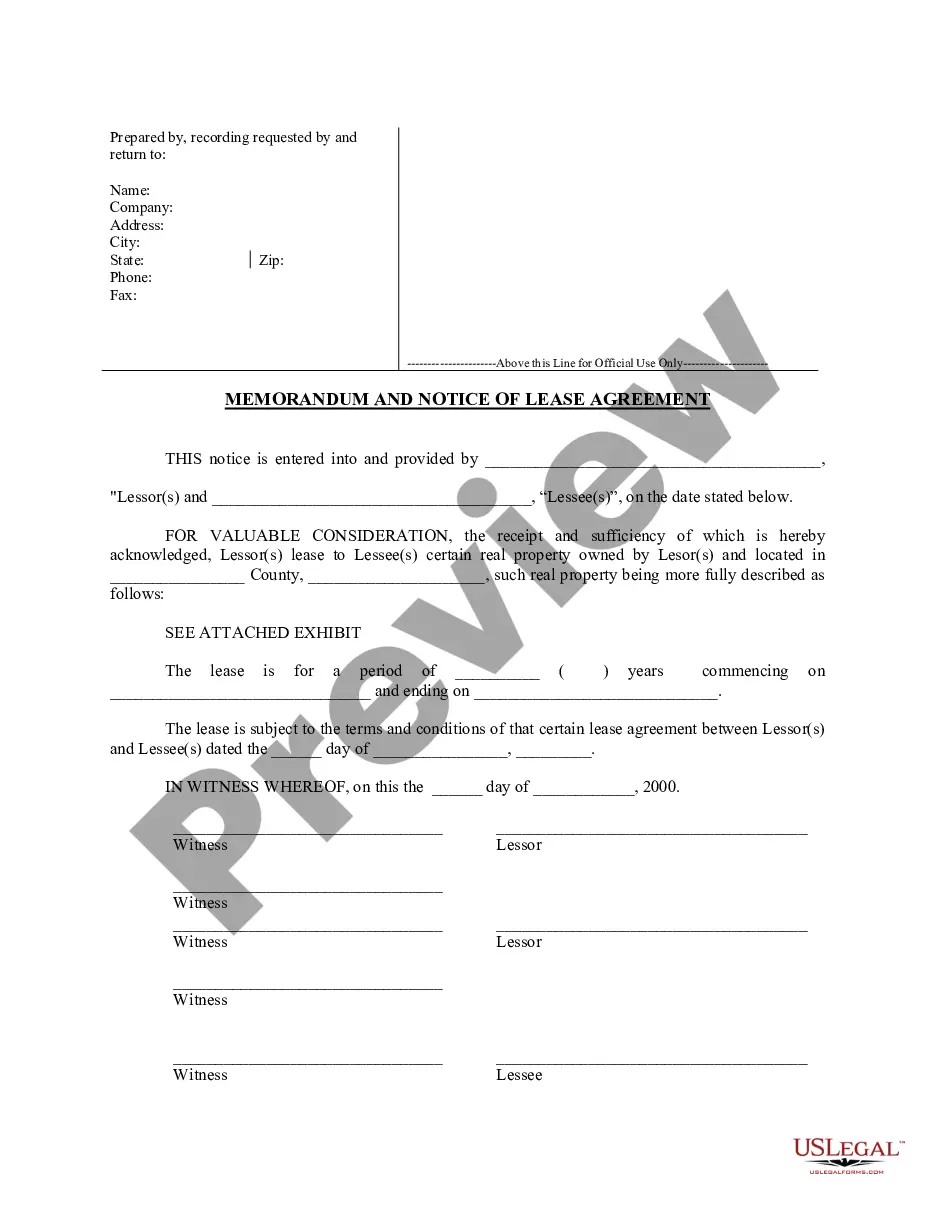
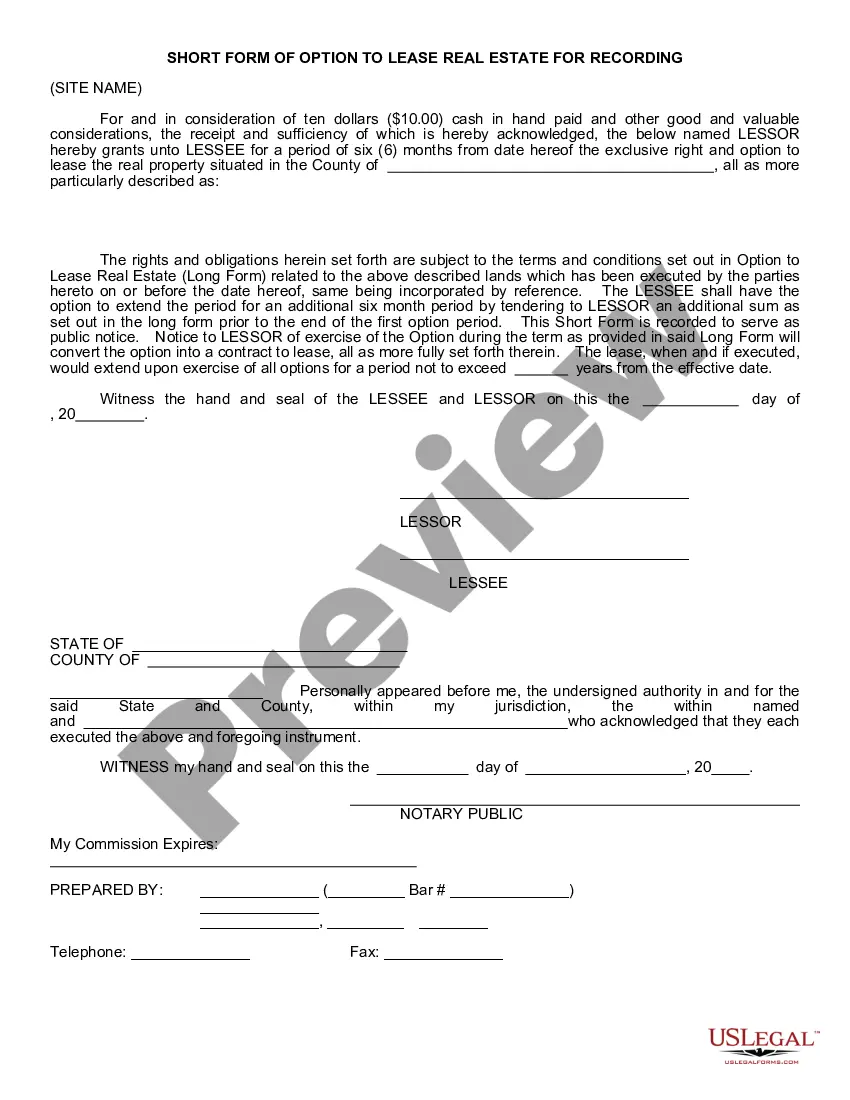
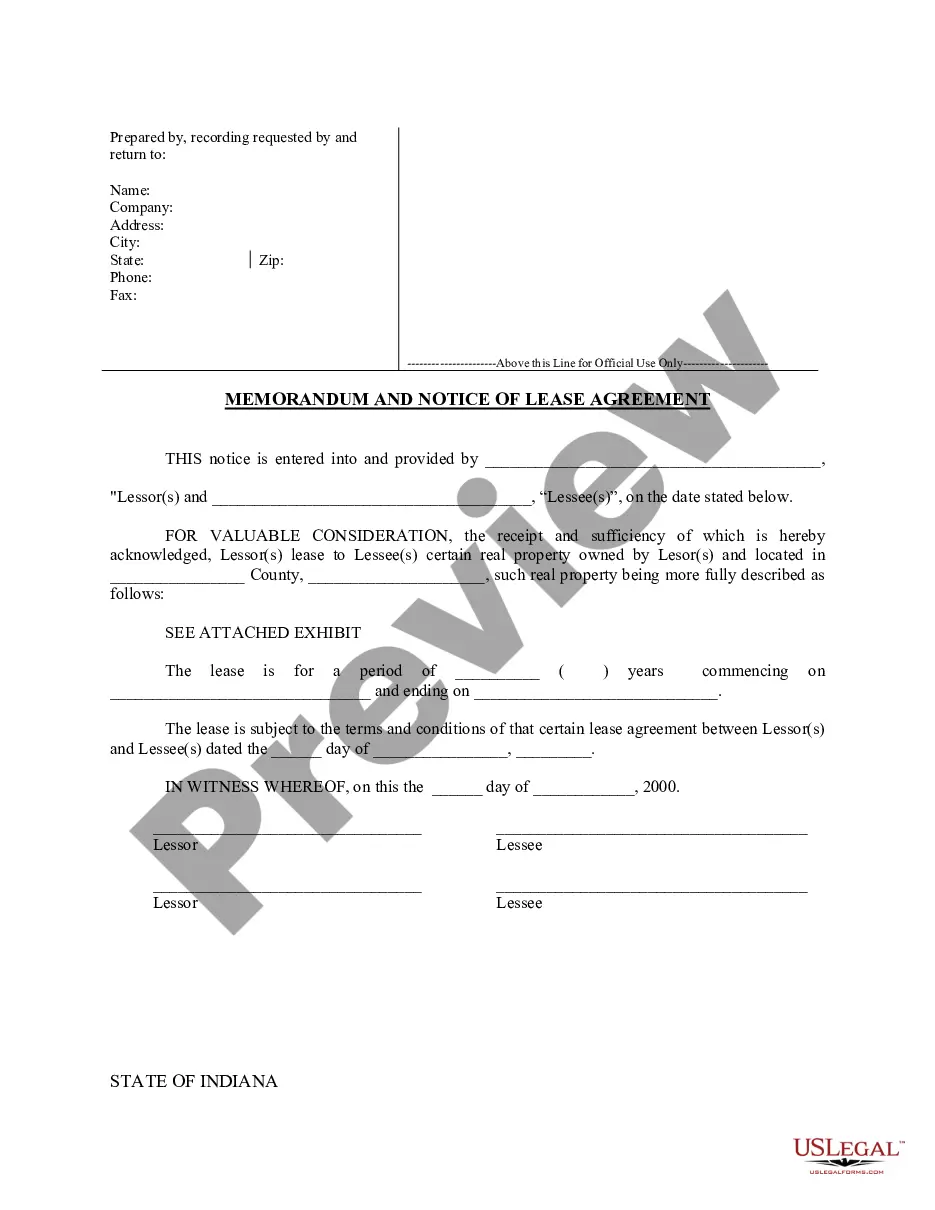
The Notice of Lease for Recording serves as an official document to notify interested parties that a lease exists for a specific parcel of real estate. Unlike recording the entire lease agreement, this form provides a summary of the lease details, ensuring that proper notice is documented in public records. This is essential for protecting the rights of both lessors and lessees regarding property ownership and tenancy.
Main sections of this form
- Prepared by and recording details: Information on who prepared the form and who is requesting the recording.
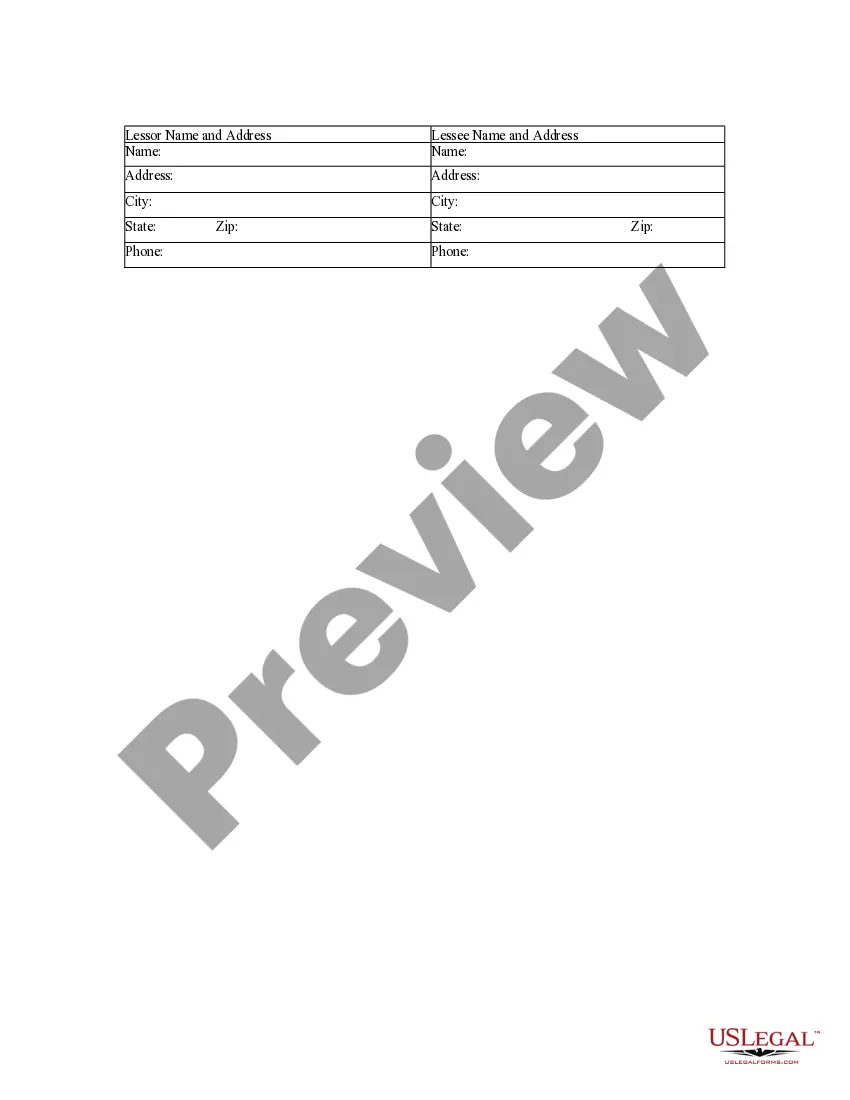
- Parties involved: Names of the lessors and lessees.
- Property description: Detailed information about the property being leased.
- Lease term: The duration of the lease agreement, including start and end dates.
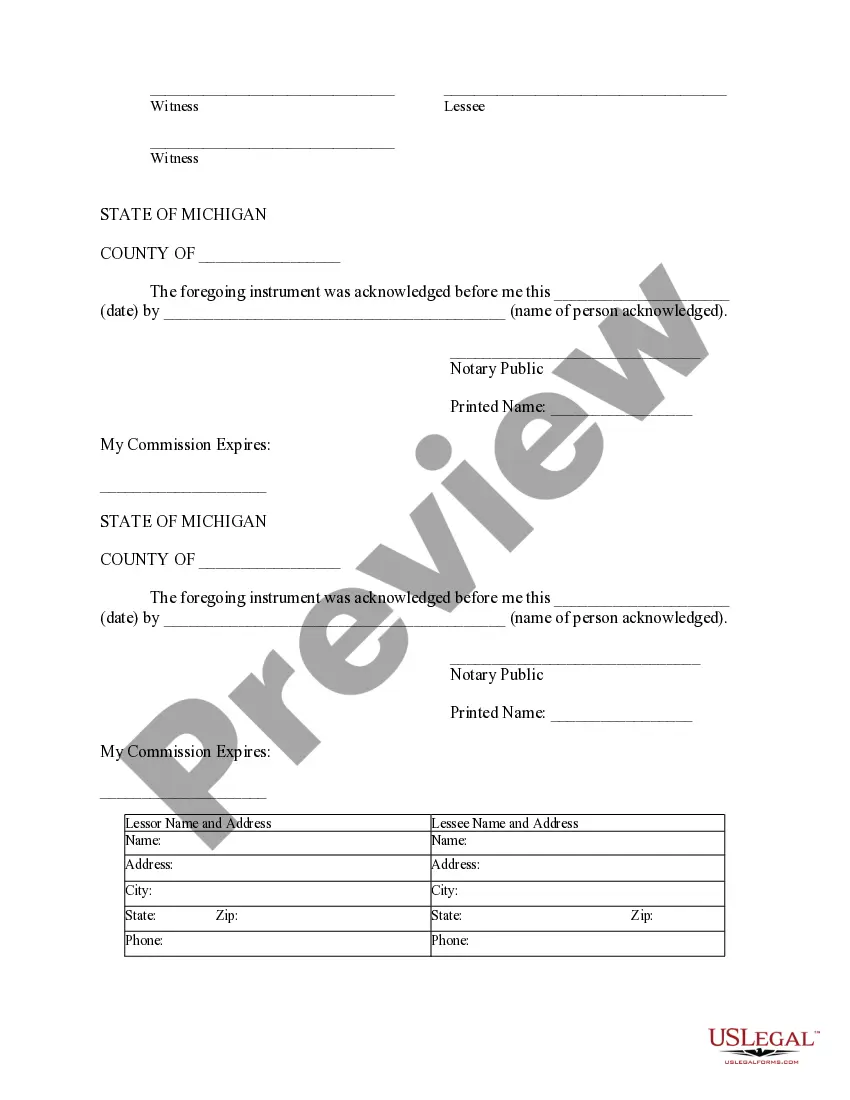
- Witnesses and notarization: Spaces for signatures of witnesses and notary acknowledgment.
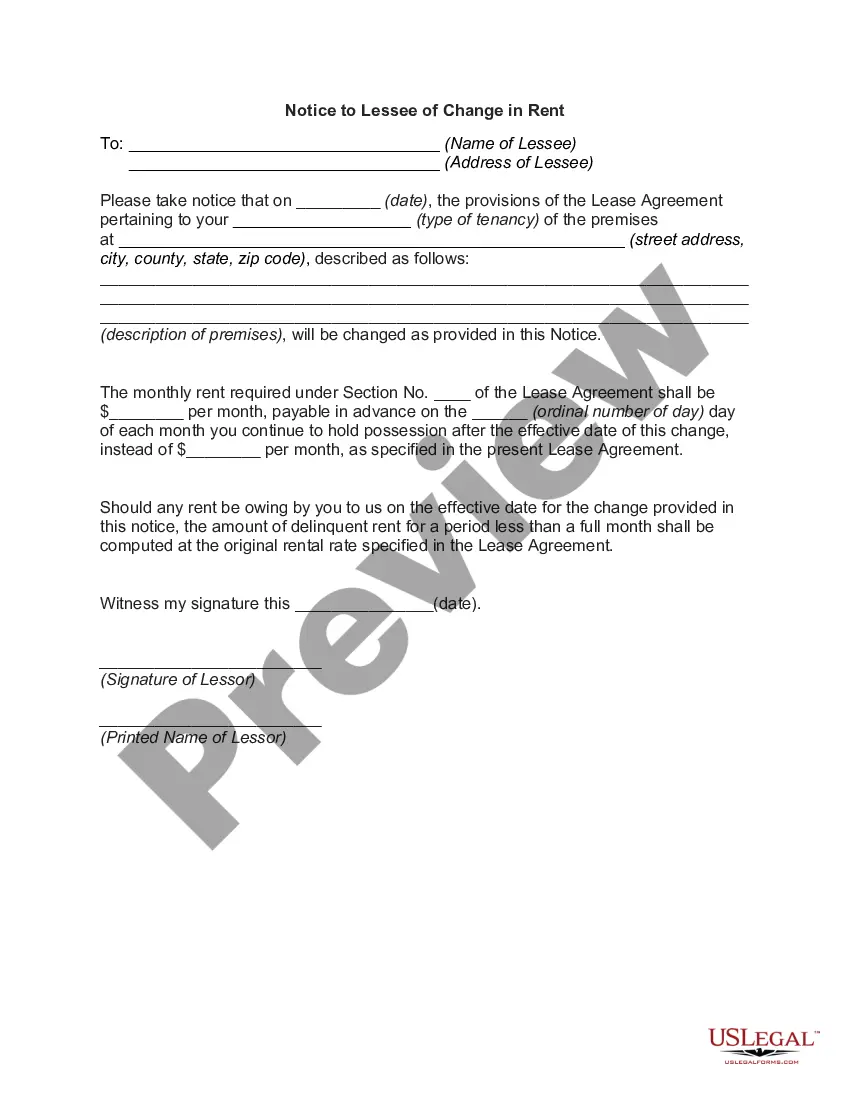
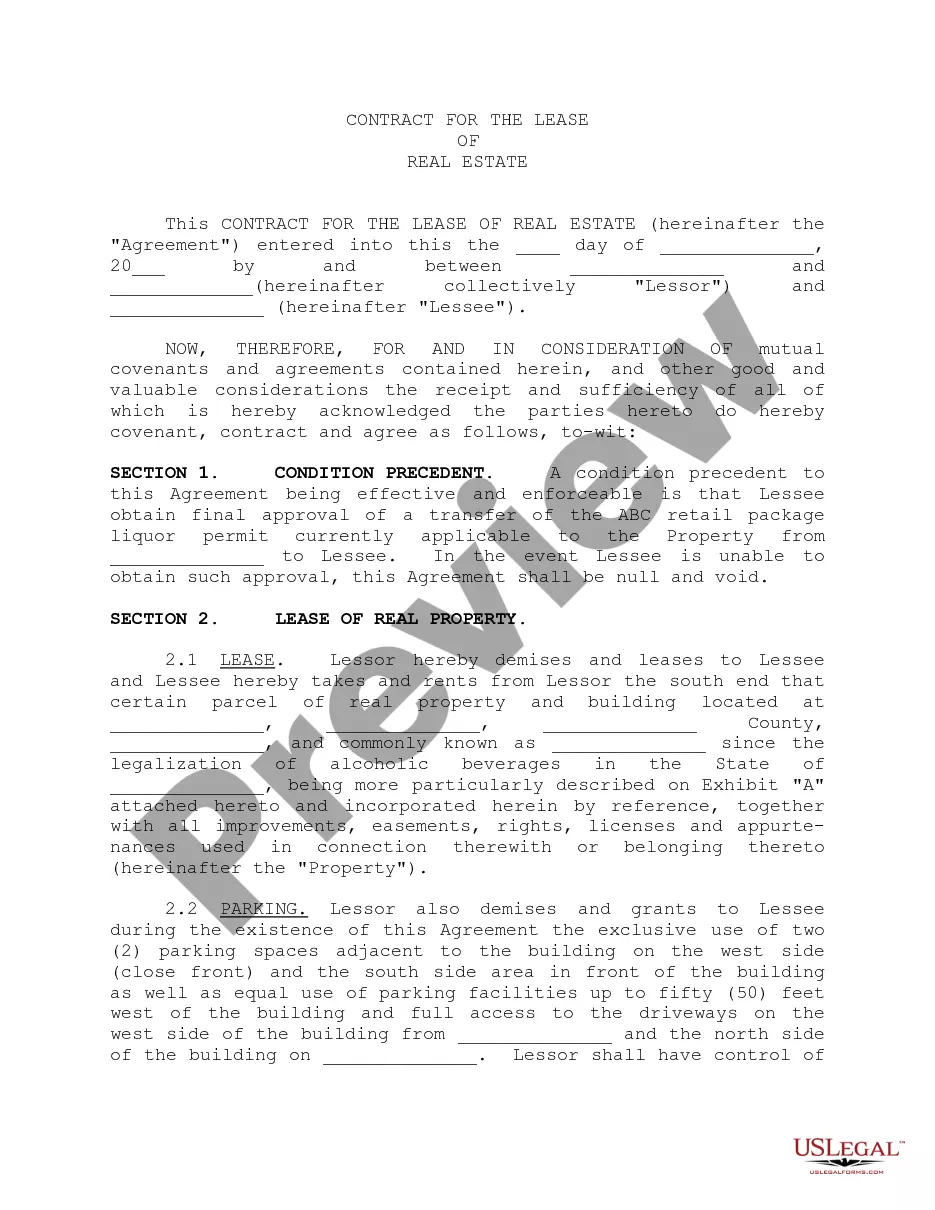
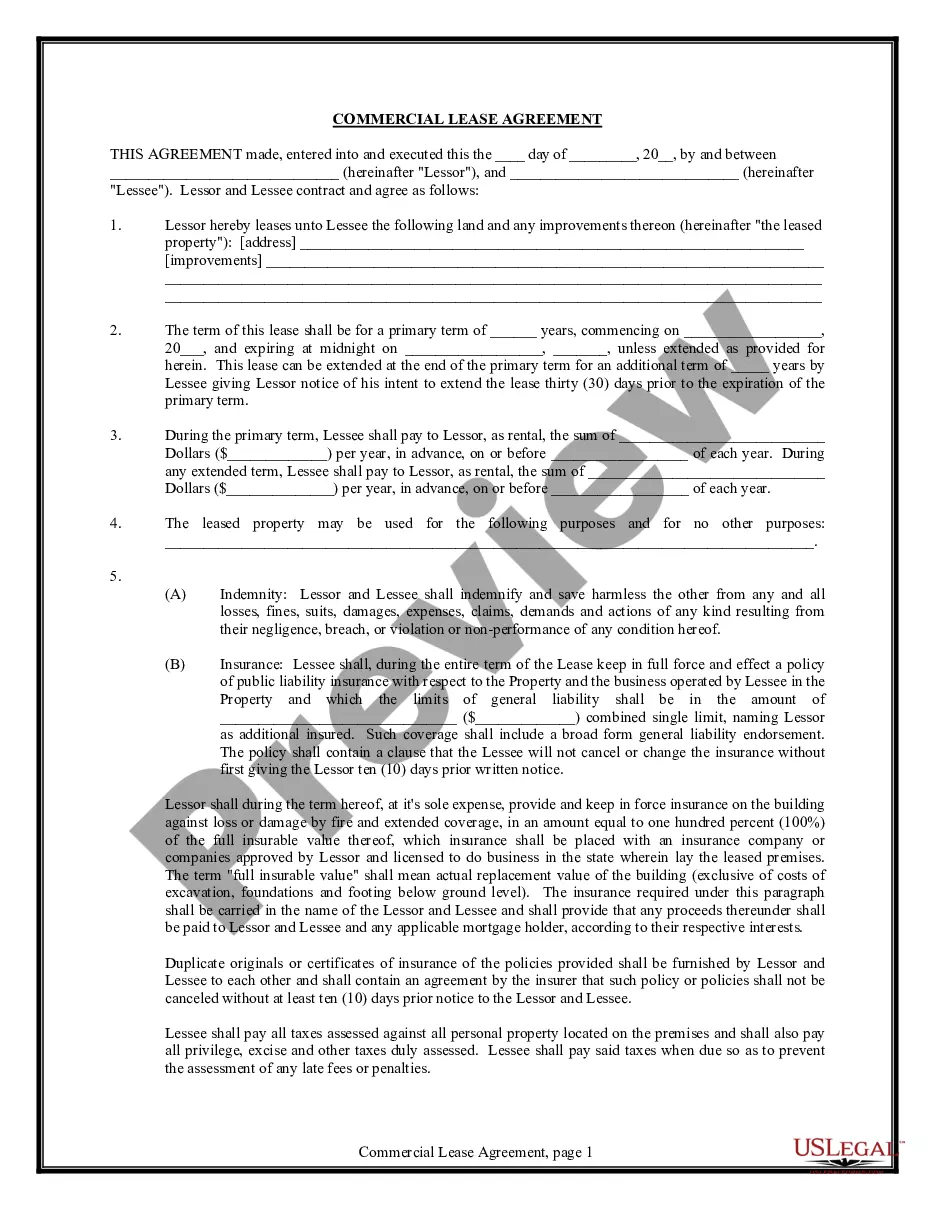

When to use this form
This form should be used when a property owner (lessor) wishes to formally record the existence of a lease on a particular property without submitting the entire lease agreement. It is useful in cases where ensuring public notice is important, such as before leasing out commercial or residential properties, or when seeking to protect one's interest against other creditors or claims on the property.
Who can use this document
- Property owners or lessors looking to record a lease.
- Tenants or lessees who want to ensure the lease is officially recognized.
- Real estate professionals managing properties on behalf of clients.
- Attorneys assisting clients in real estate transactions.
How to complete this form
- Identify the parties: Fill in the names of the lessor(s) and lessee(s).
- Specify the property: Provide a detailed description of the property being leased.
- Enter the lease term: Indicate the duration of the lease, including starting and ending dates.
- Include the lease agreement date: Reference the date of the original lease agreement between the parties.
- Gather signatures: Ensure all parties and witnesses sign the document, followed by notarization if required.
Is notarization required?
This form must be notarized to be legally valid. US Legal Forms provides secure online notarization powered by Notarize, allowing you to complete the process through a verified video call.
Get your form ready online
Our built-in tools help you complete, sign, share, and store your documents in one place.
Make edits, fill in missing information, and update formatting in US Legal Forms—just like you would in MS Word.
Download a copy, print it, send it by email, or mail it via USPS—whatever works best for your next step.
Sign and collect signatures with our SignNow integration. Send to multiple recipients, set reminders, and more. Go Premium to unlock E-Sign.
If this form requires notarization, complete it online through a secure video call—no need to meet a notary in person or wait for an appointment.
We protect your documents and personal data by following strict security and privacy standards.

Make edits, fill in missing information, and update formatting in US Legal Forms—just like you would in MS Word.

Download a copy, print it, send it by email, or mail it via USPS—whatever works best for your next step.

Sign and collect signatures with our SignNow integration. Send to multiple recipients, set reminders, and more. Go Premium to unlock E-Sign.

If this form requires notarization, complete it online through a secure video call—no need to meet a notary in person or wait for an appointment.

We protect your documents and personal data by following strict security and privacy standards.
Common mistakes
- Not providing a complete property description.
- Failing to include the correct names of lessors and lessees.
- Omitting to sign or notarize the document.
- Leaving out the lease term details.
Advantages of online completion
- Convenience: Download the form anytime, from anywhere.
- Editability: Easily fill out the form digitally before printing if needed.
- Reliability: Forms are drafted by licensed attorneys to ensure compliance with the law.
Legal use & context
- This form acts as official documentation of a lease agreement.
- Recording provides legal notice to third parties regarding the lease.
Main things to remember
- The Notice of Lease for Recording functions as an essential legal instrument to document lease agreements.
- Correctly completing and notarizing the form is crucial for its validity.
- This form is beneficial for both lessors and lessees in ensuring their rights are protected.
Looking for another form?
Form popularity
FAQ
In Michigan, a landlord typically must provide 30 days' notice before terminating a lease or making significant changes. However, this notice period can vary depending on the specific terms of the lease agreement. It is important to refer to your Michigan Notice of Lease for Recording for exact details on notice requirements. Staying informed ensures a smoother landlord-tenant relationship.
Yes, an assignment of lease should be recorded to provide public notice of the change. Recording the Michigan Notice of Lease for Recording prevents future misunderstandings regarding lease obligations. It also serves as protection for your rights and can assist in keeping all interested parties informed. Therefore, ensure that you complete this step to secure your interests.
When a lease is assigned, the original tenant transfers their rights and obligations to a new party. This means the new tenant is responsible for adhering to the terms of the lease. Additionally, a Michigan Notice of Lease for Recording should be filed to inform landlords and other interested parties of this change. Proper documentation protects the interests of all parties involved.
Yes, an assignment of rents typically requires a release when the obligation has been fulfilled. It is crucial to execute a release to clear the title and avoid future disputes. If you are unsure of the process, utilizing a Michigan Notice of Lease for Recording can simplify documentation. This ensures that all necessary notifications are made properly.
To register an assignment of a lease in Michigan, you need to complete a Michigan Notice of Lease for Recording. This document formalizes the transfer of rights and obligations under the lease. After completing the notice, you should file it with the local county register of deeds. This process ensures that all parties involved are aware of the assignment.
To get a copy of your lease agreement, reach out to your landlord or property manager directly. If you cannot locate your lease, check the email communications or documents shared when you signed. Moreover, if the lease was recorded, you might want to utilize the Michigan Notice of Lease for Recording to obtain official copies from the relevant city or county office. Having a copy is important for managing your rental responsibilities.
The 554.134 law in Michigan governs the requirements for written lease agreements, focusing on tenant and landlord obligations. It ensures that all terms are clearly stated and understood to prevent future disputes. Knowing the Michigan Notice of Lease for Recording is crucial, as this law may mention when and how such notices must be filed. It’s essential for both tenants and landlords to be aware of their rights under this law.
You can obtain proof of lease by contacting your landlord or property management for a copy of the lease agreement. Additionally, if the lease was recorded, you can request a certified copy from the county clerk's office. Using the Michigan Notice of Lease for Recording can help ensure that your lease is officially documented, providing you with legal proof when needed. Keep in mind that records may vary by jurisdiction.
To give notice on a commercial lease, you must first review your lease agreement for any specific notification instructions. Generally, you can send a written notice via certified mail or deliver it in person to the tenant. Ensure that you clearly state the intention of the notice and refer to the Michigan Notice of Lease for Recording if applicable. This procedure helps protect your rights and establishes a formal record.
Yes, in Michigan, you can potentially sue someone for recording you without your consent, especially if it violates privacy laws. This type of claim may be applicable under the Michigan Electronic Surveillance Act. If you're facing this issue, the Michigan Notice of Lease for Recording does not directly cover this situation, but having legal documentation and advice is crucial. USLegalForms provides resources that can assist you in understanding your rights and legal options.