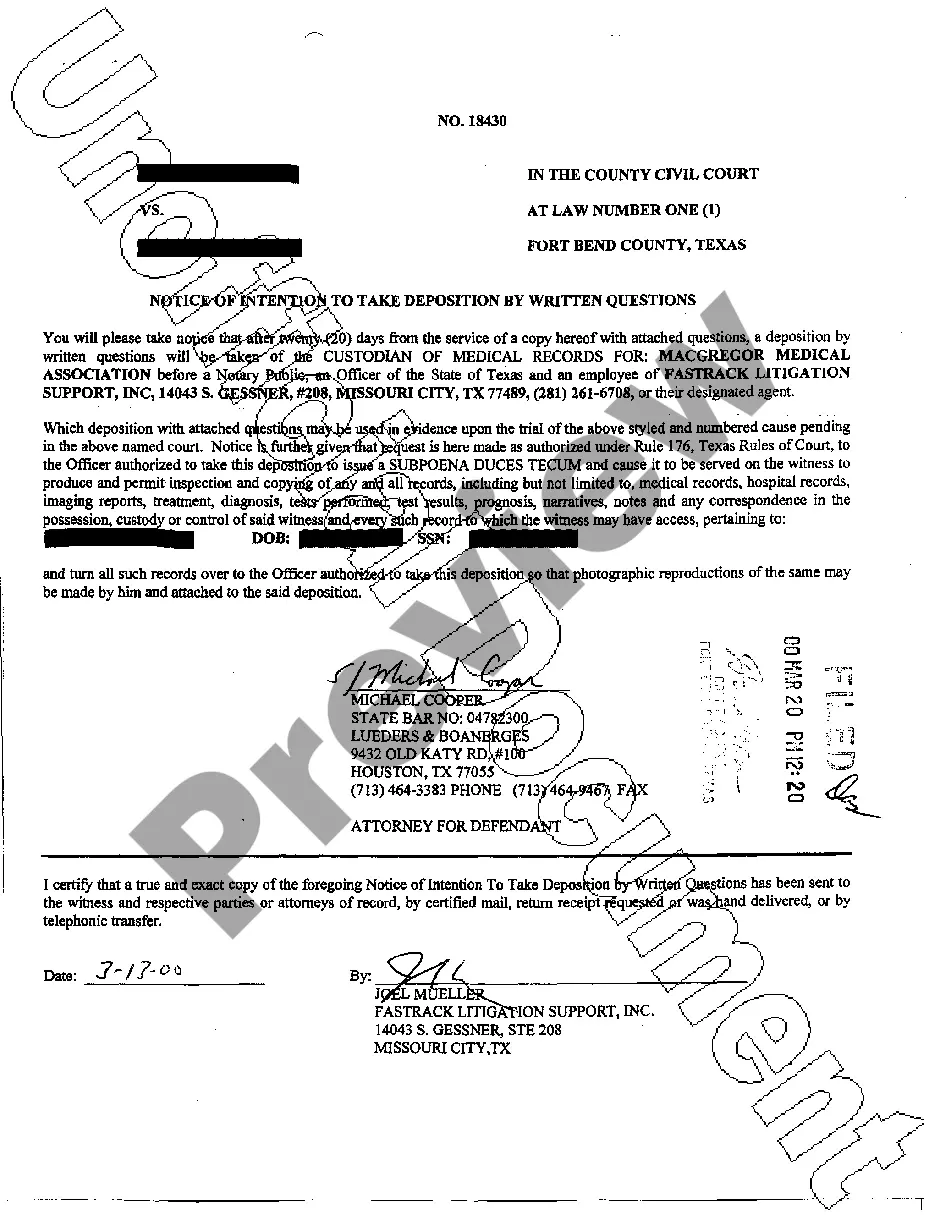
Michigan Amendment to Living Trust
What is this form?
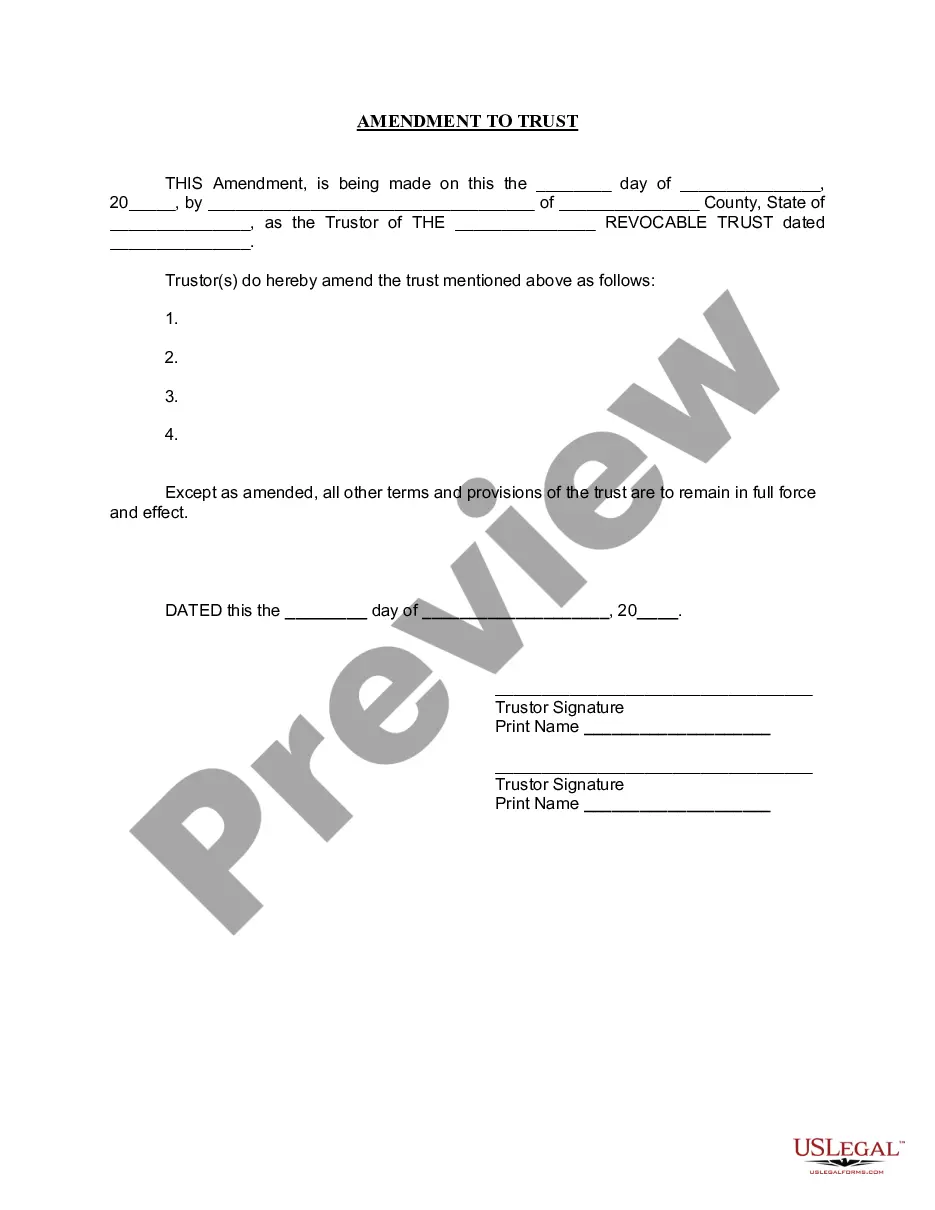
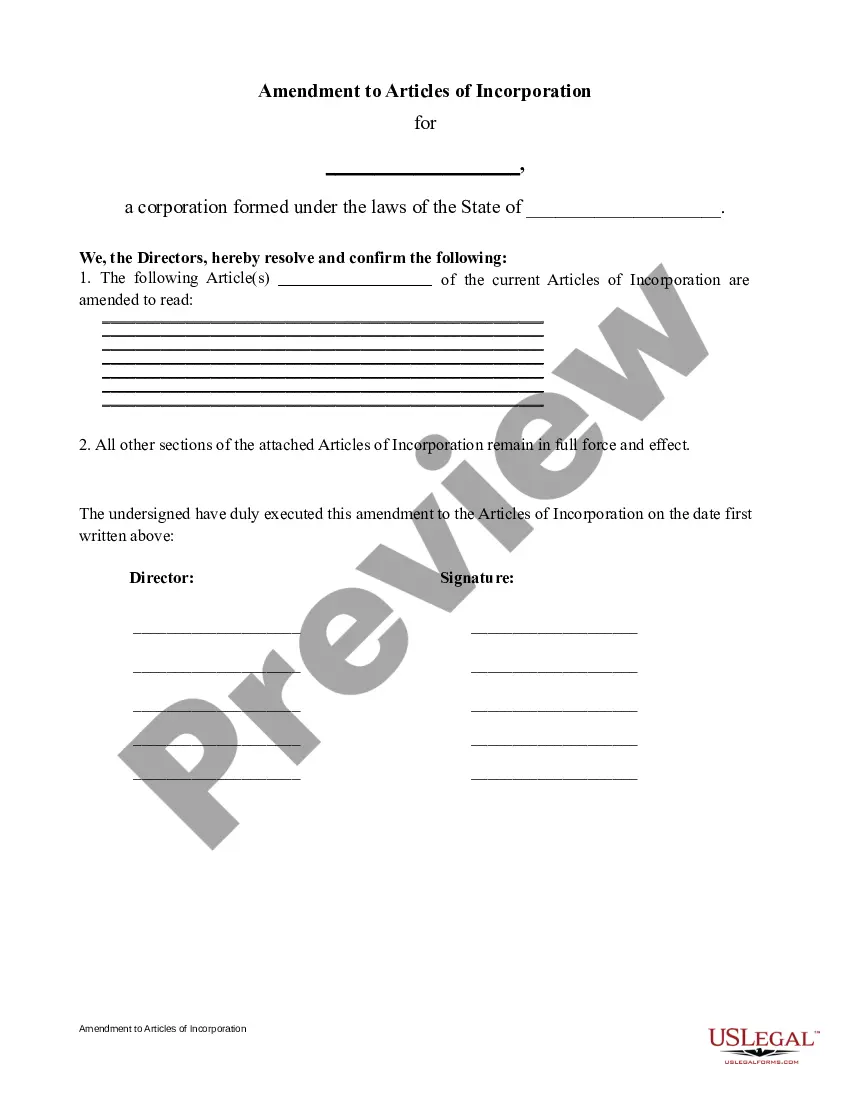
The Amendment to Living Trust is a legal document used to modify the terms of an existing living trust. Unlike creating a new trust, this amendment allows the Trustor to make changes to specific provisions while keeping the trust intact for estate planning purposes. This form is designed to ensure that the Trustor can update or change aspects of their trust without affecting the overall purpose or structure of the trust itself.
What’s included in this form
- Date of the amendment
- Name and address of the Trustor
- Details of the existing living trust being amended
- Specific amendments to be made
- Trustor signatures
- Notary acknowledgment section



When this form is needed
This form should be used when the Trustor decides to change any aspects of their living trust, such as altering beneficiaries, modifying property listings, or adding new provisions. It is particularly useful when there is a need to address changing circumstances in the Trustor's life without needing to establish a whole new trust document.
Who this form is for
- Trustors who have established a living trust and need to make amendments
- Individuals overseeing estate planning who want flexible solutions for asset management
- Anyone looking to ensure their estate plan reflects current wishes and circumstances
How to complete this form
- Fill in the date of the amendment you are making.
- Provide your full name, county, and state as the Trustor.
- Reference the existing living trust by providing its name and date.
- Clearly outline the specific changes you are making to the trust.
- Sign the document in front of a notary public.
- Obtain the notary's signature and seal to finalize the amendment.
Does this form need to be notarized?
Yes, this form must be notarized to be legally valid. US Legal Forms offers integrated online notarization services that are available twenty-four hours a day, providing a secure video call for notarization. This process ensures your document meets all legal standards without the need for travel.
Get your form ready online
Our built-in tools help you complete, sign, share, and store your documents in one place.
Make edits, fill in missing information, and update formatting in US Legal Forms—just like you would in MS Word.
Download a copy, print it, send it by email, or mail it via USPS—whatever works best for your next step.
Sign and collect signatures with our SignNow integration. Send to multiple recipients, set reminders, and more. Go Premium to unlock E-Sign.
If this form requires notarization, complete it online through a secure video call—no need to meet a notary in person or wait for an appointment.
We protect your documents and personal data by following strict security and privacy standards.

Make edits, fill in missing information, and update formatting in US Legal Forms—just like you would in MS Word.

Download a copy, print it, send it by email, or mail it via USPS—whatever works best for your next step.

Sign and collect signatures with our SignNow integration. Send to multiple recipients, set reminders, and more. Go Premium to unlock E-Sign.

If this form requires notarization, complete it online through a secure video call—no need to meet a notary in person or wait for an appointment.

We protect your documents and personal data by following strict security and privacy standards.
Typical mistakes to avoid
- Failing to include complete details of the trust being amended.
- Not signing the document in front of a notary public.
- Leaving out specific amendments or changes that were intended.
- Not reviewing the completed document for accuracy before submission.
Why complete this form online
- Convenient access to legal forms any time of the day.
- Editable templates that can be customized to meet your needs.
- Reliable forms drafted by licensed attorneys for legal compliance.
What to keep in mind
- The Amendment to Living Trust allows for straightforward modifications to an existing trust.
- Proper completion and notarization of this form are crucial for its validity.
- Understanding when and how to use this form can help ensure your estate plan remains current and effective.
Looking for another form?




Form popularity
FAQ
Yes, a living trust in Michigan generally avoids probate, allowing for a seamless transfer of assets upon your passing. This means your beneficiaries can access trust assets without the delays and costs typically associated with probate. By utilizing a Michigan Amendment to Living Trust, you can manage and streamline your estate effectively, ensuring your wishes are honored quickly.
Making an amendment to a living trust involves drafting a clear document that specifies the changes you wish to implement. The Michigan Amendment to Living Trust should be signed and dated, ideally in the presence of a notary. It’s critical to retain the original trust document alongside the amendment to ensure clarity and legal compliance.
In Michigan, a codicil needs to be signed by the testator and two witnesses, but it does not need to be notarized to be valid. However, if you choose to notarize your codicil, it may provide an extra layer of authenticity. This is distinct from the process for a Michigan Amendment to Living Trust, where notarization typically adds value.
To execute a Michigan Amendment to Living Trust, you must create a written document detailing the changes you intend to make. It should clearly state which sections of the original trust are being amended. Once you complete the document, sign it in front of a notary to validate the changes and retain a copy for your records.
A codicil is a document that alters an existing will, while an amendment to a trust specifically changes the terms of a living trust. When considering a Michigan Amendment to Living Trust, you directly modify the trust’s provisions. This customization ensures the trust aligns with your current wishes, unlike a codicil, which is limited to wills.
To obtain a trust amendment form for your Michigan Amendment to Living Trust, you can use online resources such as US Legal Forms. This platform offers a variety of customizable legal forms, including trust amendments, that adhere to Michigan laws. Simply access the site, search for the trust amendment form, and follow the instructions to download or complete it. This process simplifies your efforts to amend your trust effectively.
Yes, you can write your own amendment to your Michigan Amendment to Living Trust. However, it is important to follow the legal requirements to ensure the amendment is valid. You should clearly identify the specific provisions you want to change or add. After drafting your amendment, consider consulting a legal professional to review it and ensure it aligns with your original trust document.