Michigan Property Settlement Agreement - No Children
What this document covers
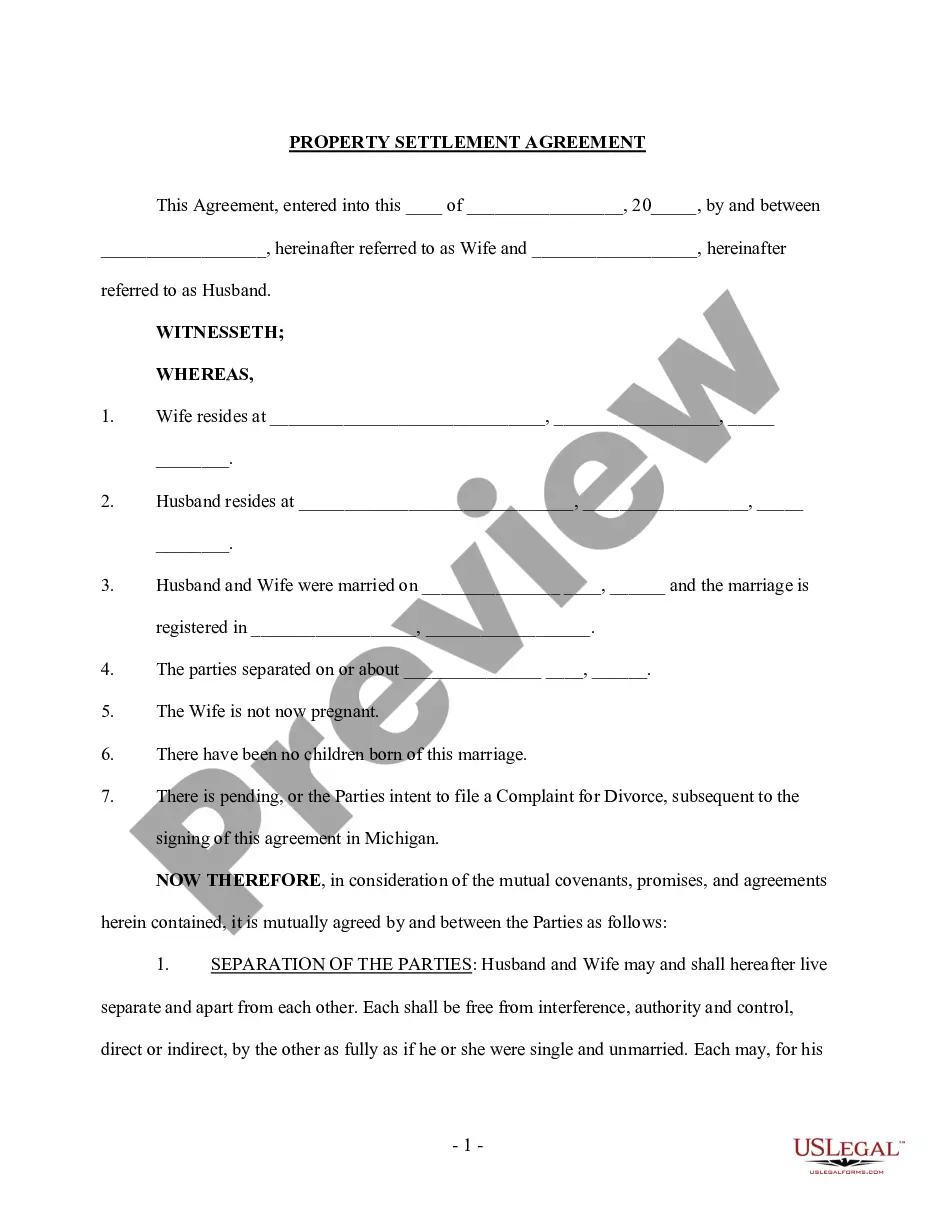
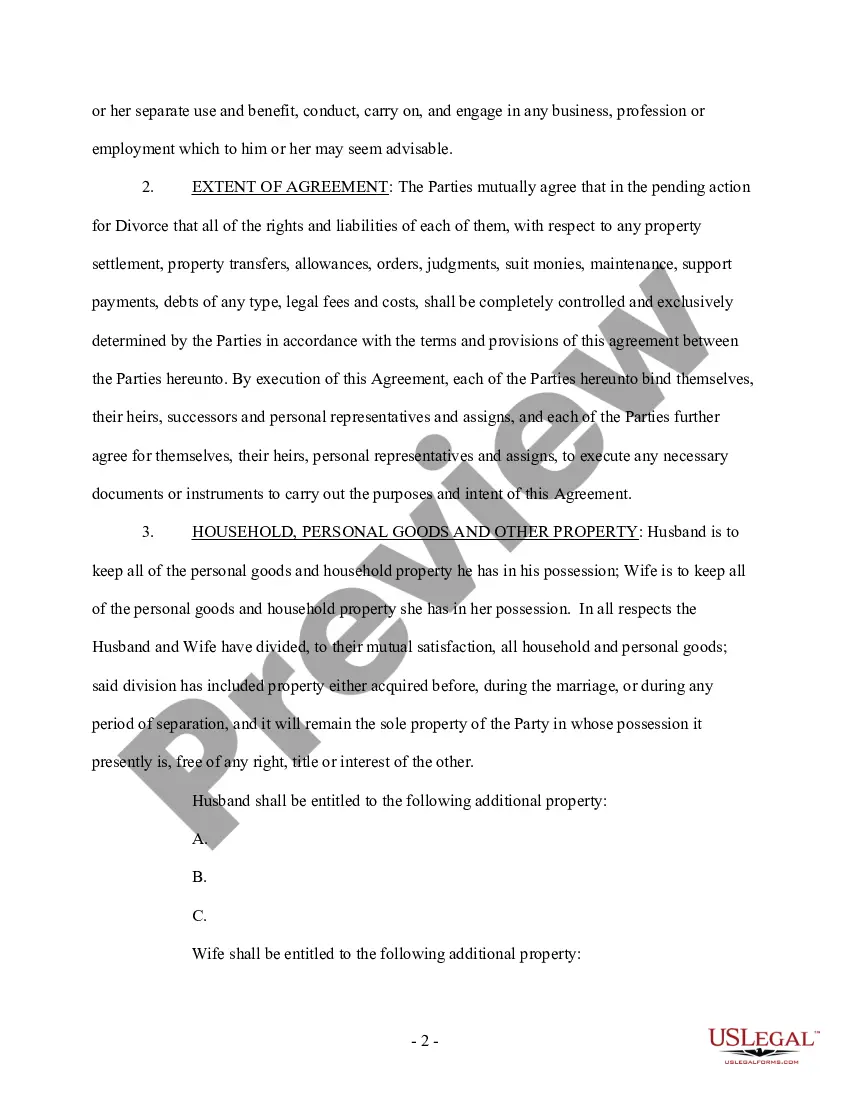
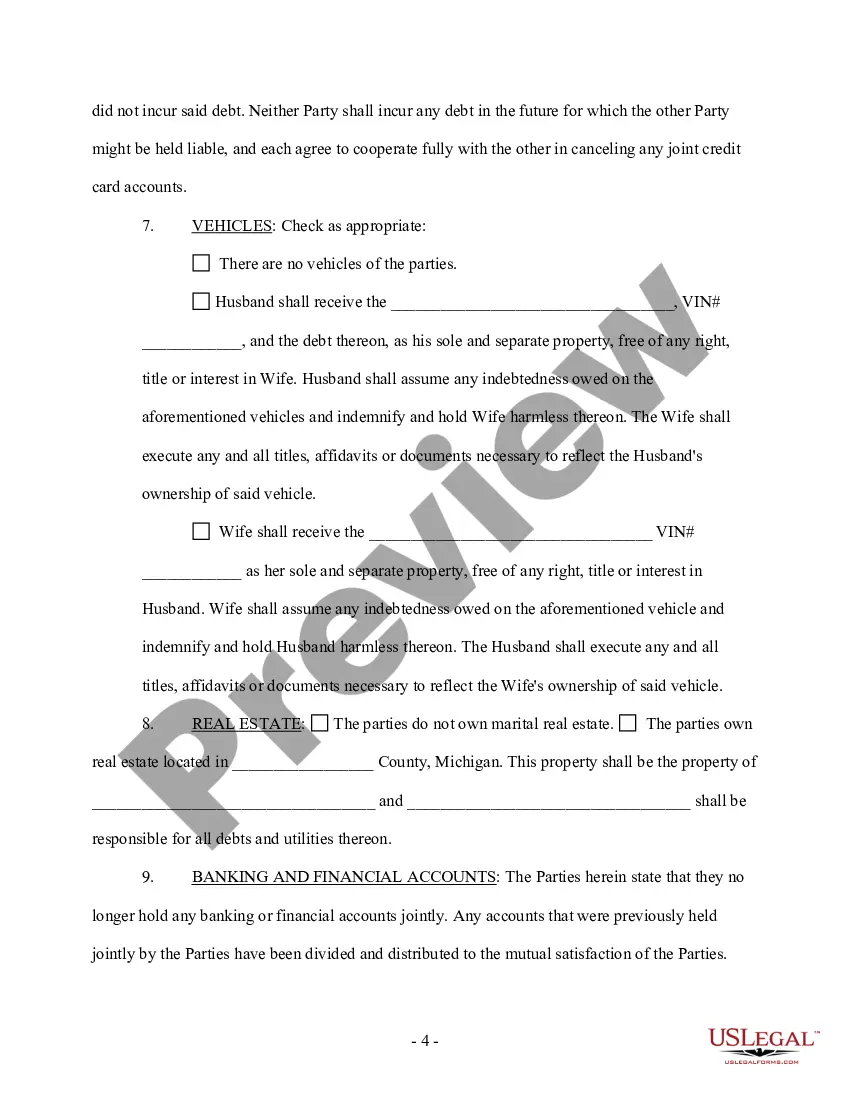
The Property Settlement Agreement - No Children is a legal document that outlines the terms of asset and debt division between spouses who are separating or divorcing without children. Unlike a Marital Settlement Agreement, this form specifically excludes provisions related to child support or custody, focusing solely on property distribution and financial obligations. It is crucial for establishing clear terms to avoid future disputes over assets or debts accrued during the marriage.
Main sections of this form
- Details of spouse identification, including names and living addresses.
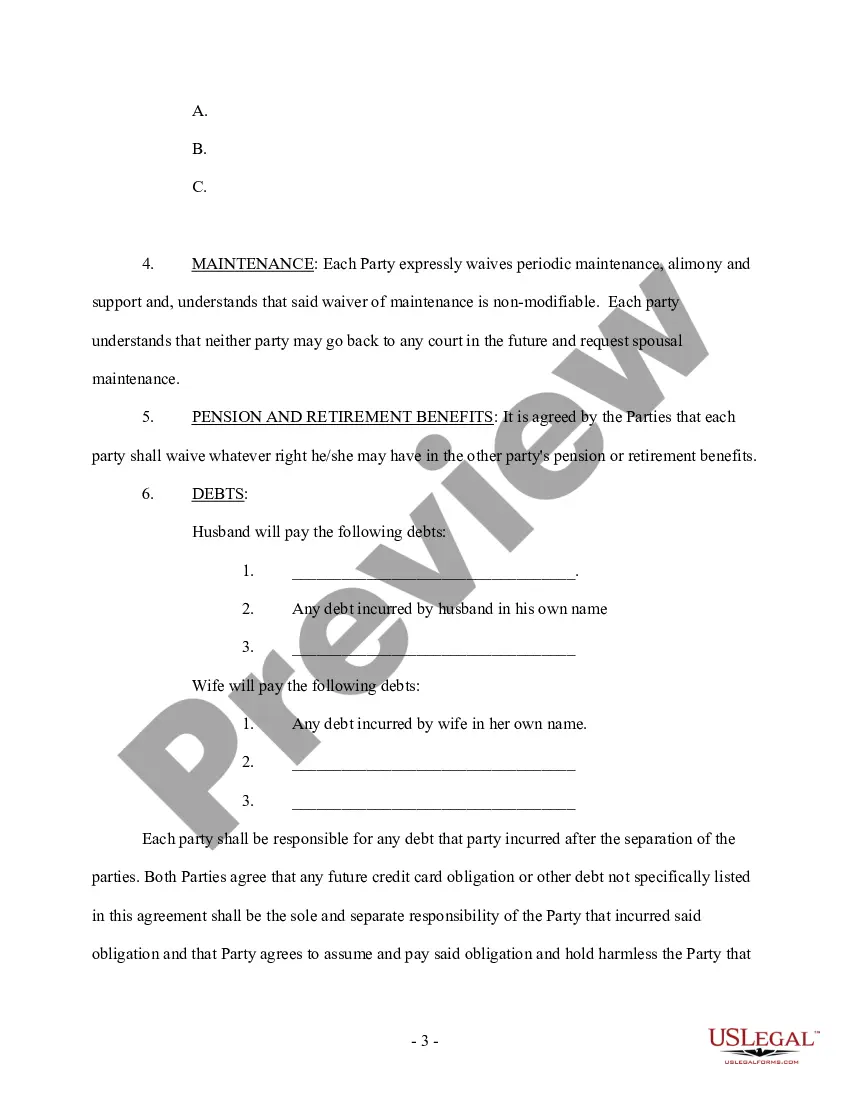
- Provisions for asset and debt separation, specifying who pays which liabilities.
- Clauses regarding pension or retirement benefit waiver by both parties.
- Instructions on handling vehicles and real estate owned by the parties.
- Indemnification agreements to protect against financial liabilities.
- Presentation requirements for a court to recognize and adopt the agreement.


Common use cases
This form is essential when a couple has decided to divorce and has no children to consider. It is particularly useful for those who wish to clearly delineate the responsibilities and rights concerning their properties and debts before finalizing their divorce. Using this agreement can simplify the divorce process by minimizing potential financial disputes after separation.
Who needs this form
- Married couples without children who are planning to divorce.
- Individuals seeking to establish clear financial responsibilities post-separation.
- Parties wishing to avoid lengthy legal disputes regarding property and debt division.
Instructions for completing this form
- Identify the parties involved by including full names and addresses.
- Fill in the date of marriage and the date of separation.
- Clearly state all debts and assets, specifying responsibilities for payment and ownership.
- Include provisions regarding waivers of pension and retirement benefits.
- Have both parties sign the document in the presence of witnesses.
Notarization guidance
This form needs to be notarized to ensure legal validity. US Legal Forms provides secure online notarization powered by Notarize, allowing you to complete the process through a verified video call, available anytime.
Get your form ready online
Our built-in tools help you complete, sign, share, and store your documents in one place.
Make edits, fill in missing information, and update formatting in US Legal Forms—just like you would in MS Word.
Download a copy, print it, send it by email, or mail it via USPS—whatever works best for your next step.
Sign and collect signatures with our SignNow integration. Send to multiple recipients, set reminders, and more. Go Premium to unlock E-Sign.
If this form requires notarization, complete it online through a secure video call—no need to meet a notary in person or wait for an appointment.
We protect your documents and personal data by following strict security and privacy standards.

Make edits, fill in missing information, and update formatting in US Legal Forms—just like you would in MS Word.

Download a copy, print it, send it by email, or mail it via USPS—whatever works best for your next step.

Sign and collect signatures with our SignNow integration. Send to multiple recipients, set reminders, and more. Go Premium to unlock E-Sign.

If this form requires notarization, complete it online through a secure video call—no need to meet a notary in person or wait for an appointment.

We protect your documents and personal data by following strict security and privacy standards.
Common mistakes
- Failing to accurately list all assets and debts can lead to unresolved financial obligations.
- Not having the agreement reviewed or notarized can impact its enforceability.
- Omitting to include necessary details about vehicle and real estate can create future disputes.
- Using the form without understanding the implications may lead to unintended consequences.
Benefits of using this form online
- Convenience of filling out the form at your own pace from home.
- Editability allows you to make changes easily until the final version is ready.
- Reliable legal language drafted by licensed attorneys ensures compliance with regulations.
Looking for another form?
Form popularity
FAQ
Marital Property Is Divided FairlyMichigan law requires judges to divide property fairly. Fair usually means that each person gets about half of everything.Your property might be divided unequally if one person is more at fault for the marriage ending or if one person needs more property.
1An offer. This is what one party proposes to do, pay, etc.2Acceptance.3Valid consideration.4Mutual assent.5A legal purpose.6A settlement agreement must also not be "unconscionable." This means that it cannot be illegal, fraudulent, or criminal.
Michigan is an equitable distribution state. This means courts will attempt to divide property and assets in a divorce in a fair and equal way but it doesn't mean that the assets will always be divided on a 50/50 basis.Separate property can become marital property if it is commingled with marital property.
1#1. Start with the Basics.2#2. Include the Details.3#3. Confirm Your Agreement.4#4. Identify and Divide Assets and Debts.5#5. Create a Parenting Plan for Custody and Visitation.6#6. Agree on Child Support and Spousal Support (Alimony)7#7. Polishing Your Agreement.8Conclusion.
Marital property is any property, or debt, acquired during the marriage (from the date of the wedding until the judgment of divorce is entered). Marital property is subject to division between the parties. Property division in Michigan follows the rule of equitable distribution.
Is Michigan a Community Property State? No. Michigan is an equitable distribution state, which means that divorce courts in Michigan may distribute the marital assets of spouses in a way they believe is fair.
In California, a marriage that lasts under 10 years will have a set duration of alimony, which is typically half the length of the marriage.
Some people wonder if they can save even more by money by writing their own settlement agreement and not seeking the help of a divorce attorney at all. While there is no legal requirement that you have a lawyer draft your settlement agreement, it is certainly a good idea to do so.