Michigan Notice of Breach of Written Lease for Violating Specific Provisions of Lease with Right to Cure for Nonresidential Property from Landlord to Tenant
Overview of this form
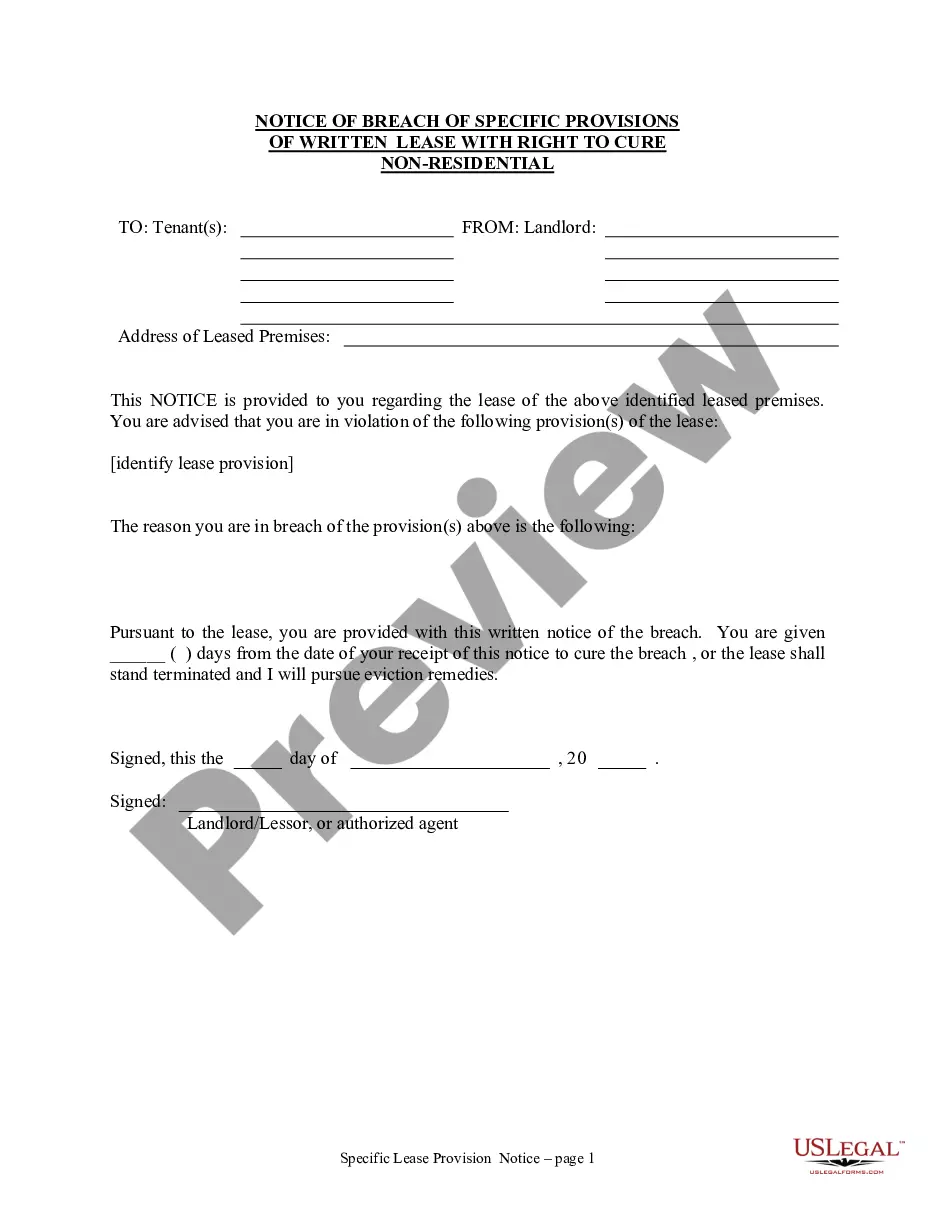
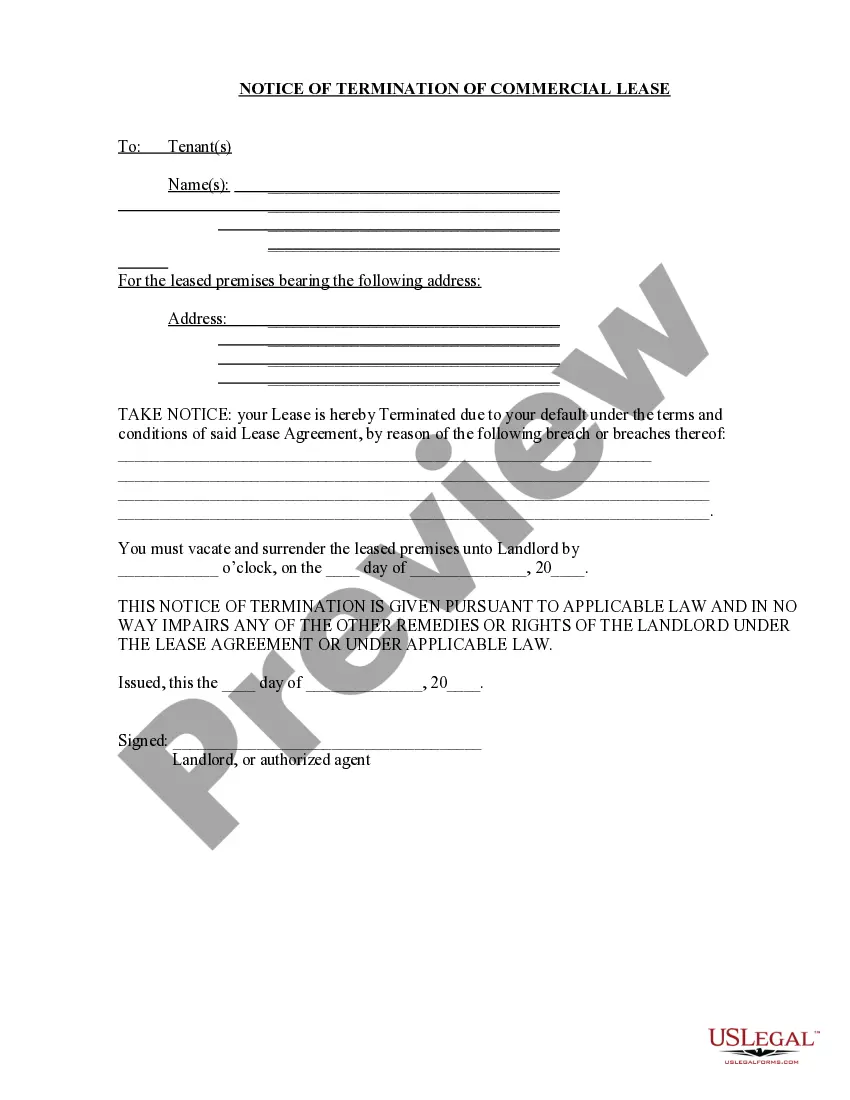
The Notice of Breach of Written Lease for Violating Specific Provisions of Lease with Right to Cure for Non-Residential Property is a legal document used by landlords to formally notify tenants of lease violations. This specific form grants the tenant the opportunity to rectify the identified breach before further action, such as eviction, is taken. Unlike other notice forms, this template is tailored for non-residential properties, ensuring it meets the unique needs of commercial landlords and tenants.
Key parts of this document
- Identification of the leased premises.
- Details of the specific lease provision that has been violated.
- A clear explanation of the breach.
- Deadline for curing the breach.
- Signature of the landlord or authorized agent.
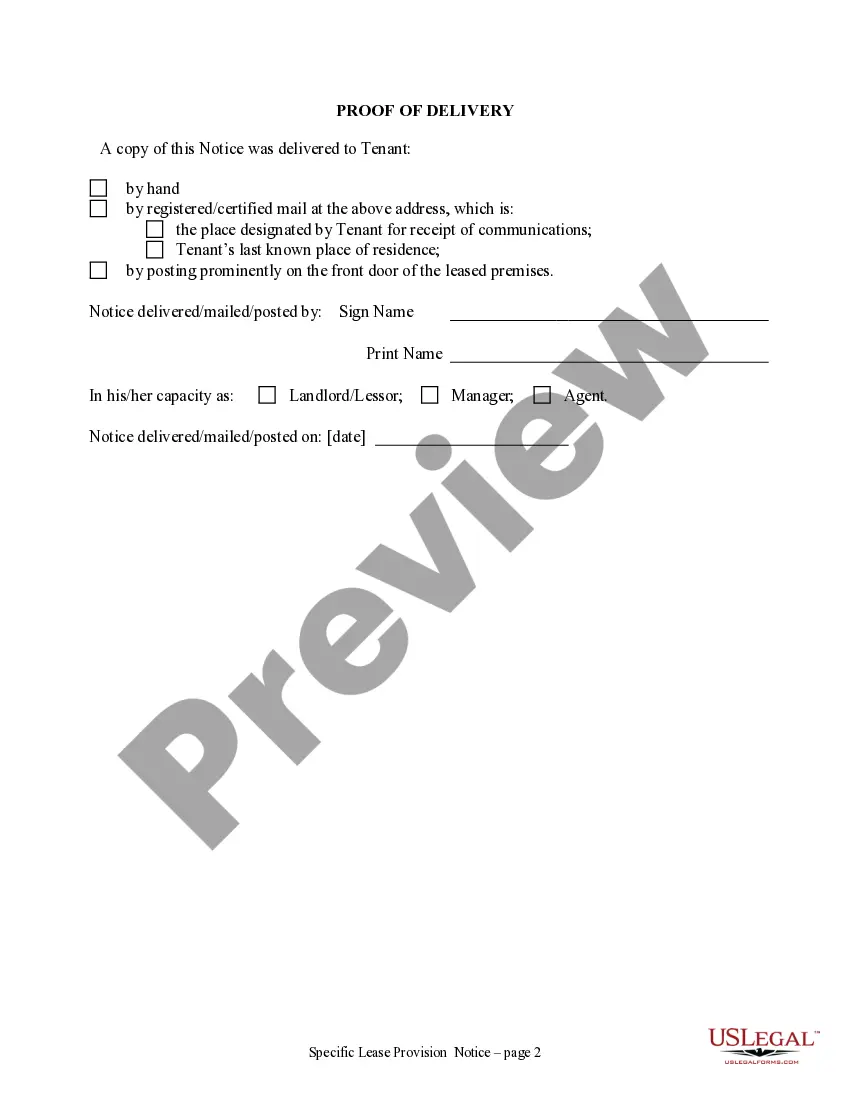
- Proof of delivery methods included.



Situations where this form applies
This form is needed when a landlord discovers that a tenant has violated specific terms laid out in a non-residential lease agreement. It serves as a formal notification to the tenant, allowing them the right to cure the violation within a specified period. This is often necessary when there is a potential breach that could lead to eviction if not addressed promptly.
Who should use this form
- Landlords of non-residential properties.
- Property managers overseeing commercial leases.
- Tenants who have received a breach notice and want to understand their rights.
Instructions for completing this form
- Identify and fill in the address of the leased premises.
- Specify the section of the lease that has been violated.
- Clearly outline the nature of the breach.
- Indicate the number of days the tenant has to cure the breach.
- Sign and date the notice.
- Deliver the notice using one of the specified methods.
Does this document require notarization?
In most cases, this form does not require notarization. However, some jurisdictions or signing circumstances might. US Legal Forms offers online notarization powered by Notarize, accessible 24/7 for a quick, remote process.
Get your form ready online
Our built-in tools help you complete, sign, share, and store your documents in one place.
Make edits, fill in missing information, and update formatting in US Legal Forms—just like you would in MS Word.
Download a copy, print it, send it by email, or mail it via USPS—whatever works best for your next step.
Sign and collect signatures with our SignNow integration. Send to multiple recipients, set reminders, and more. Go Premium to unlock E-Sign.
If this form requires notarization, complete it online through a secure video call—no need to meet a notary in person or wait for an appointment.
We protect your documents and personal data by following strict security and privacy standards.

Make edits, fill in missing information, and update formatting in US Legal Forms—just like you would in MS Word.

Download a copy, print it, send it by email, or mail it via USPS—whatever works best for your next step.

Sign and collect signatures with our SignNow integration. Send to multiple recipients, set reminders, and more. Go Premium to unlock E-Sign.

If this form requires notarization, complete it online through a secure video call—no need to meet a notary in person or wait for an appointment.

We protect your documents and personal data by following strict security and privacy standards.
Typical mistakes to avoid
- Failing to accurately identify the lease provision violated.
- Not providing a clear and specific explanation of the breach.
- Omitting the deadline for the tenant to cure the breach.
- Not signing the notice or including an authorized signer's details.
Advantages of online completion
- Easy access to a legally vetted template.
- Convenient customization to fit specific circumstances.
- Secure downloading and printing options for immediate use.
Legal use & context
- This notice serves as a formal communication that a breach has occurred.
- It provides the tenant with the right to cure the breach, which is often required by law.
- Failure to provide this notice may affect the landlord's ability to pursue eviction.
Main things to remember
- This form is essential for notifying tenants of lease violations specific to non-residential properties.
- Landlords must clearly state the breach and the time allowed for a cure.
- Using a standardized form helps to ensure compliance with legal requirements.
Looking for another form?
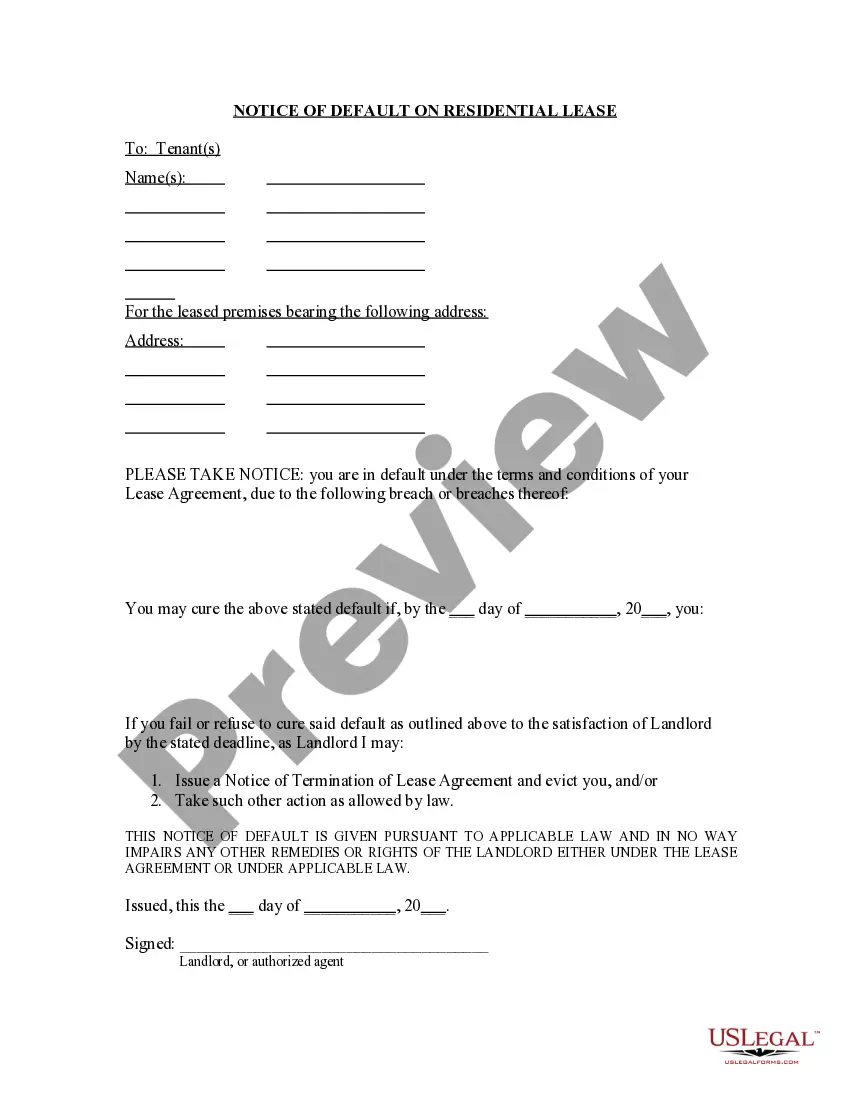
Form popularity
FAQ
The date that the tenant warning letter was written. The name and the basic personal information of the tenant. The name of the landlord or the owner of the property. The reason why a tenant warning letter has been written.
A lease is automatically void when it is against the law, such as a lease for an illegal purpose. In other circumstances, like fraud or duress, a lease can be declared void at the request of one party but not the other.
Under California law, a lease does have to be in writing to be enforceable, but only when the lease is for a period of more than a year.
The rental property address, including unit number (if applicable) The names of all tenants on the lease agreement. The date the lease violation notice was written. The specific reason for the notice. The time and date the violation occurred (if applicable)
If a tenant fails to pay rent, breaks a rule, or significantly damages the property, then it is considered breach of contract and you have grounds for eviction. If there are people living in the unit that are not on the lease, then that is also breach of contract and you have grounds to evict them.
While some jurisdictions may have provisions that allow consumers to change their minds with no consequences, generally there is no cooling-off period for leasing real property. Once the landlord and tenant sign a lease and a copy is delivered to the both parties, it becomes a valid contract.
A tenant must pay the rent up to and including the day their termination notice period ends and they vacate the property. If a tenant does not owe the landlord money at the end of their tenancy and there is no damage to the property, the bond paid at the beginning of the tenancy should be refunded in full.
In some circumstances, a tenant can break a fixed-term agreement early without penalty. A tenant can give 14 days' written notice to end an agreement early without penalty if: they have accepted an offer of social housing (e.g. from DCJ Housing)
Your name, and the landlord's name and address. The date you're writing the letter. Informing the landlord you're breaking your lease early. The reason why you're breaking your lease. The building and apartment you're vacating. The date by which you're vacating.