Michigan Letter from Tenant to Landlord with Demand that landlord repair floors, stairs or railings
Overview of this form
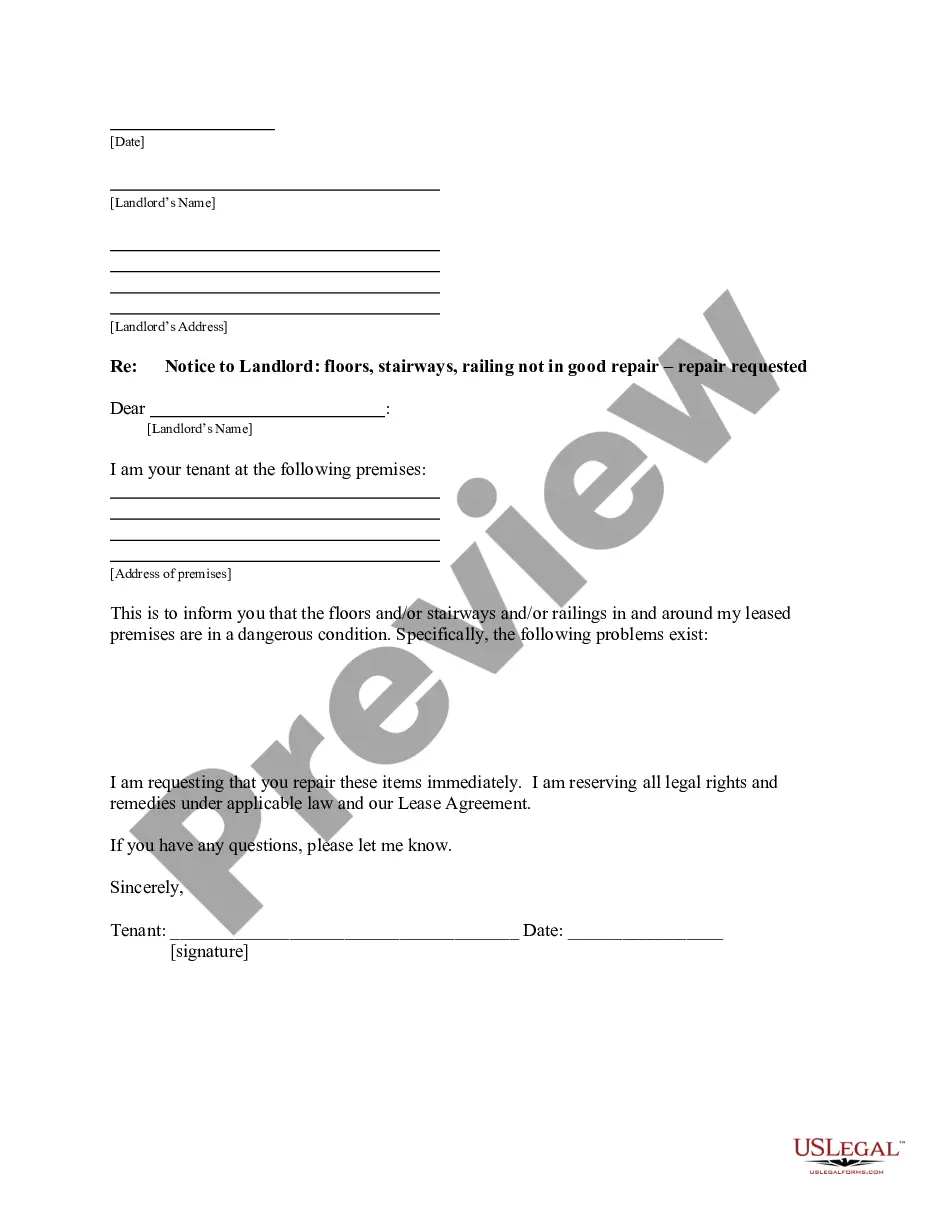
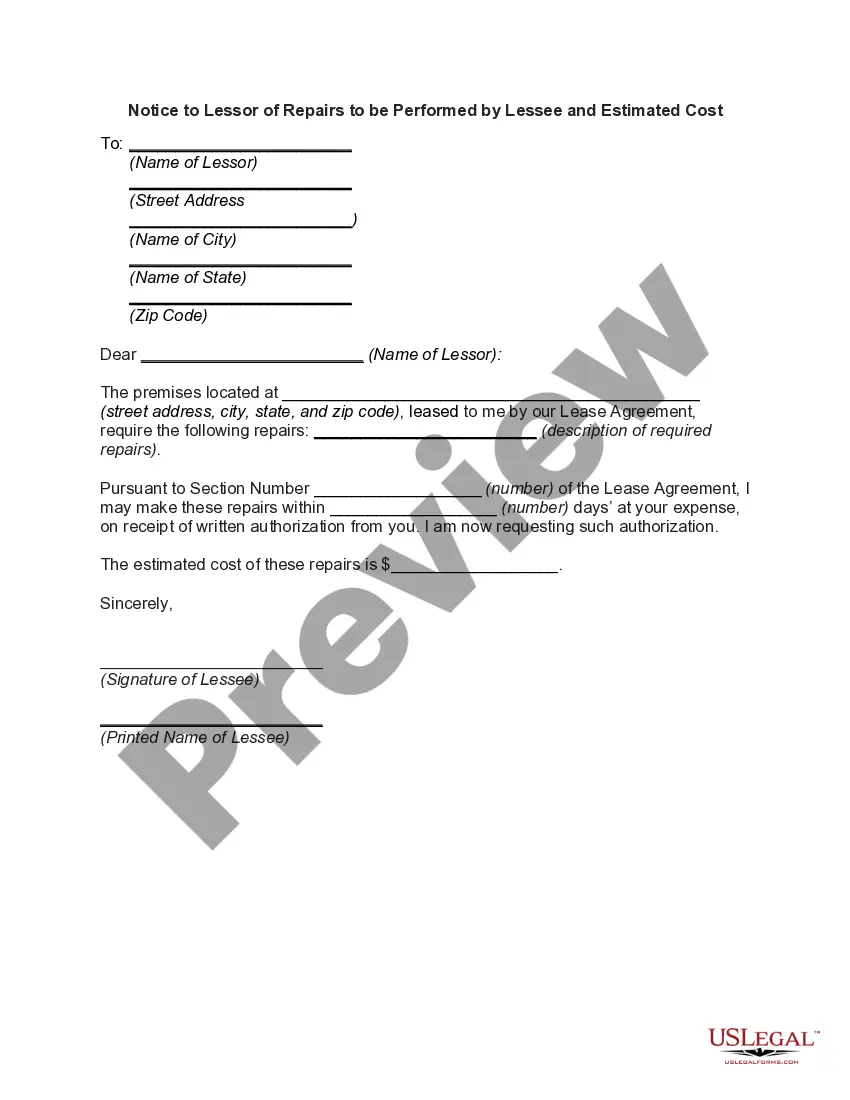
This form, titled Letter from Tenant to Landlord with Demand that landlord repair floors, stairs or railings, allows a tenant to formally request repairs for floors, stairways, or railings in their rental property. It serves to notify the landlord of their obligation to maintain the property and initiates a legal demand for necessary repairs. This form differs from general tenant notification letters as it explicitly addresses repair issues related to structural safety and tenantable conditions.
Main sections of this form
- Tenant's name and contact information
- Landlord's name and contact information
- Description of the specific repair issues (floors, stairs, railings)
- Statement of landlord's obligation to maintain the property
- Demand for prompt repairs and a timeline for completion
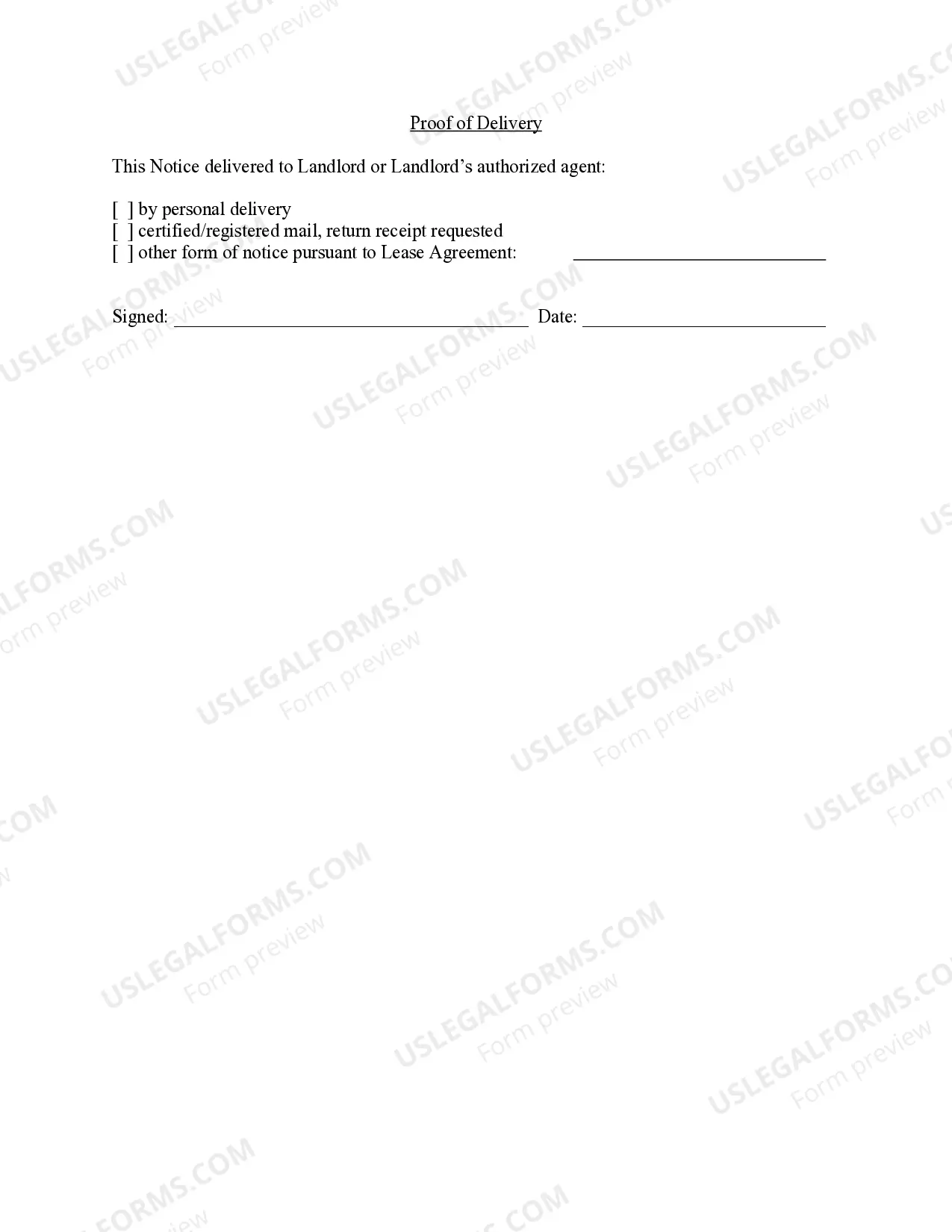
- Proof of delivery options for the notice



When to use this document
This form should be used when a tenant identifies safety concerns or disrepair related to floors, stairs, or railings in their rental unit. It is necessary when previous verbal requests for repairs have not been addressed, creating potential hazards. Utilizing this form helps to establish a documented account of the tenantâs request and the landlord's responsibilities.
Who can use this document
- Tenants living in rented properties experiencing repair issues
- Individuals who have already brought repair concerns to the landlordâs attention verbally
- Any renter seeking to formally document and demand repairs for their safety and well-being
How to prepare this document
- Identify and enter your name and contact information at the top of the letter.
- Provide your landlord's name and contact information clearly.
- Describe the specific issues with the floors, stairs, or railings in detail.
- Clearly state the demand for repairs and a reasonable timeline for completion.
- Include a signature and date at the bottom of the letter.
- Select the method of delivery (e.g., personal delivery or certified mail) and record the proof of delivery.
Does this document require notarization?
This form does not typically require notarization unless specified by local law. It is advisable to check specific state regulations to ensure compliance. For added validity, a notarized document can support your claims in legal matters.
Get your form ready online
Our built-in tools help you complete, sign, share, and store your documents in one place.
Make edits, fill in missing information, and update formatting in US Legal Forms—just like you would in MS Word.
Download a copy, print it, send it by email, or mail it via USPS—whatever works best for your next step.
Sign and collect signatures with our SignNow integration. Send to multiple recipients, set reminders, and more. Go Premium to unlock E-Sign.
If this form requires notarization, complete it online through a secure video call—no need to meet a notary in person or wait for an appointment.
We protect your documents and personal data by following strict security and privacy standards.

Make edits, fill in missing information, and update formatting in US Legal Forms—just like you would in MS Word.

Download a copy, print it, send it by email, or mail it via USPS—whatever works best for your next step.

Sign and collect signatures with our SignNow integration. Send to multiple recipients, set reminders, and more. Go Premium to unlock E-Sign.

If this form requires notarization, complete it online through a secure video call—no need to meet a notary in person or wait for an appointment.

We protect your documents and personal data by following strict security and privacy standards.
Mistakes to watch out for
- Not providing enough detail about the repair issues.
- Failing to keep a copy of the letter for personal records.
- Using informal language instead of maintaining a professional tone.
- Not including the landlord's contact information correctly.
Benefits of using this form online
- Easy to download and customize for your specific situation.
- Streamlined process saves time compared to creating a letter from scratch.
- Access to attorney-drafted forms ensures reliability and legality.
- Convenience of immediate access anytime and anywhere.
Quick recap
- This letter is essential for tenants who need to report repair issues formally.
- Clearly outlining repair demands can foster quicker responses from landlords.
- Using this form helps to document communication and could support future actions if required.
Looking for another form?
Form popularity
FAQ
Landlord Maintenance Responsibilities provide a safe and habitable dwelling; comply with state and local housing codes, where applicable; carry out repairs that are not the fault of the tenant; maintain any part of the dwelling, grounds, appliances, equipment, utilities as mutually agreed to in a lease.
The landlord had a duty to reasonably maintain the property; The landlord knew or should have known of the dangerous condition; The landlord breached their duty by failing to repair/fix the dangerous condition;
Fundamental responsibilities of landlords include: providing and maintaining the property in a clean and reasonable standard; giving proper receipts and maintaining records of all transactions pertaining to the tenancy; paying council rates and taxes; maintaining locks to ensure the property's security; and lodging the
If you think your landlord is violating the Fair Housing Act, you can get that landlord in trouble by filing a complaint at HUD.gov. Your remedy for breach of quiet enjoyment is to terminate the lease and move or sue in small claims court.
Know your state's landlord/tenant laws. Read and respond to the court summons. Try to work out a settlement. Consider legal counsel. Show up for court. Look sharp and provide evidence.
You can file a lawsuit for negligence against the manager of a real estate property in the same way you can sue the owner of any type of business. Generally speaking, with certain exceptions, filing a lawsuit for negligence against a property manager is a straightforward process.
Uninhabitable conditions can include dangerous ones, such as holes in the floor, unsafe or exposed wiring, or non-working air conditioning in dangerously hot summer months. Gross infestations of roaches, fleas or other pests are also uninhabitable conditions.
Uninhabitable conditions can include dangerous ones, such as holes in the floor, unsafe or exposed wiring, or non-working air conditioning in dangerously hot summer months. Gross infestations of roaches, fleas or other pests are also uninhabitable conditions.
If you're seeking damages for emotional distress caused by a landlord's discrimination, or punitive damages for especially blatant and intentional discrimination, a lawsuit may well be your best bet. Understand what's involved in suing your landlord. You may file a lawsuit in either federal or state court.