Michigan Quitclaim Deed from Husband to Himself and Wife
What is this form?
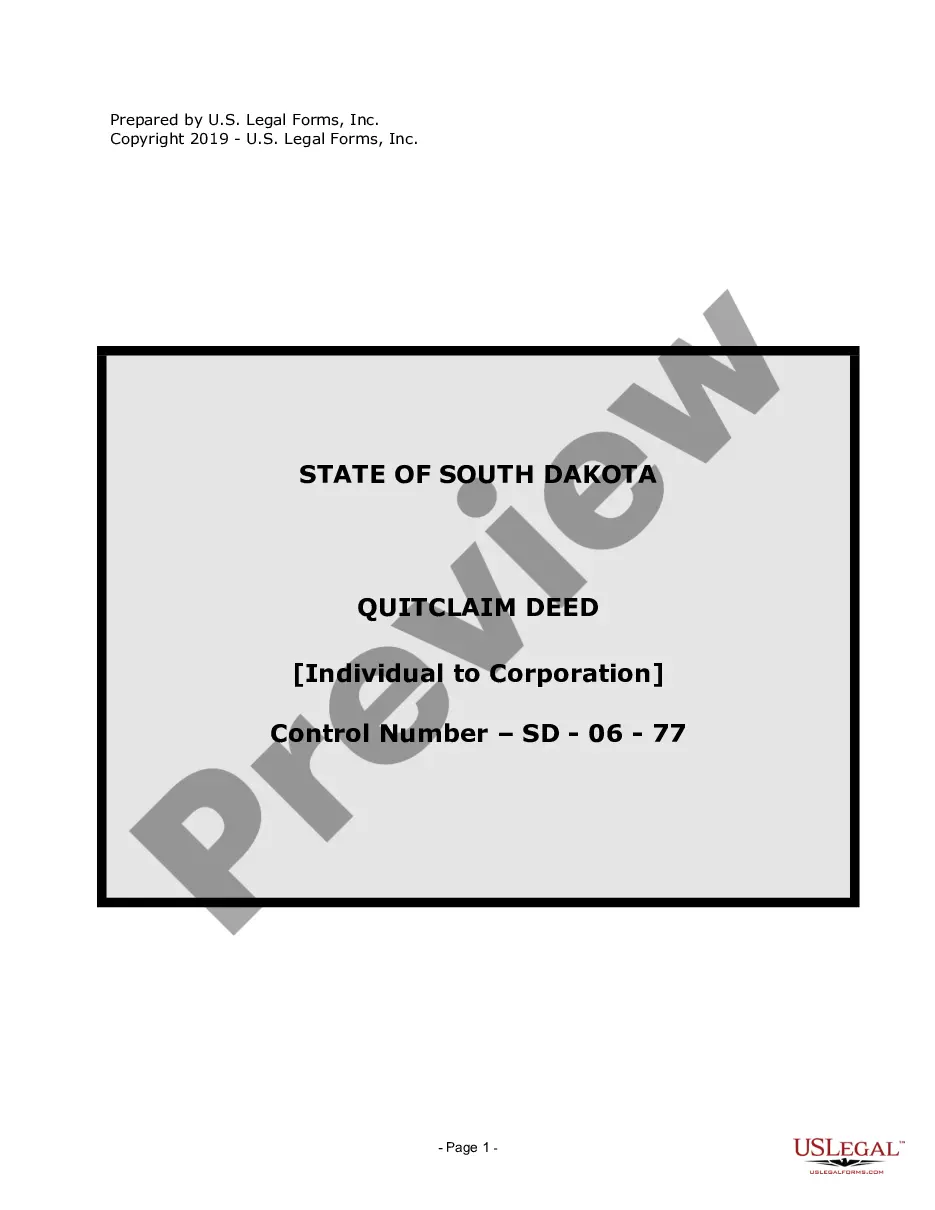
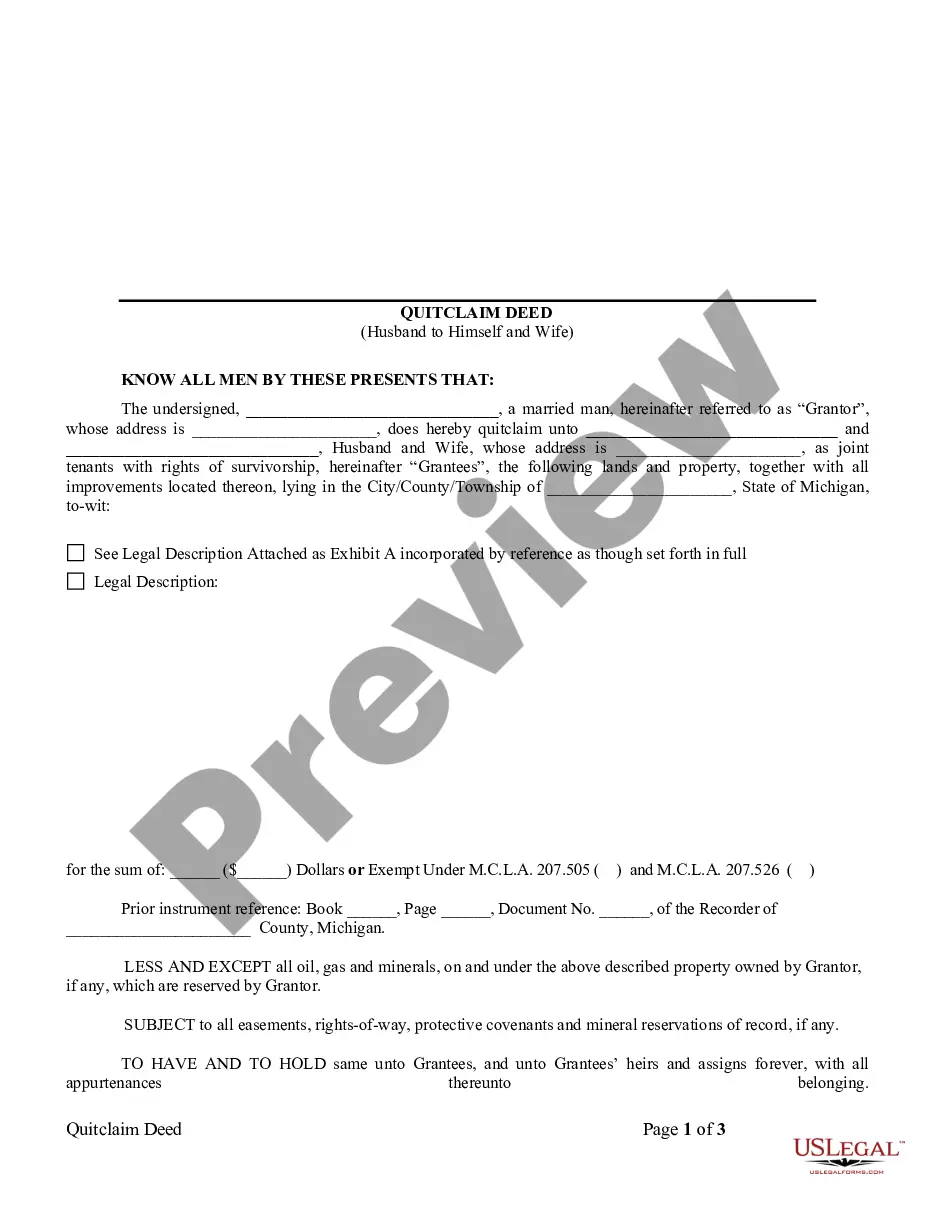
The Quitclaim Deed from Husband to Himself and Wife is a legal instrument used to transfer ownership of property. In this form, the husband, as the Grantor, conveys the property to himself and his wife, who are the Grantees. Unlike other types of deeds, a quitclaim deed does not guarantee that the Grantor holds clear title to the property, making it crucial for informal transfers or when the parties involved are familiar with the property history.
Main sections of this form
- Identification of the Grantor and Grantees, including their addresses.
- Legal description of the property being transferred.
- Reservation of rights for oil, gas, and minerals beneath the land.
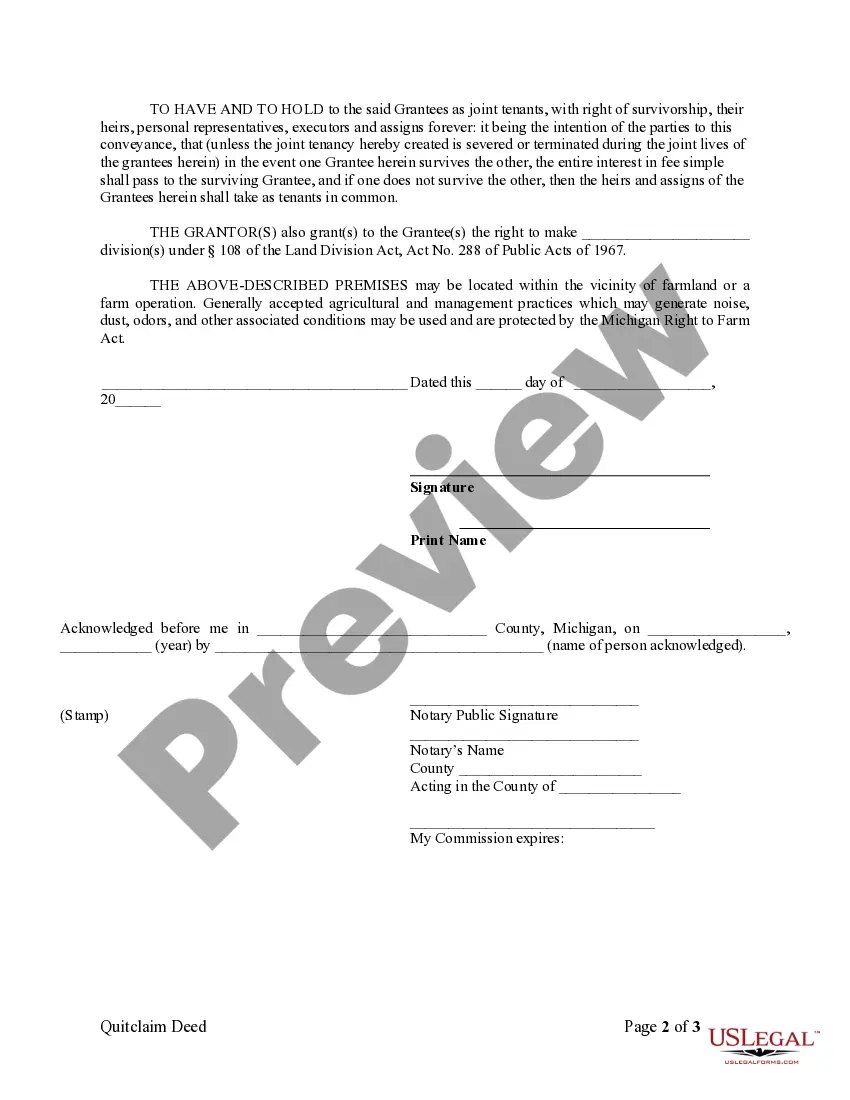
- Statement of joint tenancy with rights of survivorship for Grantees.
- Space for notarization and county information.






Situations where this form applies
This form is ideal for situations where a husband wants to transfer property ownership to both himself and his wife. Common scenarios include clarifying property ownership between spouses, transferring property as part of estate planning, or simplifying the process of property ownership in a marriage. It is also beneficial when both spouses want legal rights to the property in case of one partner's passing.
Who needs this form
- Married couples who jointly own property.
- Individuals looking to clarify or formalize ownership among spouses.
- Homeowners who want to include their spouse in the ownership of their property.
- Spouses involved in estate planning or property simplification.
Steps to complete this form
- Identify the Grantor (husband) and Grantees (husband and wife) along with their respective addresses.
- Specify the property by including its legal description in the designated section.
- Indicate any reservations regarding oil, gas, and mineral rights beneath the property.
- Fill out the notary section to ensure the document is properly executed.
- Both Grantor and Grantees should sign where indicated, acknowledging the transfer.
Notarization requirements for this form
Yes, this form must be notarized to be legally valid. Using US Legal Forms' integrated online notarization allows for secure video calls with notaries, ensuring convenience and legality without the need to travel.
Get your form ready online
Our built-in tools help you complete, sign, share, and store your documents in one place.
Make edits, fill in missing information, and update formatting in US Legal Forms—just like you would in MS Word.
Download a copy, print it, send it by email, or mail it via USPS—whatever works best for your next step.
Sign and collect signatures with our SignNow integration. Send to multiple recipients, set reminders, and more. Go Premium to unlock E-Sign.
If this form requires notarization, complete it online through a secure video call—no need to meet a notary in person or wait for an appointment.
We protect your documents and personal data by following strict security and privacy standards.

Make edits, fill in missing information, and update formatting in US Legal Forms—just like you would in MS Word.

Download a copy, print it, send it by email, or mail it via USPS—whatever works best for your next step.

Sign and collect signatures with our SignNow integration. Send to multiple recipients, set reminders, and more. Go Premium to unlock E-Sign.

If this form requires notarization, complete it online through a secure video call—no need to meet a notary in person or wait for an appointment.

We protect your documents and personal data by following strict security and privacy standards.
Mistakes to watch out for
- Failing to include a complete legal description of the property.
- Not properly executing the document in front of a notary.
- Omitting the reservation of rights for oil, gas, and minerals when applicable.
- Not ensuring that all parties' names are spelled correctly and match their identification.
Benefits of using this form online
- Convenience of downloading and printing the form at your own pace.
- Editability allows you to customize the document for your specific needs.
- Access to templates drafted by licensed attorneys ensures compliance with legal standards.
Quick recap
- The Quitclaim Deed from Husband to Himself and Wife facilitates the transfer of property between spouses.
- This form is essential for establishing joint ownership and survivorship rights.
- Complete the form accurately and ensure it is notarized for validity.
Looking for another form?
Form popularity
FAQ
Unlike a general warranty deed, there's no guarantee made as to the ownership. There's no title search completed and no title insurance issued. Lenders wouldn't accept a quitclaim deed being used to purchase a property.
Signing: § 565.201 requires that the grantor sign the document in front of a notary public. Recording: All quitclaim deeds in Michigan must be filed with the Michigan Register of Deeds in the county where the property is located.
A Michigan quitclaim deed form provides no warranty of title. That means that the new owner has no legal right to sue the prior owner if there is a problem with the title to the property. The new owner simply takes whatever title that the prior owner has.
A quitclaim deed is dangerous if you don't know anything about the person giving you the property. You should be sure that a person actually has rights to a property before signing it over with a quitclaim deed.
In Michigan, a quit claim deed must be signed by a witness, in addition to the notary, to make it legal.After all required signatures are collected and notarized, file the document with your local register of deeds to complete the transaction.
Quitclaim deeds are most often used to transfer property between family members.Examples include when an owner gets married and wants to add a spouse's name to the title or deed, or when the owners divorce and one spouse's name is removed from the title or deed.
Once you sign a quitclaim deed and it has been filed and recorded with the County Clerks Office, the title has been officially transferred and cannot be easily reversed. In order to reverse this type of transfer, it would require your spouse to cooperate and assist in adding your name back to the title.
Transfer property quickly and easily using this simple legal form. You can use a quitclaim deed to:transfer property you own by yourself into co-ownership with someone else. change the way owners hold title to the property.
There will be a $30 recording fee. If you prepare a quitclaim deed using the Do-It-Yourself Quitclaim Deed (after Divorce) tool, detailed instructions on what to do next will print out along with the deed.