Maine Foreign Judgment Enrollment
About this form
The Maine Foreign Judgment Enrollment form allows individuals or entities to enroll a judgment obtained in another state within Maine. This process is essential for enforcing foreign judgments in the state where the judgment creditor seeks to collect owed amounts, as it creates a judgment lien against the debtor's property. This form is unique to Maine and complies with the Uniform Enforcement of Foreign Judgments Act.
What’s included in this form
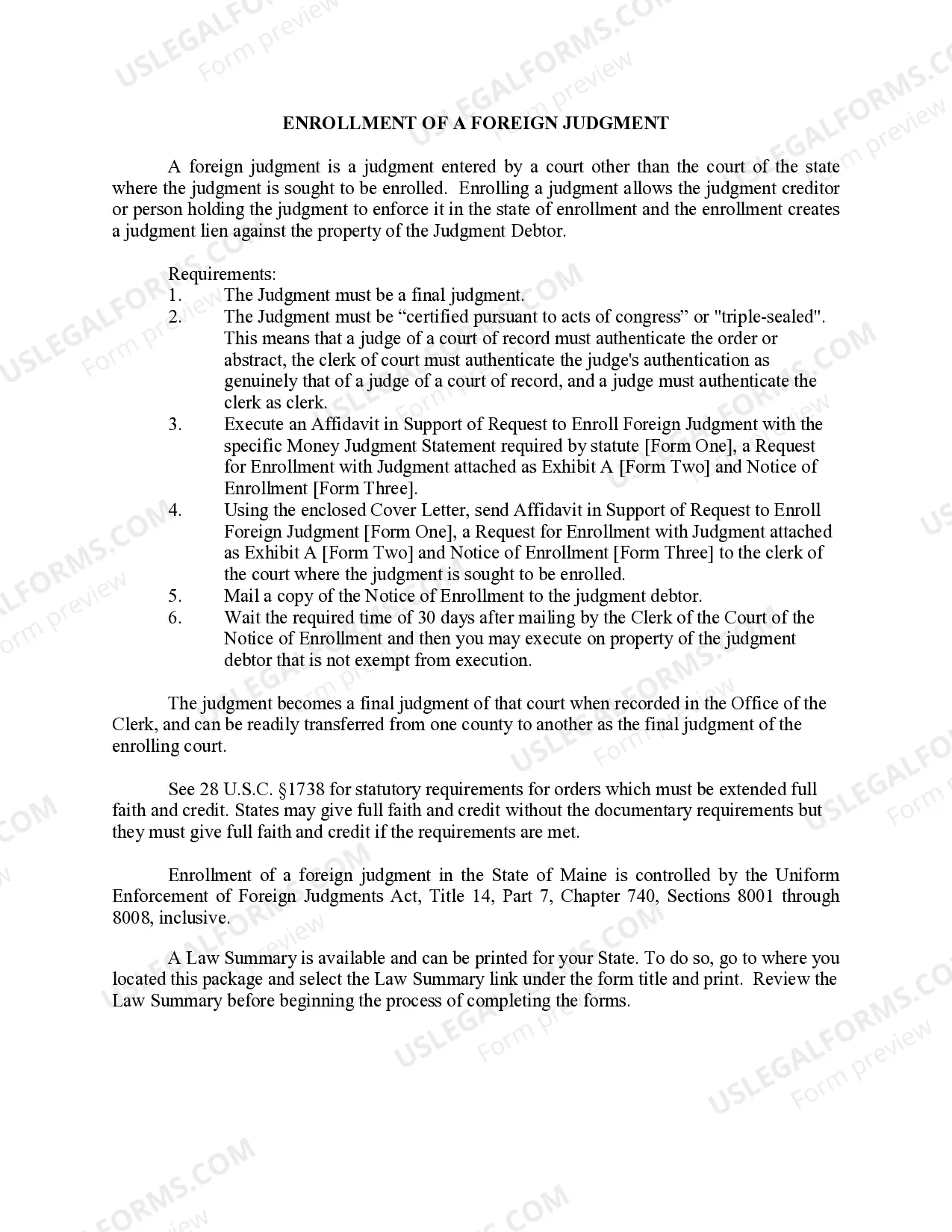
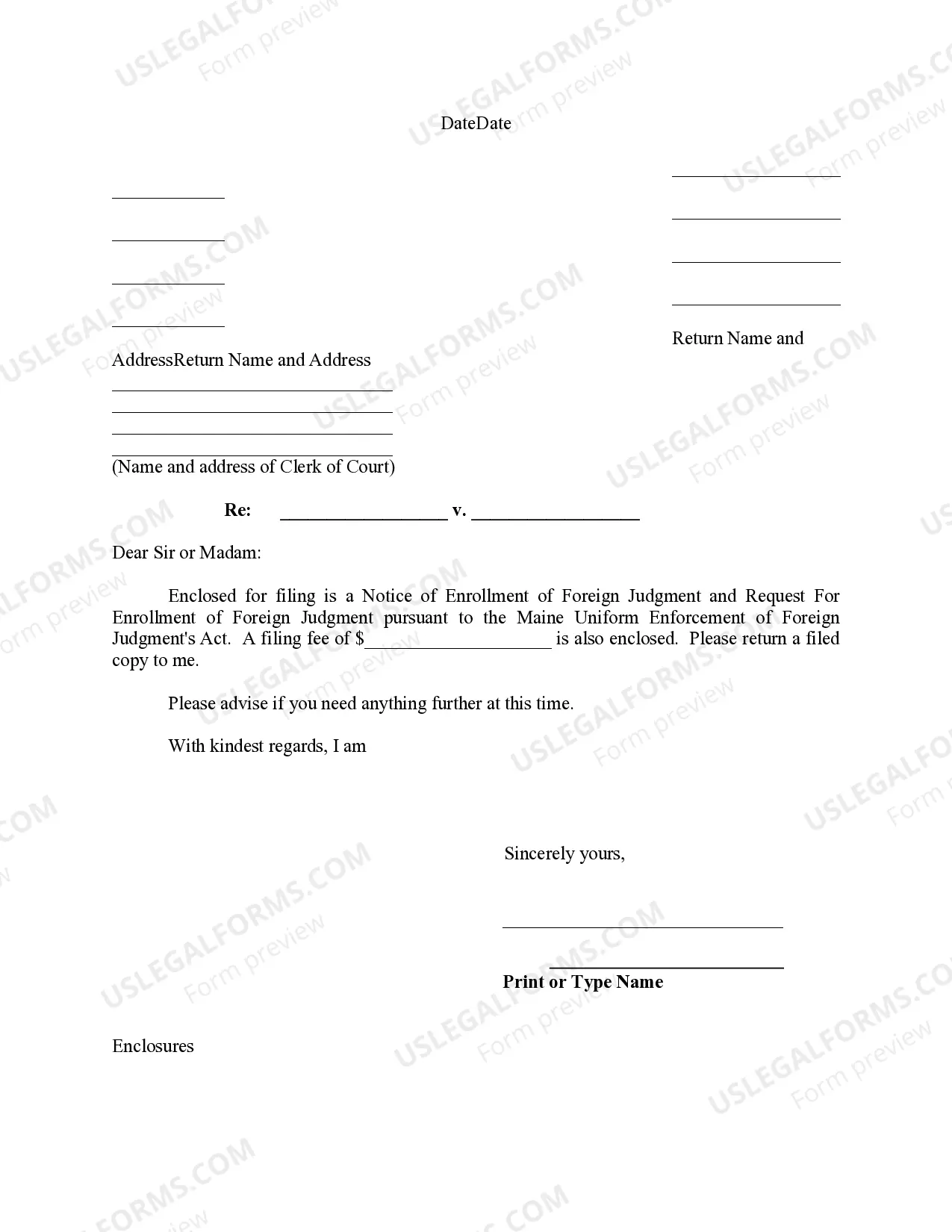
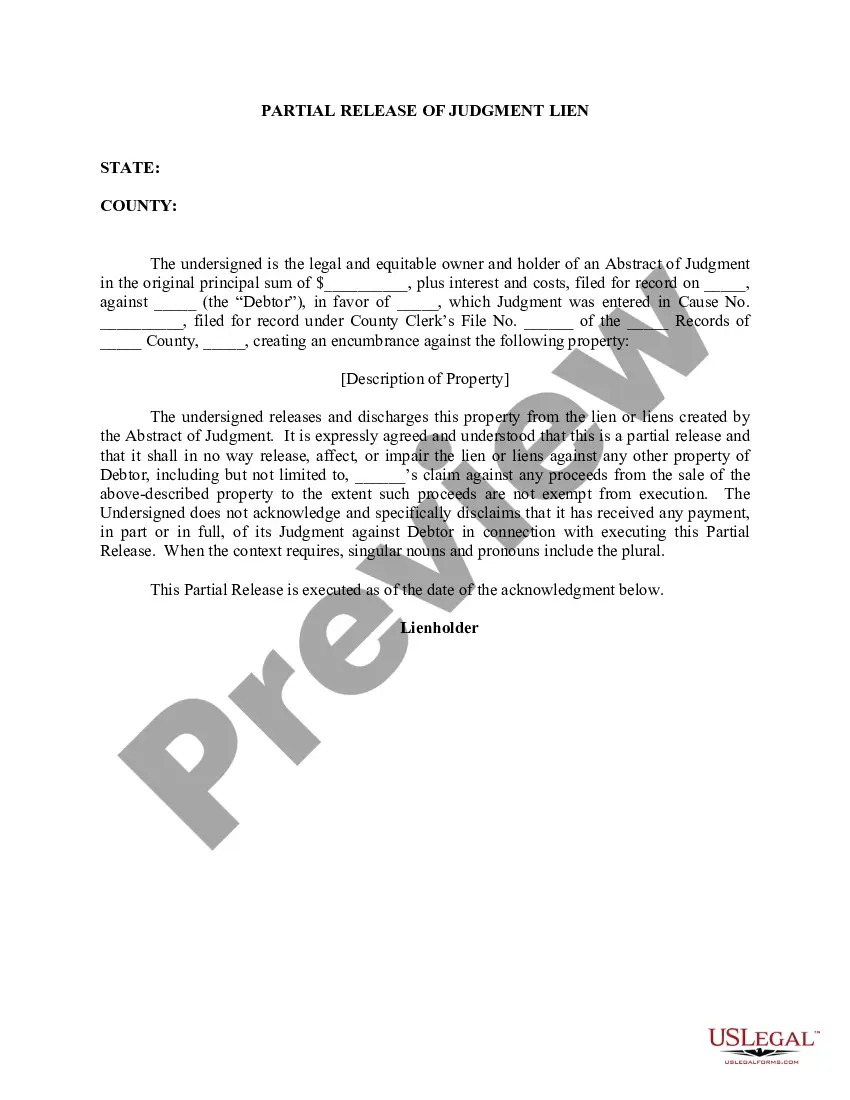
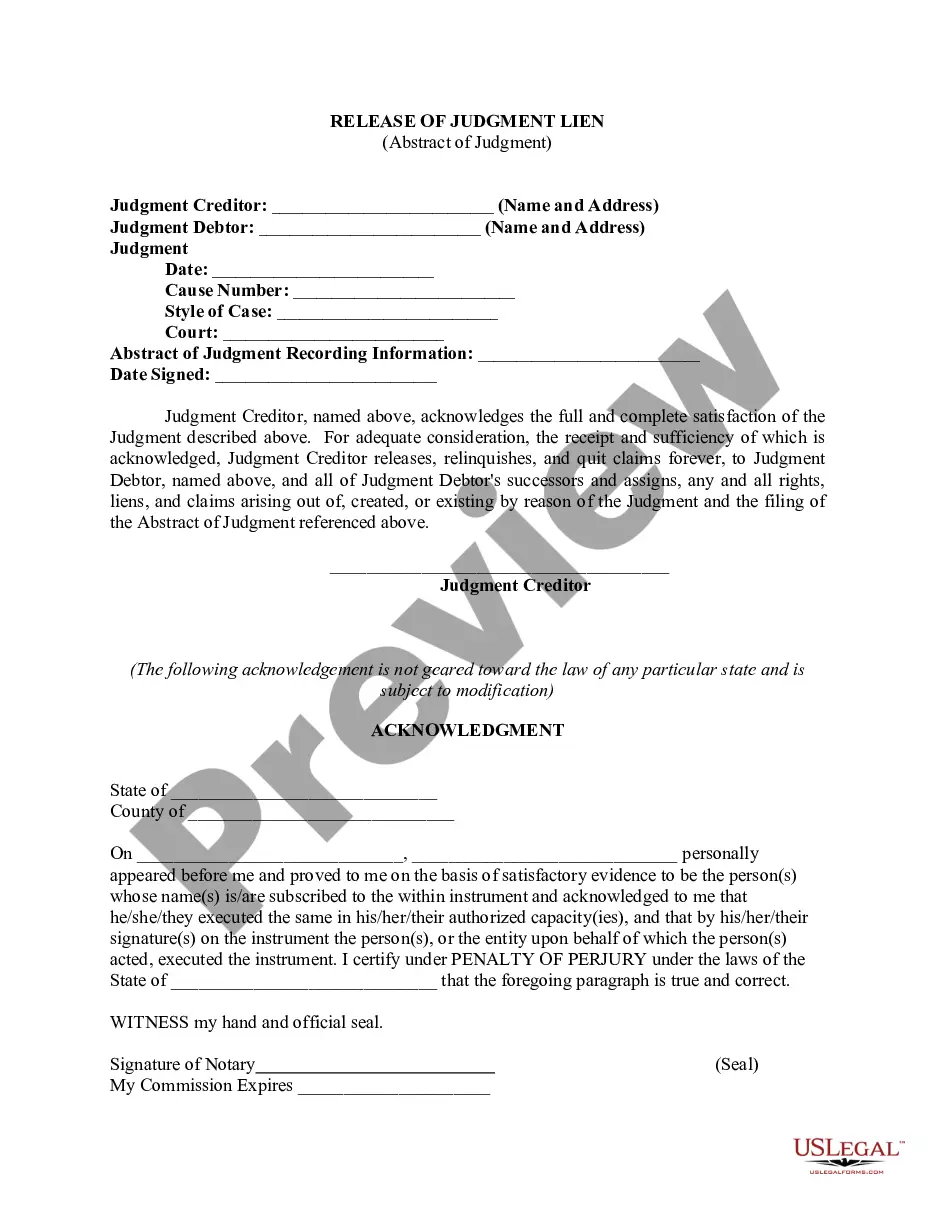
- Cover Letter: Introduction to the court and intention to enroll the judgment.
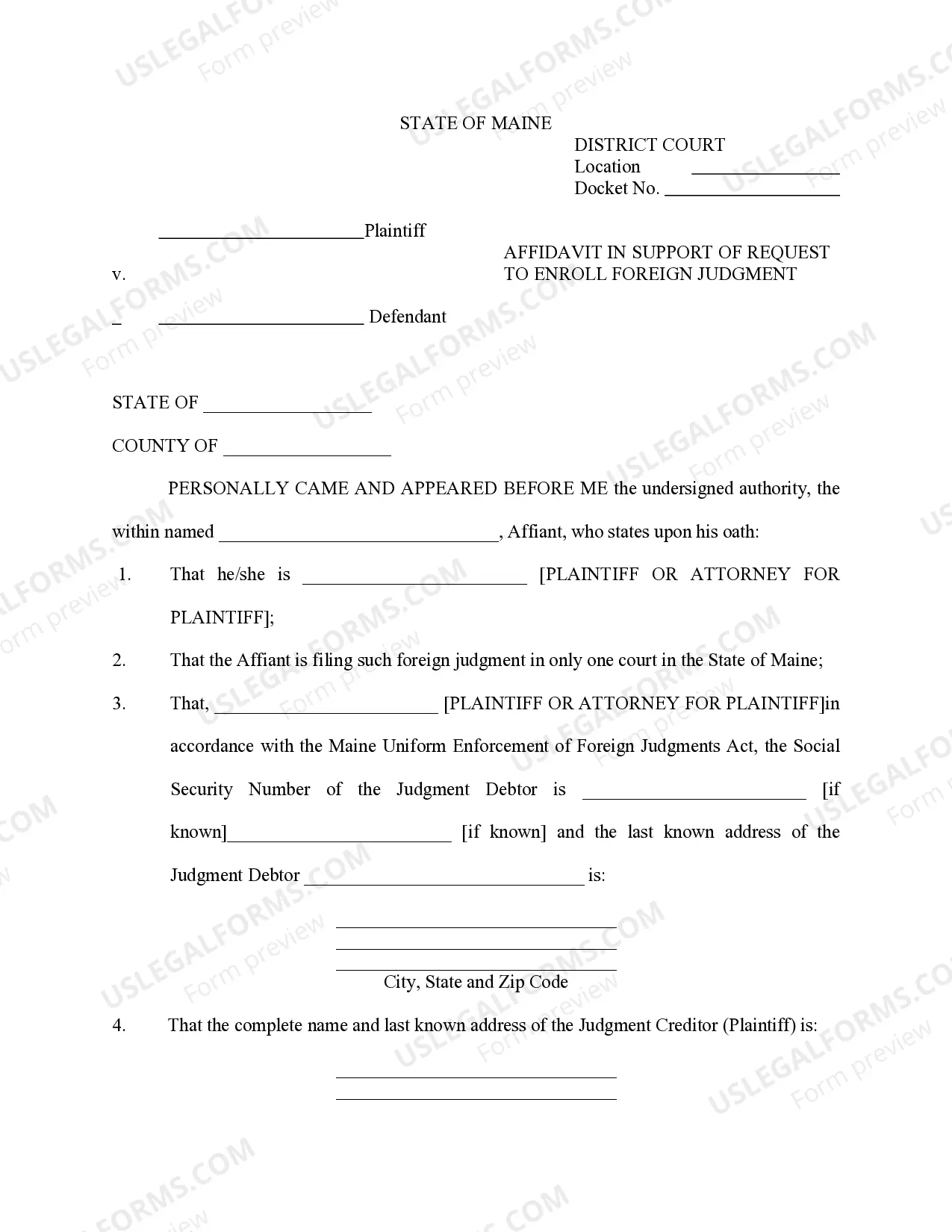
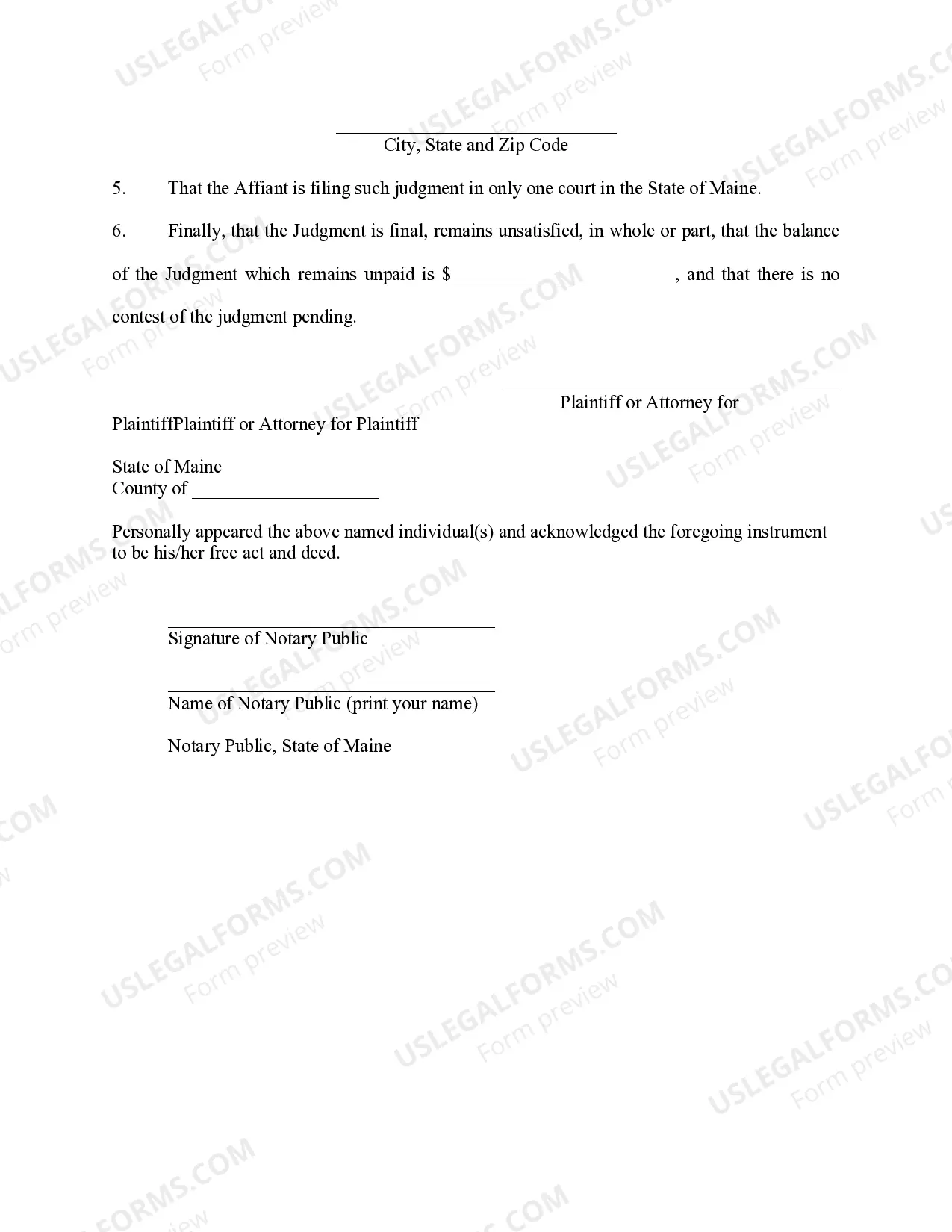
- Affidavit in Support of Request to Enroll: Certifies details of the judgment and the debtor.
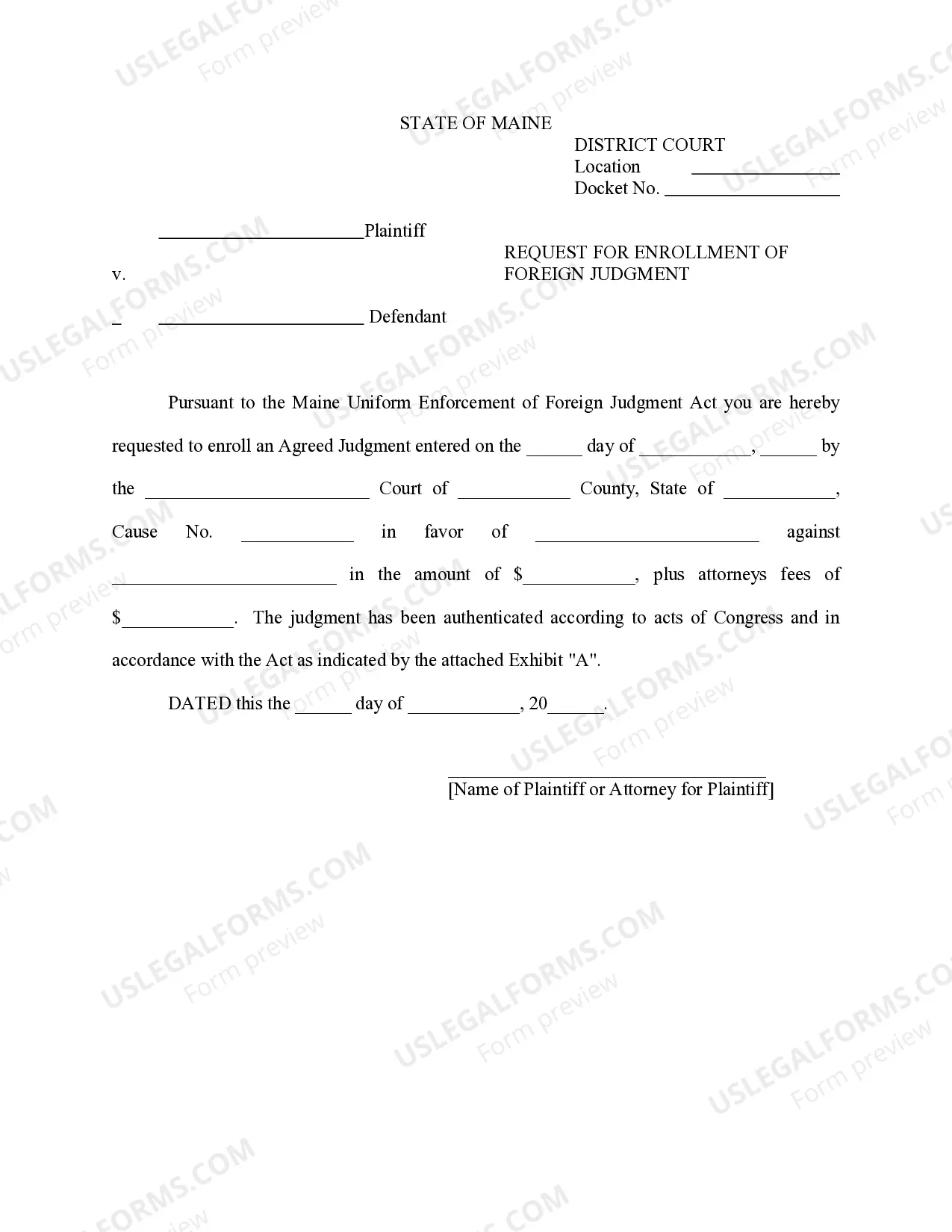
- Request for Enrollment Form: The formal application to enroll the foreign judgment.
- Notice of Enrollment: Informs the judgment debtor about the enrollment of the judgment.

When to use this document
This form should be used when you have a final judgment from another state that you need to enforce in Maine. It is typically necessary if the debtor owns property in Maine or if you want to take legal action to collect the owed amounts. The form ensures that your foreign judgment is recognized and actionable within Maine's legal system.
Who this form is for
- Judgment creditors who have a final judgment from another state.
- Lawyers representing clients wishing to enforce foreign judgments in Maine.
- Individual or business entities seeking to recover debts across state lines.
Instructions for completing this form
- Compile all necessary details, including the names and addresses of the judgment creditor and judgment debtor.
- Fill out the Affidavit in Support of Request to Enroll Foreign Judgment, including the money judgment amount.
- Prepare the Request for Enrollment by attaching the foreign judgment as Exhibit A.
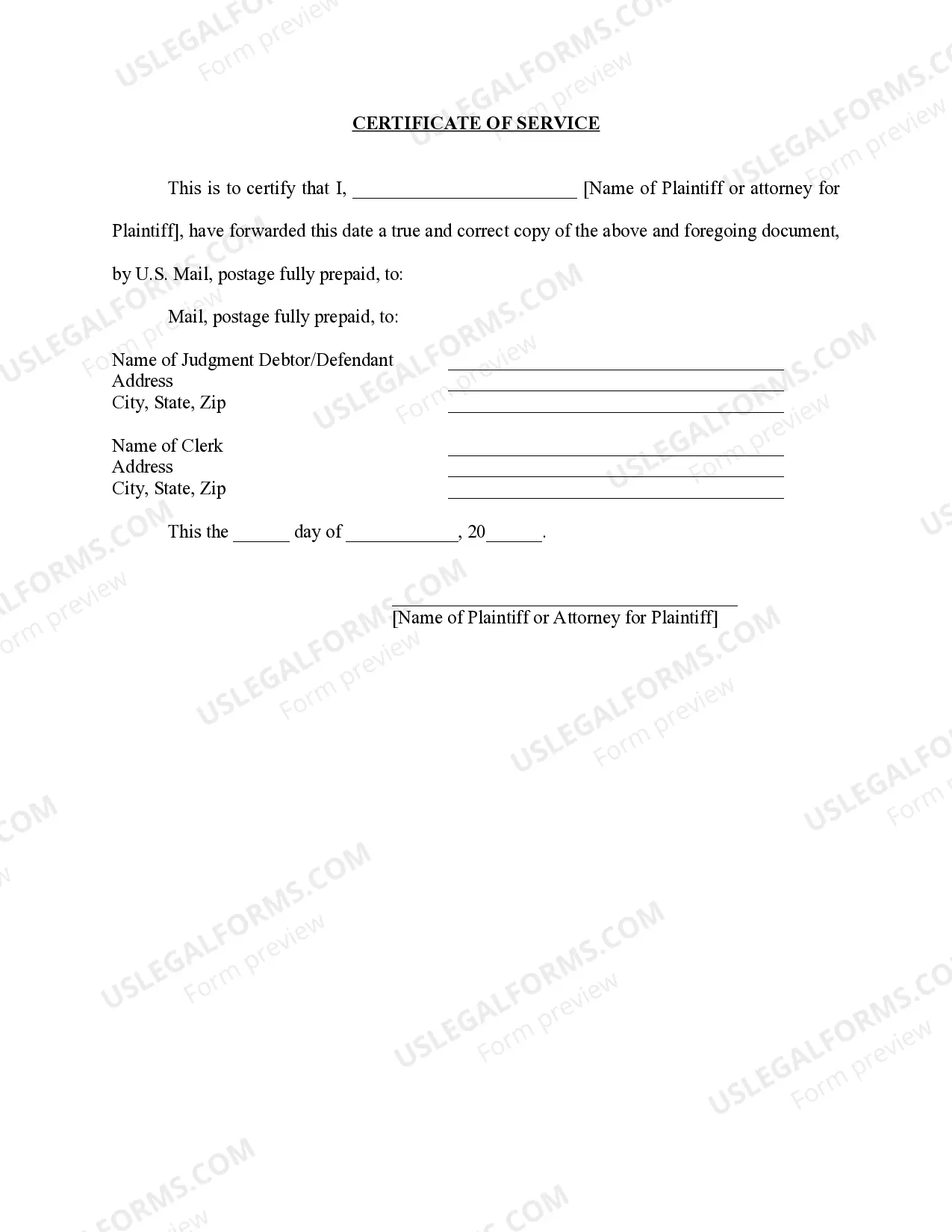
- Complete the Notice of Enrollment and ensure it is properly mailed to the debtor.
- Submit all forms to the clerk of the court along with any applicable fees.
Notarization guidance
Yes, this form must be notarized to be legally valid. US Legal Forms offers integrated online notarization services that are available twenty-four hours a day, providing a secure video call for notarization, ensuring convenience without the need for physical travel.
Get your form ready online
Our built-in tools help you complete, sign, share, and store your documents in one place.
Make edits, fill in missing information, and update formatting in US Legal Forms—just like you would in MS Word.
Download a copy, print it, send it by email, or mail it via USPS—whatever works best for your next step.
Sign and collect signatures with our SignNow integration. Send to multiple recipients, set reminders, and more. Go Premium to unlock E-Sign.
If this form requires notarization, complete it online through a secure video call—no need to meet a notary in person or wait for an appointment.
We protect your documents and personal data by following strict security and privacy standards.

Make edits, fill in missing information, and update formatting in US Legal Forms—just like you would in MS Word.

Download a copy, print it, send it by email, or mail it via USPS—whatever works best for your next step.

Sign and collect signatures with our SignNow integration. Send to multiple recipients, set reminders, and more. Go Premium to unlock E-Sign.

If this form requires notarization, complete it online through a secure video call—no need to meet a notary in person or wait for an appointment.

We protect your documents and personal data by following strict security and privacy standards.
Common mistakes
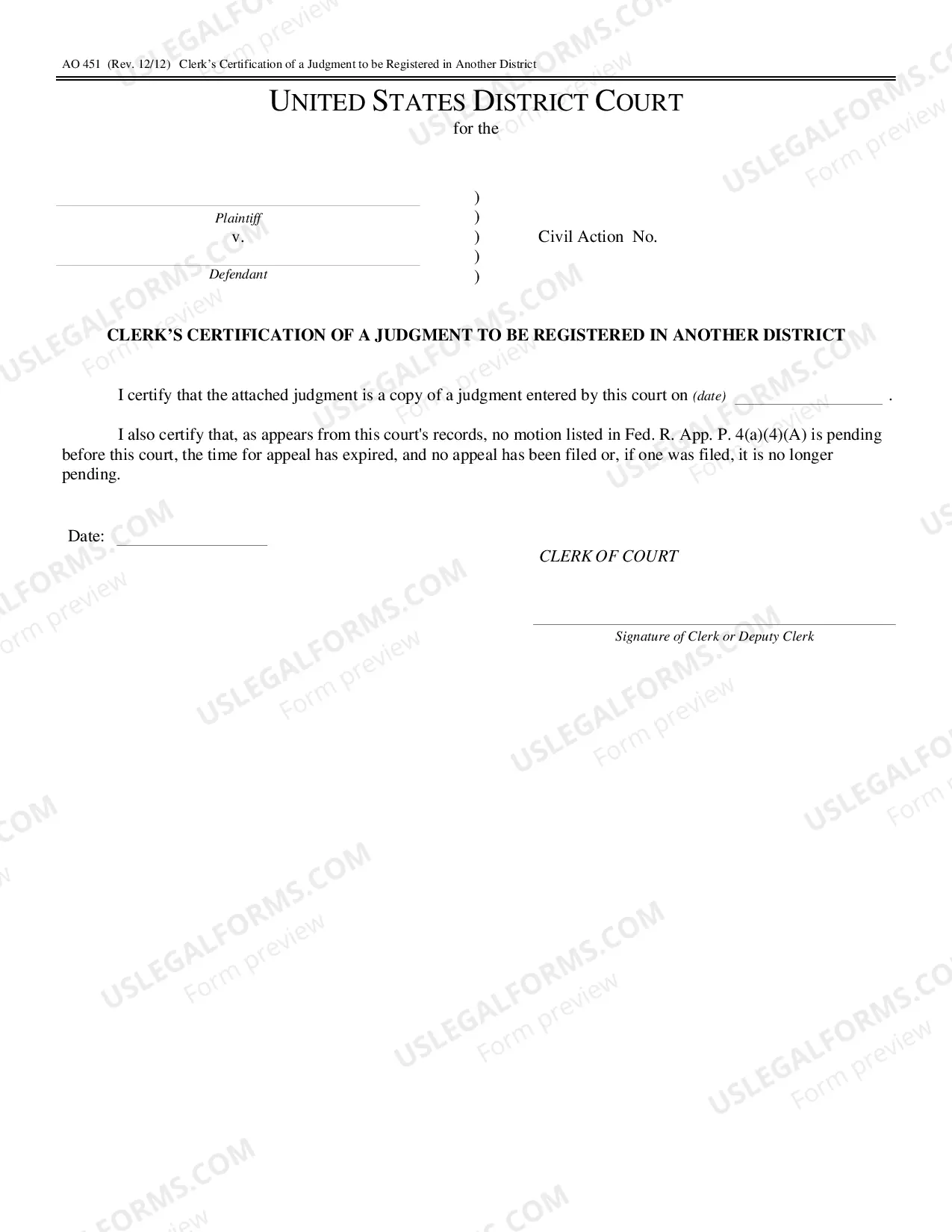
- Failing to secure proper certification of the foreign judgment.
- Not mailing the Notice of Enrollment to the judgment debtor.
- Inaccurate completion of the Affidavit leading to delays or rejections.
Benefits of completing this form online
- Convenient access allows for easy completion from anywhere.
- Edit and save your work before submission, reducing errors.
- Instant downloads provide quick access to necessary forms.
Key takeaways
- The Maine Foreign Judgment Enrollment form is critical for enforcing out-of-state judgments.
- Ensure the judgment meets all certification requirements before enrollment.
- Complete all forms accurately and have them notarized for legal validity.
Looking for another form?

Form popularity
FAQ
To enforce a foreign judgment, you must first ensure that it has been domesticated or recognized in the state where you want to enforce it. This often involves filing the necessary paperwork in court, including the original and certified copies of the judgment. With resources like uslegalforms, the process of Maine Foreign Judgment Enrollment becomes straightforward and efficient, allowing you to focus on collecting what is rightfully yours.
The statute of limitations on a foreign judgment varies by state, but it often aligns with the limitations period for domestic judgments. Typically, this period can be between five to twenty years, depending on the jurisdiction. For those considering Maine Foreign Judgment Enrollment, staying informed about these time limits is crucial to secure your rights effectively.
Rule 39 refers to the procedures for recognizing foreign judgments across different jurisdictions. It generally outlines the criteria under which a foreign judgment can be enforced, emphasizing fairness and due process. Understanding this rule is vital when pursuing Maine Foreign Judgment Enrollment, as it can provide clarity on what you need to successfully enforce your rights.
To enforce a foreign judgment in the US, you typically need to first register it in the state where enforcement is sought. Different states have specific laws regarding the registration process, often requiring a petition and supporting documents. Utilizing the services of uslegalforms can simplify the Maine Foreign Judgment Enrollment to ensure compliance with state requirements, streamlining your enforcement efforts.
The effect of a foreign judgment is that it acts as a valid court order in the jurisdiction where it is recognized, allowing the winning party to pursue enforcement and collection efforts. In the context of Maine Foreign Judgment Enrollment, this ensures that your foreign judgment will have the same power as a judgment issued within Maine, giving you leverage in enforcing your rights.
The process requires registering a certified copy of the foreign judgment with the clerk of the court in the jurisdiction where you want to enforce the judgment. You will also need to file an affidavit attesting to certain facts, as specified in the court's procedural rules.
Generally, a "foreign judgment" is one that is rendered in another state or country that is judicially distinct from the state where collection of the judgment is sought. Before a foreign judgment can be enforced, certain requirements must be met.
Generally, U.S. judgments cannot be enforced in a foreign country without first being recognized by a court in that foreign country.It can generally be said that non-default judgments not involving tort claims or punitive damages are more likely to be enforced.
A foreign judgment cannot be enforced in the US before being recognised by a US court. The 1962 and 2005 Model Acts deal with the recognition of judgments.
Hence, a decree passed by a superior court of a foreign country cannot be enforced in India if it contravenes an earlier conclusive judgment passed by a competent court in a suit between the same parties, as it is enforced as a domestic decree.