Maine Conservation Easement for Working Forest Preservation
Overview of this form
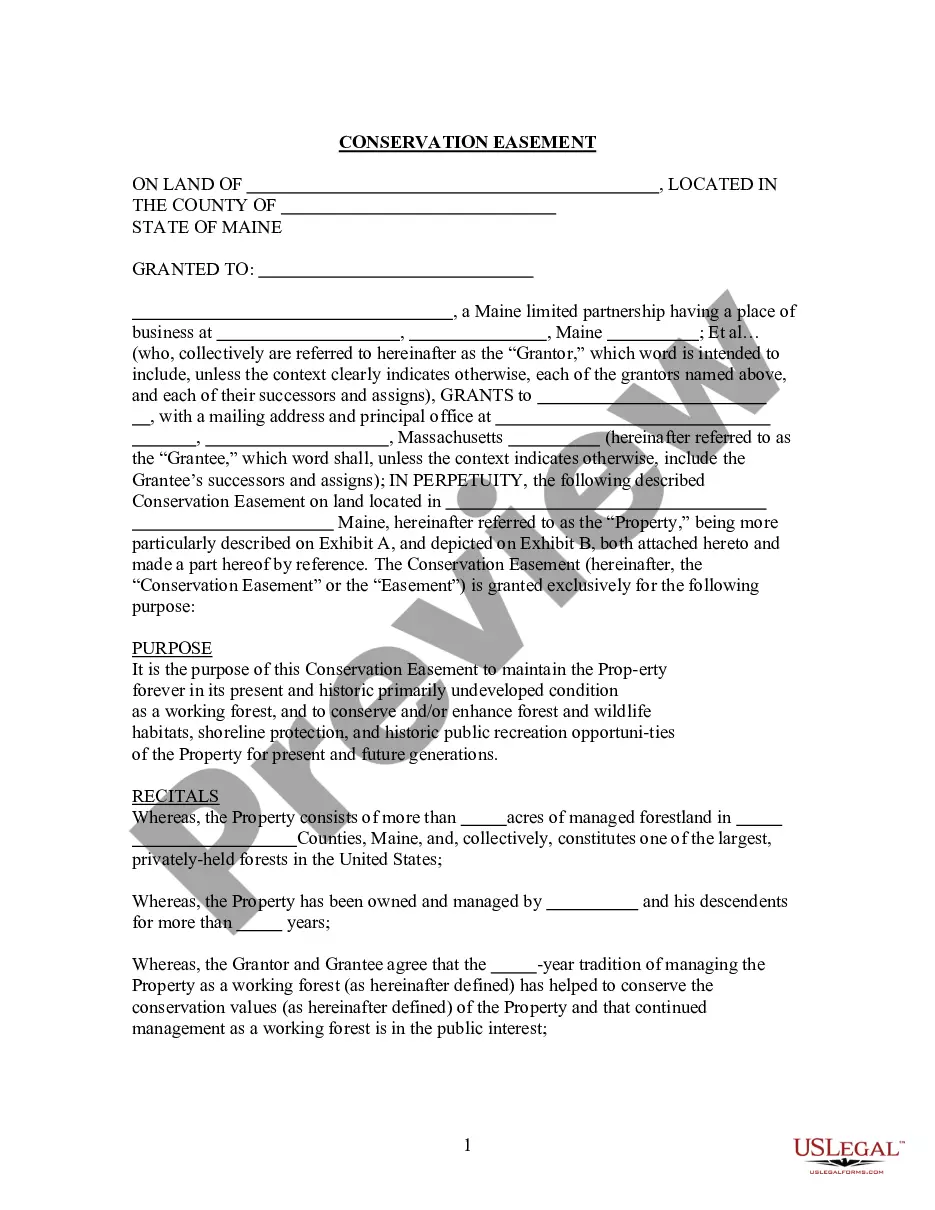
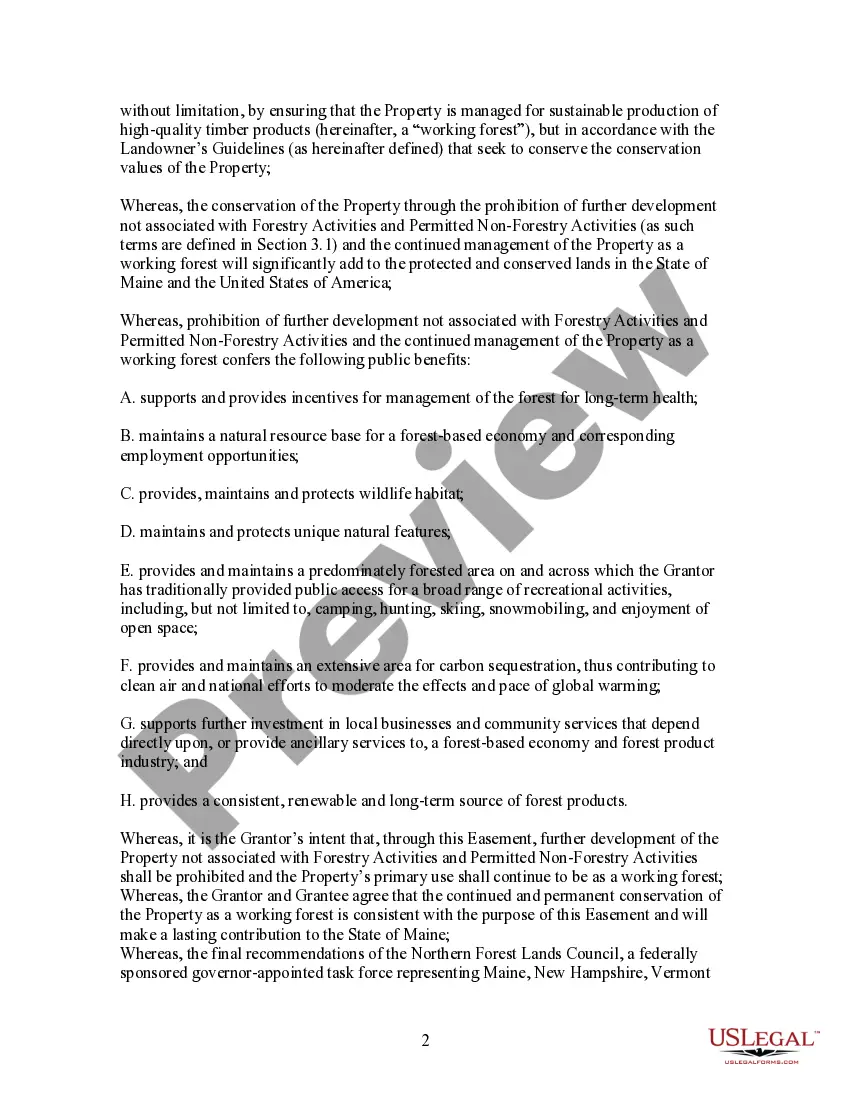
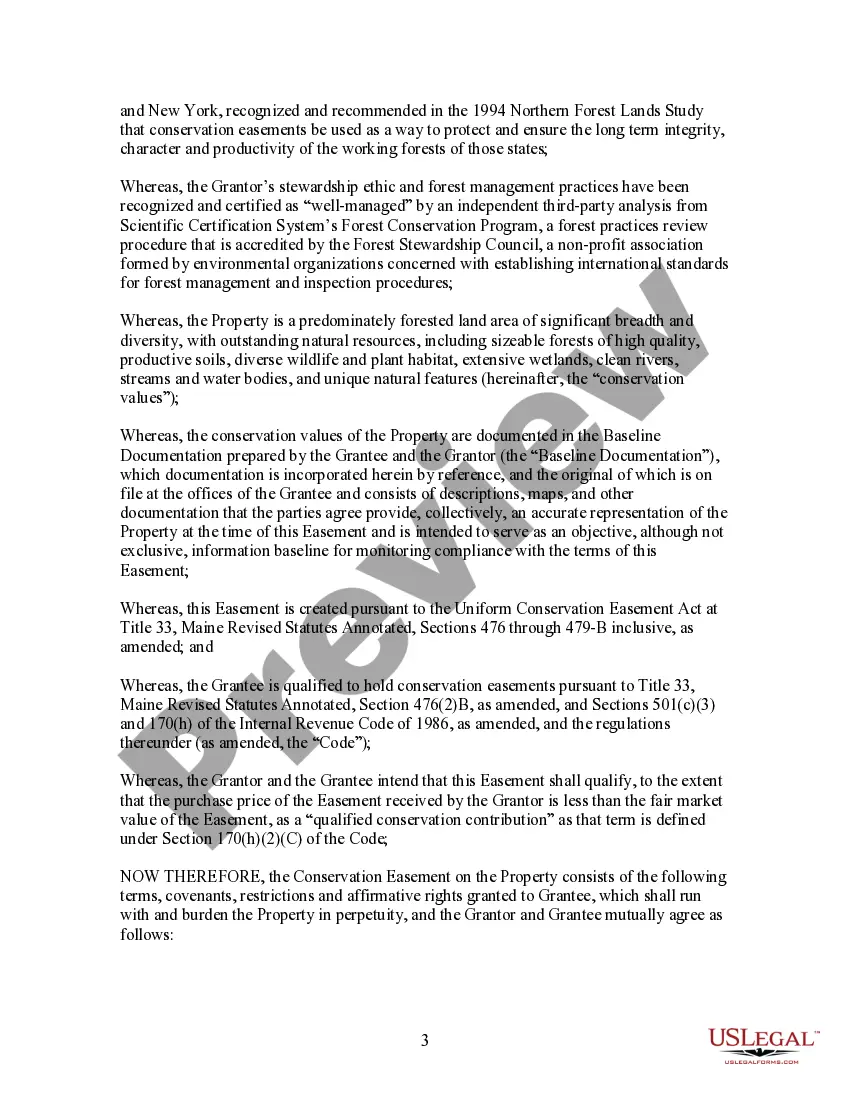
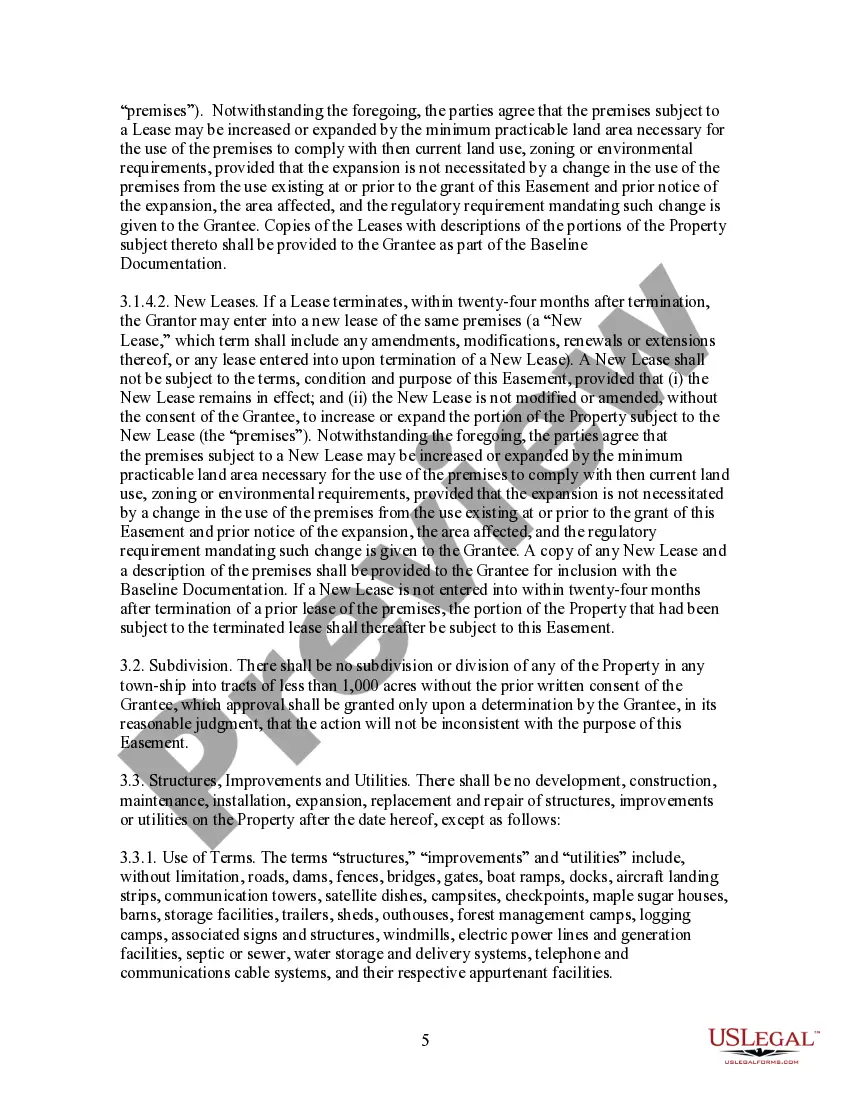
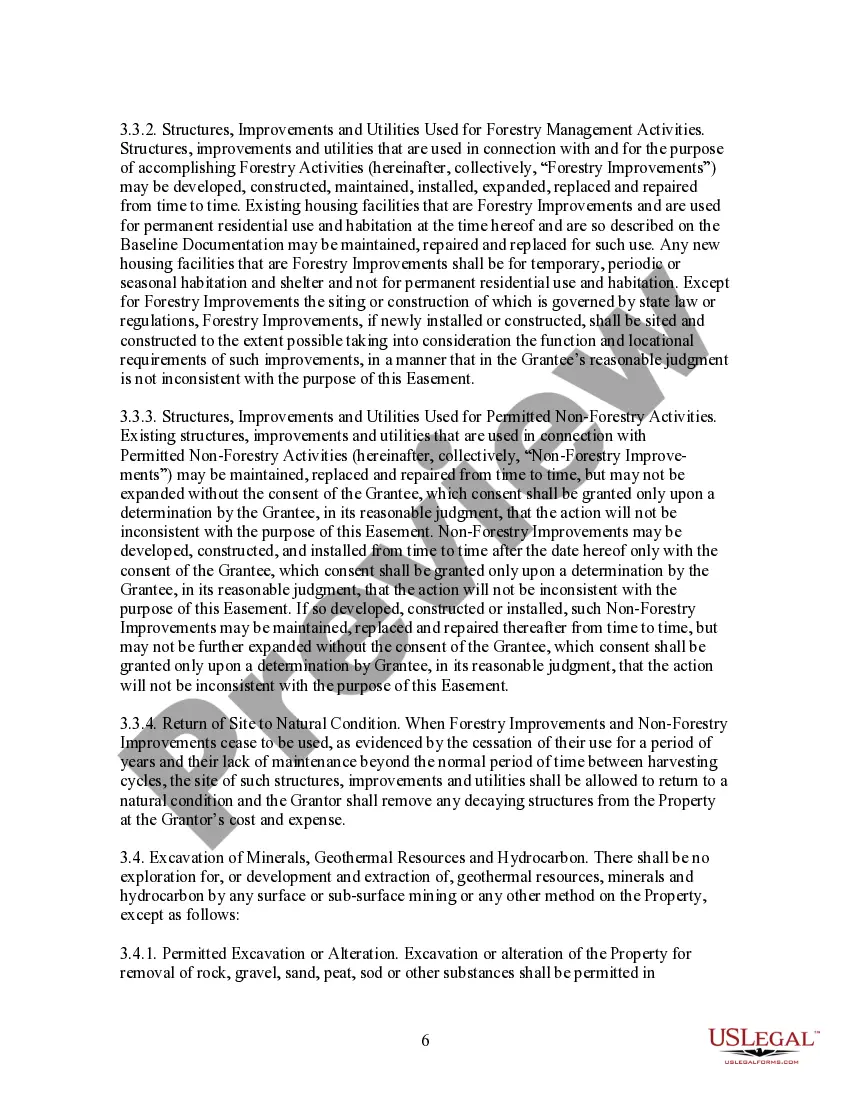
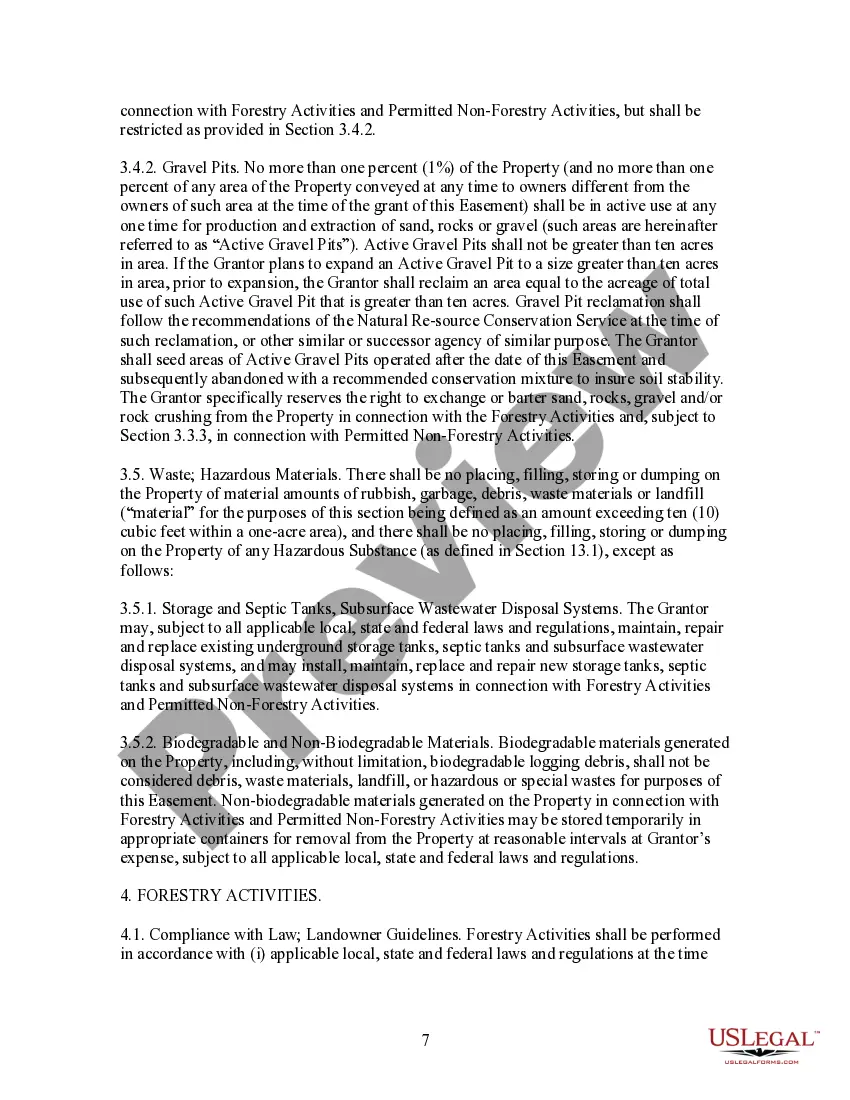
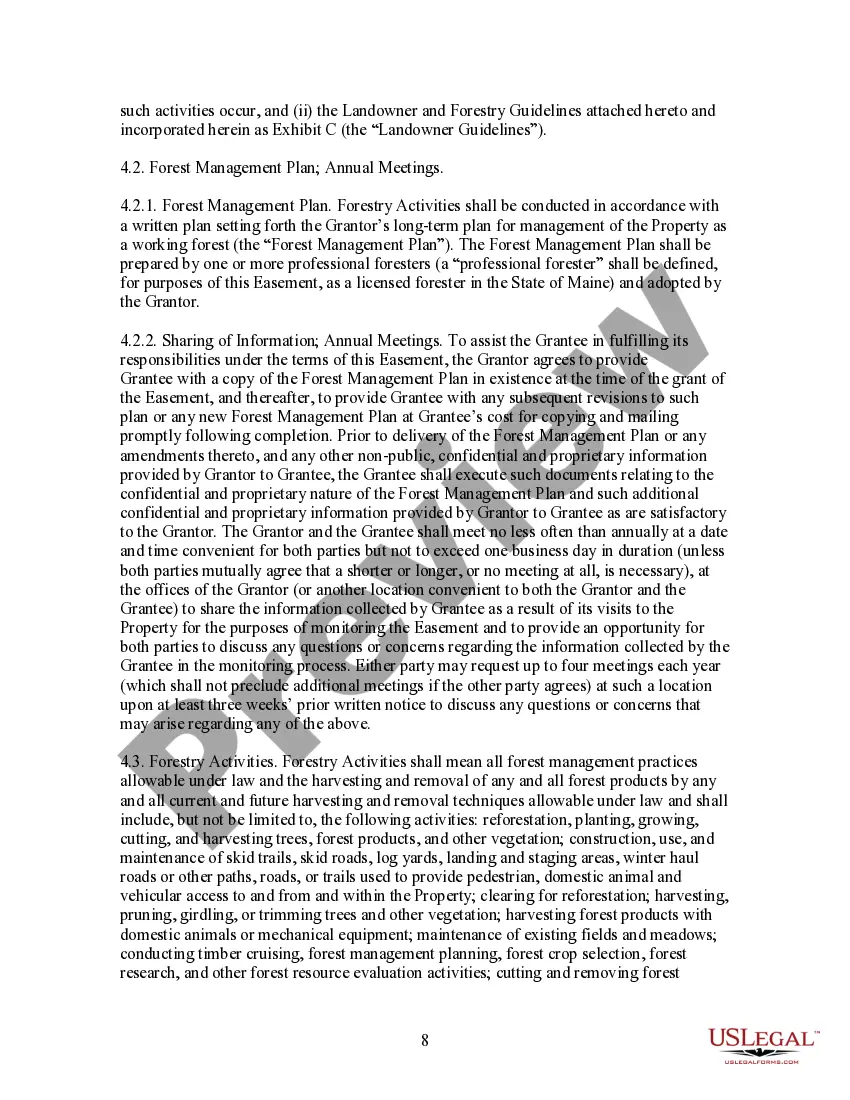
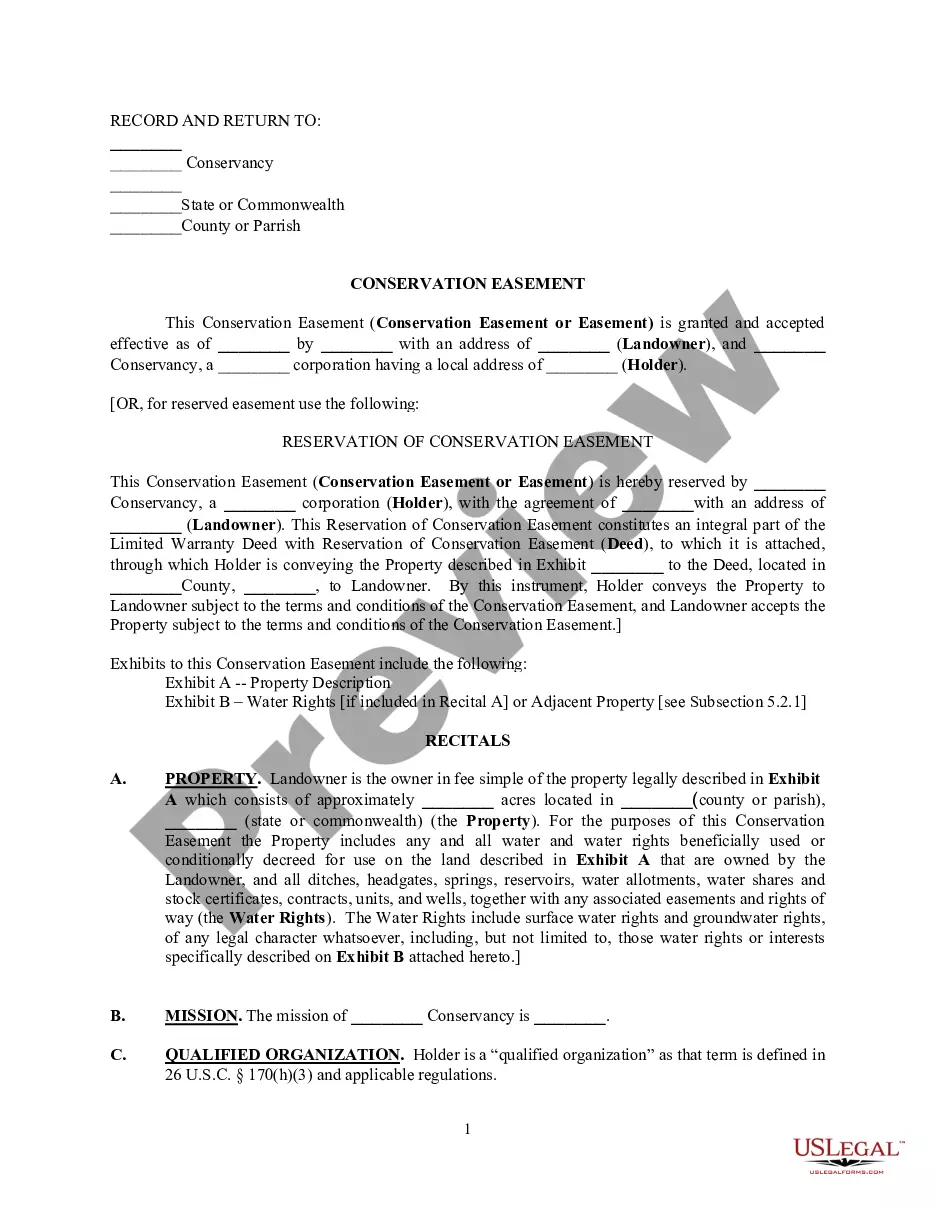
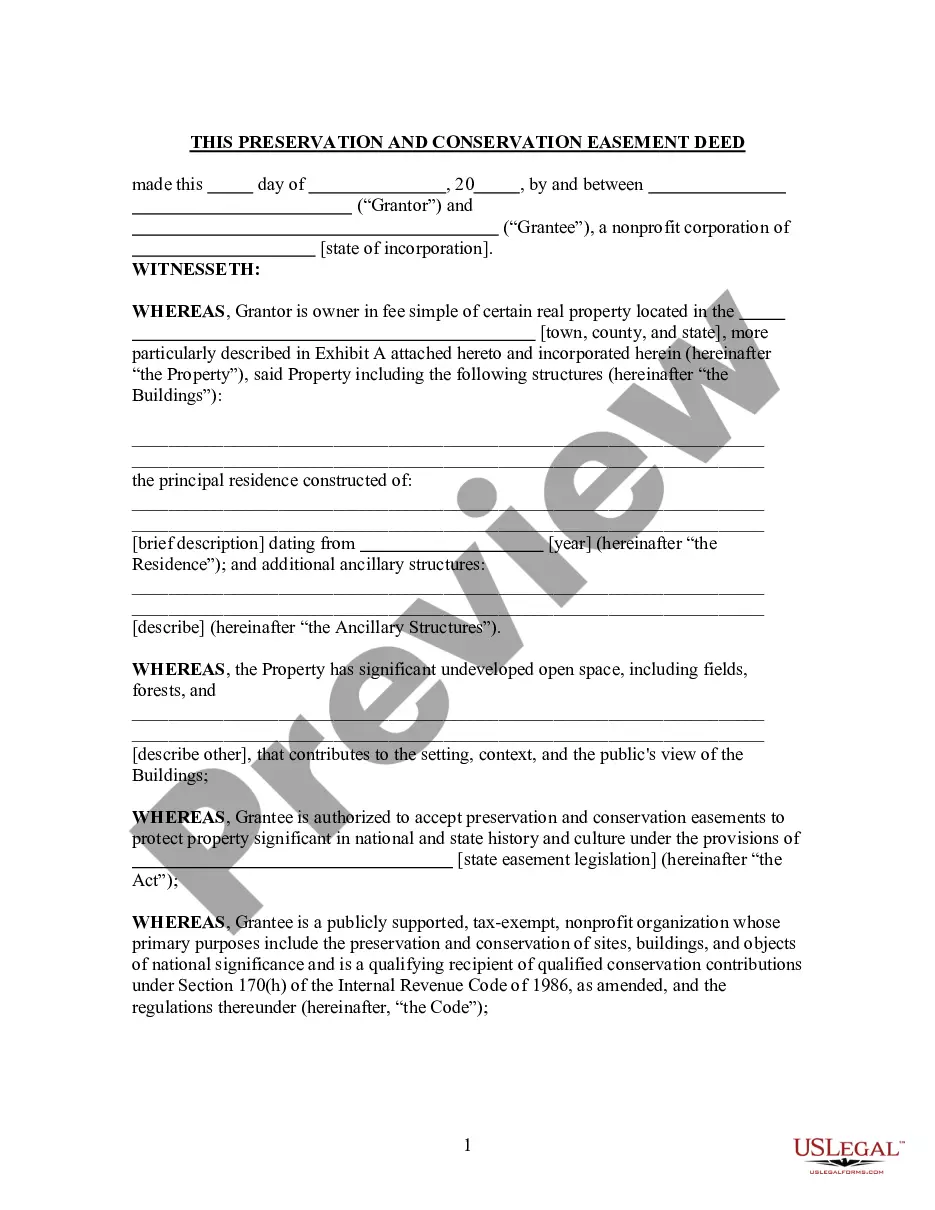
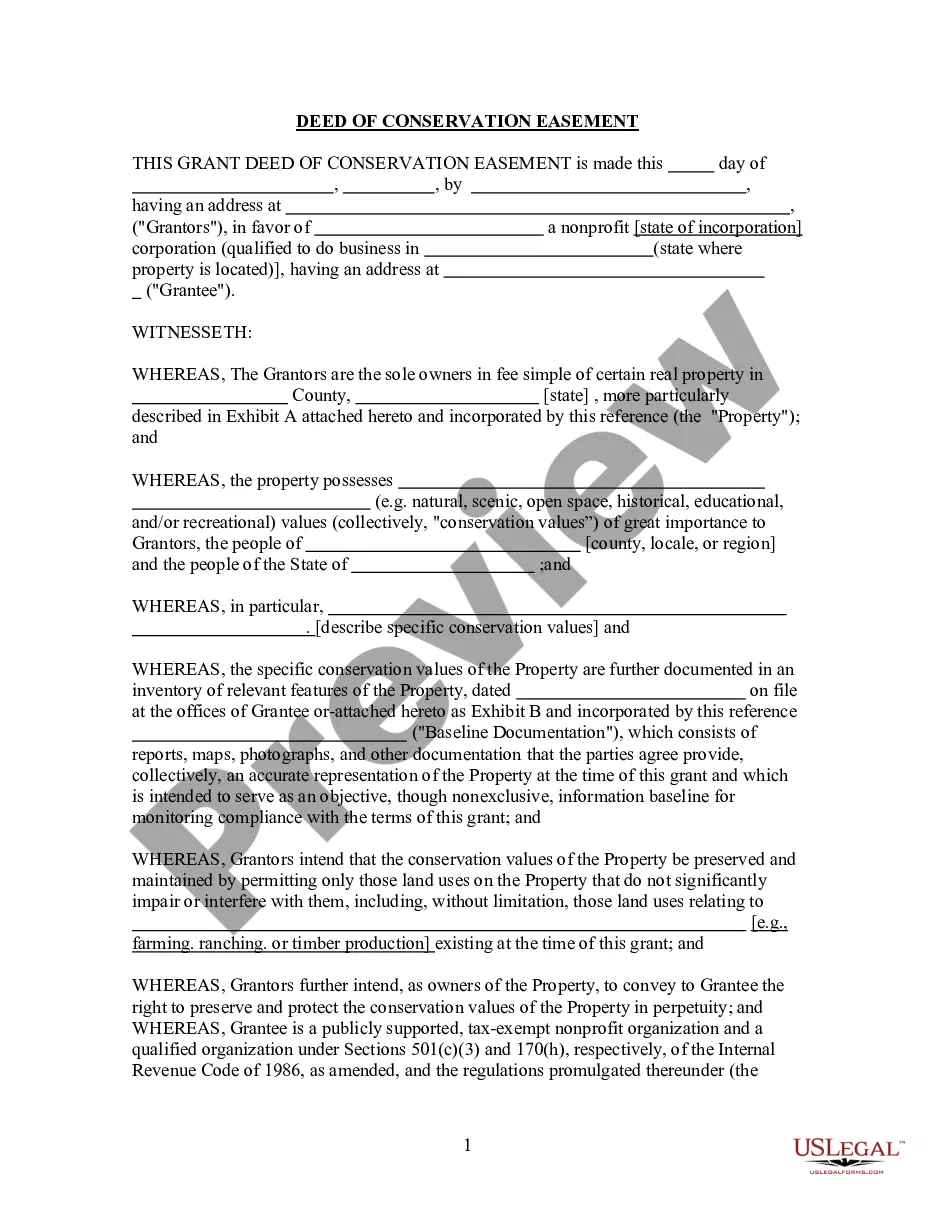
The Conservation Easement for Working Forest Preservation is a legal document that helps landowners maintain their property in its natural state as a working forest. This form is designed to protect forest and wildlife habitats, support public recreation opportunities, and ensure sustainable management of forest resources. Unlike other real estate agreements, this easement restricts new development not related to forestry, making it a vital tool for land preservation and ecological conservation.
Form components explained
- Statement of Purpose: Outlines the goals of conserving the property for future generations.
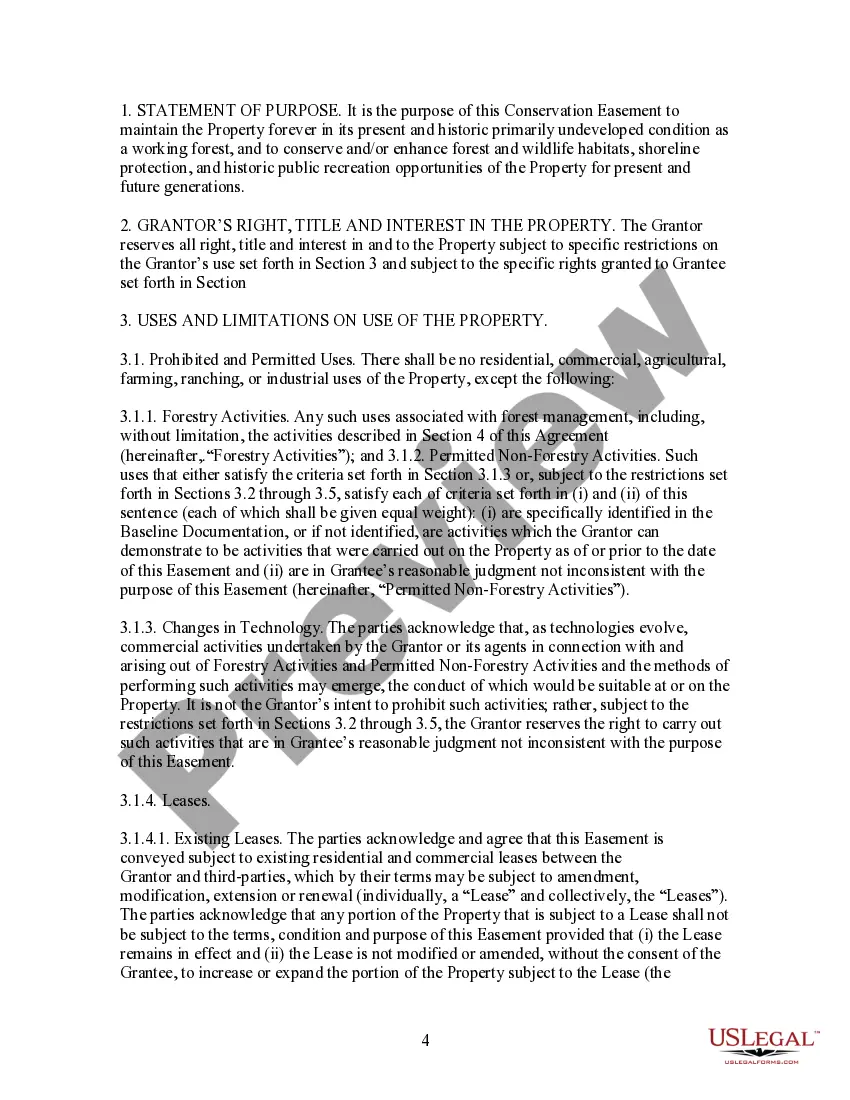
- Grantor's Rights: Identifies the rights retained by the property owner while outlining specific restrictions.
- Prohibited Uses: Details activities that are not allowed on the property, such as residential or commercial developments.
- Forestry Activities: Specifies what types of forestry management activities can be conducted.
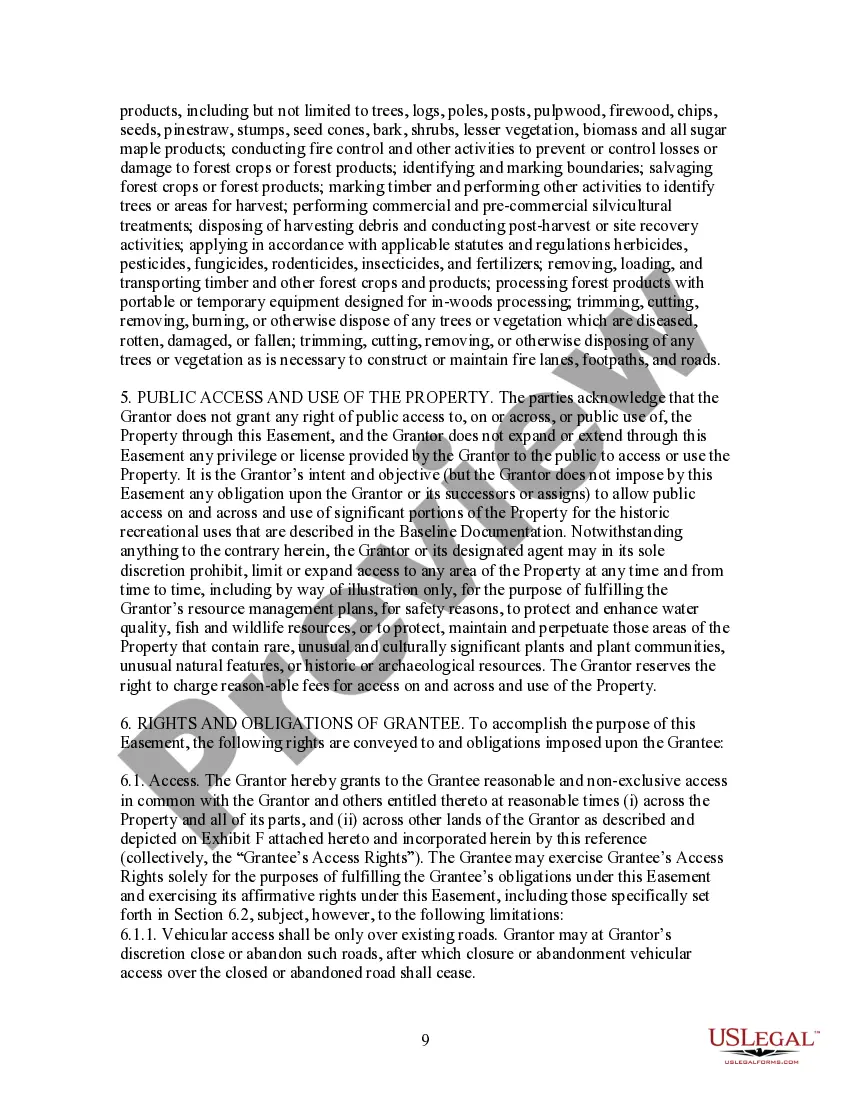
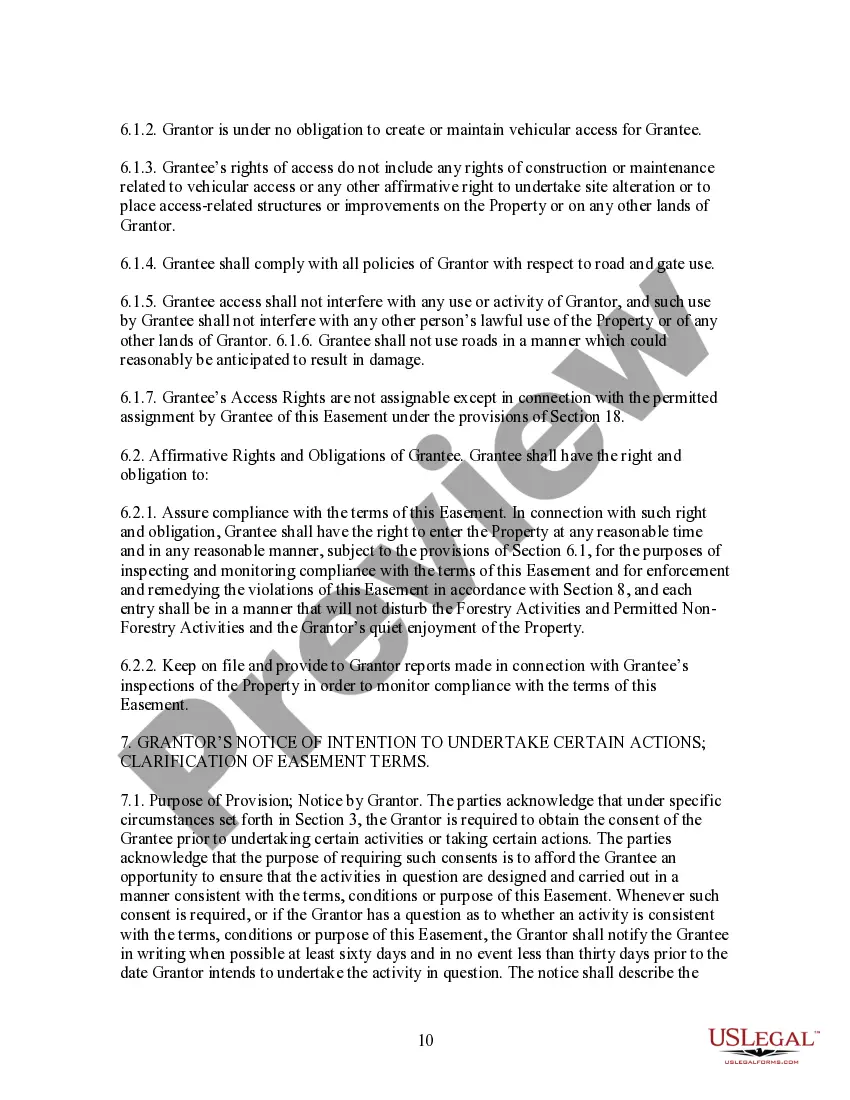
- Public Access: Clarifies rights regarding public access and recreational use of the property.

When to use this form
This form should be utilized when a property owner wishes to preserve their land as a working forest while preventing future development that could harm the ecological value of the property. It is especially useful for owners seeking to enhance wildlife habitats, support local economies dependent on forestry, and provide sustainable timber production for future generations.
Who needs this form
- Landowners looking to preserve forested areas on their property.
- Property owners interested in managing their land for sustainable timber production.
- Individuals or organizations aiming to protect environmental and recreational interests associated with forested land.
How to complete this form
- Identify the parties involved: Include the names and contact information of the Grantor (property owner) and Grantee (conservation organization).
- Specify the property: Provide a legal description of the property being placed under easement.
- Detail the conservation purpose: Clearly articulate the intended conservation objectives of the easement.
- Outline permitted activities: List the forestry and other non-forestry activities that are allowed under this easement.
- Sign and date the document: Ensure both parties sign and date the easement in accordance with local requirements.
Is notarization required?
This form needs to be notarized to ensure legal validity. US Legal Forms provides secure online notarization powered by Notarize, allowing you to complete the process through a verified video call, available anytime.
Get your form ready online
Our built-in tools help you complete, sign, share, and store your documents in one place.
Make edits, fill in missing information, and update formatting in US Legal Forms—just like you would in MS Word.
Download a copy, print it, send it by email, or mail it via USPS—whatever works best for your next step.
Sign and collect signatures with our SignNow integration. Send to multiple recipients, set reminders, and more. Go Premium to unlock E-Sign.
If this form requires notarization, complete it online through a secure video call—no need to meet a notary in person or wait for an appointment.
We protect your documents and personal data by following strict security and privacy standards.

Make edits, fill in missing information, and update formatting in US Legal Forms—just like you would in MS Word.

Download a copy, print it, send it by email, or mail it via USPS—whatever works best for your next step.

Sign and collect signatures with our SignNow integration. Send to multiple recipients, set reminders, and more. Go Premium to unlock E-Sign.

If this form requires notarization, complete it online through a secure video call—no need to meet a notary in person or wait for an appointment.

We protect your documents and personal data by following strict security and privacy standards.
Common mistakes to avoid
- Not specifying allowable forestry activities, leading to confusion over acceptable land use.
- Failing to provide a clear legal description of the property, which can affect enforceability.
- Neglecting to retain copies of the signed document for both parties.
Benefits of completing this form online
- Convenience of completing the form at your own pace without the need for physical meetings.
- Editability allows for customization to meet specific needs and conditions of the property.
- Access to reliable resources and guidance from legal professionals in drafting the easement.
Looking for another form?
Form popularity
FAQ
A qualified conservation easement meets specific criteria established by the Internal Revenue Service for tax benefits. These easements must protect significant conservation values, like wildlife habitats or open spaces, and be held by a qualified organization. Engaging in a Maine Conservation Easement for Working Forest Preservation can often fall under this classification, providing landowners with advantages while promoting conservation.
An agricultural conservation easement is a voluntary, legally recorded deed restriction that is placed on a specific property used for agricultural production.Because the easement is a restriction on the deed of the property, the easement remains in effect even when the land changes ownership.
Under IRS rules, a conservation easement must achieve at least one of the following purposes: preservation of land for outdoor recreation or education of the general public; preservation of natural habitat for fish, wildlife, or plants; preservation of open space, including farmland or forest; or preservation of a
One big advantage of buying a home or land with an easement is that it could result in major savings. Conservation land is restrictive by nature, and that's often a big sticking point for buyers. But if you're willing to deal with those restrictions, it could be a good way to buy land or property on the cheap.
Syndicated conservation easement transactions basically involve the use of a pass-through entity (for example, a partnership) to acquire property.
When you create a conservation easement, you may lose access to certain rights. While you'll likely retain certain surface rights like farming and ranching, development is almost always limited.
When a conservation easement is placed on a property, it typically lowers the property's value for federal estate tax purposes and may decrease estate tax liability. Therefore, easements may help heirs avoid being forced to sell off land to pay estate taxes and enable land to stay in the family.
Conservation easements are a great idea, in theory. Here's the way they work. Basically, if you are willing to donate your property for the public good, and that donation reduces the value of your property, you get to take a tax deduction equal to the reduction in the value of your property.
A conservation easement is a legal agreement between a landowner and a nonprofit land trust or governmental entity that permanently limits the uses of the land in order to protect specified conservation values. It does this by restricting the amount of development and activities that can take place in the future.