Maine Marital Domestic Separation and Property Settlement Agreement no children
Understanding this form
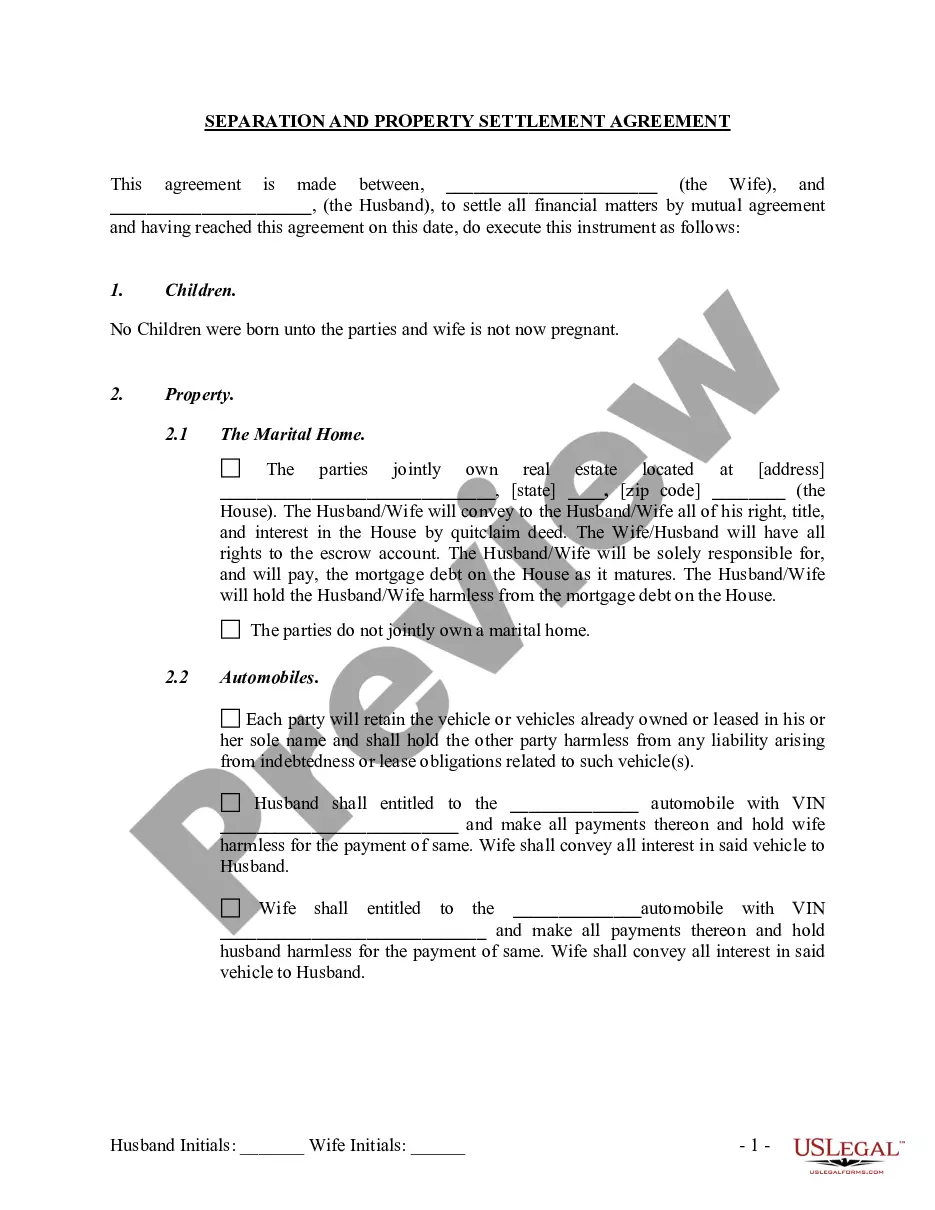
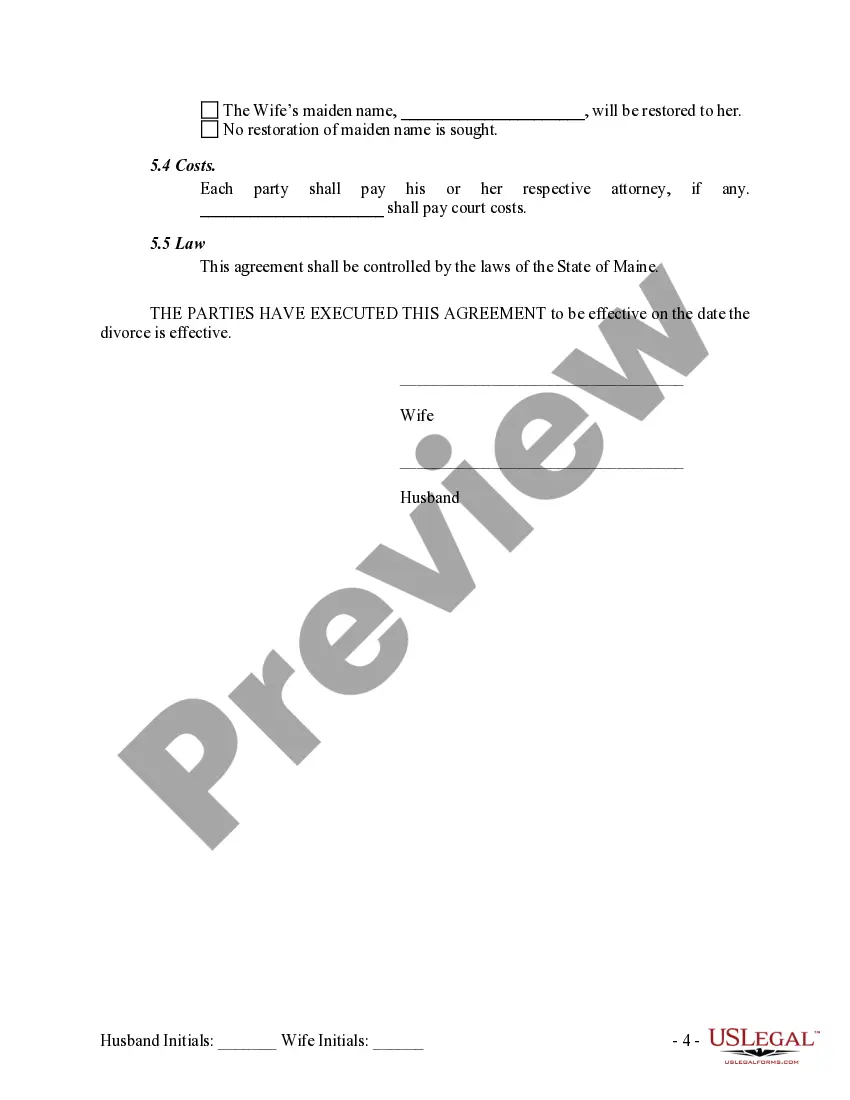
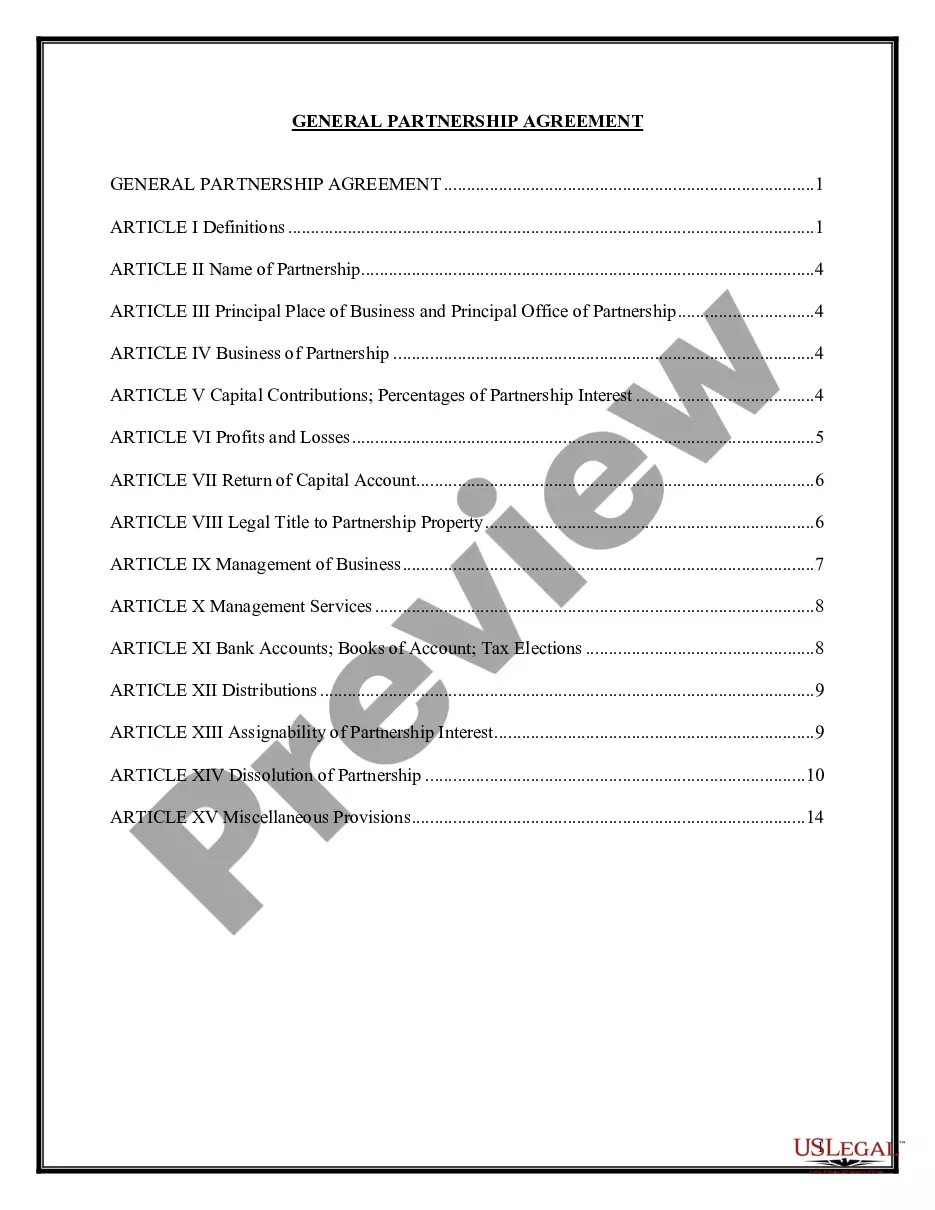
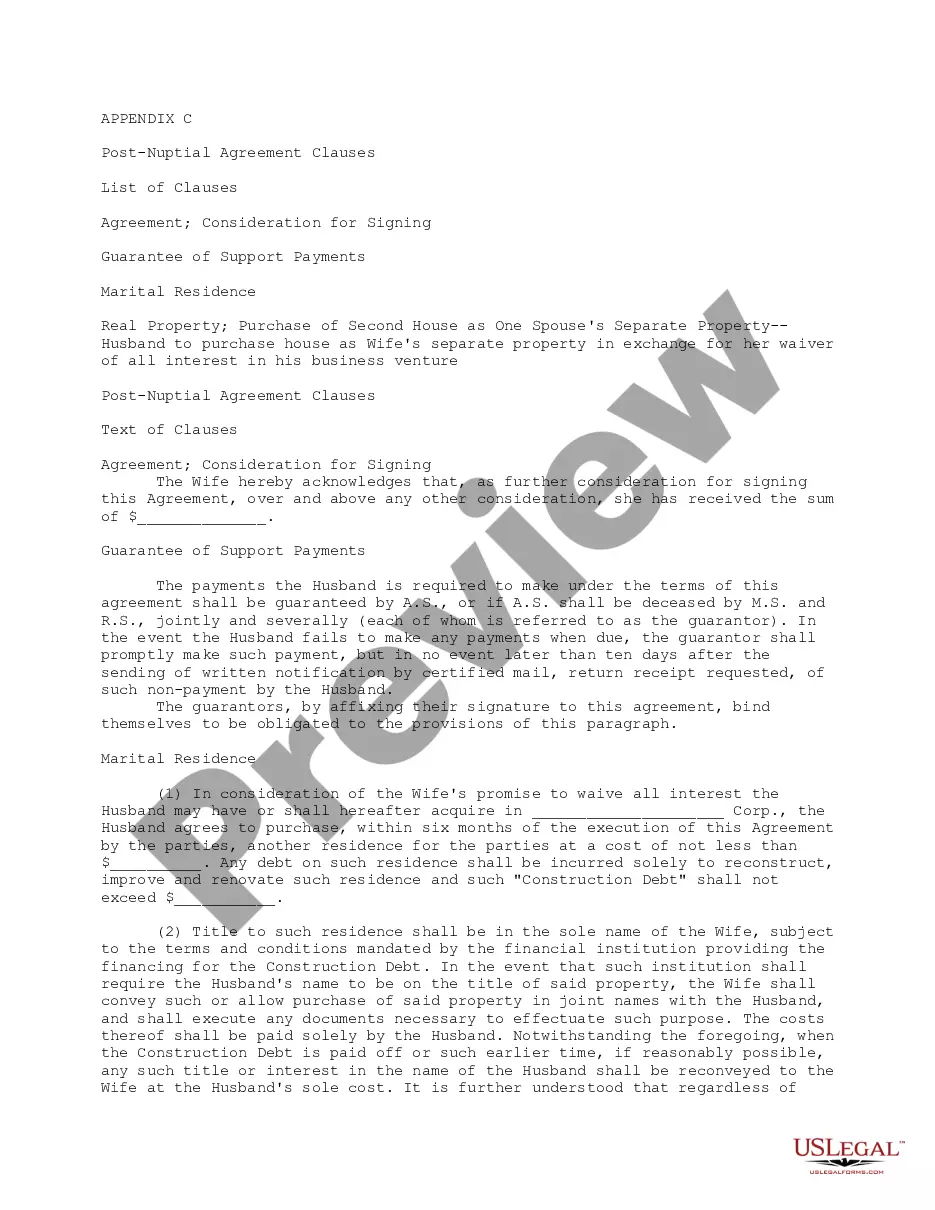
The Marital Domestic Separation and Property Settlement Agreement (no children) is a legal document used by spouses to divide their marital assets and debts when they are separating. This form is specifically designed for couples without children, ensuring a streamlined process for settling financial matters. It formalizes the agreements reached by both parties and, upon approval by a judge, becomes part of the final Judgment of Divorce.
Main sections of this form
- Identification of parties involved (Wife and Husband).
- Declaration of no children born or expected.
- Division of property, including the marital home and vehicles.
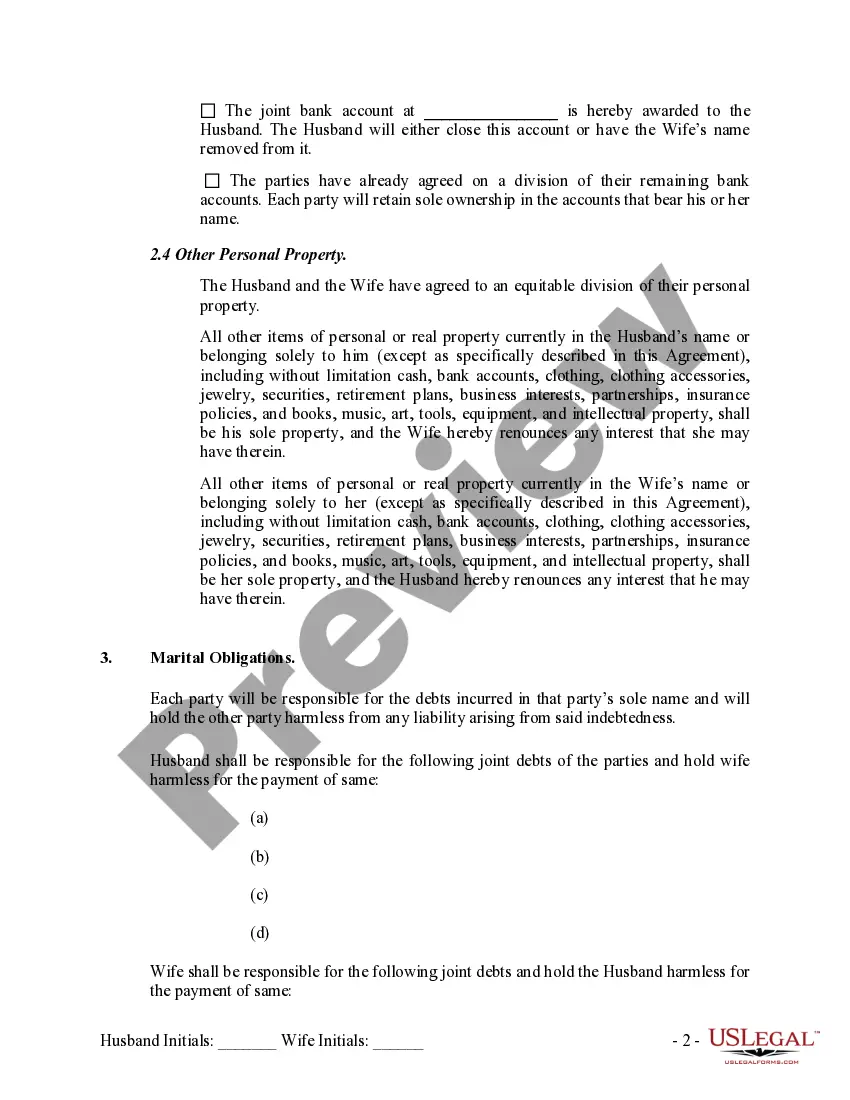
- Distribution of bank accounts and other personal property.
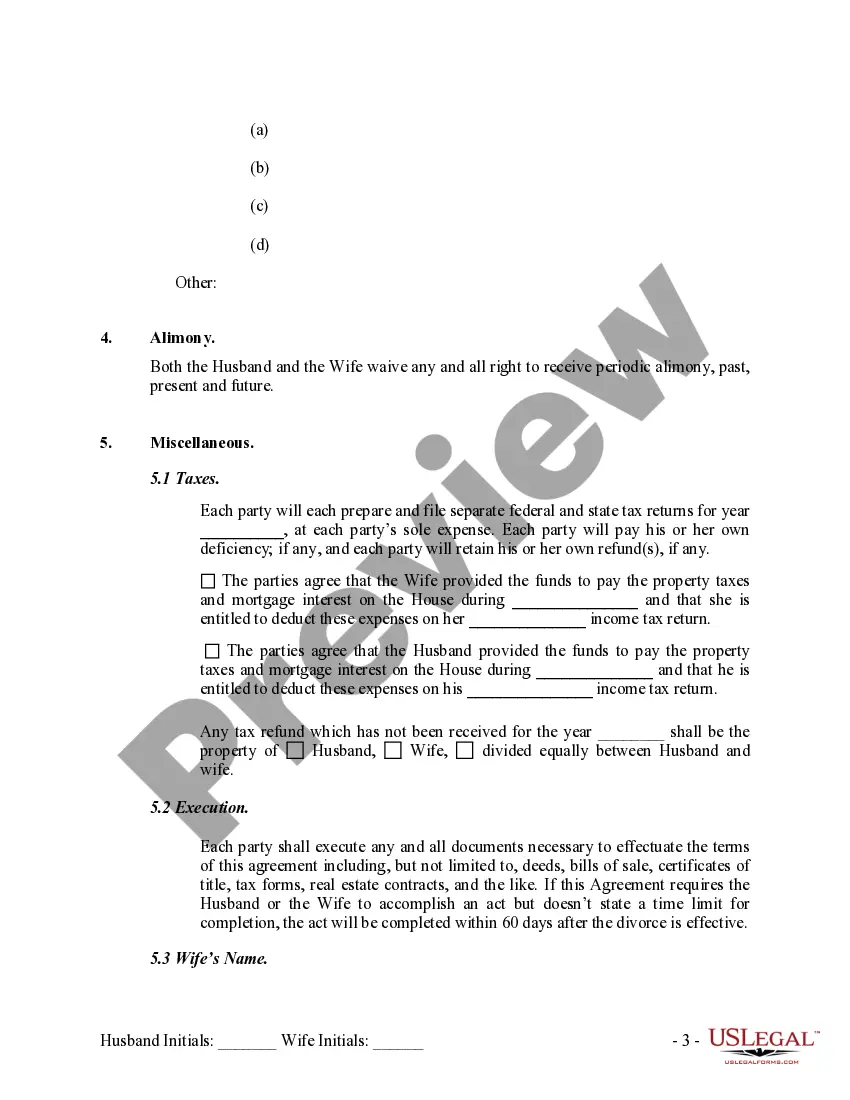
- Responsibilities for debts and tax liabilities.
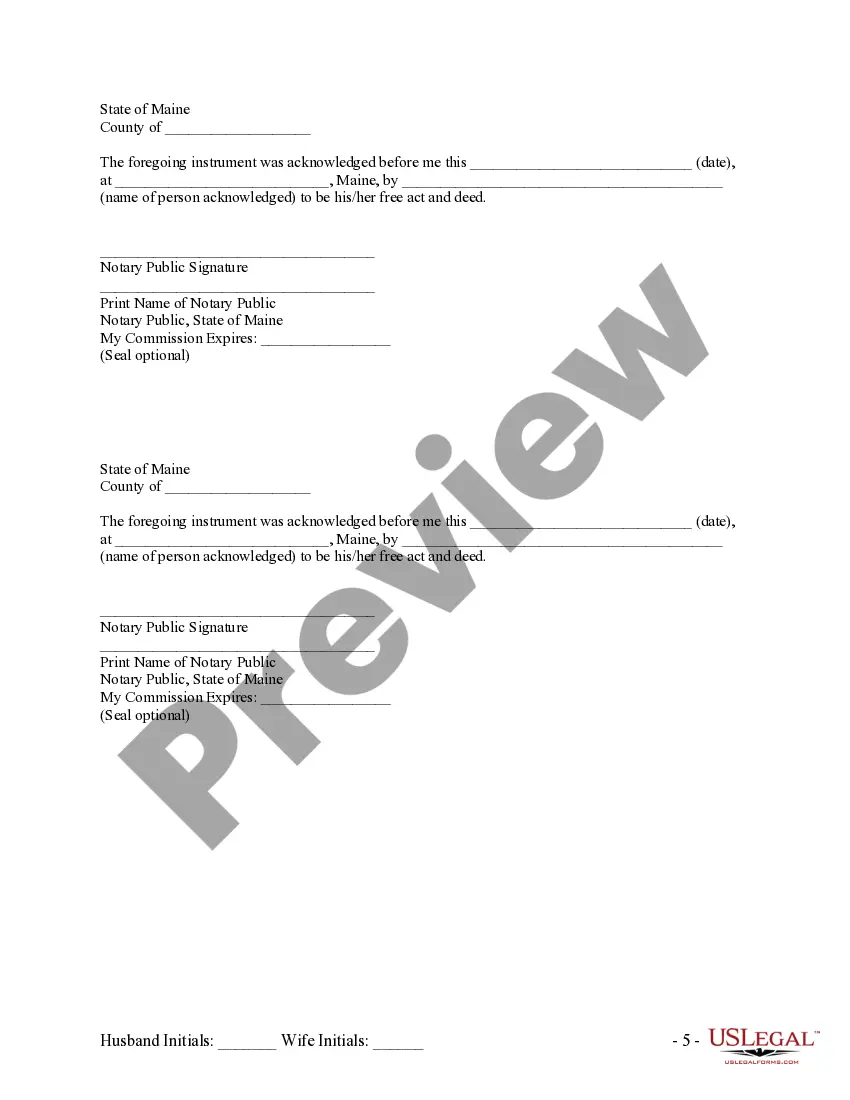
- Execution requirements, including notarization details.
Situations where this form applies
This form should be used when a married couple decides to separate and no children are involved. It is practical if both parties agree on how to divide their property, assets, and debts. This agreement helps clarify financial responsibilities and can facilitate a smoother divorce process by reducing potential disputes over property and finances.
Who needs this form
- Married couples planning to separate without children.
- Couples who have mutually agreed on the division of property and debts.
- Individuals seeking to formalize their separation in a legally binding document.
Completing this form step by step
- Identify the parties by filling in their full names.
- State that no children were born to the couple and confirm no pregnancies.
- Specify the marital property, including addresses and vehicle details.
- Outline the division of bank accounts and other personal assets.
- Detail each party's responsibilities for debts and obligations.
- Sign the agreement in front of a Notary Public to validate the document.
Notarization requirements for this form
This form needs to be notarized to ensure legal validity. US Legal Forms provides secure online notarization powered by Notarize, allowing you to complete the process through a verified video call, available anytime.
Get your form ready online
Our built-in tools help you complete, sign, share, and store your documents in one place.
Make edits, fill in missing information, and update formatting in US Legal Forms—just like you would in MS Word.
Download a copy, print it, send it by email, or mail it via USPS—whatever works best for your next step.
Sign and collect signatures with our SignNow integration. Send to multiple recipients, set reminders, and more. Go Premium to unlock E-Sign.
If this form requires notarization, complete it online through a secure video call—no need to meet a notary in person or wait for an appointment.
We protect your documents and personal data by following strict security and privacy standards.

Make edits, fill in missing information, and update formatting in US Legal Forms—just like you would in MS Word.

Download a copy, print it, send it by email, or mail it via USPS—whatever works best for your next step.

Sign and collect signatures with our SignNow integration. Send to multiple recipients, set reminders, and more. Go Premium to unlock E-Sign.

If this form requires notarization, complete it online through a secure video call—no need to meet a notary in person or wait for an appointment.

We protect your documents and personal data by following strict security and privacy standards.
Mistakes to watch out for
- Failing to include all assets and debts in the agreement.
- Not specifying the responsibilities for tax liabilities.
- Omitting signatures or notary acknowledgment.
- Using incorrect descriptions of property or vehicles.
Benefits of completing this form online
- Convenience of downloading and completing the form at your own pace.
- Access to templates drafted by licensed attorneys, ensuring legal accuracy.
- Editable formats allow for easy customization to fit your specific agreement.
- Immediate availability without the need for an appointment or travel.
What to keep in mind
- The agreement is essential for dividing assets and debts on separation.
- It is specifically tailored for couples without children.
- Notarization is required for the agreement to be legally enforceable.
- Utilizing online forms can streamline the process and ensure legal compliance.
Looking for another form?

Form popularity
FAQ
Maine has adopted the theory of equitable distribution when dividing property in a divorce. Community property states try to allocate property between spouses as evenly as possible.
Enforcing an MSA must be done by filing a formal request or motion (legal paperwork) with the court. You will need to show the court how your ex-spouse failed to follow the terms of the agreement. There are many reasons you may need to ask the court to assist you with enforcing your agreement.
Maine's divorce law strikes a compromise between fault-based and no-fault divorce. You can get a divorce in Maine if you and your spouse have irreconcilable marital differences. This is a no-fault ground and another way of saying that you and your spouse are just too different to be married anymore.
The duration of payments is determined by a judge in Maine family court. Alimony length is usually based on length of marriage - one commonly used standard for alimony duration is that 1 year of alimony is paid every three years of marriage (however, this is not always the case in every state or with every judge).
Once an agreement has been reached, both parties will sign the settlement, and it will be forwarded to a judge who will incorporate the agreement into the final divorce decree.Usually, an attorney will need to file a motion immediately, and present an argument to the court about why the agreement should be rescinded.
Maine follows marital property or equitable distribution for the division of property in divorce cases.
Maine has an equitable distribution or common law system of marital property, which is true for the majority of states. Under this system, marital property isn't automatically assumed to be owned by both spouses and therefore should be divided equally at divorce.
Marital Settlement Agreements, reached between the parties in writing and signed by the parties, become legally binding when approved by the court at the time of the final court hearing.Once approved by the court, such post judgment stipulations do become legally binding and enforceable between the parties.
Maine is NOT a community property state, which means that marital property is not automatically divided 50/50 between the spouses in a divorce case.