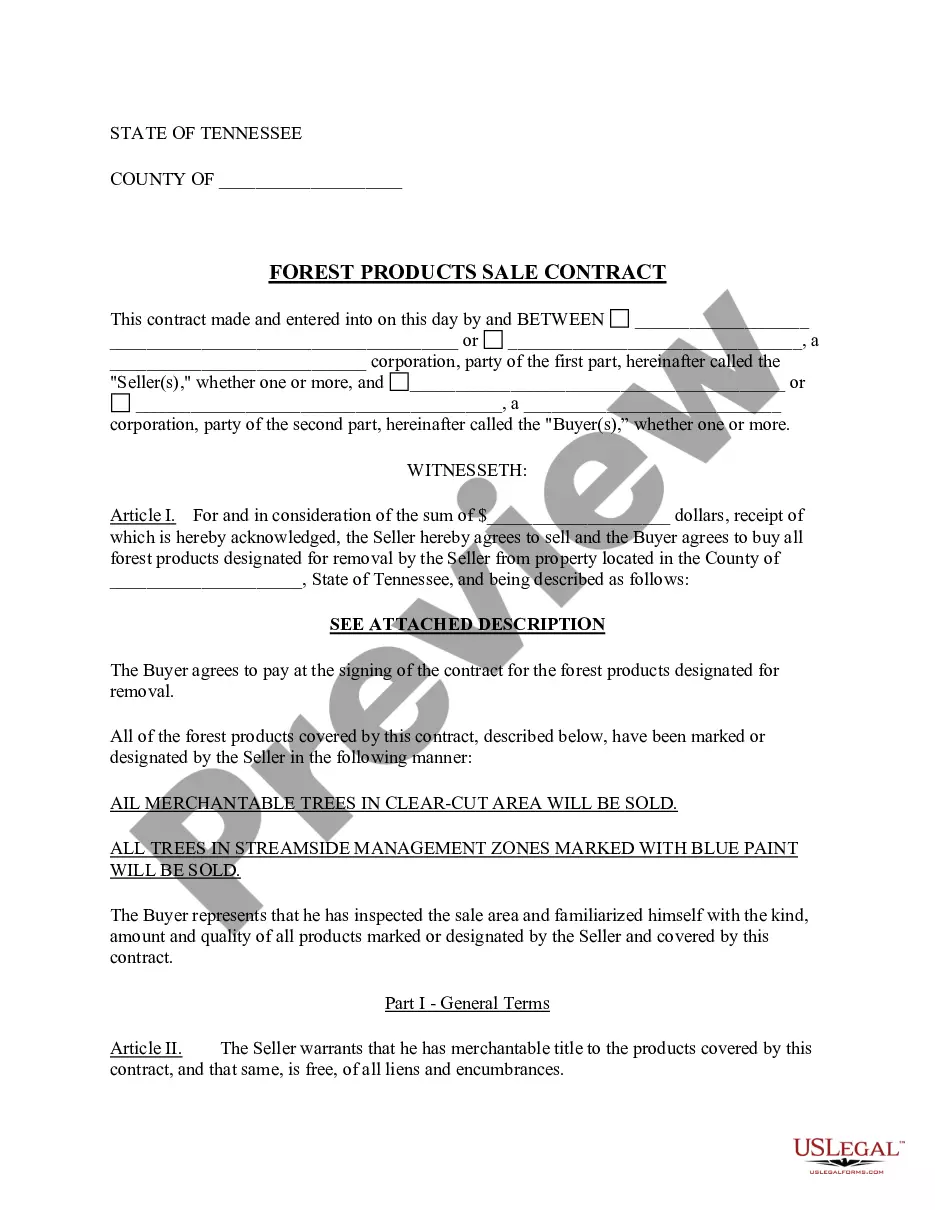
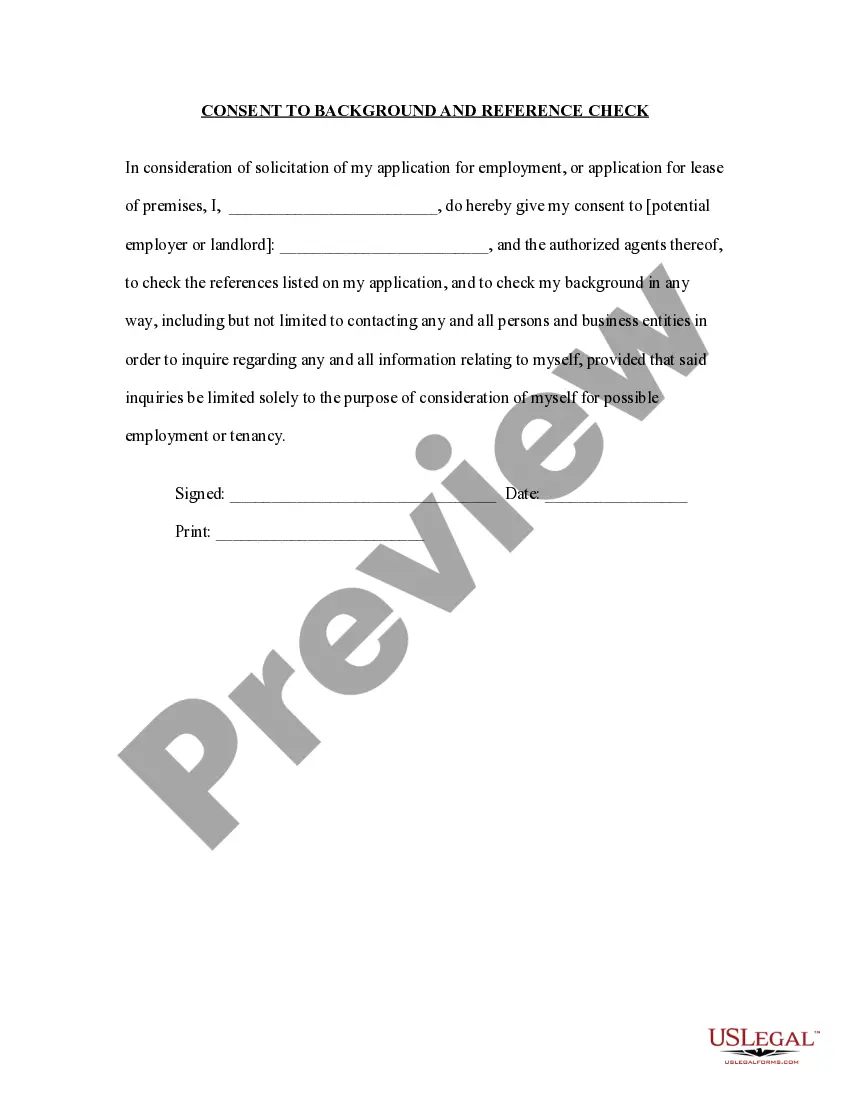
Utah Tenant Consent to Background and Reference Check
Understanding this form
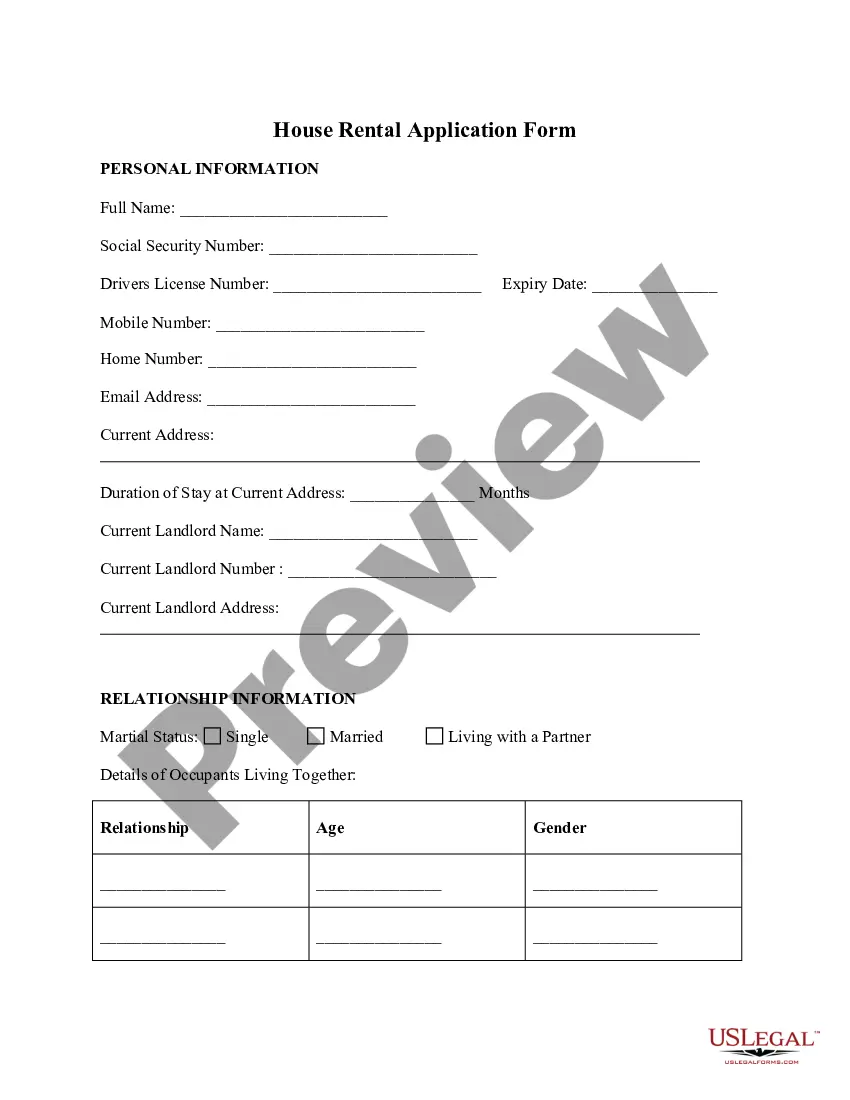
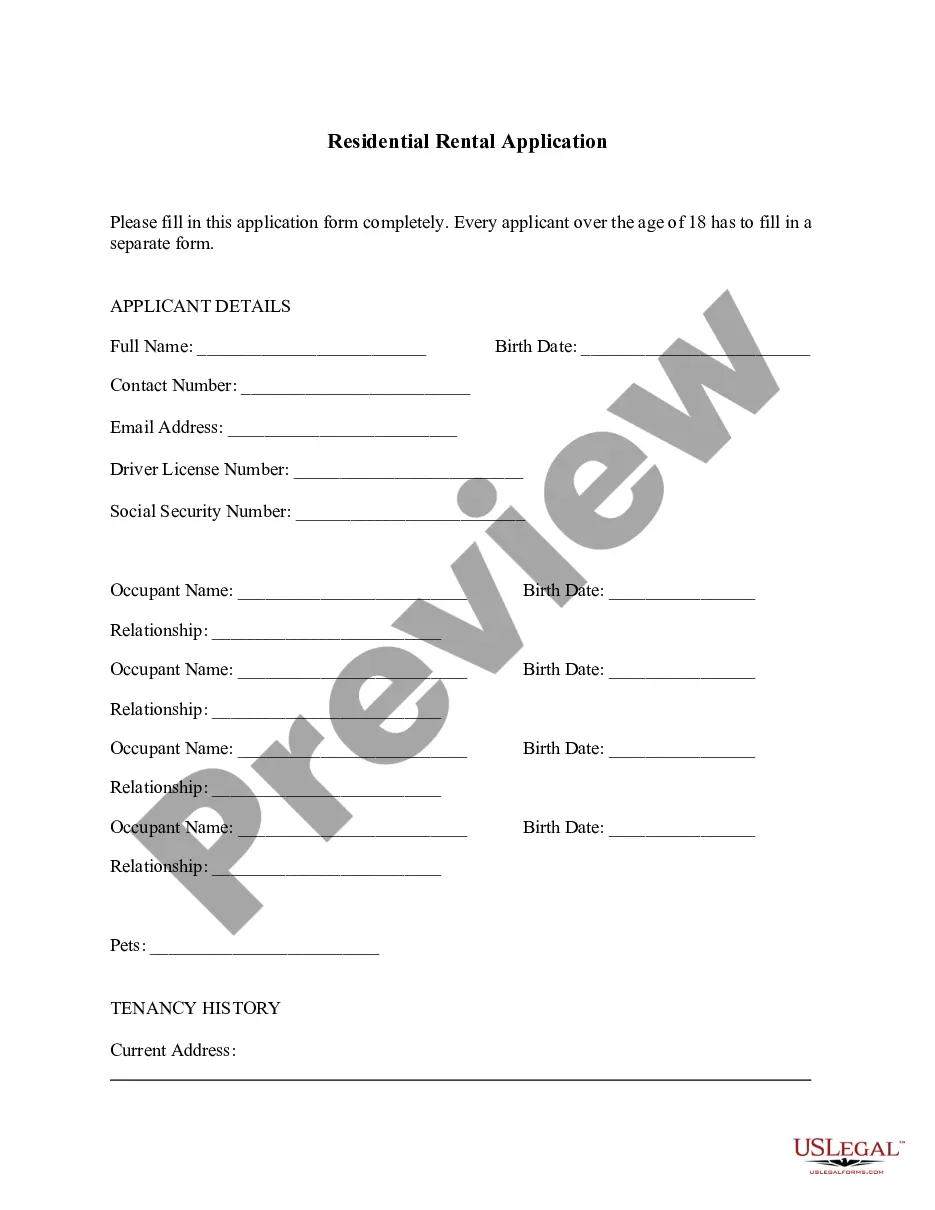
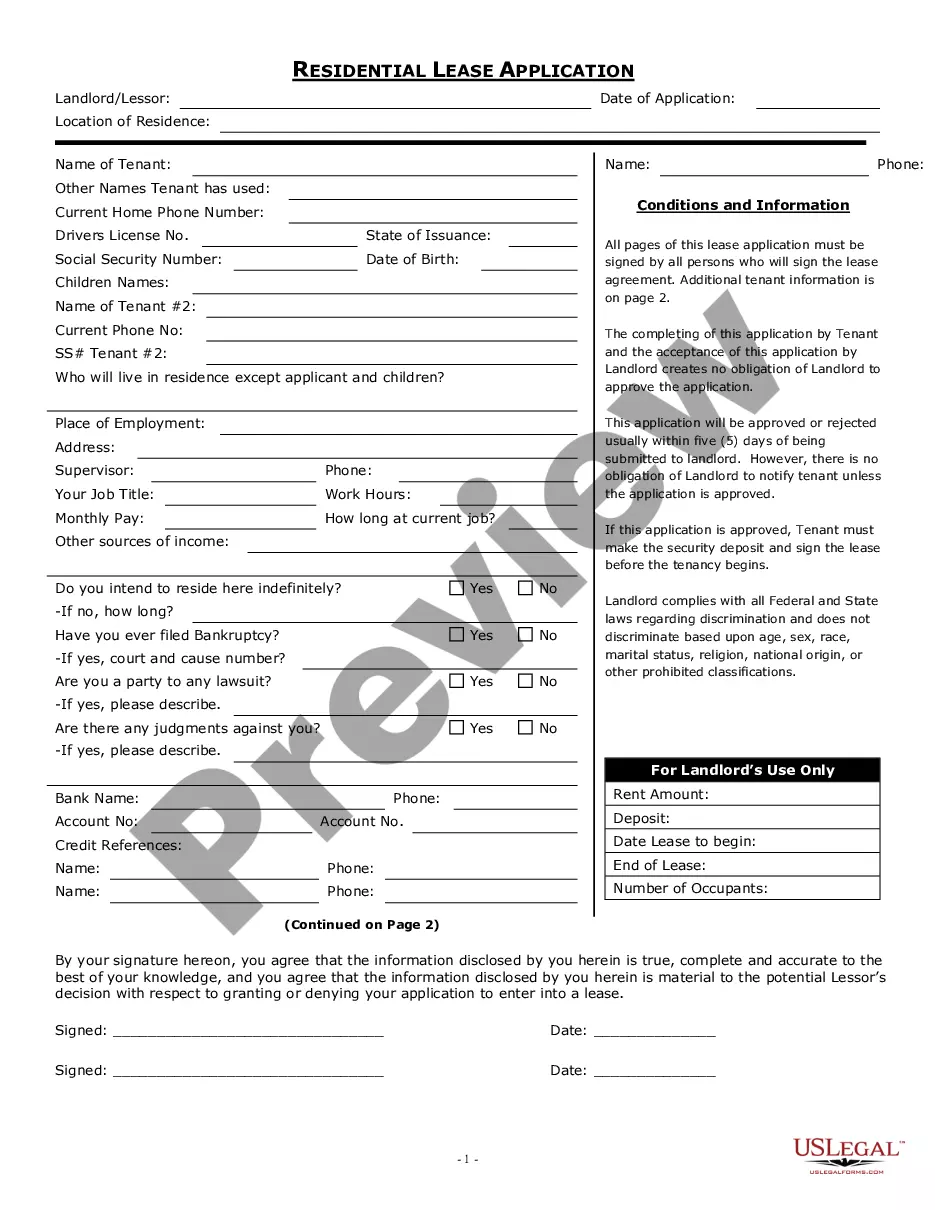
The Tenant Consent to Background and Reference Check is a legal document used by landlords to obtain permission from a tenant to conduct background checks. This form differs from other rental forms as it specifically grants consent for the landlord to review the tenant's personal references and any criminal history. It's essential for ensuring that landlords can make informed decisions about potential tenants while respecting their privacy rights.
Form components explained
- Tenant's printed name and signature to validate consent.
- Landlord's name and any authorized agents who will conduct the background check.
- A clause detailing the scope of the background check, including reference contacts.
- Space to indicate the date when the consent is given.
When to use this form
This form should be used when a tenant applies for a lease or rental agreement, and the landlord needs to verify the tenant's background and references. It is typically utilized during the application process to help landlords assess the suitability of a potential tenant before finalizing a rental agreement.
Who this form is for
- Landlords and property managers who need to conduct thorough background checks.
- Tenants applying for renting apartments, houses, or commercial properties.
- Real estate agents involved in property leasing transactions.
Steps to complete this form
- Print the tenant's name clearly in the designated area.
- Fill in the name of the landlord or property management company.
- Specify the purpose of the background check in relation to the application.
- Have the tenant sign and date the form to confirm their consent.
- Ensure all parties keep a copy for their records.
Is notarization required?
This form usually doesn’t need to be notarized. However, local laws or specific transactions may require it. Our online notarization service, powered by Notarize, lets you complete it remotely through a secure video session, available 24/7.
Get your form ready online
Our built-in tools help you complete, sign, share, and store your documents in one place.
Make edits, fill in missing information, and update formatting in US Legal Forms—just like you would in MS Word.
Download a copy, print it, send it by email, or mail it via USPS—whatever works best for your next step.
Sign and collect signatures with our SignNow integration. Send to multiple recipients, set reminders, and more. Go Premium to unlock E-Sign.
If this form requires notarization, complete it online through a secure video call—no need to meet a notary in person or wait for an appointment.
We protect your documents and personal data by following strict security and privacy standards.

Make edits, fill in missing information, and update formatting in US Legal Forms—just like you would in MS Word.

Download a copy, print it, send it by email, or mail it via USPS—whatever works best for your next step.

Sign and collect signatures with our SignNow integration. Send to multiple recipients, set reminders, and more. Go Premium to unlock E-Sign.

If this form requires notarization, complete it online through a secure video call—no need to meet a notary in person or wait for an appointment.

We protect your documents and personal data by following strict security and privacy standards.
Common mistakes to avoid
- Failing to obtain signatures from both parties, leading to unenforceability.
- Leaving sections incomplete, which may cause delays in the application process.
- Not specifying which references will be checked, potentially leading to misunderstandings.
Advantages of online completion
- Immediate access to a reliable, attorney-drafted document.
- Convenience of downloading and printing at any time.
- Customization options available for specific tenant situations.
Legal use & context
- This form is legally binding once signed by the tenant.
- It protects landlords by establishing consent before conducting background checks.
- The information collected must comply with privacy laws and regulations.
Key takeaways
- The Tenant Consent to Background and Reference Check is essential for screening potential tenants.
- Providing all necessary information and signature ensures a smoother application process.
- Using this form helps landlords adhere to legal requirements and maintain transparency.
Looking for another form?



Form popularity
FAQ
Request an Application. Start by having every prospective tenant complete an application. Run a Credit Check. Run a Background Check. Contact the Previous Landlords. Contact the Tenant's Employer. Interview the Tenant.
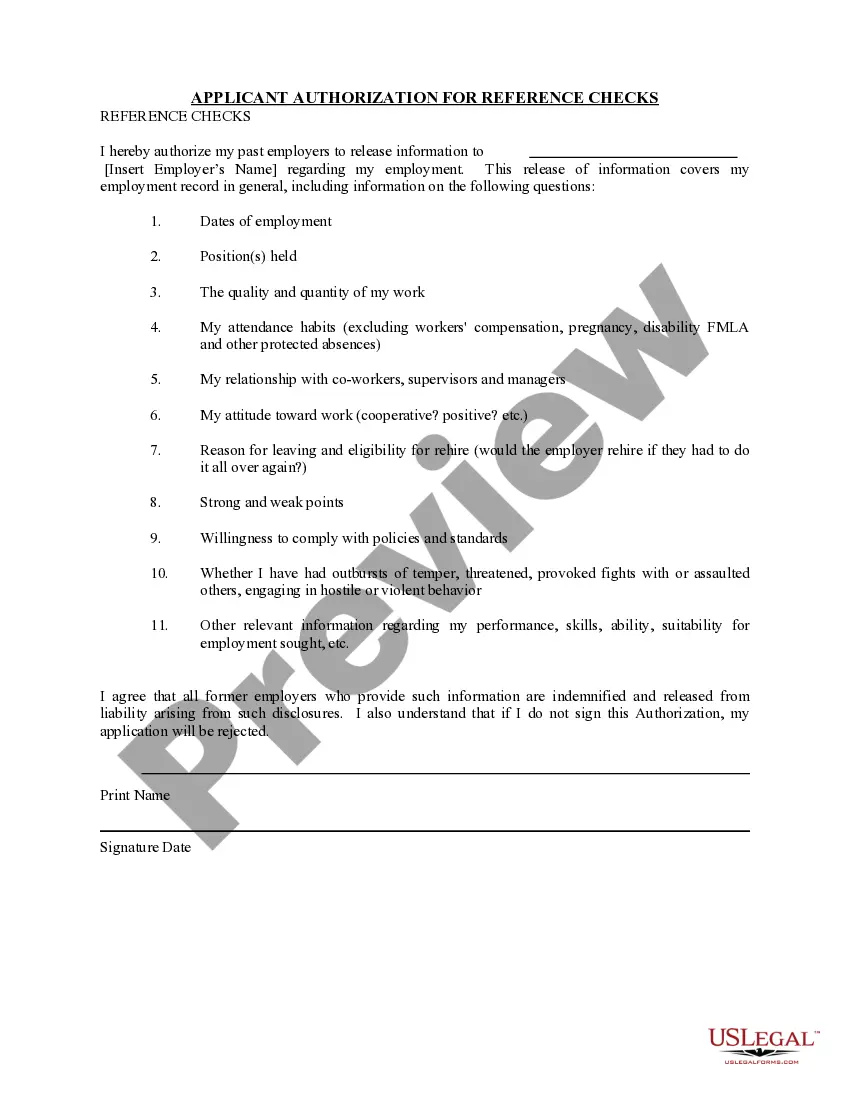
Landlord referencing This involves getting in touch with the tenant's previous landlord to find out how they behaved as a tenant. They can tell you if the tenant paid rent on time, if they treated the property with respect and any other information that might influence the decision.
A. A courteous introduction (e.g. Dear ______ or To whom it may concern) b. A statement of intent (e.g. I am writing this letter to recommend _____ as a tenant) c. A closing sentiment (e.g. Kind Regards or Sincerely)
Stick to the Facts Many landlords have heard rumors that they can't give tenants a bad reference. This is not true, and if there are definite, verifiable facts that pertain to a particular tenant, you have a responsibility to let other prospective landlords know.
Landlords should absolutely request a reference if the applicant has a rental history. Our policy is a credit check, background check, employment/financials verification, and a landlord reference. It's important to know if you're getting a quality tenant and all of the above checks help create a fuller picture.
References from past landlords may indicate how an applicant would occupy your property, and this information could help you avoid a bad outcome such as late rent payments, property damage, complaints from neighbors, or an eviction. The eviction process is time-consuming and costly.
Rest assured there are no privacy laws limiting what a landlord can or can't disclose about a previous tenant. You can say anything you wish. However, our advice is to stick to the facts and only give information that you can support with written proof so that your former tenants won't accuse you of slander.
Rental references, or referrals, are votes of confidence from people who know you in a personal, financial, educational, professional, or prior rental experience setting. Having a few qualified people who can vouch for you is one of the things that could help ensure a landlord chooses you.
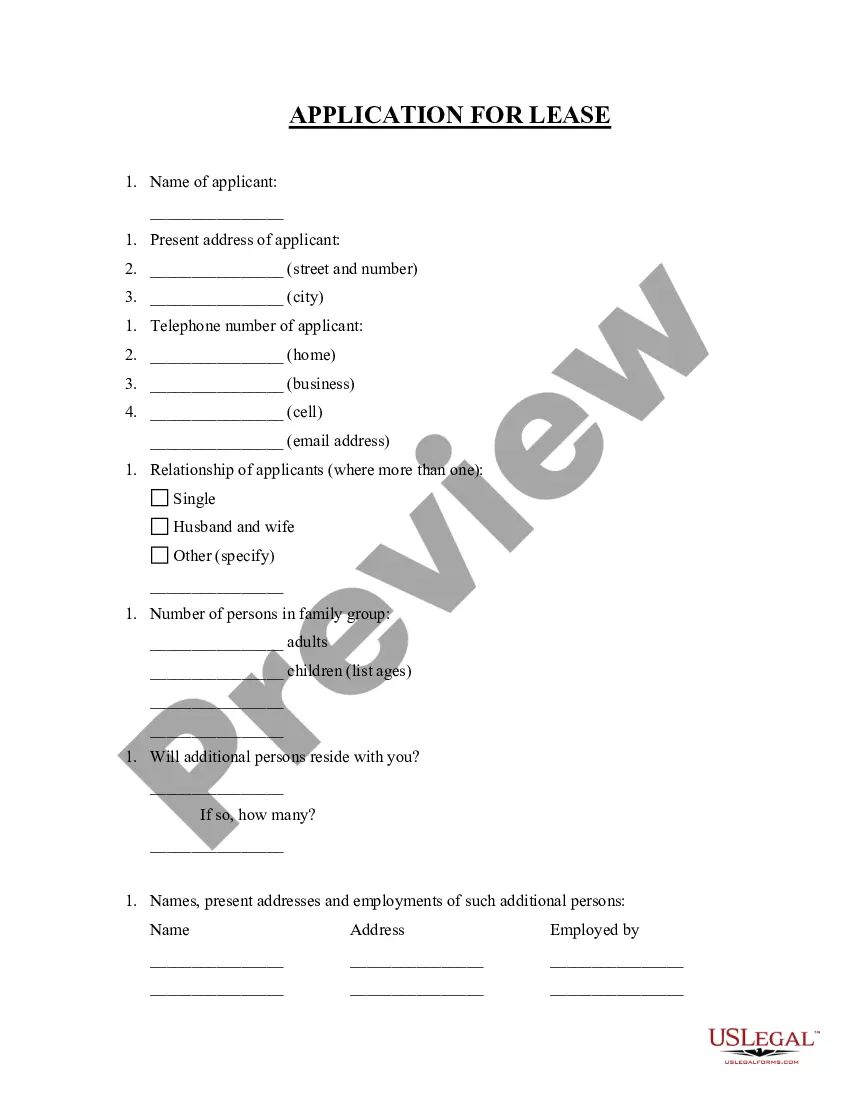
Landlords will collect rental references from interested renters via a rental application. One thing that is commonly found on rental applications is the request for personal, or character, references. As a landlord, you want to do a comprehensive background check on the tenant which includes calling tenant references.