Maine Letter from Tenant to Landlord about Landlord's refusal to allow sublease is unreasonable
Understanding this form
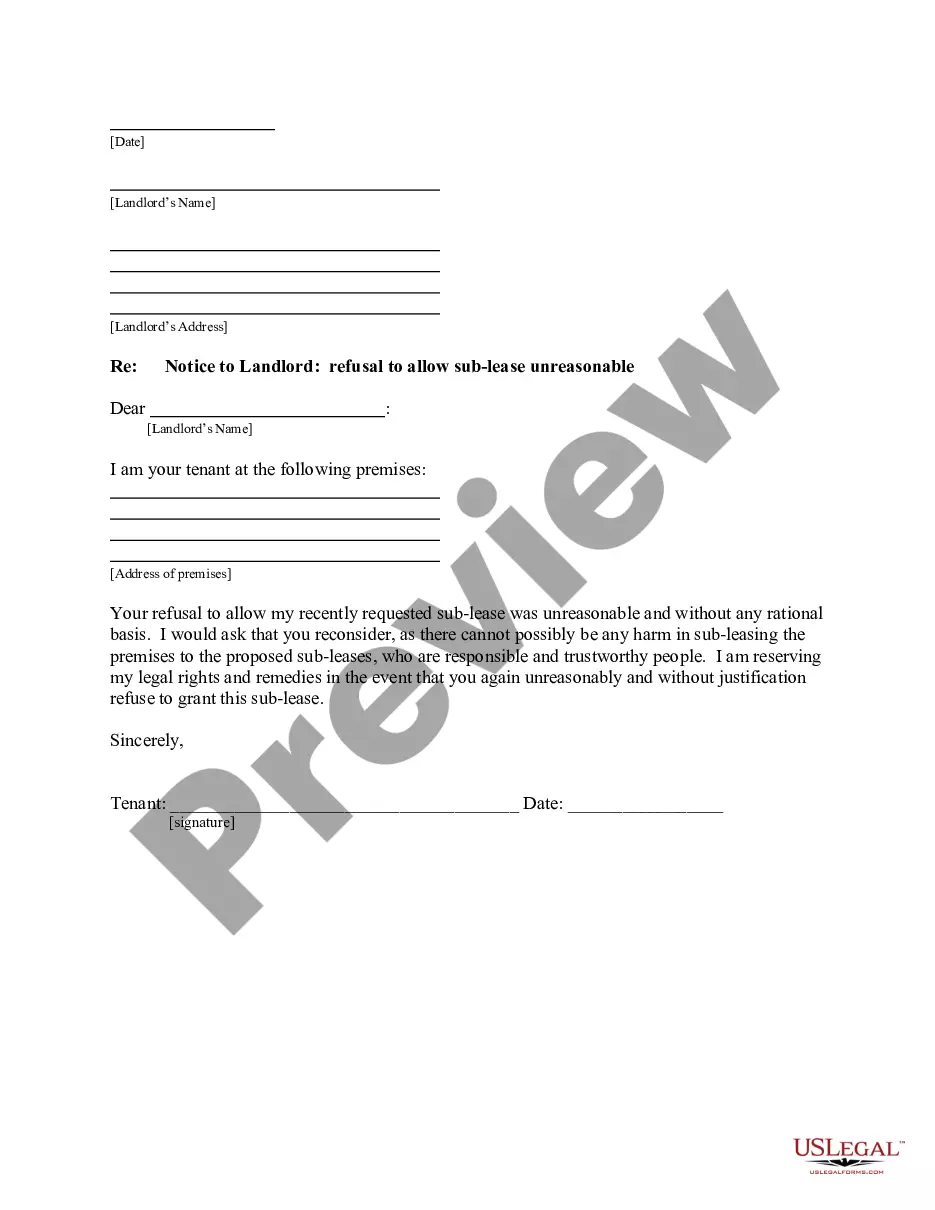
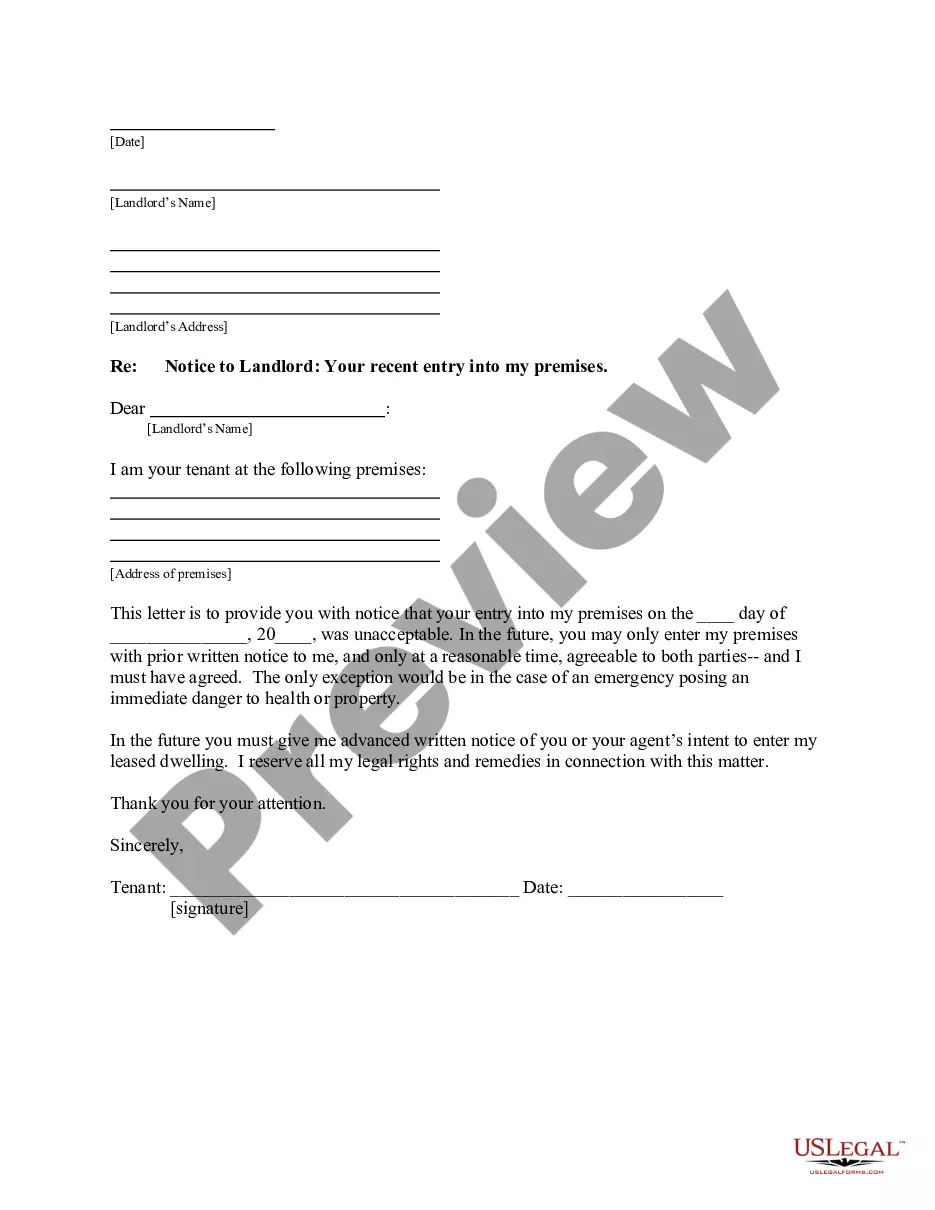
This form is a letter from a tenant to the landlord addressing the landlord's unreasonable refusal to allow a sublease. It serves to assert the tenant's position and reserve legal rights should the landlord persist in denying the request. This letter is essential for tenants seeking to clarify their rights regarding subleasing under their rental agreement, distinguishing it from general communication or lease modification forms.
What’s included in this form
- Sender's information: Name and address of the tenant.
- Recipient's information: Name and address of the landlord.
- Statement of refusal: Clear mention of the landlord's refusal to allow the sublease.
- Reservation of rights: Indicates that the tenant reserves legal rights and remedies.
- Sign-off: Signature line for the tenant's name, along with the date.

When this form is needed
This form should be used when a tenant wishes to formally communicate with their landlord regarding a denial of a sublease request. It is applicable in situations where the tenant has obtained potential subtenants and has made formal requests for permission to sublease, which the landlord has refused without reasonable grounds.
Who needs this form
- Tenants who want to sublease their rental property.
- Individuals who have received an unreasonable refusal from their landlord regarding subleasing.
- Tenants seeking to protect their legal rights related to lease assignment.
Steps to complete this form
- Identify the parties: Enter your name and address as the tenant, followed by the landlord's name and address.
- State the refusal: Clearly specify the landlord's refusal to allow the sublease.
- Reserve your rights: Include a statement reserving your legal rights if the landlord continues the denial.
- Sign and date: Provide your signature and the date to finalize the letter.
Does this form need to be notarized?
This form does not typically require notarization to be legally valid. However, some jurisdictions or document types may still require it. US Legal Forms provides secure online notarization powered by Notarize, available 24/7 for added convenience.
Get your form ready online
Our built-in tools help you complete, sign, share, and store your documents in one place.
Make edits, fill in missing information, and update formatting in US Legal Forms—just like you would in MS Word.
Download a copy, print it, send it by email, or mail it via USPS—whatever works best for your next step.
Sign and collect signatures with our SignNow integration. Send to multiple recipients, set reminders, and more. Go Premium to unlock E-Sign.
If this form requires notarization, complete it online through a secure video call—no need to meet a notary in person or wait for an appointment.
We protect your documents and personal data by following strict security and privacy standards.

Make edits, fill in missing information, and update formatting in US Legal Forms—just like you would in MS Word.

Download a copy, print it, send it by email, or mail it via USPS—whatever works best for your next step.

Sign and collect signatures with our SignNow integration. Send to multiple recipients, set reminders, and more. Go Premium to unlock E-Sign.

If this form requires notarization, complete it online through a secure video call—no need to meet a notary in person or wait for an appointment.

We protect your documents and personal data by following strict security and privacy standards.
Typical mistakes to avoid
- Not including the landlord's full name or address.
- Failing to clearly state the refusal or grounds for the sublease.
- Not reserving legal rights when necessary.
- Omitting the date and signature, which makes the letter invalid.
Benefits of completing this form online
- Convenience: Easily download and complete the form from any device.
- Editability: Customize the content to fit your specific situation.
- Reliability: Use professionally drafted documents that meet legal standards.
Legal use & context
- This letter serves as a formal notification to the landlord regarding subleasing issues.
- It preserves the tenant's legal rights in case of disputes, which may lead to further legal action.
- Understanding local laws is crucial, as they can significantly impact the tenant's rights and obligations regarding subleases.
Key takeaways
- This form helps tenants contest unreasonable sublease refusals from landlords.
- Documenting the dispute is vital for protecting legal rights.
- Users should be aware of local laws affecting subleasing agreements.
Looking for another form?
Form popularity
FAQ
While tenants cannot unreasonably deny access to a landlord, landlords must also follow all of the state and local rules regarding access to tenants' apartments. Roughly half of states have rules governing landlord entry into tenants' apartments.
If a tenant is subletting without consent, it's likely they will have broken terms in their tenancy agreement. This breach of contract means that the landlord can take action to evict them from their home. Possession proceedings can be started quickly, but it's important to follow the correct legal process.
In New South Wales if your housemate is a sub-tenant on an open-ended agreement, they'll likely still have 90 days to vacate the property even after you secure an order to evict them.
A subtenant is not a cotenant and does not have a direct relationship with your landlord. As their landlord, you can (and should) require them to pay rent directly to you and evict them if they fail to follow through. This differs from a cotenant, who can be evicted only by your landlord.
If the tenant refuses, you are permitted to send them a notice to agree or quit the property. The tenant refusing you access constitutes a breach in the lease agreement, so they could be evicted if they continue to deny access.
The subtenant must give a notice of one month in order to terminate the sublease. The subtenant is also required to give reasons for leaving the premises. A sublease can be terminated early if the subtenant is willing to pay the rent until the end of the month and an amount in addition to this.
A Residential Sublease is a legally binding contract made between the original tenant of a rental property (sublandlord) and a new tenant (also known as a subtenant or a sublessee). The sublease gives the subtenant the right to share or to take over the rented premises from the original tenant.
A landlord cannot evict a subtenant.If the landlord really wants the subtenant gone, he would have to terminate your right to sublet the property. This means, he would have to evict you to get rid of the subtenant. If you want to evict a subtenant, and don't want to get your landlord involved.