Maine Letter from Tenant to Landlord containing Notice that premises leaks during rain and demand for repair
Overview of this form
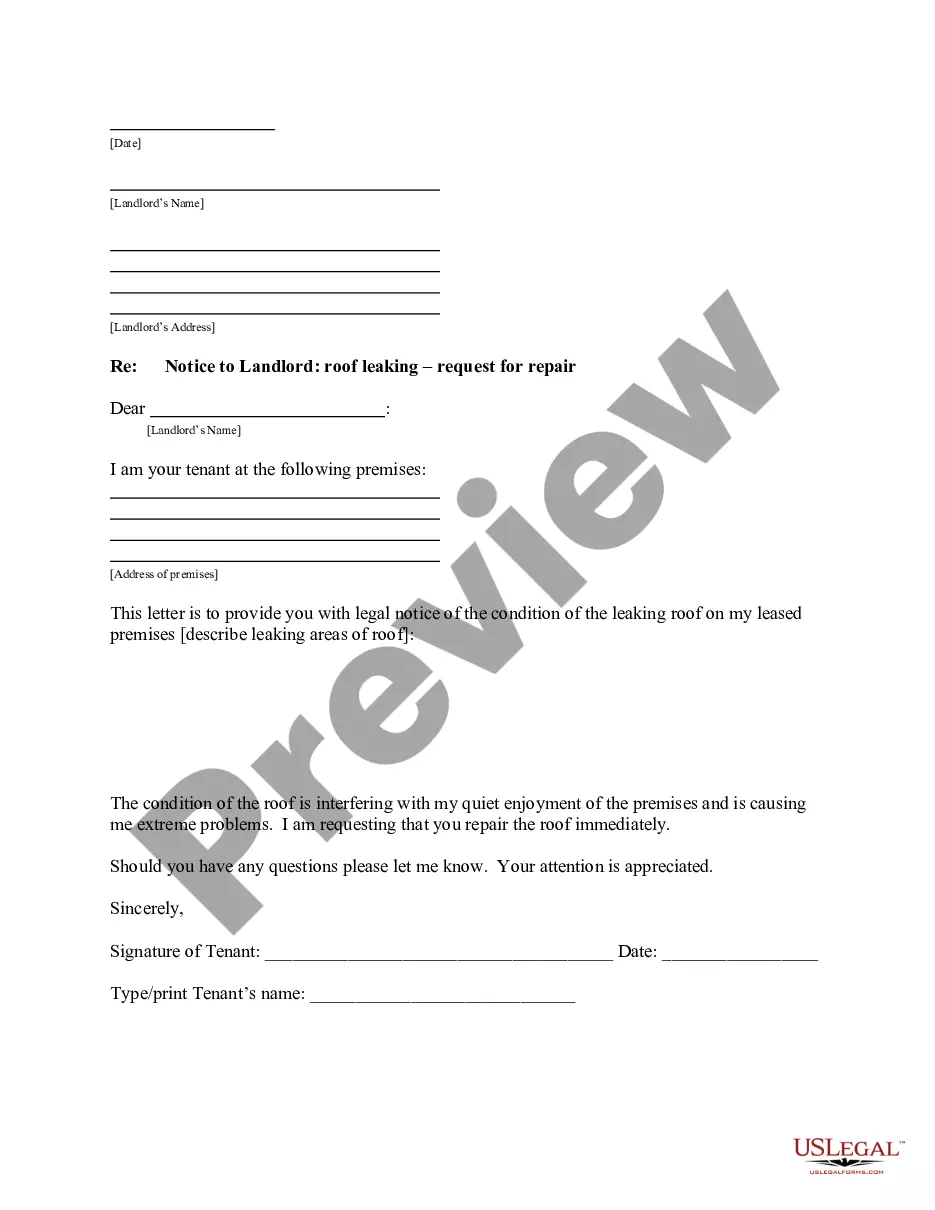
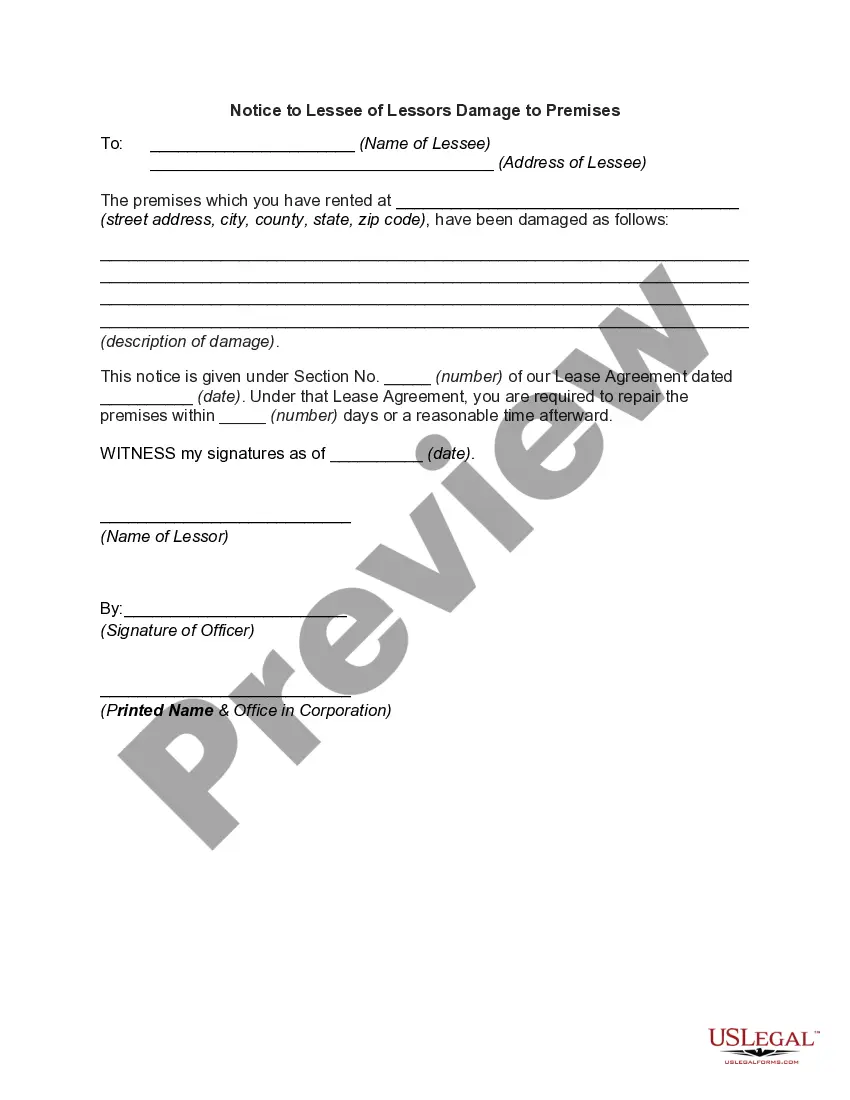
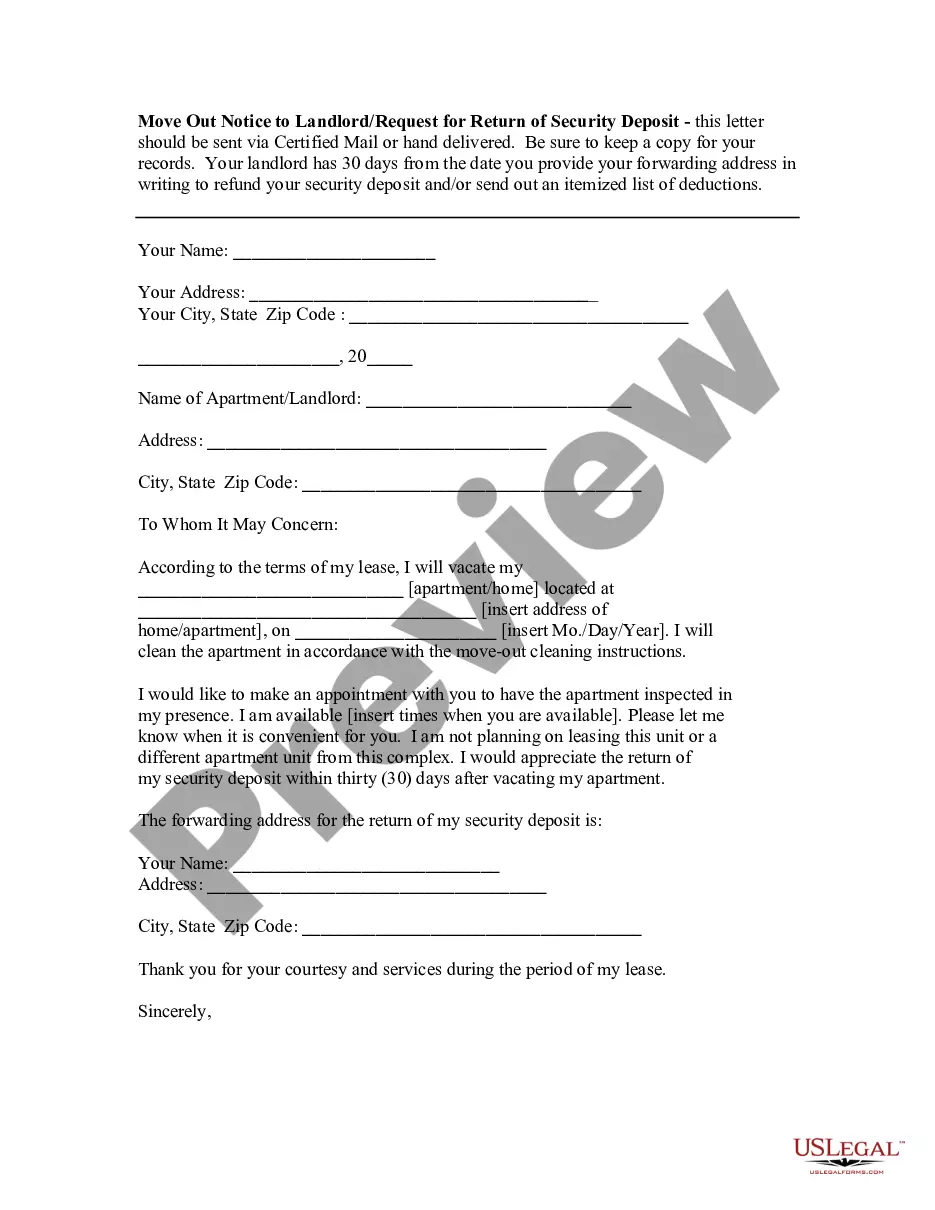
This form is a Letter from Tenant to Landlord containing Notice that premises leaks during rain and demand for repair. It allows tenants to formally notify their landlord about a leak in the property and request repairs as required by their lease agreement. This form is essential in documenting communication and ensuring that landlords are aware of issues needing attention, differentiating it from other tenant notices regarding general maintenance or complaints.
Form components explained
- Information about the tenant, including name and signature.
- Details about the property affected, including the nature of the leak.
- Request for repair and acknowledgment of the landlord's obligation under the lease.
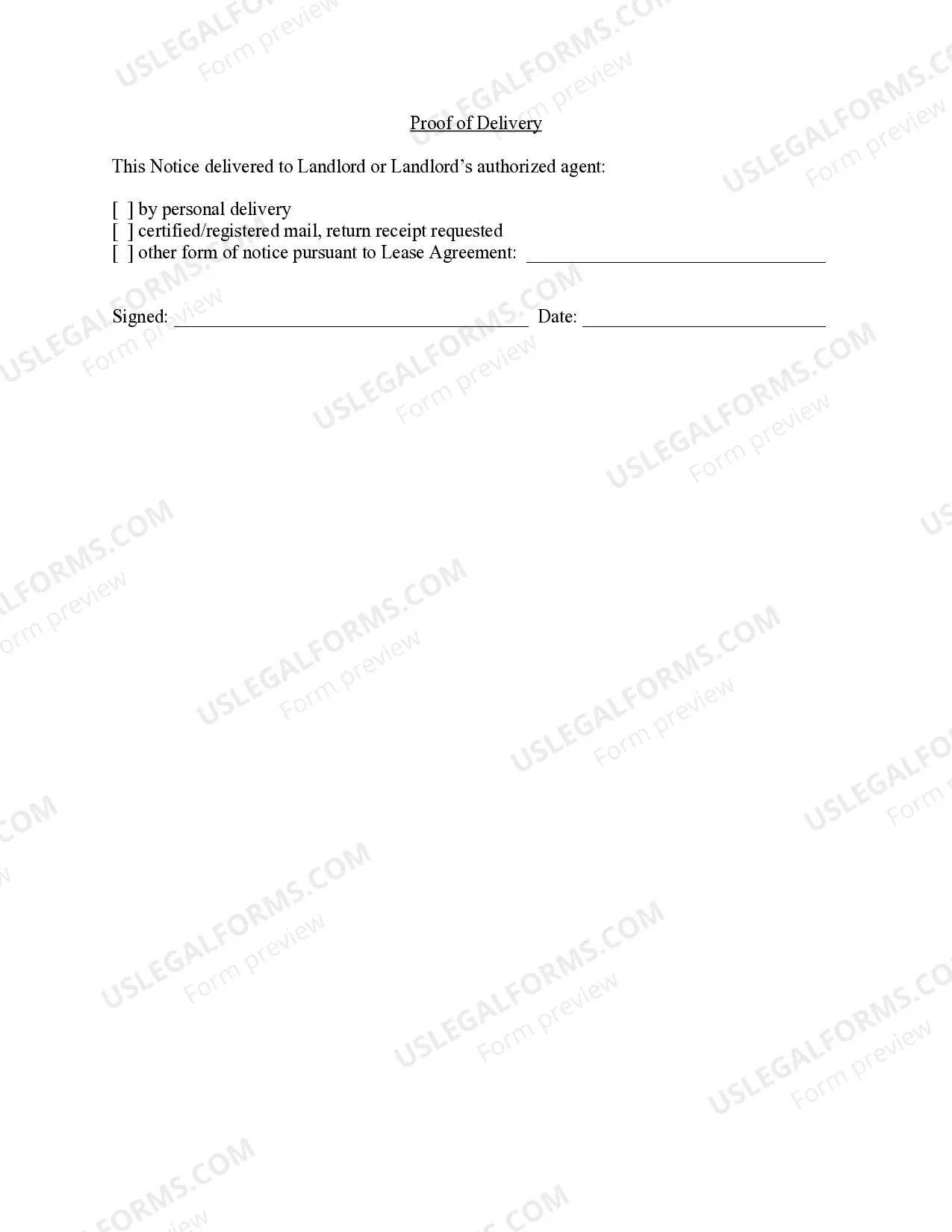
- Proof of delivery methods to ensure the notice was sent and received.
- Dates of delivery and tenant's signature for verification.

Situations where this form applies
This form is used when a tenant experiences water leakage during rain through the property's roof or other areas. It is essential to notify the landlord promptly to prevent further damage and to ensure that necessary repairs are made in a timely manner. Using this form can help protect the tenantâs rights to a habitable living environment as stipulated in rental agreements.
Who this form is for
This form is intended for:
- Tenants renting residential properties who face issues with leaks during rainy weather.
- Individuals wishing to formally document their repair requests to landlords.
- People seeking to ensure compliance with lease agreements regarding property maintenance.
Steps to complete this form
- Provide the name and signature of the tenant at the bottom of the letter.
- Specify the property address where the leak has occurred.
- Clearly describe the nature of the leak and its impact on the property.
- Select the method of proof of delivery (personal delivery, certified mail, etc.).
- Include the date of delivery to keep a record of when the landlord was notified.
Does this document require notarization?
This form does not typically require notarization unless specified by local law. Tenants should check their lease agreement or state regulations for specific requirements regarding notarization of repair notices.
Get your form ready online
Our built-in tools help you complete, sign, share, and store your documents in one place.
Make edits, fill in missing information, and update formatting in US Legal Forms—just like you would in MS Word.
Download a copy, print it, send it by email, or mail it via USPS—whatever works best for your next step.
Sign and collect signatures with our SignNow integration. Send to multiple recipients, set reminders, and more. Go Premium to unlock E-Sign.
If this form requires notarization, complete it online through a secure video call—no need to meet a notary in person or wait for an appointment.
We protect your documents and personal data by following strict security and privacy standards.

Make edits, fill in missing information, and update formatting in US Legal Forms—just like you would in MS Word.

Download a copy, print it, send it by email, or mail it via USPS—whatever works best for your next step.

Sign and collect signatures with our SignNow integration. Send to multiple recipients, set reminders, and more. Go Premium to unlock E-Sign.

If this form requires notarization, complete it online through a secure video call—no need to meet a notary in person or wait for an appointment.

We protect your documents and personal data by following strict security and privacy standards.
Mistakes to watch out for
- Not including all relevant details about the leak, such as location and severity.
- Failing to sign and date the form before sending it.
- Not retaining a copy of the notice for personal records.
- Choosing an inappropriate delivery method that does not provide proof of receipt.
Why complete this form online
- Easy to download and fill out, making it convenient for busy tenants.
- Forms are prepared by licensed attorneys to ensure accuracy and legal compliance.
- Editable format allows tenants to customize the notice to their specific situation.
Legal use & context
- The notice serves as a legal record of the tenant's request for repairs.
- Including delivery proof strengthens the tenant's position if legal action is required.
- This form aids in maintaining a professional relationship with the landlord.
Looking for another form?



Form popularity
FAQ
Type your letter. Concisely review the main facts. Be polite. Write with your goal in mind. Ask for exactly what you want. Set a deadline. End the letter by stating you will promptly pursue legal remedies if the other party does not meet your demand. Make and keep copies.
Make sure the repair is actually your landlord's responsibility. Document the problem thoroughly. Ask your landlord in writing to make the repair. Send your landlord a letter with return receipt requested. Wait for your landlord to respond.
Landlords are responsible for the repair and maintenance of your property's structure and interior. This is defined in the Landlord and Tenant Act from 1985 and the Housing Act of 2004. In general, the landlord is always obliged to keep the exterior in repair.
Clearly, state what you demand to be repaired by the person. Mention the period since it has been causing a problem and that it is high time. Without being too harsh, the letter is written as a warning to the person. Address the person well.
Include details of dates, numbers, amounts of money. A small claims court judge reading your demand letter is more likely to award you money if you can include information about letters you sent and when invoices were sent and how (email or snail mail, for example).Your demand for relief, including the money you want.
Timeline After the Demand Letter Is Sent The most common route is that, after your demand letter has been sent, the insurance company will reject your settlement amount and come back with a different value. Once that has been sent, you and your attorney will either accept or refuse the amount.
Before you go to court, a number of states require you to send a demand letter to your opposing party. An attorney is usually not necessary at this point and you can write a demand letter on your own. To write one, gather necessary documents, draft your letter, and send the letter to your opposing party.
Your landlord has to do anything your tenancy agreement says they have to do. Your landlord is also generally responsible for keeping in repair: the structure and exterior of your home, for example, the walls, roof, foundations, drains, guttering and external pipes, windows and external doors.
Your landlord is always responsible for repairs to: the property's structure and exterior. basins, sinks, baths and other sanitary fittings including pipes and drains. heating and hot water.