Maine Notice of Assignment of Contract for Deed
What is this form?
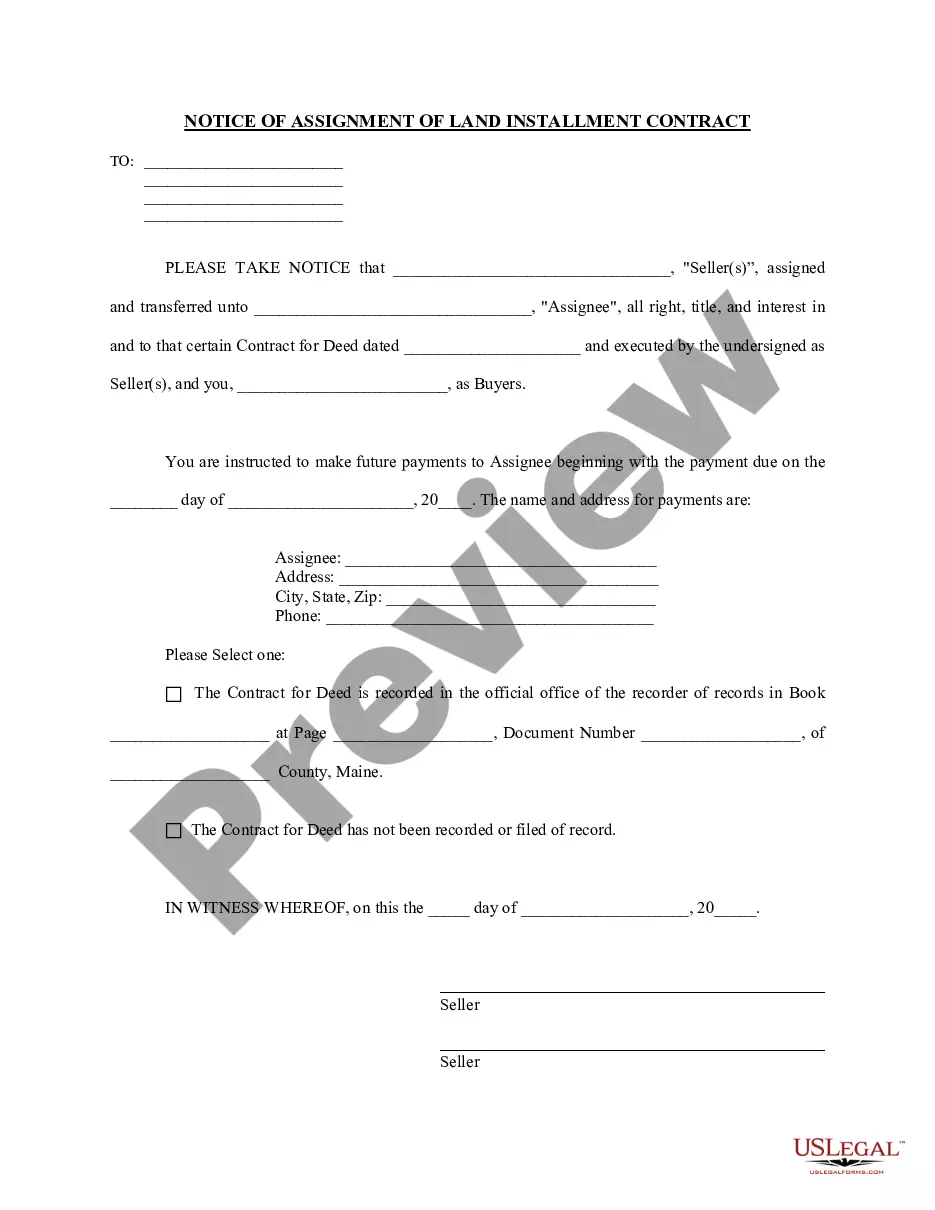
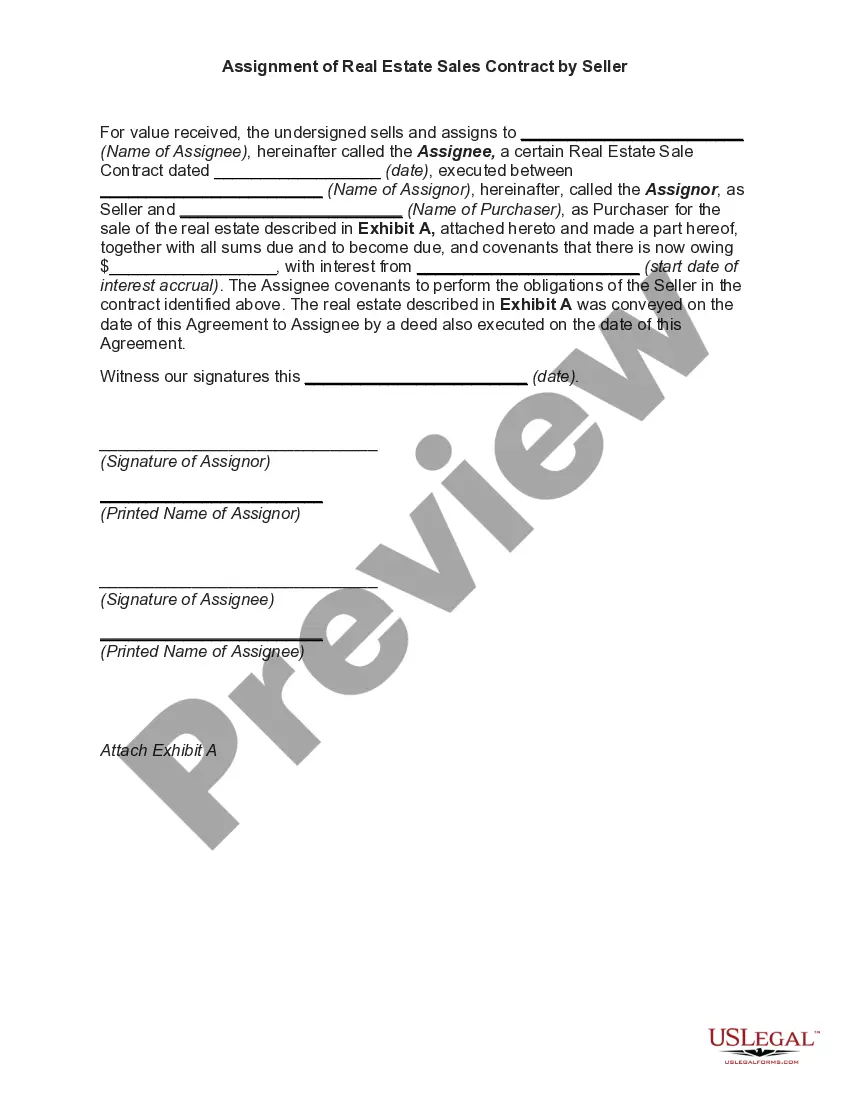
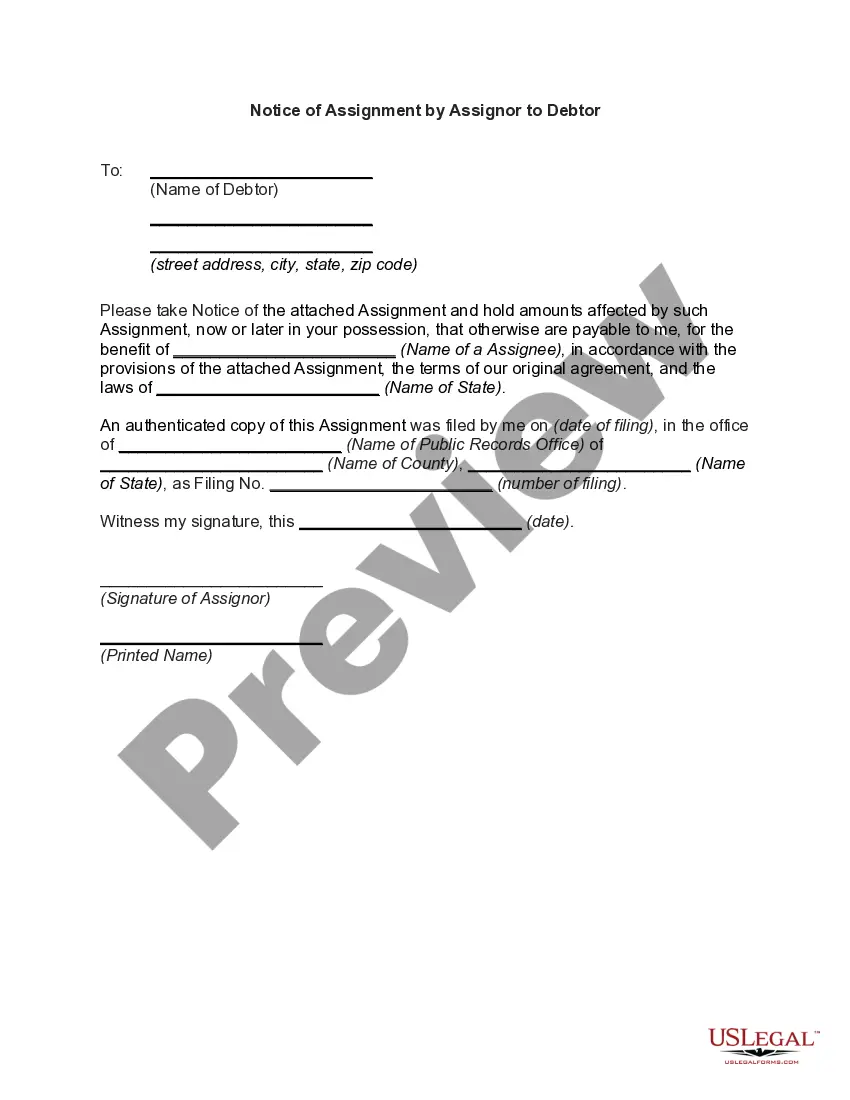
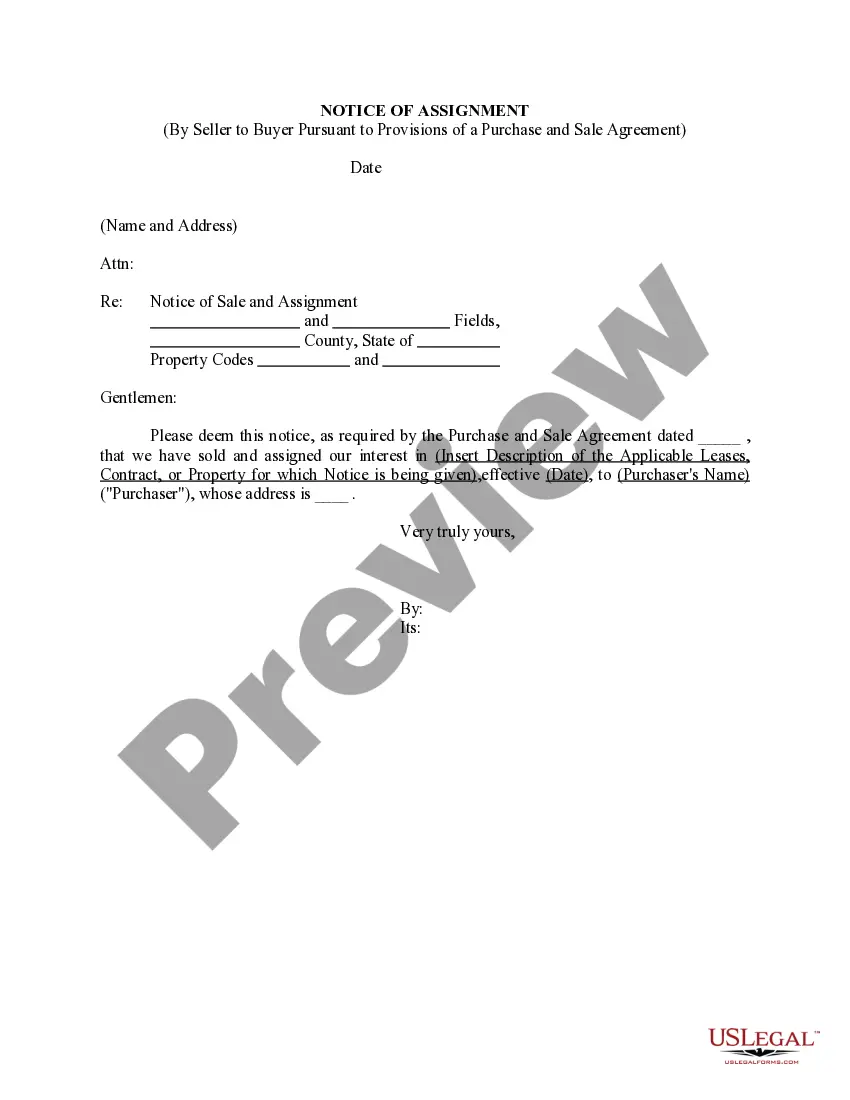
The Notice of Assignment of Contract for Deed is a legal document used by a Seller to officially notify the Buyer(s) that their contract for deed has been assigned to a third party. This notice instructs the Buyer(s) to direct future payments to the assigned party. This document is crucial for maintaining clear communication regarding payment obligations and protecting the interests of all parties involved, distinguishing it from other types of notices by specifying the assignment of a contract specifically for deeds.
Key components of this form
- Identification of the Seller(s) and Assignee
- Details of the original Contract for Deed, including the date and parties involved
- Instructions for future payments to the Assignee
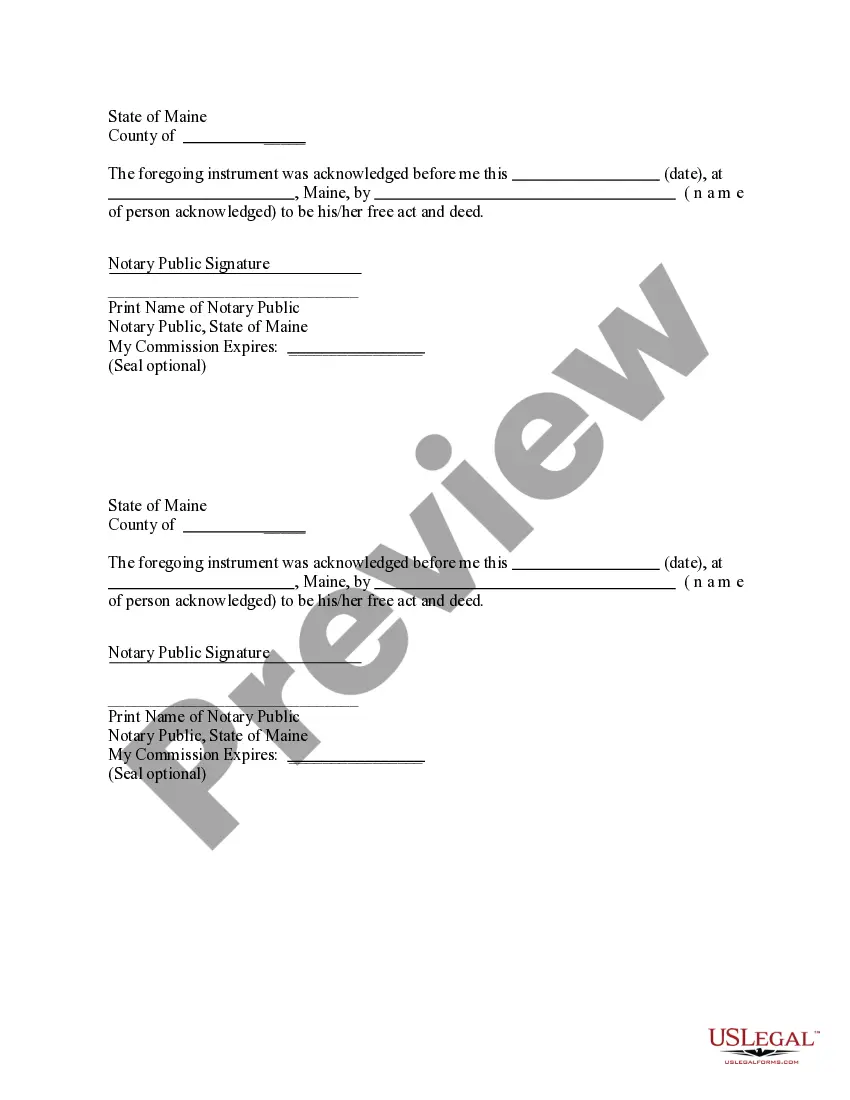
- Notarization section for legal acknowledgment
- Options for recording status of the contract
When to use this document
This form should be used when a Seller has assigned a contract for deed to another party. It is necessary to notify the Buyer(s) so they know whom to make future payments to. This situation often arises in real estate transactions when either the Seller can no longer manage the contract or when they wish to transfer their rights under the contract to another party for financial or personal reasons.
Who can use this document
- Any Seller who has entered into a contract for deed and wishes to assign it to a third party
- Buyers who need to be informed about changes in their payment obligations
- Assignees who require formal documentation of their rights to receive payments under the contract
Completing this form step by step
- Identify the parties: enter the names and addresses of the Seller(s), Assignee, and Buyer(s).
- Specify the Contract for Deed: fill in the date and details of the contract being assigned.
- Note payment instructions: clarify where the Buyer(s) should send future payments.
- Complete notary section: ensure the document is signed and notarized to validate its authenticity.
- Choose the recording status: indicate whether the contract for deed has been recorded.
Notarization guidance
Yes, this form must be notarized to be legally valid. Notarization adds an additional layer of authenticity and prevents fraud. US Legal Forms offers integrated online notarization services, allowing you to notarize your document securely through a video call, ensuring convenience and accessibility without the need for travel.
Get your form ready online
Our built-in tools help you complete, sign, share, and store your documents in one place.
Make edits, fill in missing information, and update formatting in US Legal Forms—just like you would in MS Word.
Download a copy, print it, send it by email, or mail it via USPS—whatever works best for your next step.
Sign and collect signatures with our SignNow integration. Send to multiple recipients, set reminders, and more. Go Premium to unlock E-Sign.
If this form requires notarization, complete it online through a secure video call—no need to meet a notary in person or wait for an appointment.
We protect your documents and personal data by following strict security and privacy standards.

Make edits, fill in missing information, and update formatting in US Legal Forms—just like you would in MS Word.

Download a copy, print it, send it by email, or mail it via USPS—whatever works best for your next step.

Sign and collect signatures with our SignNow integration. Send to multiple recipients, set reminders, and more. Go Premium to unlock E-Sign.

If this form requires notarization, complete it online through a secure video call—no need to meet a notary in person or wait for an appointment.

We protect your documents and personal data by following strict security and privacy standards.
Common mistakes
- Failing to notify all relevant parties of the assignment.
- Not providing correct payment instructions, leading to payment delays.
- Omitting the signature and notarization, which can render the document invalid.
- Using an outdated form that doesnât reflect current state laws.
Benefits of completing this form online
- Easy access: download the form instantly from anywhere.
- Editable: fill in your details online before printing.
- Compliance: forms are drafted by licensed attorneys to ensure legal validity.
Key takeaways
- The Notice of Assignment of Contract for Deed is crucial for informing buyers about payment changes.
- Proper completion and notarization are essential for legal enforceability.
- Always check state-specific requirements to ensure compliance.
Looking for another form?
Form popularity
FAQ
Purchase price. Down payment. Interest rate. Number of monthly installments. Responsibilities of the buyer and seller. Legal remedies for the seller if the buyer does not make payments.
In the first instance, if your deed is not recorded, there is nothing in the public record to stop the seller from conveying the property to another person.The second situation could happen if your seller fails to pay his or her debts and the seller's creditors file liens or judgments against your property.
The only way to add or remove a name on a deed is to have a new deed recorded. Once a document is recorded, it cannot be altered. In order to protect your legal interests, we strongly suggest that you contact an attorney to have this done for you.
The buyer must record the contract for deed with the county recorder where the land is located within four months after the contract is signed. Contracts for deed must provide the legal name of the buyer and the buyer's address.
Retrieve your original deed. Get the appropriate deed form. Draft the deed. Sign the deed before a notary. Record the deed with the county recorder. Obtain the new original deed.
Generally, contract for deed sellers use IRS Form 6252 to report installment sales in the year in which they take place. You also use Form 6252 during each year you receive income from your contract for deed.
A properly recorded deed provides constructive notice of its contents, which means that all parties concerned are considered to have notice of the deed whether or not they actually saw it.
To be able to record the deed, it must be accompanied by a transfer tax form and payment of transfer tax. Transfer tax rate in Maine is $2.20 per $500 or fractional part of $500 of the value of the property being transferred. Further, transfer tax is imposed 50/50 on both the grantor and grantee.
The buyer should record the contract for deed with the county recorder where the land is located and does so normally within four months after the contract is signed, though the time may vary depending on state law.