Maryland Mutual Wills Package with Last Wills and Testaments for Married Couple with Minor Children
What this document covers
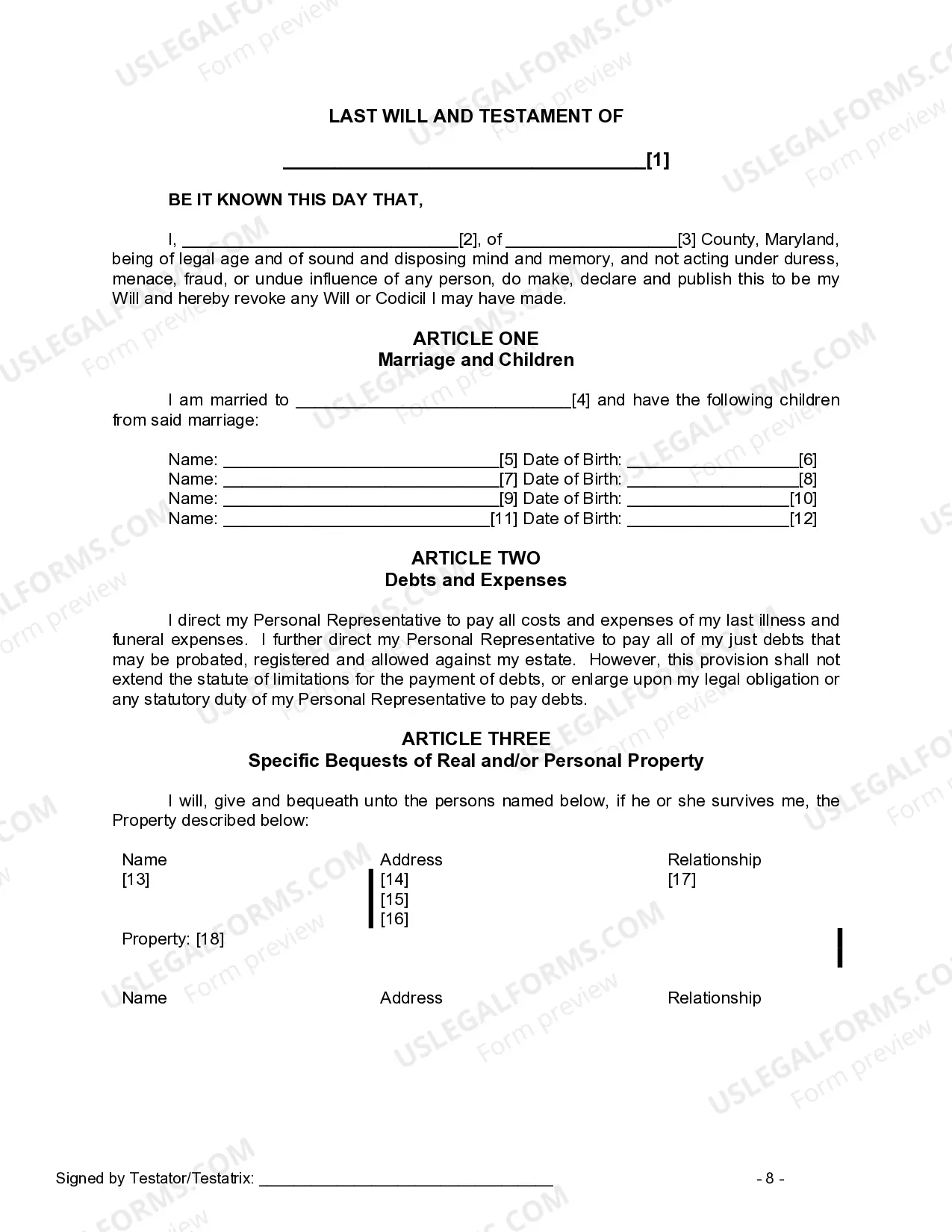
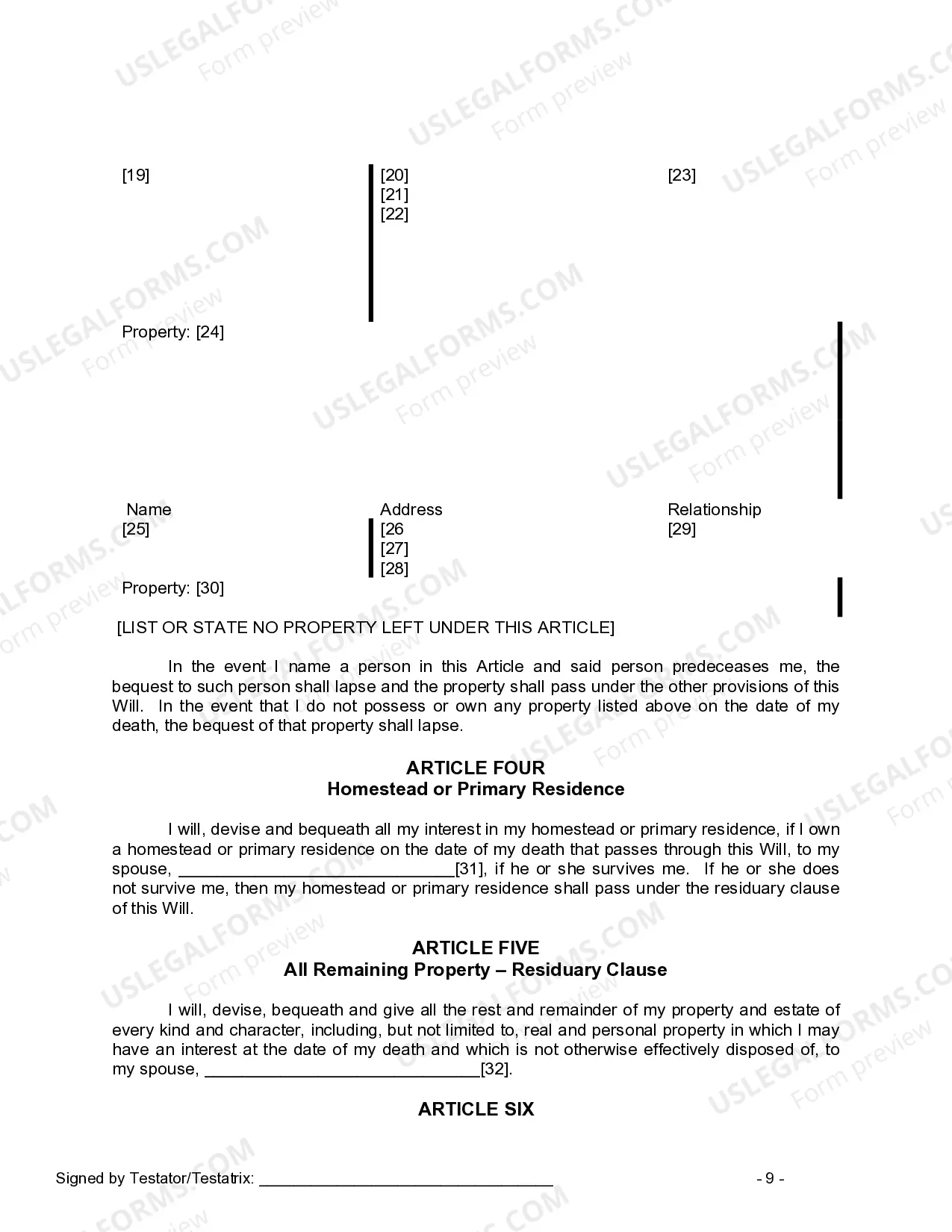
The Mutual Wills Package with Last Wills and Testaments for Married Couple with Minor Children is a comprehensive legal document designed for married couples who wish to create mutual wills that provide clear directives for the distribution of their assets and the care of their minor children in the event of their passing. This form serves a unique purpose by establishing a mutual agreement between spouses to leave their property to one another and designating their children as beneficiaries. Unlike individual wills, this package includes two distinct wills, one for each spouse, tailored to ensure that their wishes align in regards to guardianship and asset distribution.
Key components of this form
- Appointment of a personal representative (executor) to manage the estate.
- Specification of beneficiaries, including a spouse and children.
- Establishment of a trust for minor childrenâs inheritance.
- Designation of a guardian for minor children.
- Provisions for the distribution of specific property and homestead.
- Instructions for proper witnessing and notarization requirements.
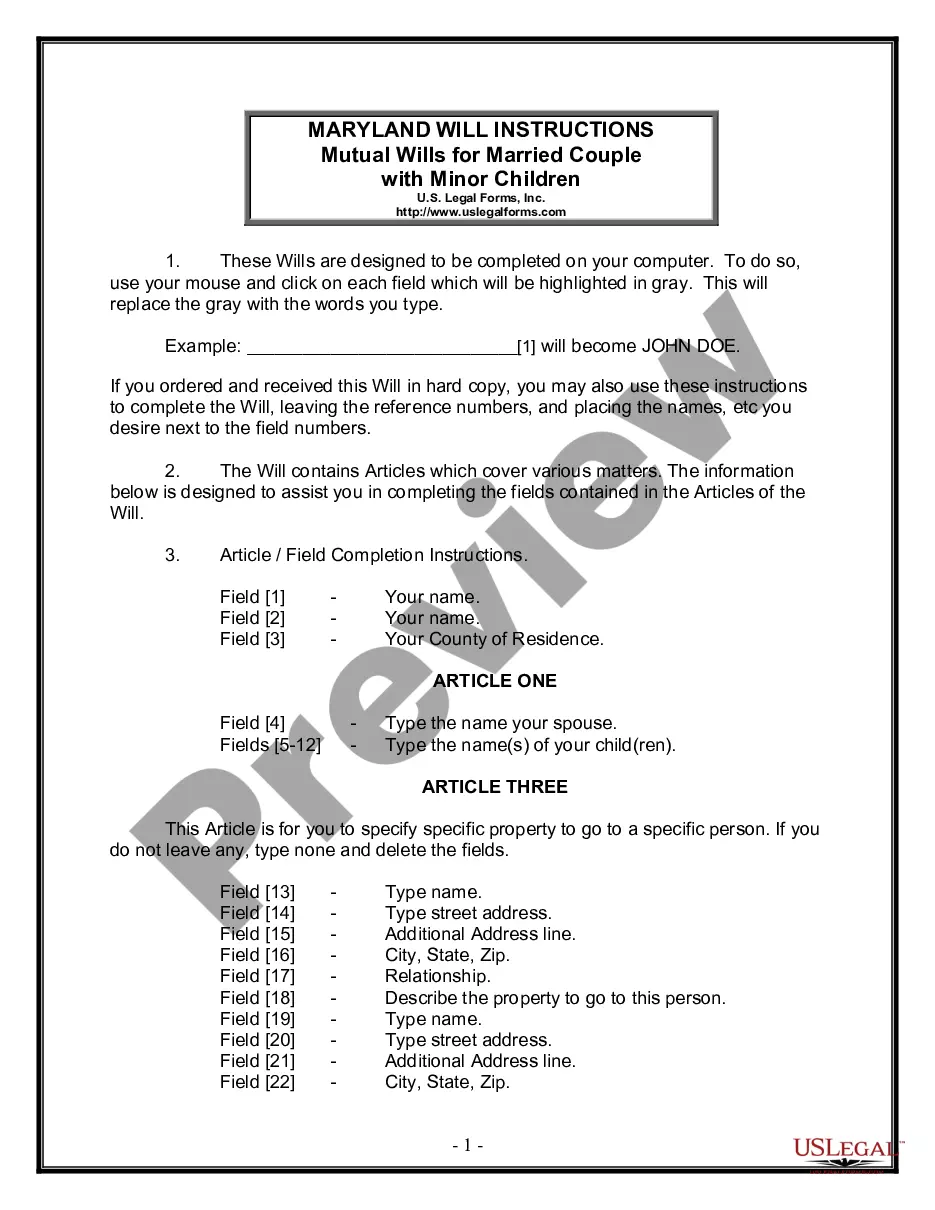
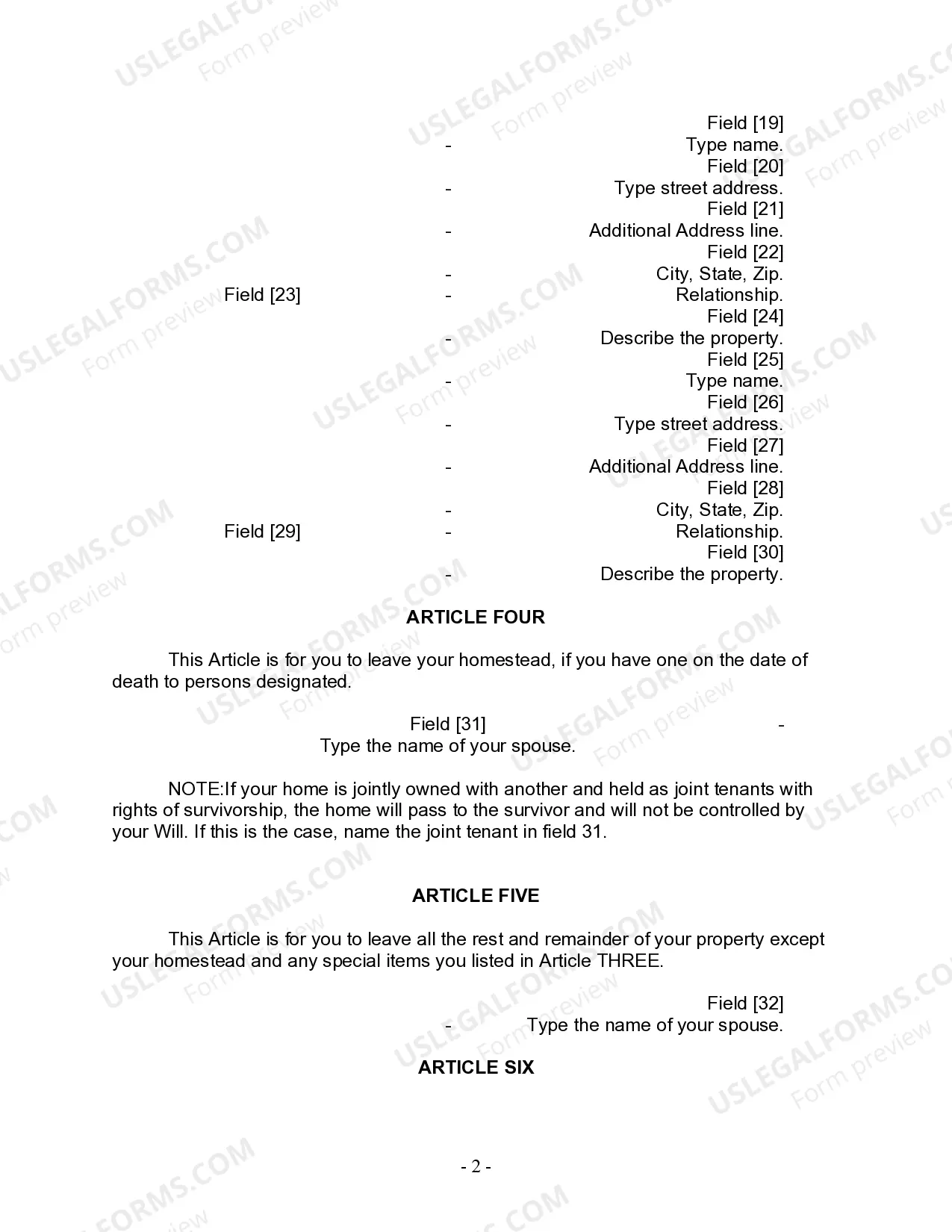
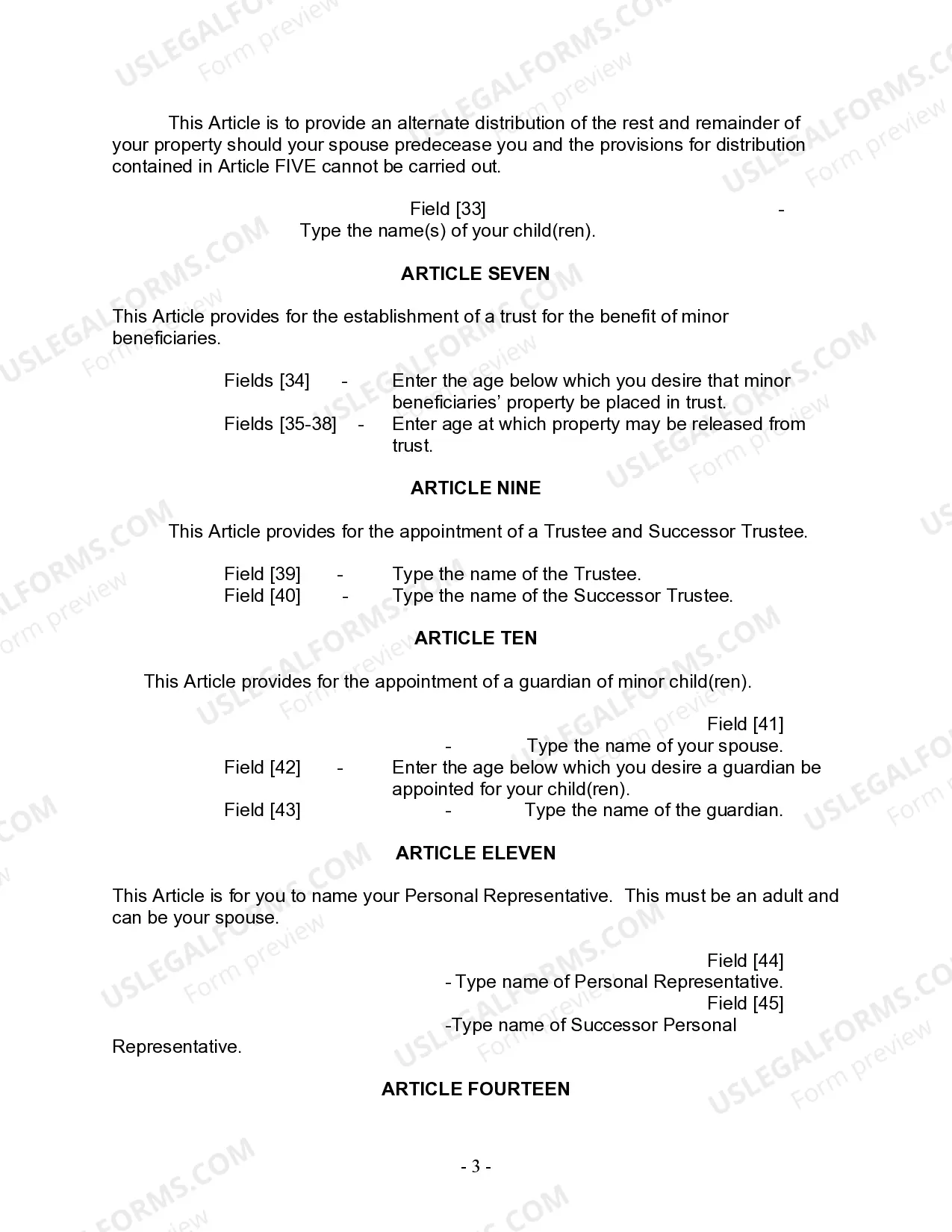






Situations where this form applies
This form is necessary when a married couple with minor children desires to establish a clear, legally binding plan for their estate. Use this mutual wills package if you wish to ensure that both spouses are committed to similar terms for asset distribution and guardianship. It is particularly important in situations where both parents wish for a coordinated plan in case of unforeseen circumstances, ensuring that their children are cared for according to their mutual wishes.
Who should use this form
- Married couples who want to ensure a harmonious distribution of their assets.
- Couples with minor children needing to designate guardianship and financial management for their children's inheritance.
- Spouses looking to protect their family's financial future through well-defined estate planning.
How to prepare this document
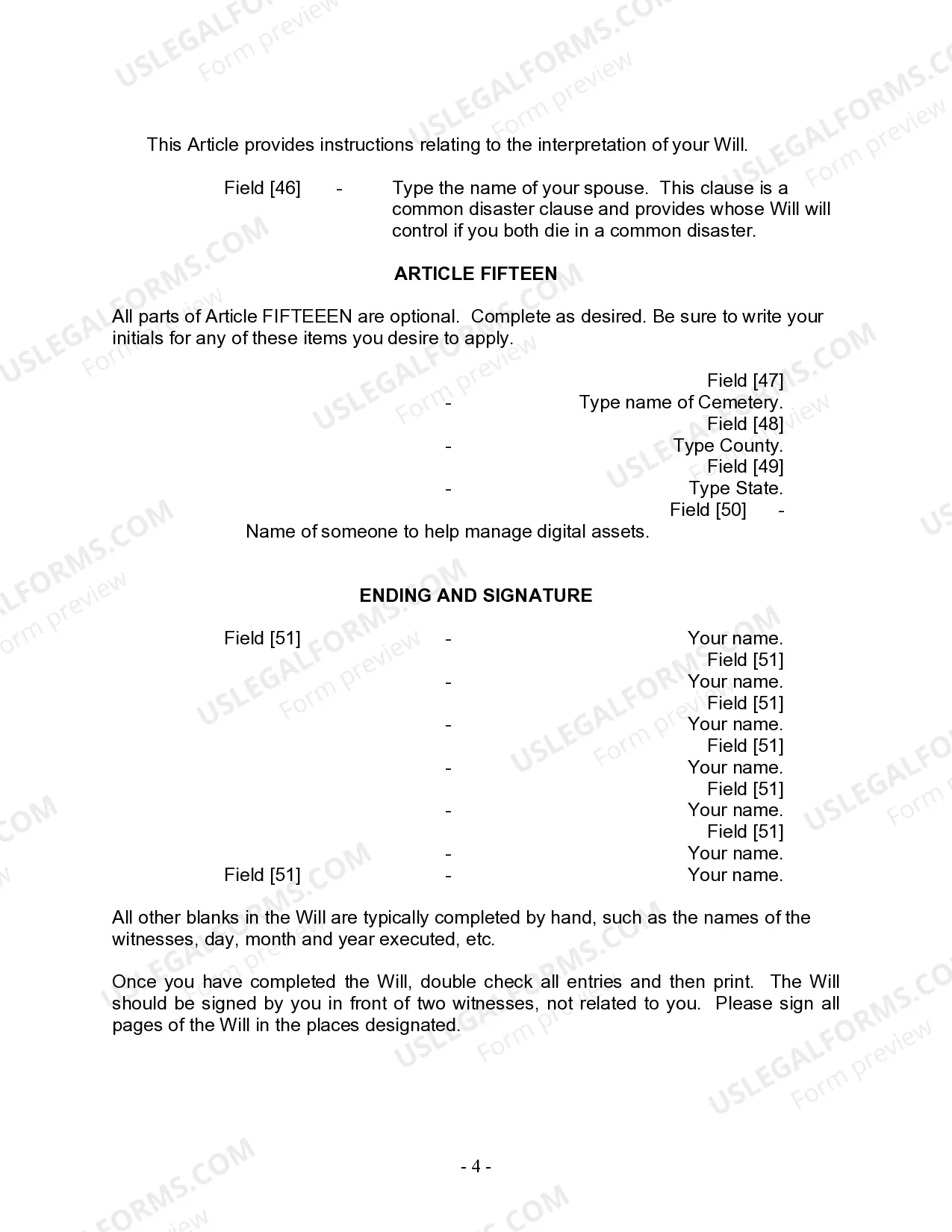
- Begin by entering the full names of both spouses at the designated fields.
- Specify the names and details of any minor children under the appropriate sections.
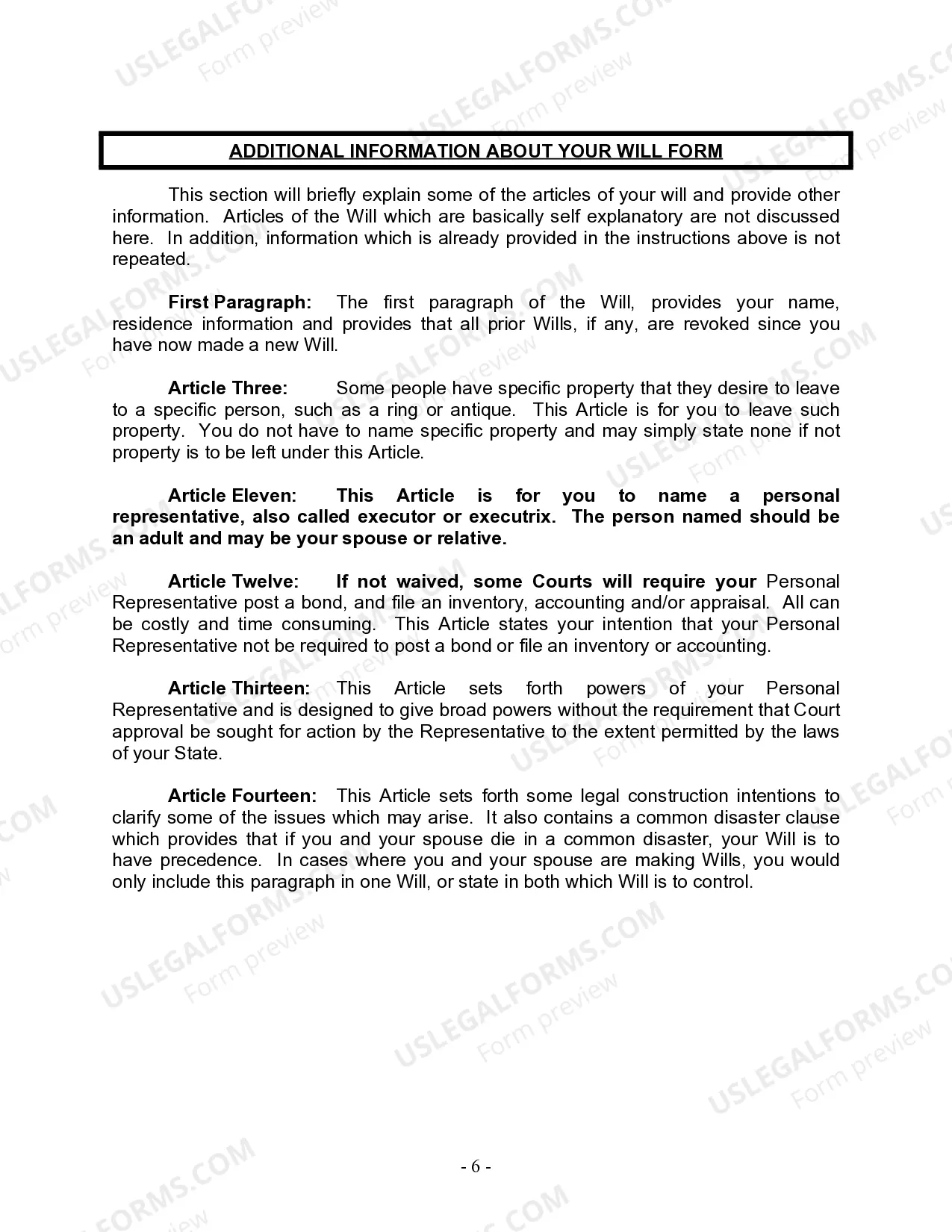
- Designate specific property and beneficiaries according to your wishes in the relevant articles.
- Indicate who will act as the guardian for your minor children, should that become necessary.
- Review the will for accuracy, sign in front of two witnesses, and ensure all required signatures are obtained.
- If necessary, complete the state-specific self-proving affidavit and have it notarized.
Does this document require notarization?
Yes, this form must be notarized to be legally valid in many jurisdictions. The package includes specific instructions for notarization, ensuring compliance with local legal requirements.
Get your form ready online
Our built-in tools help you complete, sign, share, and store your documents in one place.
Make edits, fill in missing information, and update formatting in US Legal Forms—just like you would in MS Word.
Download a copy, print it, send it by email, or mail it via USPS—whatever works best for your next step.
Sign and collect signatures with our SignNow integration. Send to multiple recipients, set reminders, and more. Go Premium to unlock E-Sign.
If this form requires notarization, complete it online through a secure video call—no need to meet a notary in person or wait for an appointment.
We protect your documents and personal data by following strict security and privacy standards.

Make edits, fill in missing information, and update formatting in US Legal Forms—just like you would in MS Word.

Download a copy, print it, send it by email, or mail it via USPS—whatever works best for your next step.

Sign and collect signatures with our SignNow integration. Send to multiple recipients, set reminders, and more. Go Premium to unlock E-Sign.

If this form requires notarization, complete it online through a secure video call—no need to meet a notary in person or wait for an appointment.

We protect your documents and personal data by following strict security and privacy standards.
Typical mistakes to avoid
- Failing to designate a guardian for minor children.
- Not signing the document in front of the required number of witnesses.
- Omitting specific property bequests which can lead to misunderstandings.
Advantages of online completion
- Convenient access to personalized legal documents without the need for attorney visits.
- Immediate editable format that allows couples to tailor their wills to fit their specific needs.
- Ability to securely store and date the documents for future reference or updates.
Legal use & context
- A mutual will is a legally binding document that reflects the wishes of both spouses.
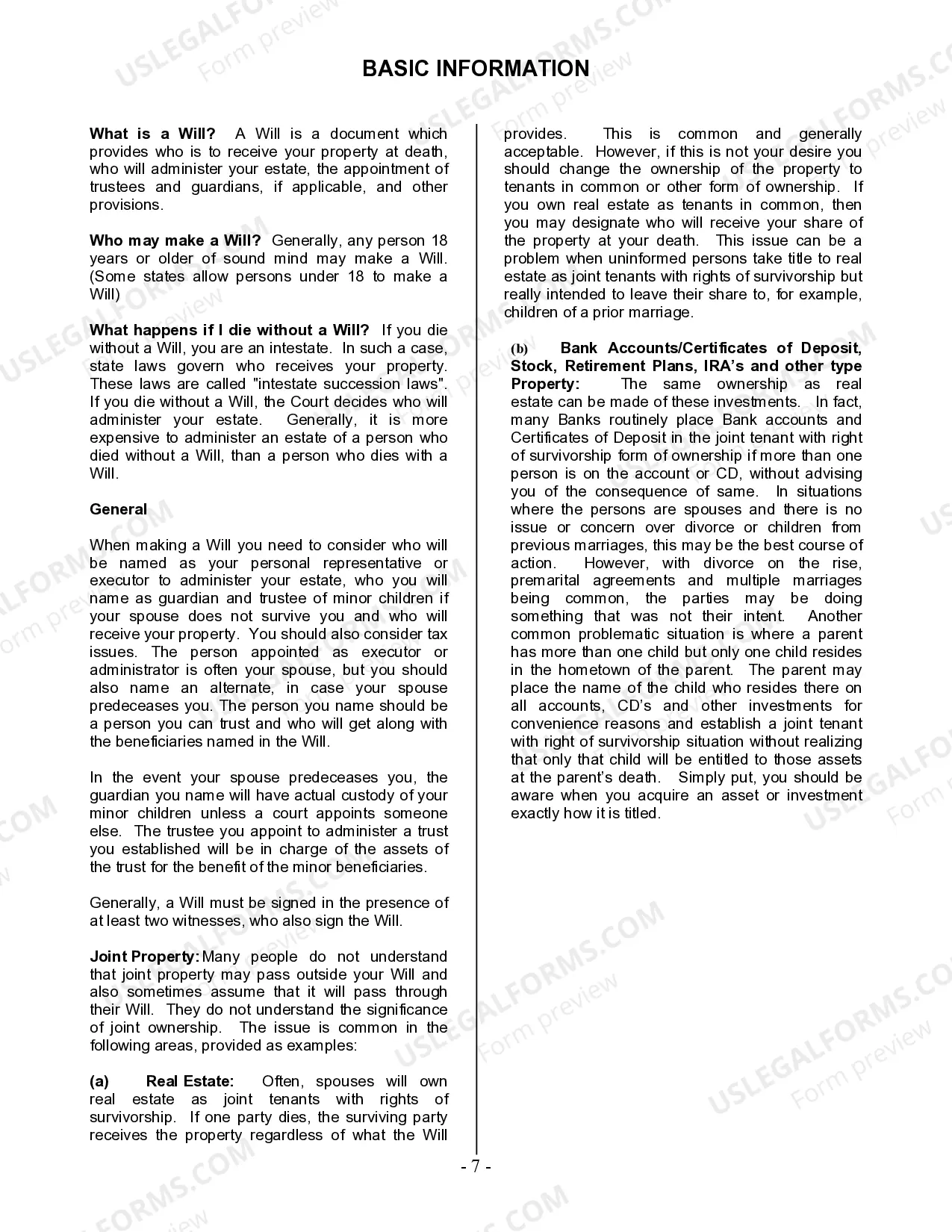
- Failure to create legally valid wills may lead to intestacy laws governing estate distribution, which may not align with the deceased's wishes.
- Proper execution, including witness signatures, is crucial for enforceability in court.
Quick recap
- The Mutual Wills Package provides essential estate planning for married couples with minor children.
- It ensures that your wishes regarding property distribution, guardianship, and management of your children's inheritance are honored.
- Completing the forms accurately and following state requirements is critical for legal validity.
Looking for another form?


Form popularity
FAQ
A notarized will does not need to be probated.When a person dies leaving behind a will that is not notarized, the law requires that its validity be ascertained by a notary or by a court. Similarly, any non-notarized modification made to a will must be probated, whether the will is notarized or not.
In Maryland, a will must be signed by the person making the will (testator/testatrix) and Attested and signed by two credible witnesses in the presence of the person making the will.
Once commissioned as a notary public, a notary may notarize documents anywhere in the State of Maryland for four years.
Maryland law requires that your will be in writing, signed by the testator (you) and witnessed by two individuals in the testator's presence. This is called "executing a will." When you are ready to execute your will, you should have at least two witnesses, although three is better.
Is a holographic (handwritten) Will legal in Maryland ? Yes, if it complies with Maryland Law.
No, in Maryland, you do not need to notarize your will to make it legal. Maryland does allow you to make your will "self-proving," which speeds up probate because the court can accept the will without contacting the witnesses who signed it.
Executing a WillMaryland law requires that the will be in writing, signed by the testator, and witnessed by two individuals in the testator's presence. This is called "executing a will." When you are ready to execute your will, you should have at least two disinterested witnesses, although three is preferable.
Holographic wills are wills that have been written entirely in the hand of the testator. Although Maryland does recognize holographic wills, they must comply with Maryland law. Unless holographic wills are written properly, there is a chance the courts may not recognize the document as a valid last will and testament.