Maryland Warranty Deed for Parents to Child with Reservation of Life Estate
What this document covers
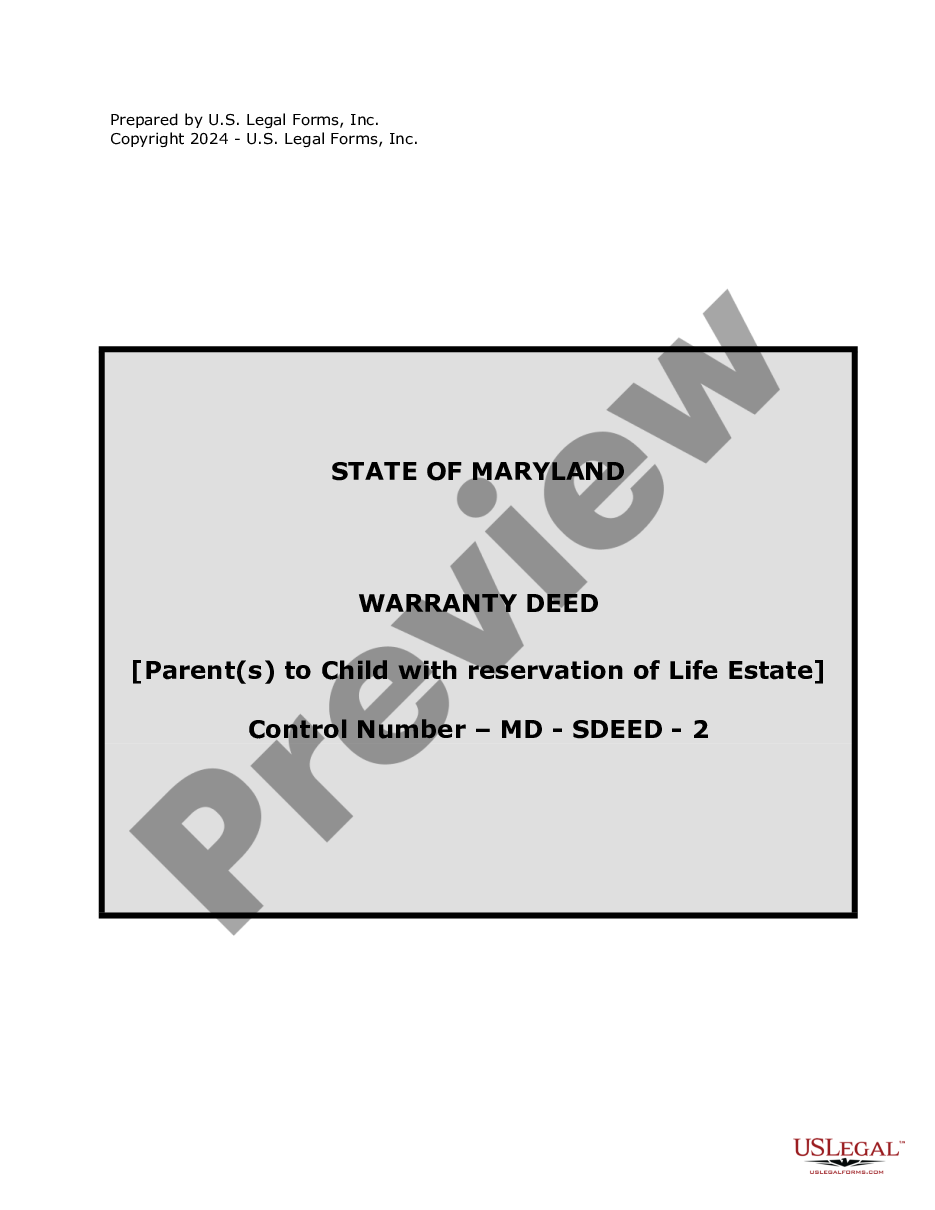
The Warranty Deed for Parents to Child with Reservation of Life Estate is a legal document that allows parents to transfer property ownership to their child while retaining the right to live on and utilize the property for their lifetime. This form is distinct from other property transfer documents because it includes a life estate clause, which protects the parents' right to occupy the property until their passing, ensuring peace of mind while distributing property to their heirs.
Key components of this form
- Parties involved: Details the grantors (parents) and grantee (child).
- Property description: Specifics about the property being transferred.
- Life estate terms: Outlines the retained life estate for the grantors.
- Legal assurances: Statements ensuring the property is free of encumbrances.
- Execution: Signatures of the grantors and witnesses required for validity.
- Notary acknowledgment: Certification required for legal enforcement.
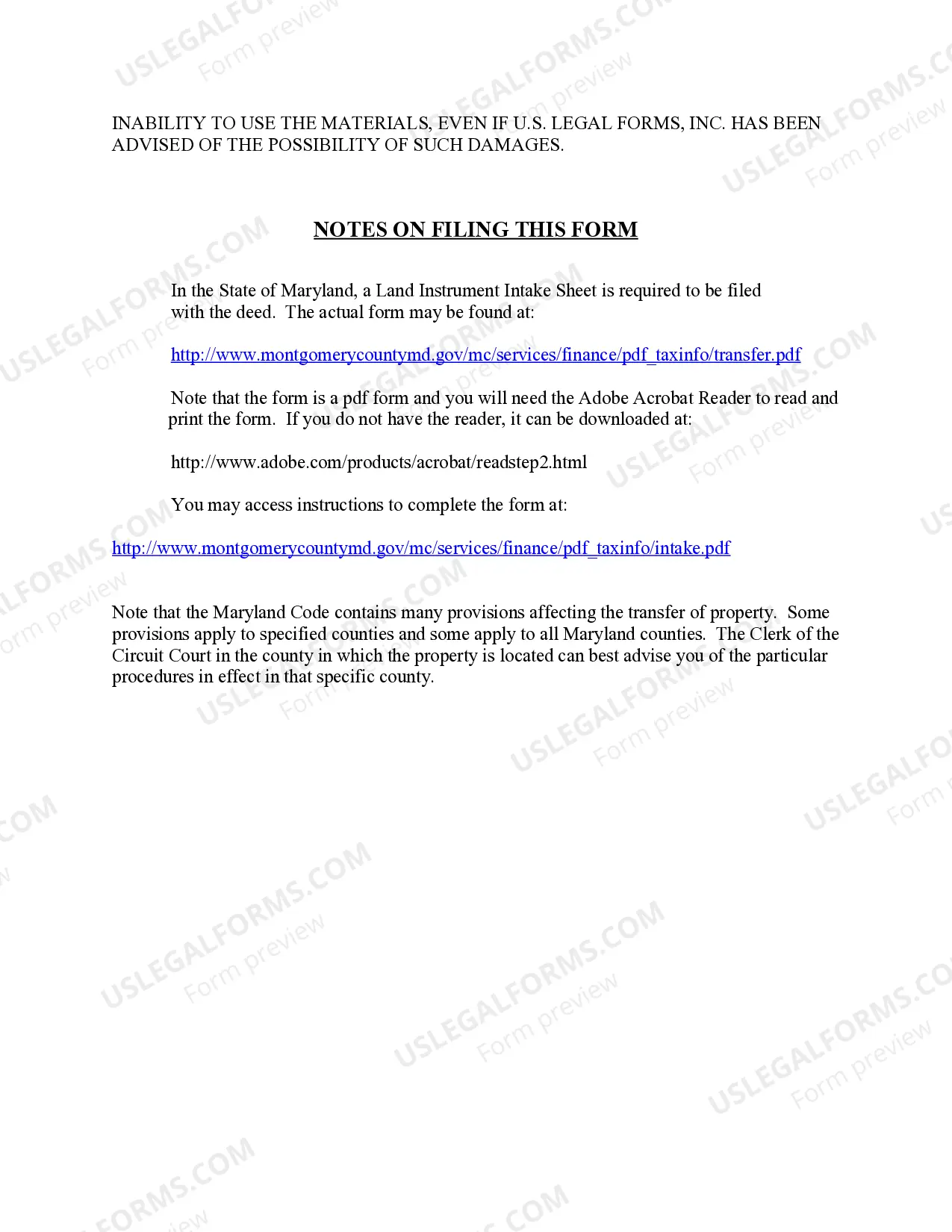
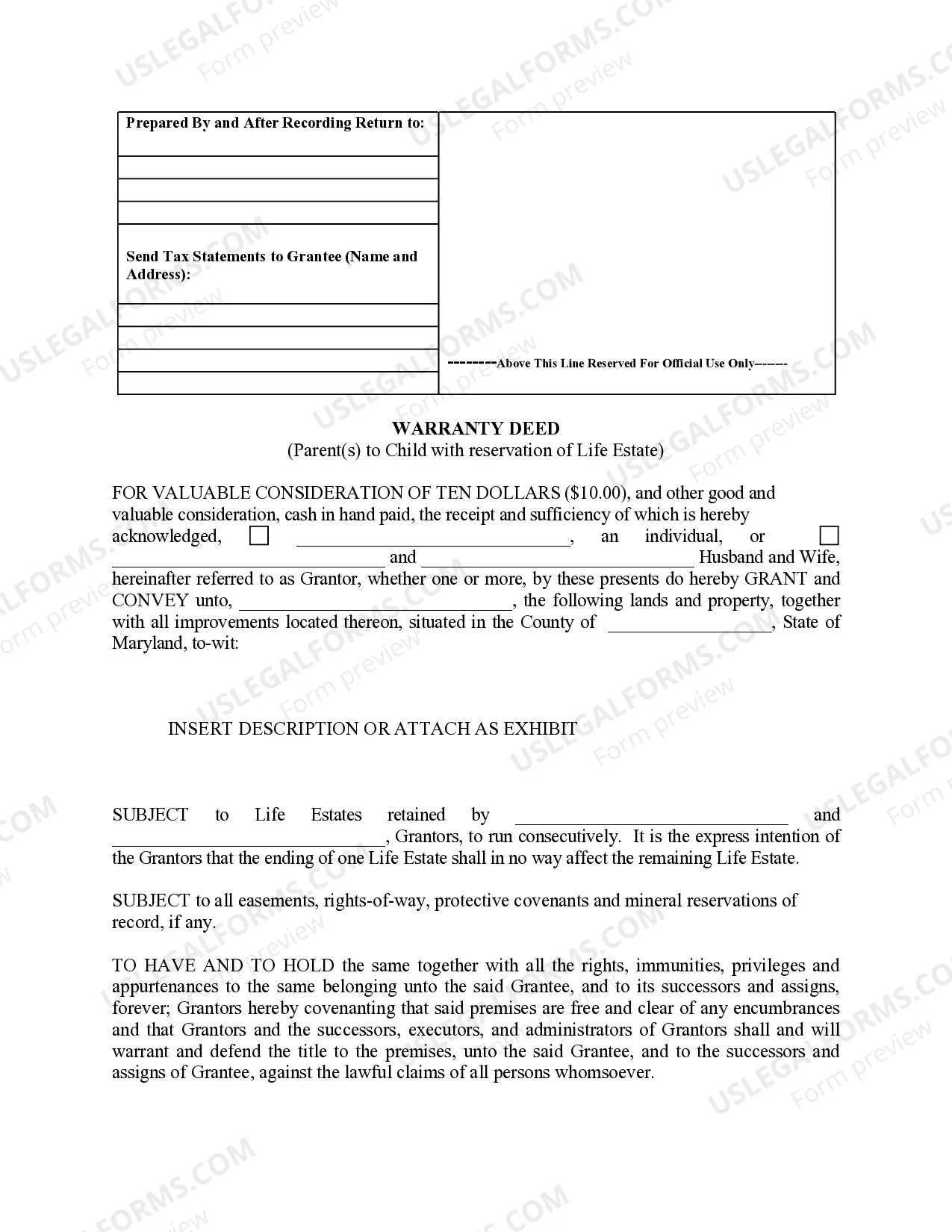
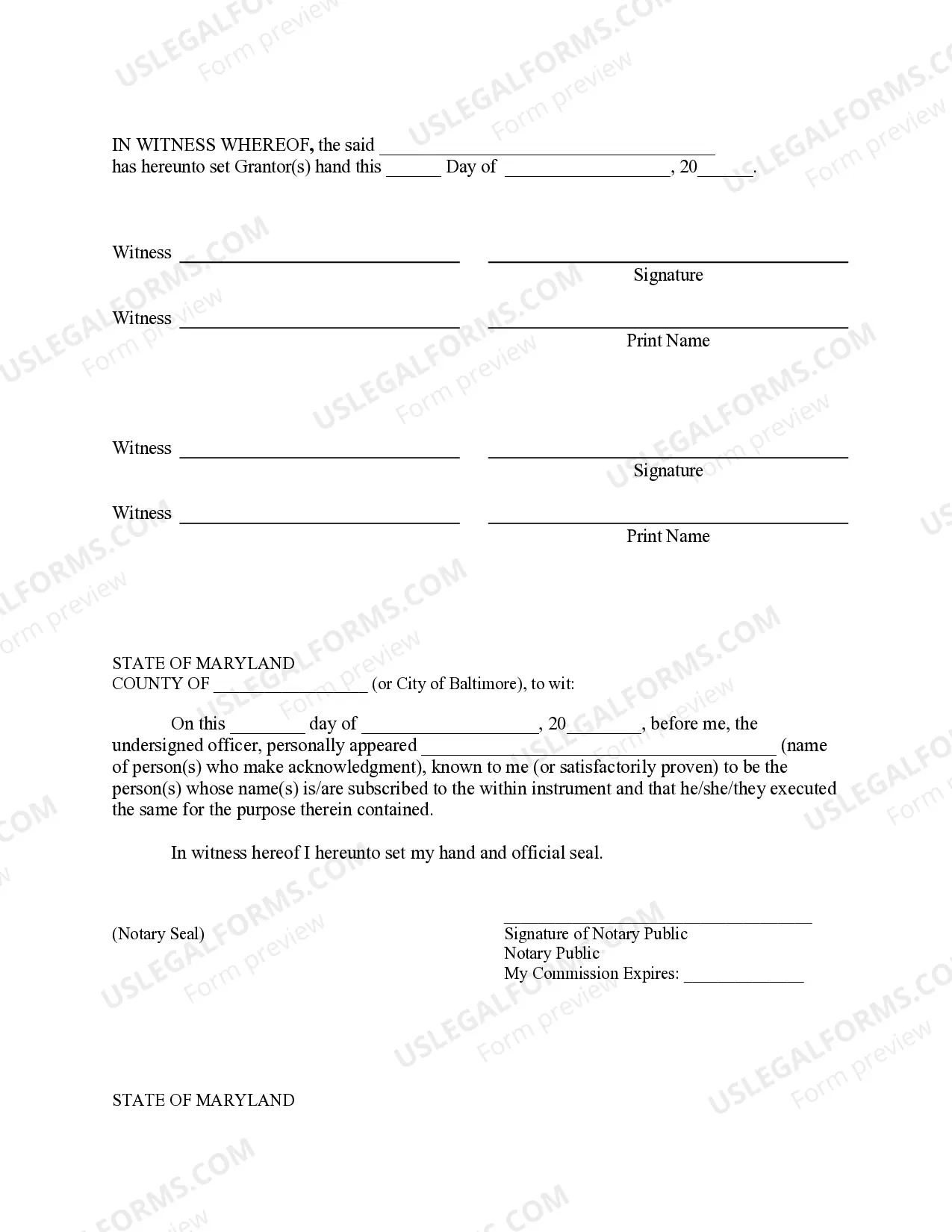
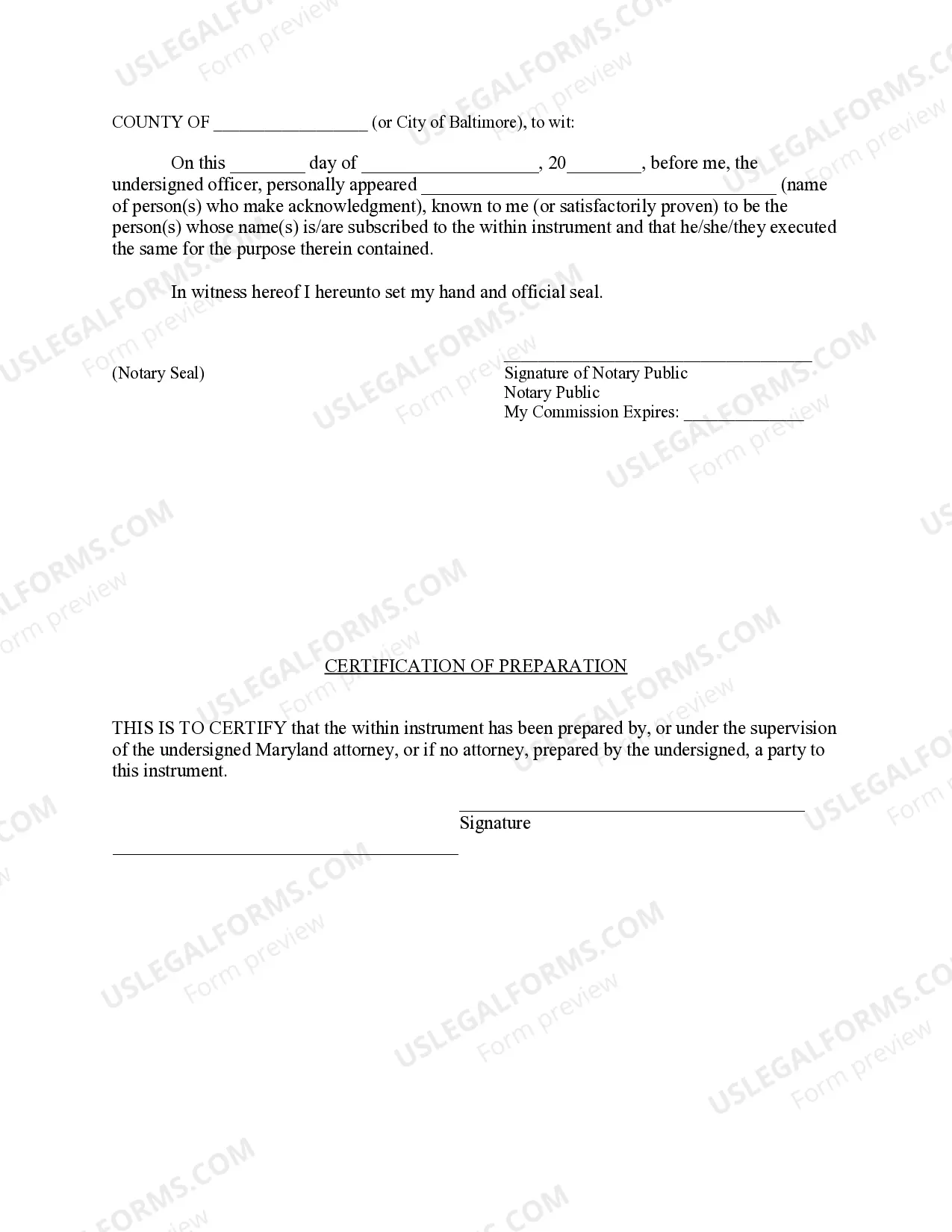



Situations where this form applies
This form is typically used when parents wish to gift property to their child while ensuring that they can continue living in the property until their death. It can be useful in estate planning to avoid probate issues and provide financial stability to the child without losing the right to abode for the parents.
Who should use this form
- Parents looking to transfer property to their child.
- Individuals seeking to maintain residency rights in a property during their lifetime.
- Those involved in estate planning who want to avoid probate processes.
How to complete this form
- Identify the parties: Fill in the names and addresses of the grantors and grantee.
- Specify the property: Provide a detailed description of the property being transferred.
- Enter life estate details: Indicate the names of the grantors retaining the life estate.
- Fill in the execution date: Include the date when the deed is executed.
- Sign and notarize: Ensure all signatures are completed, and the deed is notarized by a licensed notary public.
Notarization requirements for this form
This form must be notarized to be legally valid. US Legal Forms provides secure online notarization powered by Notarize, allowing you to complete the process through a verified video call.
Get your form ready online
Our built-in tools help you complete, sign, share, and store your documents in one place.
Make edits, fill in missing information, and update formatting in US Legal Forms—just like you would in MS Word.
Download a copy, print it, send it by email, or mail it via USPS—whatever works best for your next step.
Sign and collect signatures with our SignNow integration. Send to multiple recipients, set reminders, and more. Go Premium to unlock E-Sign.
If this form requires notarization, complete it online through a secure video call—no need to meet a notary in person or wait for an appointment.
We protect your documents and personal data by following strict security and privacy standards.

Make edits, fill in missing information, and update formatting in US Legal Forms—just like you would in MS Word.

Download a copy, print it, send it by email, or mail it via USPS—whatever works best for your next step.

Sign and collect signatures with our SignNow integration. Send to multiple recipients, set reminders, and more. Go Premium to unlock E-Sign.

If this form requires notarization, complete it online through a secure video call—no need to meet a notary in person or wait for an appointment.

We protect your documents and personal data by following strict security and privacy standards.
Typical mistakes to avoid
- Failing to include a detailed property description.
- Omitting the names of all parties involved in the transaction.
- Not signing or having the document notarized.
- Misunderstanding local requirements for recording the deed.
Why complete this form online
- Accessibility: Download and complete the form at your convenience.
- Editability: Easily modify information before finalizing the document.
- Reliability: Forms are drafted by licensed attorneys, ensuring they meet legal standards.
Legal use & context
- This deed provides a clear legal framework for transferring property with a retained life estate.
- Enforceable in Maryland courts, subject to adherence to local laws.
- Helps avoid probate, facilitating smoother property transfer upon the death of the grantors.
Quick recap
- This Warranty Deed allows parents to transfer property while retaining occupancy rights.
- It is specifically designed for use in Maryland and requires notarization.
- Proper completion and filing are essential for legal validity and proper property transfer.
Looking for another form?
Form popularity
FAQ
A life estate deed is a type of deed. You give yourself a life estate interest in your home 1 and retain the right to live in, use, and enjoy the property during your lifetime.There are two different types of life estate deeds used in Maryland. The first is called a life estate deed with full powers.
A California Revocable Transfer-On-Death Deed does not take effect until the property owner dies.As long as the original owner is alive, he can revoke the transfer, sell the property, add or remove beneficiaries, and otherwise maintain complete control over the property.
The life tenant cannot change the remainder beneficiary without their consent. If the life tenant applies for any loans, they cannot use the life estate property as collateral. There's no creditor protection for the remainderman. You can't minimize estate tax.
When the life tenant dies, the house will not go through probate, since at the life tenant's death the ownership will pass automatically to the holders of the remainder interest.The life tenant cannot sell or mortgage the property without the agreement of the remaindermen.
The IRS treats the life estate transfer as a sale, and the fair market value of the house is included in your estate. If your estate exceeds the exclusion amount, you could owe estates taxes on the difference.If your estate is $100,000 to $150,000 over the exclusion maximum, the amount is taxed at 30 percent.
A person owns property in a life estate only throughout their lifetime. Beneficiaries cannot sell property in a life estate before the beneficiary's death. One benefit of a life estate is that property can pass when the life tenant dies without being part of the tenant's estate.
Life Estates establish two different categories of property owners: the Life Tenant Owner and the Remainder Owner.Remainder Owners have no right to use the property or collect income generated by the property, and are not responsible for taxes, insurance or maintenance, as long as the Life Tenant is still alive.
Possible tax breaks for the life tenant. Reduced capital gains taxes for remainderman after death of life tenant. Capital gains taxes for remainderman if property sold while life tenant still alive. Remainderman's financial problems can affect the life tenant.
A life estate deed permits the property owner to have full use of their property until their death, at which point the ownership of the property is automatically transferred to the beneficiary.