Maryland Marital Domestic Separation and Property Settlement Agreement Minor Children Parties May have Joint Property or Debts where Divorce Action Filed
Overview of this form
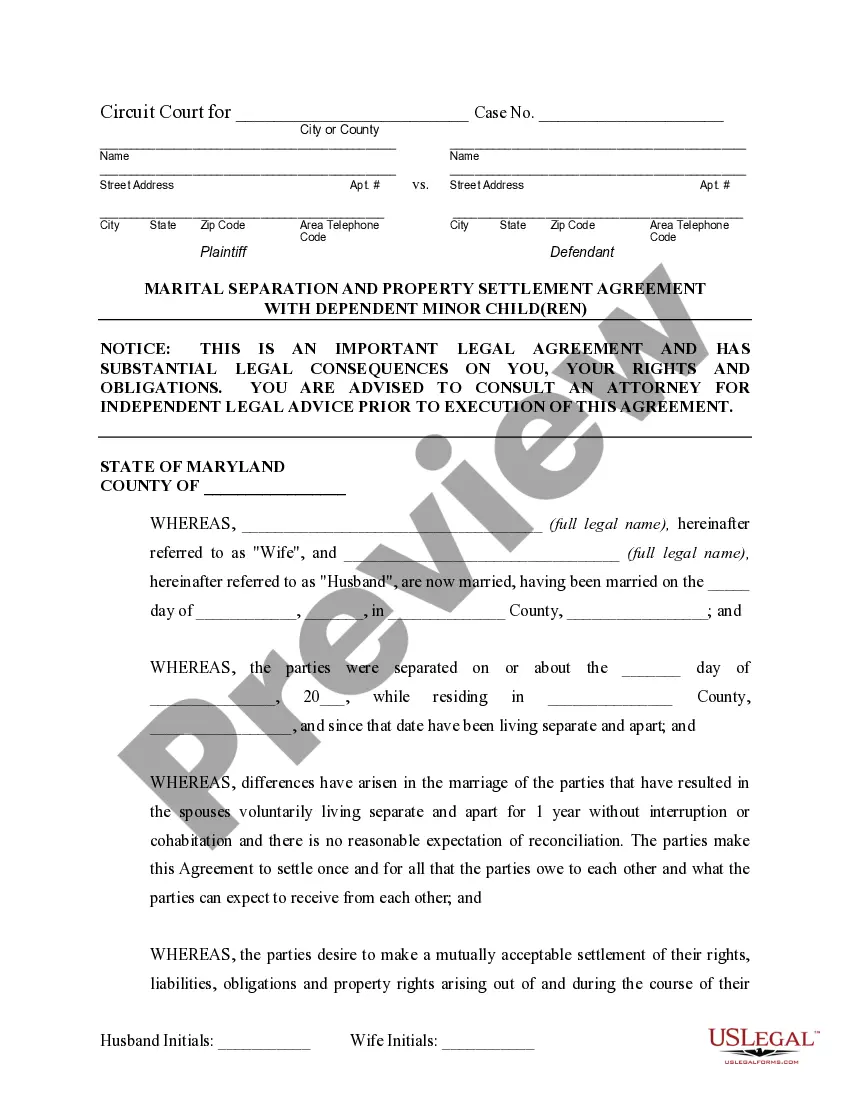
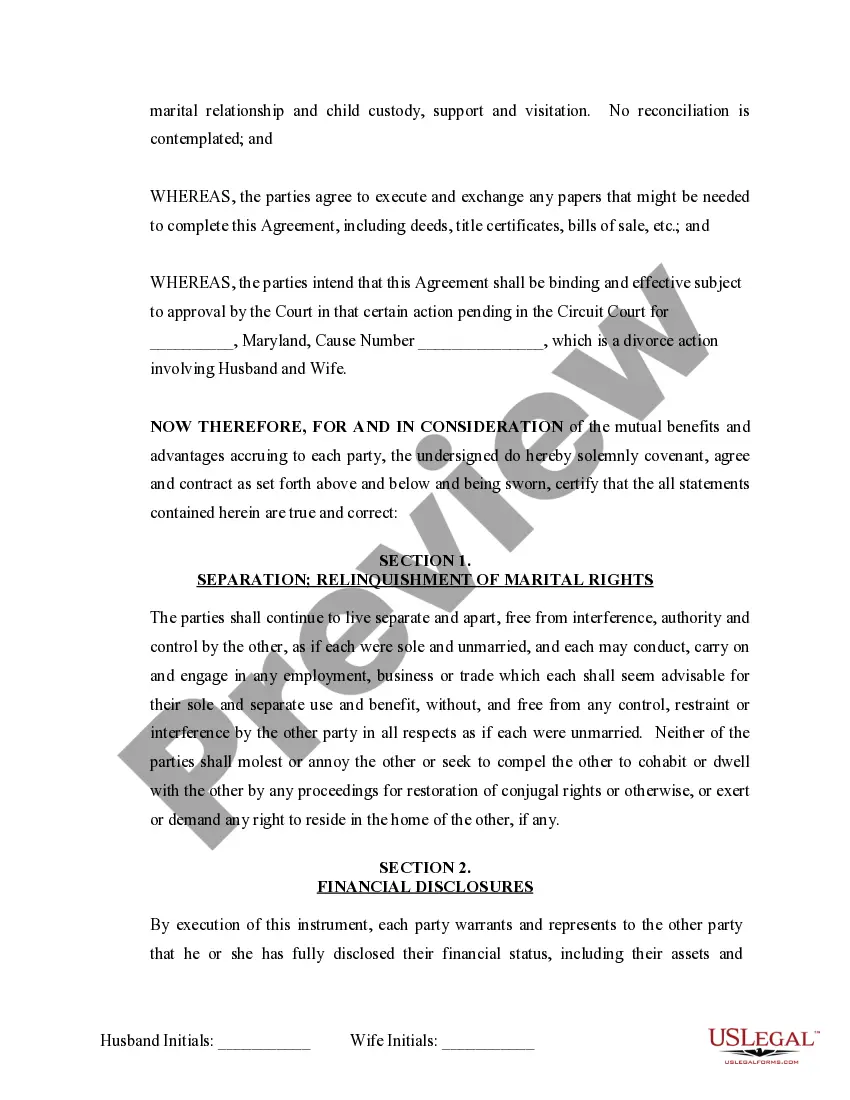
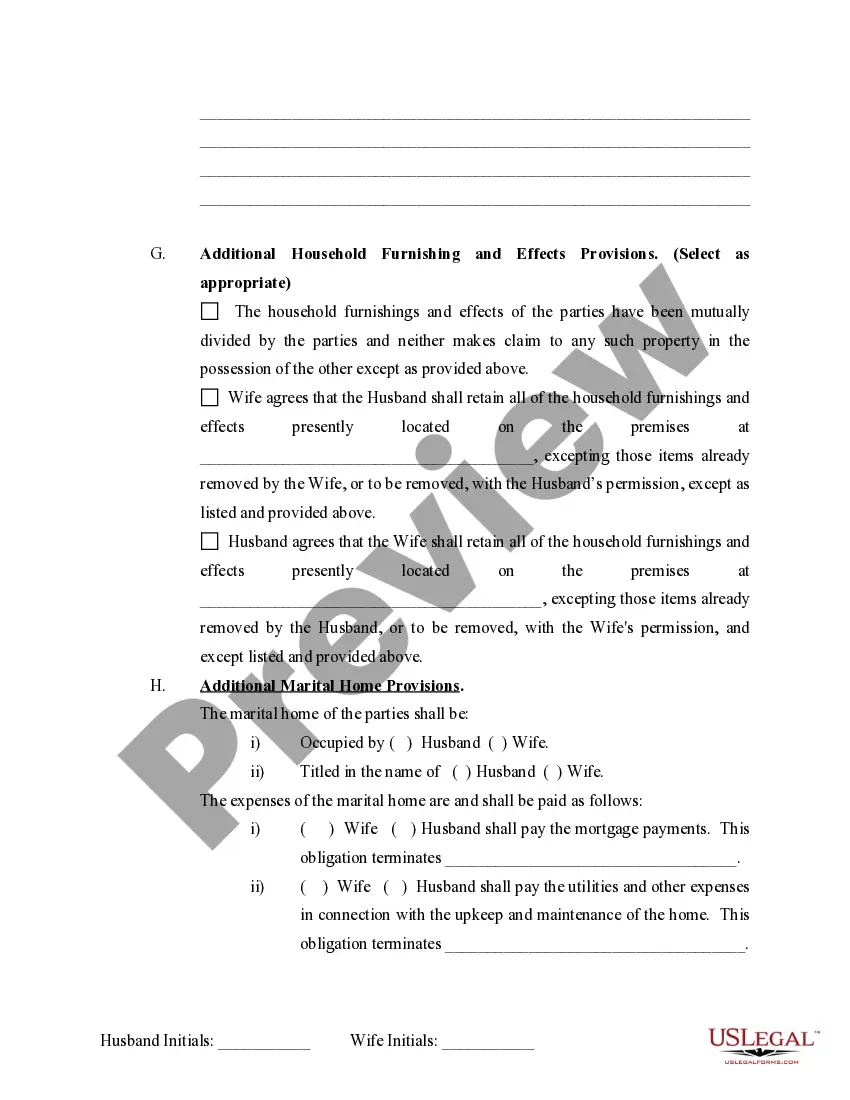
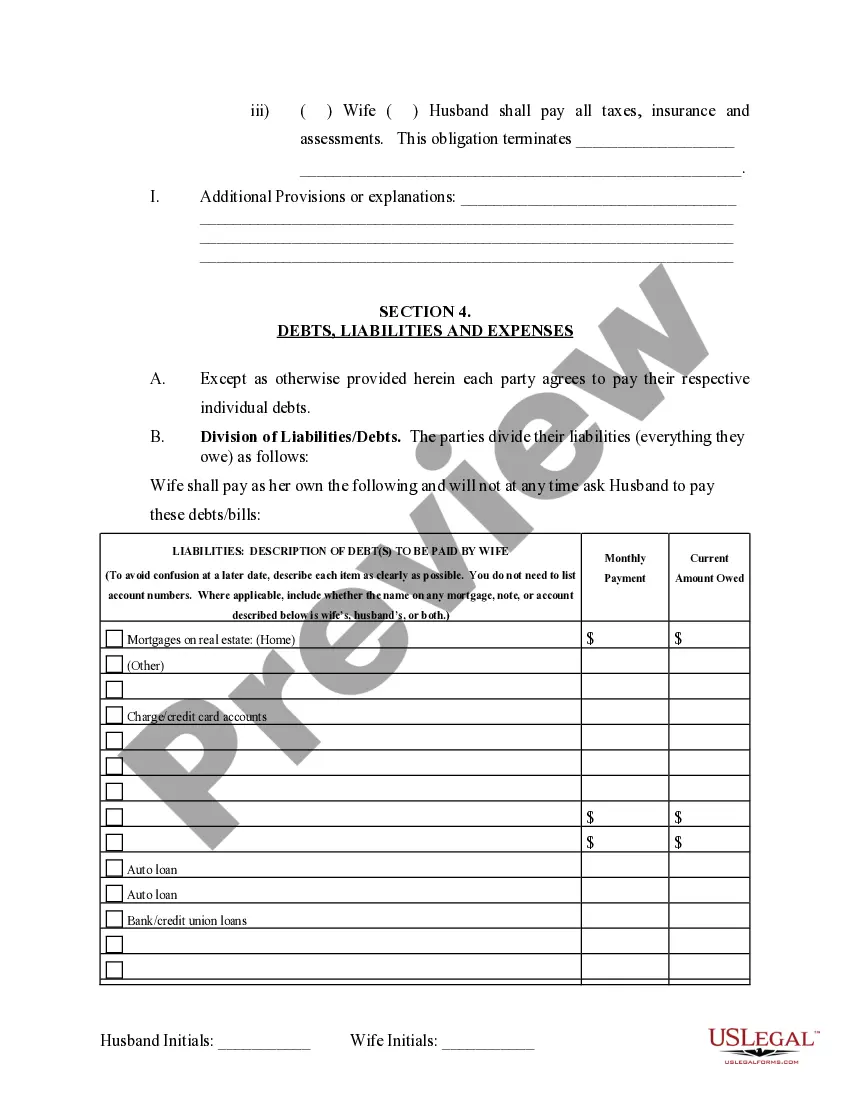
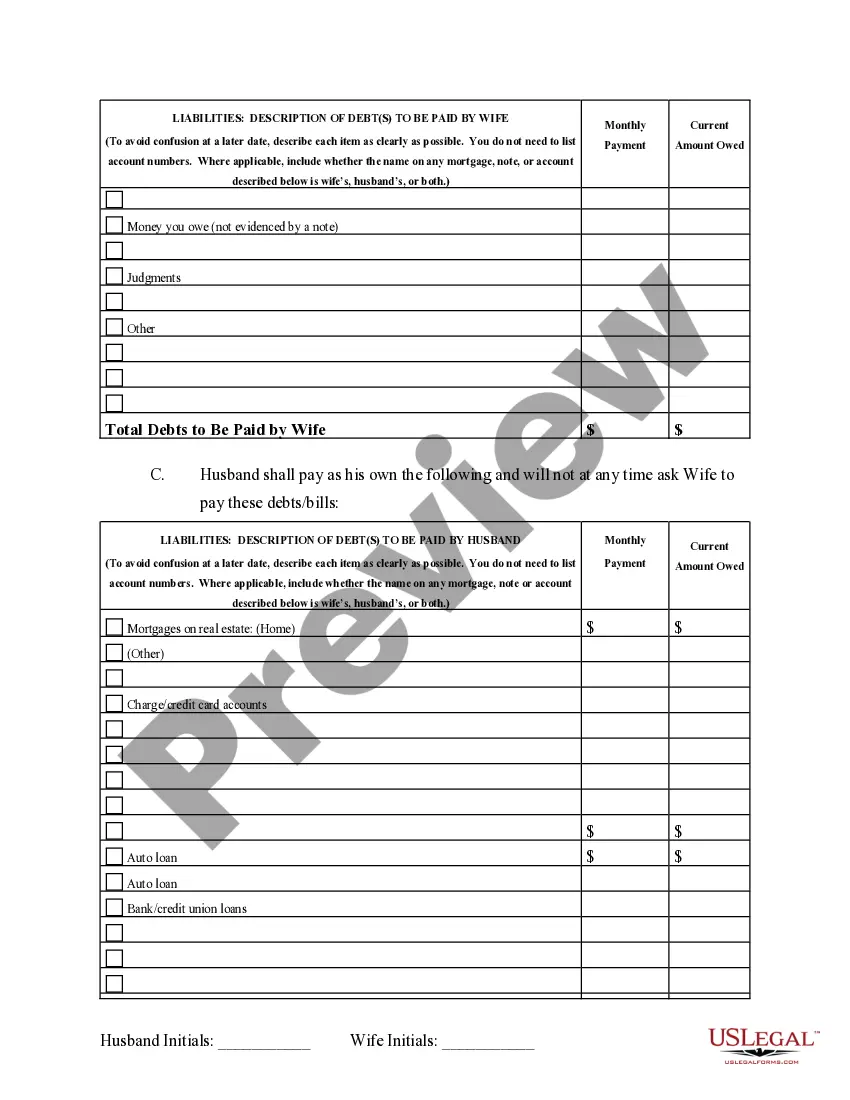
This Marital Domestic Separation and Property Settlement Agreement is designed for couples with minor children who are seeking a formal arrangement during a divorce process. This agreement covers various aspects such as the division of property, liabilities, child custody, visitation rights, child support, and potentially alimony. Unlike other separation agreements, this document specifically accommodates joint property or debts and is tailored for use in Maryland where a divorce action is pending.
Key parts of this document
- Identification of parties and minor children involved
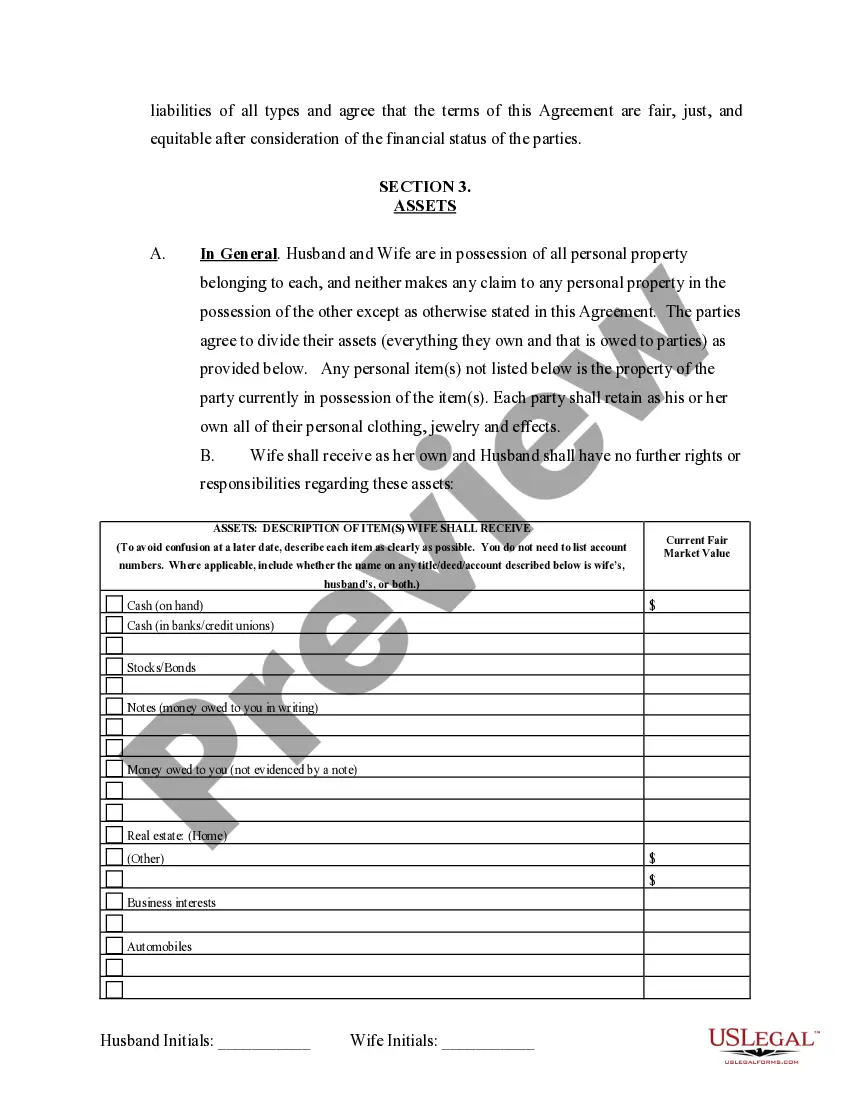
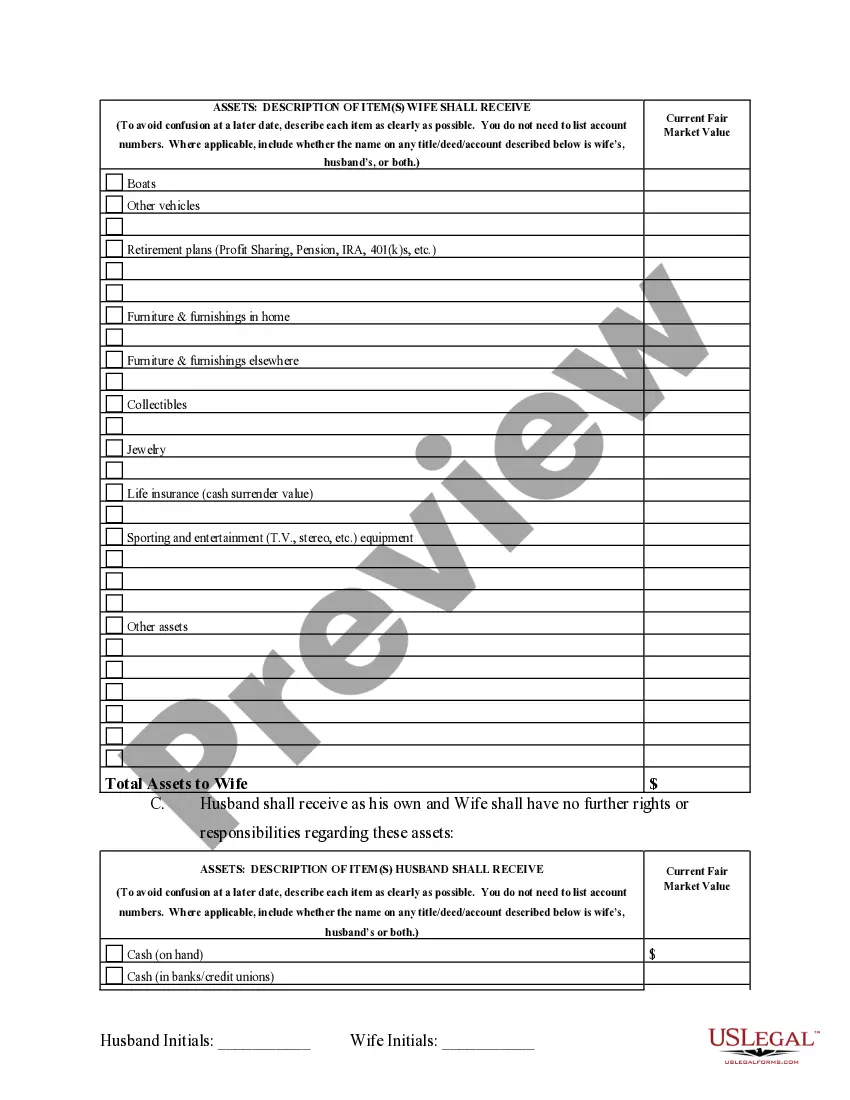
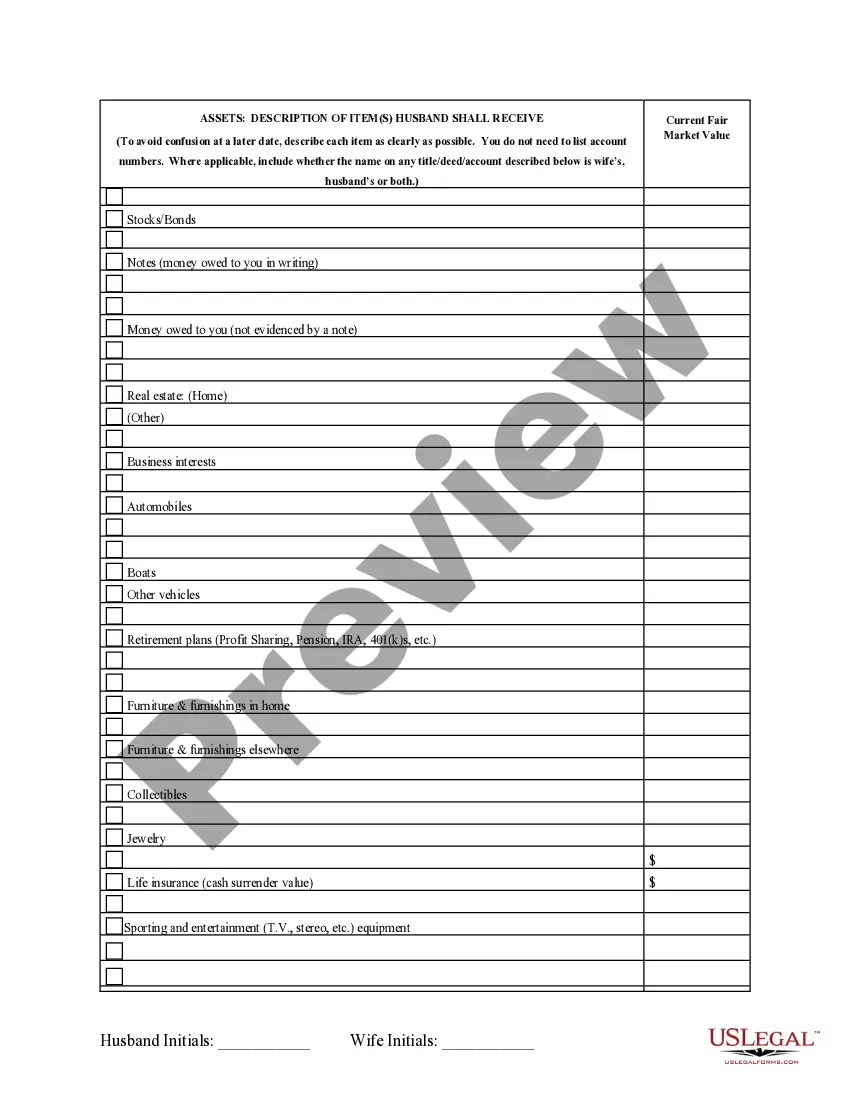
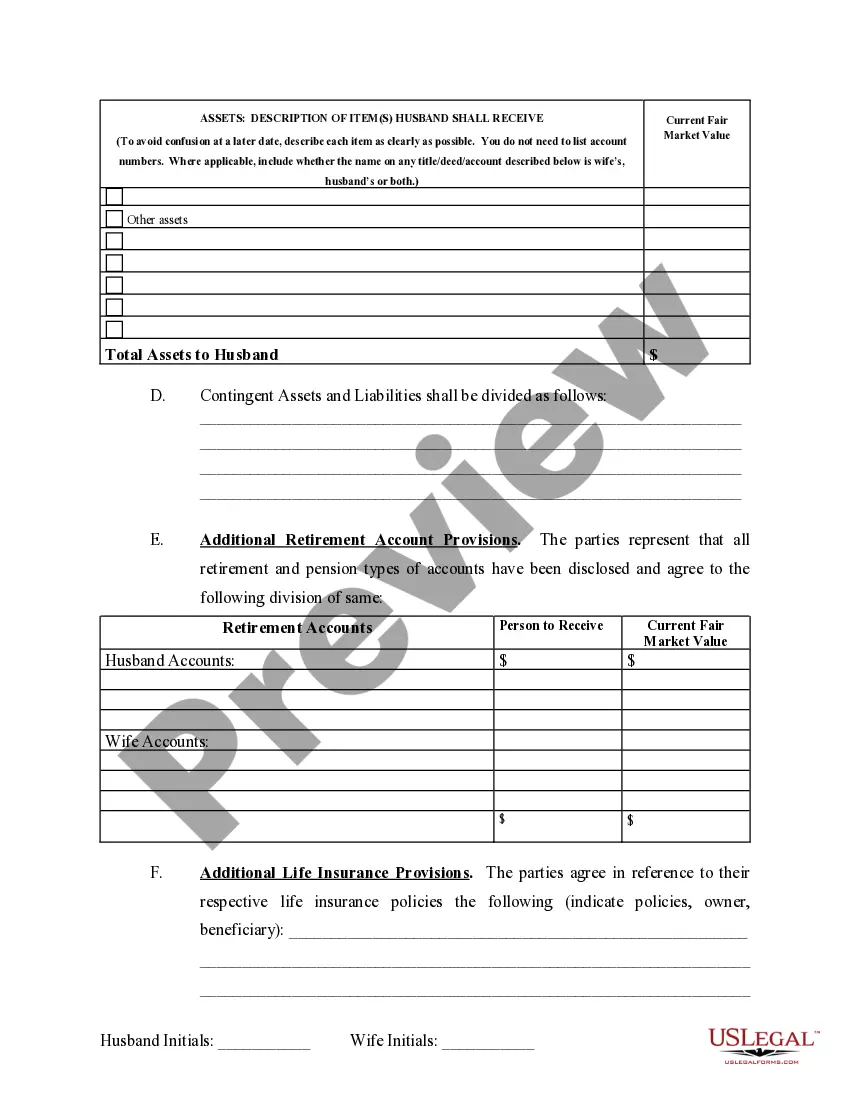
- Detailed division of assets and debts
- Child custody and visitation arrangements
- Child support obligations
- Provisions for alimony if applicable
- Mutual indemnity clauses

When to use this document
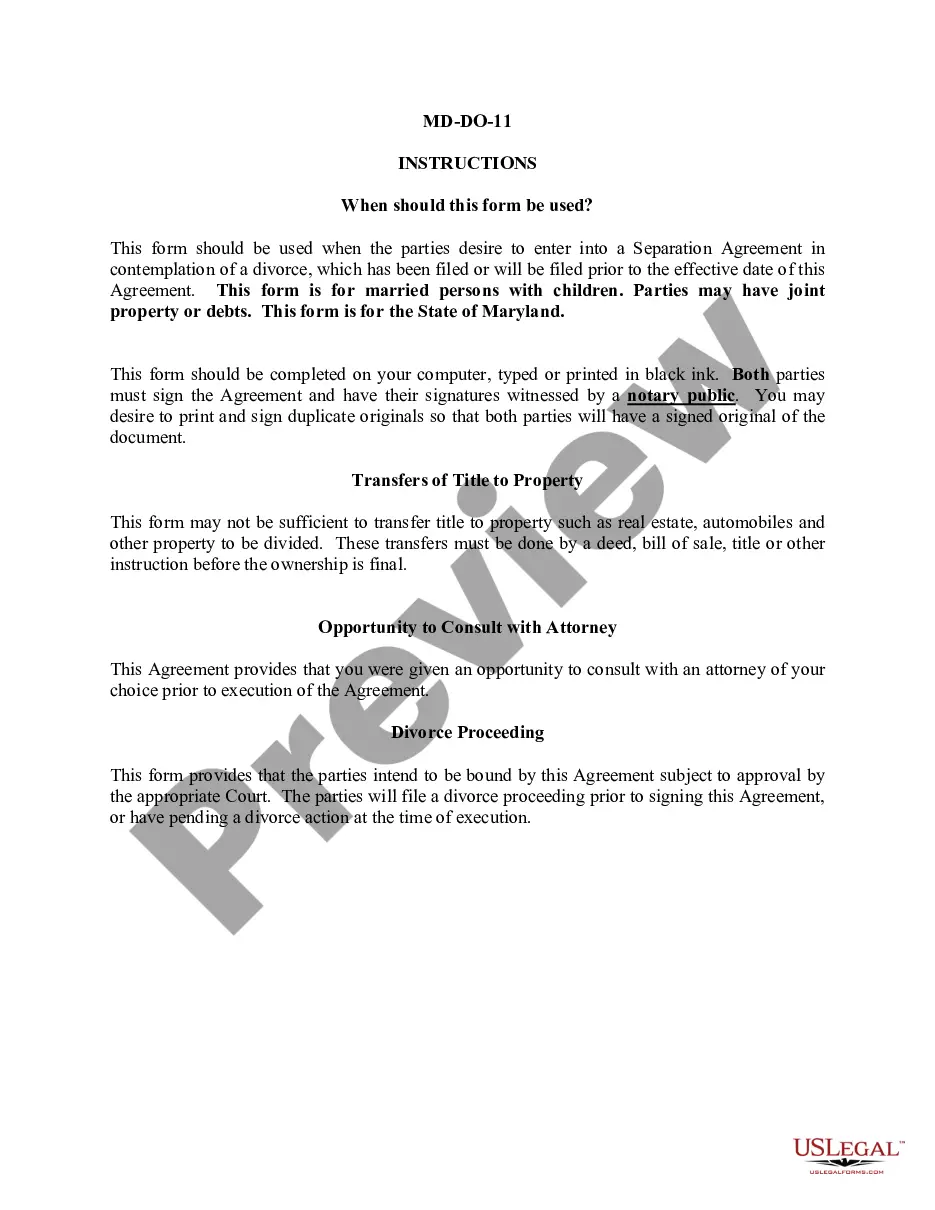
This form should be used when married couples with minor children decide to separate and are contemplating divorce. It is especially applicable when a divorce action is already filed or will be filed before the agreement takes effect. This agreement helps resolve all pertinent issues related to the children's welfare and the division of joint property or debts.
Who should use this form
- Married individuals with minor children facing separation or divorce
- Couples with joint property or debts
- Parties seeking a legally binding resolution of custody and financial arrangements before divorce
- Residents of Maryland who are subject to state laws regarding separation and divorce
Instructions for completing this form
- Identify and enter the names and addresses of both parties involved.
- Clearly list all assets and debts to be divided.
- Specify child custody arrangements, including visitation schedules.
- Detail child support obligations, including amounts and payment intervals.
- Both parties must sign the agreement in the presence of a notary.
- Consider making duplicate originals for both parties' records.
Notarization requirements for this form
To make this form legally binding, it must be notarized. Our online notarization service, powered by Notarize, lets you verify and sign documents remotely through an encrypted video session.
Get your form ready online
Our built-in tools help you complete, sign, share, and store your documents in one place.
Make edits, fill in missing information, and update formatting in US Legal Forms—just like you would in MS Word.
Download a copy, print it, send it by email, or mail it via USPS—whatever works best for your next step.
Sign and collect signatures with our SignNow integration. Send to multiple recipients, set reminders, and more. Go Premium to unlock E-Sign.
If this form requires notarization, complete it online through a secure video call—no need to meet a notary in person or wait for an appointment.
We protect your documents and personal data by following strict security and privacy standards.

Make edits, fill in missing information, and update formatting in US Legal Forms—just like you would in MS Word.

Download a copy, print it, send it by email, or mail it via USPS—whatever works best for your next step.

Sign and collect signatures with our SignNow integration. Send to multiple recipients, set reminders, and more. Go Premium to unlock E-Sign.

If this form requires notarization, complete it online through a secure video call—no need to meet a notary in person or wait for an appointment.

We protect your documents and personal data by following strict security and privacy standards.
Mistakes to watch out for
- Failing to fully disclose all assets and debts
- Not specifying clear visitation schedules and child custody terms
- Overlooking the requirement for notarization after signing
- Neglecting to update the form in case of changes in circumstances
- Using vague language that could lead to misunderstandings
Advantages of online completion
- Convenience of downloading and completing the form at your own pace
- Editable fields allow for easy modification and personalization
- Access to attorney-drafted content ensures legal accuracy and clarity
- Ability to securely store and print for personal records
- Instant access from any device at any time, no need for physical appointments
Looking for another form?
Form popularity
FAQ
There is no such thing as a legal separation in Maryland. If you and your spouse live apart with the intention of ending your marriage, and if you do not have sexual intercourse during that time, that constitutes separation.
Separation agreements in Maryland may be oral or written, but in order to be enforceable, they should be written, signed, and notarized.If you decide not to divorce, your separation agreement can remain in effect as a contract.
In a Maryland divorce, judges don't always divide marital property right down the middle using a 50/50 split. Because Maryland is an equitable distribution state, the divorce court will divide property fairly between the spouses, but not always equally.
With a few important exceptions, all the property acquired during a marriage is considered marital property. Marital property normally includes such things as houses, cars, furniture, appliances, stocks, bonds, jewelry, bank accounts, pensions, retirement plans, and IRA's.
Generally in California, property acquired by a spouse prior to marriage is considered under the family code as separate property while those acquired after marriage are considered community assets.The process of apportioning between the separate and community property component is laid out in the Marriage of Madsen.
Maryland law prohibits adultery. Adultery is a misdemeanor offense punishable by a $10 fine; however, prosecutions for adultery are rare.
In California, each spouse or partner owns one-half of the community property. And, each spouse or partner is responsible for one-half of the debt. Community property and community debts are usually divided equally.And, in a divorce or legal separation in California, it will be treated as community property.
Maryland is not a Community Property state.For divorcing couples in Community Property states, any property that either spouse owned prior to their marriage or property acquired after the separation would not be considered marital. Additionally, all Community Property is split evenly, 50/50, between the spouses.