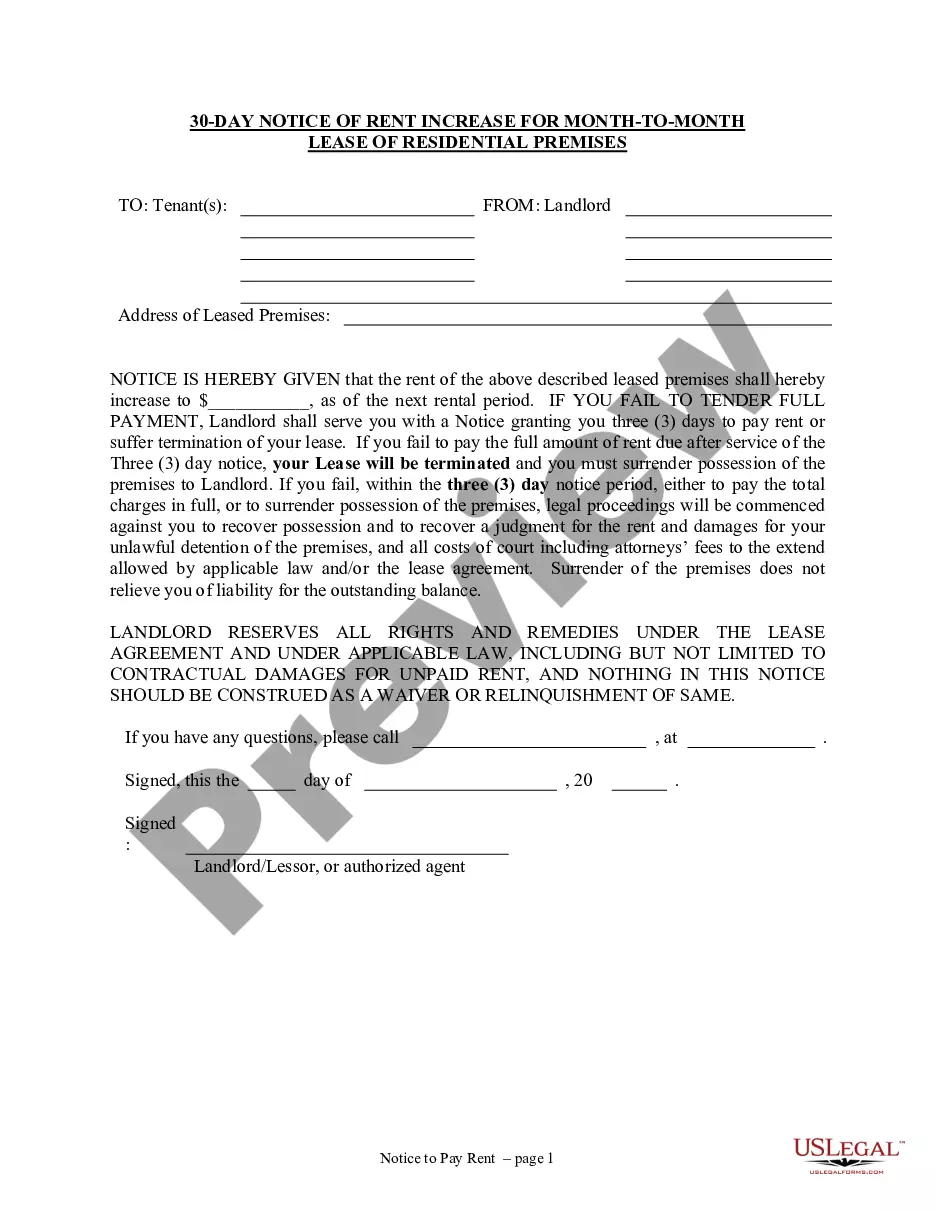
Maryland Letter from Landlord to Tenant that Sublease granted - Rent Paid by Subtenant, Old Tenant Released from Liability for Rent
About this form
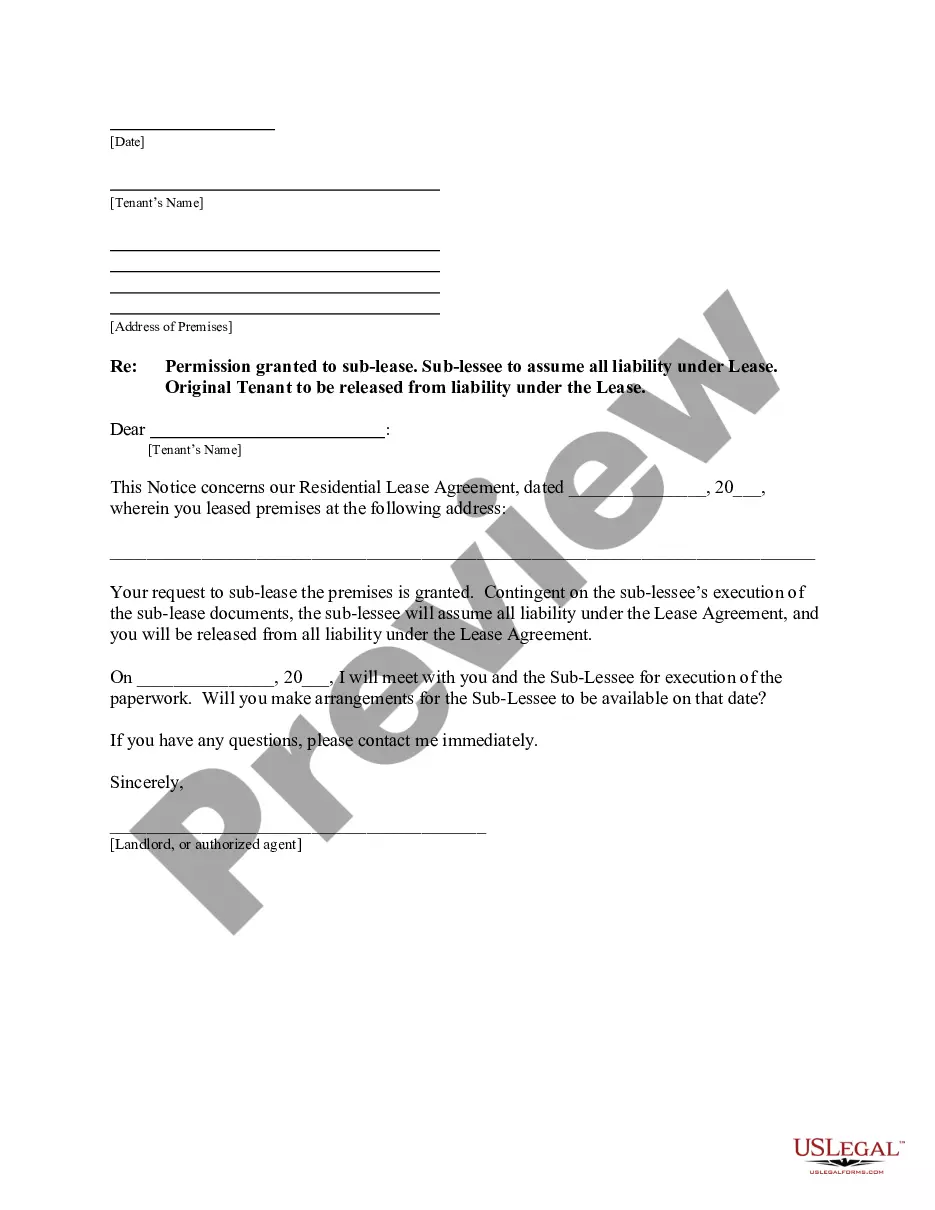
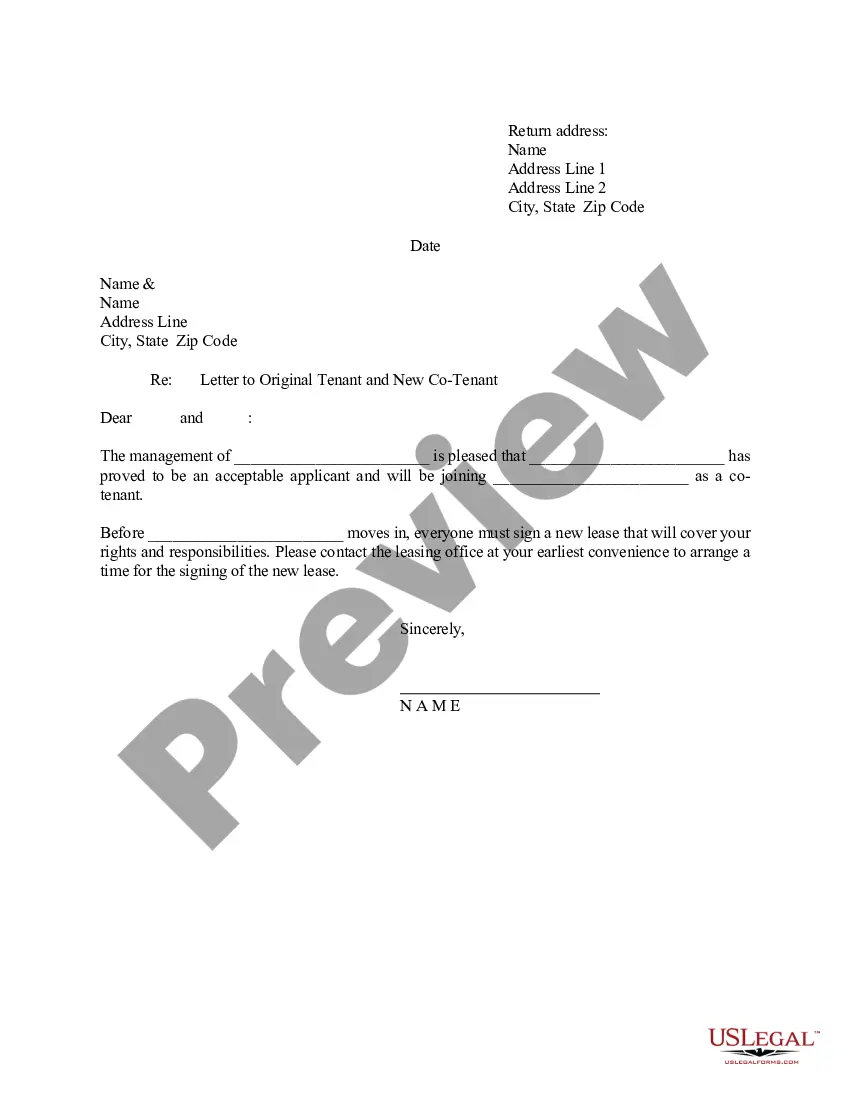
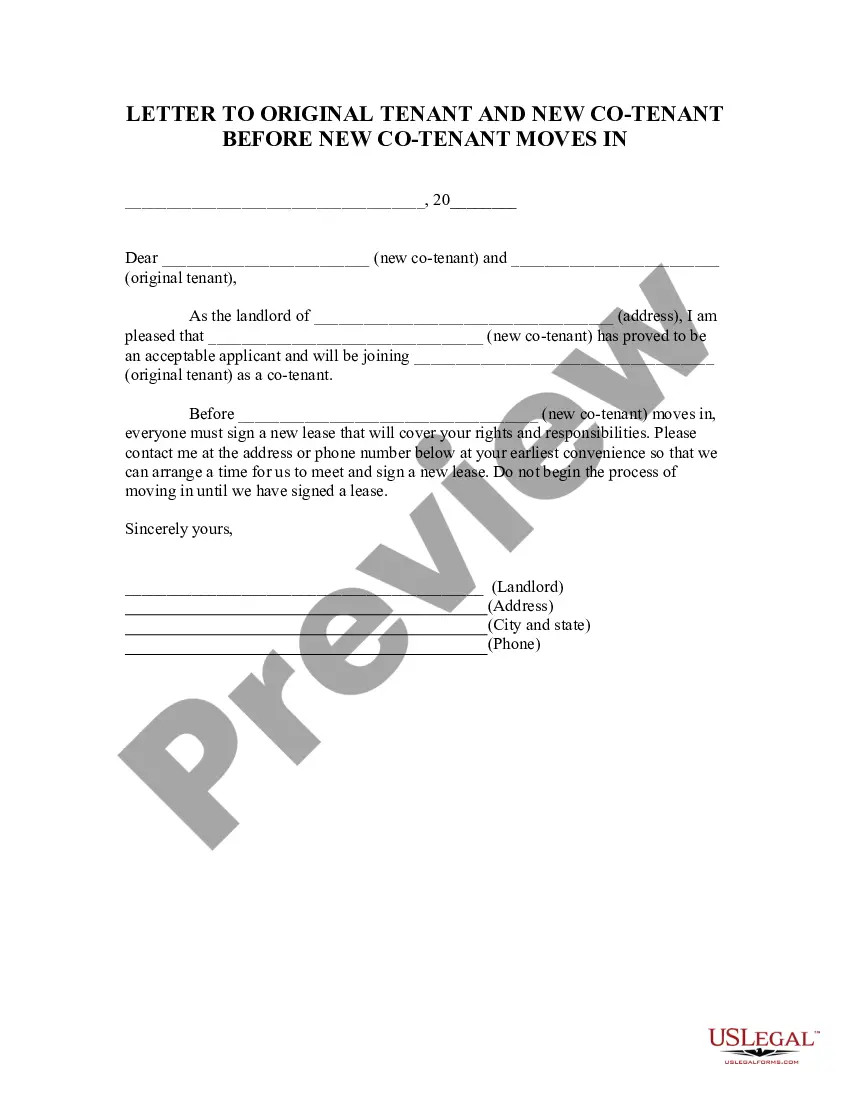
This form is a Letter from Landlord to Tenant that confirms a sublease has been granted. It outlines that rent will be paid by the sub-tenant, releasing the original tenant from liability for rent payments. This letter is essential in managing tenant relationships and ensuring that all parties are aware of their responsibilities. Unlike a standard lease agreement, this document specifically addresses the subleasing process and the transfer of liability, making it a critical tool for landlords and tenants alike.
Key components of this form
- Statement of approval for the sublease.
- Confirmation of the sub-tenant's assumption of liability under the lease agreement.
- Indication that the original tenant is released from liability for rent.
- Proposed meeting date for the execution of the sub-lease documents.
- Contact information for further questions.

Situations where this form applies
This form should be used when a tenant wants to sublease their rental property and requires formal approval from the landlord. It is applicable in scenarios where the landlord agrees to a sublease arrangement, ensuring that the liability for rent is shifted from the original tenant to the sub-tenant. This letter helps clarify roles and responsibilities, making it essential for maintaining proper legal standing in rental agreements.
Who this form is for
This form is intended for:
- Landlords who want to document their approval of a tenant's sublease.
- Tenants wishing to sublease their rental property and maintain clarity in their rental obligations.
- Sub-tenants entering into a sublease agreement.
Completing this form step by step
- Identify the parties involved: landlord, original tenant, and sub-tenant.
- Confirm the approval of the sublease and the release of liability for the original tenant.
- Enter the date for the meeting where the sub-lease documents will be executed.
- Provide contact information for the landlord or authorized agent.
- Ensure all parties sign and retain a copy of the letter for their records.
Does this form need to be notarized?
This form does not typically require notarization unless specified by local law. Always check your jurisdiction's requirements to ensure compliance.
Get your form ready online
Our built-in tools help you complete, sign, share, and store your documents in one place.
Make edits, fill in missing information, and update formatting in US Legal Forms—just like you would in MS Word.
Download a copy, print it, send it by email, or mail it via USPS—whatever works best for your next step.
Sign and collect signatures with our SignNow integration. Send to multiple recipients, set reminders, and more. Go Premium to unlock E-Sign.
If this form requires notarization, complete it online through a secure video call—no need to meet a notary in person or wait for an appointment.
We protect your documents and personal data by following strict security and privacy standards.

Make edits, fill in missing information, and update formatting in US Legal Forms—just like you would in MS Word.

Download a copy, print it, send it by email, or mail it via USPS—whatever works best for your next step.

Sign and collect signatures with our SignNow integration. Send to multiple recipients, set reminders, and more. Go Premium to unlock E-Sign.

If this form requires notarization, complete it online through a secure video call—no need to meet a notary in person or wait for an appointment.

We protect your documents and personal data by following strict security and privacy standards.
Avoid these common issues
- Not obtaining the landlord's written approval before subleasing.
- Failing to clearly outline the financial responsibilities of the sub-tenant.
- Neglecting to document the release of the original tenant's liability.
- Omitting important contact information in the letter.
Benefits of using this form online
- Convenient access to downloadable templates crafted by legal professionals.
- Easy customization to fit your specific subleasing situation.
- Instant availability allows for timely completion and submission.
Legal use & context
- This letter is legally binding once executed by the necessary parties.
- The formal acknowledgment of subleasing protects the interests of the landlord and tenant.
- Ensures clarity in financial responsibilities and lease obligations.
Summary of main points
- The letter serves to confirm the approval of a sublease and changes in liability.
- It is crucial that all parties understand their responsibilities outlined in the letter.
- Using this form online simplifies the process and helps ensure compliance with legal standards.
Looking for another form?
Form popularity
FAQ
You can prove a tenant is subletting an apartment by collecting evidence such as rental payments made by the subtenant, correspondence between the tenant and subtenant, and any advertisements for the sublease. Additionally, tracking visitor patterns and documenting any changes to the apartment can support your case. A Maryland Letter from Landlord to Tenant that Sublease granted - Rent Paid by Subtenant, Old Tenant Released from Liability for Rent is essential for formally acknowledging the arrangement. This documentation helps clarify responsibilities and ensures that all parties understand their obligations.
To write a letter confirming that someone pays you rent, include key details such as the address of the property, the names of both parties, and the rental amount. Clearly state that the rent is being paid by a subtenant and include the effective date of the agreement. Incorporating a Maryland Letter from Landlord to Tenant that Sublease granted - Rent Paid by Subtenant, Old Tenant Released from Liability for Rent can provide a formal framework for this communication. Make sure to keep a copy of this letter for your records.
Landlords often restrict subletting to maintain control over the property and the tenants who occupy it. They want to ensure that tenants adhere to the terms of the lease and comply with property rules. Additionally, a Maryland Letter from Landlord to Tenant that Sublease granted - Rent Paid by Subtenant, Old Tenant Released from Liability for Rent can complicate liability issues and the assurance of rent payments. Landlords typically prefer to manage tenant relationships directly.
To prove a tenant is subletting, collect evidence such as rental agreements, payment records, or communication between the tenant and the subtenant. Document any signs like multiple residents living in the unit or different individuals appearing for maintenance visits. Utilizing a Maryland Letter from Landlord to Tenant that Sublease granted - Rent Paid by Subtenant, Old Tenant Released from Liability for Rent can also help clarify subletting terms and confirm approval from the landlord.
In many cases, the original tenant remains responsible for the lease even after assigning or subletting. The landlord may still hold the original tenant accountable for any unpaid rent or damages, unless explicitly stated otherwise in a Maryland Letter from Landlord to Tenant that Sublease granted - Rent Paid by Subtenant, Old Tenant Released from Liability for Rent. Therefore, it is crucial for tenants to clarify their responsibilities before proceeding with subleasing.
Landlords often dislike subleasing due to concerns about losing control over their property. When a tenant subleases, they may not ensure that the subtenant follows the lease terms. This can lead to potential damages and unpaid rent. Moreover, landlords prefer maintaining direct communication with tenants rather than dealing with subtenants, which complicates relationships.
In Maryland, tenants typically need to obtain their landlord's consent before subleasing. The lease may outline specific criteria or procedures for this process. Utilizing a clear Maryland Letter from Landlord to Tenant that Sublease granted - Rent Paid by Subtenant, Old Tenant Released from Liability for Rent helps ensure compliance with legal requirements while protecting the interests of the landlord, tenant, and subtenant.
Unauthorized subletting occurs when a tenant rents out their apartment to someone else without the landlord’s consent. This action can violate lease terms and may lead to legal issues for both the tenant and subtenant. Therefore, using a Maryland Letter from Landlord to Tenant that Sublease granted - Rent Paid by Subtenant, Old Tenant Released from Liability for Rent becomes essential in formalizing approvals and protecting all parties.