Maryland Letter from Landlord to Tenant as Notice to remove unauthorized pets from premises
What is this form?
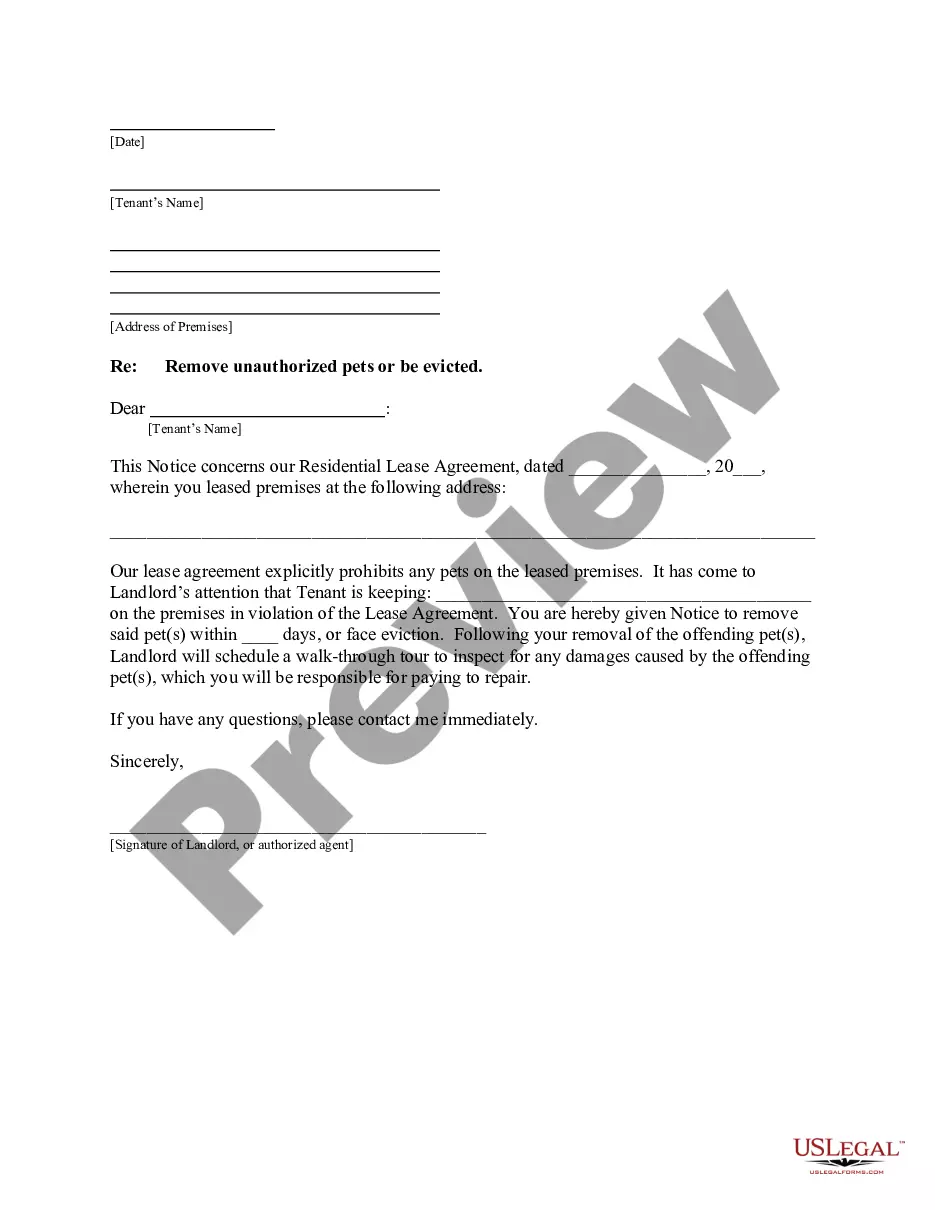
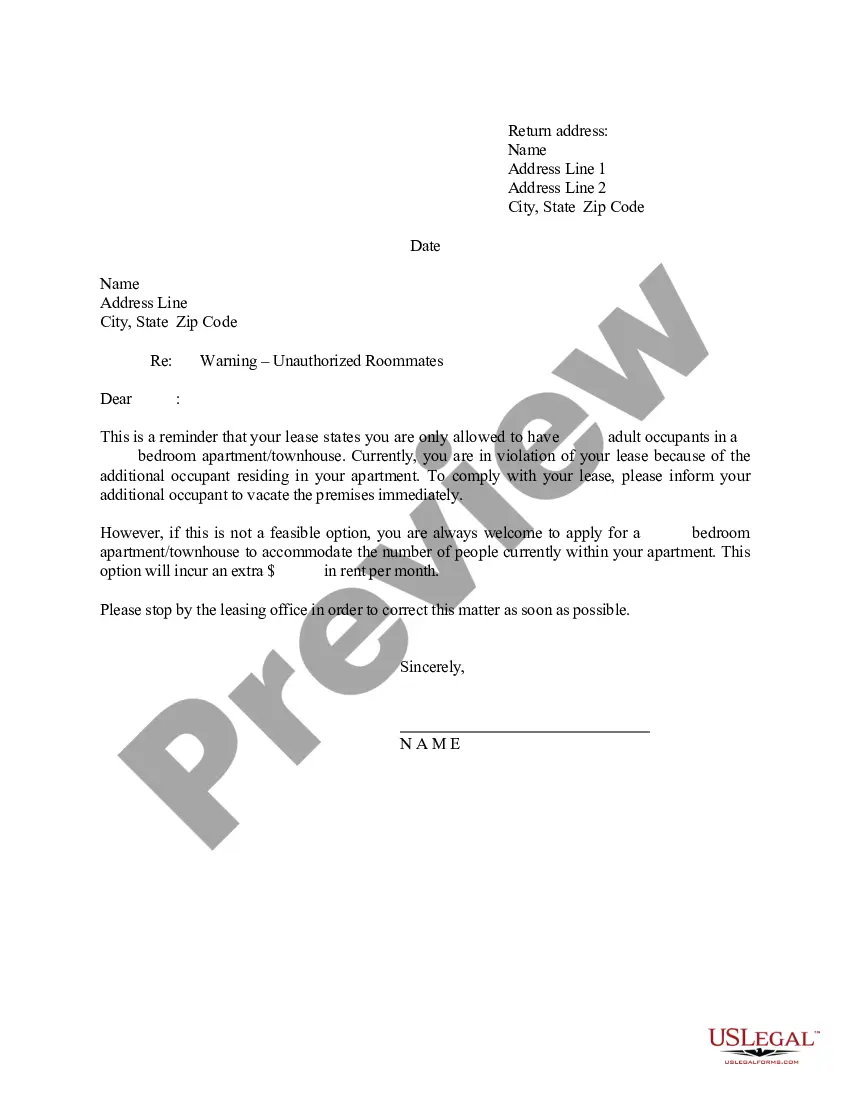
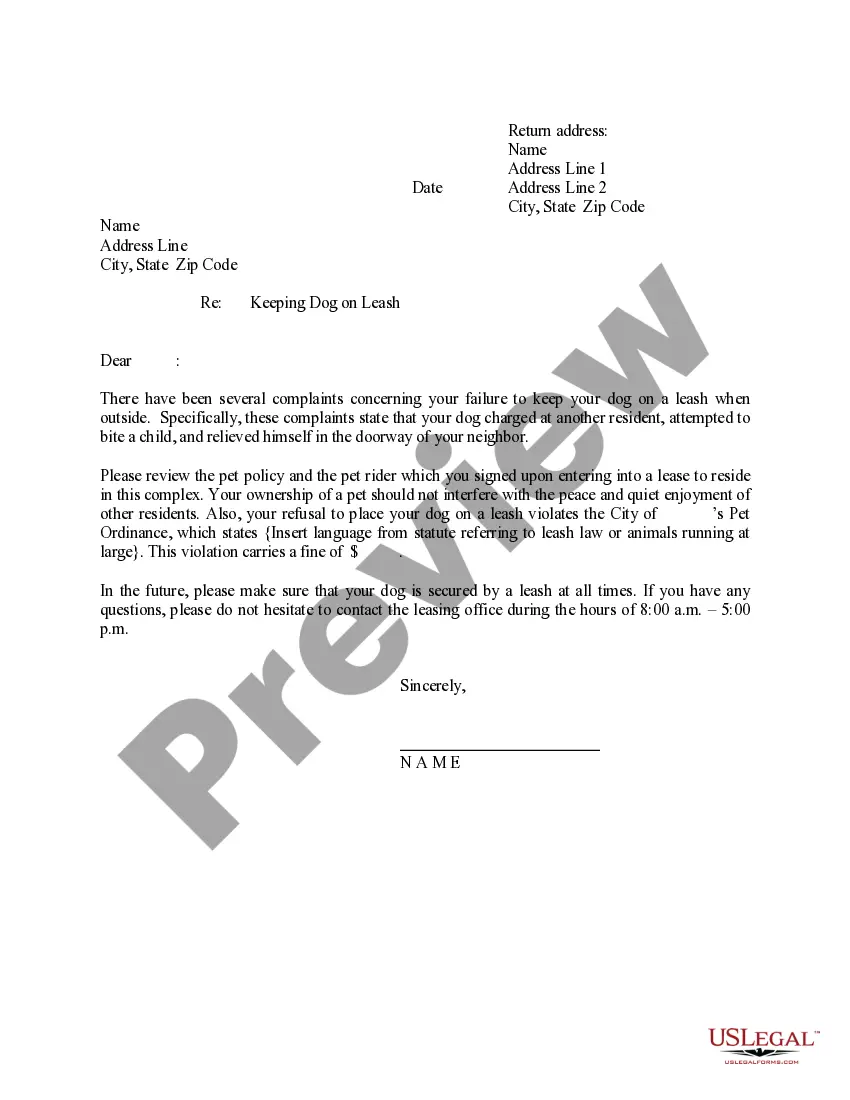
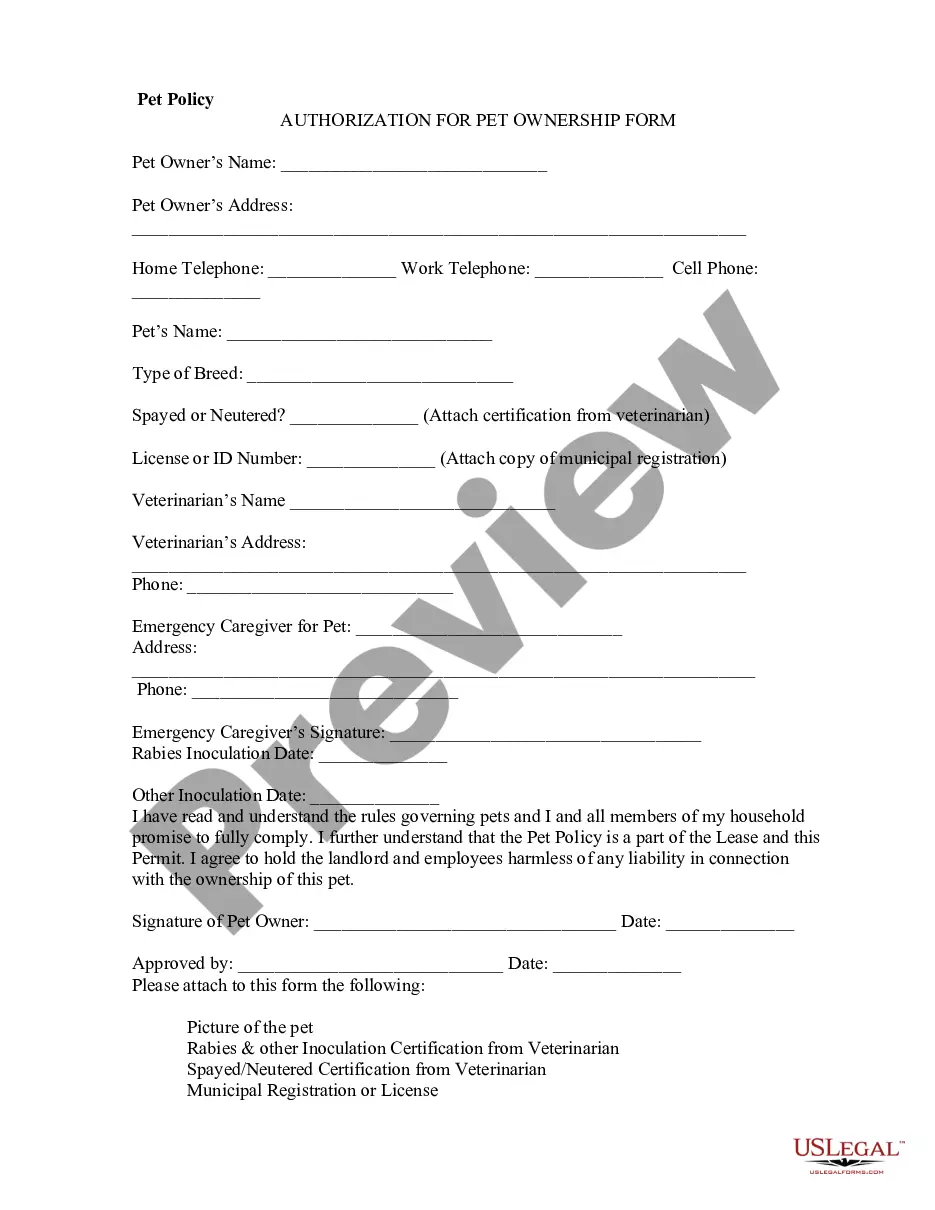
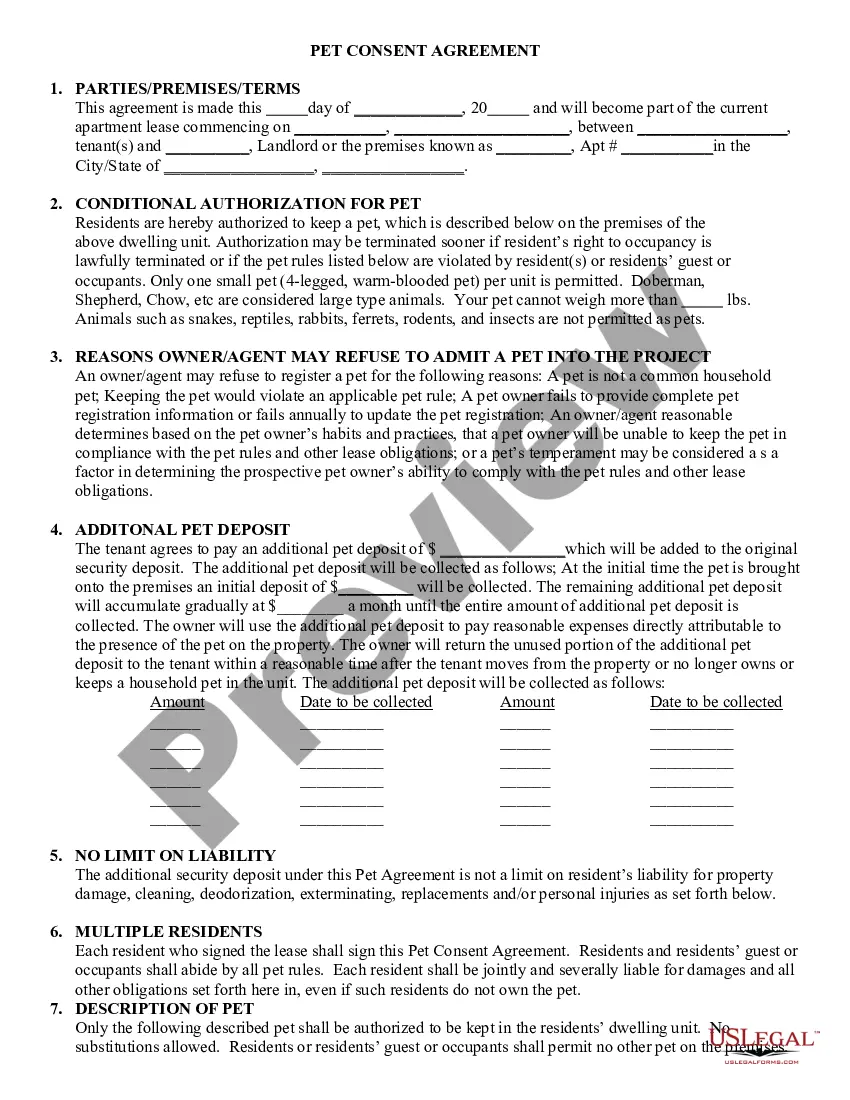
This form is a notice from a landlord to a tenant regarding unauthorized pets on the leased premises. The purpose of this letter is to formally inform the tenant that keeping pets breaches the residential lease agreement. While similar forms may address other lease violations, this specific notice focuses solely on the issue of unauthorized pets, providing clear steps for the tenant to take to avoid potential eviction.
What’s included in this form
- Date of the lease agreement
- Address of the leased premises
- Description of the unauthorized pet(s)
- Timeline for pet removal
- Details of potential consequences for non-compliance
- Landlord's contact information for further questions
Common use cases
This form should be used when a landlord discovers that a tenant is keeping pets in violation of the terms specified in the residential lease agreement. It serves as a formal notice to the tenant, providing an opportunity to address the issue before further legal action, such as eviction, is taken. This situation commonly arises when the lease agreement expressly prohibits pets, and the landlord aims to enforce these terms without delay.
Who this form is for
- Landlords or property managers who have a signed residential lease agreement with tenants
- Landlords who wish to enforce no-pet policies in their rental agreements
- Property owners approaching a situation where pets are kept unlawfully on their property
How to complete this form
- Identify and enter the date of the lease agreement.
- Provide the full address of the leased premises.
- Clearly state the type and number of unauthorized pet(s) being kept.
- Specify the number of days the tenant has to remove the pet(s).
- Include your contact information for any questions from the tenant.
- Sign the notice as the landlord or authorized agent.
Does this document require notarization?
This form does not typically require notarization unless specified by local law. It is advisable to check local regulations to ensure compliance before delivering the notice to the tenant.
Get your form ready online
Our built-in tools help you complete, sign, share, and store your documents in one place.
Make edits, fill in missing information, and update formatting in US Legal Forms—just like you would in MS Word.
Download a copy, print it, send it by email, or mail it via USPS—whatever works best for your next step.
Sign and collect signatures with our SignNow integration. Send to multiple recipients, set reminders, and more. Go Premium to unlock E-Sign.
If this form requires notarization, complete it online through a secure video call—no need to meet a notary in person or wait for an appointment.
We protect your documents and personal data by following strict security and privacy standards.

Make edits, fill in missing information, and update formatting in US Legal Forms—just like you would in MS Word.

Download a copy, print it, send it by email, or mail it via USPS—whatever works best for your next step.

Sign and collect signatures with our SignNow integration. Send to multiple recipients, set reminders, and more. Go Premium to unlock E-Sign.

If this form requires notarization, complete it online through a secure video call—no need to meet a notary in person or wait for an appointment.

We protect your documents and personal data by following strict security and privacy standards.
Typical mistakes to avoid
- Failing to provide sufficient details about the unauthorized pets.
- Not specifying the timeframe for pet removal.
- Overlooking the requirement to sign the notice.
- Not keeping a copy of the notice for records.
- Not understanding the local laws regarding tenant eviction procedures.
Why complete this form online
- Immediate access to a legally vetted template designed by licensed attorneys.
- Convenience of downloading and filling out the form at your own pace.
- Ability to edit and customize the form to meet specific needs.
- Assurance that the form complies with state laws and residential agreements.
Summary of main points
- This form is critical for landlords to enforce lease agreements regarding unauthorized pets.
- It outlines the consequences for tenants who fail to comply.
- Clear and precise communication through this notice helps prevent legal disputes.
Looking for another form?
Form popularity
FAQ
The Consumer Rights Act (2015) states that a no pet clause should allow for the tenant to ask for permission to keep a pet. The landlord is not allowed to unreasonably refuse the request.If you, as a tenant, were to take this to court, then it is likely that you would win the right to keep a pet.
Most landlords are willing to work with their tenants, even if you do break the lease, but some landlords won't. If you're caught sneaking in a pet, your landlord may have the right to evict you. If you're evicted, your landlord may sue you for the remainder of your lease payment.
Address the Tenant(s) Named in the Residential Lease. List the Lease Information. Notify the Tenant of the Eviction. Give a Reason for the Eviction. Serve the Eviction Notice to the Tenant(s)
"But there are 'no pet' clauses in a lot of these agreements, so if you signed up as a tenant to a lease with a 'no pet' clause and haven't told the landlord that you've got a pet, there is grounds for termination or eviction of the pet. "So you can be evicted, or asked for the pet to be evicted."
Under the new Model Tenancy Agreement, announced by Housing Minister Rt Hon Christopher Pincher MP, landlords will no longer be able to issue blanket bans on pets.To ensure landlords are protected, tenants will continue to have a legal duty to repair or cover the cost of any damage to the property.
PUT YOUR BEST PAW FORWARD. GO FETCH (AN EXTRA DEPOSIT) TEACH AN OLD DOG NEW TRICKS. UNDERHANDED TACTICS. LANDLORD'S BEST FRIEND.
If a tenant is found to be keeping a pet despite the tenancy agreement stating that they can't, the landlord has the right to evict them from the property as it is considered a breach of contract.After all, you may lose money from your decision to evict if you cannot replace the tenant soon enough.
If you want to hide your pet from your landlord, always cover up any evidence (odor, hair). Vacuum your house thoroughly, including the couches, curtains, and the rugs/carpets. Regularly make use of scented candles, room sprays to mask the pet smell. A portable air purifier can help in eliminating the pet odor.
It is generally a good idea to find an apartment that accepts your pets. You could potentially get evicted and charged for any damages if you sneak a dog into your apartment.It's very difficult to hide a dog longterm, and you may end up owing your landlord some money if you get caught.