Maryland Bill of Sale for Automobile or Vehicle including Odometer Statement and Promissory Note
What is this form?
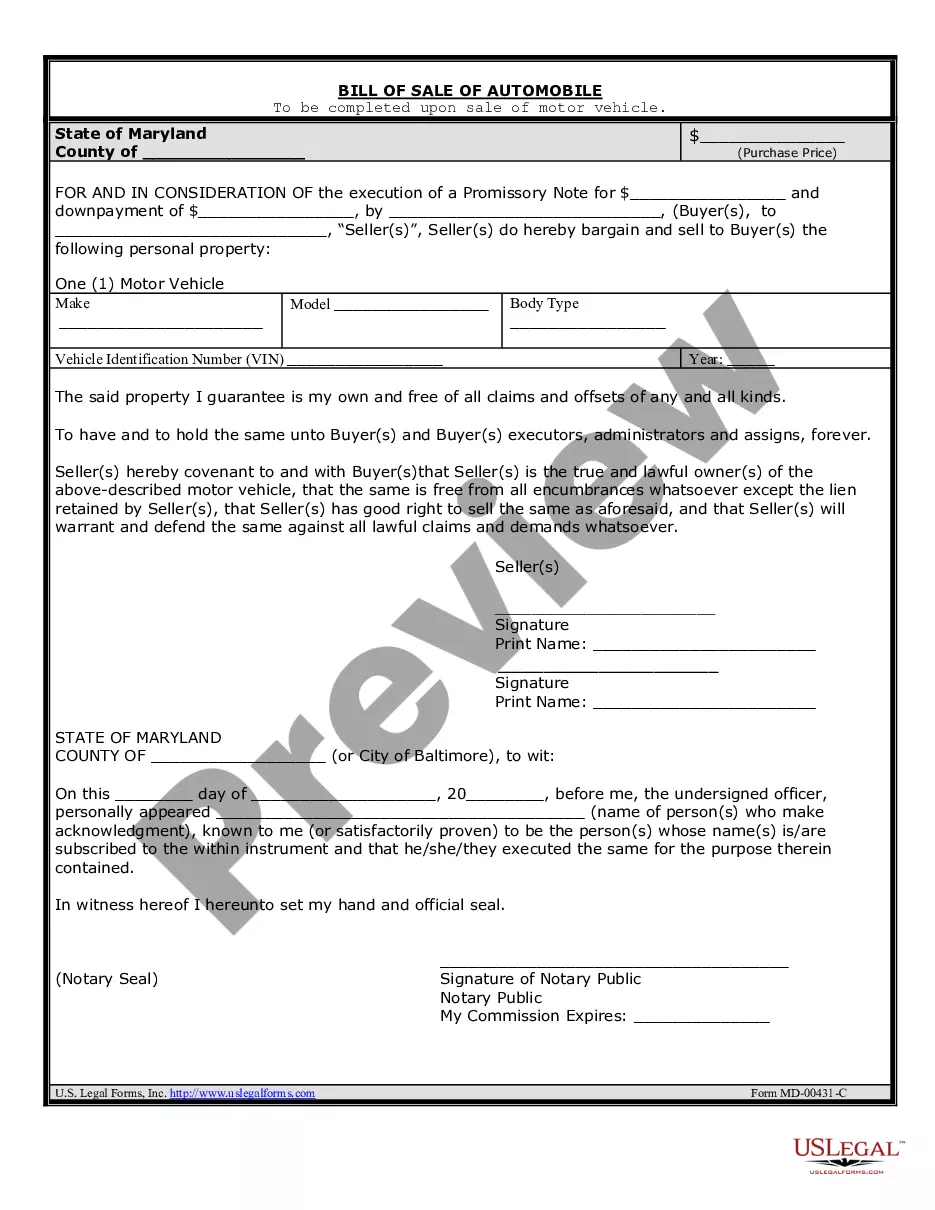
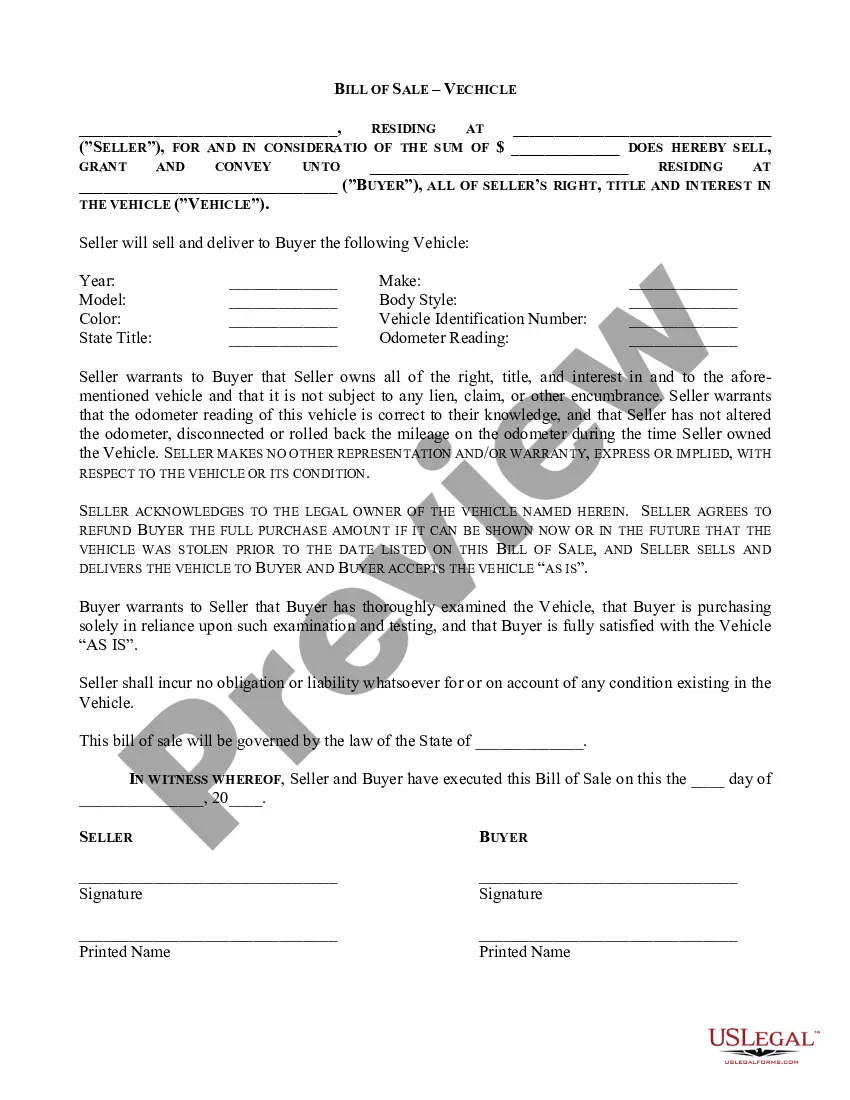
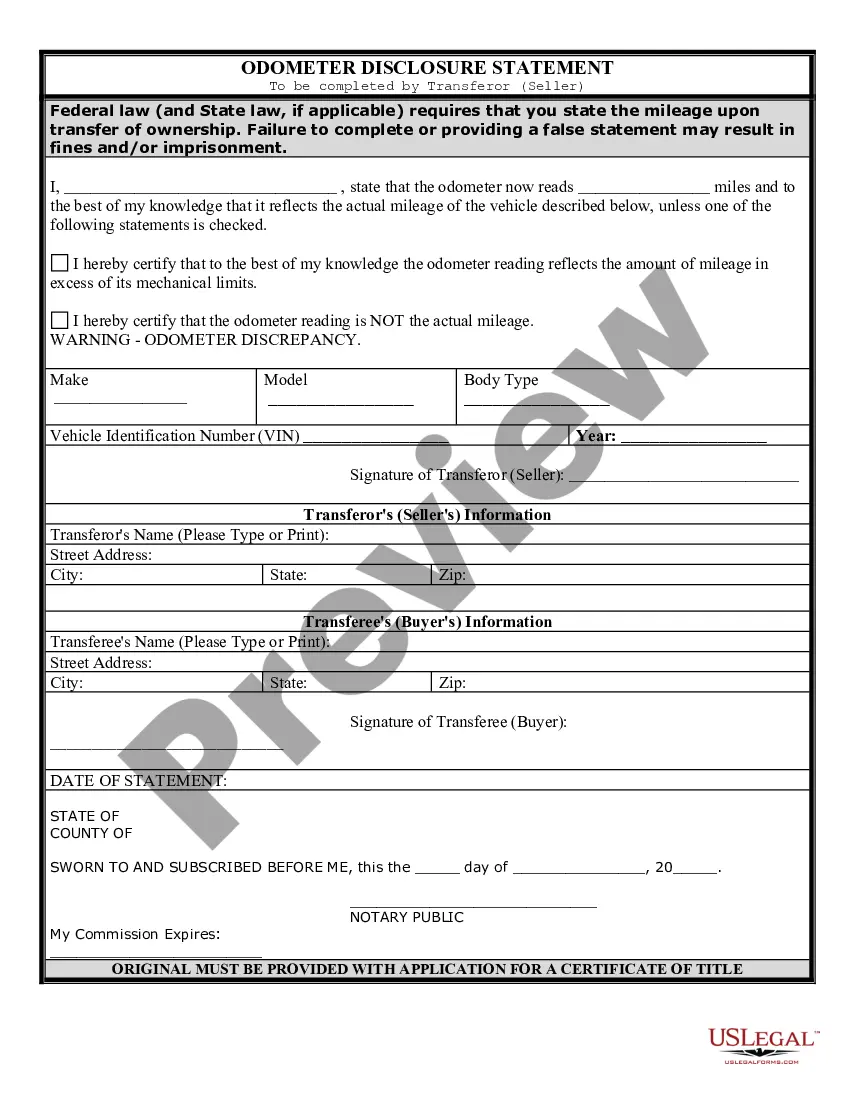
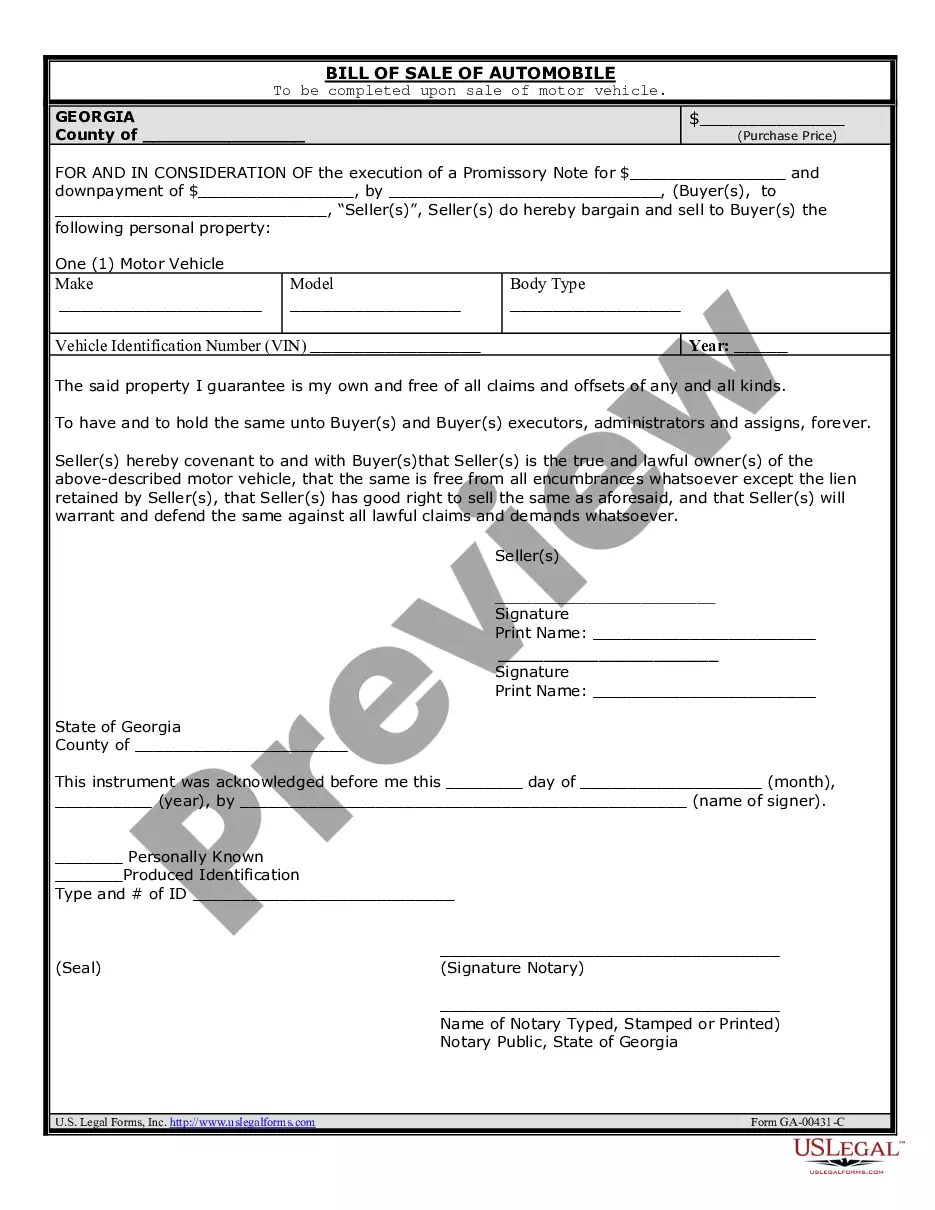
The Bill of Sale for Automobile or Vehicle including Odometer Statement and Promissory Note is a legal document used to transfer ownership of a vehicle from a seller to a buyer. This form package includes a Bill of Sale, an Odometer Disclosure Statement, and a Promissory Note, making it ideal for transactions where the buyer pays a downpayment and finances the remaining balance over time. This comprehensive package not only clarifies the terms of the sale but also ensures legal compliance regarding odometer disclosure and financing.
What’s included in this form
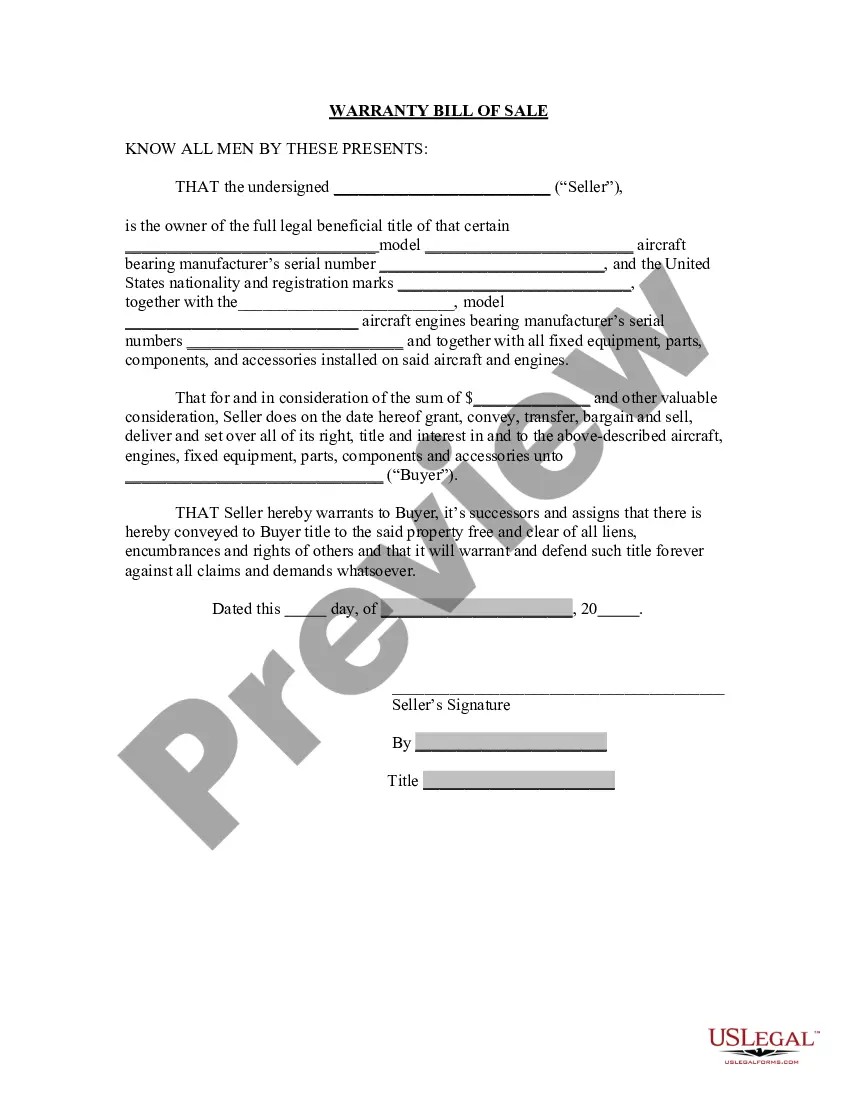
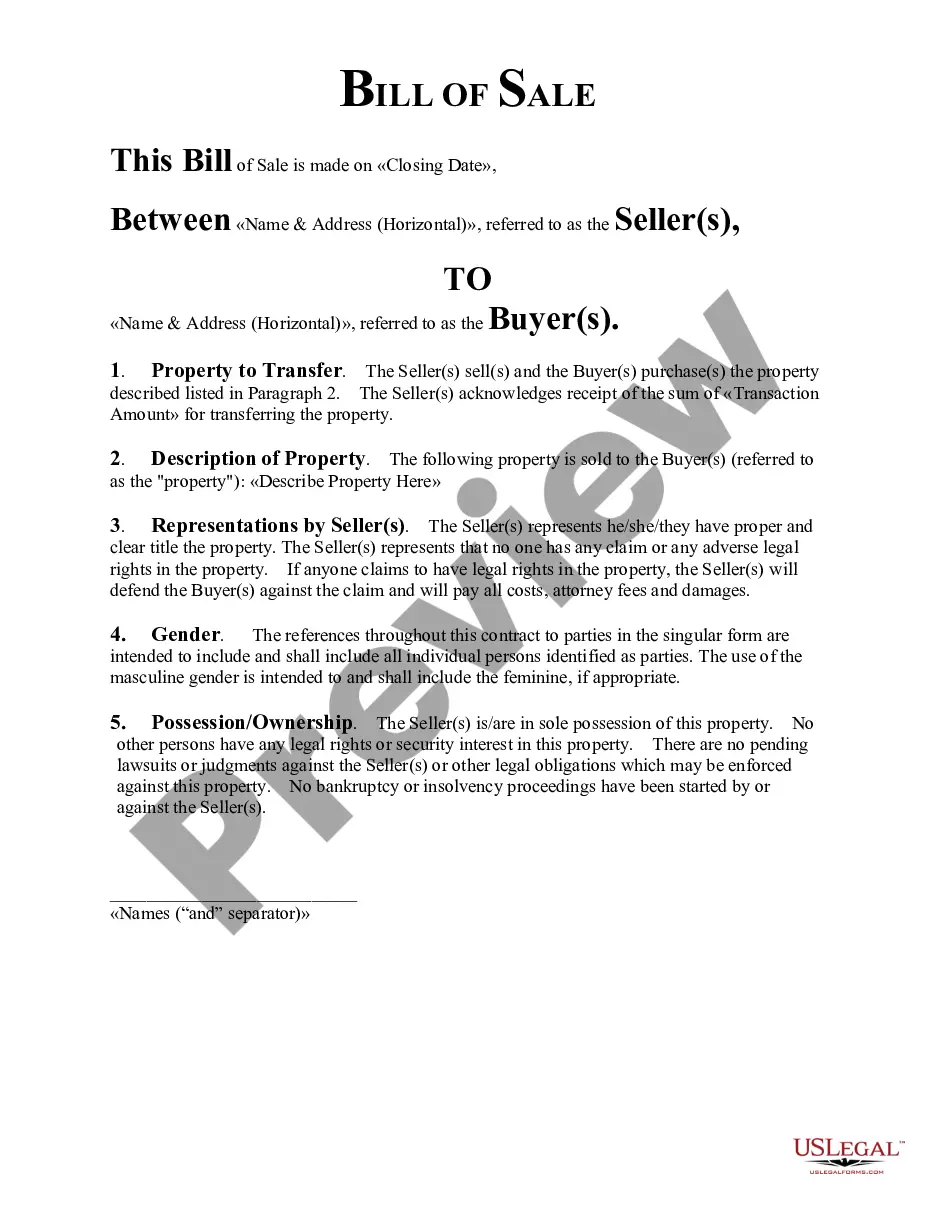
- Bill of Sale: Records the transfer of vehicle ownership from the seller to the buyer.
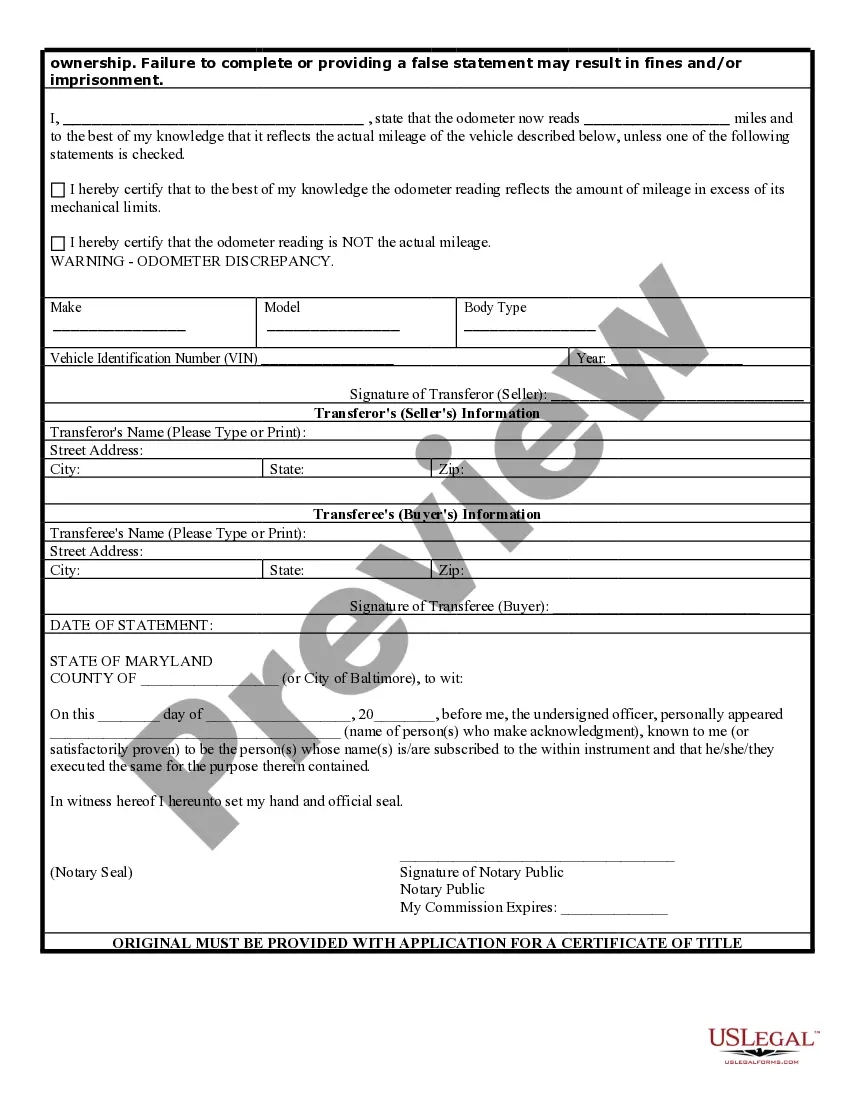
- Odometer Disclosure Statement: Indicates the vehicle's mileage at the time of sale and confirms the accuracy of this information.
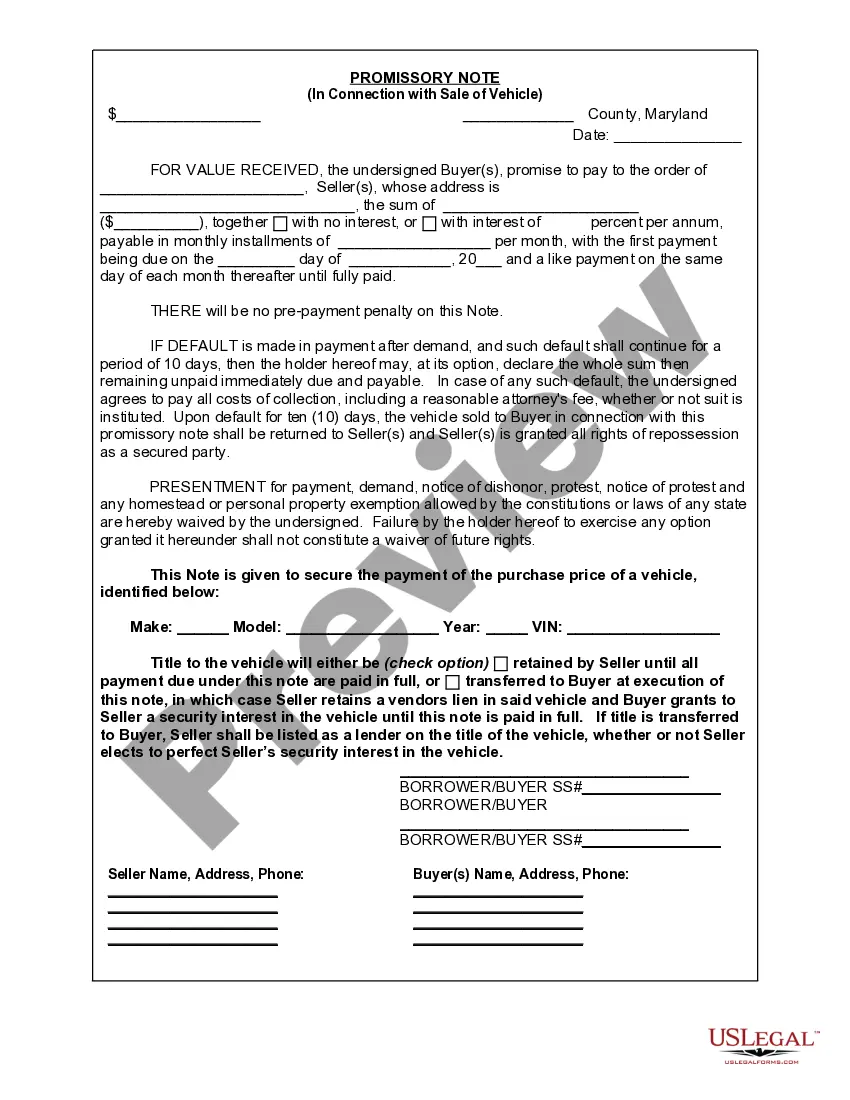
- Promissory Note: Outlines the payment terms, including downpayment and financing details.
- Signatures: Requires the signatures of both the buyer and seller, along with a notary acknowledgment for legal validity.
- Property details: Captures essential information about the vehicle, including make, model, year, and VIN.
When to use this document
This form is essential when selling or buying a vehicle and requires a structured agreement for the transaction. It should be used in situations where the buyer intends to make a downpayment and pay off the remaining balance through installments, establishing repayment terms and guaranteeing the seller's security interest in the vehicle.
Intended users of this form
- Individuals selling or buying a motor vehicle.
- Buyers financing their vehicle purchase through a payment plan.
- Sellers who want to ensure legal compliance during the sale process.
- Parties needing formal documentation for vehicle ownership transfer.
Completing this form step by step
- Identify the parties involved: Enter the names and addresses of the seller and buyer.
- Specify the property: Fill in the details of the vehicle, including make, model, year, and VIN.
- Enter purchase price and payment terms: Clearly outline the purchase price, downpayment amount, and financing details in the Promissory Note.
- Complete the Odometer Disclosure: State the mileage on the vehicle and check the relevant declaration regarding the accuracy of the odometer reading.
- Gather signatures: Both parties must sign the Bill of Sale and have it notarized for legal validity.
Notarization requirements for this form
Yes, this form must be notarized to be legally valid in the state of Maryland. The inclusion of a notary public section provides assurance that the identities of the parties are verified, and the document is executed correctly. US Legal Forms offers integrated online notarization services for convenience, allowing you to complete the process securely via video call without the need to travel.
Get your form ready online
Our built-in tools help you complete, sign, share, and store your documents in one place.
Make edits, fill in missing information, and update formatting in US Legal Forms—just like you would in MS Word.
Download a copy, print it, send it by email, or mail it via USPS—whatever works best for your next step.
Sign and collect signatures with our SignNow integration. Send to multiple recipients, set reminders, and more. Go Premium to unlock E-Sign.
If this form requires notarization, complete it online through a secure video call—no need to meet a notary in person or wait for an appointment.
We protect your documents and personal data by following strict security and privacy standards.

Make edits, fill in missing information, and update formatting in US Legal Forms—just like you would in MS Word.

Download a copy, print it, send it by email, or mail it via USPS—whatever works best for your next step.

Sign and collect signatures with our SignNow integration. Send to multiple recipients, set reminders, and more. Go Premium to unlock E-Sign.

If this form requires notarization, complete it online through a secure video call—no need to meet a notary in person or wait for an appointment.

We protect your documents and personal data by following strict security and privacy standards.
Avoid these common issues
- Failing to accurately report the odometer reading, leading to potential legal issues.
- Not including all necessary details about the vehicle, such as the VIN.
- Neglecting to have the form notarized if required by state law.
- Omitting signatures from either the buyer or seller, which can invalidate the document.
Why complete this form online
- Immediate access to legally vetted templates created by licensed attorneys.
- Customizable fields allow users to input specific details for their transaction easily.
- Convenience of downloading and completing the form at your own pace.
- Ensures compliance with legal standards, reducing the risk of errors.
- Streamlines the document preparation process, saving time and effort.
Legal use & context
- This form provides legal proof of the sale, protecting both parties in the transaction.
- Failure to accurately complete the Odometer Disclosure Statement can result in legal penalties.
- The Promissory Note attached ensures clear repayment terms and can be enforced in court if needed.
Quick recap
- The form includes necessary documents for a vehicle sale, including a Bill of Sale, Odometer Statement, and Promissory Note.
- Correct completion and notarization of the form are crucial for legal validity.
- This form helps protect buyers and sellers by outlining clear terms and conditions of the sale.
Looking for another form?
Form popularity
FAQ
Year, Make, and Model. Vehicle Identification Number (VIN) Date of Transaction (Sale Date) Sale Price. Names/Addresses/Signatures of both Buyer and Seller.
You will need the title, signed over to you; the MVA Bill of Sale, if required; the passing inspection report; proof of insurance; and the titling fee.
Step 1: Get the vehicle inspected. In Maryland, sellers are required to get a vehicle safety inspection by a licensed Maryland inspection station. Step 2: Organize and gather all related vehicle documentation. Step 3: Bill of Sale. Step 4: Transfer the title. Step 5: Remove your plates and cancel your insurance.
Write the title "Bill of Sale" at the top of the paper. Write the buyer's full name and address under the title of "Buyer." Write the seller's full name and address under the title of "Seller." Write down the year, make, model, color, current odometer reading, and Vehicle Identification Number from the vehicle.
A description of the vehicle, including the year, make, model, vehicle style, and Vehicle Identification Number (VIN) Printed names and signatures of the buyer and seller. Date of the sale. Total cost of the vehicle.
The date of the sale. A description of the car, including its: Year, make and model. The selling price of the car. If the car is a gift or partial gift, you should still create a bill of sale. Warranty information. The full names, addresses and signatures of the buyer and seller.
You will need a notary, witnessing both the buyer(s) and seller(s) signatures, if you present a bill of sale to complete your transaction.A notarized MVA Bill of Sale200b (form # VR-181) is needed if the sale price is less than the vehicle's book value and the vehicle is 7 years old or newer.
You will need a notary, witnessing both the buyer(s) and seller(s) signatures, if you present a bill of sale to complete your transaction.A notarized MVA Bill of Sale200b (form # VR-181) is needed if the sale price is less than the vehicle's book value and the vehicle is 7 years old or newer.