Mississippi Landlord Tenant Closing Statement to Reconcile Security Deposit
About this form
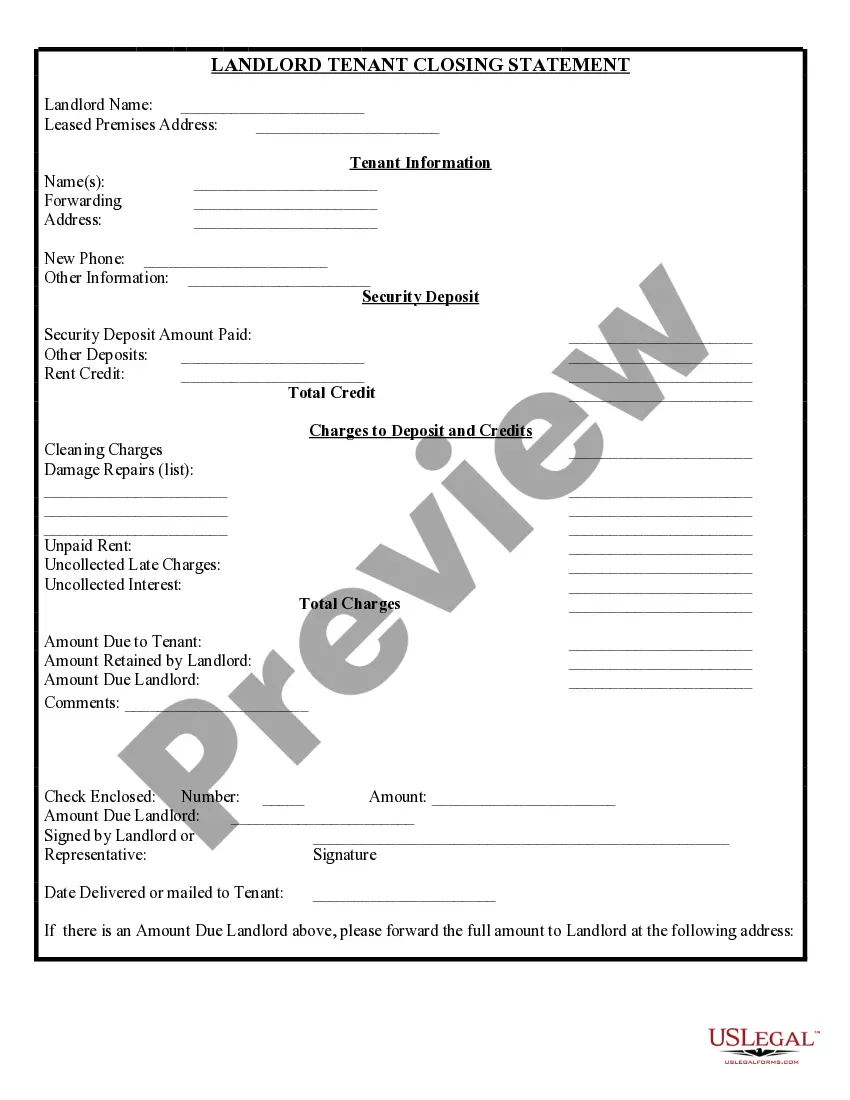
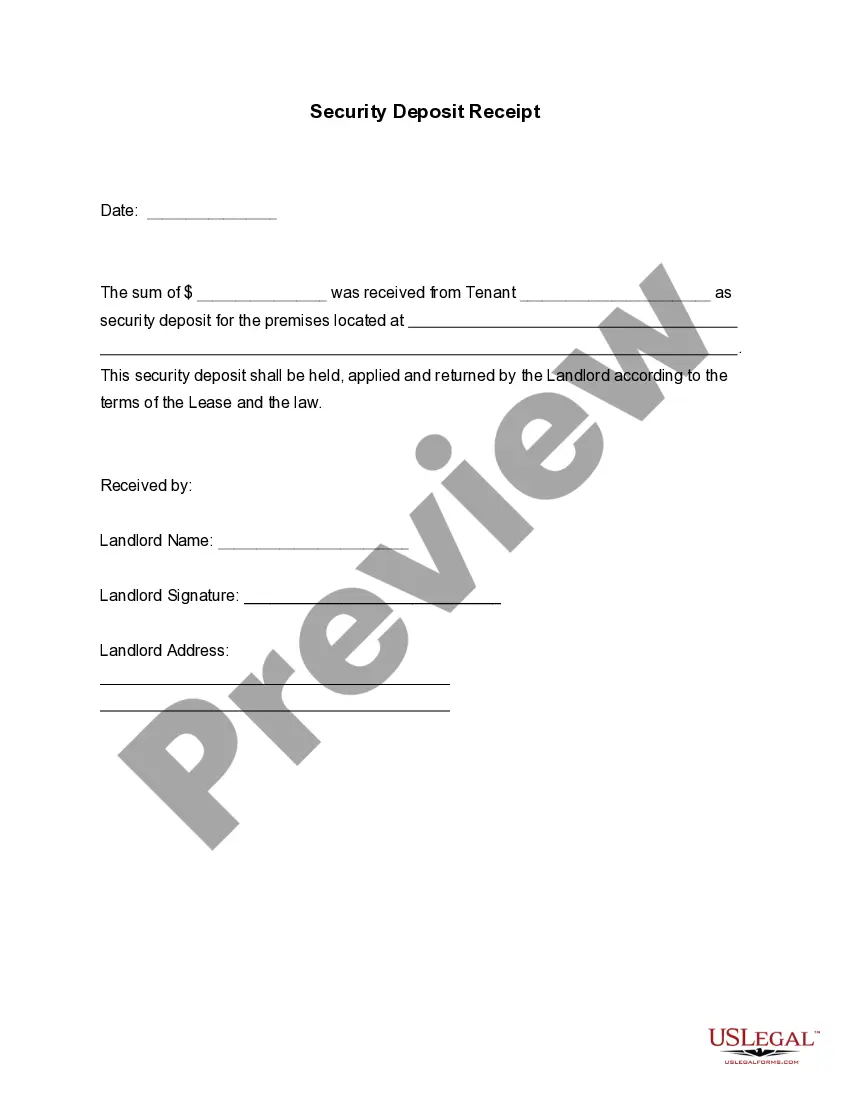
The Landlord Tenant Closing Statement to Reconcile Security Deposit is a legal document that records the security deposit details held by a landlord for a tenant. This form is crucial for accurately documenting any deposits and credits, along with deductions for damages over normal wear and tear. Unlike rent, a security deposit is money belonging to the tenant, kept by the landlord for potential repairs or unpaid rent. This form helps clarify the financial relationship regarding the security deposit between the landlord and the tenant.
Key components of this form
- Details of the security deposit amount paid by the tenant.
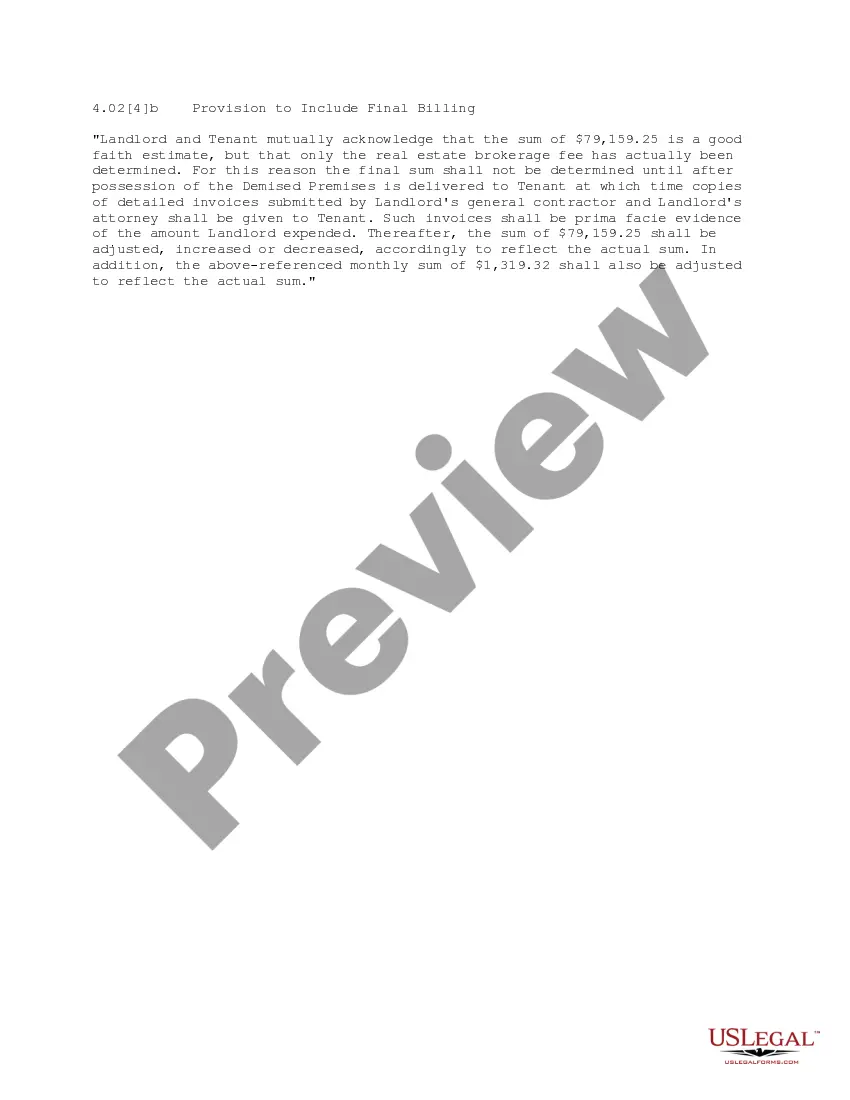
- List of deductions for repairs or damages beyond normal wear and tear.
- Credits that may offset the total amount deducted from the deposit.
- Final balance due to the tenant after accounting for deductions and credits.
- Signature fields for both the landlord and tenant to confirm agreement.
When this form is needed
This form is used when a tenant moves out of a rental property and the landlord needs to account for the security deposit. It is essential in situations where there are deductions for damages or outstanding rent. Utilizing this form helps prevent disputes by providing a clear record of financial transactions related to the security deposit upon lease termination.
Who this form is for
- Landlords seeking to document the reconciliation process of a security deposit.
- Tenants wanting to understand the deductions made from their security deposit.
- Property management companies handling deposits on behalf of landlords.
- Legal advisors providing guidance to landlords and tenants regarding security deposits.
Instructions for completing this form
- Identify the names of the landlord and tenant involved in the rental agreement.
- Specify the amount of the security deposit collected from the tenant.
- Detail any deductions for damages or unpaid rent, with clear descriptions.
- Calculate the final balance owed to the tenant after all deductions and credits.
- Obtain signatures from both the landlord and tenant to confirm the reconciliation.
Does this form need to be notarized?
Notarization is not commonly needed for this form. However, certain documents or local rules may make it necessary. Our notarization service, powered by Notarize, allows you to finalize it securely online anytime, day or night.
Get your form ready online
Our built-in tools help you complete, sign, share, and store your documents in one place.
Make edits, fill in missing information, and update formatting in US Legal Forms—just like you would in MS Word.
Download a copy, print it, send it by email, or mail it via USPS—whatever works best for your next step.
Sign and collect signatures with our SignNow integration. Send to multiple recipients, set reminders, and more. Go Premium to unlock E-Sign.
If this form requires notarization, complete it online through a secure video call—no need to meet a notary in person or wait for an appointment.
We protect your documents and personal data by following strict security and privacy standards.

Make edits, fill in missing information, and update formatting in US Legal Forms—just like you would in MS Word.

Download a copy, print it, send it by email, or mail it via USPS—whatever works best for your next step.

Sign and collect signatures with our SignNow integration. Send to multiple recipients, set reminders, and more. Go Premium to unlock E-Sign.

If this form requires notarization, complete it online through a secure video call—no need to meet a notary in person or wait for an appointment.

We protect your documents and personal data by following strict security and privacy standards.
Typical mistakes to avoid
- Failing to document all deductions clearly can lead to disputes.
- Not providing copies of receipts for repairs that justify deductions.
- Using the form without reviewing state-specific laws about security deposit handling.
Why complete this form online
- Convenient access to a legally sound document tailored to your needs.
- Edit and customize the form quickly to fit specific circumstances.
- Reliable templates drafted by licensed attorneys ensure compliance with local laws.
Legal use & context
- The form serves as a formal record of the security deposit reconciliation between landlords and tenants.
- It helps to enforce the terms regarding security deposits set forth in a rental agreement.
- A properly completed statement can assist in resolving disputes should they arise.
Summary of main points
- The Landlord Tenant Closing Statement is essential for reconciling security deposits.
- Clear documentation helps avoid misunderstandings between landlords and tenants.
- Understanding state-specific laws is crucial for compliance and fairness.
Looking for another form?



Form popularity
FAQ
Presentation of the Statement of Deposits It details the amounts deposited in your bank account during the preceding year as well as the first monthly payment of the current year, if applicable.Note that the Statement of Deposits includes only direct deposit payments.
Unpaid rent at the end of the tenancy. Unpaid bills at the end of the tenancy. Stolen or missing belongings that are property of the landlord. Direct damage to the property and it's contents (owned by the landlord) Indirect damage due to negligence and lack of maintenance.
The Security Deposit Accounting Statement includes the necessary information to properly understand the form like the start and end dates, date notice was given, and date of the move out inspection.The landlord will use this form if there is still money owed after repairs, court costs, fees, or other charges.
Date of the deposit receipt. Name of the tenant. Name and location of the financial institution where the security deposit is held. Account number, if required. Amount deposited and date the deposit was made.
The landlord is entitled to deduct from the rental deposit any expenses incurred repairing any damage to the property which occurred during the tenancy. The remainder of the money must then be refunded to the tenant no later than 14 days after the restoration of the property as dictated by the Act.
Generally, a landlord may retain all or part of the security deposit to pay for damages to the unit that occurred during the tenants' occupancy, except for those resulting from normal wear and tear. Usually, the landlord can deduct other costs, such as late fees, unpaid rent, and unpaid utility bills.
Tenant's name and new address, or address he gave for return of the security deposit. Commencement date of the lease and date it ended. Amount of the security deposit when the tenant moved in. Amount of interest accrued.
Your landlord can still deduct from your deposit to cover the cleaning bill if the property is not cleaned to the level it was at and can prove it, though. So, it's still important to clean the property thoroughly before you move out.
5 Times a Landlord Does Not Have to Return a Tenant's Security Deposit. Breaking or Terminating a Lease Early. Nonpayment of Rent. Damage to the Property. Cleaning Costs. Unpaid Utilities.