Massachusetts Living Trust for Individual Who is Single, Divorced or Widow (or Widower) with No Children
Understanding this form
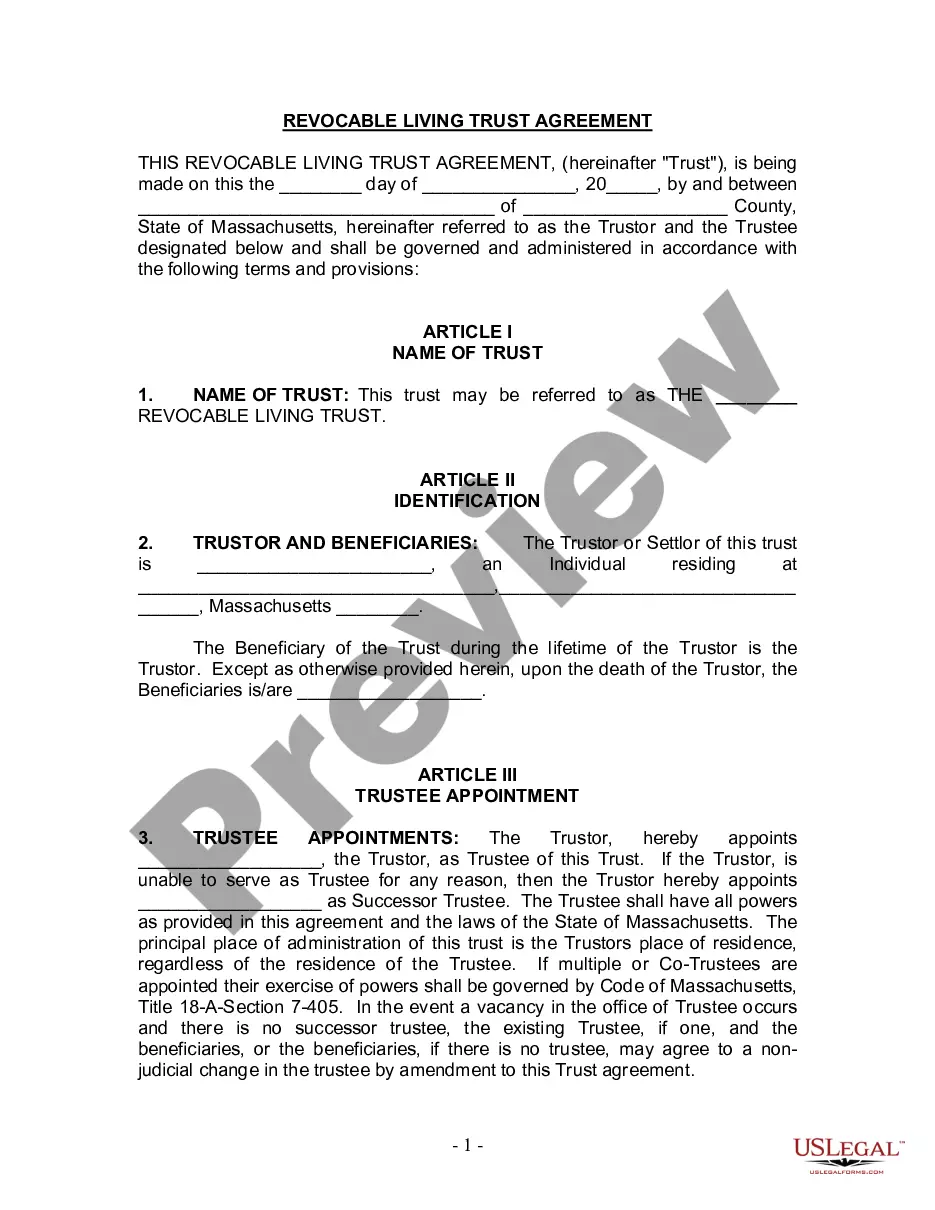
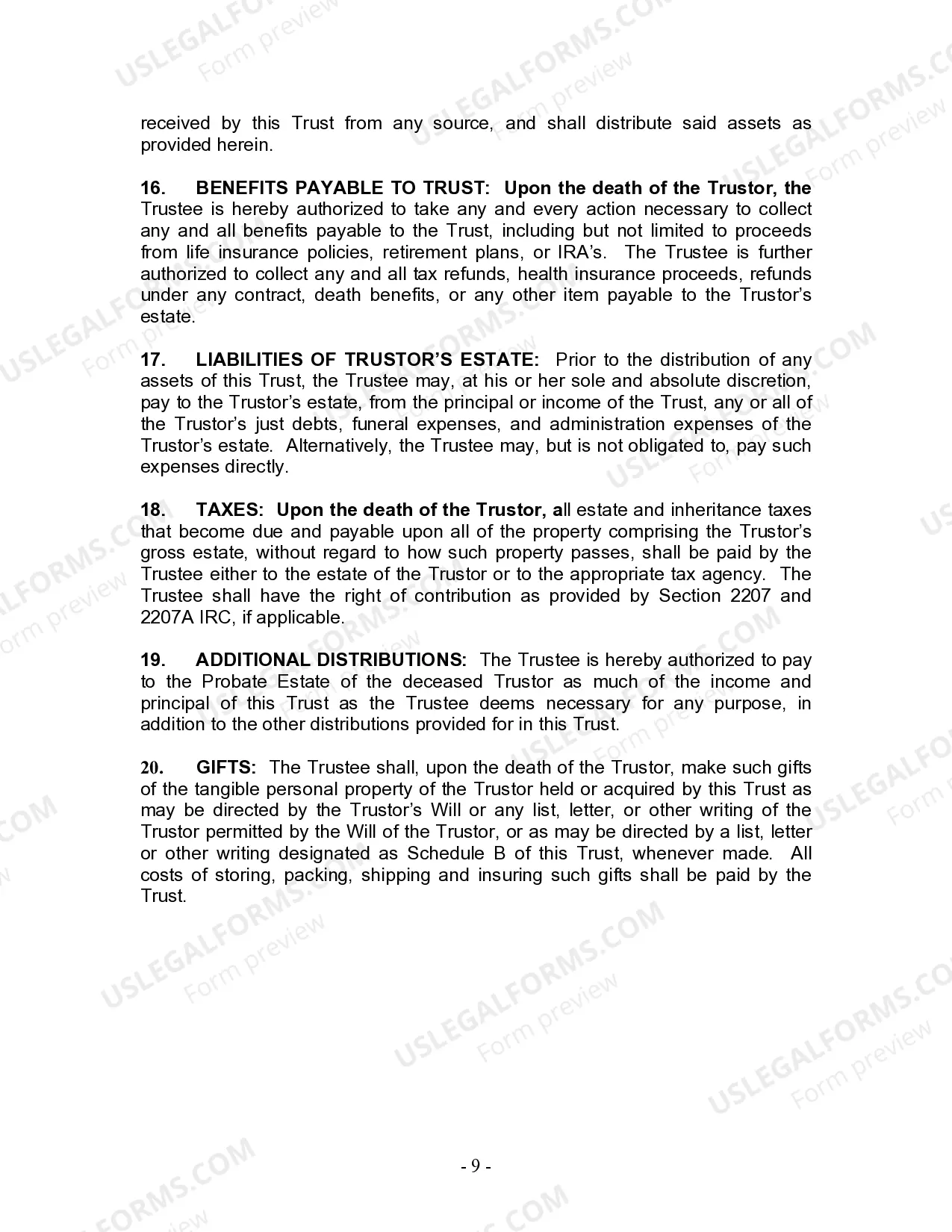
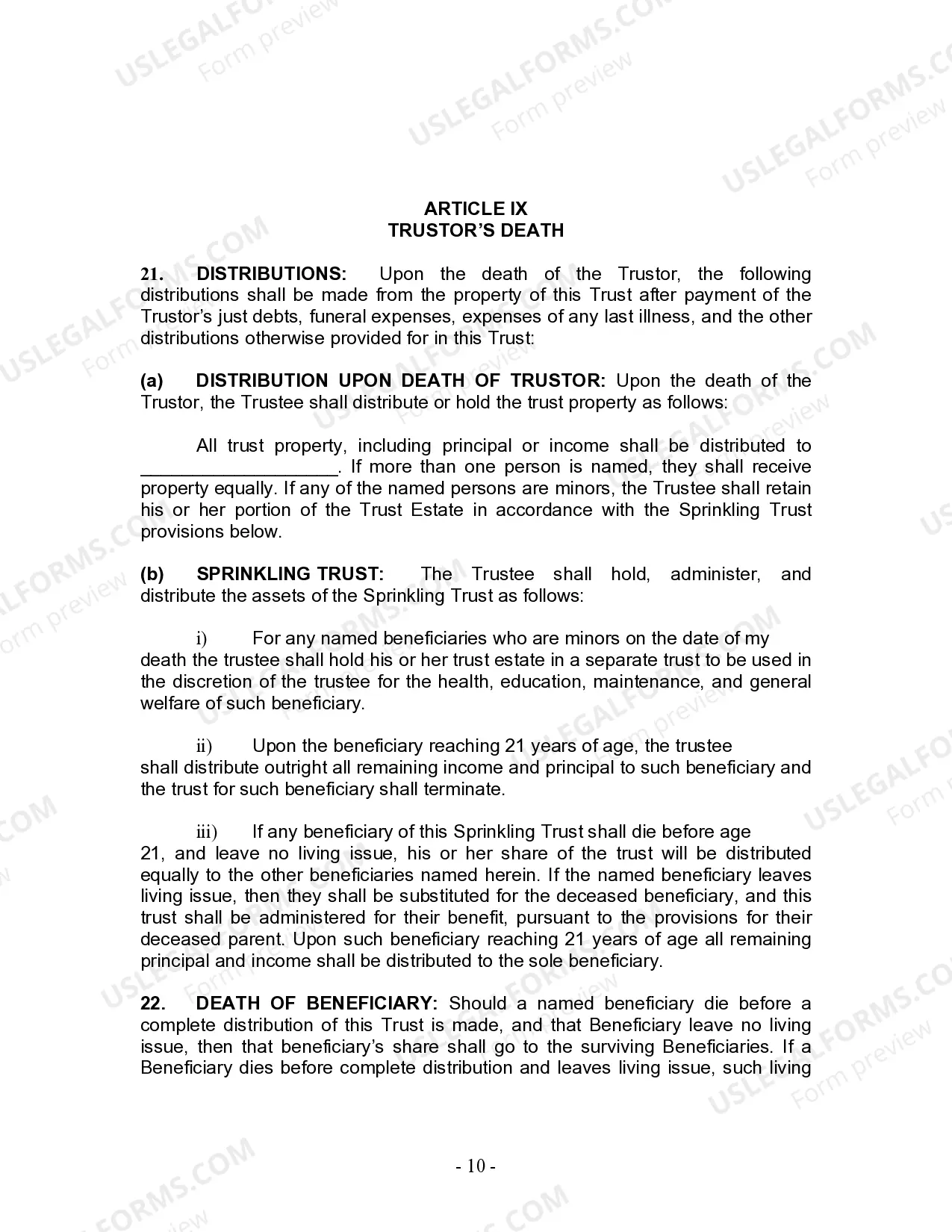
The Living Trust for Individual Who is Single, Divorced or Widow (or Widower) with No Children is a legal document that outlines how an individual's assets and property will be managed during their lifetime and distributed upon their death. Unlike a will, this living trust allows the individual (known as the Trustor) to maintain control over their assets while avoiding the probate process after death. This form is specifically designed for individuals who are single, divorced, or widowed and have no children, ensuring their wishes are clearly stated and legally enforceable.
Form components explained
- Name of the Trust: Specifies the title of the living trust.
- Trustor and Beneficiaries: Identifies the Trustor and the named beneficiaries.
- Trustee Appointment: Designates the Trustee and any successor Trustees for asset management.
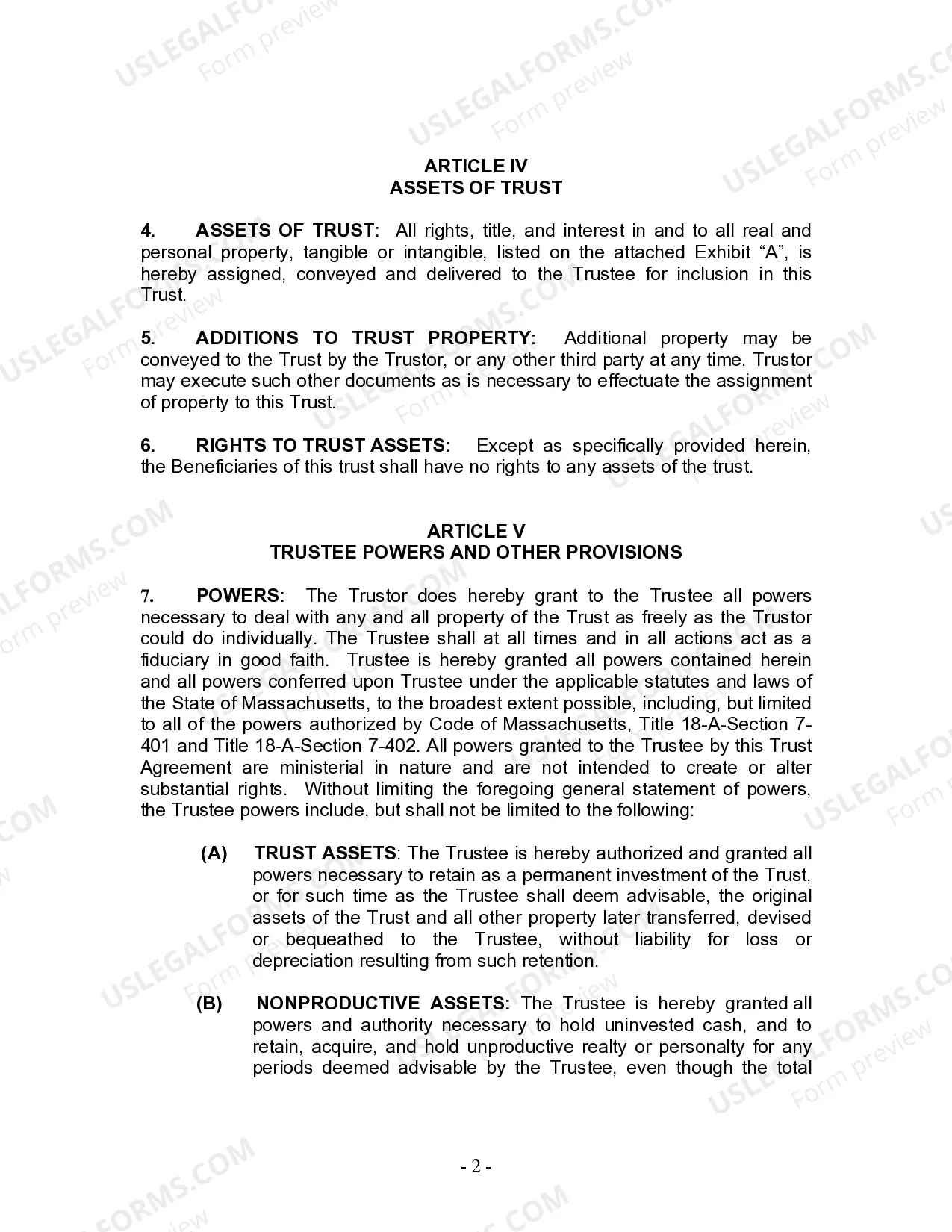
- Assets of the Trust: Details the assets included in the Trust and provisions for adding new assets.
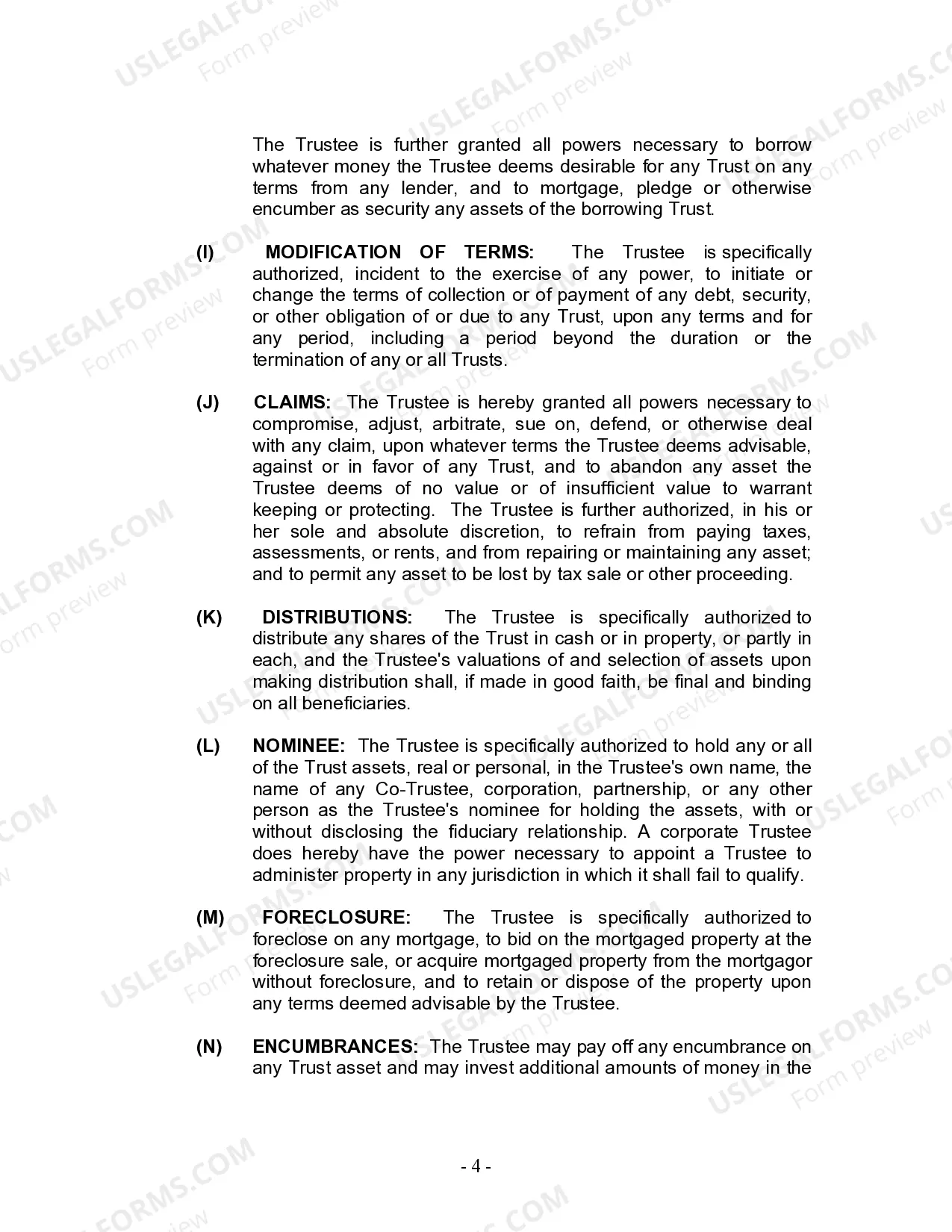
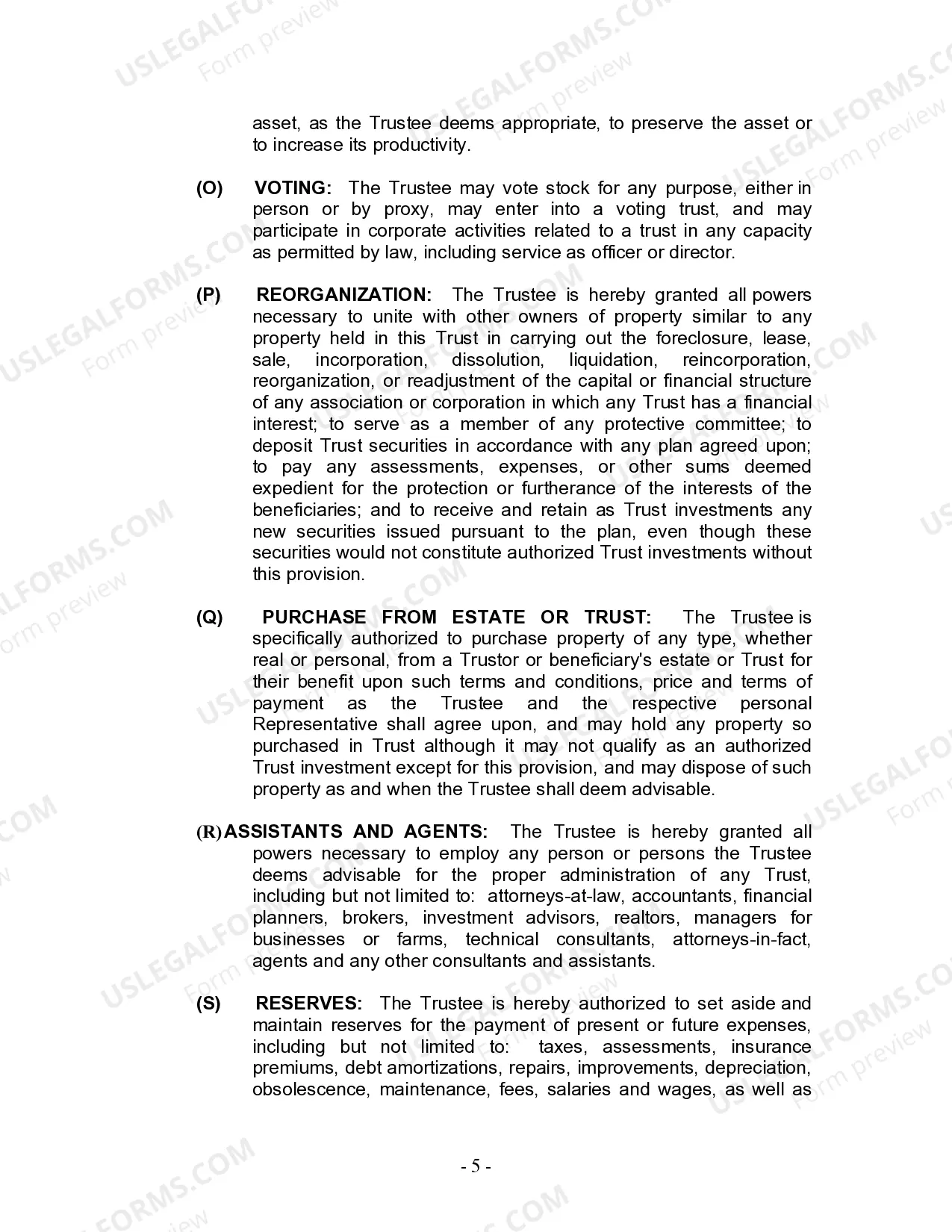
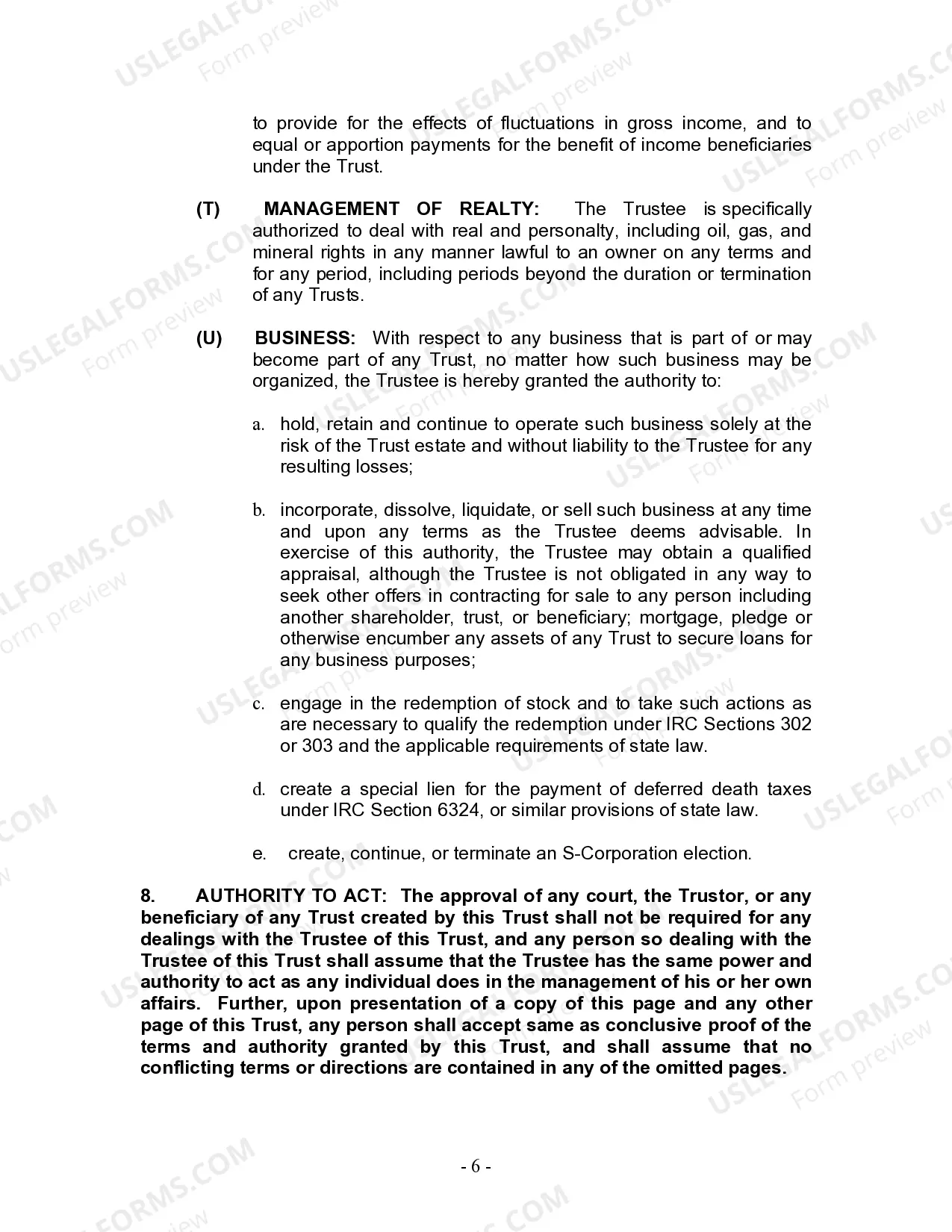
- Trustee Powers: Outlines the powers granted to the Trustee to manage and distribute trust assets.
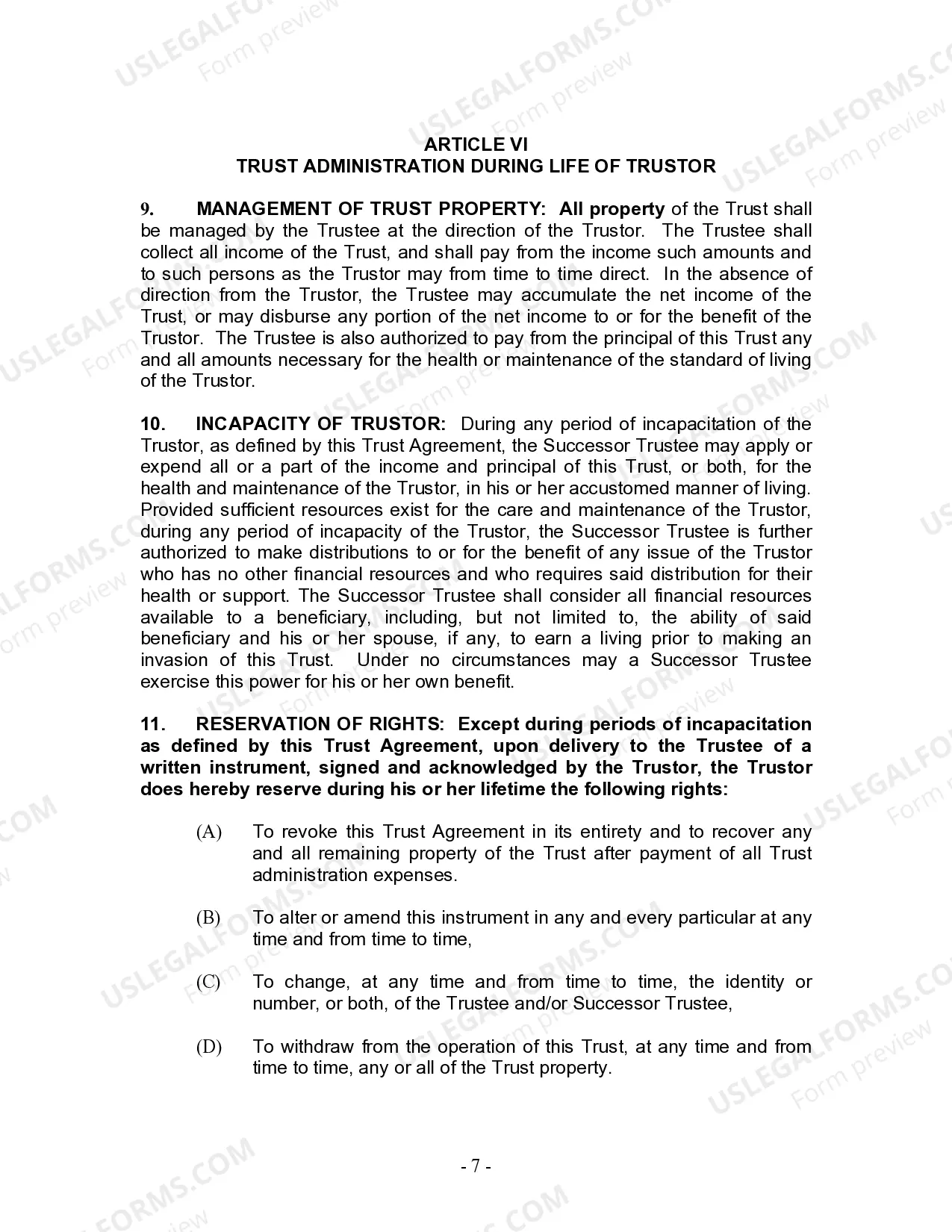
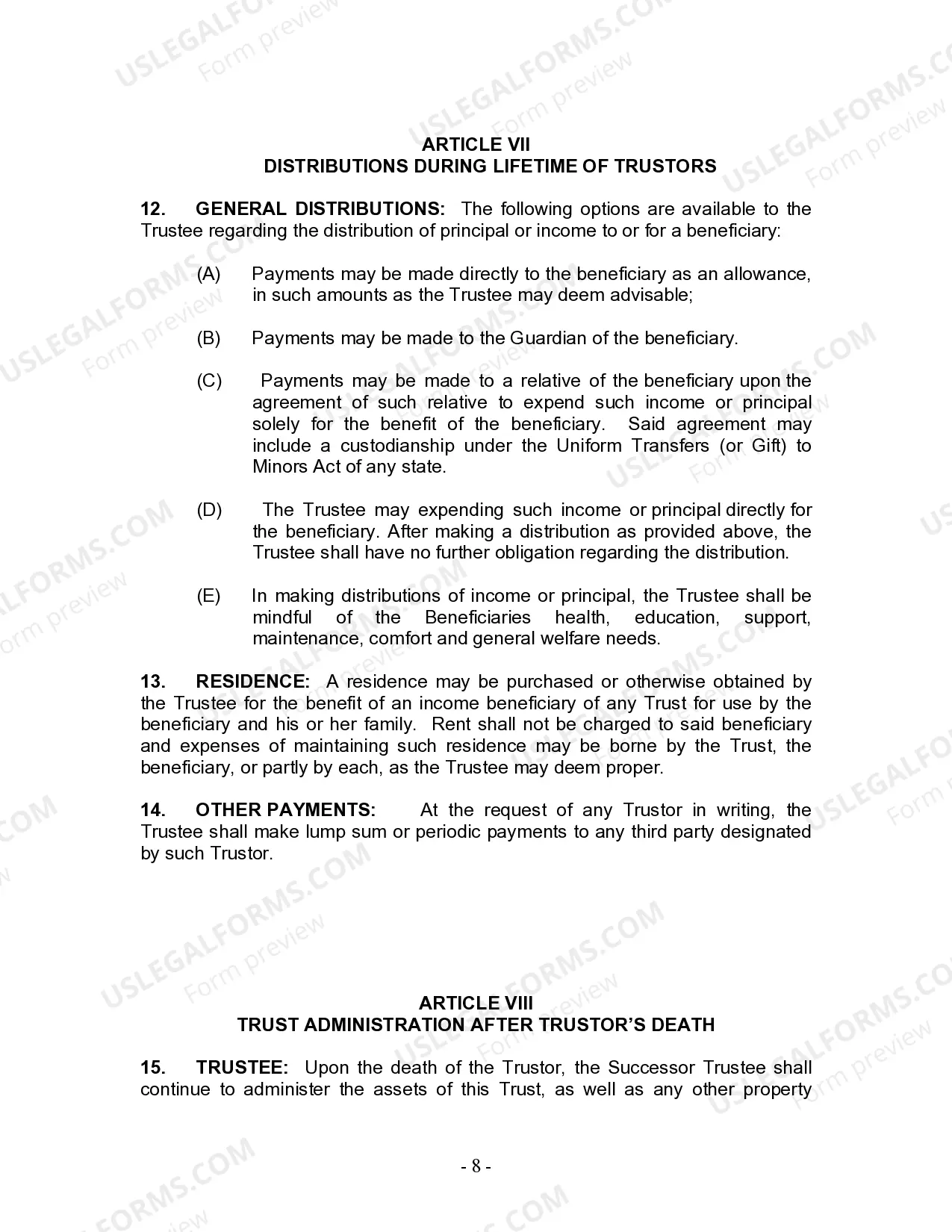
- Distributions: Specifies how and when assets are to be distributed upon the Trustor's death.






When to use this document
This form is ideal for individuals who are single, divorced, or widowed without any children. It is useful for estate planning and ensuring that your assets are managed according to your wishes after your passing. It is also a good option for those who seek to ease the transfer of their estate to named beneficiaries while avoiding the complexities and delays of probate court.
Who should use this form
- Individuals who are single, divorced, or widowed.
- Persons without children who wish to establish a trust for the distribution of their assets.
- Anyone looking to maintain control over their assets while minimizing the probate process.
How to complete this form
- Identify the parties: Fill in the names and addresses of the Trustor and Trustee.
- Specify the trust name: Provide the chosen name for the trust.
- Detail the assets: List all assets that will be transferred into the trust.
- Designate beneficiaries: Identify who will receive the assets upon the death of the Trustor.
- Sign and date: Ensure all parties sign and date the document to make it legally binding.
Does this document require notarization?
Notarization is required for this form to take effect. Our online notarization service, powered by Notarize, lets you verify and sign documents remotely through an encrypted video session, available 24/7.
Get your form ready online
Our built-in tools help you complete, sign, share, and store your documents in one place.
Make edits, fill in missing information, and update formatting in US Legal Forms—just like you would in MS Word.
Download a copy, print it, send it by email, or mail it via USPS—whatever works best for your next step.
Sign and collect signatures with our SignNow integration. Send to multiple recipients, set reminders, and more. Go Premium to unlock E-Sign.
If this form requires notarization, complete it online through a secure video call—no need to meet a notary in person or wait for an appointment.
We protect your documents and personal data by following strict security and privacy standards.

Make edits, fill in missing information, and update formatting in US Legal Forms—just like you would in MS Word.

Download a copy, print it, send it by email, or mail it via USPS—whatever works best for your next step.

Sign and collect signatures with our SignNow integration. Send to multiple recipients, set reminders, and more. Go Premium to unlock E-Sign.

If this form requires notarization, complete it online through a secure video call—no need to meet a notary in person or wait for an appointment.

We protect your documents and personal data by following strict security and privacy standards.
Common mistakes
- Not clearly identifying all assets to be included in the trust.
- Failing to update the trust as circumstances change (e.g., marriage, divorce).
- Not designating a clear successor Trustee.
- Neglecting to sign and date the document appropriately.
Advantages of online completion
- Convenience: Download and complete the form at your own pace.
- Editability: Easily make changes to the document as needed.
- Reliability: Ensure your living trust is drafted according to legal standards by licensed attorneys.
Main things to remember
- The living trust allows you to manage your assets during your lifetime and dictate their distribution after your death.
- It simplifies the transfer process, helping you avoid probate.
- It is specifically designed for individuals who are single, divorced, or widowed without children.
Looking for another form?
Form popularity
FAQ
A widow's trust is a specific type of trust that provides financial support and security for a widow or widower after the death of a spouse. In the context of a Massachusetts Living Trust for Individual Who is Single, Divorced or Widow (or Widower) with No Children, this trust ensures that the surviving spouse maintains control over assets while also specifying how the assets will be distributed after their passing. It helps in managing assets seamlessly during a time of emotional transition.
Trusts in Massachusetts are governed by the Massachusetts Uniform Trust Code, codified at G.L.c. 203E.The trustee's certificate is recorded either immediately upon the trust's acquisition of real property, or when the trustee acts upon the title 1.
Revocable Trusts. Irrevocable Trust. Asset Protection Trust. Charitable Trust. Constructive Trust. Special Needs Trust. Spendthrift Trust. Tax By-Pass Trust.
Unlike a Will, which has to be filed with the court at the start of the probate process, a Revocable Living Trust generally does not have to be filed or recorded anywhere. Unless there's a lawsuit concerning your trust, it won't become a matter of public record.
Just for your information, a trust is not a public record, so it's impossible to retrieve a trust document from a public office, agency or anyone who is not a beneficiary and doesn't have the rights to know about the details your trust.
A revocable living trust is especially important if you are remarried and wish to leave money or property to children from a prior marriage. In Massachusetts, even if you have a will leaving everything to your children, your spouse can elect to receive a sizable portion of your estate.
Decide between a single or joint trust. A single is obviously a good match for those that are unmarried. Review your property. Pick a trustee. Get your trust documents together. Sign your living trust. Fund your trust with your assets and property.
A trust is not required to be registered with any State or local agency and should be held by the parties involved, mainly, the Trustee. Although not legally required, having the document notarized could help prove authenticity should it be challenged.
The five main types of trusts are living, testamentary, revocable, irrevocable, and funded or unfunded.
Since the Schedule of Beneficiaries to a trust is not recorded with the Declaration of Trust at the Registry of Deeds, the identity of the Beneficiaries is not a matter of public record.There are two types of Trusts in Massachusetts.