North Dakota Statutory Health Care Directive
Overview of this form
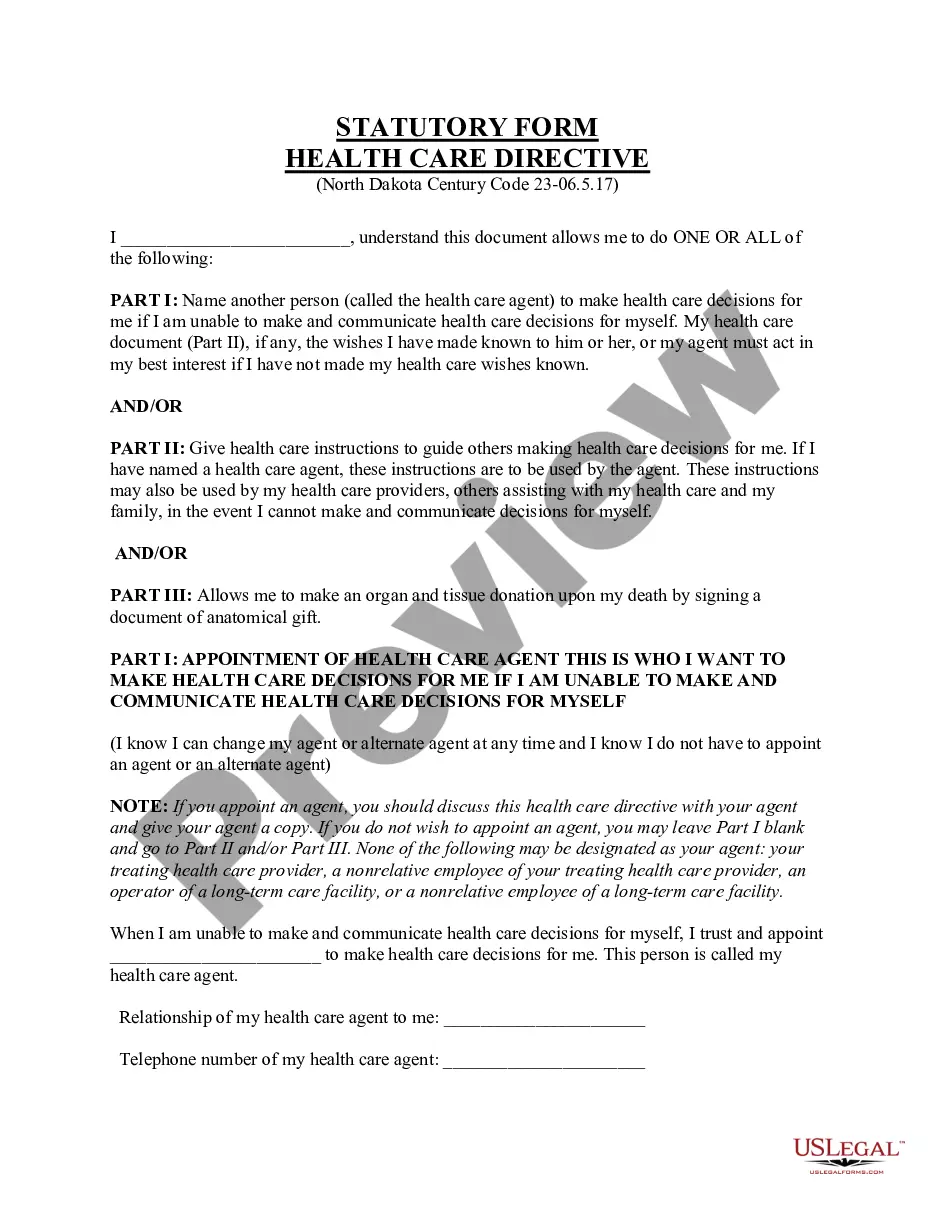
The Statutory Health Care Directive is a legal document provided under North Dakota law that empowers you to appoint a healthcare agent to make medical decisions on your behalf if you become unable to do so. Unlike other advance directives, this form encompasses decisions about both physical and mental health treatments, ensuring your healthcare preferences are honored even when you cannot communicate them.
Main sections of this form
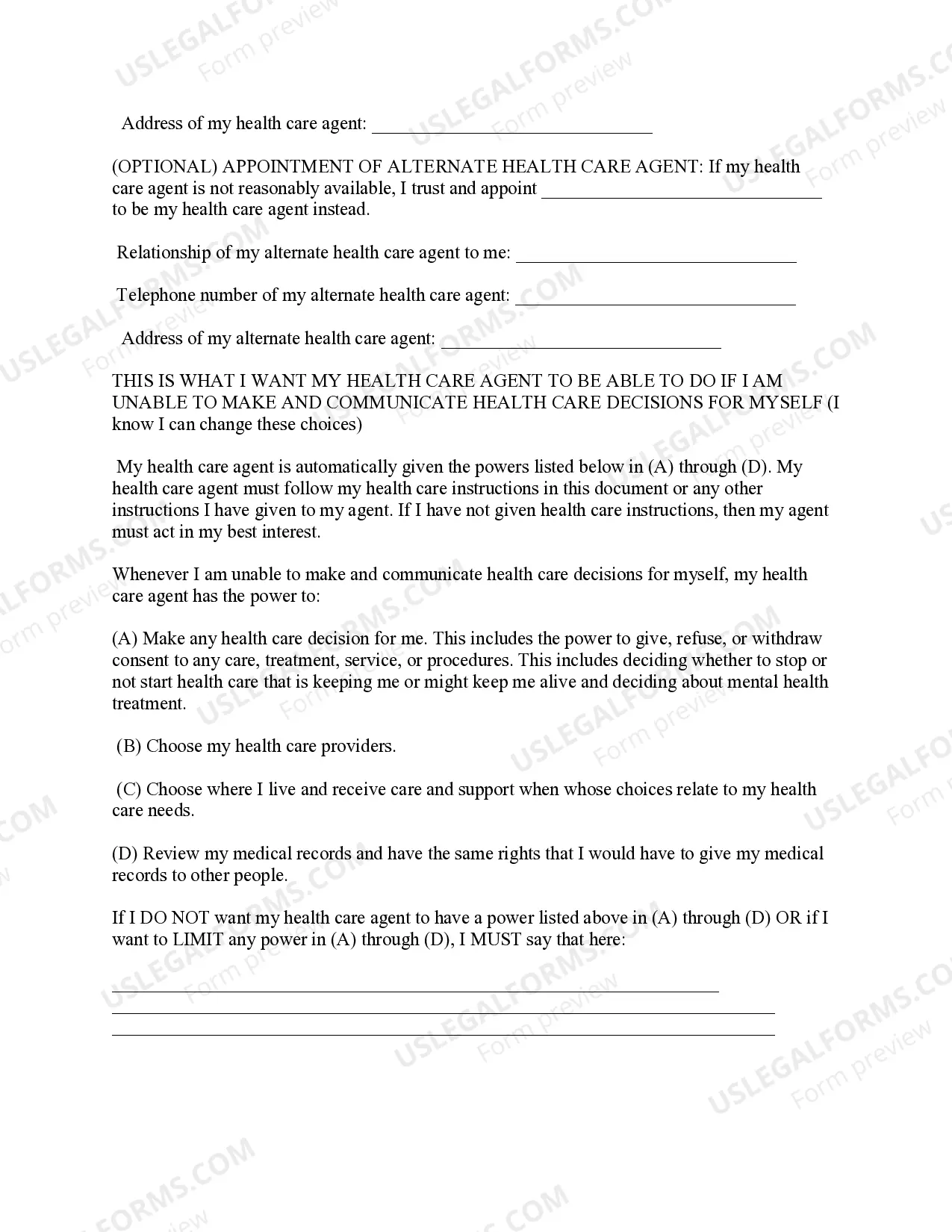
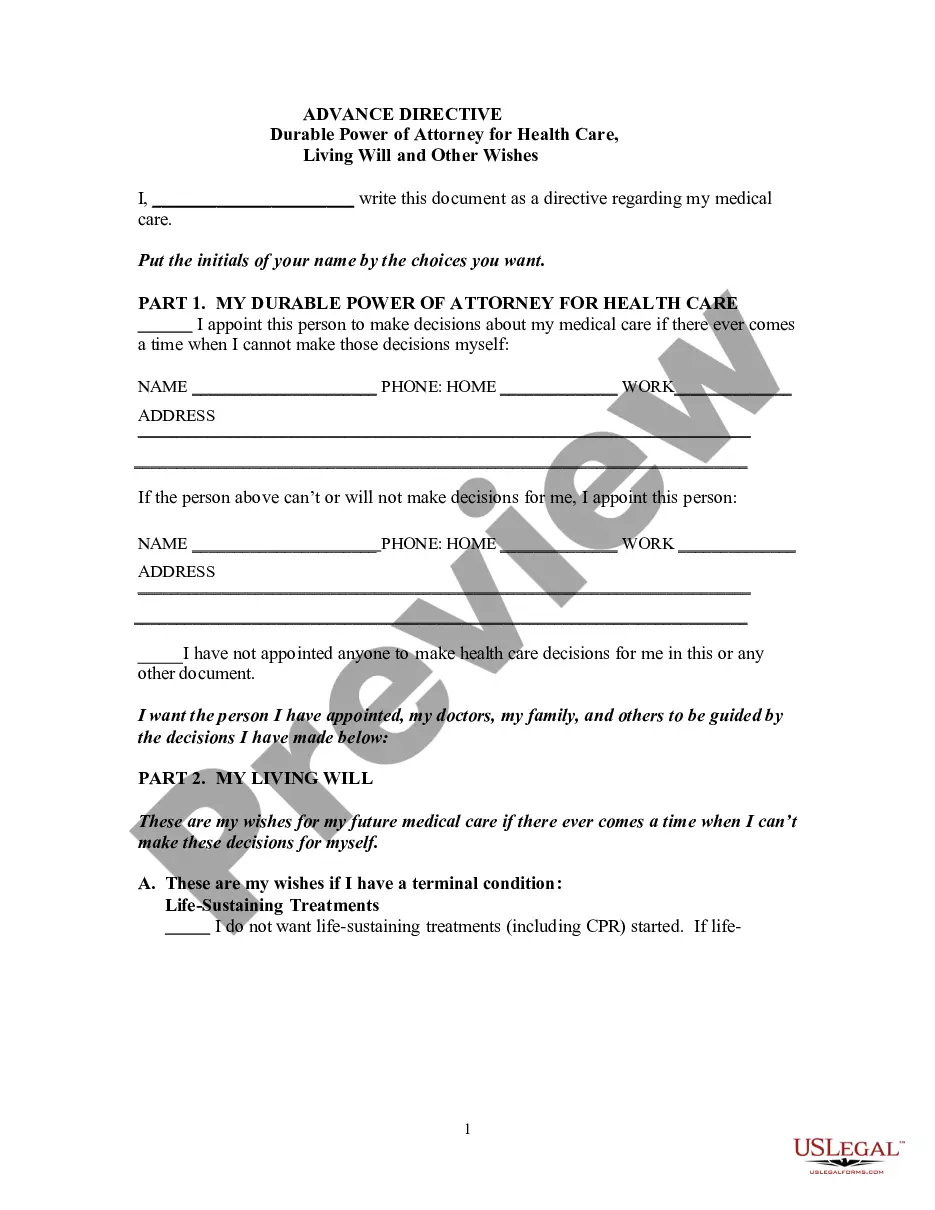
- Part I: Appointment of a health care agent to make decisions when you are incapacitated.
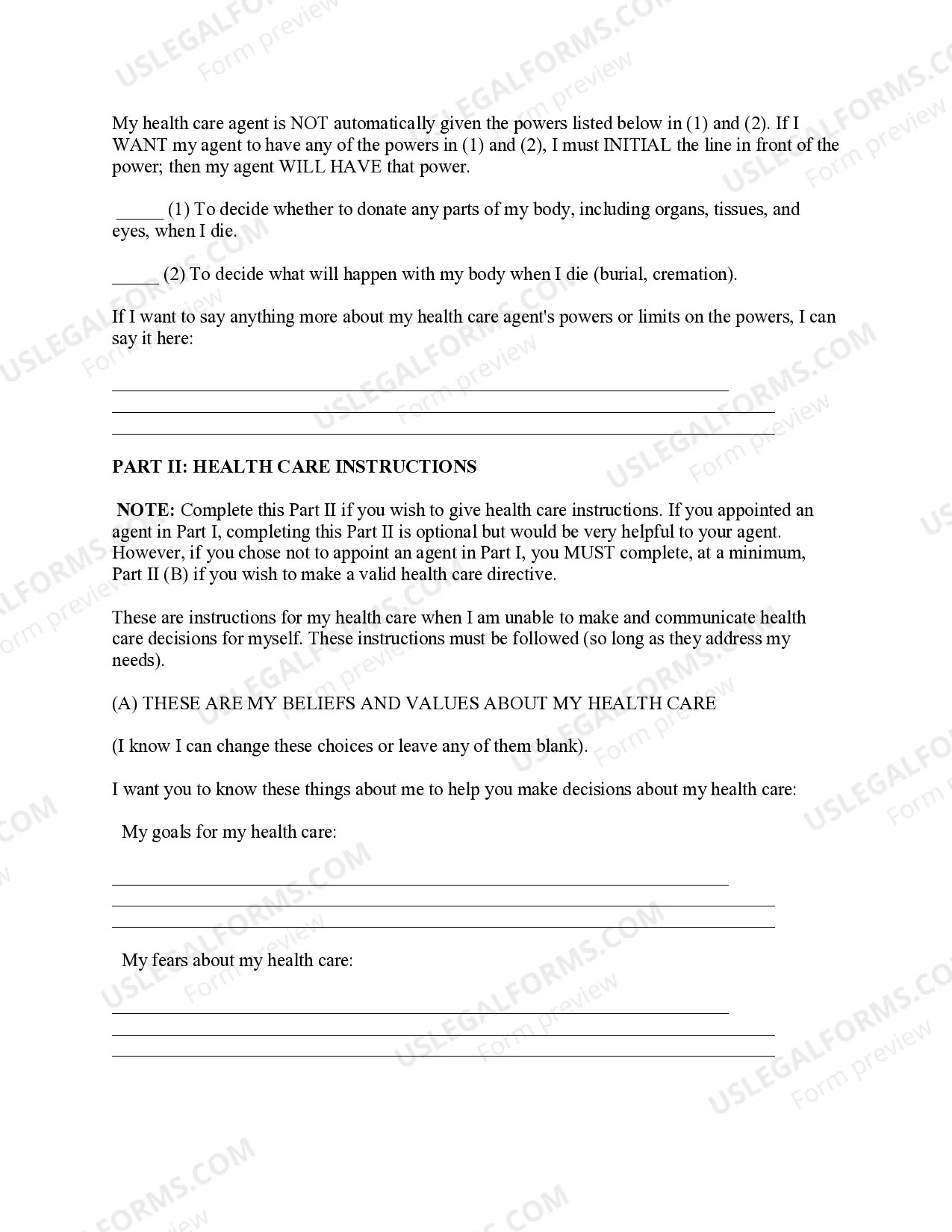
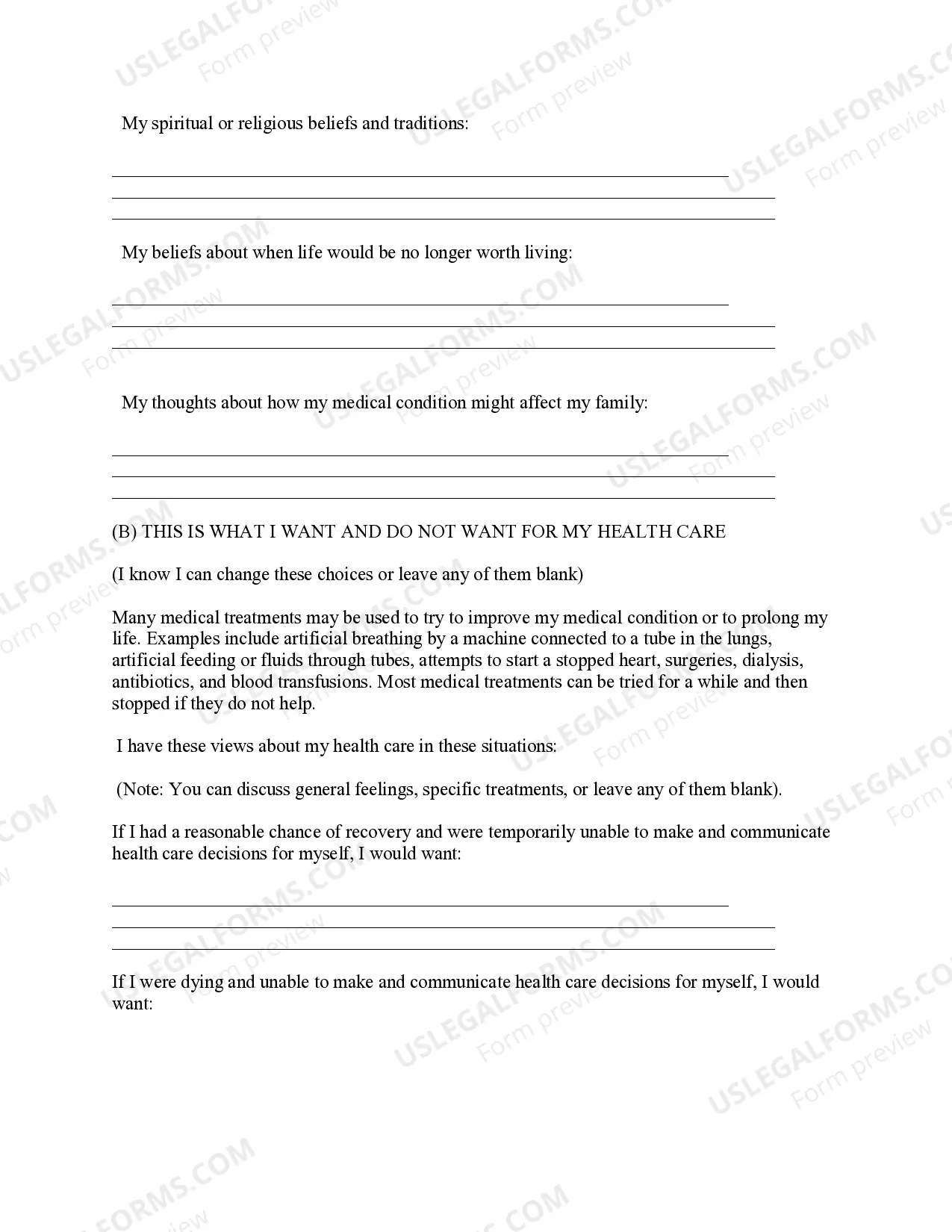
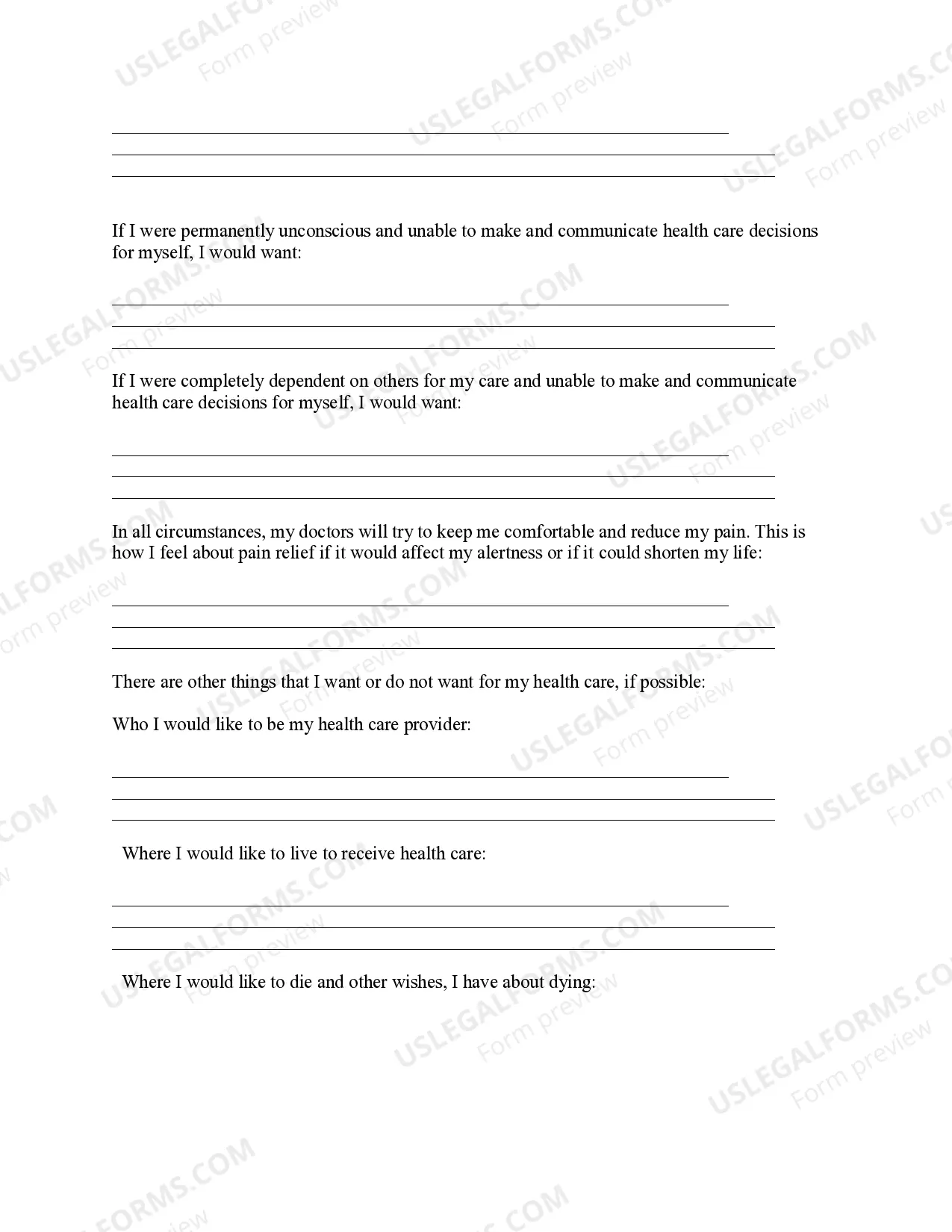
- Part II: Health care instructions detailing your wishes regarding medical care.
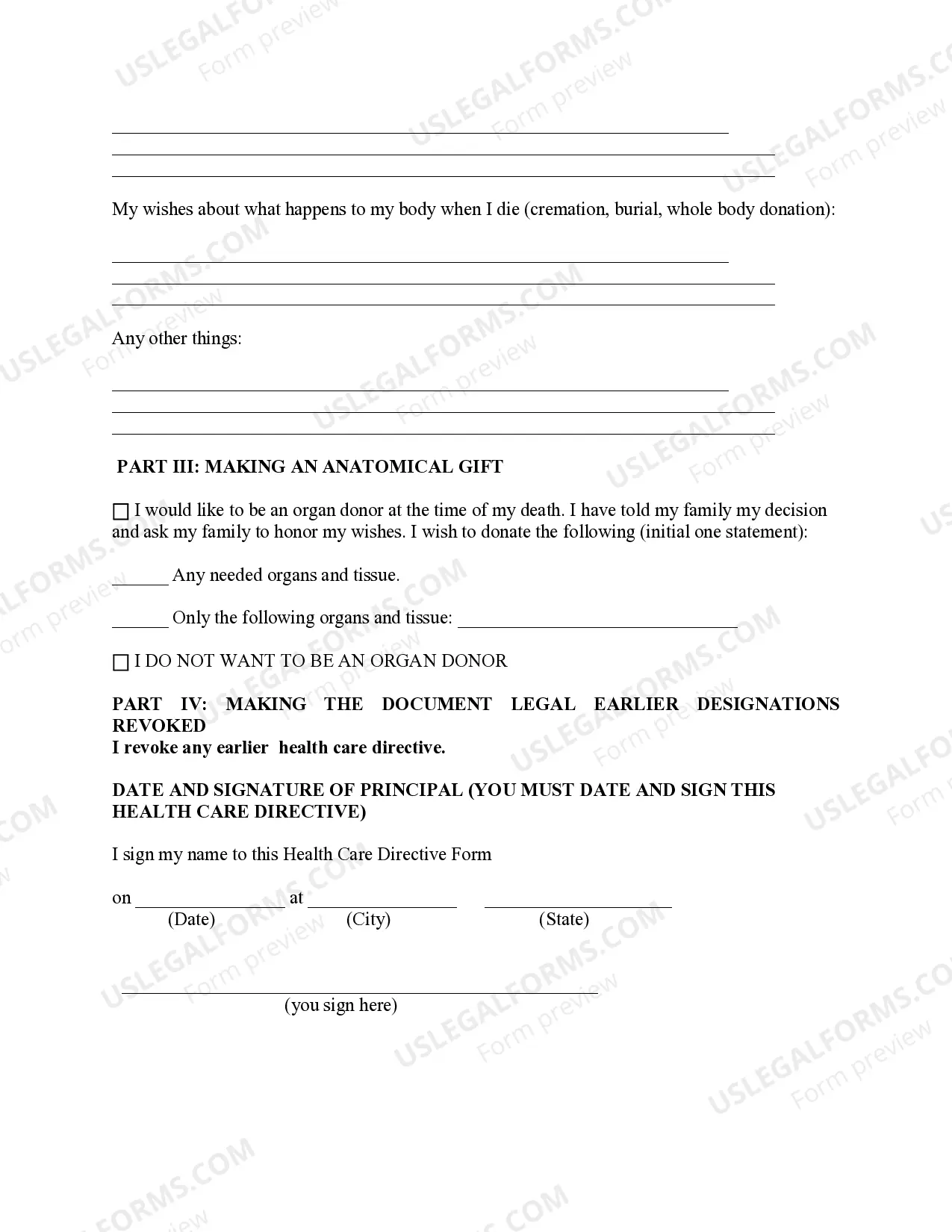
- Part III: Options for organ and tissue donation upon your death.
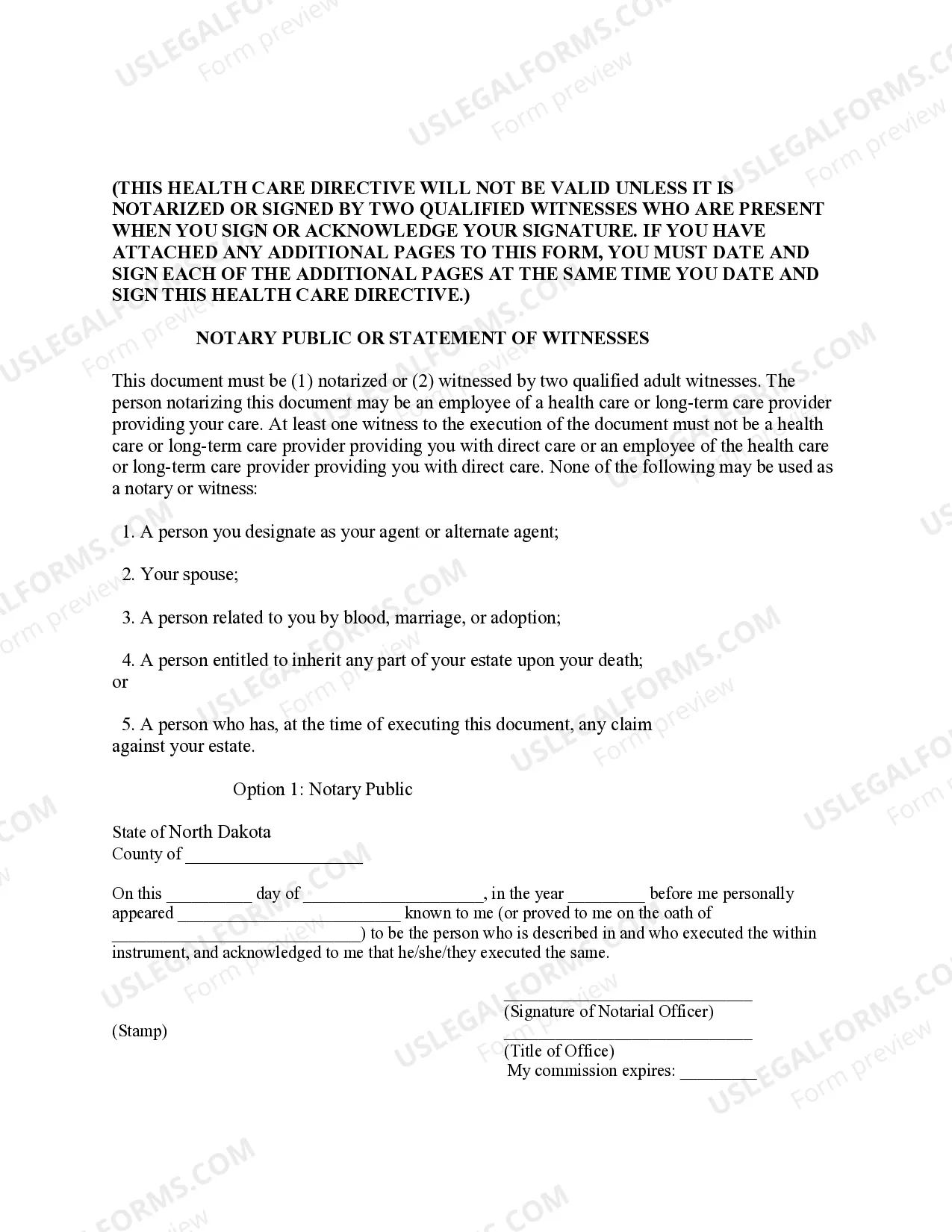
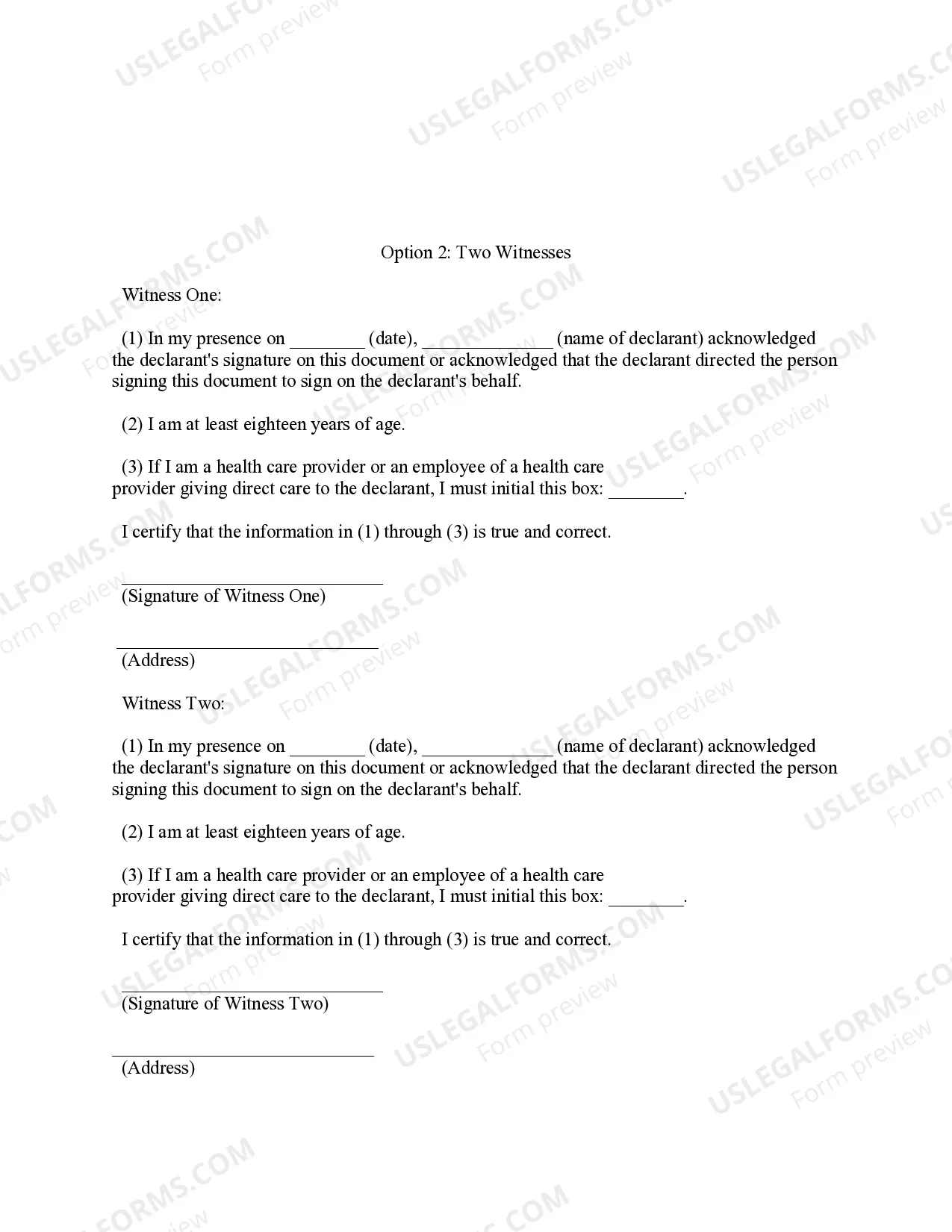
- Part IV: Legal validation information through notarization or witness signatures.

When to use this form
This form is essential when you want to ensure your healthcare choices are made according to your wishes in situations where you may be unable to communicate, such as serious illness, surgery, or incapacitation due to an accident. Having this form completed can provide peace of mind for you and your family during critical health scenarios.
Who can use this document
- Adults who want to designate someone to make healthcare decisions on their behalf.
- Individuals with specific medical treatment preferences that they want documented.
- People who wish to indicate their organ donation preferences.
Instructions for completing this form
- Identify and appoint a health care agent in Part I, providing their contact details.
- Outline your health care preferences and values in Part II to guide your agent.
- Complete the organ donation section in Part III if you wish to make anatomical gifts.
- Sign and date the document in Part IV, ensuring it is either notarized or witnessed.
Notarization requirements for this form
To make this form legally binding, it must be notarized. Our online notarization service, powered by Notarize, lets you verify and sign documents remotely through an encrypted video session.
Get your form ready online
Our built-in tools help you complete, sign, share, and store your documents in one place.
Make edits, fill in missing information, and update formatting in US Legal Forms—just like you would in MS Word.
Download a copy, print it, send it by email, or mail it via USPS—whatever works best for your next step.
Sign and collect signatures with our SignNow integration. Send to multiple recipients, set reminders, and more. Go Premium to unlock E-Sign.
If this form requires notarization, complete it online through a secure video call—no need to meet a notary in person or wait for an appointment.
We protect your documents and personal data by following strict security and privacy standards.

Make edits, fill in missing information, and update formatting in US Legal Forms—just like you would in MS Word.

Download a copy, print it, send it by email, or mail it via USPS—whatever works best for your next step.

Sign and collect signatures with our SignNow integration. Send to multiple recipients, set reminders, and more. Go Premium to unlock E-Sign.

If this form requires notarization, complete it online through a secure video call—no need to meet a notary in person or wait for an appointment.

We protect your documents and personal data by following strict security and privacy standards.
Common mistakes
- Failing to discuss your wishes with your appointed agent.
- Not providing specific health care instructions in Part II.
- Overlooking the notarization or witness requirement, rendering the document invalid.
Benefits of using this form online
- Convenience of downloading and completing the form at your pace.
- Editability to customize your preferences as circumstances change.
- Reliable templates drafted by licensed attorneys ensure legal compliance.
What to keep in mind
- The Statutory Health Care Directive is vital for ensuring your medical decisions align with your wishes.
- Appointing a health care agent allows your preferences to be honored during crucial health situations.
- Ensure proper notarization or witnessing of the document to make it valid.
Looking for another form?




Form popularity
FAQ
An advance directive, alone, may not be sufficient to stop all forms of life-saving treatment. You may also need specific do not resuscitate, or DNR orders.You retain the right to override the decisions or your representative, change the terms of your living will or POA, or completely revoke an advance directive.
The name and contact information of your healthcare agent/proxy. Answers to specific questions about your preferences for care if you become unable to speak for yourself. Names and signatures of individuals who witness your signing your advance directive, if required.
Advance Directives They must be portable; they can be available wherever you are in the world. They must be available in a timely manner. They must be in a safe place, protected from theft, fire, flood or other natural disasters.
The living will. Durable power of attorney for health care/Medical power of attorney. POLST (Physician Orders for Life-Sustaining Treatment) Do not resuscitate (DNR) orders. Organ and tissue donation.
Advance directives generally fall into three categories: living will, power of attorney, and health care proxy.
As long as you can still make your own decisions, your advance directive won't be used. You can change or cancel it at any time. Your health care agent will only make choices for you if you can't or don't want to decide for yourself.
An advance directive is a set of instructions someone prepares in advance of ill health that determines his healthcare wishes. A living will is one type of advance directive that becomes effective when a person is terminally ill.
Advance directives are oral and written instructions about future medical care should your parent become unable to make decisions (for example, unconscious or too ill to communicate).A living will is one type of advance directive. It takes effect when the patient is terminally ill.
Your health care agent and any alternative agents. Your doctor. Your hospital chart. A safe spot in your home. Carry it with you.