Massachusetts Standby Temporary Guardian Legal Documents Package
What is this form package?
The Massachusetts Standby Temporary Guardian Legal Documents Package provides essential legal forms and resources for appointing a standby guardian. This package is designed to help parents prepare for unexpected situations where they may be unable to care for their child. It addresses the specific provisions of standby guardianship laws in Massachusetts, making it distinct from similar packages that may not cover state-specific requirements. With this package, you can ensure that a trusted individual is prepared to step in for your child when needed.
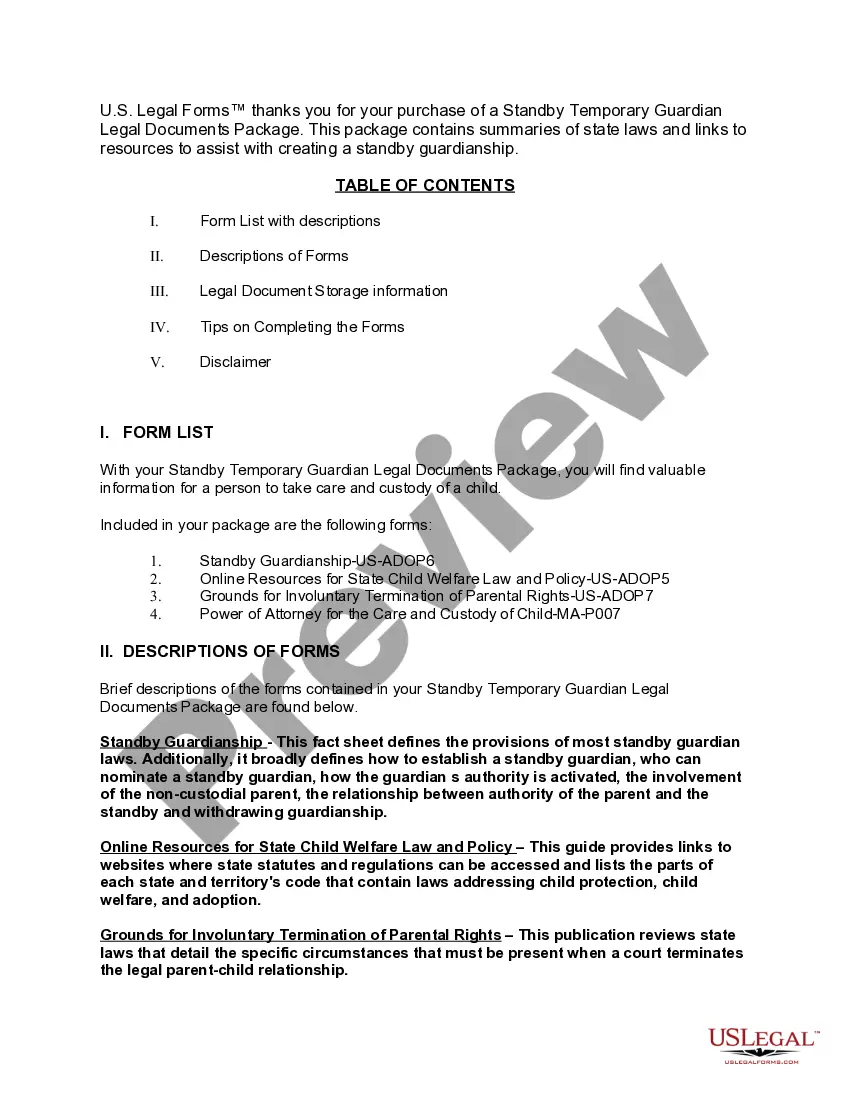
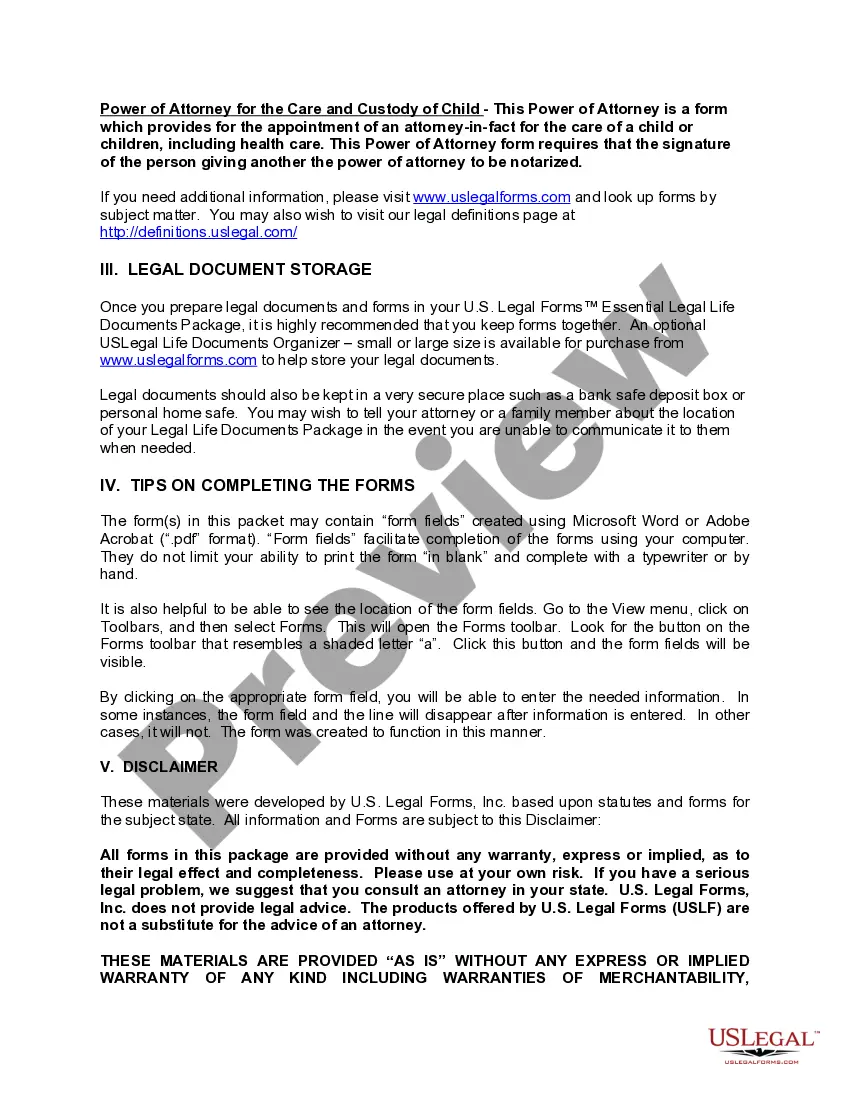
Forms included in this package

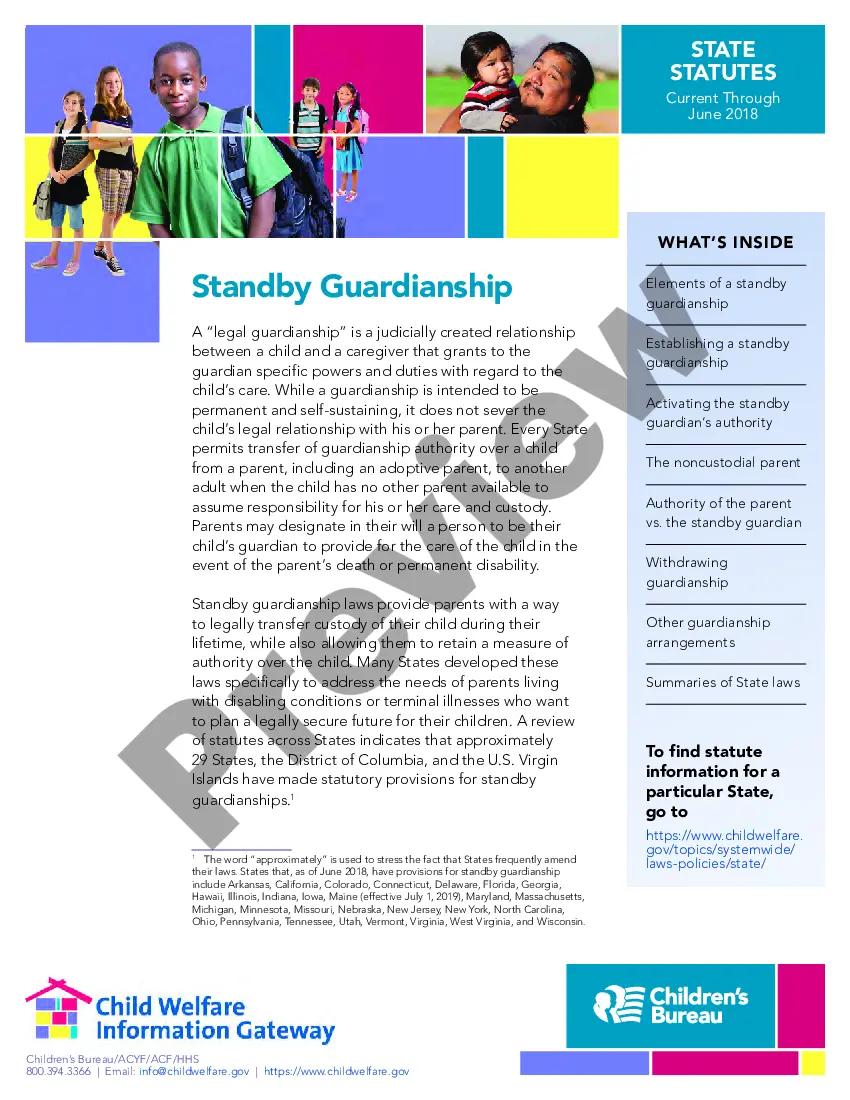
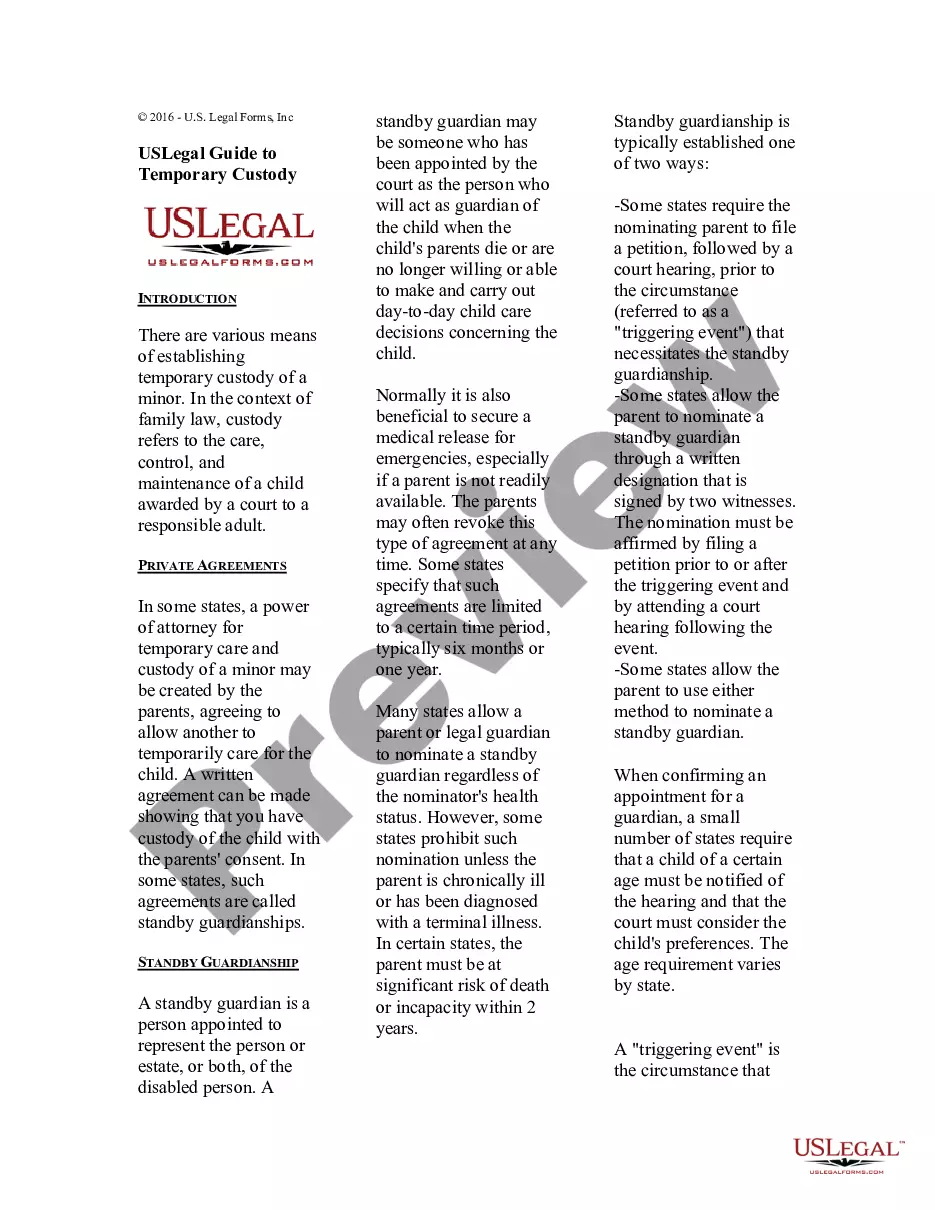

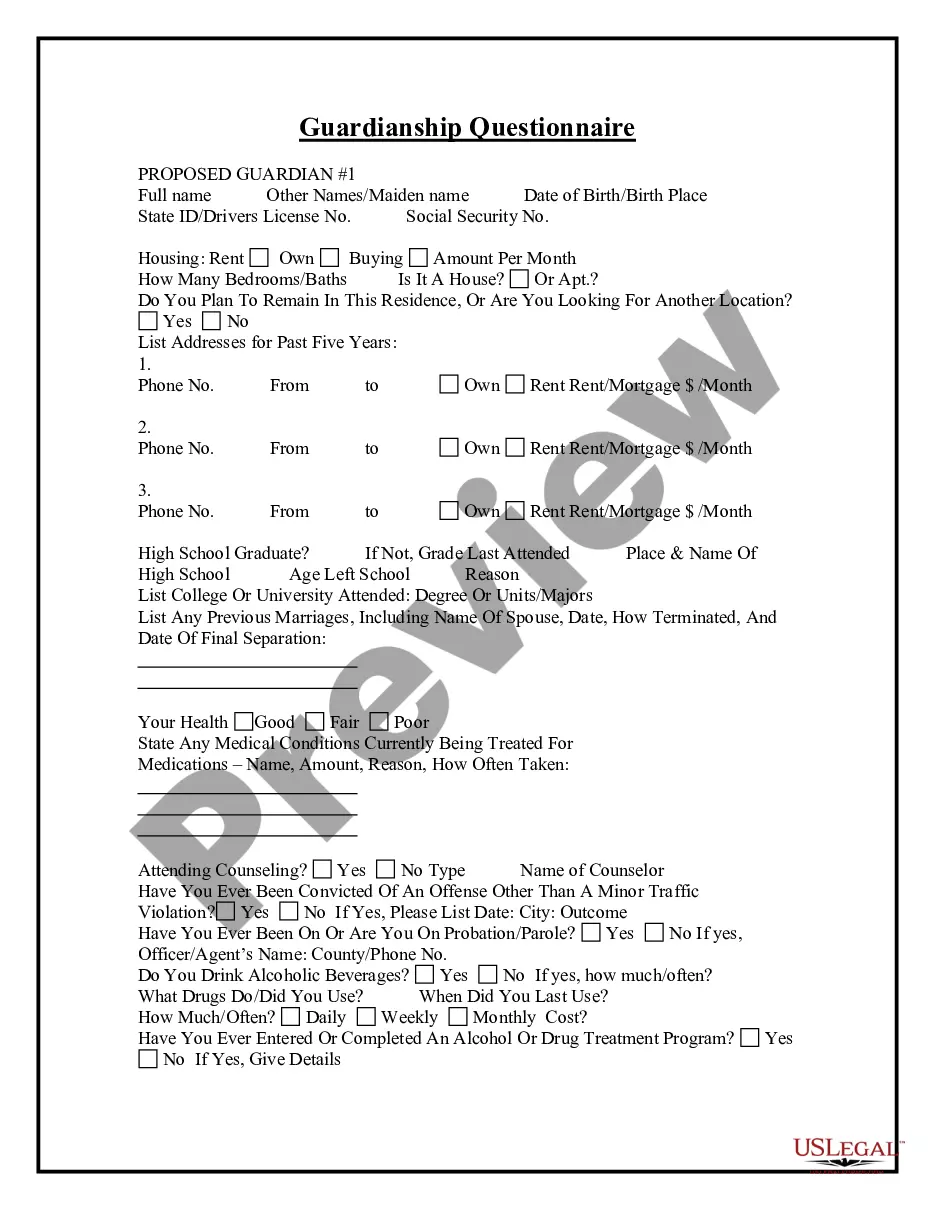
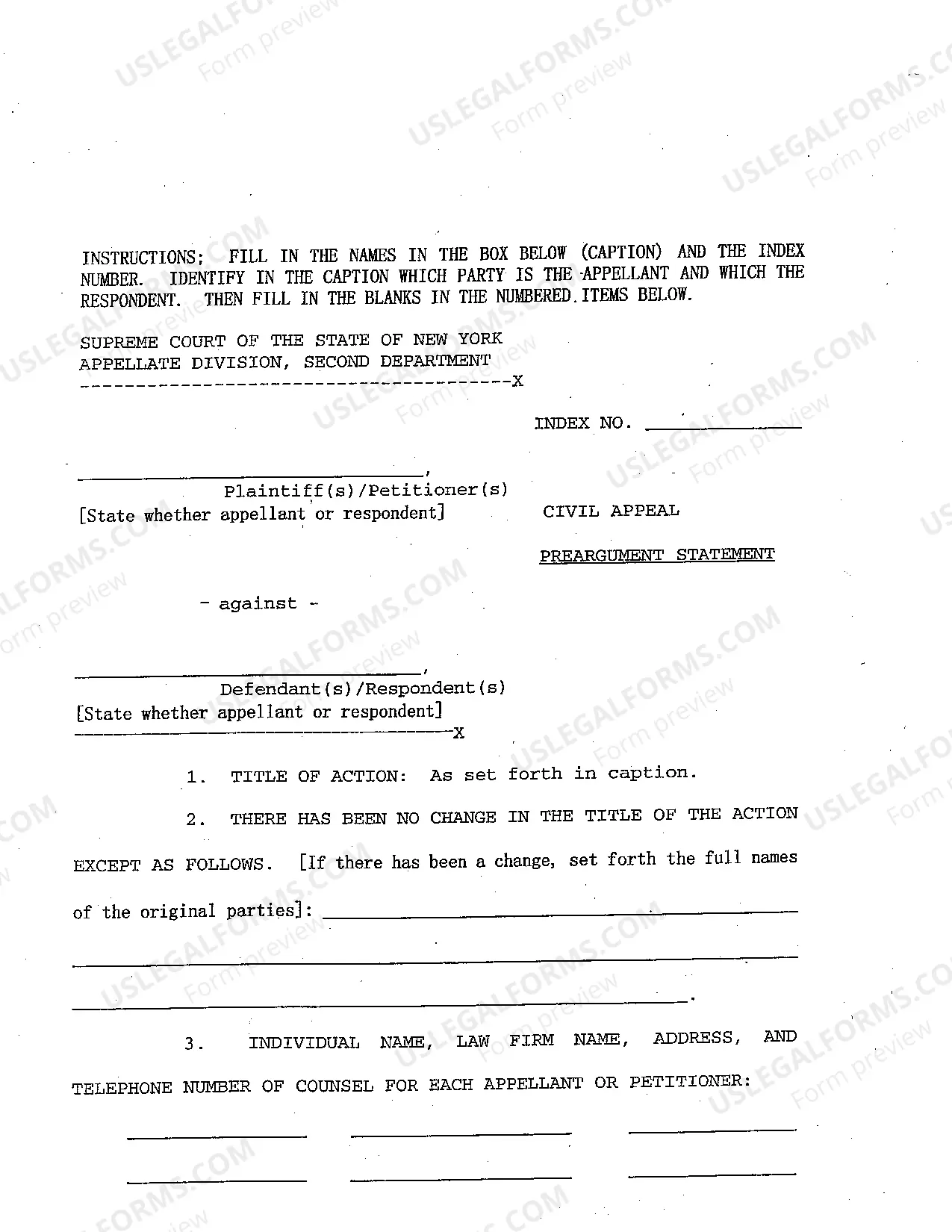
Common use cases
This form package is useful in several scenarios, including:
- When parents anticipate being temporarily unable to care for their children due to illness, travel, or other emergencies.
- When a guardian needs to be designated in case of a parent's death or incapacity.
- When formalizing the appointment of a standby guardian to make important decisions for the child's welfare.
Intended users of this form package
- Parents looking to establish a standby guardian for their minor child.
- Legal guardians or relatives of a child needing legal authority to act in emergencies.
- Attorneys assisting clients with child custody or guardianship matters.
How to prepare this document
- Review all included forms to understand your rights and responsibilities.
- Identify and designate the individual you wish to appoint as standby guardian.
- Complete the necessary forms with the required information, ensuring clarity and accuracy.
- Have the Power of Attorney form signed and notarized where applicable.
- Keep copies of the completed documents for your records and provide copies to the designated guardian.
Do forms in this package need to be notarized?
Yes, forms in this package must be notarized to be legally valid. The Power of Attorney for the Care and Custody of Child specifically requires notarization. US Legal Forms provides integrated online notarization services, offering 24/7 availability through secure video calls, ensuring a hassle-free experience without the need to travel.
Get your form ready online
Our built-in tools help you complete, sign, share, and store your documents in one place.
Make edits, fill in missing information, and update formatting in US Legal Forms—just like you would in MS Word.
Download a copy, print it, send it by email, or mail it via USPS—whatever works best for your next step.
Sign and collect signatures with our SignNow integration. Send to multiple recipients, set reminders, and more. Go Premium to unlock E-Sign.
If this form requires notarization, complete it online through a secure video call—no need to meet a notary in person or wait for an appointment.
We protect your documents and personal data by following strict security and privacy standards.

Make edits, fill in missing information, and update formatting in US Legal Forms—just like you would in MS Word.

Download a copy, print it, send it by email, or mail it via USPS—whatever works best for your next step.

Sign and collect signatures with our SignNow integration. Send to multiple recipients, set reminders, and more. Go Premium to unlock E-Sign.

If this form requires notarization, complete it online through a secure video call—no need to meet a notary in person or wait for an appointment.

We protect your documents and personal data by following strict security and privacy standards.
Common mistakes to avoid
- Failing to notarize the Power of Attorney form, which may void its effectiveness.
- Leaving sections of the forms incomplete or unsigned, leading to potential legal issues.
- Not keeping the designated standby guardian informed of their appointment or responsibilities.
Advantages of online completion
- Convenience: Easily access and download forms from anywhere at any time.
- Editability: Fill out the forms electronically or print them for manual completion.
- Reliability: Forms are created by licensed attorneys, ensuring they meet legal standards.
Main things to remember
- The form package facilitates the appointment of a standby guardian in Massachusetts.
- Proper notarization is essential for the Power of Attorney form.
- Completing the forms accurately ensures legal protection for your child's welfare.
Looking for another form?
Form popularity
FAQ
The names of the forms are usually: Petition for Appointment of Guardian (or Petition for Appointment of Guardian of Minor) Petition for Conservatorship (when dealing with an incompetent adult) Order Appointing Guardian.
A Guardian usually signs legal documents on behalf of the Ward, chooses an appropriate living situation for the Ward, and grants, withholds, and withdraws consent to medical treatment. In most situations, it is necessary to disclose the Guardian/Ward relationship.
The main difference between custody and guardianship is the child's parents - custody is provided to the child's biological parents while guardianship is given to a non-biological parent.
The legal guardianship document is a formal declaration to the court system that another party is responsible for the well-being of the minors. No one can predict when an accident or other disaster may occur. Some include a legal guardianship document in their wills to determine who will raise their children.
You can establish guardianship of a child by filing papers in court. Initially, file a petition stating your interest in obtaining guardianship along with a filing fee. You'll also want to file a letter of consent from the child's parents.
Begin your letter by introducing yourself and explaining your relationship to the parent and how long you've known her. Then, spend two or three paragraphs explaining why you think she should be awarded custody. Use your final paragraph to summarize the points you've made in the body of your letter.
Letter From Notary Oftentimes, however, these written notary letters do not specifiy the scope of the temporary guardianship, and are missing essential information that gives temporary guardians legal power over your children. They can be generally ineffective.
State The Reason For The Letter The letter should be addressed to the person who is being granted temporary custody. It should state the reason for the letter and give permission to the addressee to have guardianship over the sender's child or children in the beginning. The child's full name should be stated.