Massachusetts Agreed Written Termination of Lease by Landlord and Tenant
About this form
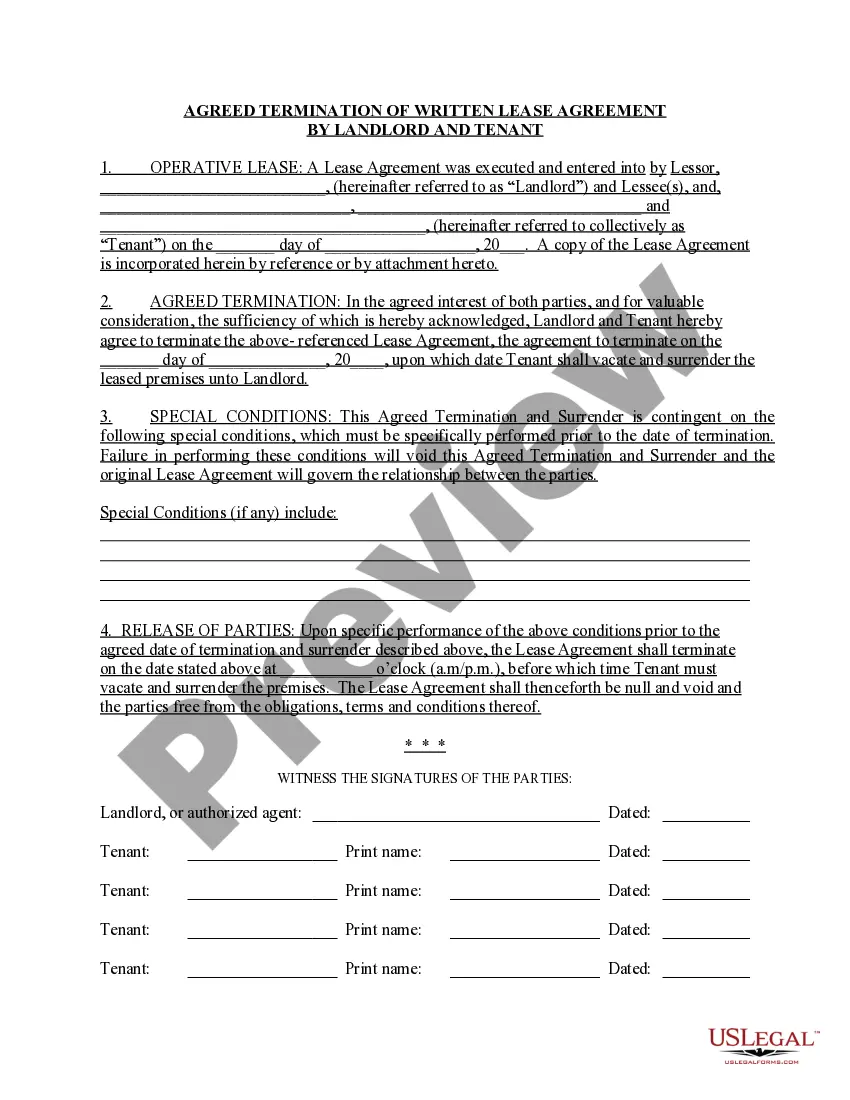
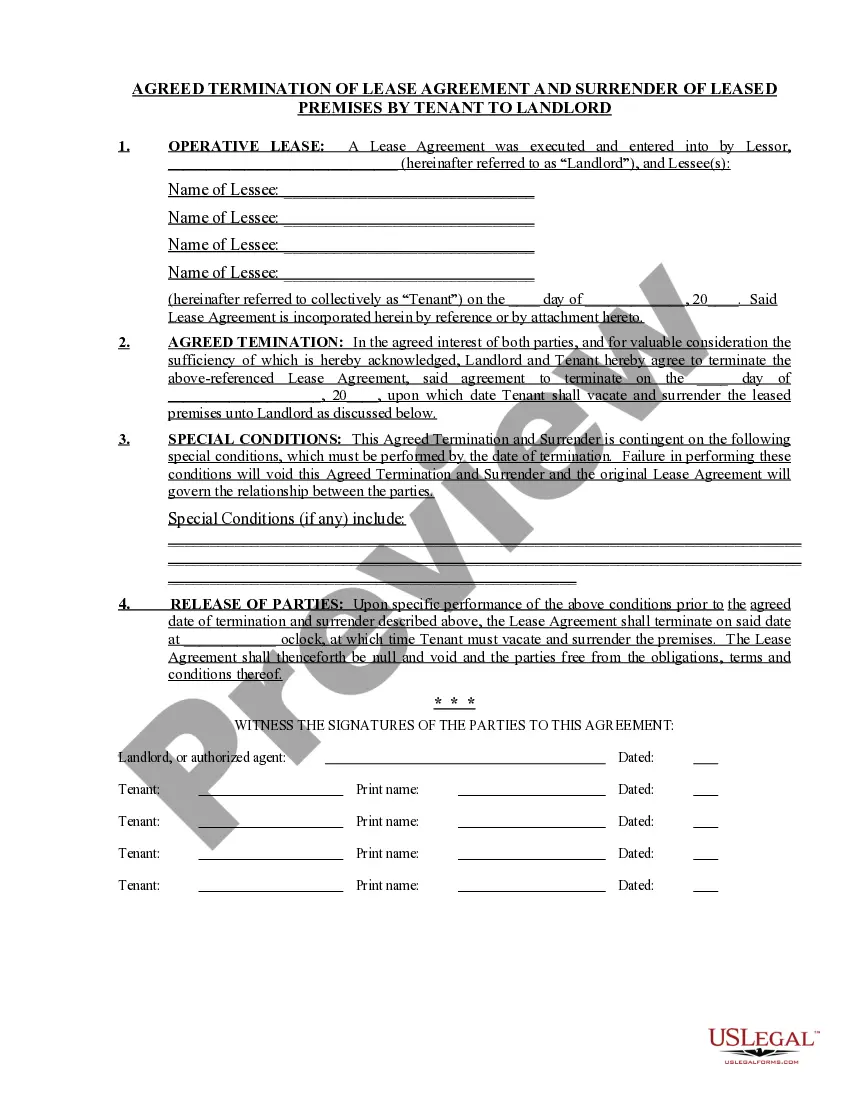
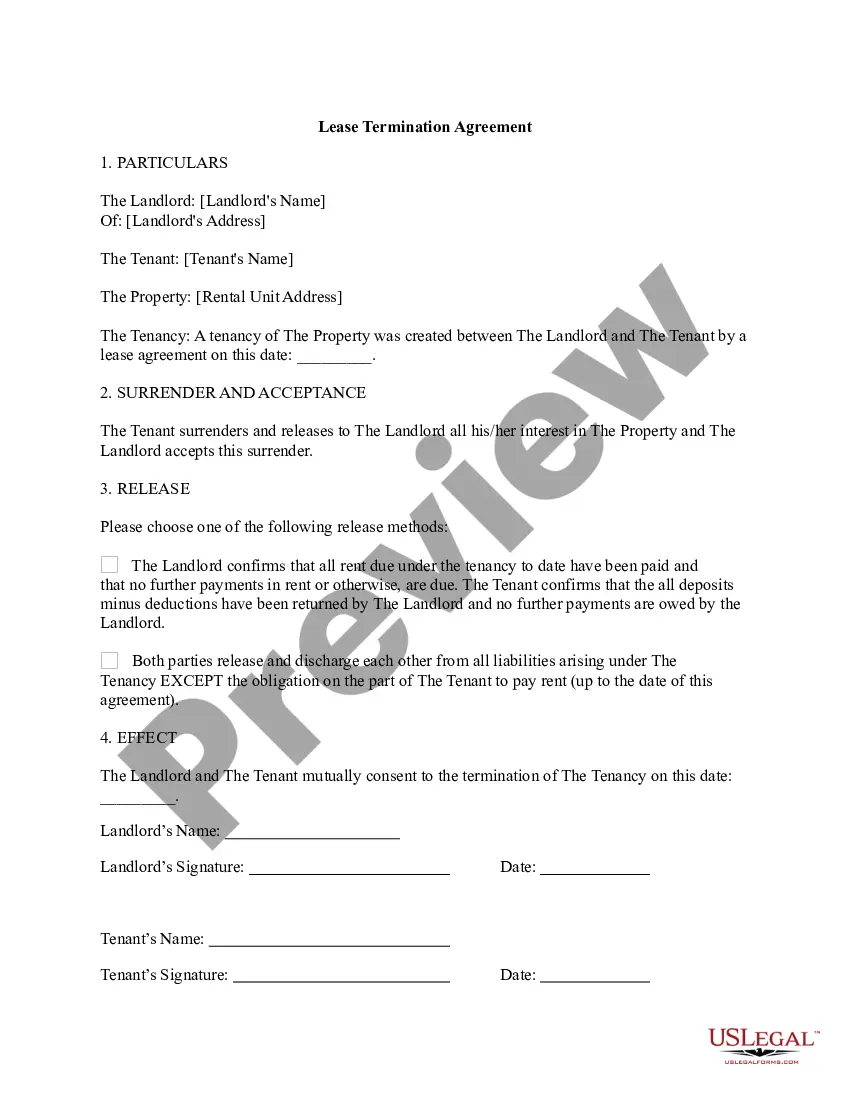
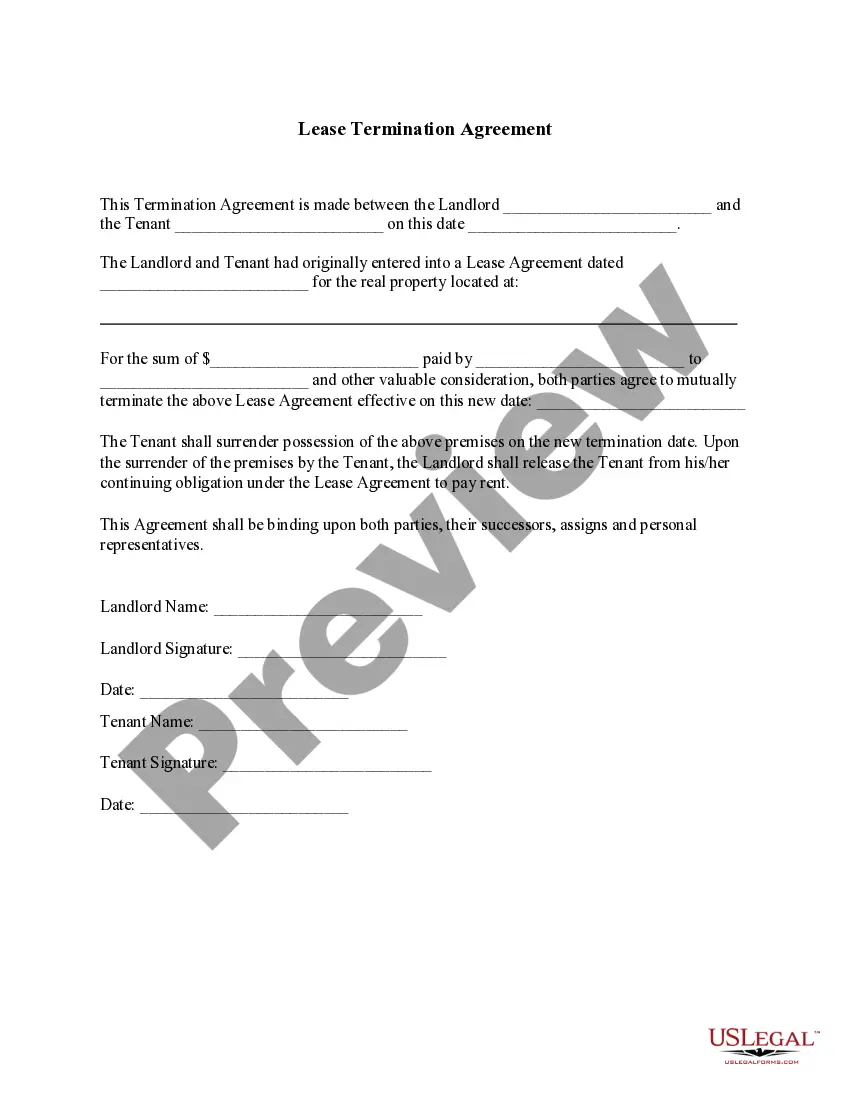
The Agreed Written Termination of Lease by Landlord and Tenant form is a legal document that enables landlords and tenants to mutually agree to terminate a lease agreement. This form helps both parties formalize the end of a tenancy while ensuring that any specific conditions are met before the lease is officially terminated. Unlike standard lease termination notices, this form outlines the agreed-upon terms between both parties, ensuring clarity and release from further obligations.
What’s included in this form
- Operative Lease: Identifies the original lease agreement details and the parties involved.
- Agreed Termination: Specifies the mutual agreement to terminate the lease and the effective termination date.
- Special Conditions: Allows for any specific terms that must be completed before termination.
- Release of Parties: Details how the parties will be relieved from future liabilities upon fulfillment of conditions.
- Signatures: Requires signatures from both the landlord and tenant to validate the agreement.

Common use cases
This form is necessary in situations where both the landlord and tenant agree to terminate a lease ahead of schedule. It can be used when tenants need to leave for personal reasons or when landlords want to regain possession of the property. It is also useful in scenarios where special conditions must be fulfilled before the lease officially ends, ensuring that both parties clarify their expectations and responsibilities.
Intended users of this form
- Landlords seeking to terminate leases with their tenants.
- Tenants wishing to vacate their rented properties before the lease expiration.
- Both parties looking for a clear and formal way to end their rental agreement.
How to complete this form
- Identify the parties involved: Fill in the names of the landlord and tenants.
- Specify the property: Provide details of the property being leased.
- Enter the original lease date: Include the date the original lease agreement was signed.
- Indicate the termination date: Clearly state the agreed-upon date for the termination of the lease.
- List any special conditions: If there are terms that must be fulfilled before termination, list them here.
- Secure signatures: Ensure all parties sign and date the form to formalize the agreement.
Notarization guidance
This form does not typically require notarization to be legally valid. However, some jurisdictions or document types may still require it. US Legal Forms provides secure online notarization powered by Notarize, available 24/7 for added convenience.
Get your form ready online
Our built-in tools help you complete, sign, share, and store your documents in one place.
Make edits, fill in missing information, and update formatting in US Legal Forms—just like you would in MS Word.
Download a copy, print it, send it by email, or mail it via USPS—whatever works best for your next step.
Sign and collect signatures with our SignNow integration. Send to multiple recipients, set reminders, and more. Go Premium to unlock E-Sign.
If this form requires notarization, complete it online through a secure video call—no need to meet a notary in person or wait for an appointment.
We protect your documents and personal data by following strict security and privacy standards.
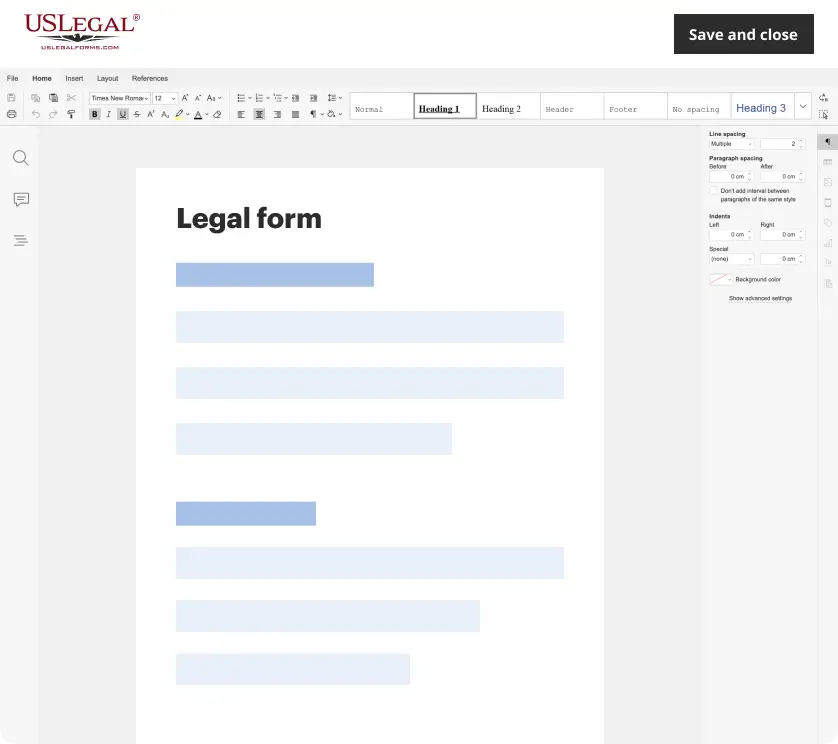
Make edits, fill in missing information, and update formatting in US Legal Forms—just like you would in MS Word.
Download a copy, print it, send it by email, or mail it via USPS—whatever works best for your next step.
Sign and collect signatures with our SignNow integration. Send to multiple recipients, set reminders, and more. Go Premium to unlock E-Sign.
If this form requires notarization, complete it online through a secure video call—no need to meet a notary in person or wait for an appointment.
We protect your documents and personal data by following strict security and privacy standards.
Avoid these common issues
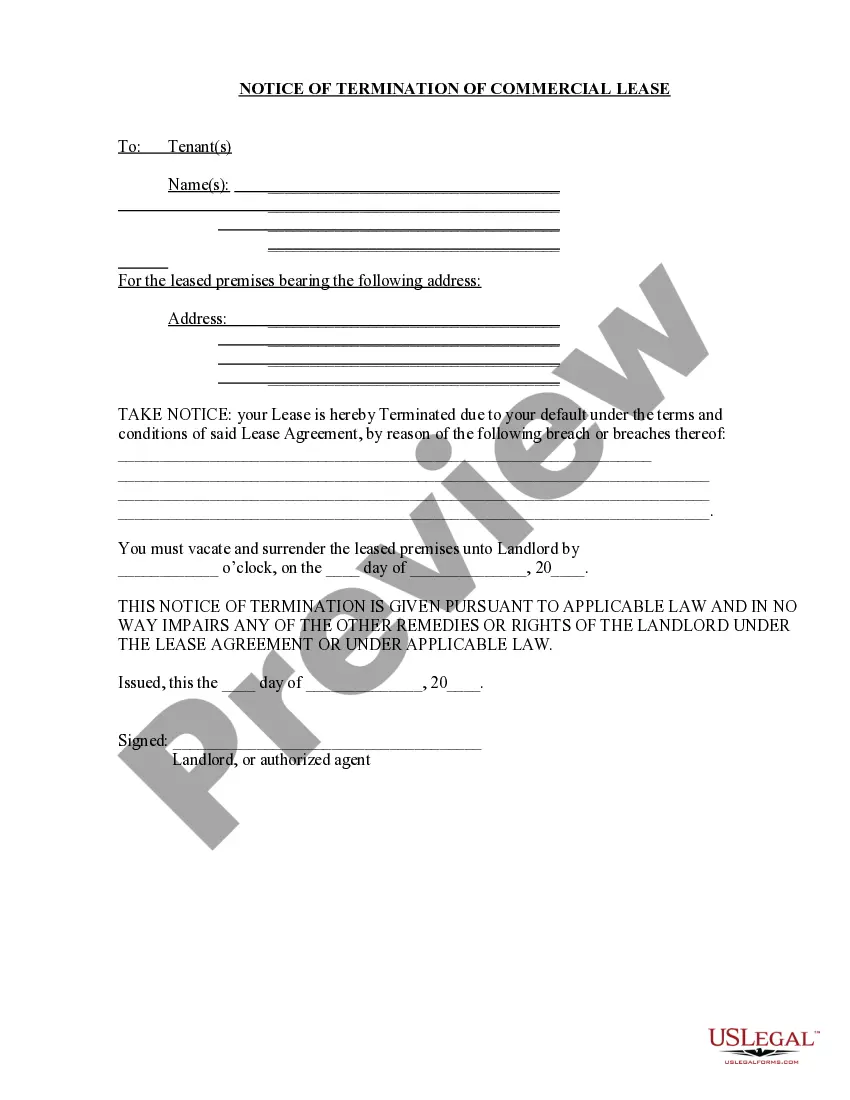
- Not entering the termination date correctly, leading to potential disputes.
- Failing to specify and agree upon special conditions before completing the form.
- Skimping on signature requirements, which can invalidate the agreement.
Benefits of using this form online
- Convenience: Easily download and fill out the form at your convenience.
- Editability: Customizable for your specific needs, including the addition of special conditions.
- Reliability: Access forms that are regularly updated and drafted by licensed attorneys.
Looking for another form?
Form popularity
FAQ
Your name, and the landlord's name and address. The date you're writing the letter. Informing the landlord you're breaking your lease early. The reason why you're breaking your lease. The building and apartment you're vacating. The date by which you're vacating.
Habitability rights You are entitled to a safe and habitable living environment throughout your entire tenancy. The State Sanitary Code protects the health, safety and well-being of tenants and the general public. Your local Board of Health in the city or town where you are renting enforces the Code.
Tenants without Leases.Until individual cities or the state changes the law, no fault evictions, where a landlord is evicting a tenant who has done nothing wrong, are lawful in Massachusetts. A landlord may also evict tenants without leases for non-payment of rent and for using the apartment for illegal purposes.
Termination For Breach Of AgreementIf the tenant breaches any of the terms and conditions stated in the tenancy agreement, then the landlord is entitled to terminating the lease early under this statute in NSW. The landlord can give the tenants a 14-day termination notice if they breach the tenancy agreement.
In Massachusetts, the landlord cannot terminate a lease, refuse to renew a lease, or raise the rent on a tenant who has: Exercised a legal right.
When no such lease termination clause exists, a tenant should send a certified letter with return receipt (obtained at your local post office) to the landlord or assigns stating the reason for wanting to break the lease and detailing an expected move-out date, along with any pertinent documentation.
The above are some of the many factors that help answer how long an eviction in Massachusetts take. Generally, an uncontested eviction will take between one to two months. A contested eviction, with requests for discovery and a jury trial, can take anywhere from three to six months.
The law requires tenants at will to give landlords written notice that they are moving out at least one full rental period or 30 days (whichever is longer) before moving.