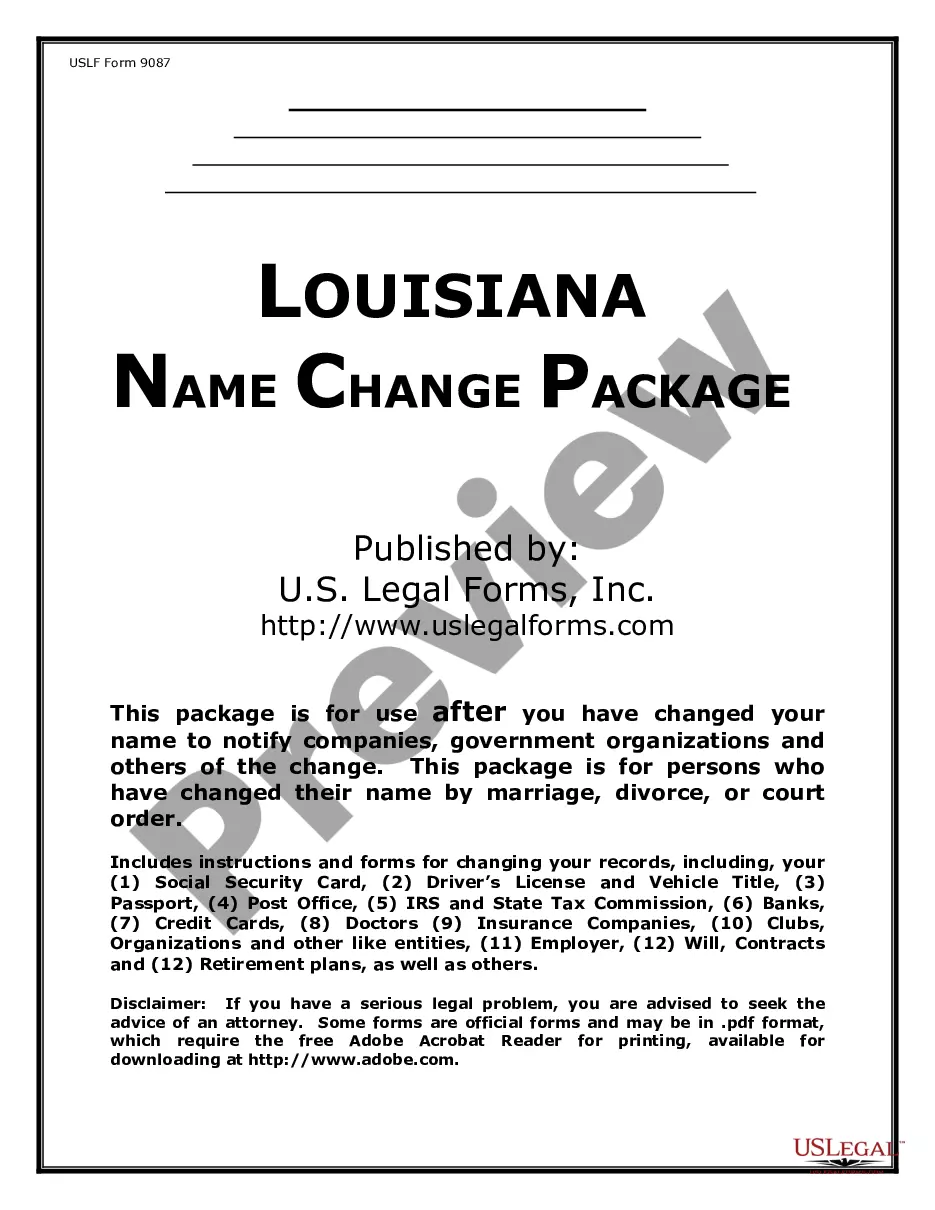
Louisiana Name Change Notification Package for Brides, Court Ordered Name Change, Divorced, Marriage
Understanding this form
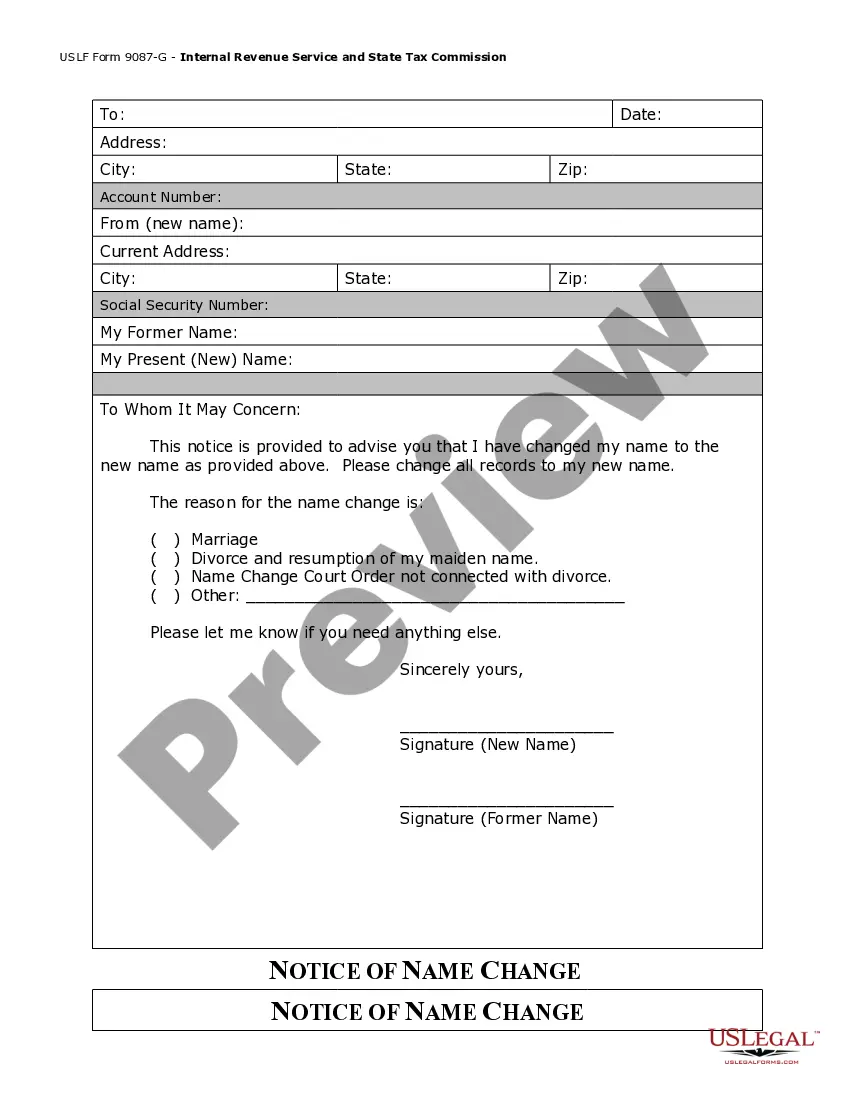
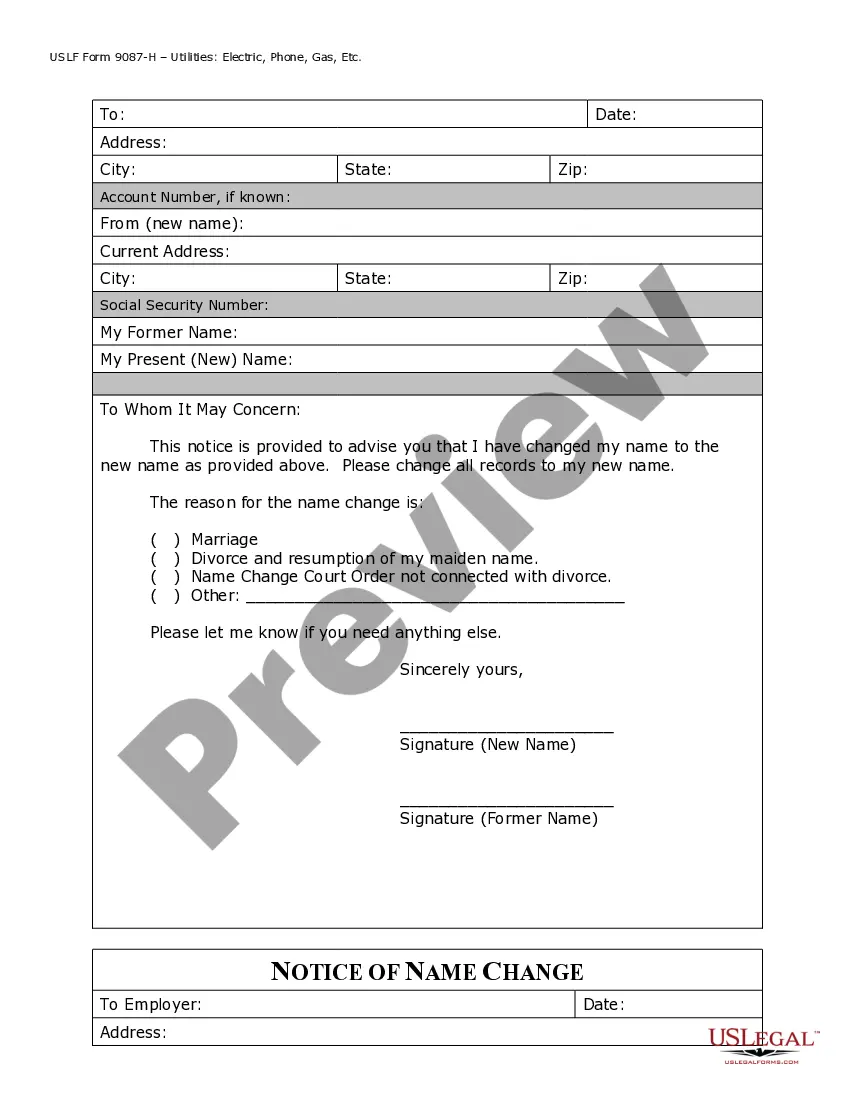
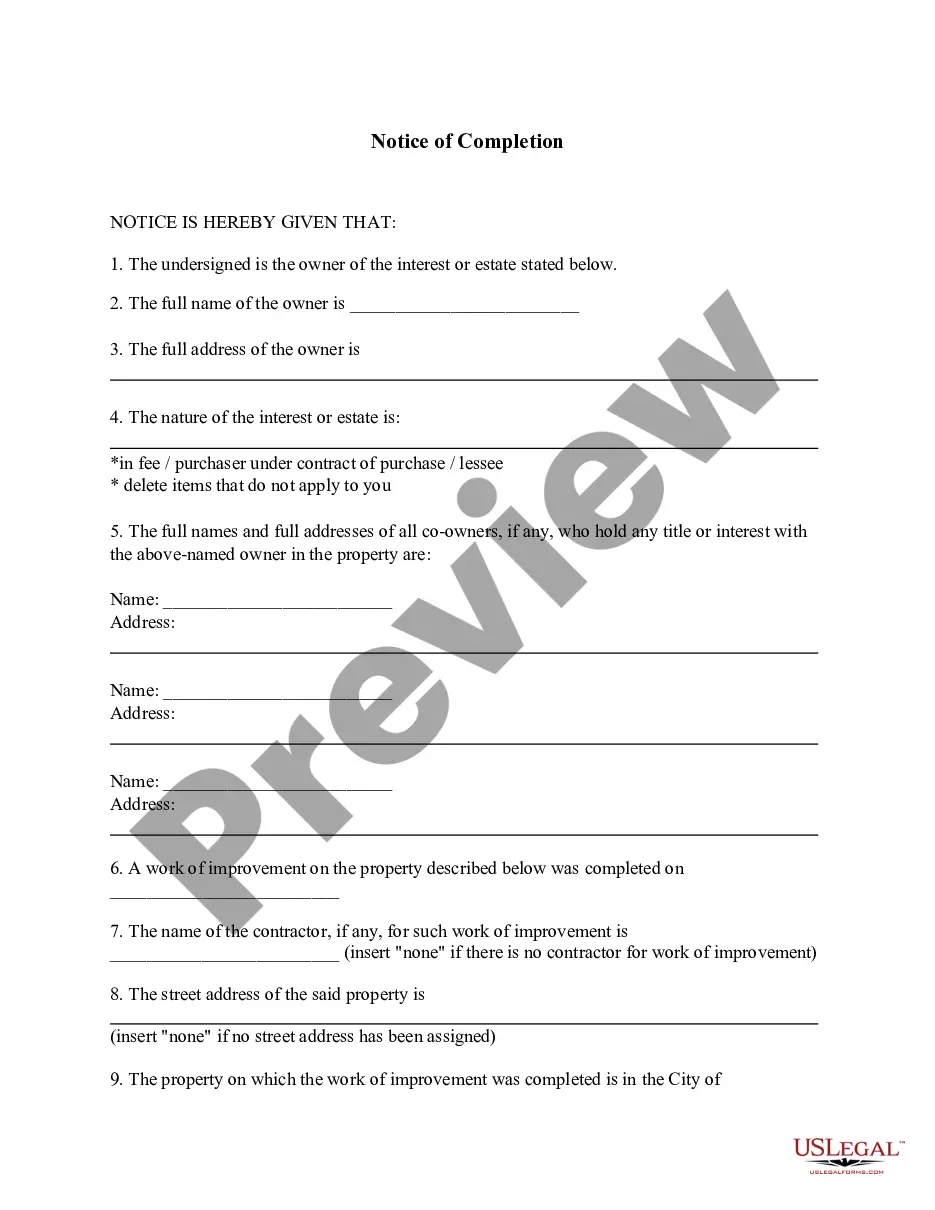
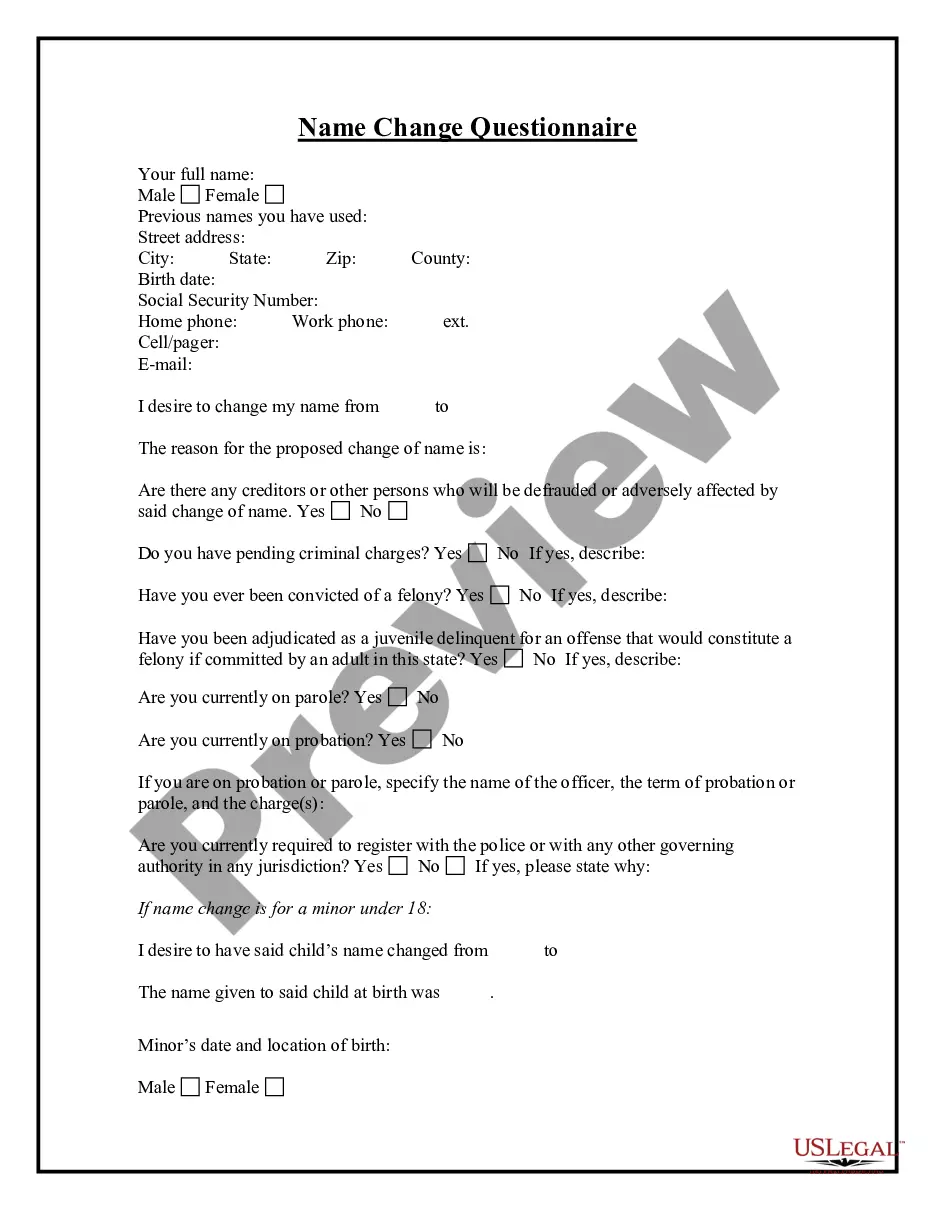
The Name Change Notification Package for Brides, Court Ordered Name Change, Divorced, and Marriage is a comprehensive legal form package designed to assist individuals in notifying various government agencies and organizations about a name change. This package is essential for anyone who has changed their name due to marriage, divorce, or a court order. It includes instructions and forms required to update records with agencies such as the Social Security Administration, Department of Motor Vehicles, and financial institutions.
Key components of this form
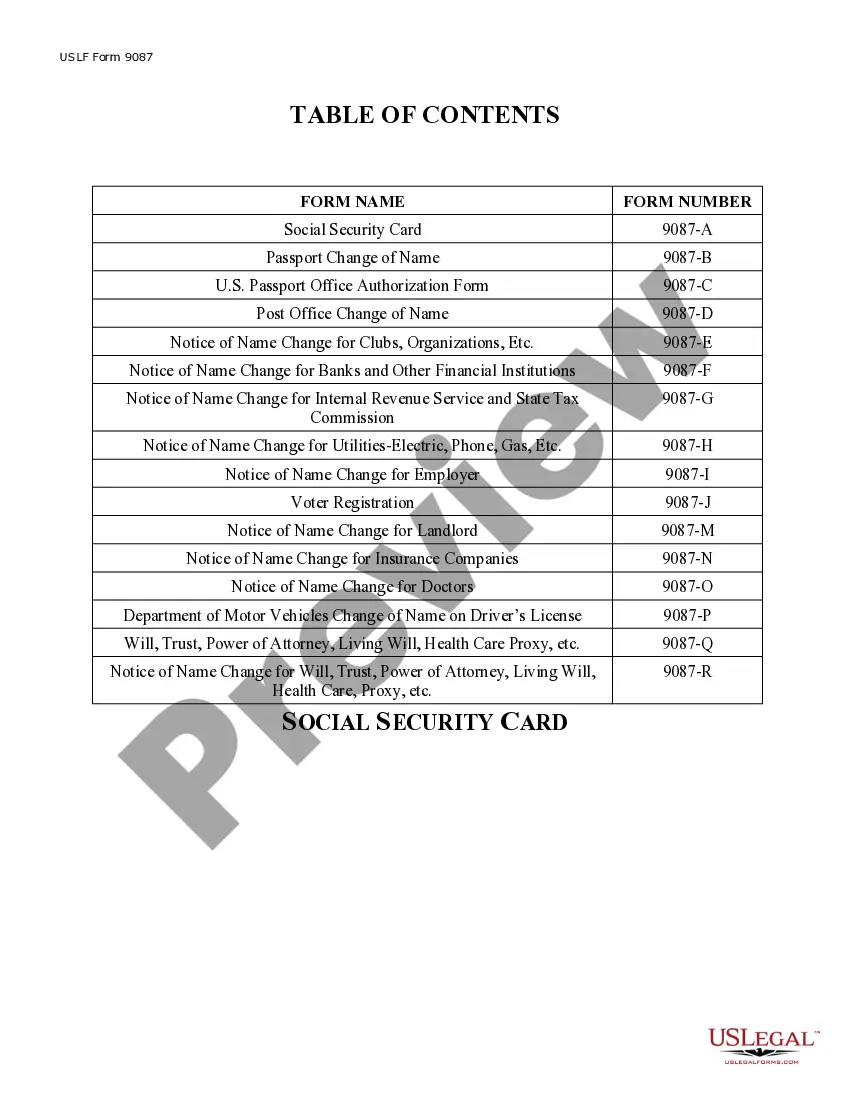
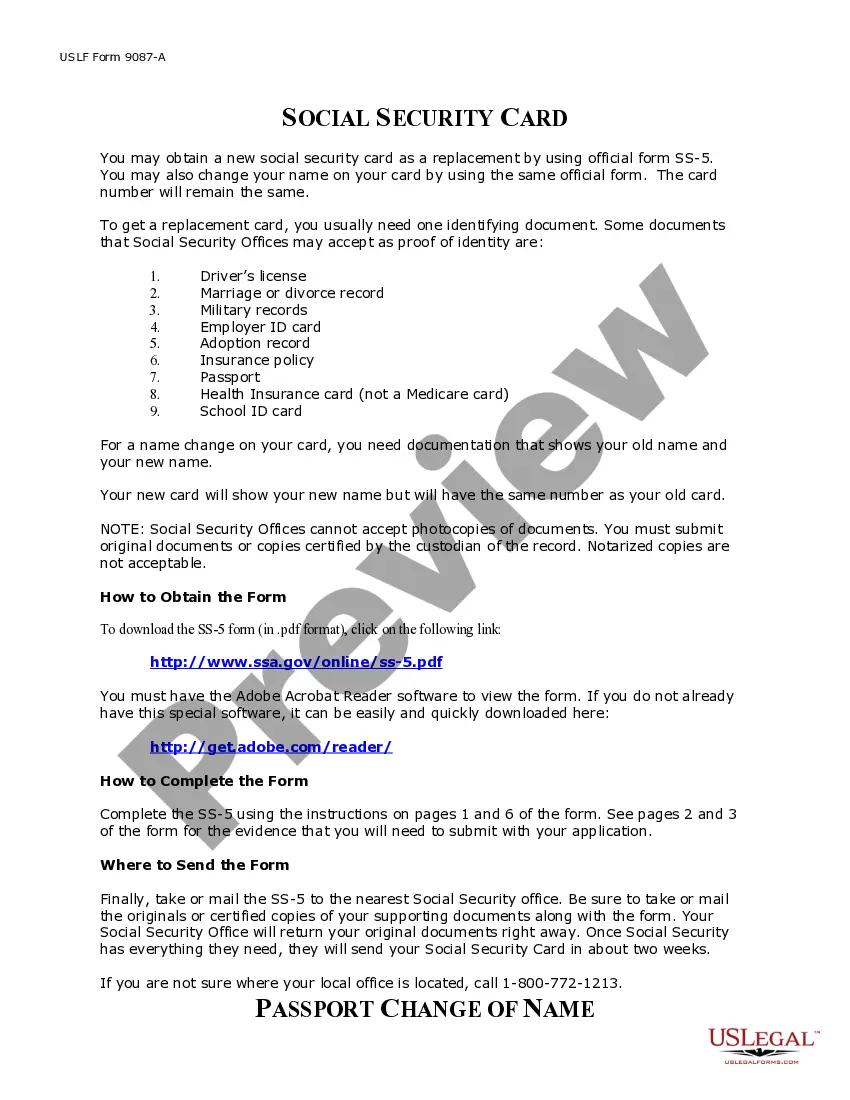
- Social Security Card update form
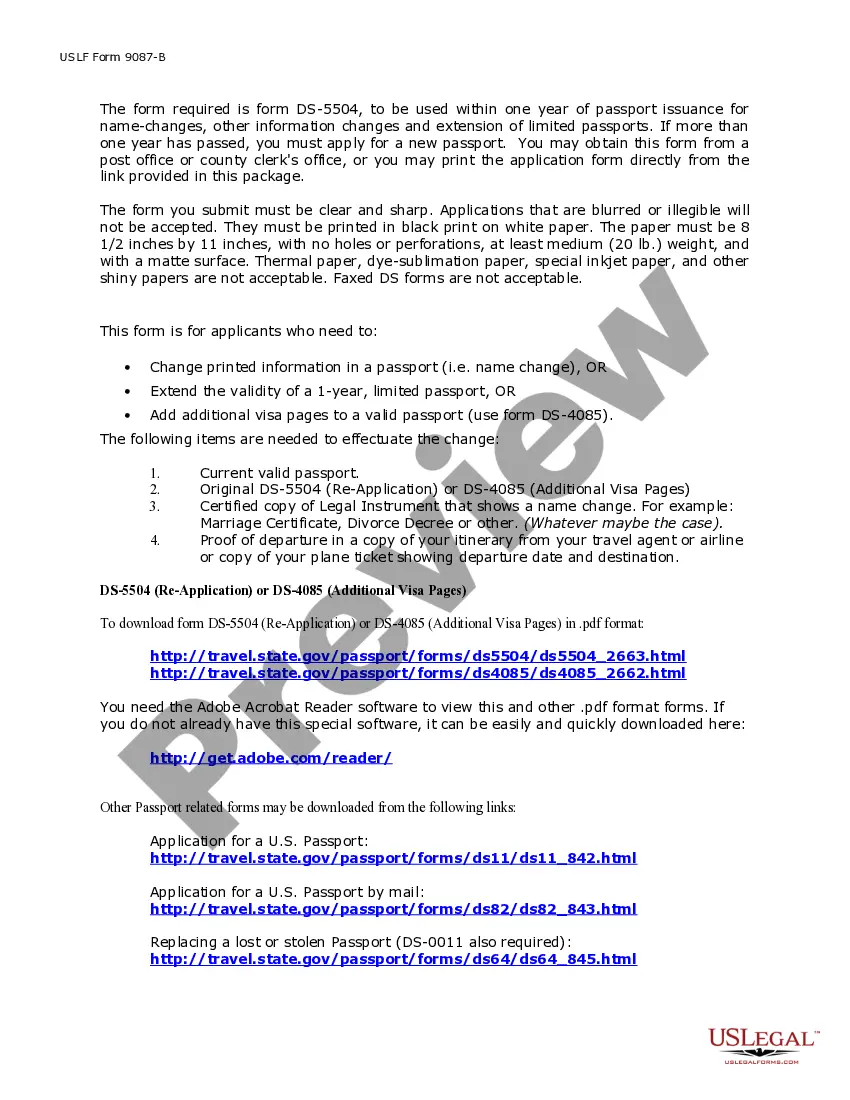
- Passport change notification form
- Notice of name change for financial institutions
- Notice of name change for employer
- Forms for updating legal documents, such as wills and trusts
- Guidance on notifying the IRS and state tax commission
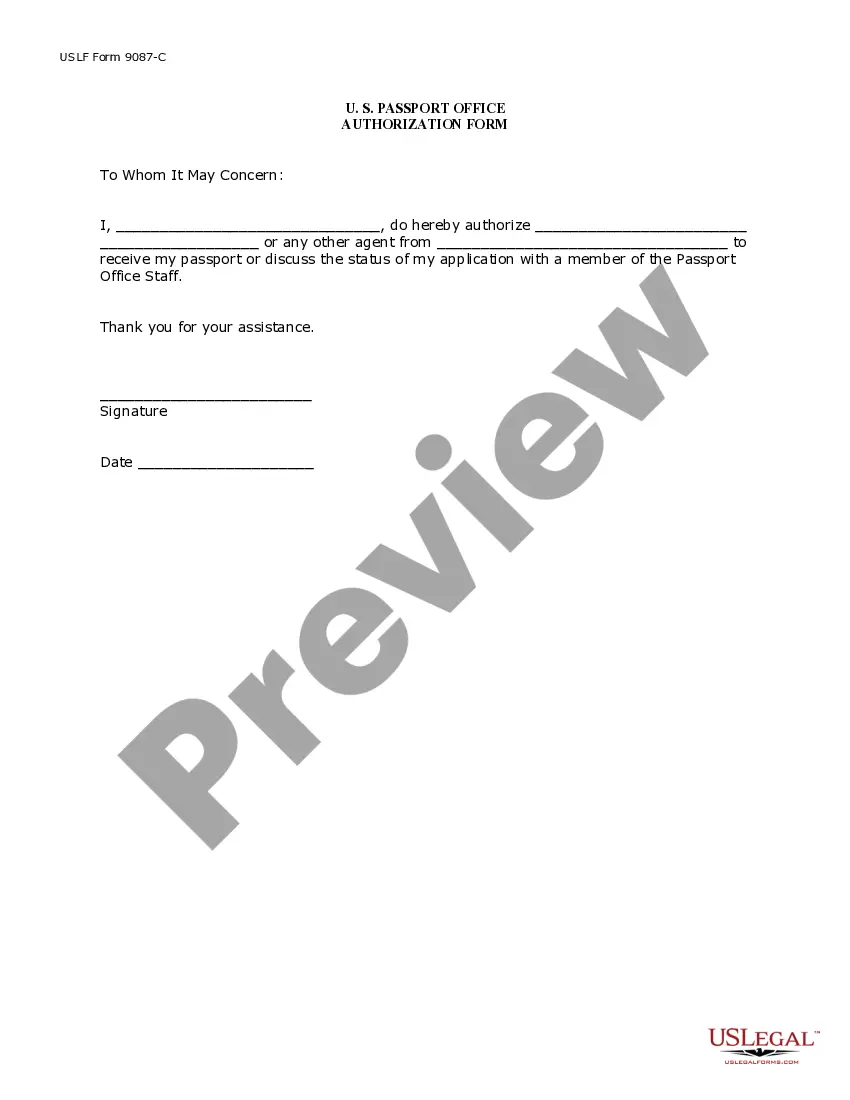
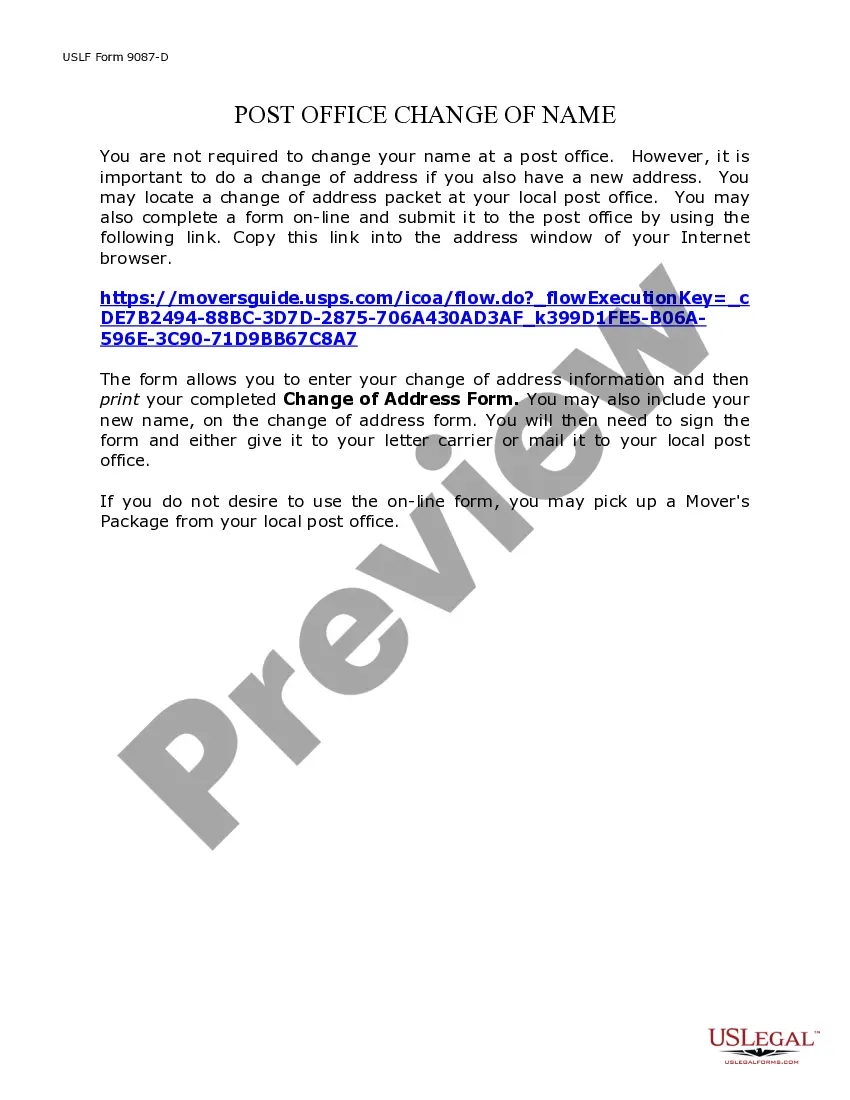
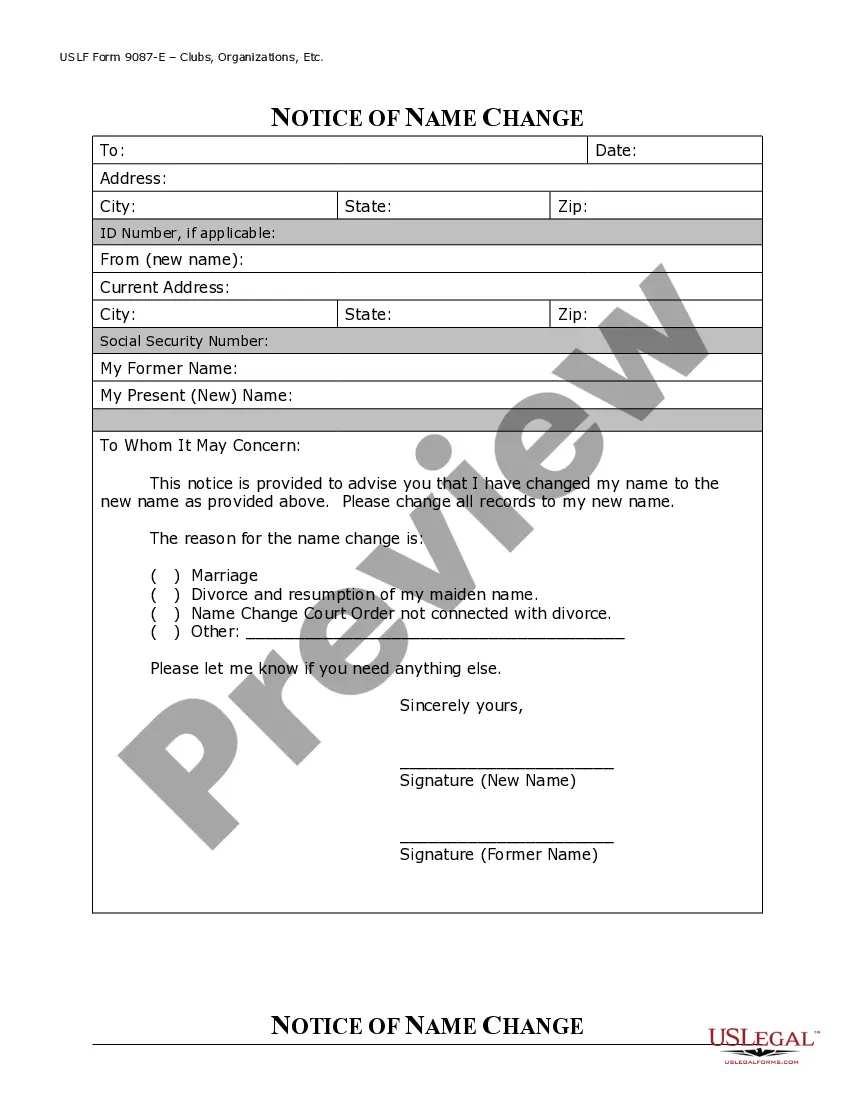
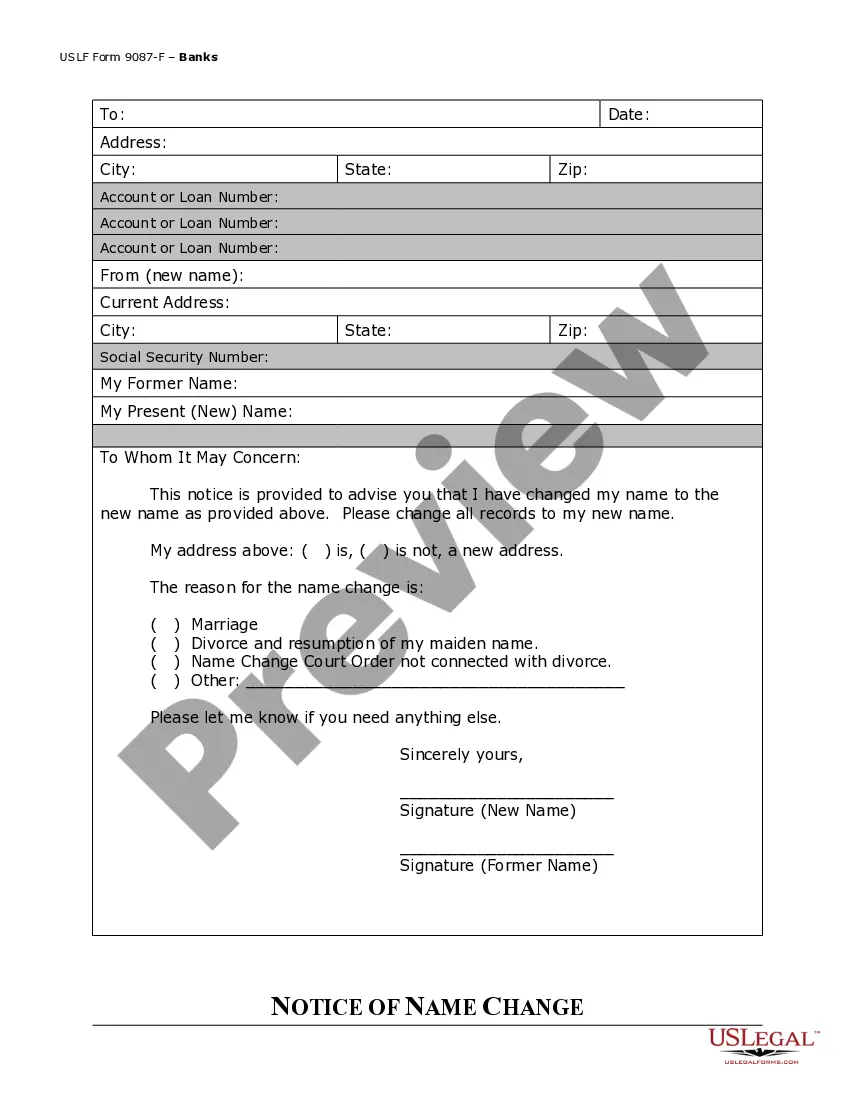

When to use this document
This form package is necessary when you have legally changed your name due to marriage, divorce, or a court directive. Use this form set to ensure that your name is accurately updated across all relevant records and institutions. This includes notifying government bodies, financial institutions, and updating personal legal documents to reflect your new name.
Who should use this form
- Individuals who are newly married and wish to change their last name
- Divorced persons who want to revert to their maiden name
- Individuals who have legally changed their name via court order
- Anyone needing to update various identifiers to reflect their new name
Completing this form step by step
- Gather all required documentation proving your name change, such as marriage certificates or court orders.
- Fill out the specific forms provided in the package for each institution you need to notify.
- For forms requiring submissions, ensure you include any original or certified copies of supporting documents.
- Review all completed forms for accuracy before mailing them to the appropriate agencies.
- Keep copies of the submitted forms and any correspondence for your records.
Notarization guidance
This form does not typically require notarization unless specified by local law. Always consult your local regulations to confirm if notarization is necessary for your specific situation.
Get your form ready online
Our built-in tools help you complete, sign, share, and store your documents in one place.
Make edits, fill in missing information, and update formatting in US Legal Forms—just like you would in MS Word.
Download a copy, print it, send it by email, or mail it via USPS—whatever works best for your next step.
Sign and collect signatures with our SignNow integration. Send to multiple recipients, set reminders, and more. Go Premium to unlock E-Sign.
If this form requires notarization, complete it online through a secure video call—no need to meet a notary in person or wait for an appointment.
We protect your documents and personal data by following strict security and privacy standards.

Make edits, fill in missing information, and update formatting in US Legal Forms—just like you would in MS Word.

Download a copy, print it, send it by email, or mail it via USPS—whatever works best for your next step.

Sign and collect signatures with our SignNow integration. Send to multiple recipients, set reminders, and more. Go Premium to unlock E-Sign.

If this form requires notarization, complete it online through a secure video call—no need to meet a notary in person or wait for an appointment.

We protect your documents and personal data by following strict security and privacy standards.
Common mistakes to avoid
- Failing to submit original documents rather than photocopies.
- Not including all necessary supporting documents with the notification forms.
- Overlooking specific submission guidelines for each agency.
- Not updating all relevant institutions, such as banks and insurance companies.
Why use this form online
- Instant access to all needed forms and instructions from any device.
- Convenient editing options to tailor the forms to your specific situation.
- Reliable and professionally drafted forms to ensure compliance with legal requirements.
Main things to remember
- The Name Change Notification Package is essential for notifying relevant parties after a name change.
- Ensure all documentation is complete and accurate to avoid delays in processing your name change.
- This package simplifies the process of keeping government and personal records up to date.
Looking for another form?
Form popularity
FAQ
Although there is no legal requirement to do so, many separated or divorced women revert to using their maiden name. This is entirely a personal choice as there is no legal requirement to do so. Your husband cannot make you stop using his surname if you wish to continue to do so after your separation.
After a divorce, you cannot legally force your ex-wife to change back to her maiden name. She has the right to keep your last name.Additionally, discussing what name she will continue to use after your marriage is over during the divorce proceedings can be mutually beneficial.
If the courts have finalized your divorce, you can complete an application asking the divorce court judge to restore your former name. You can find the form online by searching the phrase name change in California. You can also visit your county clerk's office for the form in person.
You simply need to take with you a copy of the Marriage Certificate, Birth Certificate and, if applicable, the Divorce Order to the relevant institutions and inform them that you are reverting to your maiden name.
Specifically, if a woman wants to use her first husband's name after divorcing her second husband, the procedure will depend on "whether she has used the name before and whether the divorce has been finalized. In other words, if you've never used your first husband's last name, it's unlikely you would start after your
Obtain several certified copies of the divorce decree. Start with Primary Name Change Agencies such as the DMV, Social Security Administration, IRS, Passport and Voter Registration. After you finish with the Primary Agencies, change your name with Secondary Agencies.
The court fees for a name change vary from one parish to another and range from $300 to more than $500. So, one should contact their parish in order to verify the necessary fee and be prepared to pay it.
If you are going to keep your married name, you need to say so in the divorce decree. There will be a question that asks if you would like to retain your married name, or be known by your maiden (or former) name.It is your legal right to keep your married name, even after your husband has moved on.