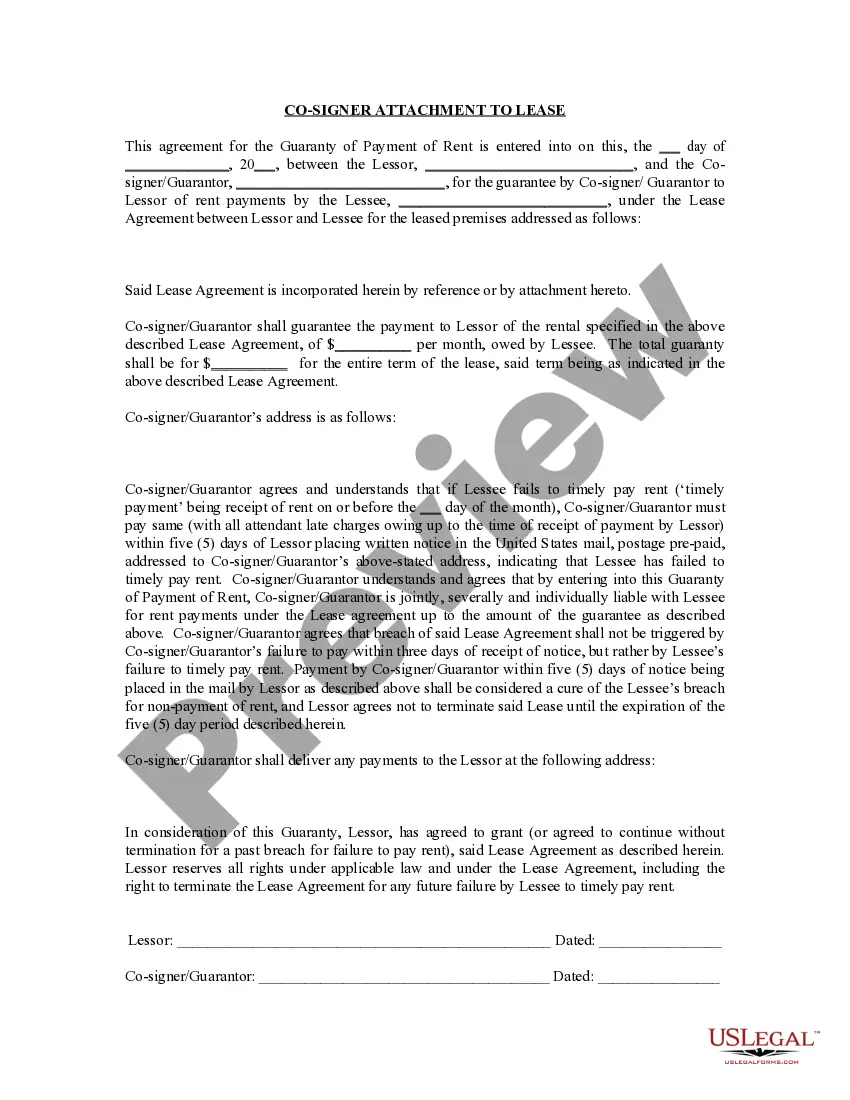
Louisiana Residential Rental Lease Agreement
Overview of this form
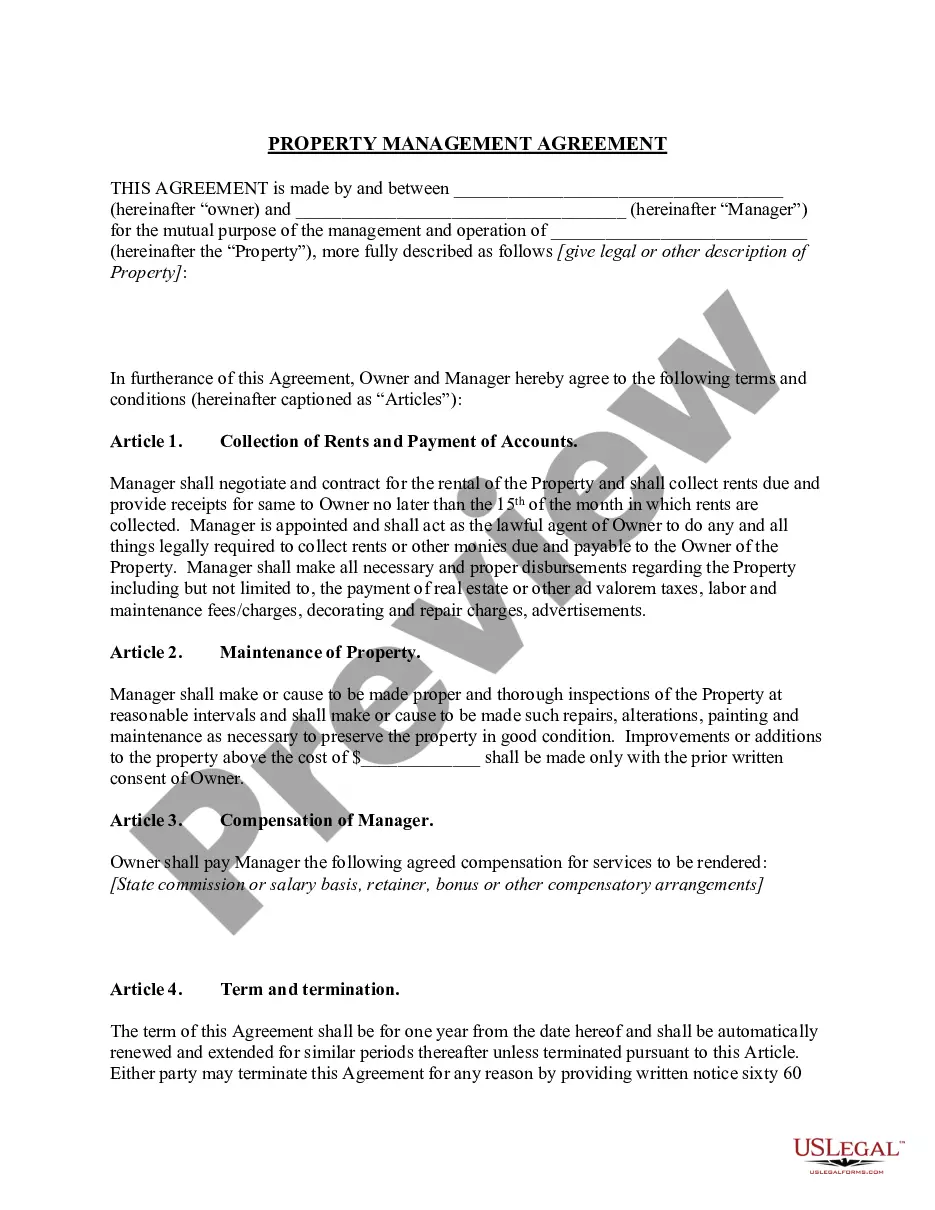
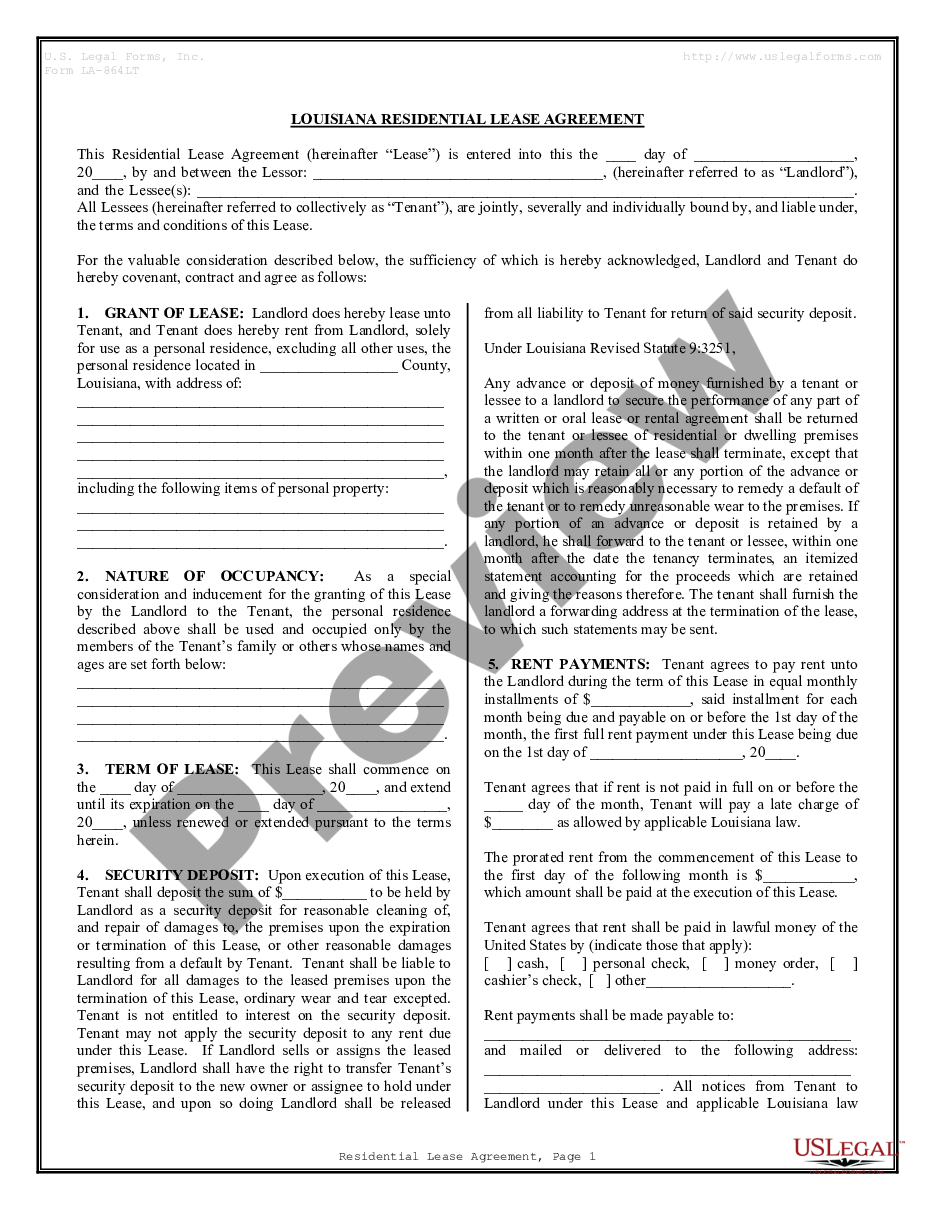
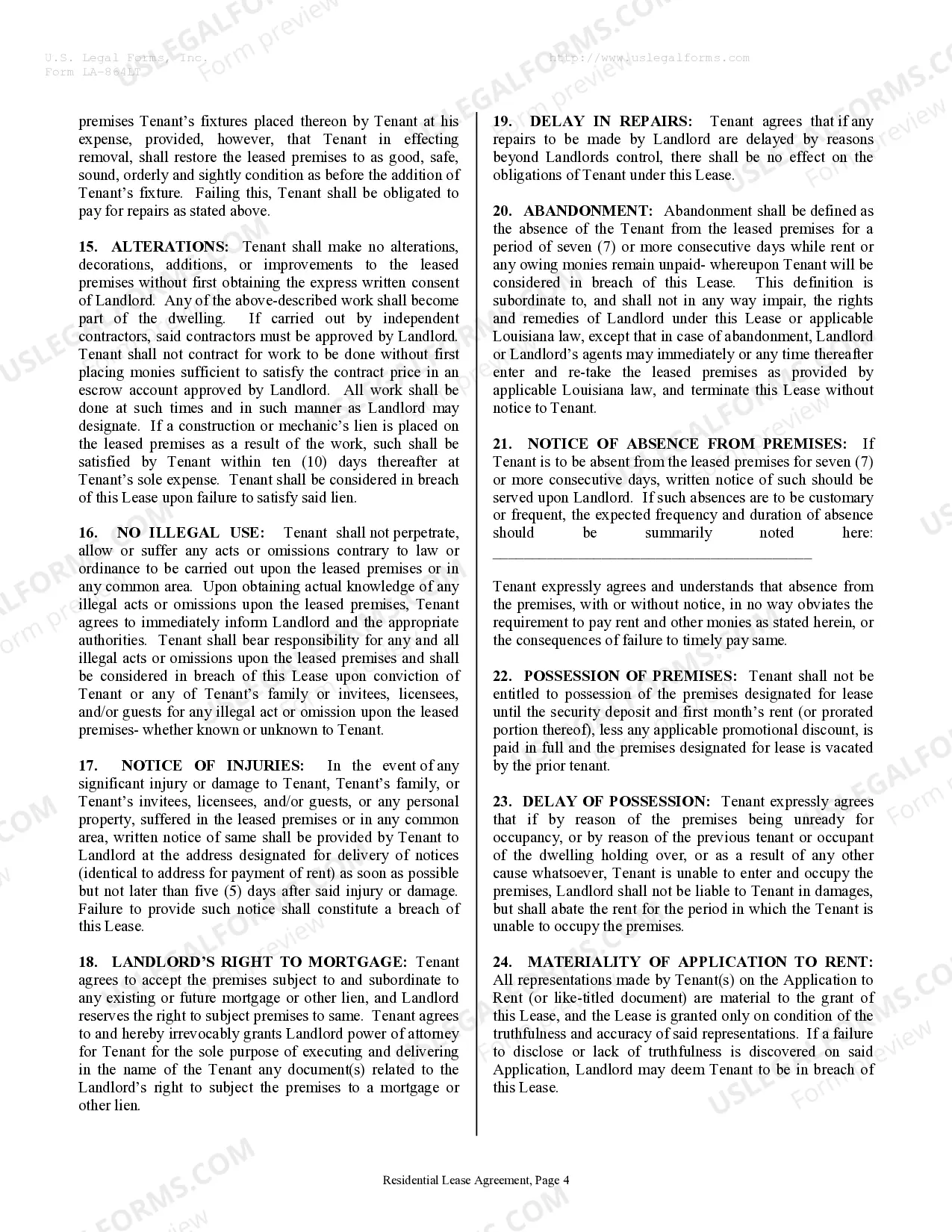
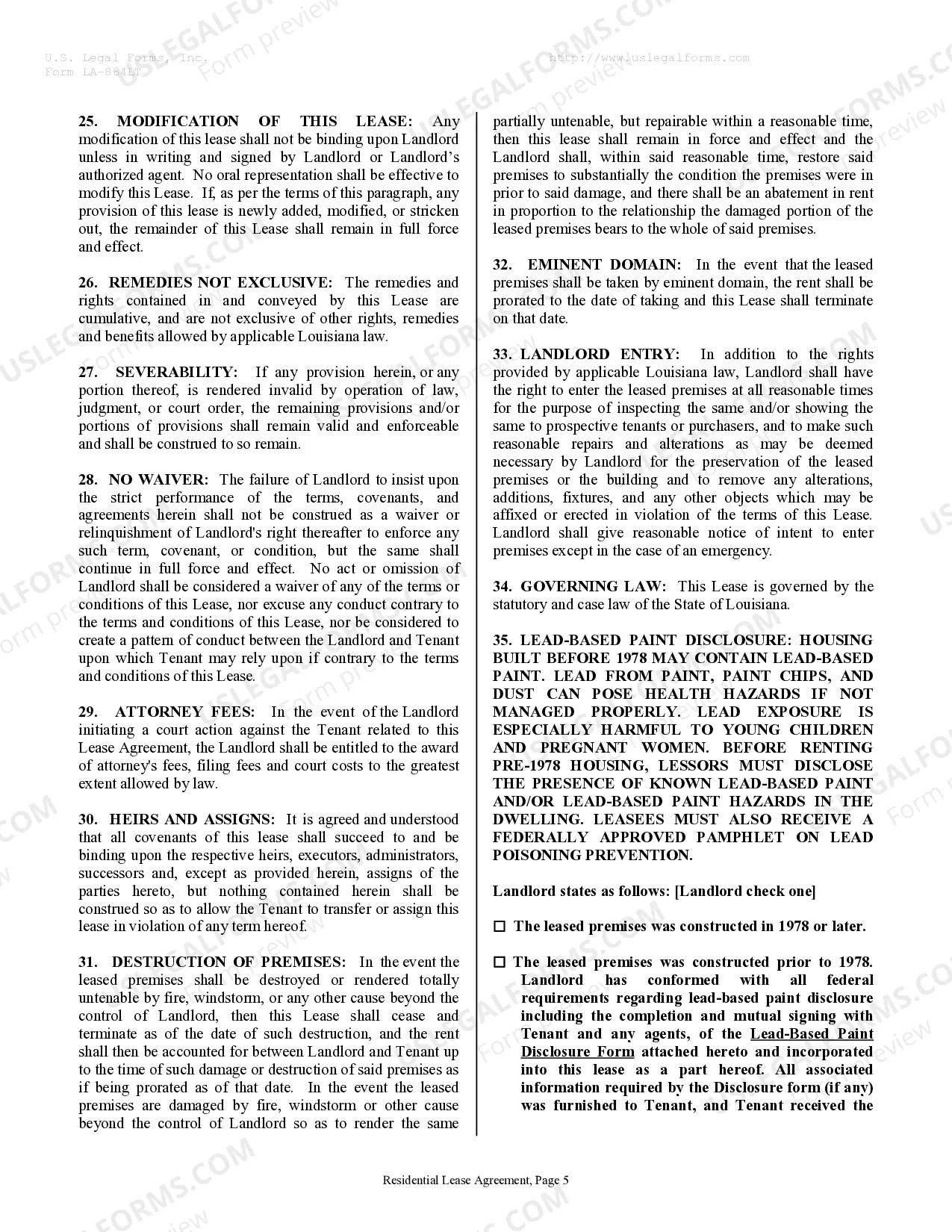
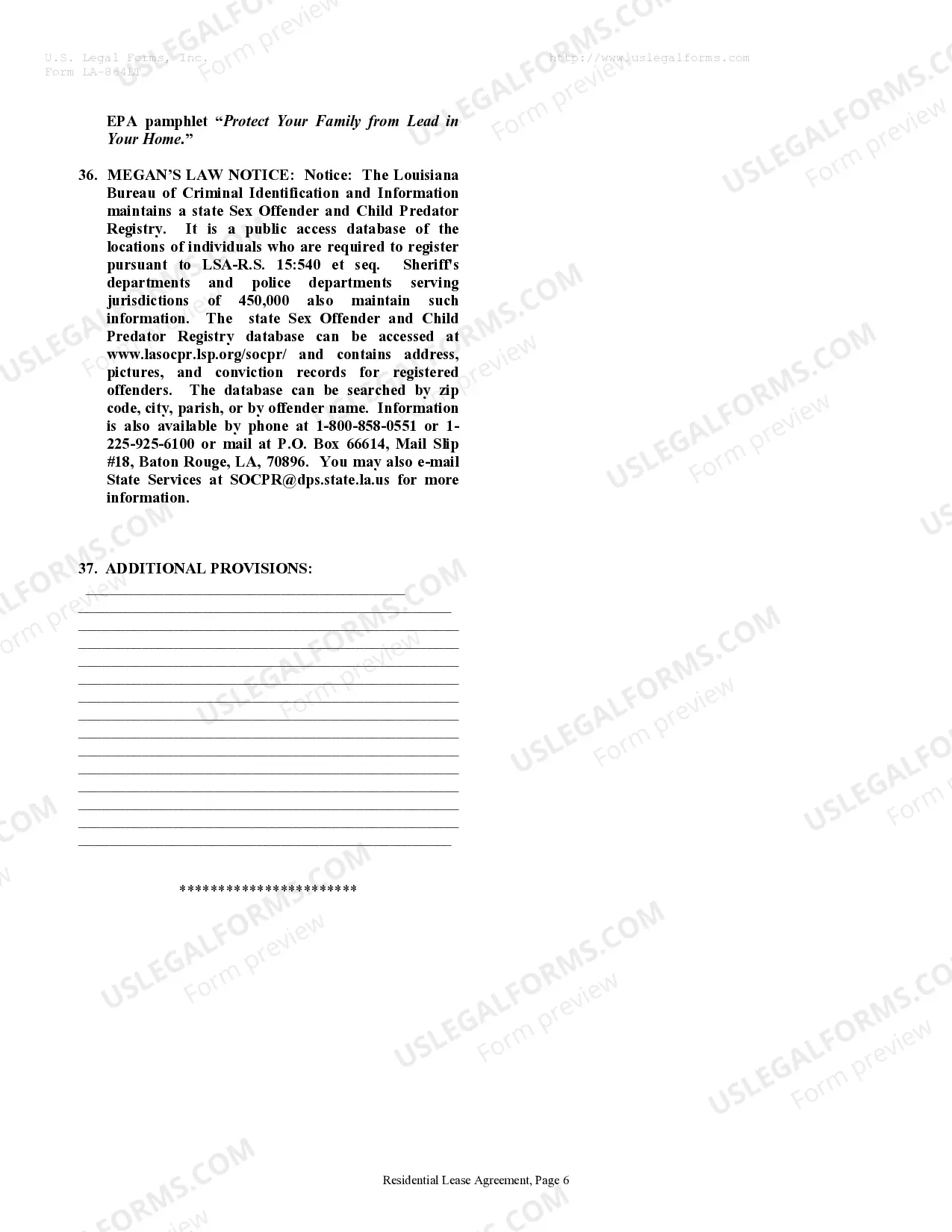
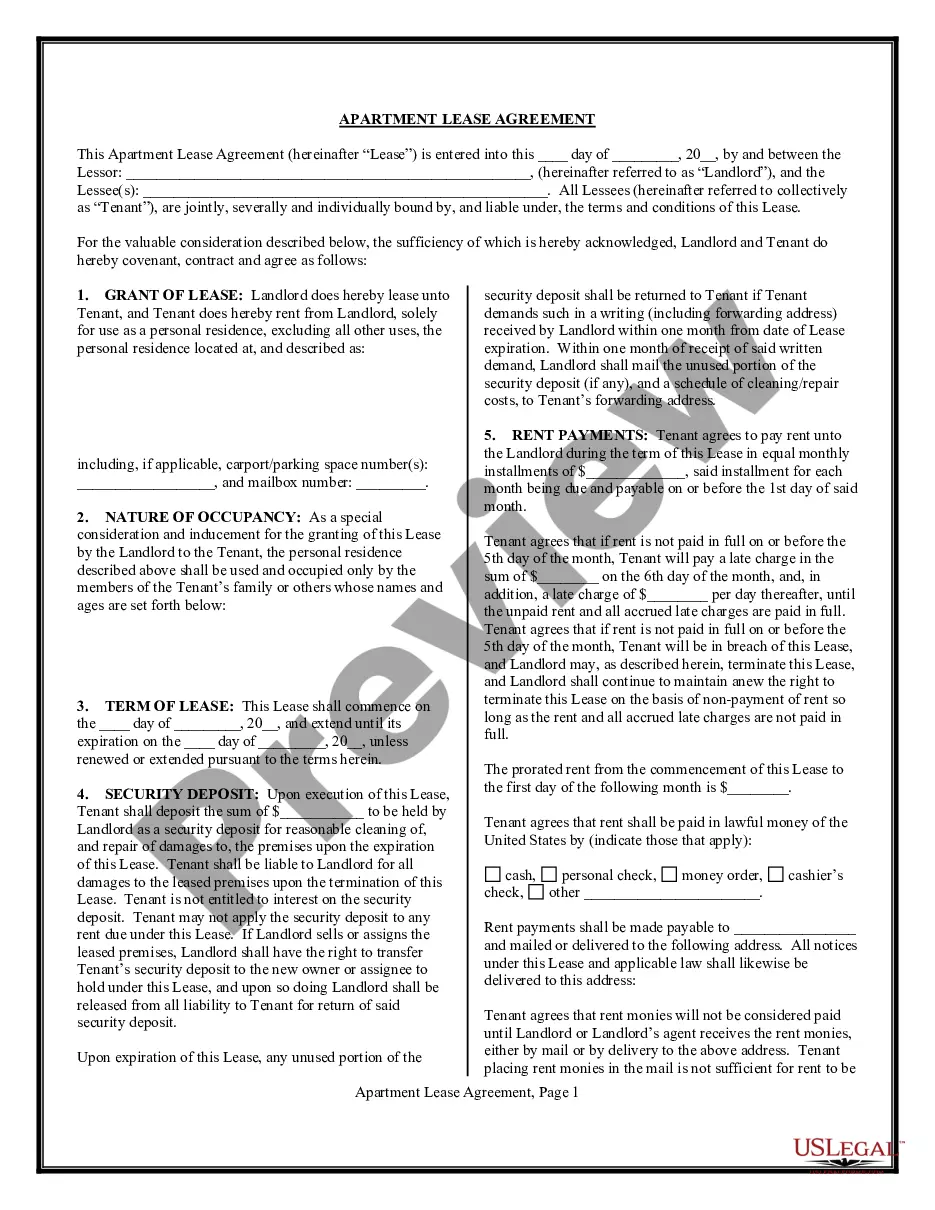
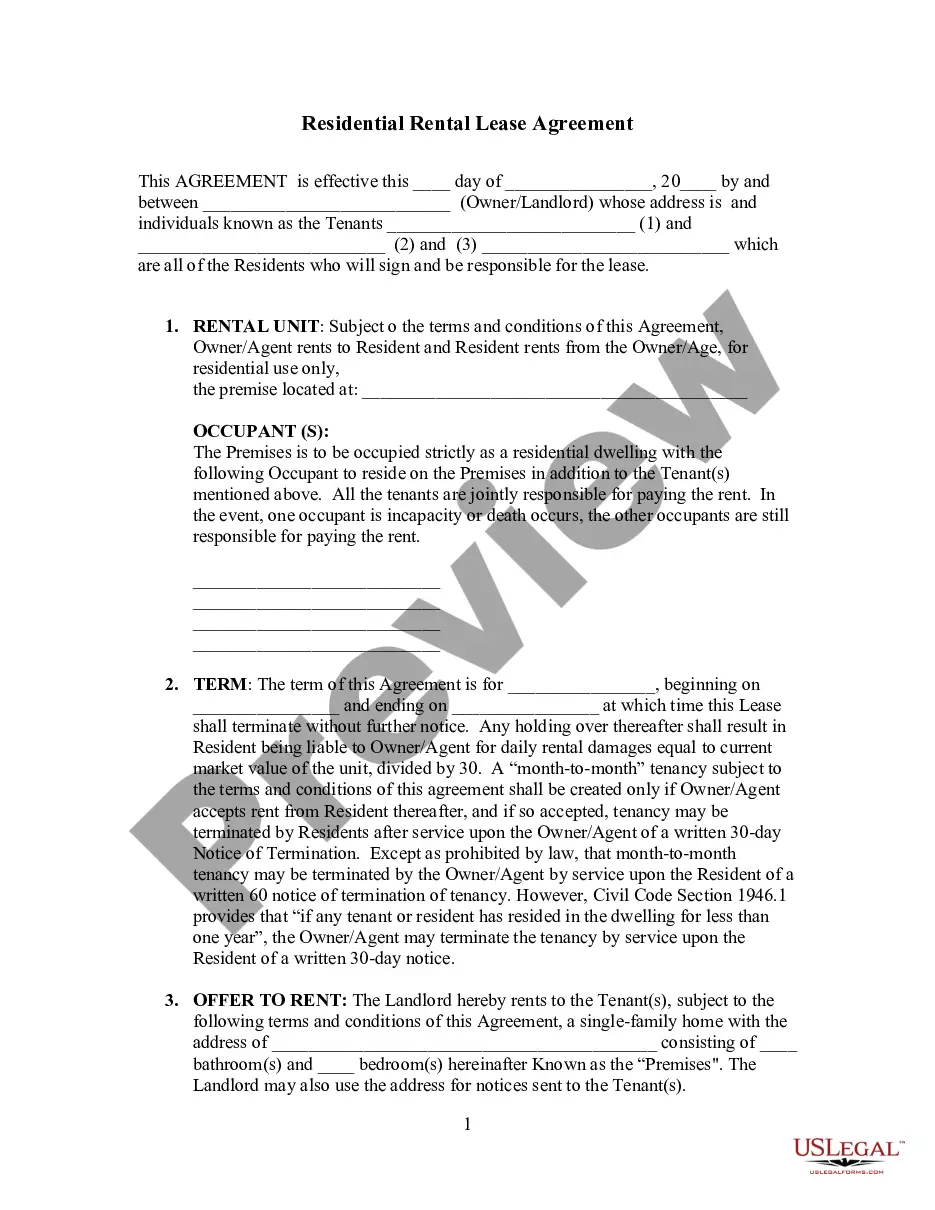
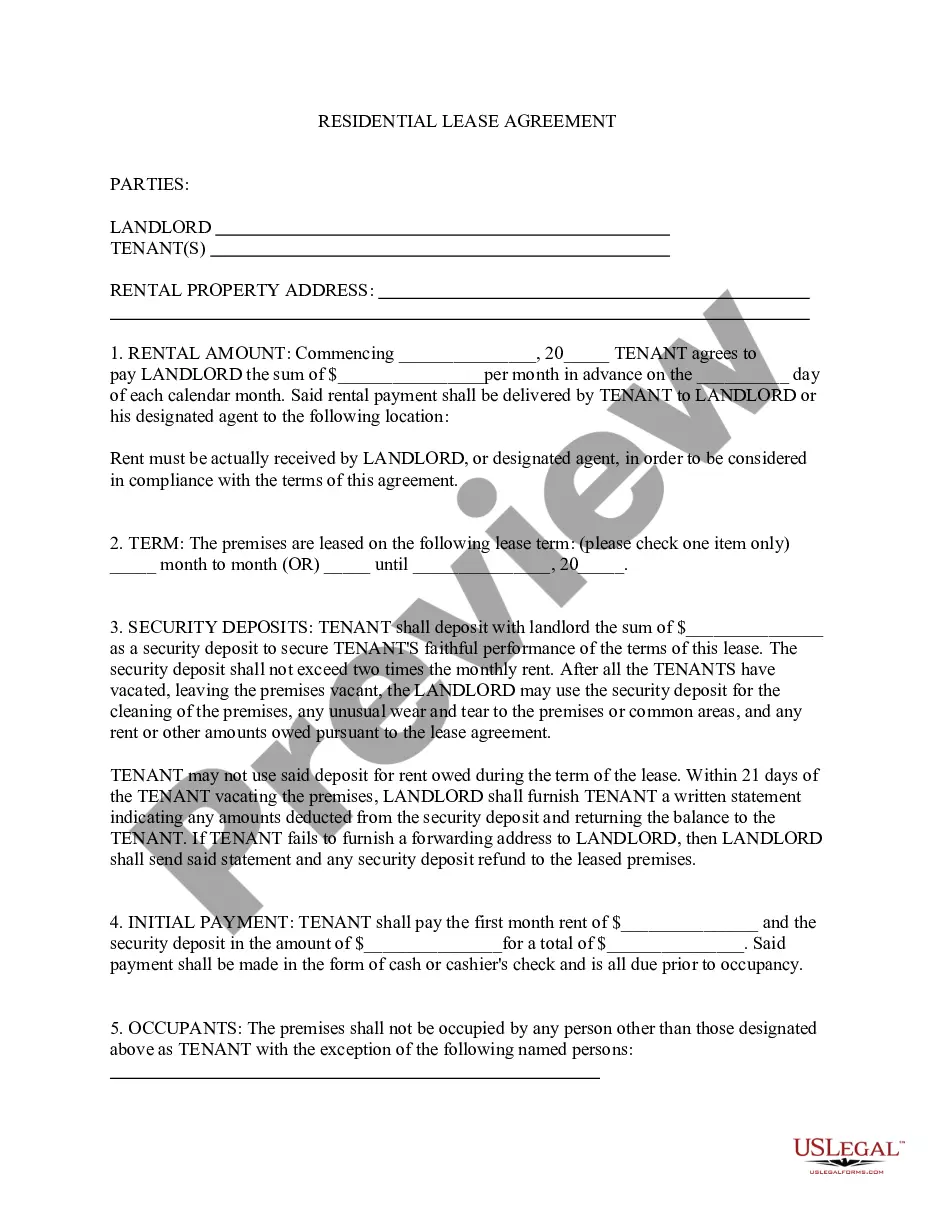
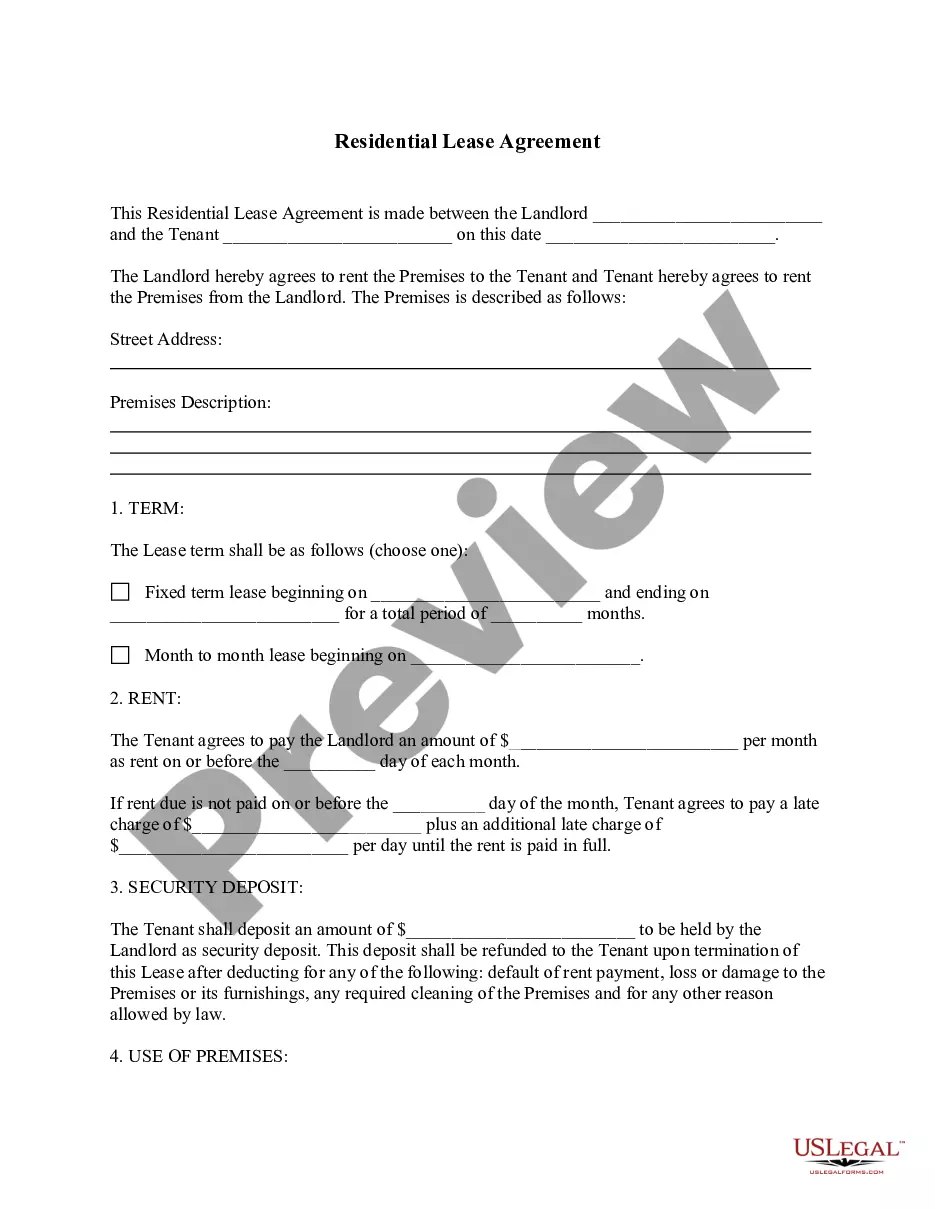
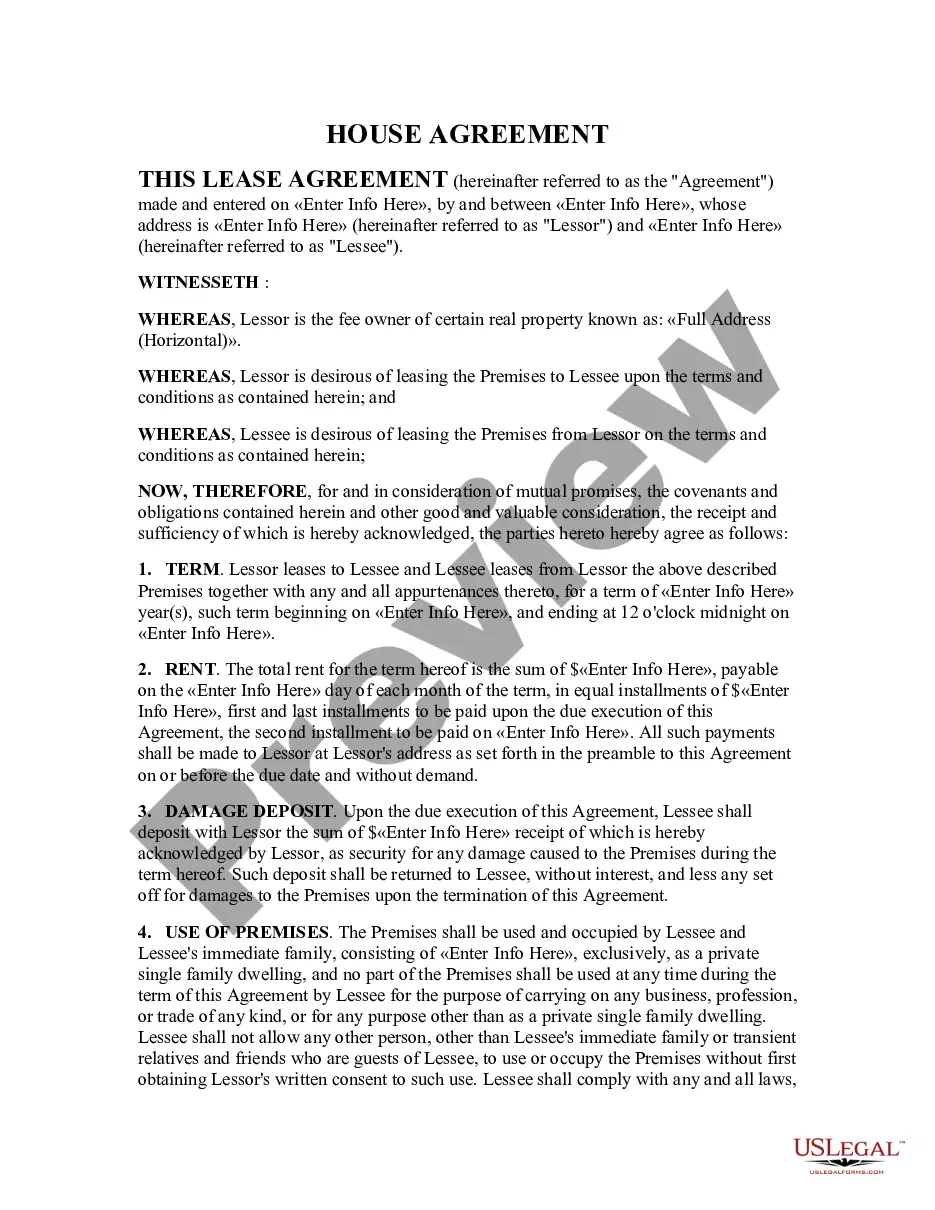
The Residential Rental Lease Agreement is a legally binding document that outlines the terms and conditions between a landlord and a tenant for renting a residential property. This agreement is designed for a specific rental term, such as one year or six months, and includes important provisions such as rent, security deposits, tenant obligations, and landlord responsibilities. It differs from other rental forms by being tailored specifically for residential leases, ensuring clarity and compliance with local laws.
Key components of this form
- Grant of Lease: Specifies the property being rented and its intended use.
- Term of Lease: Defines the rental period and renewal options.
- Security Deposit: Details the amount and conditions regarding the security deposit.
- Rent Payments: Outlines the rental amount, payment schedule, and late fees.
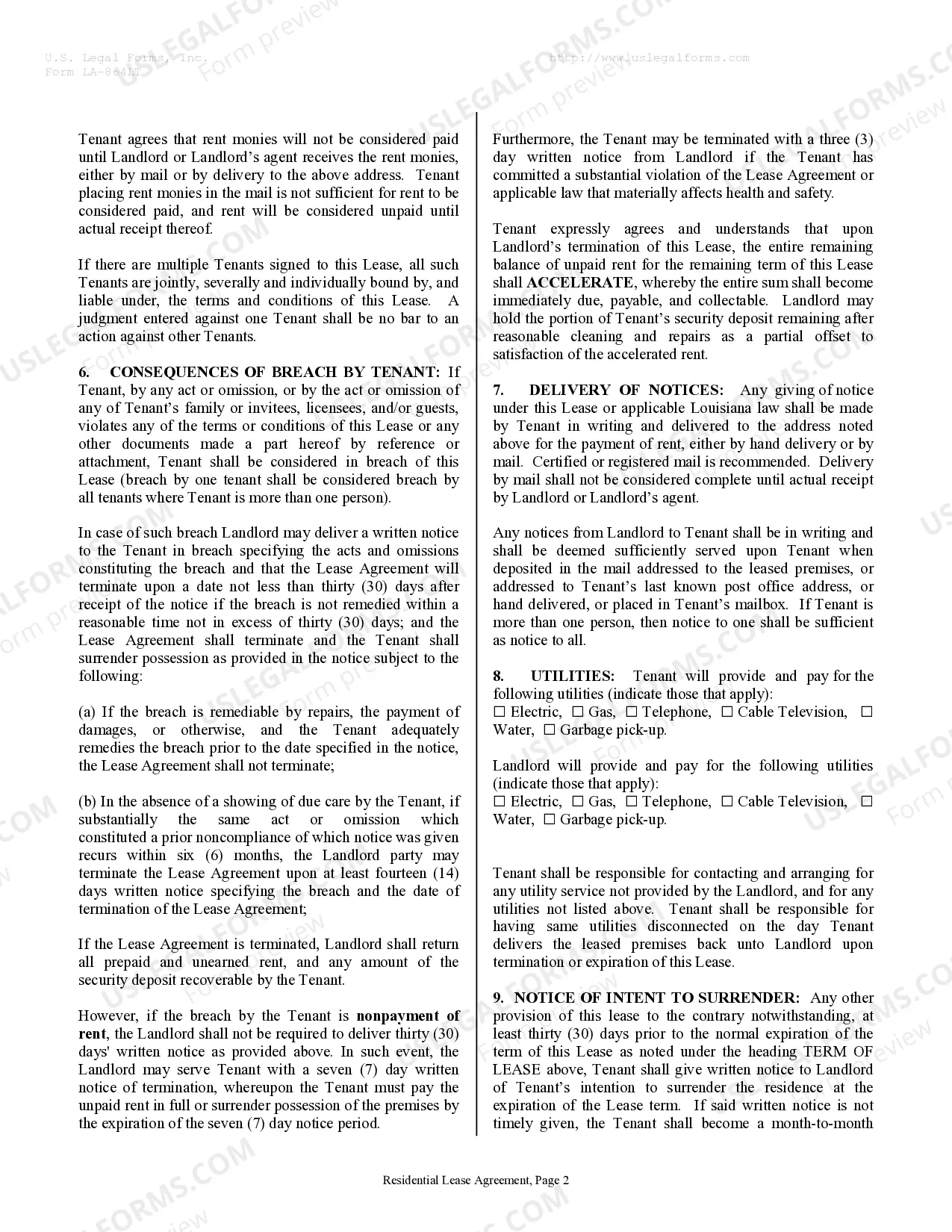
- Consequences of Breach: Describes actions taken in case of default by the tenant.
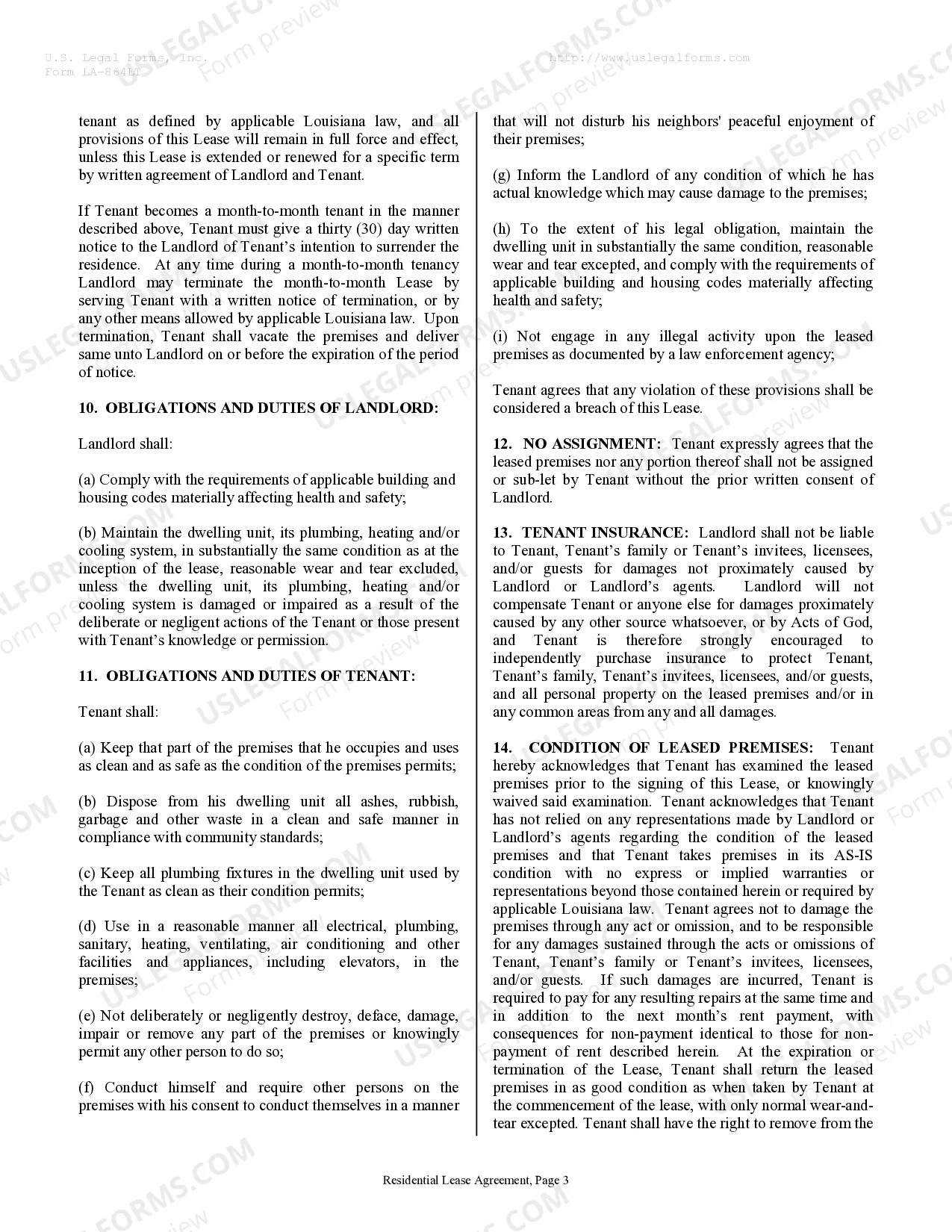
- Obligations and Duties: Lists responsibilities of both landlord and tenant regarding property maintenance and compliance.
When to use this form
This form should be used when a landlord and tenant agree to a rental arrangement for a residential property. It is appropriate for both new rental agreements and renewals of existing leases. The Residential Rental Lease Agreement protects both parties by clearly defining their rights and responsibilities, making it essential when entering into a rental relationship.
Who should use this form
- Landlords seeking to establish a formal rental agreement with tenants.
- Tenants intending to rent a residential property and wishing to understand their rights.
- Real estate professionals managing rental properties who need standardized agreements.
Instructions for completing this form
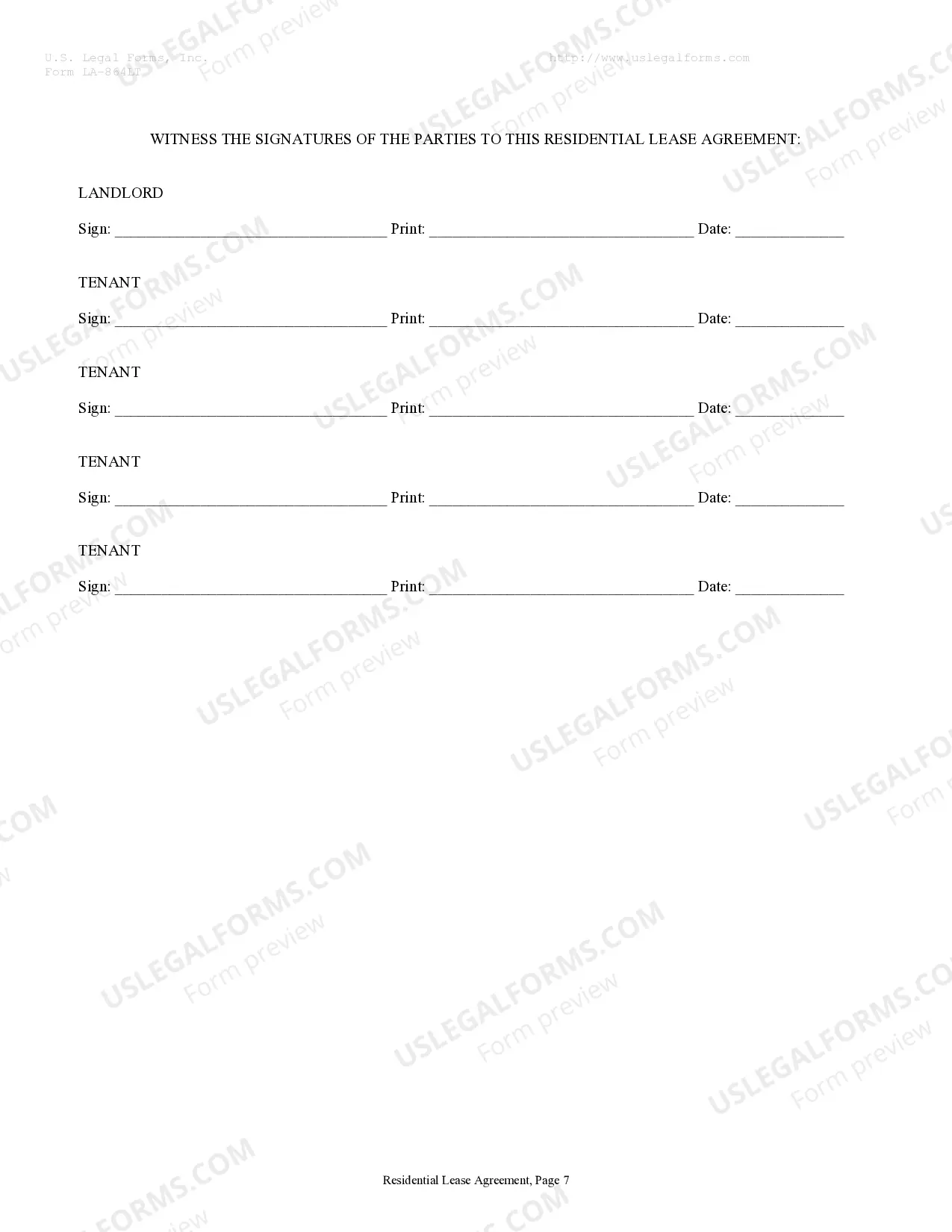
- Identify the parties: Fill in the names of the landlord (Lessor) and tenant (Lessee).
- Specify the property: Clearly describe the rental property address and details.
- Enter dates: Indicate the start and end dates of the lease agreement.
- Detail security deposit and rent: Fill in the security deposit amount and monthly rent due.
- List tenant obligations: Clearly state any tenant responsibilities regarding utilities and upkeep.
Notarization guidance
This form does not typically require notarization unless specified by local law. However, it is advisable to have both parties sign the agreement in the presence of a witness for additional security and verification.
Get your form ready online
Our built-in tools help you complete, sign, share, and store your documents in one place.
Make edits, fill in missing information, and update formatting in US Legal Forms—just like you would in MS Word.
Download a copy, print it, send it by email, or mail it via USPS—whatever works best for your next step.
Sign and collect signatures with our SignNow integration. Send to multiple recipients, set reminders, and more. Go Premium to unlock E-Sign.
If this form requires notarization, complete it online through a secure video call—no need to meet a notary in person or wait for an appointment.
We protect your documents and personal data by following strict security and privacy standards.

Make edits, fill in missing information, and update formatting in US Legal Forms—just like you would in MS Word.

Download a copy, print it, send it by email, or mail it via USPS—whatever works best for your next step.

Sign and collect signatures with our SignNow integration. Send to multiple recipients, set reminders, and more. Go Premium to unlock E-Sign.

If this form requires notarization, complete it online through a secure video call—no need to meet a notary in person or wait for an appointment.

We protect your documents and personal data by following strict security and privacy standards.
Avoid these common issues
- Failing to include all parties: Ensure all tenants sign the agreement.
- Not specifying the correct rental term: Clearly outline the lease duration.
- Omitting details about security deposits and rent due dates: Include all financial terms for clarity.
Benefits of completing this form online
- Convenience: Easily download and customize the form to fit your specific rental situation.
- Editability: Modify the lease agreement terms as necessary to reflect your agreement with tenants.
- Reliability: Use templates drafted by licensed attorneys, ensuring legal soundness and compliance with state laws.
Legal use & context
- This form serves as evidence of the lease agreement between the landlord and tenants.
- It outlines the rights and obligations of both parties, making it enforceable under Louisiana law.
- Failure to adhere to the terms can result in legal action by either party.
Looking for another form?
Form popularity
FAQ
The difference between lease and rent is that a lease generally lasts for 12 months while a rental agreement generally lasts for 30 days.That means the landlord can't raise the rent without your written consent or evict you without cause, and you can't stop paying rent or break the lease without consequence.
No, lease agreements do not need to be notarized in Louisiana.A landlord and tenant can agree to have a written lease notarized if they wish, but it is not required by Louisiana law.
A lease agreement is a contract, and like any contract, there is no requirement that it be notarized.
The Lease Must be in Writing It does not matter if the lease is handwritten or typed.
As long as the contract spells out specific details and both parties have signed that they agree to the contract's terms, a handwritten contract is legally binding and enforceable in court.
The lease becomes legally binding when all parties have signed: the landlord and all tenants living in the unit who are 18 and older. If you're worried about situations where a lease needs to end early, learn about breaking a lease and grounds for eviction.
A lease can be written or verbal, but a verbal lease can be very difficult to enforce.Most leases are fairly standard and cover basic components such as rent amount, duration of lease term, resposiblities of each party and penalties for not following the terms.
When you rent an apartment or house, you will almost always sign a lease agreement. The standard lease agreement is a legally binding contract between tenant and landlord, which includes specific responsibilities for the parties involved. Subtenants may or may not be included in the agreement.