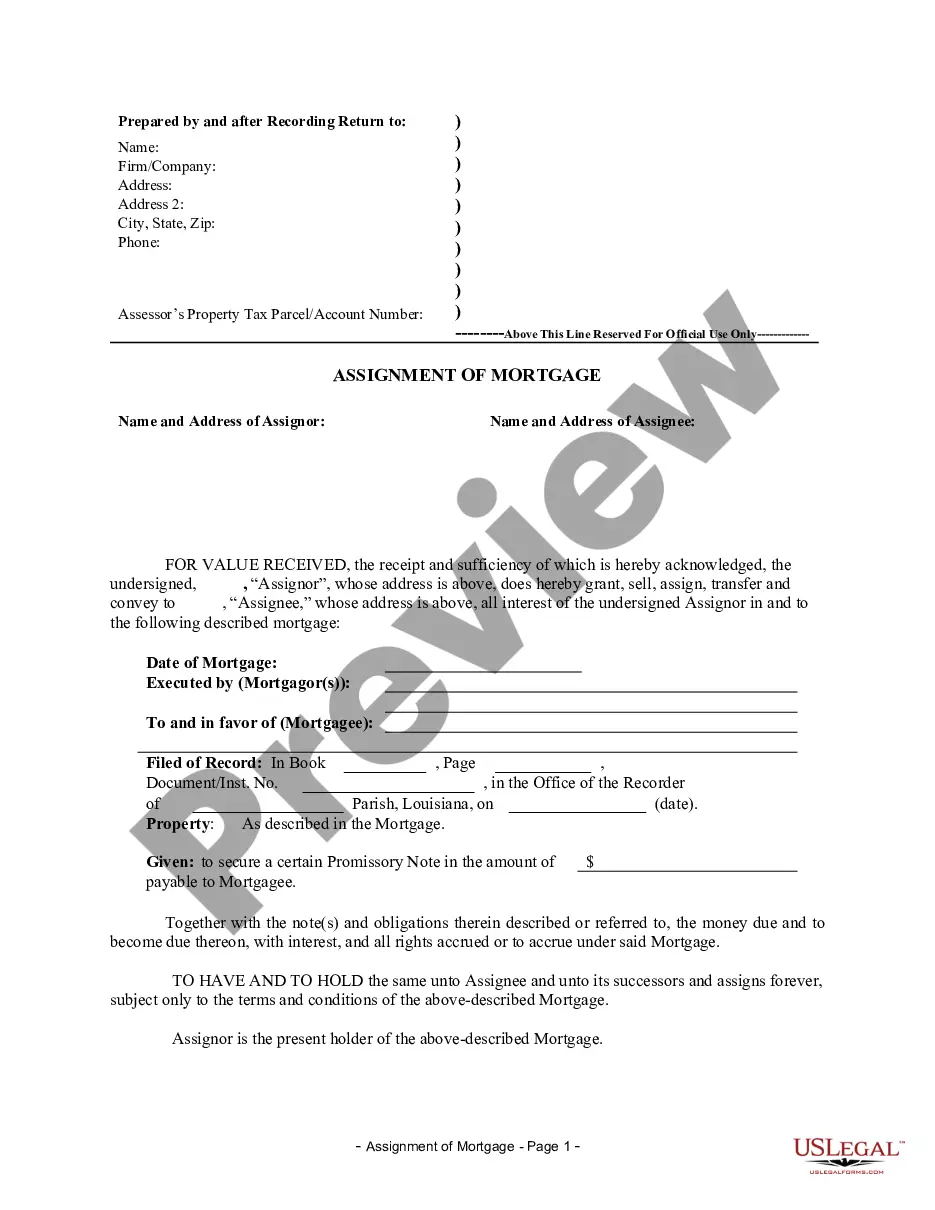
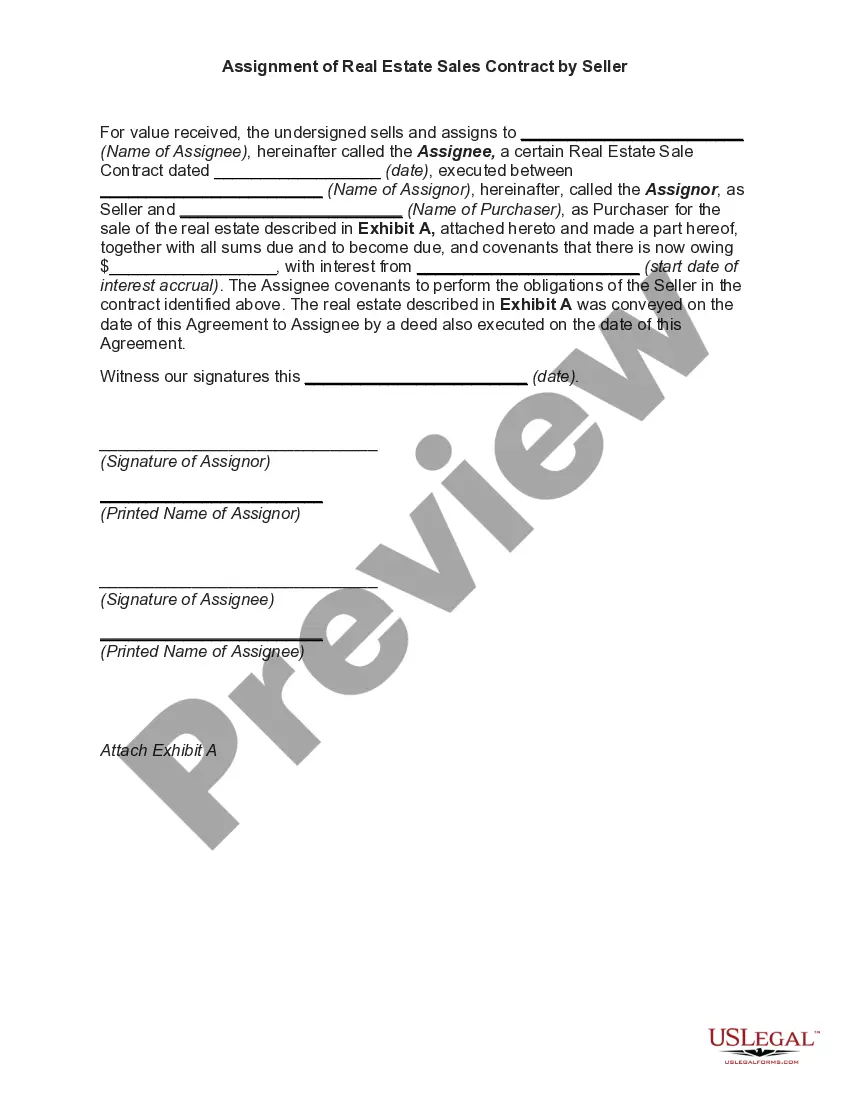
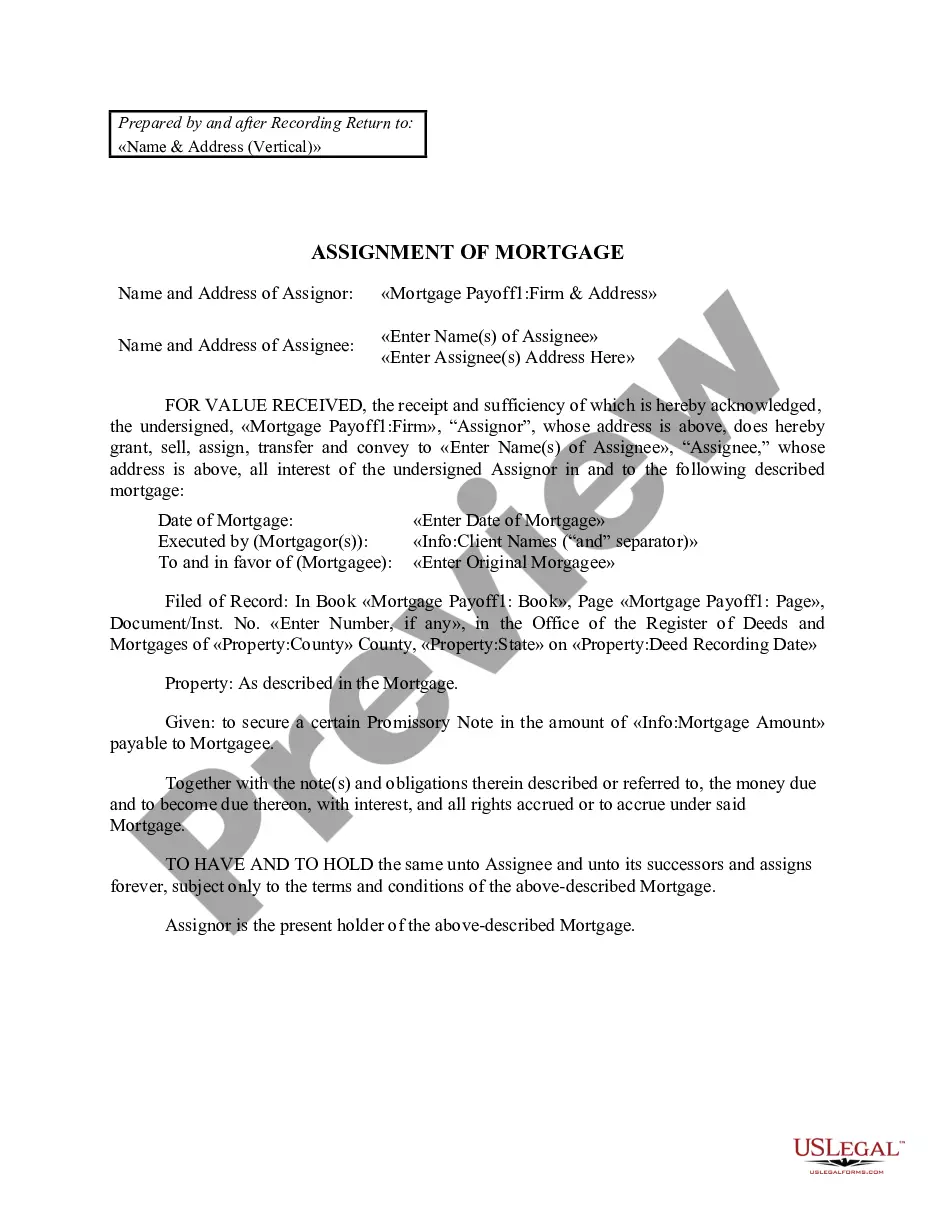
Assignment of Mortgage by Individual Mortgage Holder
Assignments Generally: Lenders, or holders
of mortgages or deeds of trust, often assign mortgages or deeds of trust
to other lenders, or third parties. When this is done the assignee
(person who received the assignment) steps into the place of the original
lender or assignor. To effectuate an assignment, the general rules
is that the assignment must be in proper written format and recorded to
provide notice of the assignment.
Satisfactions Generally: Once a mortgage
or deed of trust is paid, the holder of the mortgage is required to satisfy
the mortgage or deed of trust of record to show that the mortgage or deed
of trust is no longer a lien on the property. The general rule is that
the satisfaction must be in proper written format and recorded to provide
notice of the satisfaction. If the lender fails to record a satisfaction
within set time limits, the lender may be responsible for damages set by
statute for failure to timely cancel the lien. Depending on your state,
a satisfaction may be called a Satisfaction, Cancellation, or Reconveyance.
Some states still recognize marginal satisfaction but this is slowly being
phased out. A marginal satisfaction is where the holder of the mortgage
physically goes to the recording office and enters a satisfaction on the
face of the the recorded mortgage, which is attested by the clerk.
Louisiana Law
Assignment: It is recommended that an assignment
be in writing and recorded immediately.
Demand to Satisfy: Upon full payoff, mortgagor
may make written request to mortgagee to produce the satisfied promissory
note or an instrument of release in a form sufficient to bring about the
cancellation of the inscription of the recorded mortgage to the mortgagor,
whereupon mortgagee must do so within 30 days (60 days if domiciled outside
of Louisiana) or suffer liability.
Recording Satisfaction: The recorder of
mortgages for the parish of Orleans, and the clerk of court and ex-officio
recorder of mortgages of any other parish of the state, shall cancel from
the records of his office the inscription of a mortgage upon presentation
to him by the debtor thereunder of the original note or sufficient reproduction
thereof. (See below, sec. 9:5167)
Marginal Satisfaction: The recorder cancells
the mortgage by certification written upon the note.
Penalty: If mortgagee fails to timely comply
with written demand for satisfaction as described above (see, Demand
to Satisfy), mortgagee is liable for all damages and costs resulting
from said failure, including reasonable attorney fees.
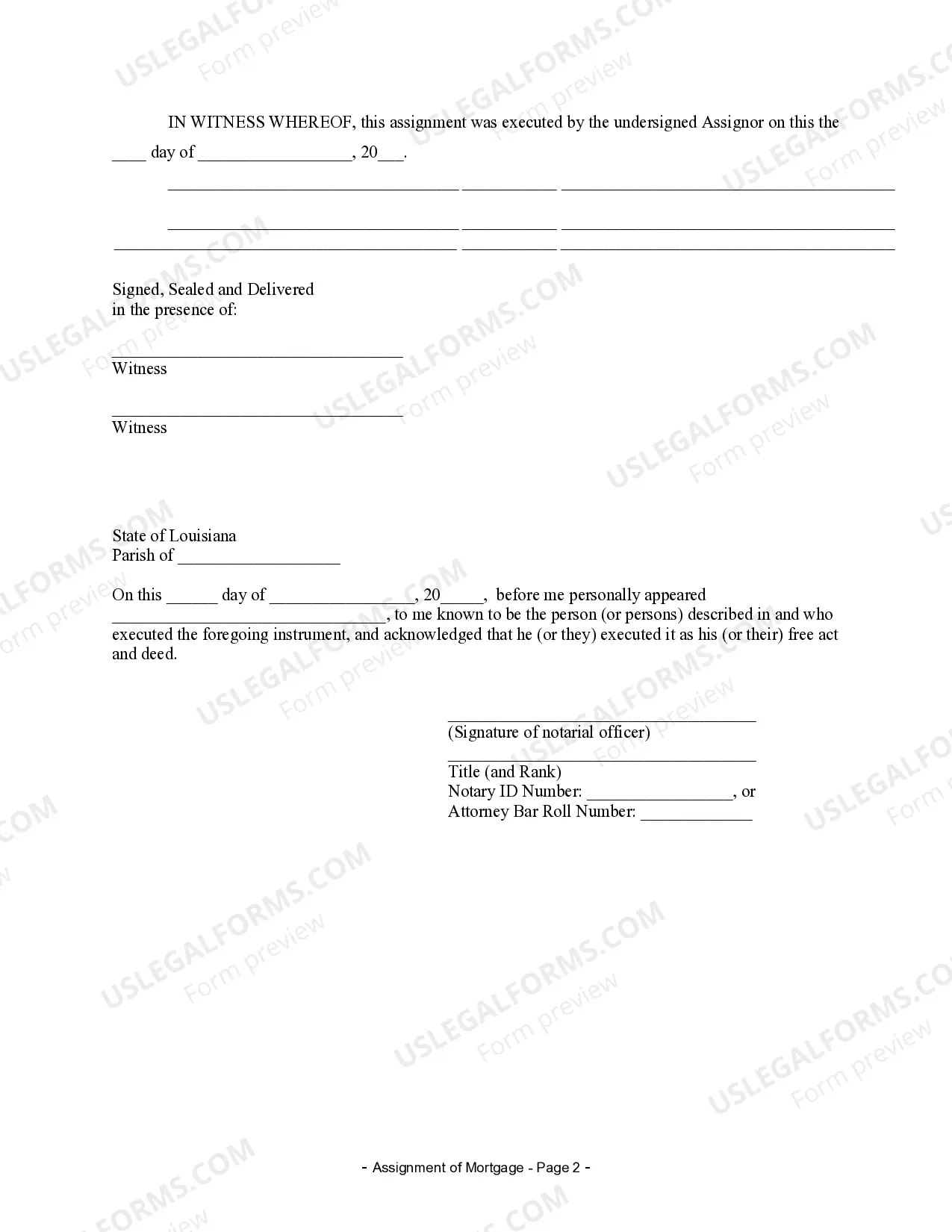
Acknowledgment: An assignment or satisfaction
must contain a proper Louisiana acknowledgment, or other acknowledgment
approved by Statute.
Louisiana Statutes
9:5167. Cancellation of mortgage inscription upon presentation
of note or affidavit; lost or destroyed note
A. The recorder of mortgages for the parish of Orleans, and the
clerk of court and ex-officio recorder of mortgages of any other parish
of the state, shall cancel from the records of his office the inscription
of a mortgage upon presentation to him by the debtor thereunder of either:
(1) The original note or notes; or
(2) Any reproduction of the original note or notes reproduces and
certified true in accordance with Subsection B of this Section as security
for which the mortgage noted in the inscription was given, if such original
note or notes are marked paid and if such original note or notes have been
duly paraphed for identification with the mortgage as required by Civil
Code Article 3384.
B. Immediately upon presentation of an original note pursuant to
Subsection A of this Section the recorder of mortgages for the parish or
Orleans, and the clerk of court and ex officio recorder of mortgages of
any other parish of the state shall certify on the original note
that the original note was presented on such date in accordance with this
statute and shall immediately photocopy, or otherwise facsimile reproduce,
one or more times as requested by the presenter, the original note so certified,
returning the original note to the presenter. Each such reproduction shall
be certified true by the recorder of mortgages for the parish of Orleans,
or the clerk of court and ex officio recorder of mortgages of any other
parish of the state, and may charge no more than ten dollars for each photocopy
or facsimile. One of the certified true reproductions shall be recorded.
C. Upon presentation of such a certified true reproduction, the recorder
of mortgages for the parish of Orleans, and the clerk of court and ex officio
recorder of mortgages of any other parish of the state, in addition to
cancelling the inscription as directed in Subsection A, shall record the
same.
D. The manner of cancellation of mortgage inscriptions provided for
by this Section shall be alternative and in addition to any other manner
of cancellation authorized by other laws.
E. (1) When a promissory note secured by a mortgage on immovable
property has been lost or destroyed after receipt by the notary public
who satisfied the promissory note out of the proceeds of an act of sale
or mortgage executed before him, the clerk of court or recorder of mortgages
may cancel the mortgage upon receipt of an affidavit from the notary public.
The affidavit shall set forth:
(a) A description of the promissory note and the property,
(b) That the affiant did satisfy the promissory note,
(c) That the affiant did receive the note marked "Paid in Full" from
the last holder of the note,
(d) That the note was lost or destroyed while in the affiant's custody,
and
(e) That the affiant agrees to hold harmless the clerk of court or
recorder of mortgages for any loss or damage occasioned by his failure
to produce the note.
(2) In addition, the affidavit shall include a statement that the
affiant has made a due and diligent search for the last holder, the last
holder cannot be located, and one year has elapsed since recordation of
the act of sale or mortgage giving rise to the affidavit of cancellation;
or, shall be accompanied by an affidavit from the last holder stating that
the promissory note marked "Paid in Full" was delivered to the notary public.
(3) No mandamus proceeding is required to use the provisions of this
Subsection.
(4) The clerk of court or recorder of mortgages shall not be liable
for any damages resulting to any person or entity as a consequence of cancelling
a mortgage pursuant to an affidavit which complies with this Subsection.
9:5167.1. Cancellation of mortgage inscription by affidavit;
penalties
A. A mortgagee shall execute and
deliver sufficient acceptable documentation, as required by the clerk of
court and ex officio recorder of mortgages for the cancellation of a mortgage,
to the mortgagor or the mortgagor's designated agent within sixty days
after the date of receipt of full payment of the balance owed on
the debt secured by the mortgage in accordance with a payoff statement.
The payoff statement shall be furnished by the mortgagee or its mortgage
servicer. If the mortgagee fails to execute and deliver acceptable documentation,
an authorized officer of a title insurance business,
the closing notary public, or the notary public for the person or entity
which made the payment may, on behalf of the mortgagor or an owner of the
property encumbered by the mortgage, execute an affidavit that complies
with the requirements of this Section and record the
affidavit in the mortgage records of each parish in which the mortgage
was recorded.
B. An affidavit executed under this
Section shall state that:
(1) The affiant is an authorized
officer of a title insurance business, the closing notary public, or the
attorney for the person or entity which made the payment.
(2) The affidavit is made on behalf
of the mortgagor or an owner of the property encumbered by the mortgage.
(3) The mortgagee provided a payoff
statement with respect to the loan secured by the mortgage.
(4) The affiant has ascertained that
the mortgagee has received payment of the loan secured by the mortgage
in accordance with the payoff statement, as evidenced by:
(a) A bank check, certified check,
or escrow account check which has been negotiated by or on behalf of the
mortgagee; or
(b) Other documentary evidence of
the receipt of payment by the mortgagee including but not limited to verification
that the funds were wired to the mortgagee.
(5) More than sixty days have elapsed
since the date payment was received by the mortgagee and the mortgagee
has not returned documentary authorization for cancellation of the mortgage.
(6) The mortgagee has been given
at least fifteen days notice in writing of the intention to execute and
record an affidavit in accordance with this Section, with a copy of the
proposed affidavit attached to the written notice.
C. The affidavit shall include the
names of the mortgagor and the mortgagee, the date of the mortgage, and
the book and page, or folio, or clerk's file number of the immovable property
records where the mortgage is recorded, together with similar information
for a recorded assignment of the mortgage.
D. The affiant shall attach to the
affidavit the documentary evidence that payment has been received by the
mortgagee including a copy of the payoff statement. Evidence of payment
may include a copy of the canceled check indicating endorsement by the
mortgagee or other documentary evidence described in Subsection B.
E. An affidavit executed and recorded
as provided by this Section shall constitute a release of and an authority
to cancel the mortgage described in the affidavit. The clerk of court and
ex officio recorder of mortgages may rely on the sworn statements contained
within the affidavit and has no duty to traverse the
contents thereof.
F. The clerk of court and ex officio
recorder of mortgages shall index the affidavit in the names of the original
mortgagee and the last assignee of the mortgage appearing of record as
the grantors and in the name of the mortgagor as grantee, and shall cancel
the inscription of the mortgage and assignments from the mortgage records.
G. The intentional falsification
of information by the affiant in an affidavit filed in the office of the
recorder of mortgages is subject to the provisions of R.S. 14:132, governing
the crime of injuring public records. The affiant shall also be liable
for any damages, attorney fees, and expenses occasioned by a fraudulently
executed affidavit.
H. As used in this Section:
(1) "Attorney for the person or entity
making payment" is an attorney licensed to practice law in this state who
certifies in the affidavit that he is authorized to make the affidavit
on behalf of the person or entity making payment.
(2) "Closing" shall have the same
meaning as provided in R.S. 22:2092.2(2) and (15).
(3) "Closing notary public" is the
duly commissioned notary public who executes the required documents or
performs notarial functions at the closing.
(4) "Payoff statement" is the statement
of the following:
(a) The unpaid balance of a loan
secured by a mortgage, including principal, interest, and other charges
properly assessed under the loan documentation of the mortgage.
(b) The interest on a per diem basis
for the unpaid balance.
(5) "Title insurance business" shall
have the same meaning as provided in R.S. 22:2092.2(17).
9:5174. Debtor's right to obtain release upon payment of obligation
He who shall have subscribed
in favor of another, an act bearing a mortgage or privilege, to secure
the payment of a debt or the execution of an obligation, may, on the payment
of the debt or performance of the obligation, require of the creditor a
release of the mortgage or privilege, provided he will defray the expense
of the act which it may be necessary to prepare for this purpose; and if
the creditor refuses to grant this release, the other party shall have
an action to compel him to grant it, and he shall be condemned to pay the
costs.
9:5385. Satisfaction of mortgage; production of promissory note
or release for cancellation; liability
A. When the obligation
secured by a mortgage has been fully satisfied, the mortgagee, the servicing
agent, or any holder of the note shall, within thirty days of receipt
of written demand by the person providing full satisfaction, produce
the satisfied promissory note or an instrument of release in a form sufficient
to bring about the cancellation of the inscription of the recorded mortgage
to the person providing full satisfaction. However, if the note is held
by a federal agency or instrumentality, or a federally sponsored or supported
lender, or any nonoriginating secondary mortgage market lender domiciled
outside the state of Louisiana, the holder of the note shall, within sixty
days after receipt of notice of the satisfaction from the servicing
agent, produce the satisfied promissory note or an instrument of release
to the servicing agent.
B. If the mortgagee,
the servicing agent, or any holder of the note fails to produce
the satisfied promissory note or an instrument of release in a form sufficient
to bring about cancellation of the mortgage within thirty days after
receipt of written demand by the person providing full payment
of the balance of the note, the mortgage and the servicing agent or the
mortgagee and any holder of the note shall be liable in solido to the person
providing full satisfaction for all damages and costs resulting therefrom,
including reasonable attorney fees. However, if the note is held by
a federal agency or instrumentality, or a federally sponsored or supported
lender, or an instrument of release from the holder of the note, produce
the note or instrument to the person providing full satisfaction.
C. For purposes of this
Section, "person" shall include the mortgagor acting in his own behalf,
or a notary public or any person, firm, or corporation acting in place
of or on behalf of the mortgagor.