Louisiana Letter from Tenant to Landlord about Fair Housing Reduction or Denial of services to Family with Children
Understanding this form
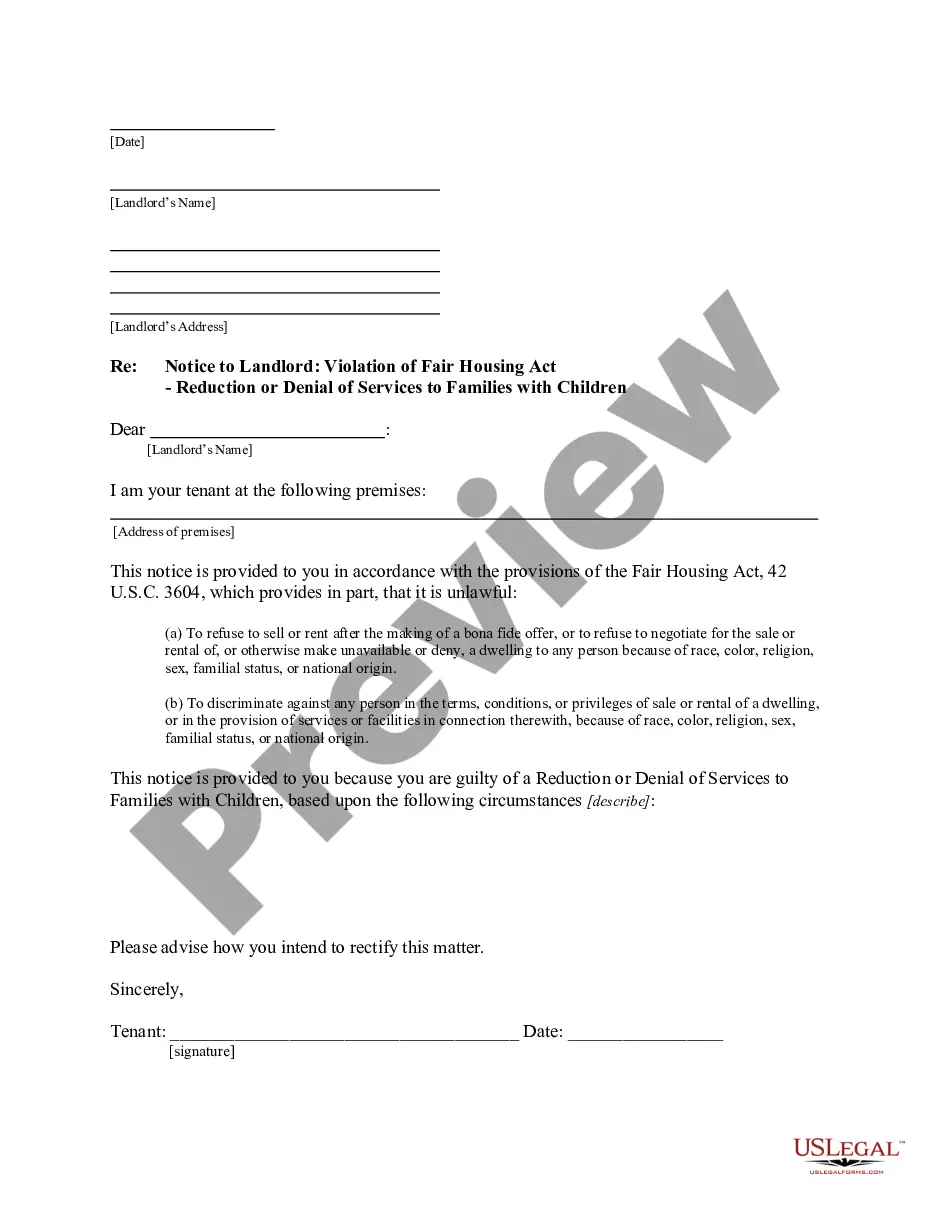
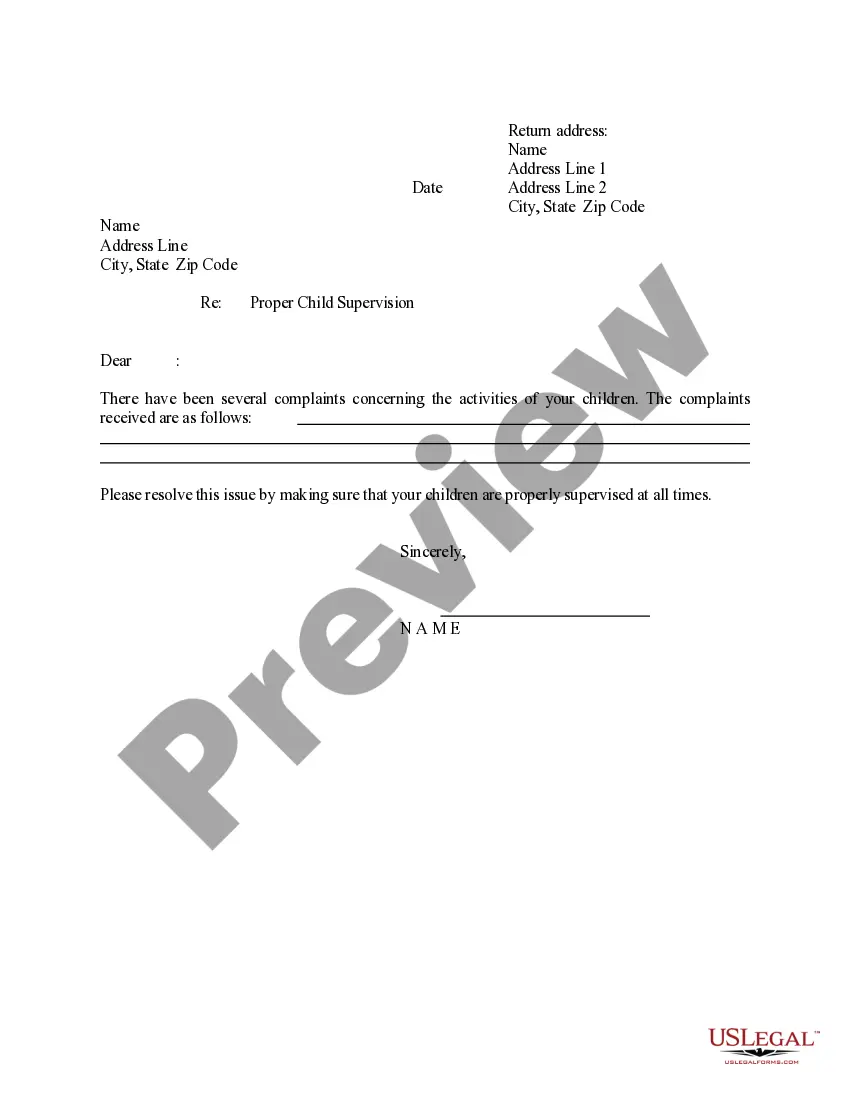
This form is a Letter from Tenant to Landlord about Fair Housing Reduction or Denial of Services to Families with Children. Its primary purpose is to notify the landlord of their violation of the Fair Housing Act by denying or reducing services to families with children. Unlike broader tenant-landlord communication forms, this letter specifically addresses issues of discrimination based on familial status, ensuring that tenants can assert their rights effectively.
What’s included in this form
- Tenant details: Information about the tenant sending the letter.
- Landlord details: Information about the landlord or property owner receiving the notice.
- Statement of violation: A clear statement regarding the alleged Fair Housing Act violation.
- Description of circumstances: Specific details outlining how services were denied or reduced.
- Request for action: A request for the landlord to rectify the situation.

When this form is needed
This form should be used when a tenant believes that their landlord has unlawfully denied or reduced services due to the presence of children in the household. Common scenarios include landlords refusing maintenance or other services that are essential for families, or imposing unfair restrictions that target families with children. Sending this letter helps document the issue formally and encourages the landlord to comply with the Fair Housing Act.
Who should use this form
- Any tenant currently experiencing discrimination from their landlord.
- Families with children who feel that their housing rights are being violated.
- Individuals seeking to assert their rights under the Fair Housing Act.
Steps to complete this form
- Identify the parties: Fill in your name and contact information as the tenant, along with the landlord's details.
- Specify the violation: Clearly mention the specific Fair Housing Act violation related to the denial or reduction of services.
- Describe the circumstances: Provide detailed descriptions of the incidents or issues that support your claim.
- Request action: State what you would like the landlord to do to remedy the situation.
- Sign and date: Ensure the letter is signed and dated appropriately before sending it.
Does this document require notarization?
In most cases, this form does not require notarization. However, some jurisdictions or signing circumstances might. US Legal Forms offers online notarization powered by Notarize, accessible 24/7 for a quick, remote process.
Get your form ready online
Our built-in tools help you complete, sign, share, and store your documents in one place.
Make edits, fill in missing information, and update formatting in US Legal Forms—just like you would in MS Word.
Download a copy, print it, send it by email, or mail it via USPS—whatever works best for your next step.
Sign and collect signatures with our SignNow integration. Send to multiple recipients, set reminders, and more. Go Premium to unlock E-Sign.
If this form requires notarization, complete it online through a secure video call—no need to meet a notary in person or wait for an appointment.
We protect your documents and personal data by following strict security and privacy standards.

Make edits, fill in missing information, and update formatting in US Legal Forms—just like you would in MS Word.

Download a copy, print it, send it by email, or mail it via USPS—whatever works best for your next step.

Sign and collect signatures with our SignNow integration. Send to multiple recipients, set reminders, and more. Go Premium to unlock E-Sign.

If this form requires notarization, complete it online through a secure video call—no need to meet a notary in person or wait for an appointment.

We protect your documents and personal data by following strict security and privacy standards.
Mistakes to watch out for
- Failing to provide clear details about the violation.
- Not including contact information for both parties.
- Sending the letter without being signed or dated.
Benefits of using this form online
- Convenience: Download and edit the form from anywhere, saving time.
- Reliability: Forms are drafted by licensed attorneys to ensure legal accuracy.
- Editability: Easily customize the form to suit your specific situation.
Legal use & context
- Helps tenants assert their rights under the Fair Housing Act.
- Documents instances of discrimination to create a formal record.
- Can be used in disputes before legal action is considered.
Summary of main points
- This form is essential for tenants facing housing discrimination based on familial status.
- Clearly document the violation and your request for corrective actions.
- Utilizing this letter can help protect your rights and promote compliance with the Fair Housing Act.
Looking for another form?
Form popularity
FAQ
The person can establish a case against the landlord by proving four things: that the plaintiff is a member of a protected group; that the plaintiff applied for and was qualified to rent a certain property; that the plaintiff was rejected by the landlord; and that the property remained unrented thereafter.
It is illegal to refuse to rent to someone because of past drug use, though you can consider a history of drug manufacture and dealing. California law prohibits any consumer report from including arrests, indictments or misdemeanors that did not result in a conviction, or crimes that are spent by more than seven years.
It's fair to be angry and scaredthe direct federal fines for violations of the Fair Housing Act are usually $17,000 per violation; total settlements on race, familial status, age and sex discrimination cases often reach well into the six figuresbut those overwhelming emotions are why you should go straight to your
HUD Settles Disability Discrimination Fair Housing Act Case For $80,000.
If you're seeking damages for emotional distress caused by a landlord's discrimination, or punitive damages for especially blatant and intentional discrimination, a lawsuit may well be your best bet. Understand what's involved in suing your landlord. You may file a lawsuit in either federal or state court.
It is illegal to discriminate in the sale or rental of housing, including against individuals seeking a mortgage or housing assistance, or in other housing-related activities. The Fair Housing Act prohibits this discrimination because of race, color, national origin, religion, sex, familial status, and disability.
In the Sale and Rental of Housing: It is illegal discrimination to take any of the following actions because of race, color, religion, sex, disability, familial status, or national origin: Refuse to rent or sell housing. Refuse to negotiate for housing.
Under California law, it is unlawful for a landlord, managing agent, real estate broker, or salesperson to discriminate against a person or harass a person because of the person's race, color, religion, sex (including gender and perception of gender), sexual orientation, marital status, national origin, ancestry,