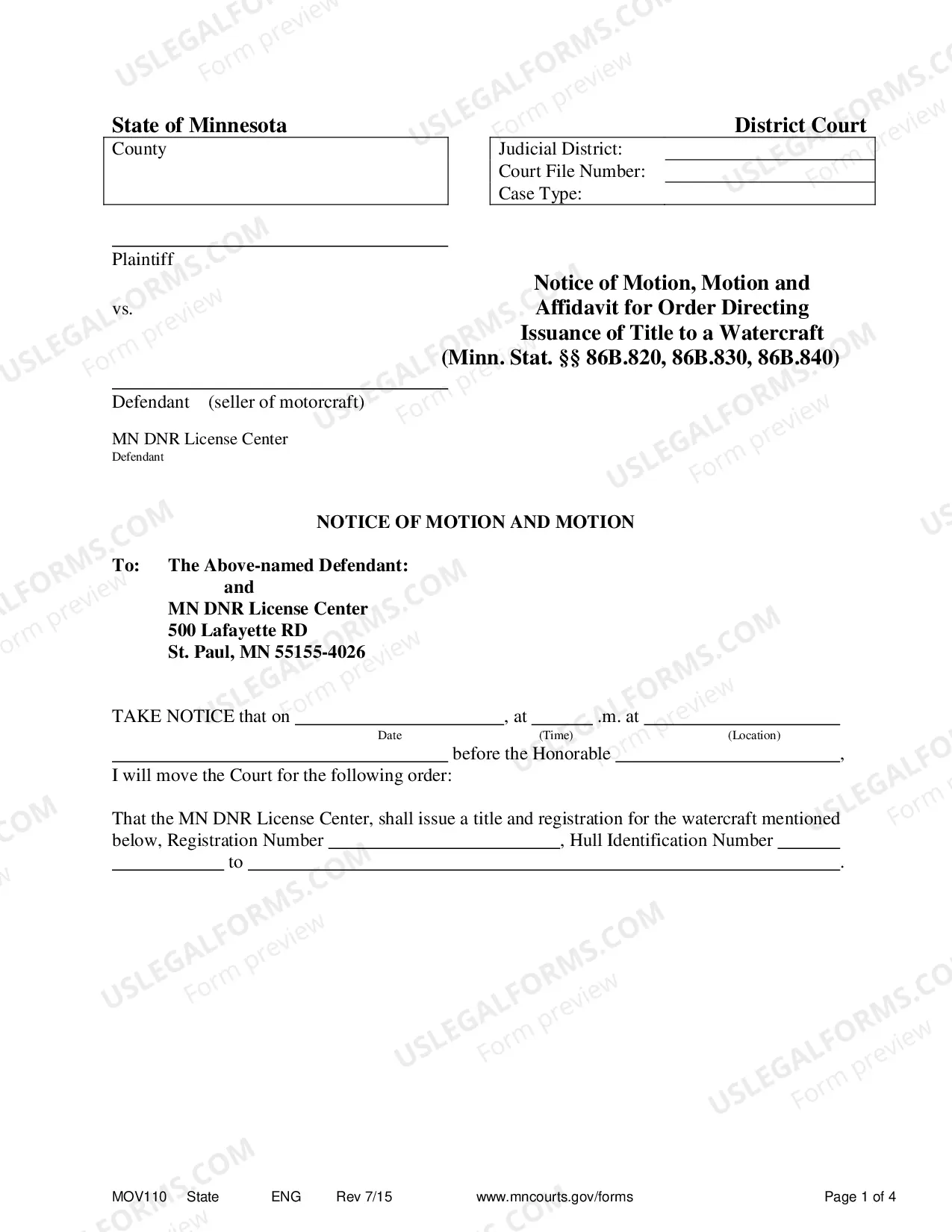
Louisiana Notice of Lien Rights - Individual
About this form
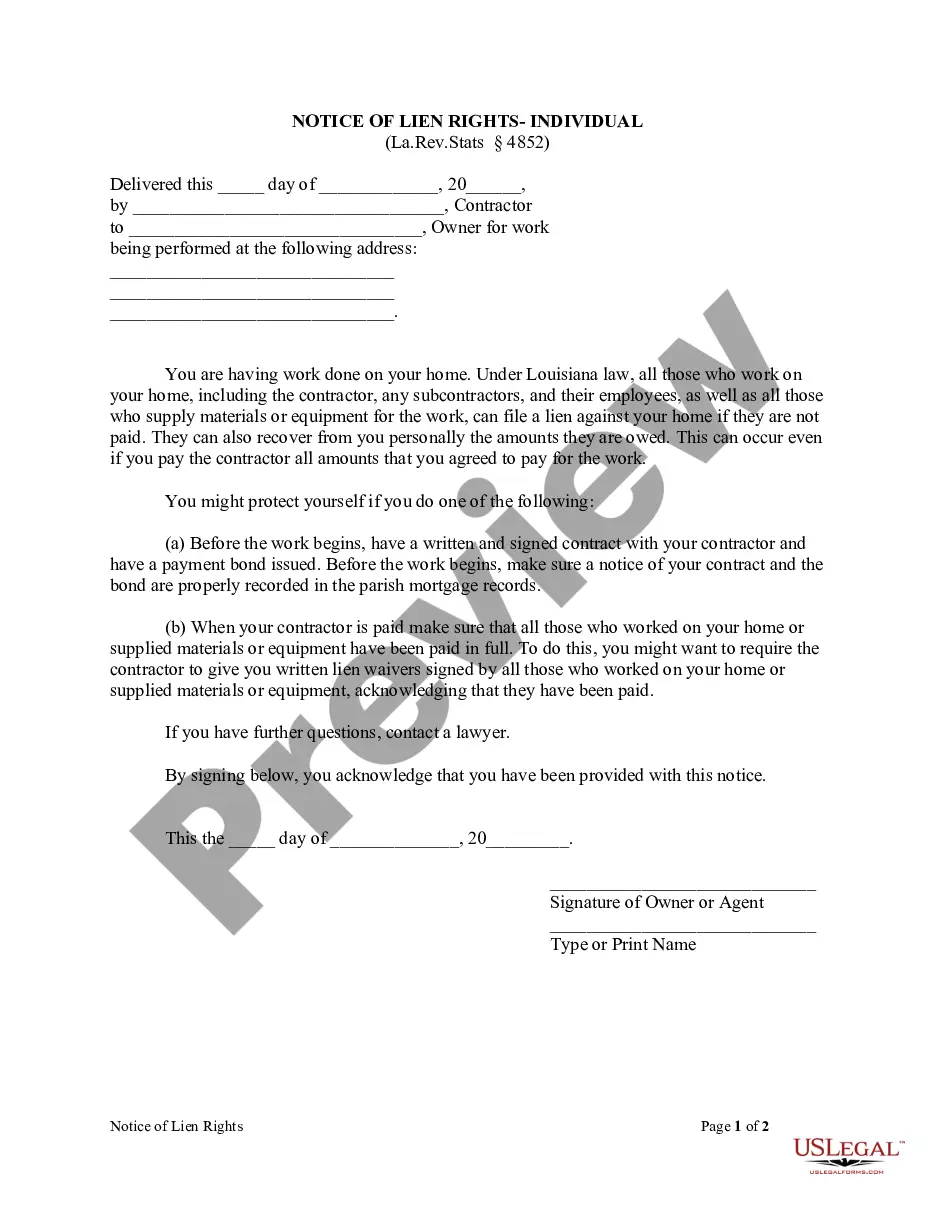
The Notice of Lien Rights - Individual is a legal form used by contractors to inform property owners of impending work on their residential property. This form outlines the contractors' right to file a lien against the property, ensuring that all hiring partiesâcontractors, subcontractors, laborers, and material suppliersâare protected for payment. This form specifically addresses the obligations of the property owner under Louisiana law, setting it apart from similar notification forms used in other states.
Form components explained
- Date of delivery to the owner.
- Name and contact information of the contractor and property owner.
- Address of the residential property being improved.
- Review of lien rights available to contractors and subcontractors.
- Owner's acknowledgment of understanding the notice and its implications.
- Signature lines for both the contractor and the owner.
When to use this document
This form should be used when a contractor plans to begin improvements on a residential property. It provides legal notice to the property owner about the contractorâs lien rights, ensuring that all parties are aware of their financial obligations related to the work performed. It is particularly useful in situations where work will commence without a formal written contract or when specific agreements regarding lien rights are not in place.
Who should use this form
- Contractors and subcontractors managing home improvement projects.
- Property owners who are undertaking renovations or repairs on their homes.
- Individuals involved in home construction or property management.
Steps to complete this form
- Identify and fill in the delivery date of the notice.
- Complete the names of the contractor and the property owner.
- Provide the complete address of the residential property where work will be performed.
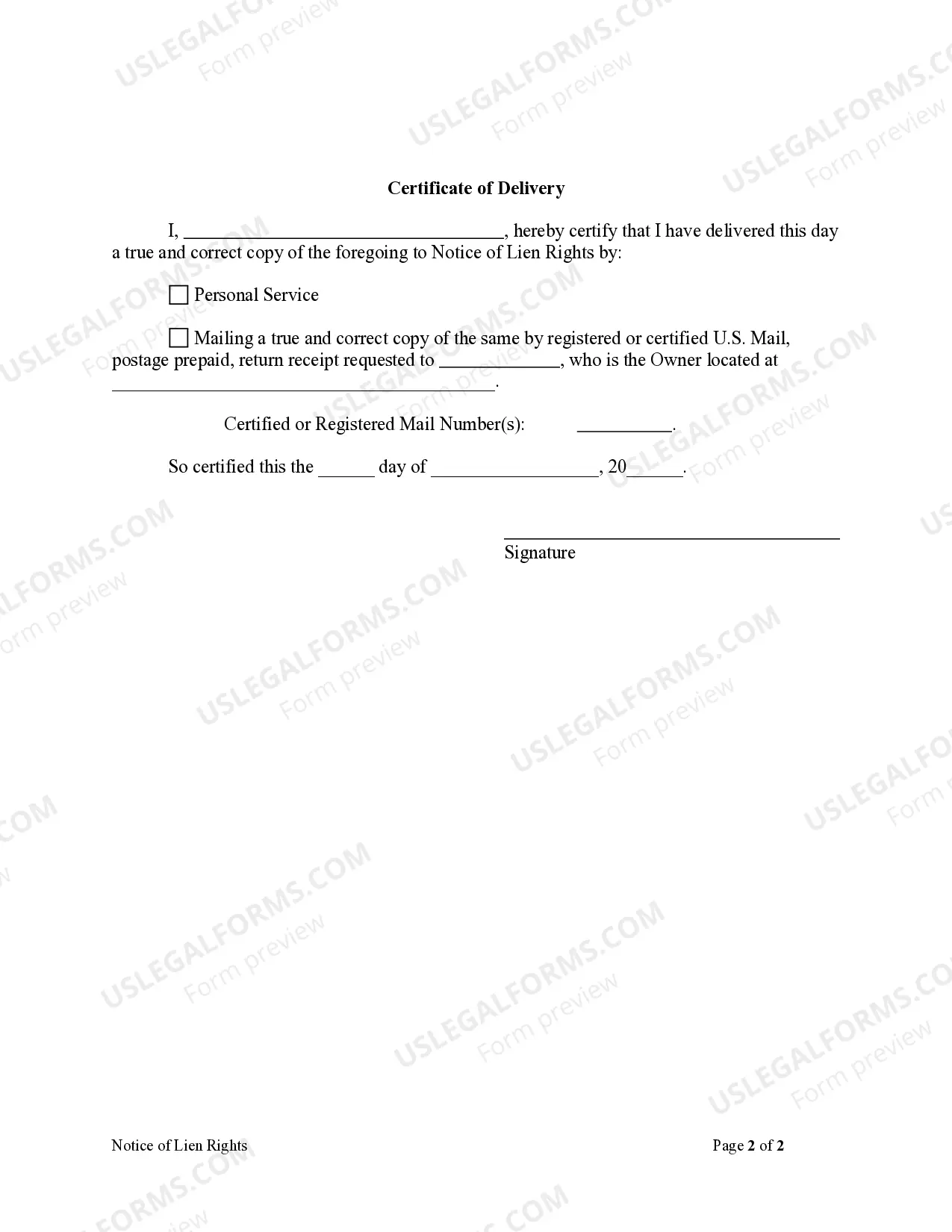
- Have the owner sign the acknowledgment section to confirm receipt of the notice.
- Ensure that both parties retain a copy for their records.
Does this document require notarization?
This form does not typically require notarization unless specified by local law. Therefore, it is advisable for users to check the local regulations in Louisiana to ensure compliance.
Get your form ready online
Our built-in tools help you complete, sign, share, and store your documents in one place.
Make edits, fill in missing information, and update formatting in US Legal Forms—just like you would in MS Word.
Download a copy, print it, send it by email, or mail it via USPS—whatever works best for your next step.
Sign and collect signatures with our SignNow integration. Send to multiple recipients, set reminders, and more. Go Premium to unlock E-Sign.
If this form requires notarization, complete it online through a secure video call—no need to meet a notary in person or wait for an appointment.
We protect your documents and personal data by following strict security and privacy standards.

Make edits, fill in missing information, and update formatting in US Legal Forms—just like you would in MS Word.

Download a copy, print it, send it by email, or mail it via USPS—whatever works best for your next step.

Sign and collect signatures with our SignNow integration. Send to multiple recipients, set reminders, and more. Go Premium to unlock E-Sign.

If this form requires notarization, complete it online through a secure video call—no need to meet a notary in person or wait for an appointment.

We protect your documents and personal data by following strict security and privacy standards.
Common mistakes
- Not delivering the notice prior to the commencement of work.
- Failing to include all required information, such as correct dates or addresses.
- Omitting the ownerâs signature, which can invalidate the notice.
- Using outdated versions of the form that may not reflect current laws.
Benefits of completing this form online
- Convenient access to forms that can be downloaded and filled out immediately.
- Editability allows users to customize the form as needed.
- Access to forms that are drafted by licensed attorneys, ensuring legal reliability.
Looking for another form?


Form popularity
FAQ
The simplest way to prevent liens and ensure that subcontractors and suppliers are paid is to pay with joint checks. This is when both parties endorse the check. Compare the contractor's materials or labor bill to the schedule of payments in your contract and the Preliminary Notices.
Who you are. The services or materials you provided. The last date you provided the services or materials. How much payment should be. The date on which you will file a lien if you do not receive payment. How the debtor should pay.
If you're claiming a lien on real property, it must be filed in the recorder's office of the county where the property is located. Expect to pay a filing fee between $25 and $50 depending on the location where you file.
How Liens Work. A lien provides a creditor with the legal right to seize and sell the collateral property or asset of a borrower who fails to meet the obligations of a loan or contract. The property that is the subject of a lien cannot be sold by the owner without the consent of the lien holder.
A judgment lien in Louisiana will remain attached to the debtor's property (even if the property changes hands) for ten years.
If the Notice of Contract is filed, a contractor has 60 days from the filing of a Notice of Acceptance to file a Louisiana mechanics lien. If no Notice of Contract has been filed, a contractor has 60 days from completion on the project to file a Louisiana mechanics lien if the contract amount is less than $25,000.
Complete the Louisiana Statement of Claim and Privilege form. Record the claim form with the recorder of mortgages office in the parish where the property is located. Serve notice of the lien claim to the property owner.