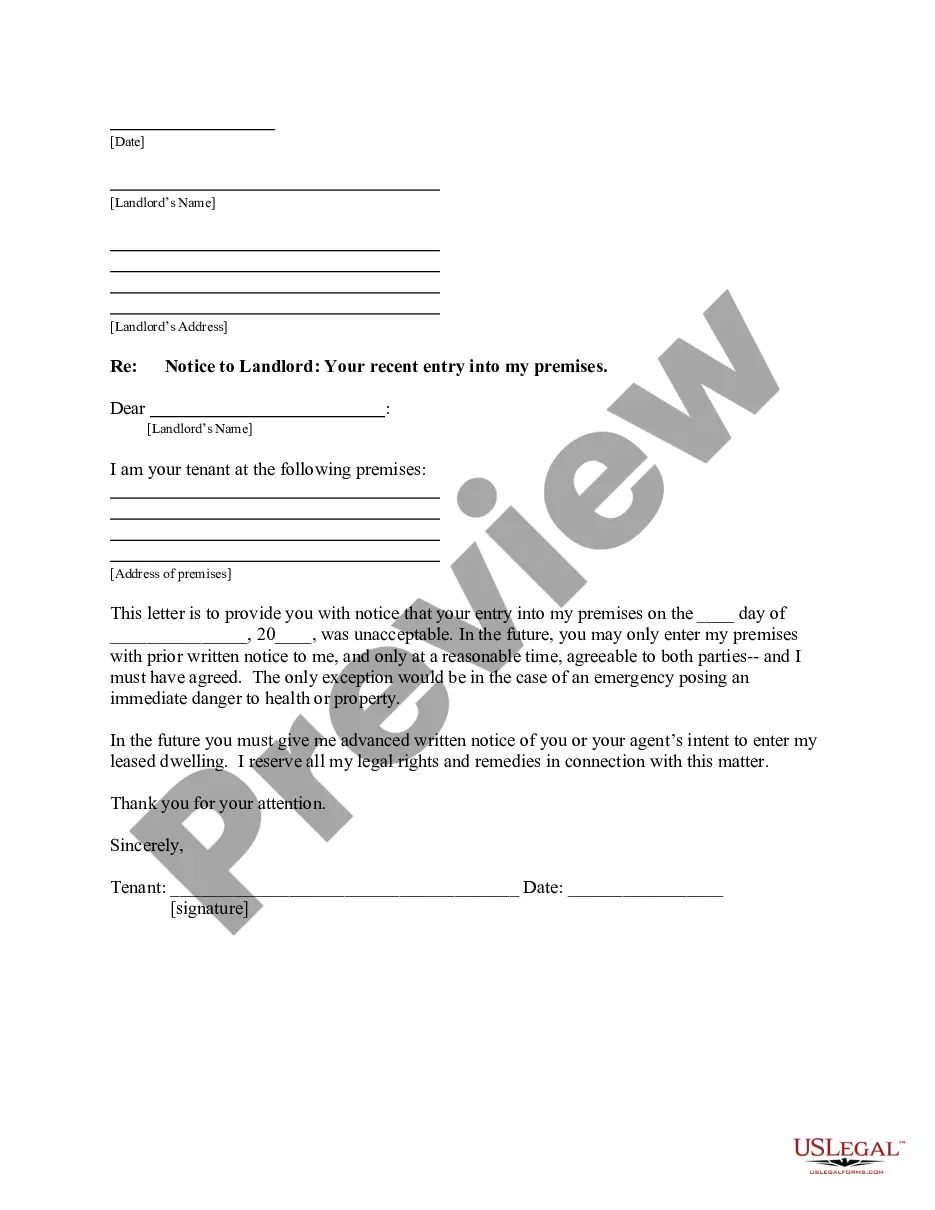
Kentucky Letter from Tenant to Landlord containing Notice to landlord to cease retaliatory threats to evict or retaliatory eviction
What this document covers
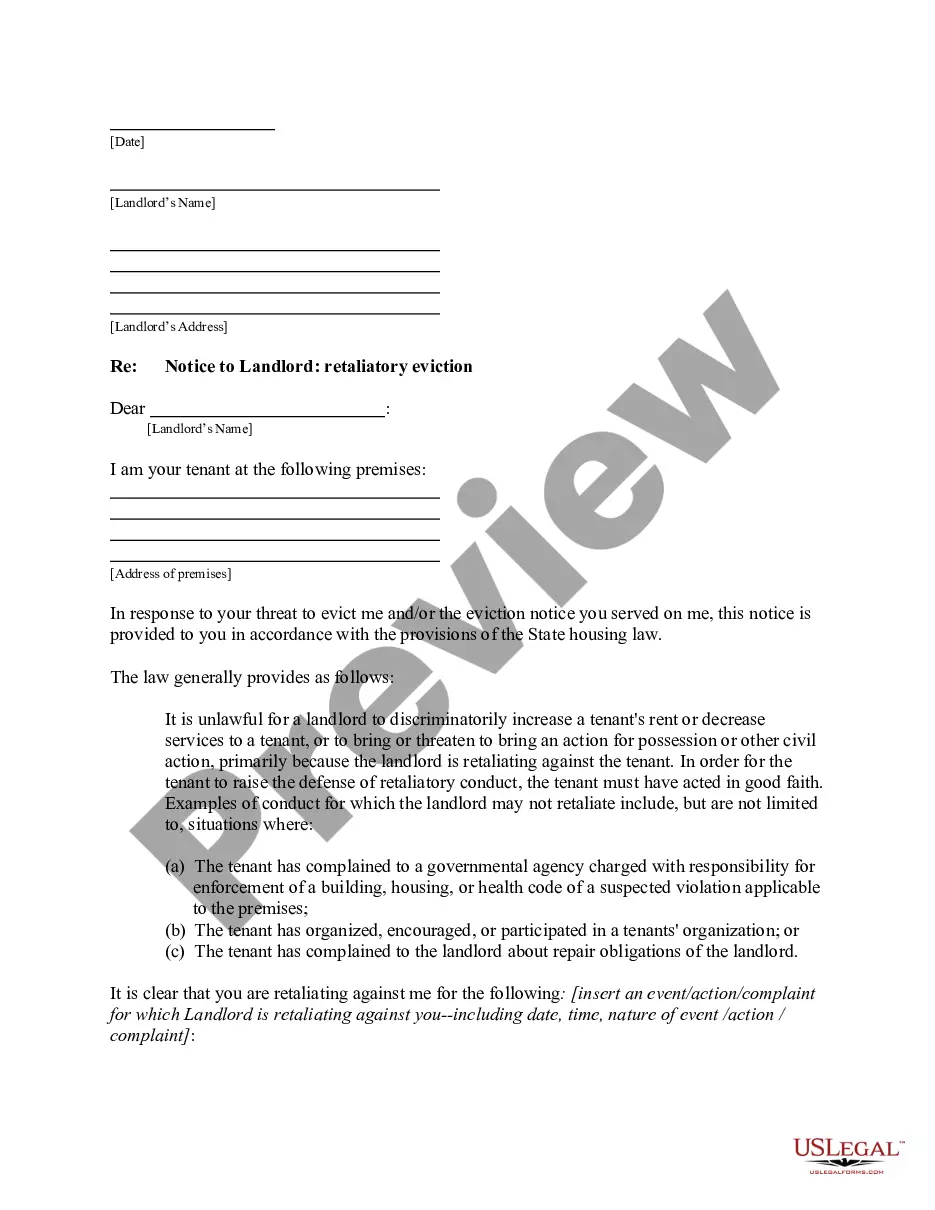
This form is a formal letter from a tenant to their landlord, addressing the landlord's retaliatory threats to evict the tenant. It serves to notify the landlord that the tenant believes the eviction threats are unlawful as they are made in retaliation for the tenant's legally protected actions. This notice is particularly crucial as it reinforces the tenant's rights and complies with state housing laws regarding retaliatory eviction practices.
Form components explained
- Identification of the tenant and landlord.
- Specific details about the retaliatory threat made by the landlord.
- A statement affirming the tenant's good faith actions that triggered the landlord's response.
- Reference to applicable state housing laws.
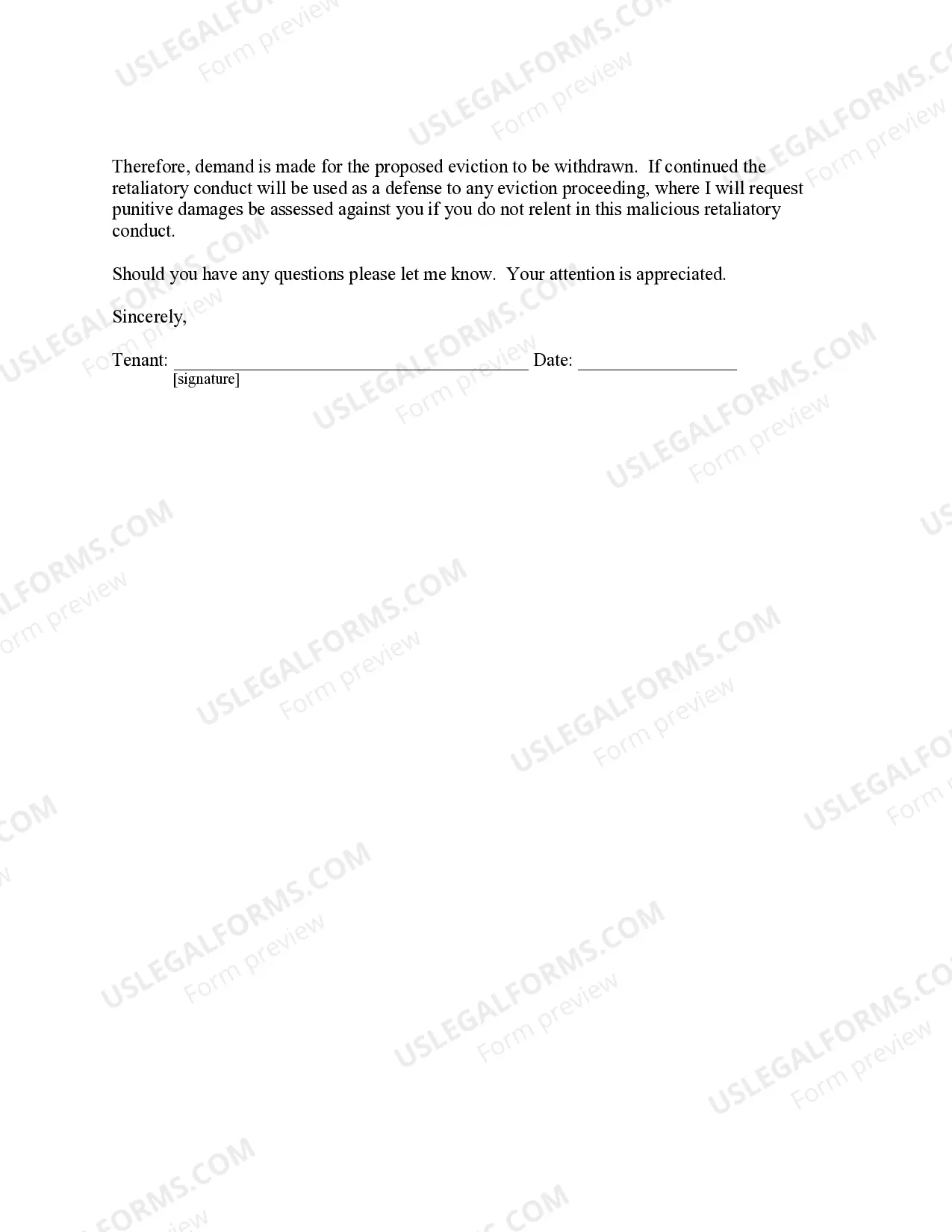
- A request to cease all retaliatory actions.
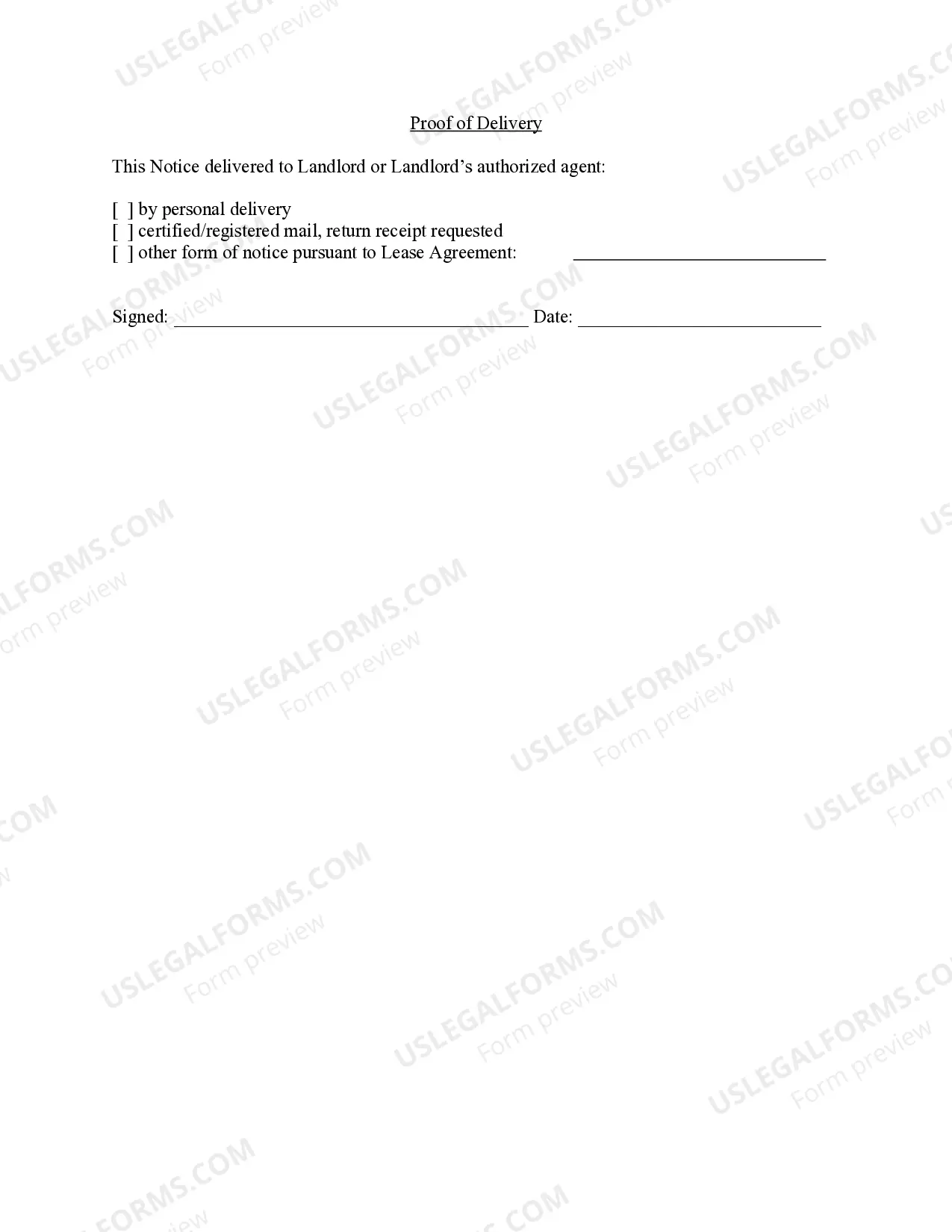
- Proof of delivery method for the notice.


When this form is needed
This form is necessary when a landlord threatens eviction as retaliation against a tenant for exercising their rights. Situations may include when a tenant has reported living conditions to a government agency, organized tenant groups, or requested necessary repairs from the landlord. Using this notice can help clarify the tenant's position and legally document the threat of eviction.
Who this form is for
- Tenants facing eviction threats that they believe are retaliatory.
- Tenants who have reported violations or requested repairs from their landlord.
- Individuals seeking to assert their rights under housing laws.
Completing this form step by step
- Identify yourself as the tenant and provide your landlord's contact information.
- Clearly state the retaliatory eviction threat made by your landlord.
- Cite specific actions you took that protect your rights as a tenant.
- Sign and date the notice to affirm its authenticity.
- Deliver the notice to your landlord or their authorized representative and document the method of delivery.
Notarization requirements for this form
In most cases, this form does not require notarization. However, some jurisdictions or signing circumstances might. US Legal Forms offers online notarization powered by Notarize, accessible 24/7 for a quick, remote process.
Get your form ready online
Our built-in tools help you complete, sign, share, and store your documents in one place.
Make edits, fill in missing information, and update formatting in US Legal Forms—just like you would in MS Word.
Download a copy, print it, send it by email, or mail it via USPS—whatever works best for your next step.
Sign and collect signatures with our SignNow integration. Send to multiple recipients, set reminders, and more. Go Premium to unlock E-Sign.
If this form requires notarization, complete it online through a secure video call—no need to meet a notary in person or wait for an appointment.
We protect your documents and personal data by following strict security and privacy standards.

Make edits, fill in missing information, and update formatting in US Legal Forms—just like you would in MS Word.

Download a copy, print it, send it by email, or mail it via USPS—whatever works best for your next step.

Sign and collect signatures with our SignNow integration. Send to multiple recipients, set reminders, and more. Go Premium to unlock E-Sign.

If this form requires notarization, complete it online through a secure video call—no need to meet a notary in person or wait for an appointment.

We protect your documents and personal data by following strict security and privacy standards.
Common mistakes
- Failing to provide specific examples of protected actions.
- Not delivering the notice or failing to document the delivery method.
- Neglecting to keep a copy of the notice for personal records.
Why use this form online
- Convenient access to legal forms at any time.
- Editable templates allow for customization to fit individual circumstances.
- Reliable formats ensure compliance with legal standards.
Legal use & context
This form is legally significant as it helps tenants assert their rights under housing laws. It provides a documented response to a landlord's potential retaliatory eviction, which can be useful in case of future legal disputes. Understanding the legal framework ensures that tenants are aware of their protections and the actions they can take against unlawful eviction threats.
Summary of main points
- Use this form to formally notify your landlord of retaliatory eviction threats.
- Be specific about the actions that constitute retaliation and your own good faith actions.
- Deliver the notice according to state laws to ensure it is legally valid.
Looking for another form?
Form popularity
FAQ
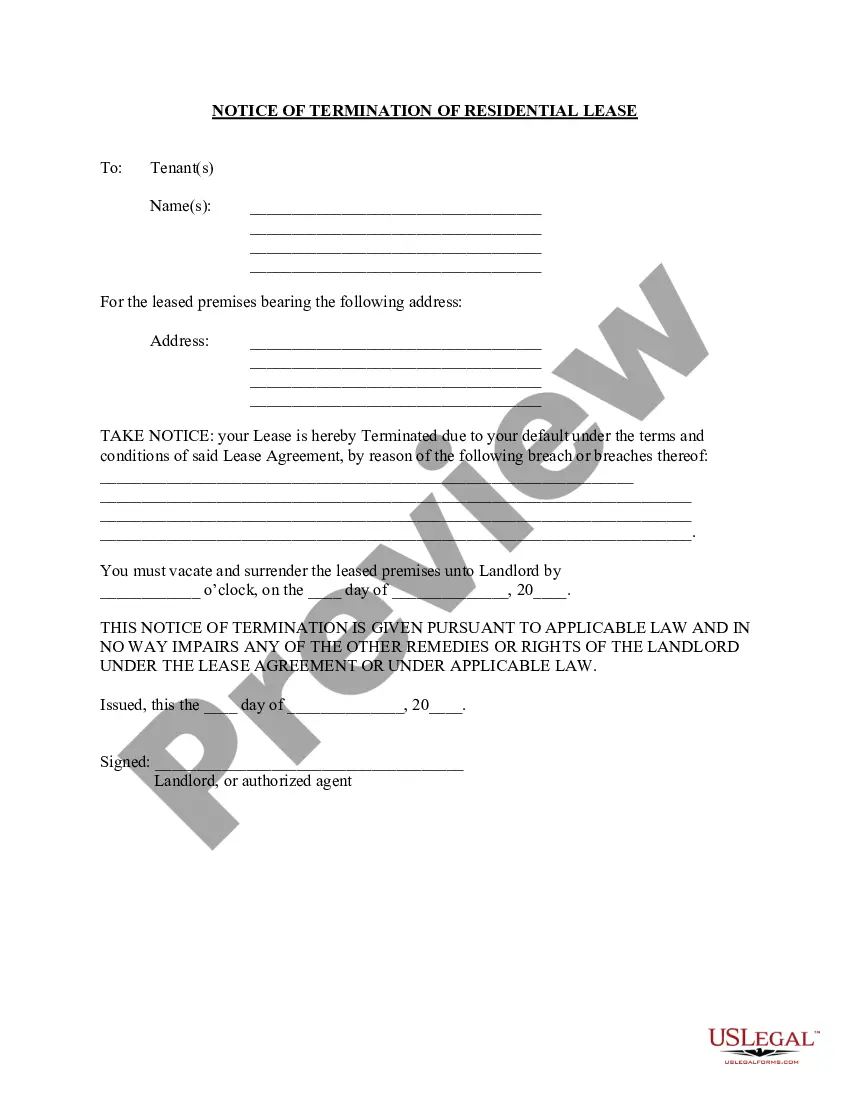
Address the Tenant(s) Named in the Residential Lease. List the Lease Information. Notify the Tenant of the Eviction. Give a Reason for the Eviction. Serve the Eviction Notice to the Tenant(s)
Addresses. Date. Tenant names. Status and date of the lease. Why the eviction notice is served (clear and concise explanation) Date tenant must vacate the property. Proof of service or delivery of notice.
If your landlord breaches the warranty of habitability or the warranty of quiet enjoyment, you may be able to sue her to recover monetary damages.In some states, such as California and Arizona, you may be able to seek emotional distress damages if the landlord's actions were particularly egregious.
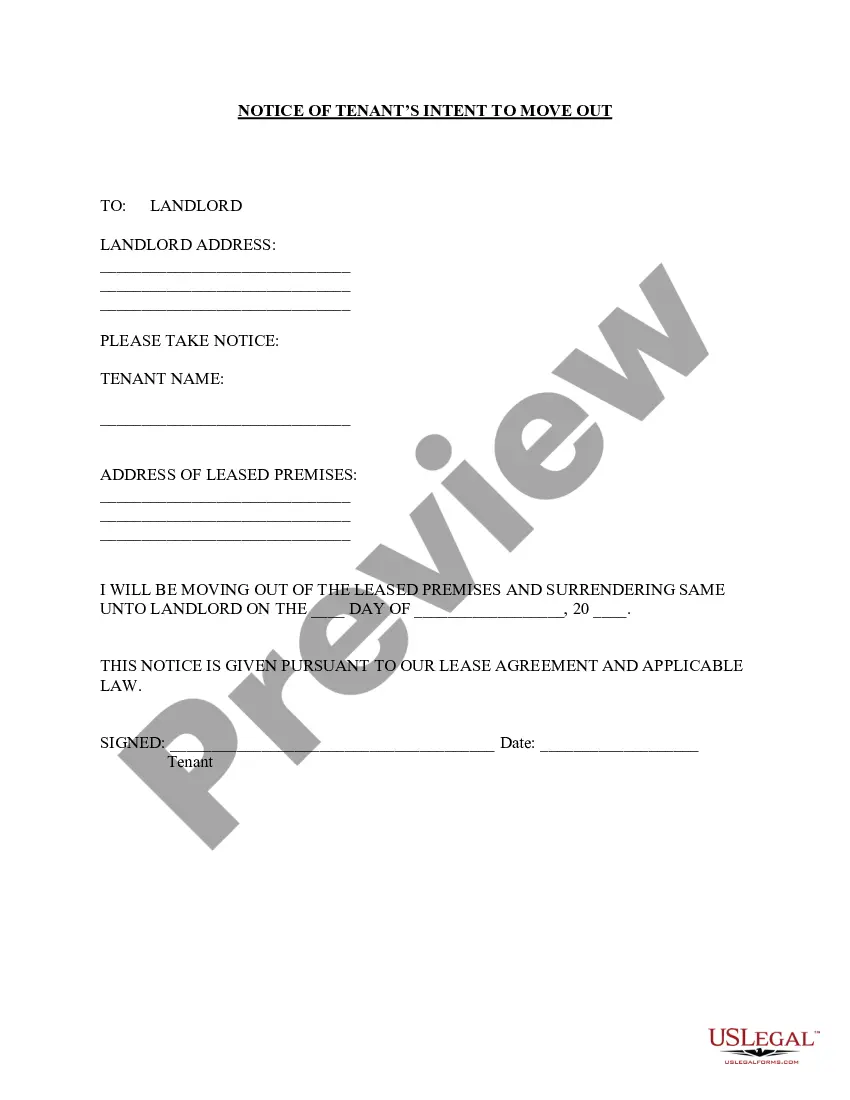
Dear (Name of landlord or manager), This letter constitutes my written (number of days' notice that you need to give based on your lease agreement)-day notice that I will be moving out of my apartment on (date), the end of my current lease. I am leaving because (new job, rent increase, etc.)
A landlord cannot legally evict you without a court order, whether or not you have a lease.) How long does it take for a landlord to evict a tenant? A landlord can evict a tenant only by going through a formal eviction proceeding, which can take a few weeks from start to finish.
If you're seeking damages for emotional distress caused by a landlord's discrimination, or punitive damages for especially blatant and intentional discrimination, a lawsuit may well be your best bet. Understand what's involved in suing your landlord. You may file a lawsuit in either federal or state court.
A revenge or retaliatory eviction is when a landlord tries to evict a tenant because they ask for repairs or complain about poor conditions. You're at risk if you are an assured shorthold tenant.If you have these types of tenancy, your landlord must prove to the court that there's a legal reason to evict you.
Harassment and illegal evictions. It's a crime for your landlord to harass you or try to force you out of a property without using proper procedures. If this happens, you may have a right to claim damages through the court.
The date you're submitting your notice. The date you're moving. Information on your current home the address and the landlord's name. A statement declaring that you intend to leave the home. A straightforward statement that you're providing this letter, 30 days out, per your lease agreement.