Michigan Revocation of Postnuptial Property Agreement
What this document covers
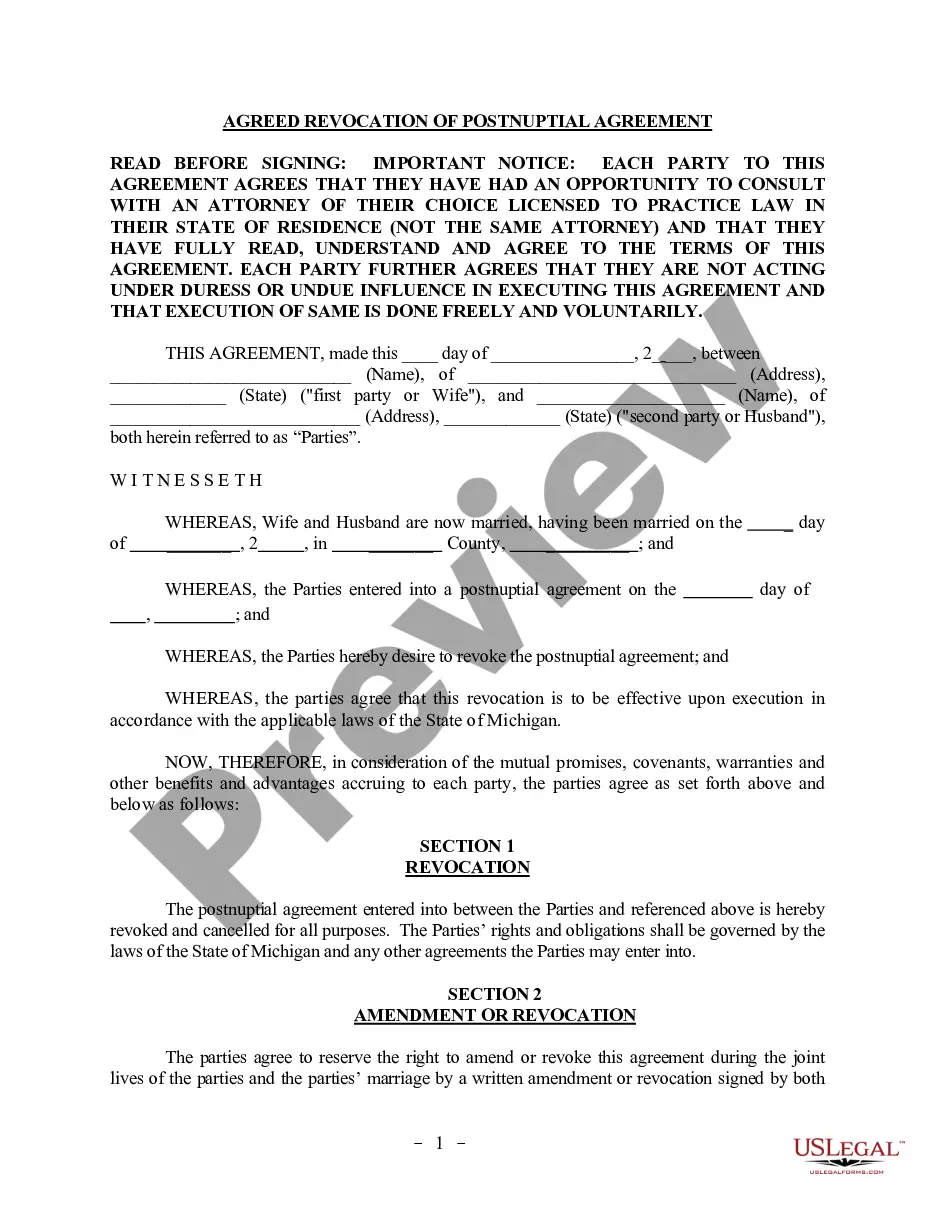
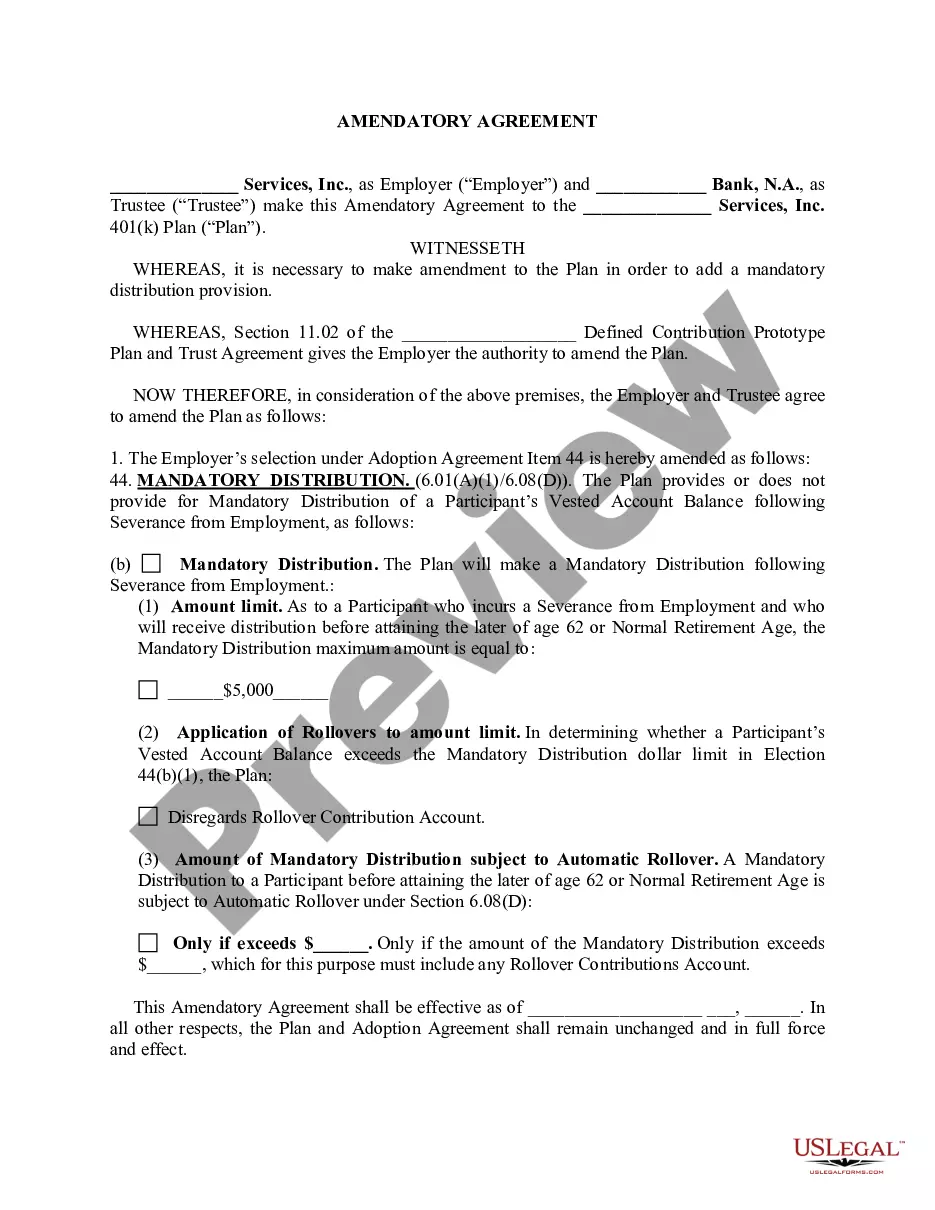
The Revocation of Postnuptial Property Agreement is a legal document used by spouses to formally revoke an existing postnuptial agreement. This form ensures that both parties agree to cancel the earlier arrangement, thereby returning their property rights to the default legal framework without impact from the revoked agreement. This differs from a postnuptial agreement, as it nullifies rather than establishes property rights after marriage.
Key components of this form
- Statement of revocation outlining the original postnuptial agreement.
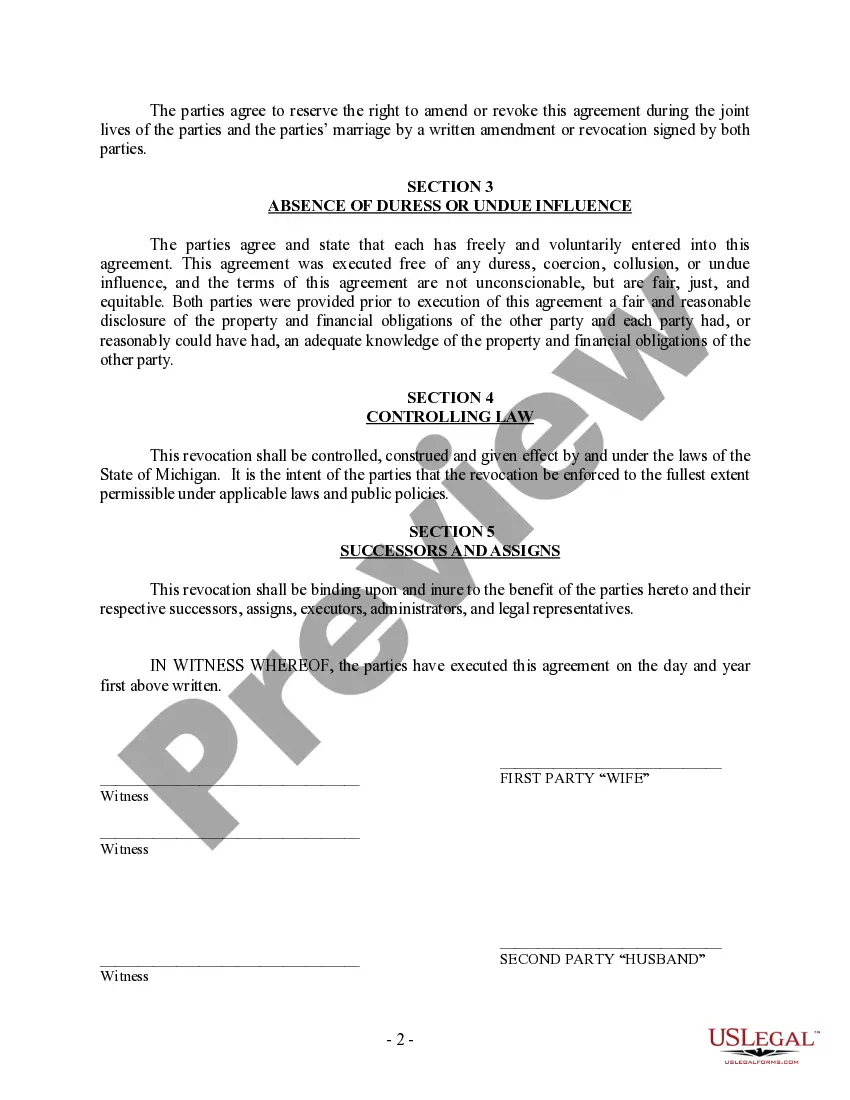
- Clauses regarding the absence of duress and the voluntary nature of the agreement.
- Specification of governing law, usually the law of Michigan.
- Details for potential future amendments or further revocations.
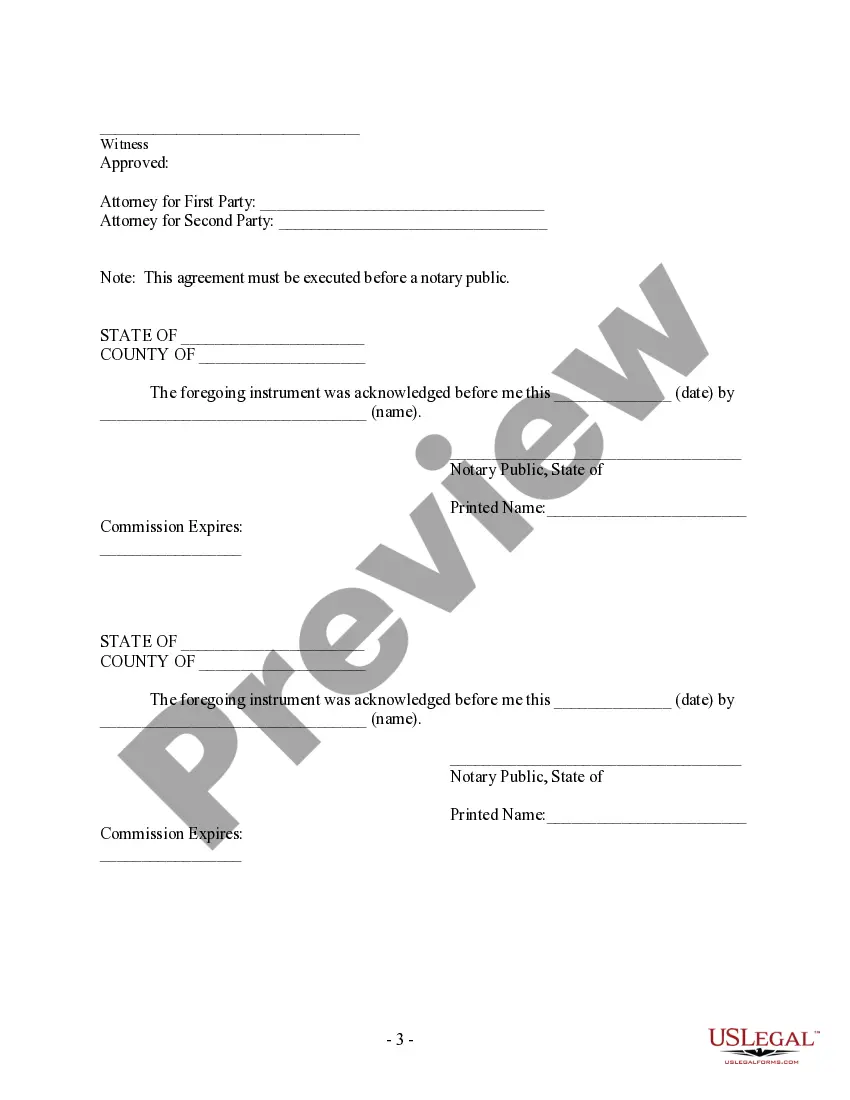
- Signature sections for both parties and required witnesses.
- Notary acknowledgment sections to validate the execution of the document.

Situations where this form applies
This form is appropriate to use when both parties wish to revoke an existing postnuptial property agreement, often due to changes in circumstances, the desire to simplify their financial arrangements, or reconciliation efforts. It is essential to ensure that both spouses are in agreement regarding the revocation to prevent future legal disputes.
Who can use this document
- Married couples who have previously entered into a postnuptial agreement and wish to revoke it.
- Individuals who are seeking to alter their financial and property arrangements without the constraints of a postnuptial agreement.
- Couples considering reconciliation and needing to revert to default legal implications regarding property ownership.
Instructions for completing this form
- Identify the names of both parties and the date of revocation.
- Review the terms of the original postnuptial agreement being revoked.
- Both parties should read and understand each clause before signing.
- Each party must sign the agreement in the presence of a notary and witnesses.
- Ensure that all notarial sections are completed accurately post-signature.
Does this document require notarization?
Yes, this form must be notarized to be legally valid. All parties must sign the document in the presence of a notary public to ensure authenticity. US Legal Forms offers integrated online notarization services, allowing for secure video calls to finalize the document without needing to travel.
Get your form ready online
Our built-in tools help you complete, sign, share, and store your documents in one place.
Make edits, fill in missing information, and update formatting in US Legal Forms—just like you would in MS Word.
Download a copy, print it, send it by email, or mail it via USPS—whatever works best for your next step.
Sign and collect signatures with our SignNow integration. Send to multiple recipients, set reminders, and more. Go Premium to unlock E-Sign.
If this form requires notarization, complete it online through a secure video call—no need to meet a notary in person or wait for an appointment.
We protect your documents and personal data by following strict security and privacy standards.

Make edits, fill in missing information, and update formatting in US Legal Forms—just like you would in MS Word.

Download a copy, print it, send it by email, or mail it via USPS—whatever works best for your next step.

Sign and collect signatures with our SignNow integration. Send to multiple recipients, set reminders, and more. Go Premium to unlock E-Sign.

If this form requires notarization, complete it online through a secure video call—no need to meet a notary in person or wait for an appointment.

We protect your documents and personal data by following strict security and privacy standards.
Avoid these common issues
- Neglecting to have the agreement signed in front of a notary public and witnesses.
- Failing to ensure both parties fully understand the implications of revocation.
- Not including the necessary dates or signatures, leading to an invalid document.
Advantages of online completion
- Convenient access to legal forms without the need for in-person visits.
- Editable templates that allow customization to fit specific needs.
- Reliable and up-to-date content drafted by licensed attorneys.
Looking for another form?
Form popularity
FAQ
The three most common grounds for nullifying a prenup are unconscionability, failure to disclose, or duress and coercion.Duress and coercion can also invalidate a prenup. If the prenup was signed the day before your wedding, it may appear that the parties didn't have much time to fully review the agreement.
Postnuptial agreements are generally enforceable if the parties of the document adhere to all state laws regarding inheritance, child custody, visitation and monetary support if a divorce does occur.This may also come with a will or other legal document.
If a spouse is able to prove non-disclosure of all previous assets or property, then the prenuptial agreement can be considered void. Second, if a spouse is able to prove that he or she was compelled to sign the prenuptial agreement under stressful circumstances, then the prenup can be invalidated.
In general, you should expect that a postnuptial agreement will receive scrutiny from the court before it decides to enforce the agreement. As your family law attorney would advise you, these agreements are not usually signed under the best of circumstances in the marriage.
The three most common grounds for nullifying a prenup are unconscionability, failure to disclose, or duress and coercion.Duress and coercion can also invalidate a prenup. If the prenup was signed the day before your wedding, it may appear that the parties didn't have much time to fully review the agreement.
Per , since postnuptial agreements generally handle the same issues that prenuptial agreements address, the same circumstances that can cause a court to void part or all of a prenuptial agreement also apply to a postnuptial. Like a prenuptial, a postnuptial agreement should be in written form.
Reasons a Judge Can Overturn a Prenuptial Agreement There are no specific rules that state what will overturn a prenup.Neither person should be in a state of duress or under any pressure to sign the prenup. Any indication of coercion or lack of willingness can give way for a divorce judge to overturn the agreement.
Are Post-Nuptial Agreements Legally Binding? Post-Nuptial Agreements are usually legally binding and the position has been strengthened since 2008 following a Privy Council judgement.