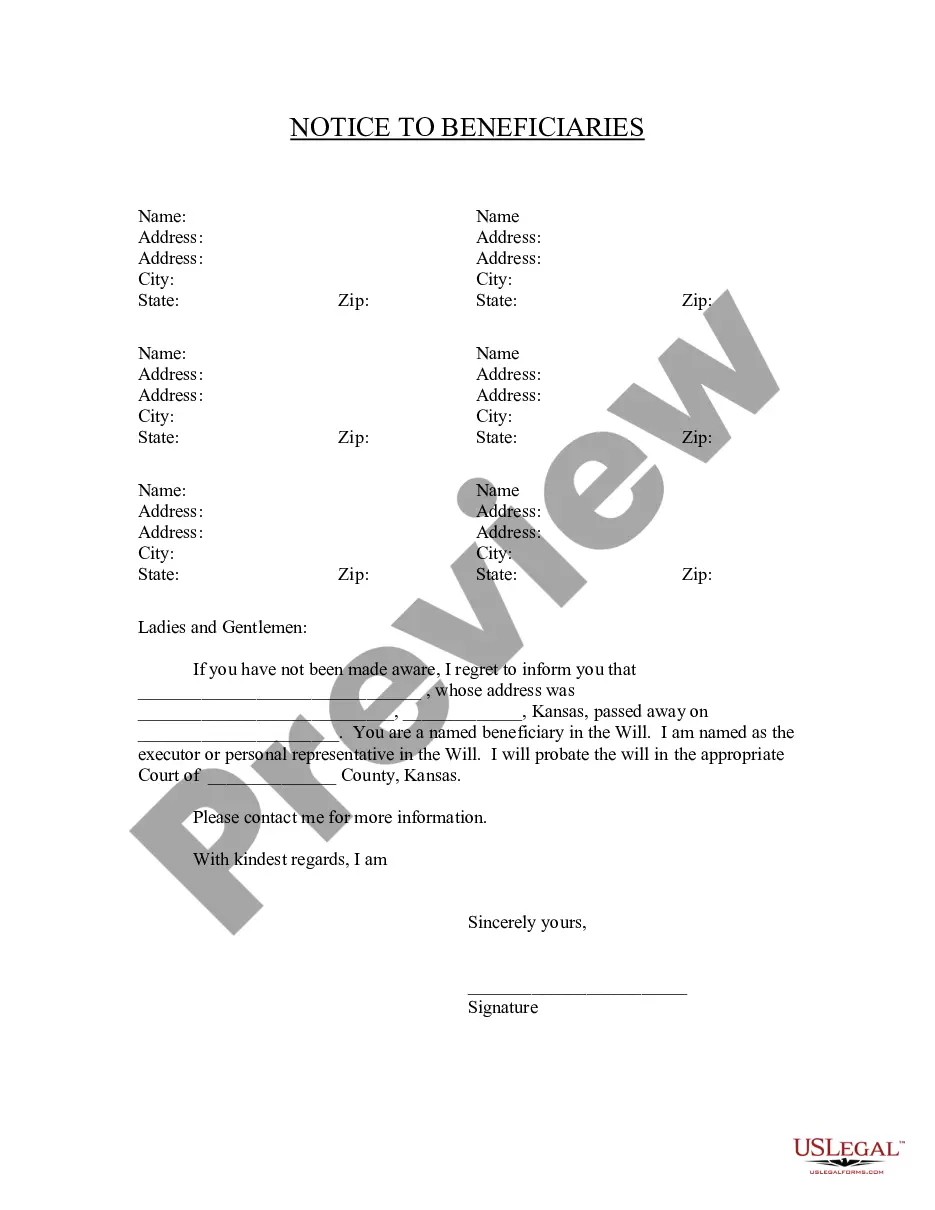
Kansas Notice to Beneficiaries of being Named in Will
Understanding this form
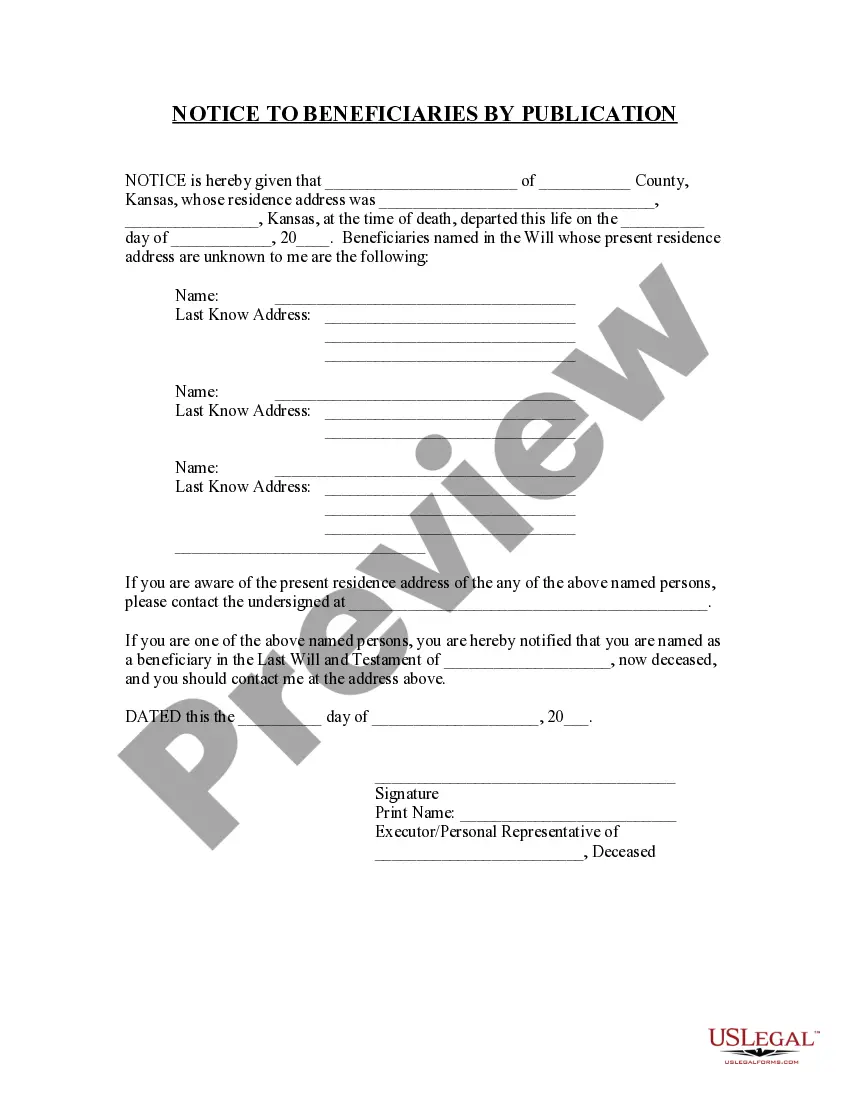
The Notice to Beneficiaries of being Named in Will is a legal document used by an executor or personal representative to formally inform individuals named as beneficiaries in a deceased person's will. This notice serves to ensure that beneficiaries are aware of their status and includes options for notifying beneficiaries whose locations are unknown through public announcement. It is distinct from other legal notices as it specifically relates to estate administration and the probate process.
What’s included in this form
- Information about the deceased, including name and address.
- The name and contact information of the executor or personal representative.
- Dates related to the deceased's passing and the probate process.
- Details of the beneficiaries named in the will.
- A publication notice section for beneficiaries whose addresses are unknown.

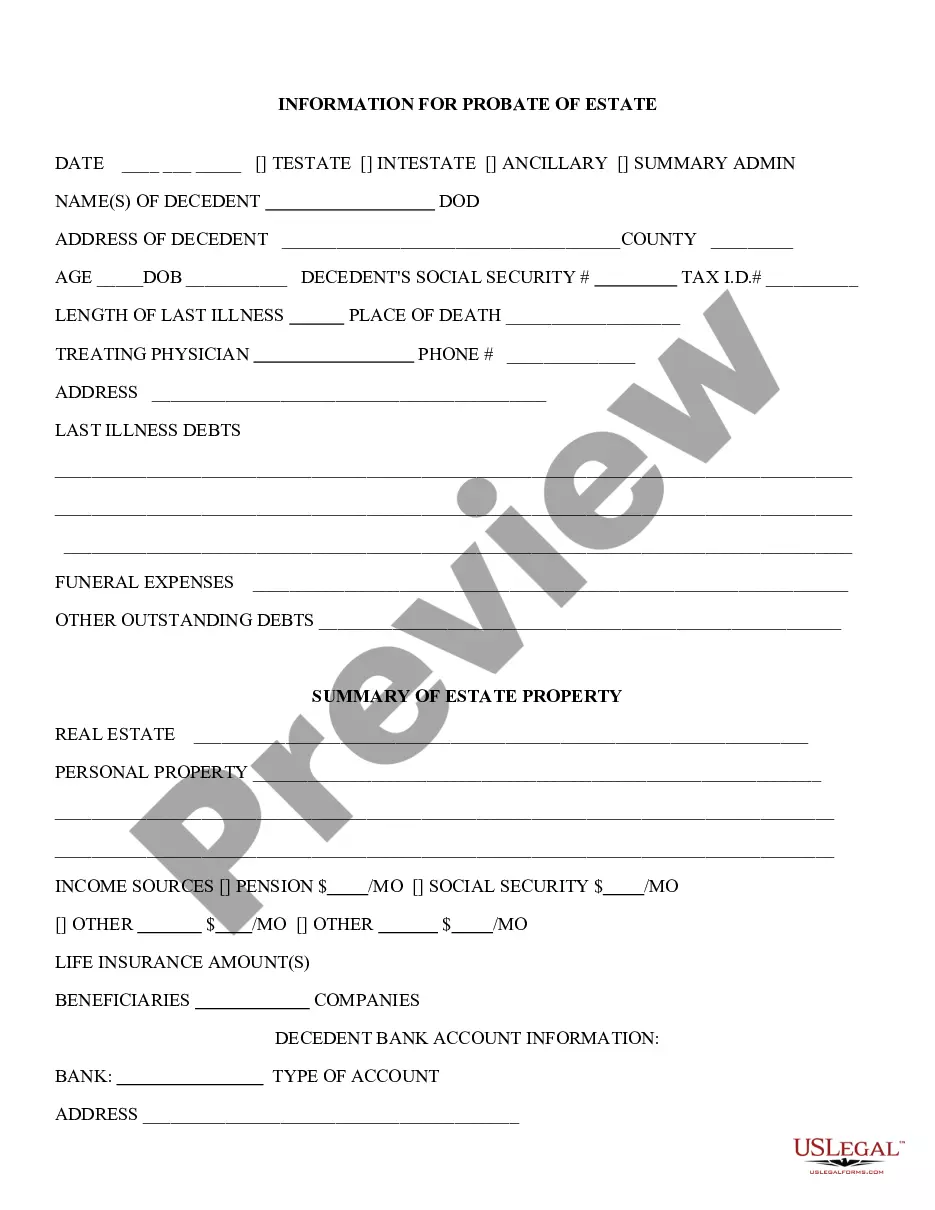
When to use this document
This form is needed when an executor or personal representative must notify beneficiaries that they are named in a will after someone has passed away. It is essential in situations where beneficiaries may be unaware of their designation or whereabouts, ensuring that all parties are informed and involved in the probate process.
Who should use this form
- Executors or personal representatives of an estate.
- Individuals managing the estate of a deceased person in a legal capacity.
- Anyone responsible for ensuring that beneficiaries are informed of their status in a will.
Completing this form step by step
- Enter the name and address of the deceased.
- Fill in the date of death and the relevant probate court information.
- Include your name and signature as the executor or personal representative.
- List the beneficiaries and their last known addresses, if available.
- If necessary, complete the publication notice for beneficiaries whose addresses are unknown.
Does this document require notarization?
This form does not typically require notarization unless specified by local law. However, check with your local probate court for any additional requirements that may apply to your jurisdiction.
Get your form ready online
Our built-in tools help you complete, sign, share, and store your documents in one place.
Make edits, fill in missing information, and update formatting in US Legal Forms—just like you would in MS Word.
Download a copy, print it, send it by email, or mail it via USPS—whatever works best for your next step.
Sign and collect signatures with our SignNow integration. Send to multiple recipients, set reminders, and more. Go Premium to unlock E-Sign.
If this form requires notarization, complete it online through a secure video call—no need to meet a notary in person or wait for an appointment.
We protect your documents and personal data by following strict security and privacy standards.

Make edits, fill in missing information, and update formatting in US Legal Forms—just like you would in MS Word.

Download a copy, print it, send it by email, or mail it via USPS—whatever works best for your next step.

Sign and collect signatures with our SignNow integration. Send to multiple recipients, set reminders, and more. Go Premium to unlock E-Sign.

If this form requires notarization, complete it online through a secure video call—no need to meet a notary in person or wait for an appointment.

We protect your documents and personal data by following strict security and privacy standards.
Common mistakes
- Failing to include all named beneficiaries.
- Omitting the necessary contact information for the executor.
- Incorrectly stating the date of death.
- Not following proper publication procedures if beneficiaries are unknown.
Why complete this form online
- Easy to download and access from anywhere.
- Editability allows for customization based on specific circumstances.
- Drafted by licensed attorneys to ensure legal validity.
- Quick access to necessary forms without the need for in-person visits.
Looking for another form?

Form popularity
FAQ
What are my rights as a beneficiary?A beneficiary is entitled to be told if they are named in a person's will. They are also entitled to be told what, if any, property/possessions have been left to them, and the full amount of inheritance they will receive.
Call the probate court to obtain the name and phone number of the executor, if you cannot obtain it from family members. Ask the executor of the will whether you are a beneficiary in your relative's will. Ask for a copy of the will so you can verify the information he provided.
As Executor, you should notify beneficiaries of the estate within three months after the Will has been filed in Probate Court. For beneficiaries of assets that are not included in the will (and therefore do not pass through Probate) there are no specific notification requirements.
The person named as the Executor in the Will (or the Administrator if there is no Will) is responsible for contacting all of the Beneficiaries. This person should promptly notify everyone who has an interest in the Estate, advising what their entitlement is, to avoid any confusion later on in the process.
The person named as the Executor in the Will (or the Administrator if there is no Will) is responsible for contacting all of the Beneficiaries. This person should promptly notify everyone who has an interest in the Estate, advising what their entitlement is, to avoid any confusion later on in the process.
All taxes and liabilities paid from the estate, including medical expenses, attorney fees, burial or cremation expenses, estate sale costs, appraisal expenses, and more. The executor should keep all receipts for any services or transactions needed to liquidate the assets of the deceased.
Beneficiaries of a will must be notified after the will is accepted for probate. 3feff Moreover, probated wills are automatically placed in the public record. If the will is structured to avoid probate, there are no specific notification requirements. 4feff This is relatively rare.