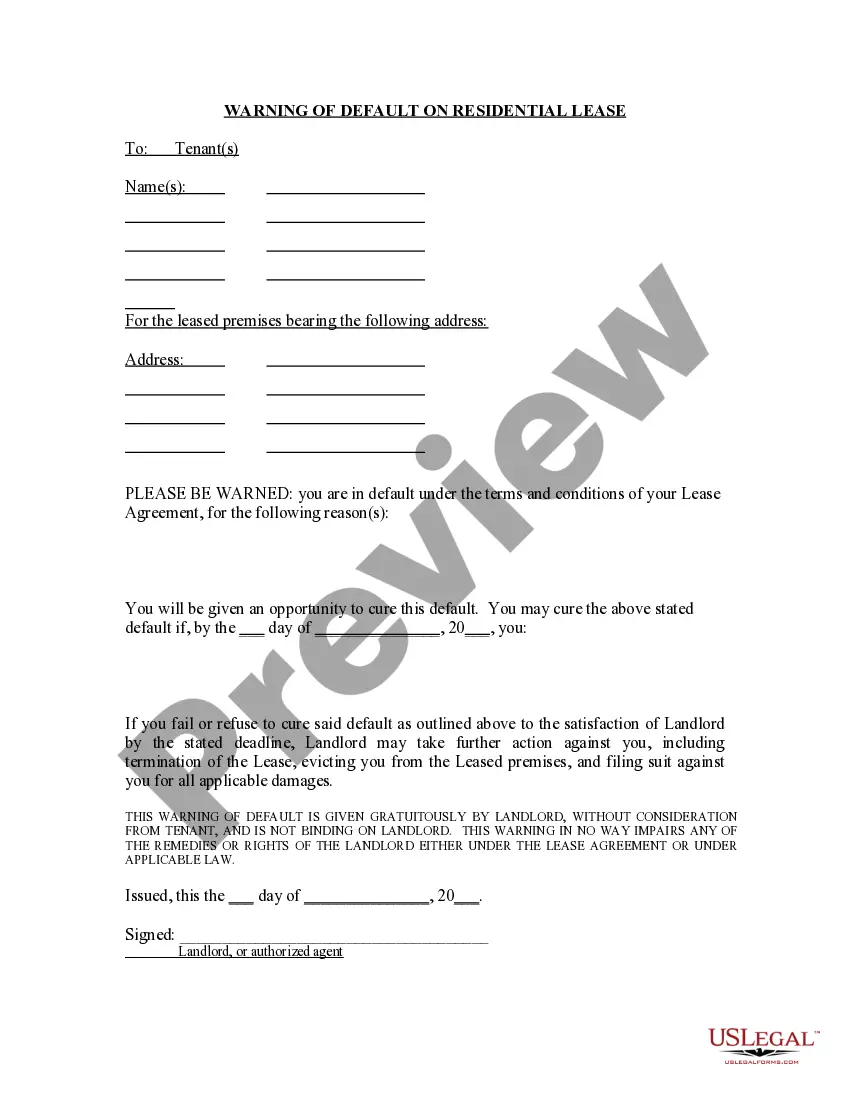
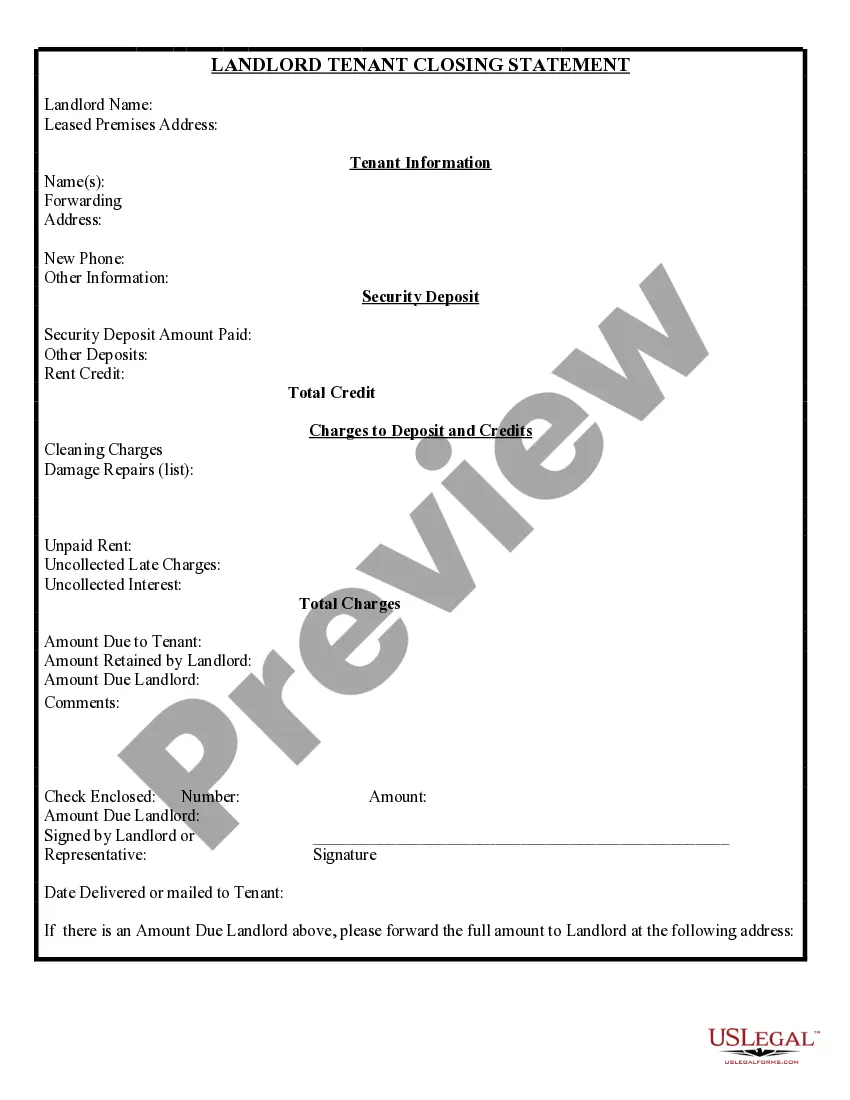
Kansas Last Will and Testament for other Persons
Overview of this form
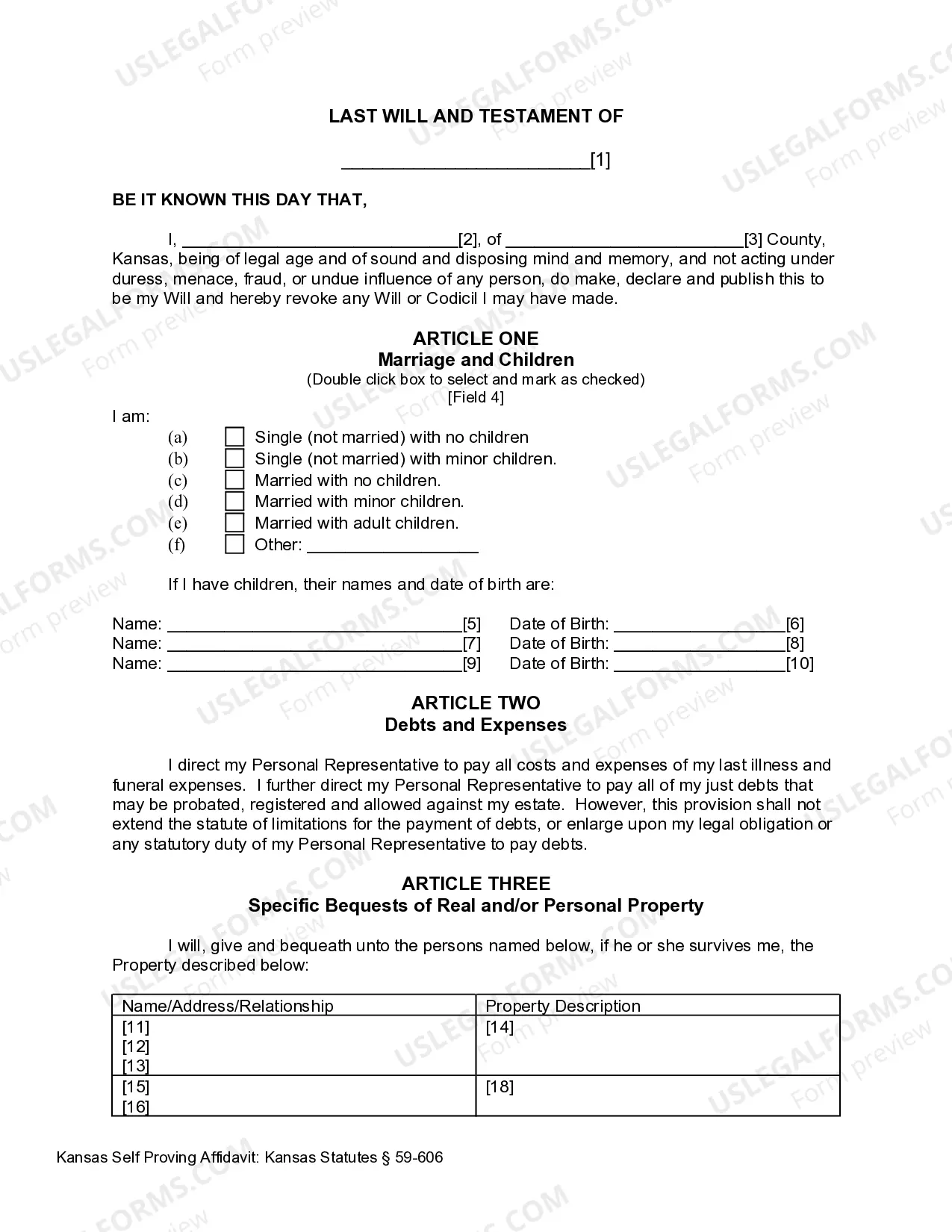
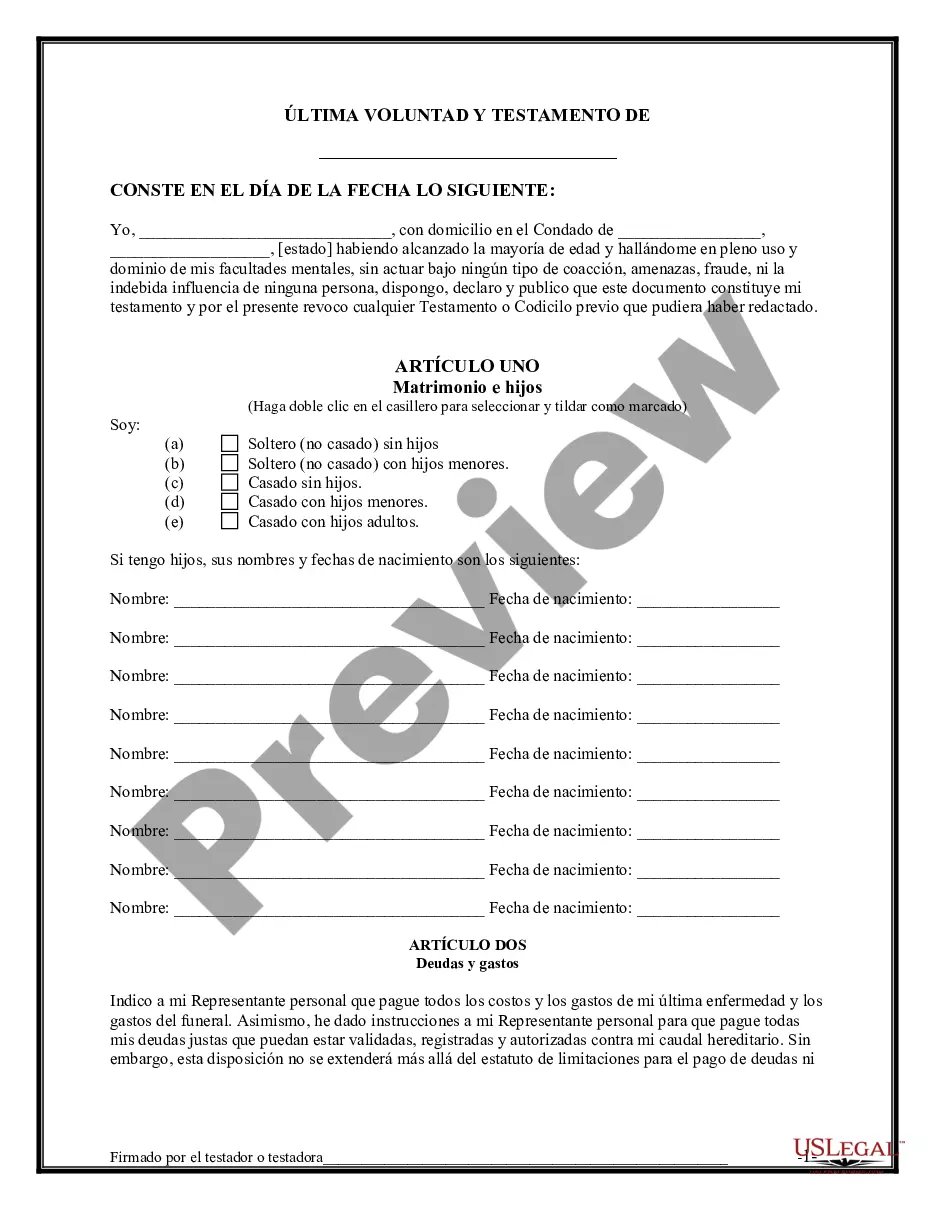
This Last Will and Testament for Other Persons is a legal document that allows you to specify how your assets will be distributed upon your death. It provides clear instructions on who will receive your property, who will manage your estate, and other important decisions such as guardianship for minor children. This will is specifically tailored for individuals residing in Kansas, ensuring compliance with state laws. Unlike other legal forms, this will accommodates those who may not find an existing template that meets their unique requirements.
What’s included in this form
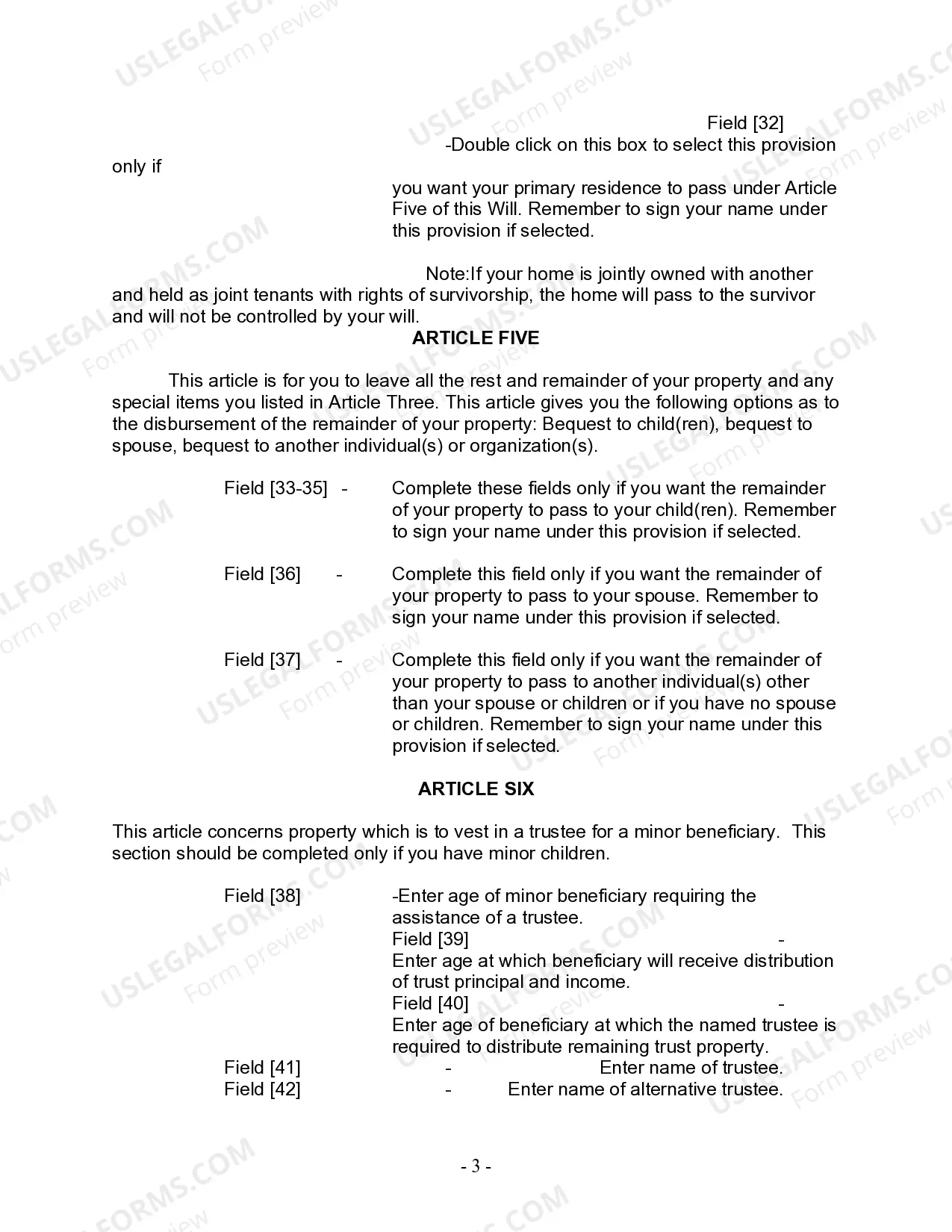
- Article One: Specify marital status and list any children.
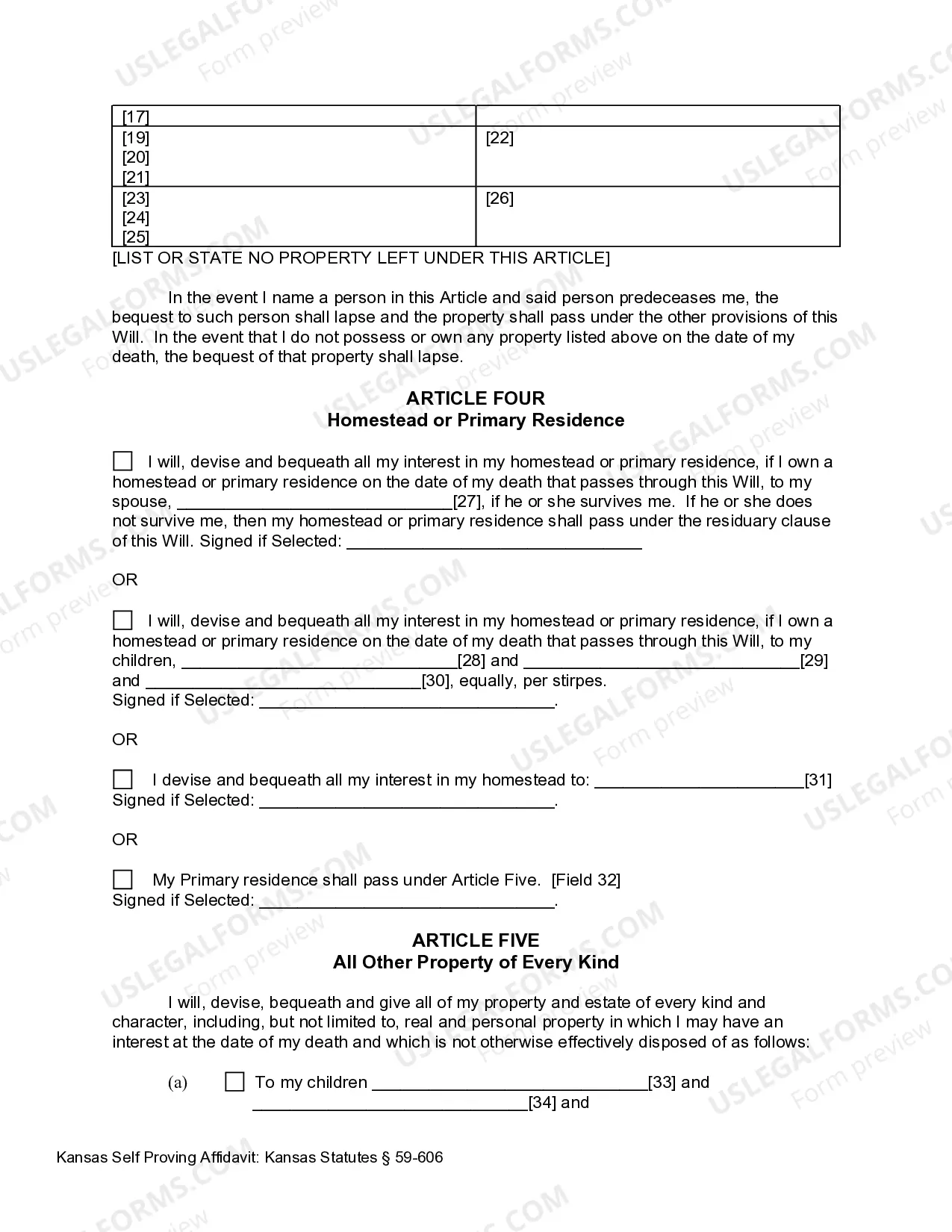
- Article Three: Designate specific gifts of property to individuals.
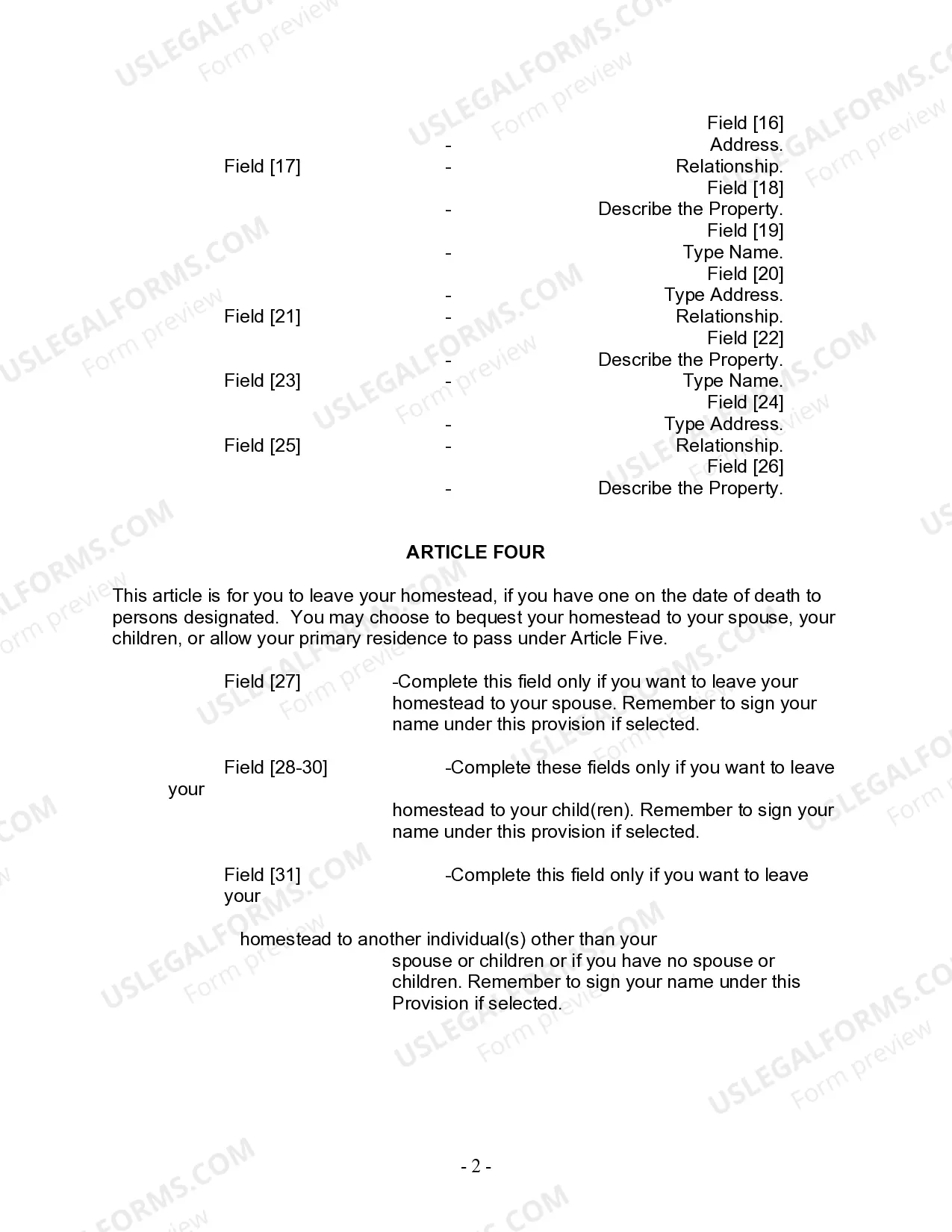
- Article Four: Decide the disposition of your homestead.
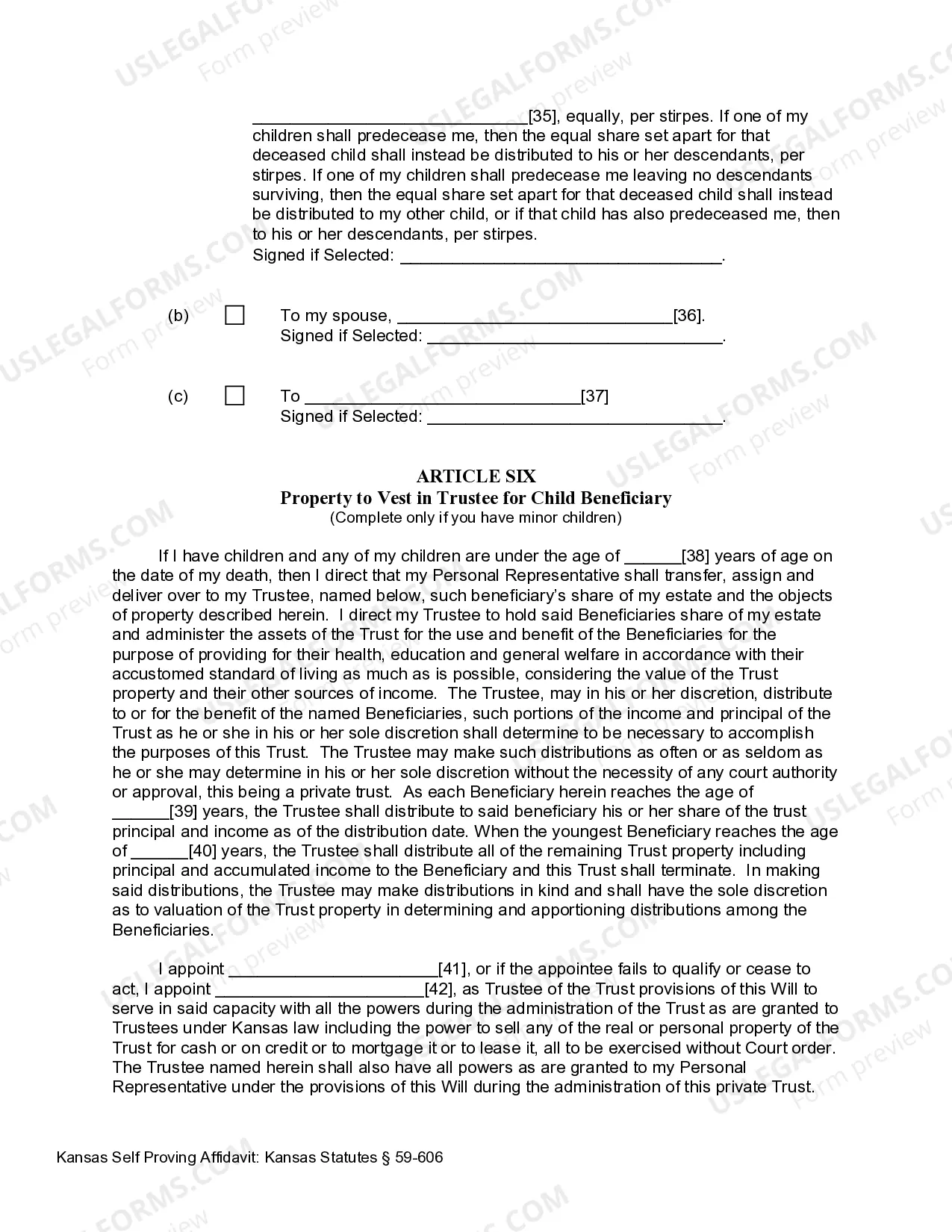
- Article Five: Outline the distribution of all remaining property.
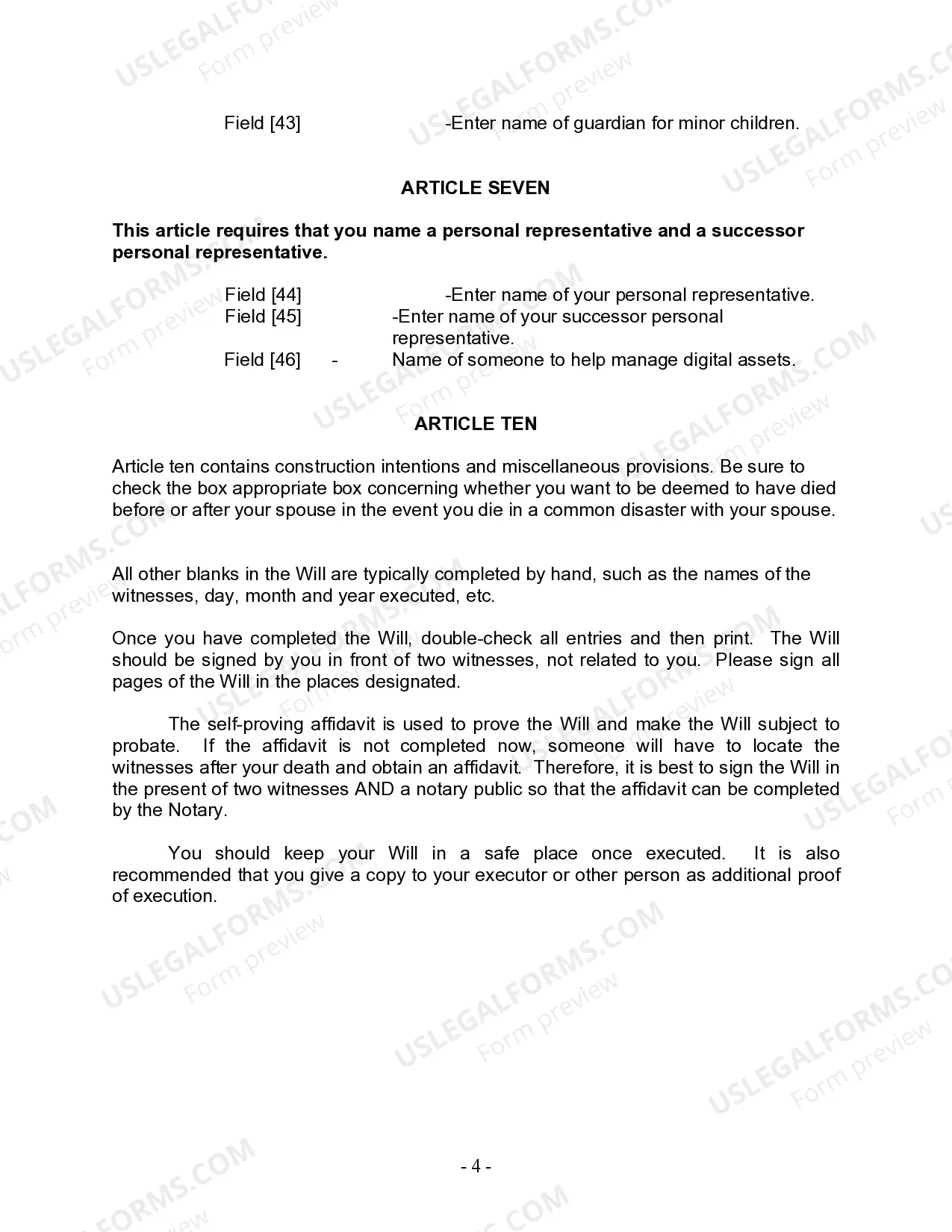
- Article Six: Provide for minor beneficiaries and a trustee.
- Article Seven: Appoint a personal representative for your estate.





When to use this document
This form is appropriate for individuals who want to establish a legally binding will in Kansas but do not have a pre-existing document or need a different structure. It is essential when you wish to manage how your estate is handled and ensure that your specific wishes regarding property and guardianship are fulfilled. Use this will if you have minor children to designate guardians or if you need to outline special requests for particular assets.
Who should use this form
- Adults residing in Kansas aged eighteen or older.
- Individuals with children or dependents they wish to provide for.
- Anyone looking to establish how their assets should be divided after death.
- Individuals seeking clarity in estate management without existing legal documents.
Steps to complete this form
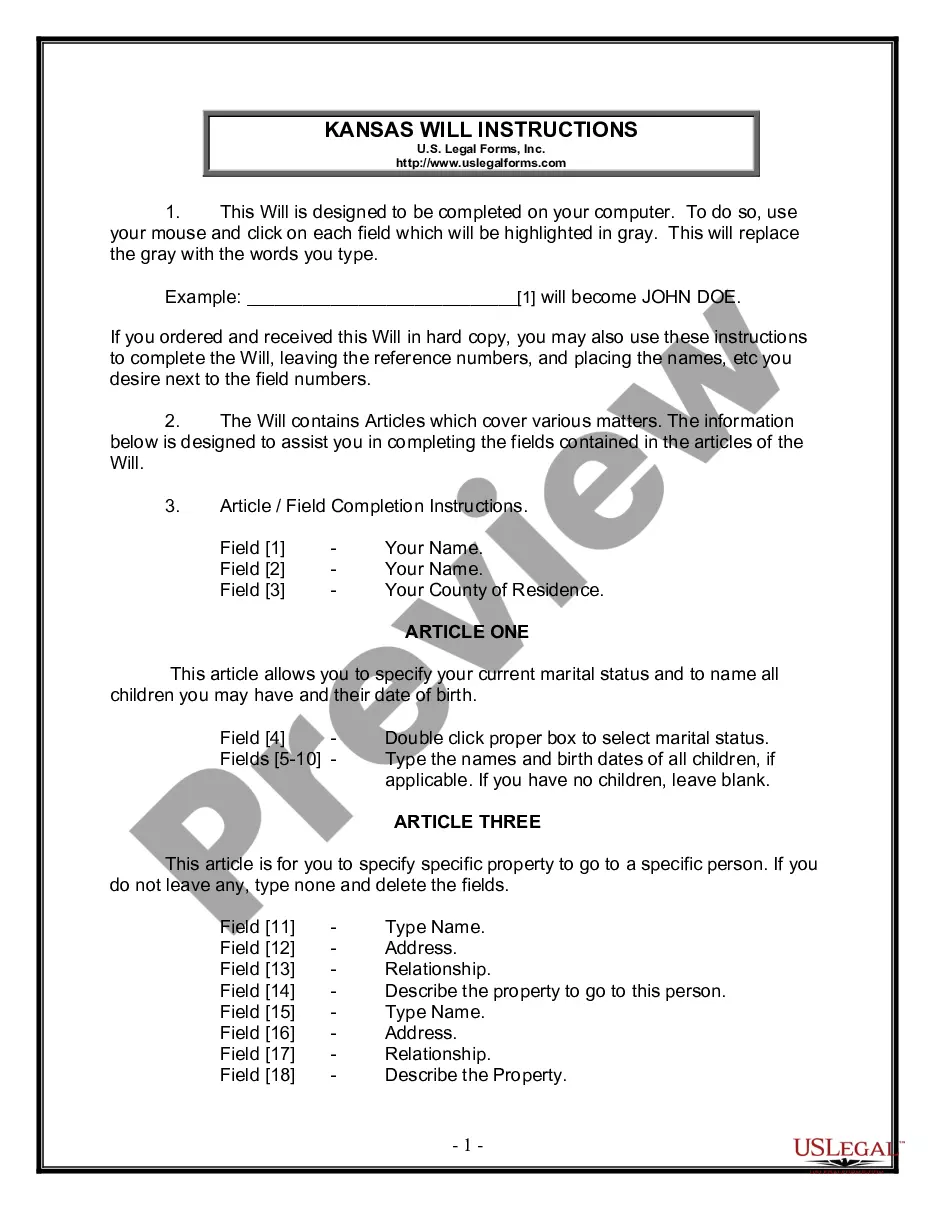
- Open the will on your computer and fill in your name and county of residence.
- Specify your marital status and list your children along with their dates of birth.
- Designate specific property to individuals as desired in Article Three.
- Decide who will inherit your homestead and complete the relevant fields in Article Four.
- Appoint a personal representative and an alternative in Article Seven before finalizing your signature.
Is notarization required?
This form must be notarized to be legally valid. US Legal Forms provides secure online notarization powered by Notarize, allowing you to complete the process through a verified video call.
Get your form ready online
Our built-in tools help you complete, sign, share, and store your documents in one place.
Make edits, fill in missing information, and update formatting in US Legal Forms—just like you would in MS Word.
Download a copy, print it, send it by email, or mail it via USPS—whatever works best for your next step.
Sign and collect signatures with our SignNow integration. Send to multiple recipients, set reminders, and more. Go Premium to unlock E-Sign.
If this form requires notarization, complete it online through a secure video call—no need to meet a notary in person or wait for an appointment.
We protect your documents and personal data by following strict security and privacy standards.

Make edits, fill in missing information, and update formatting in US Legal Forms—just like you would in MS Word.

Download a copy, print it, send it by email, or mail it via USPS—whatever works best for your next step.

Sign and collect signatures with our SignNow integration. Send to multiple recipients, set reminders, and more. Go Premium to unlock E-Sign.

If this form requires notarization, complete it online through a secure video call—no need to meet a notary in person or wait for an appointment.

We protect your documents and personal data by following strict security and privacy standards.
Avoid these common issues
- Failing to sign the will in front of witnesses or a notary public.
- Leaving out necessary details for property distribution.
- Not including a personal representative, which can complicate estate management.
- Overlooking the designation of guardians for minor children.
Why complete this form online
- Convenient access and easy editing directly on your computer.
- Ability to tailor the document to meet your specific needs.
- Paperless storage options ensure your will is easily retrievable when needed.
- Reliable templates drafted by licensed attorneys ensure compliance with state laws.
Legal use & context
- A Last Will and Testament consolidates your wishes and instructions for asset distribution after death.
- It serves to minimize disputes among heirs and streamline the probate process.
- The form is void if not executed according to Kansas law, including witness signatures.
Summary of main points
- Creating a Last Will and Testament is essential for ensuring your wishes are honored after your death.
- Properly completing this form can help avoid complications during the probate process.
- Make sure to update your will regularly, especially after significant life changes.
Looking for another form?

Form popularity
FAQ
Beneficiaries of a will must be notified after the will is accepted for probate. 3feff Moreover, probated wills are automatically placed in the public record. If the will is structured to avoid probate, there are no specific notification requirements.
Once a grant of probate has been issued, a will becomes a public document and anyone can apply to have a copy. The Gov.UK website provides information about searching for probate records, either online or by post.
Only the executors appointed in a will are entitled to see the will before probate is granted. If you are not an executor, the solicitors of the person who has died or the person's bank, if it has the will, cannot allow you to see it or send you a copy of it, unless the executors agree.
If you are not family and were never named in a previous will, you have no standing to contest the will. If the testator (the deceased) discussed an inheritance with you previously, write down as much as you can remember. Using this, estimate the dollar value (whether money or possessions).
In writing. Signed at the end by the person making the will (testator) or by someone else in the presence of and at the express direction of the testator. Signed by two or more competent witnesses who saw the testator sign the will or heard him or her acknowledge the will.
When probate is granted, the will is kept by the Probate Service and any member of the public can get a copy. If you want to search for the will of a person who died recently, you can apply to the Probate Service for a standing search to be made.
Obviously, the person who is named as executor or personal representative is entitled to a copy of the will. He or she is in charge of applying for probate, managing the decedent's property, and making sure the instructions in the will get carried out.
Obtain a Will From Probate Court The best way to view the will is to get the probate court file number. The executor can give you this information. You may also be able to access the file number by phone, online, or in person at the courthouse by providing the deceased's name and date of death.
No, in Kansas, you do not need to notarize your will to make it legal. However, Kansas allows you to make your will "self-proving" and you'll need to go to a notary if you want to do that. A self-proving will speeds up probate because the court can accept the will without contacting the witnesses who signed it.