Kansas Amendment of Residential Lease
Understanding this form
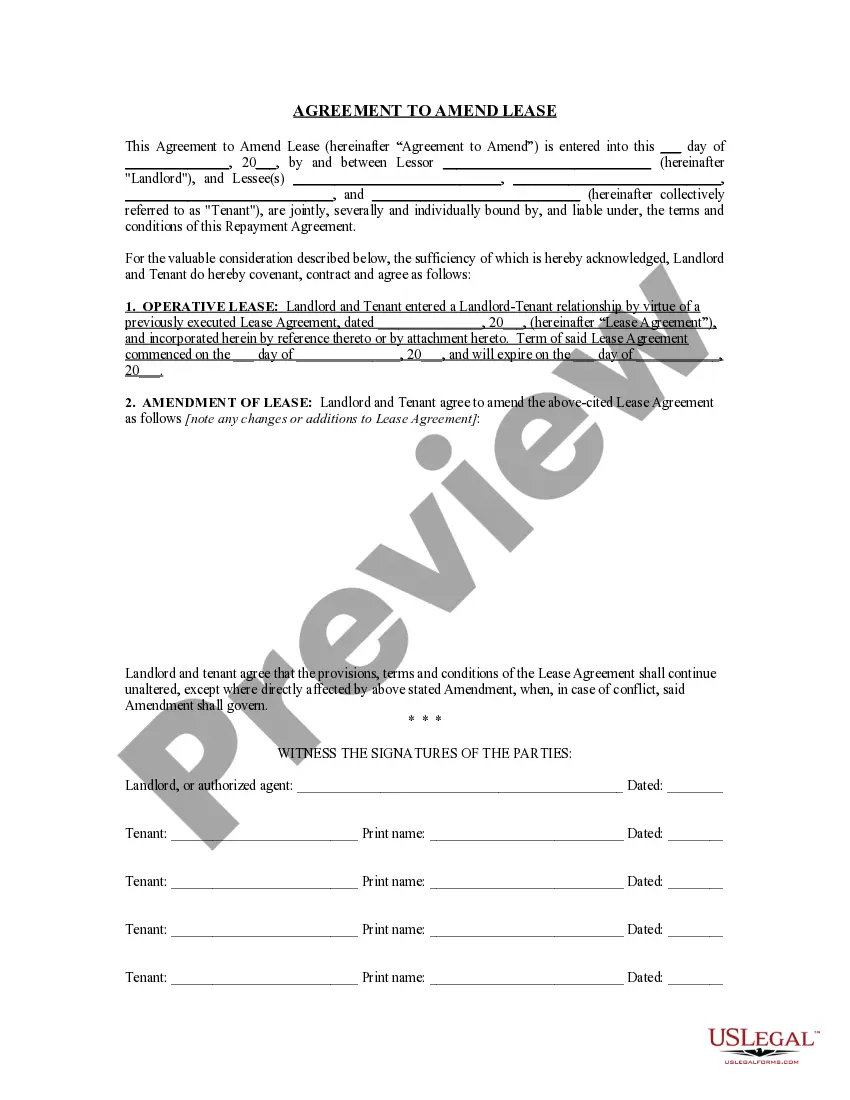
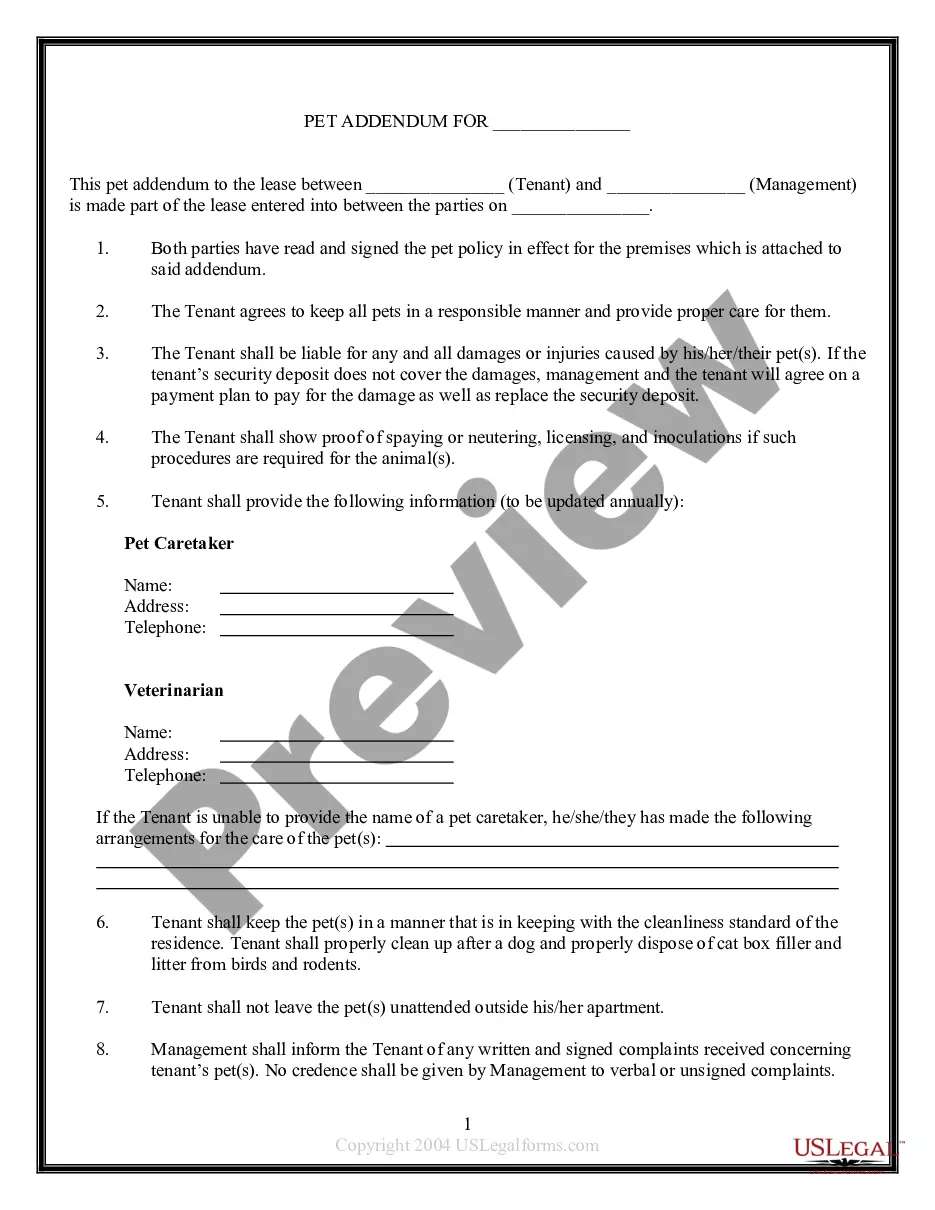
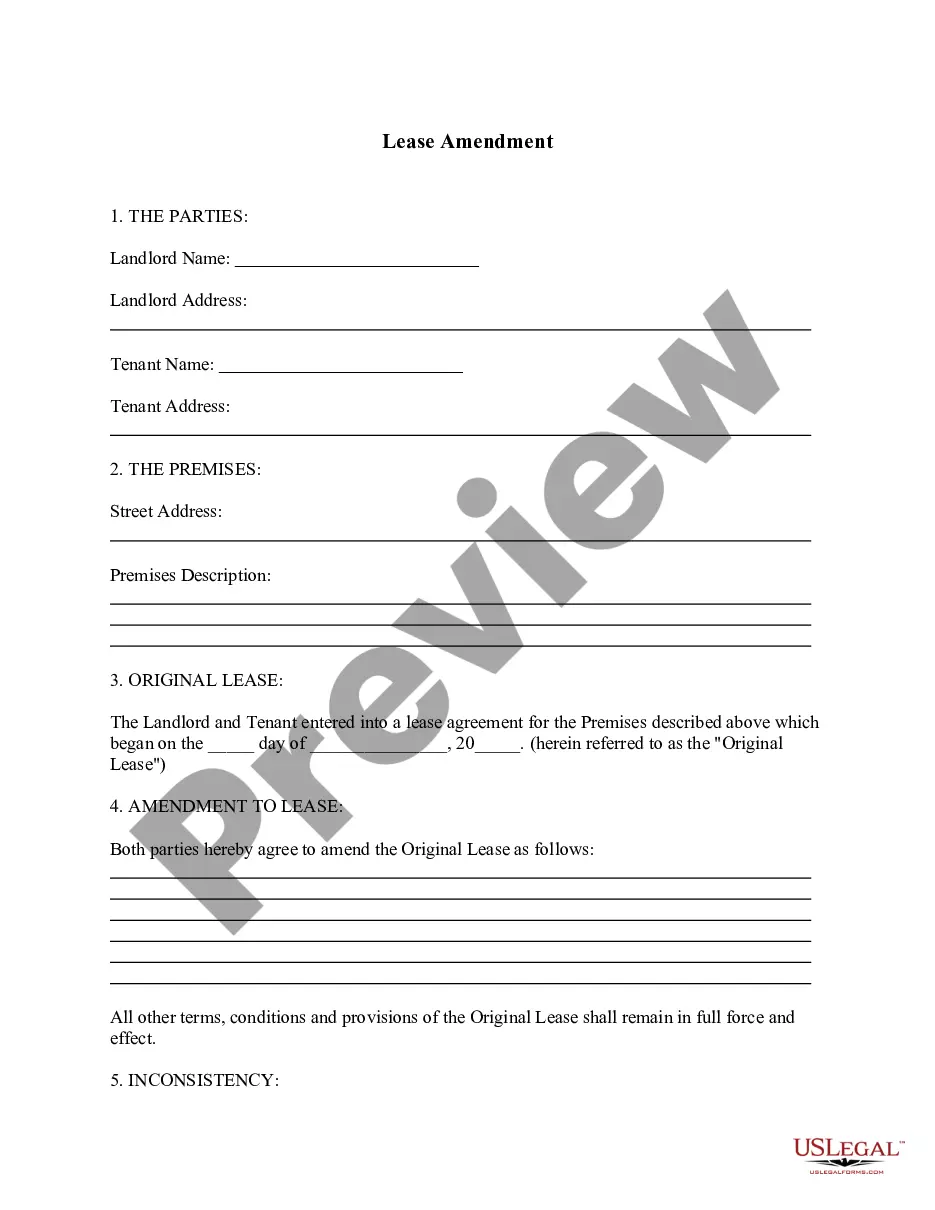
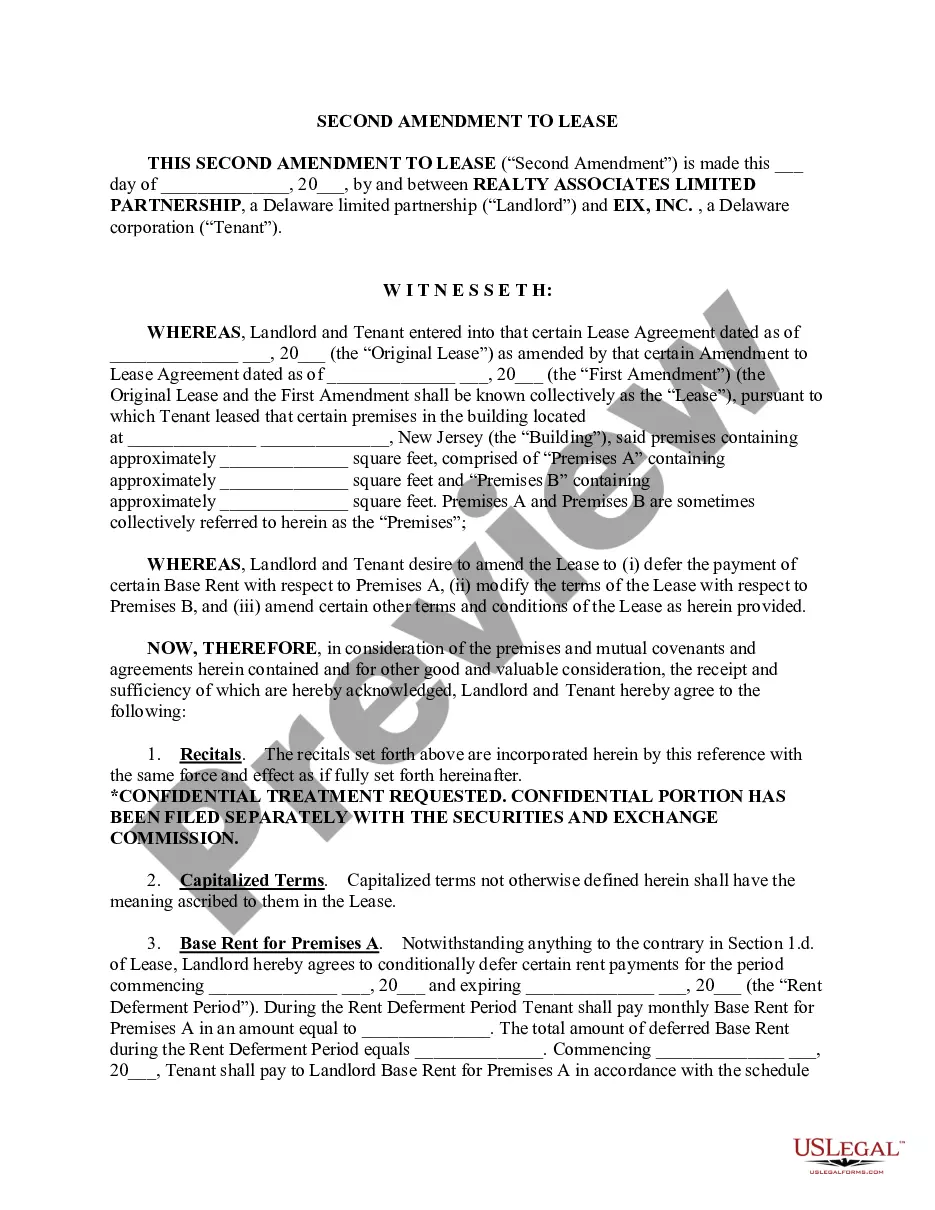
The Amendment of Residential Lease is a legal document that allows landlords and tenants to modify their existing lease agreement. This form is crucial for implementing changes such as revising terms, adjusting rent, or extending the lease duration while ensuring compliance with state laws. Utilizing this form helps prevent misunderstandings and keeps both parties aligned regarding their rights and responsibilities under the lease.
Key parts of this document
- Details of the parties involved, including the landlord and tenants.
- A reference to the original lease agreement, ensuring clarity of changes made.
- Specific amendments to terms such as rent, lease duration, and additional provisions.
- Signatures of all parties to confirm agreement to the modifications.
When to use this form
This form should be used in situations where either the landlord or the tenants need to change specific terms of the existing lease. For example, this may arise when a tenant requires an extension of their lease term, or when the landlord wishes to increase rent due to market conditions. Furthermore, any addition of new tenants or changes in responsibilities for maintenance can also necessitate this amendment.
Who needs this form
This form is intended for:
- Landlords who need to update lease agreements with their tenants.
- Tenants who wish to negotiate changes to their lease terms.
- Both parties involved in commercial or residential rental agreements requiring formal modifications.
Completing this form step by step
- Identify and fill in the names of the landlord and tenants involved.
- Enter the date and details of the original lease agreement for reference.
- Specify the exact terms you wish to amend, such as rent changes or lease duration.
- Ensure all parties sign and date the amendment to attest to the changes.
Notarization guidance
Notarization is generally not required for this form. However, certain states or situations might demand it. You can complete notarization online through US Legal Forms, powered by Notarize, using a verified video call available anytime.
Get your form ready online
Our built-in tools help you complete, sign, share, and store your documents in one place.
Make edits, fill in missing information, and update formatting in US Legal Forms—just like you would in MS Word.
Download a copy, print it, send it by email, or mail it via USPS—whatever works best for your next step.
Sign and collect signatures with our SignNow integration. Send to multiple recipients, set reminders, and more. Go Premium to unlock E-Sign.
If this form requires notarization, complete it online through a secure video call—no need to meet a notary in person or wait for an appointment.
We protect your documents and personal data by following strict security and privacy standards.

Make edits, fill in missing information, and update formatting in US Legal Forms—just like you would in MS Word.

Download a copy, print it, send it by email, or mail it via USPS—whatever works best for your next step.

Sign and collect signatures with our SignNow integration. Send to multiple recipients, set reminders, and more. Go Premium to unlock E-Sign.

If this form requires notarization, complete it online through a secure video call—no need to meet a notary in person or wait for an appointment.

We protect your documents and personal data by following strict security and privacy standards.
Common mistakes
- Not referencing the original lease agreement correctly.
- Failing to have all parties sign the document.
- Overlooking state-specific regulations that may apply to lease amendments.
Why complete this form online
- Easy access to professionally drafted templates that ensure legal compliance.
- Ability to customize the form to suit specific terms agreed upon by both parties.
- Immediate download for quick implementation of lease changes.
Legal use & context
- The form helps establish clear communications about lease modifications.
- Amendments must comply with local landlord-tenant laws to be enforceable.
- Any changes made without this amendment may not be legally binding.
What to keep in mind
- The Amendment of Residential Lease allows for legally recognized modifications to lease agreements.
- Clear identification of parties and terms is crucial for validity.
- Using this form helps prevent misunderstandings regarding lease changes.
Looking for another form?
Form popularity
FAQ
The landlord must give you notice before entering. He/she can only enter during reasonable hours.
Lease agreements that exceed one year are permitted, but they must be in writing to comply with the statutes of fraud concerning property transactions. The maximum length of a standard residential lease agreement in Florida is generally one (1) year.
If you want to avoid paying pet rent, you can off-fur to pay a larger pet deposit (so you can get your money back if no damage is incurred and your landlord still has a way to pay for any damages that do occur). You can also offer to sign a longer lease (the less time your unit is vacant, the better for your landlord).
Notice to terminate a week-to-week lease. Seven-day written notice. Notice to terminate a month-to-month lease. 30-day written notice. Notice to terminate a yearly lease with no end date.
Kansas landlords are also allowed to charge an additional deposit for pets. This pet deposit cannot be more than one-half month's rent. Landlords in Kansas do not have to provide their tenants with written notice after receiving a tenant's security deposit.
When creating your Lease Amendment, you'll want to include information such as: the names of the landlord(s) and the tenant(s); the effective date of the original lease; the date of the lease amendment; the address and nature of the leased property; whether the original lease was recorded with the county; which
When a landlord and tenant sign a lease agreement it forms a legally binding contract. The lease cannot be altered except through another written agreement signed by both parties unless the original lease specifically gives a party the power to change something on their own.
Many landlords don't allow pets, so finding one that does can often be a challenge, which means pet-friendly landlords can usually demand more rent. Allowing pets opens up a wider audience, so it becomes a lot easier to find tenants, which can help minimise vacant periods.
Kansas is relatively landlord-friendly because of the lack of rent control and limit on rental fees. Landlords can also generally set their own entry procedures.