Indiana Release and Authorization
What this document covers
The Indiana Release and Authorization is a HIPAA authorization form designed specifically for residents of Indiana. This form allows you to grant permission to a healthcare provider to share your protected health information with specified individuals. It is essential for controlling access to your medical records and differs from general authorization forms by adhering to Indianaâs specific legal requirements for health information privacy.
Key components of this form
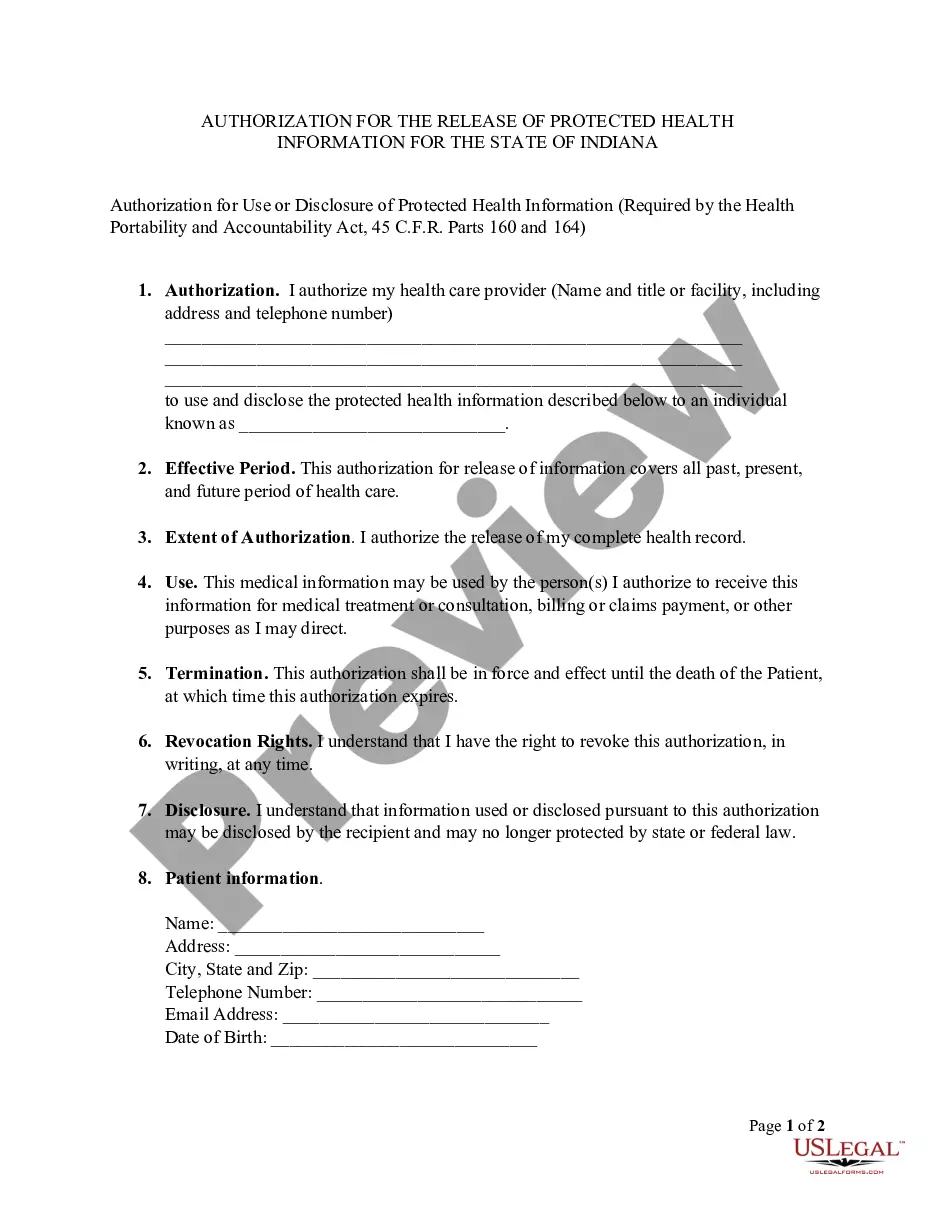
- Authorization: Grants your healthcare provider the ability to disclose your health information.
- Effective Period: Valid for all past, present, and future health care periods.
- Extent of Authorization: Covers the release of your complete health record.
- Use of Information: Specifies that the information may be used for treatment, billing, or other purposes as directed.
- Revocation Rights: States your right to revoke the authorization in writing at any time.
- Patient Information: Includes personal details such as name, address, and date of birth required for identification.
When to use this document
You should use the Indiana Release and Authorization form when you need to grant permission for your healthcare provider to share your medical records with a third party. This could be necessary for various reasons, such as seeking a second opinion, transferring care to a new provider, or dealing with billing matters involving insurance companies.
Intended users of this form
- Individuals seeking to manage the distribution of their medical records.
- Patients needing to authorize healthcare providers or other third parties to access their health information.
- Personal representatives of patients who are authorized to act on behalf of patients in medical matters.
Instructions for completing this form
- Identify your healthcare provider's name, title, and facility, including address and phone number.
- Specify the individual or entities to whom your health information may be disclosed.
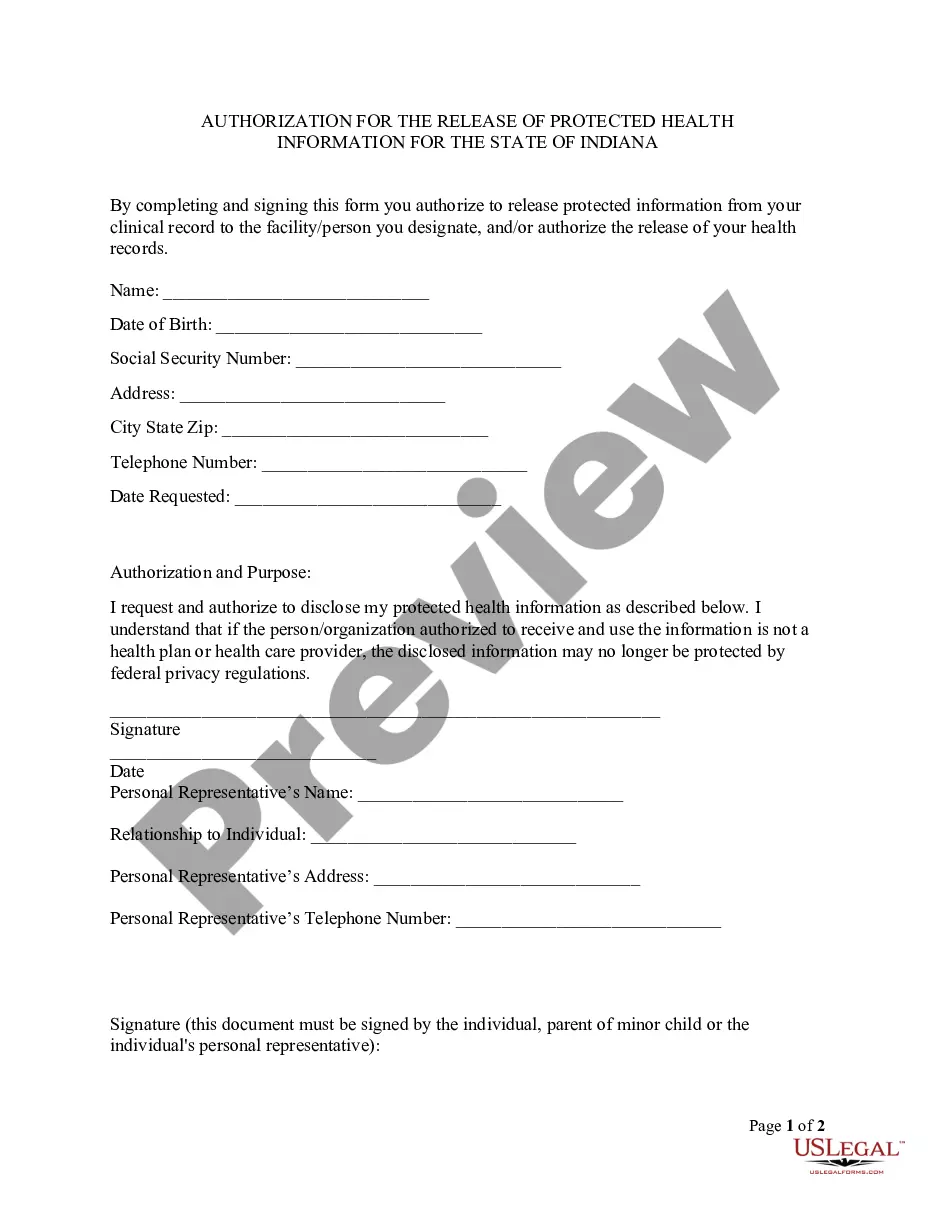
- Enter your personal information, including your name, address, phone number, and date of birth.
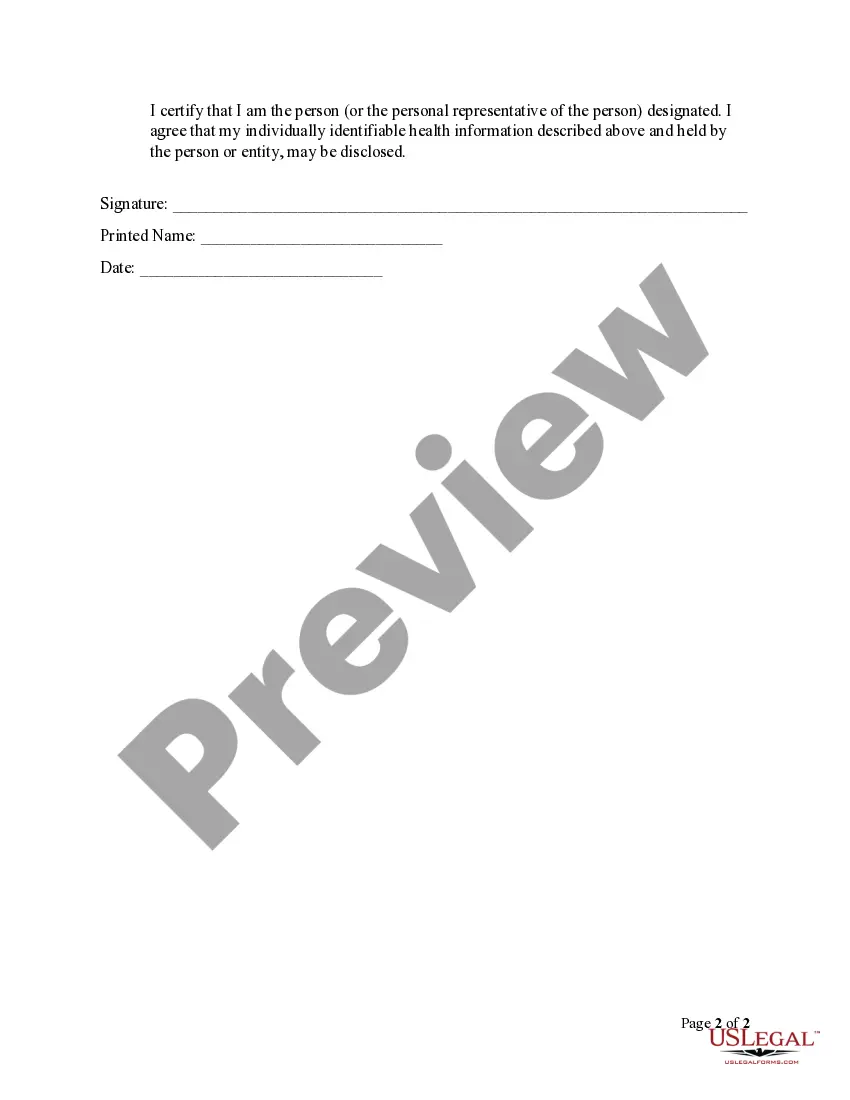
- Provide your signature and printed name, along with the date you are signing.
- Keep a copy of the completed form for your records.
Does this document require notarization?
This form does not typically require notarization unless specified by local law. Ensure that all parties involved understand the requirements before finalizing the document.
Get your form ready online
Our built-in tools help you complete, sign, share, and store your documents in one place.
Make edits, fill in missing information, and update formatting in US Legal Forms—just like you would in MS Word.
Download a copy, print it, send it by email, or mail it via USPS—whatever works best for your next step.
Sign and collect signatures with our SignNow integration. Send to multiple recipients, set reminders, and more. Go Premium to unlock E-Sign.
If this form requires notarization, complete it online through a secure video call—no need to meet a notary in person or wait for an appointment.
We protect your documents and personal data by following strict security and privacy standards.

Make edits, fill in missing information, and update formatting in US Legal Forms—just like you would in MS Word.

Download a copy, print it, send it by email, or mail it via USPS—whatever works best for your next step.

Sign and collect signatures with our SignNow integration. Send to multiple recipients, set reminders, and more. Go Premium to unlock E-Sign.

If this form requires notarization, complete it online through a secure video call—no need to meet a notary in person or wait for an appointment.

We protect your documents and personal data by following strict security and privacy standards.
Mistakes to watch out for
- Failing to provide complete and accurate information for the healthcare provider.
- Not specifying the individuals allowed to receive the health information.
- Omitting your signature or the date on the form.
- Using an outdated version of the form that does not comply with current HIPAA regulations.
Why complete this form online
- Convenient access to pre-drafted forms that comply with legal requirements.
- Editable fields allow for personalization without needing legal expertise.
- Immediate downloads provide instant availability for urgent needs.
Looking for another form?
Form popularity
FAQ
A: ?Consent? is a general term under the Privacy Rule, but ?authorization? has much more specific requirements. The Privacy Rule permits, but does not require, a CE to obtain patient ?consent? for uses and disclosures of PHI for treatment, payment, and healthcare operations.
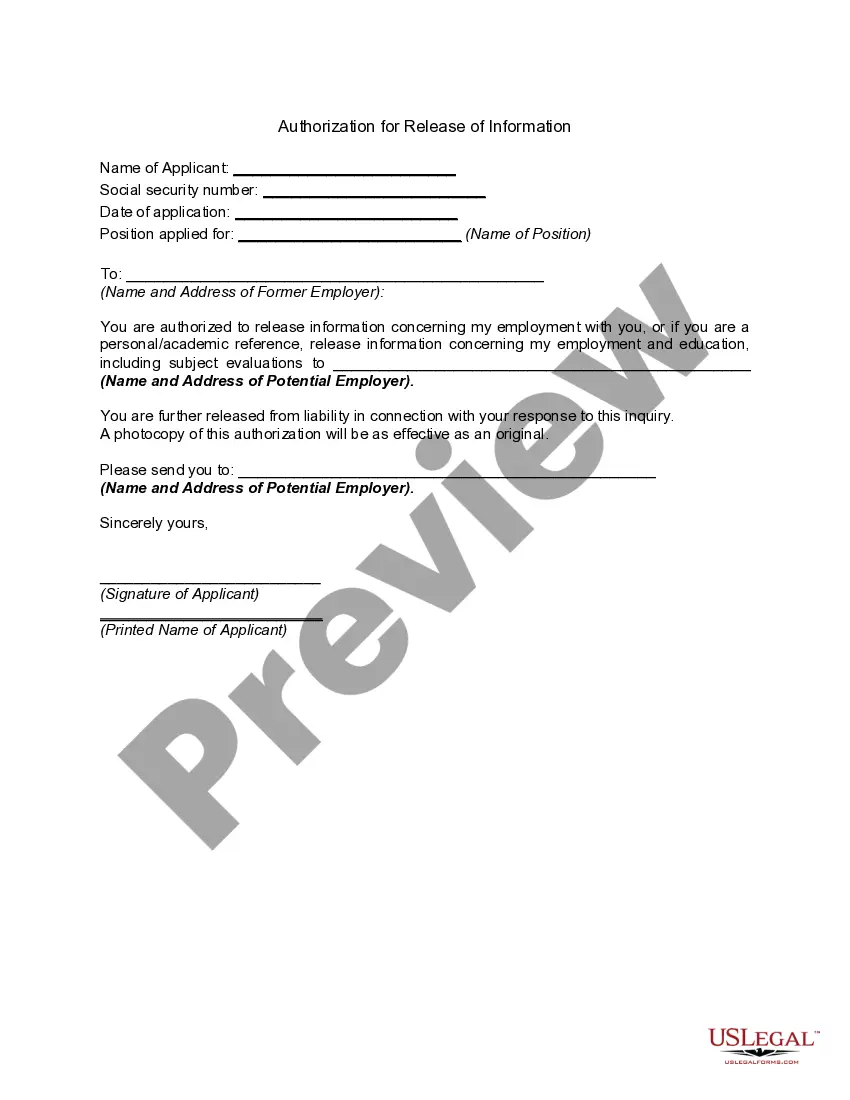
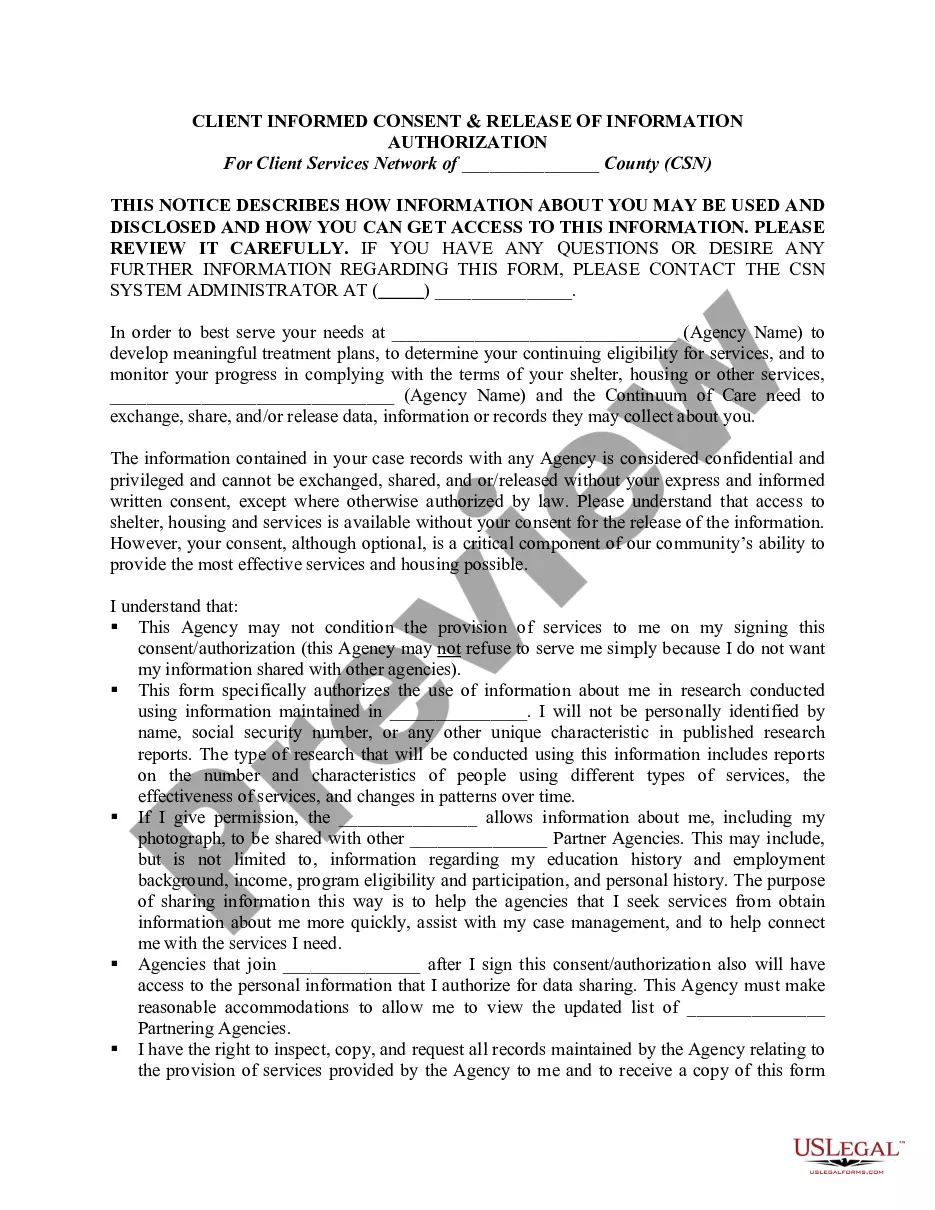
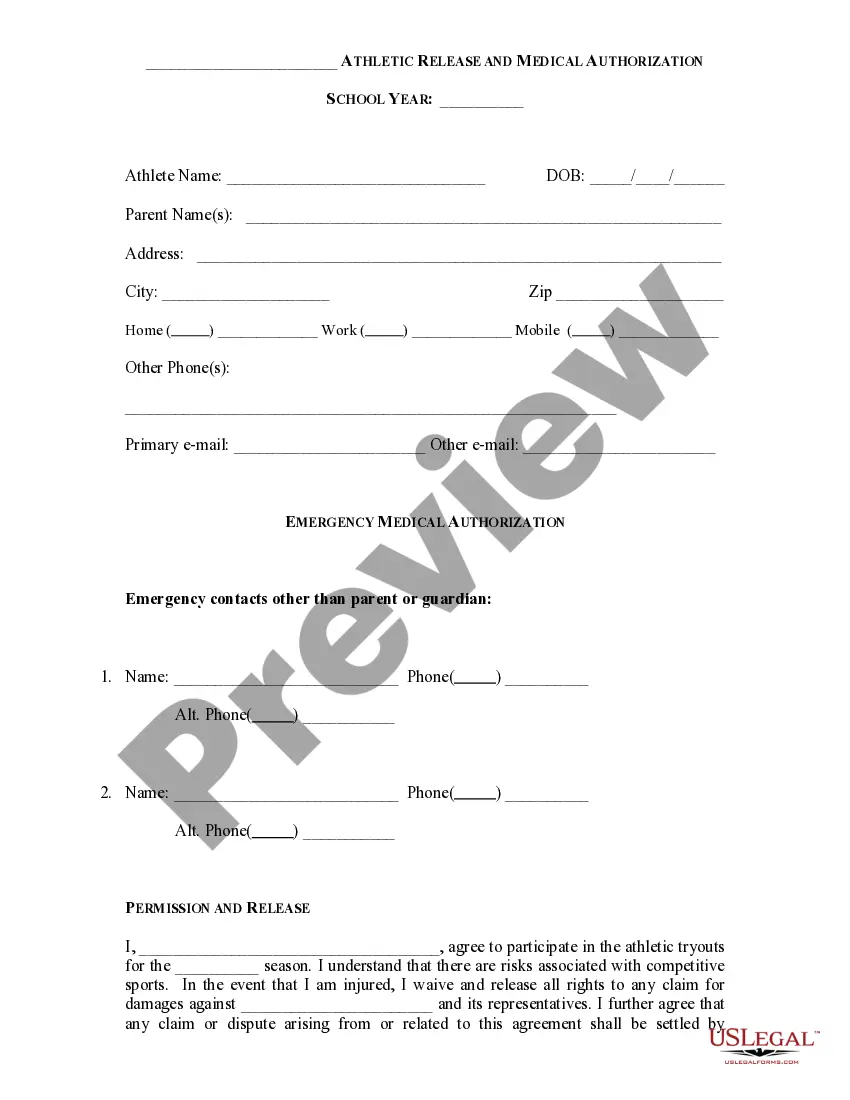
Authorization for release of information means the form prescribed by the agency for the purpose of authorizing the release of a confidential record, signed and dated by the person empowered to release the information.
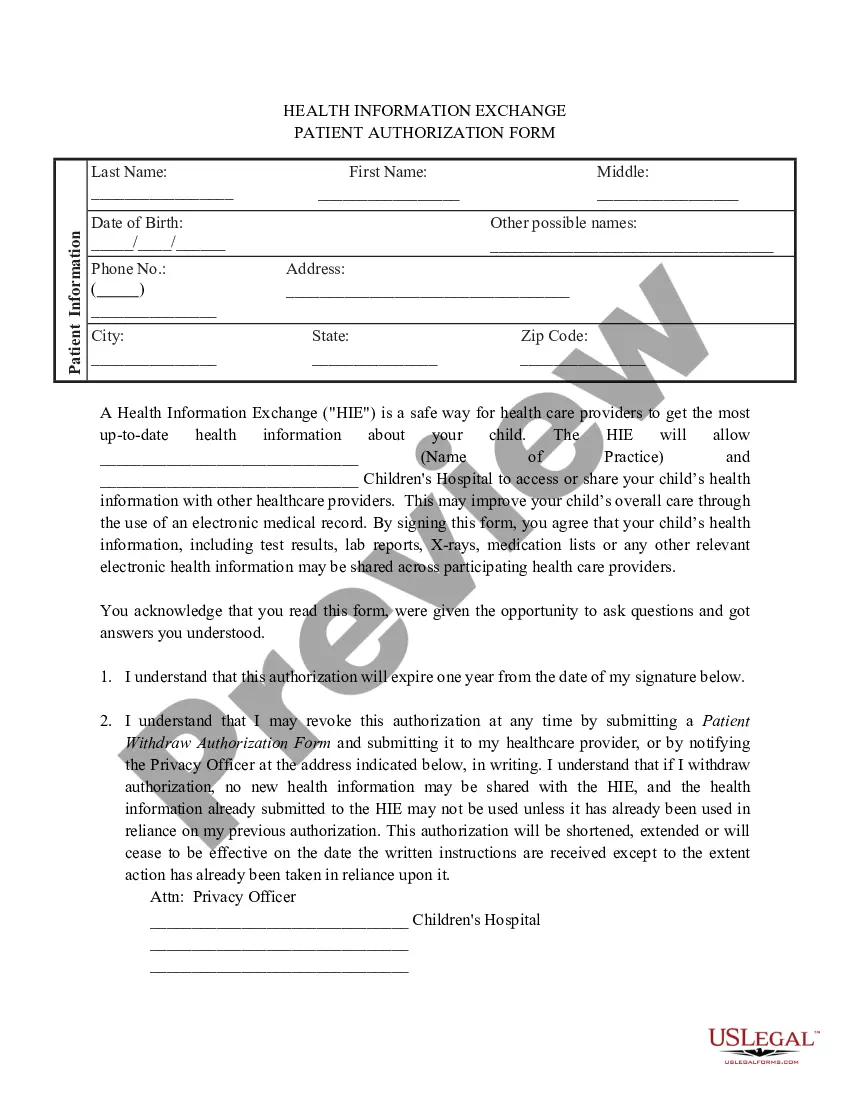
HIPAA Authorization is a document that authorizes the release of medical records which are protected under HIPAA. The authorization names designated representatives who may receive protected medical records, despite the privacy protections of HIPAA. HIPAA is an important piece of legislation.
HIPAA requires doctors and their staff to keep your medical records confidential unless one of three exceptions applies: If you need emergency treatment; If you introduce your health or injuries in a court case; or. If the government requires specific reporting (mostly for births, deaths, and communicable diseases.
Under the HIPAA Privacy Rule, healthcare providers, health plans, business associates, and others involved in administration of healthcare, may not share a patient's protected health information (PHI) without that patient's written authorization.
By setting up a Release Authorization (ARI), you are giving customer service your permission to disclose information about your accounts to another person. Typically, this is used to give account access to a spouse or other family member.
The medical record information release (HIPAA) form allows a patient to give authorization to a 3rd party and access their health records.
A HIPAA authorization form, also known as a HIPAA release form, is a document that individual signs for their health provider before the entity may use or disclose their protected health information (PHI).