Kansas Notice of Intent to Vacate at End of Specified Lease Term from Tenant to Landlord - Nonresidential
About this form
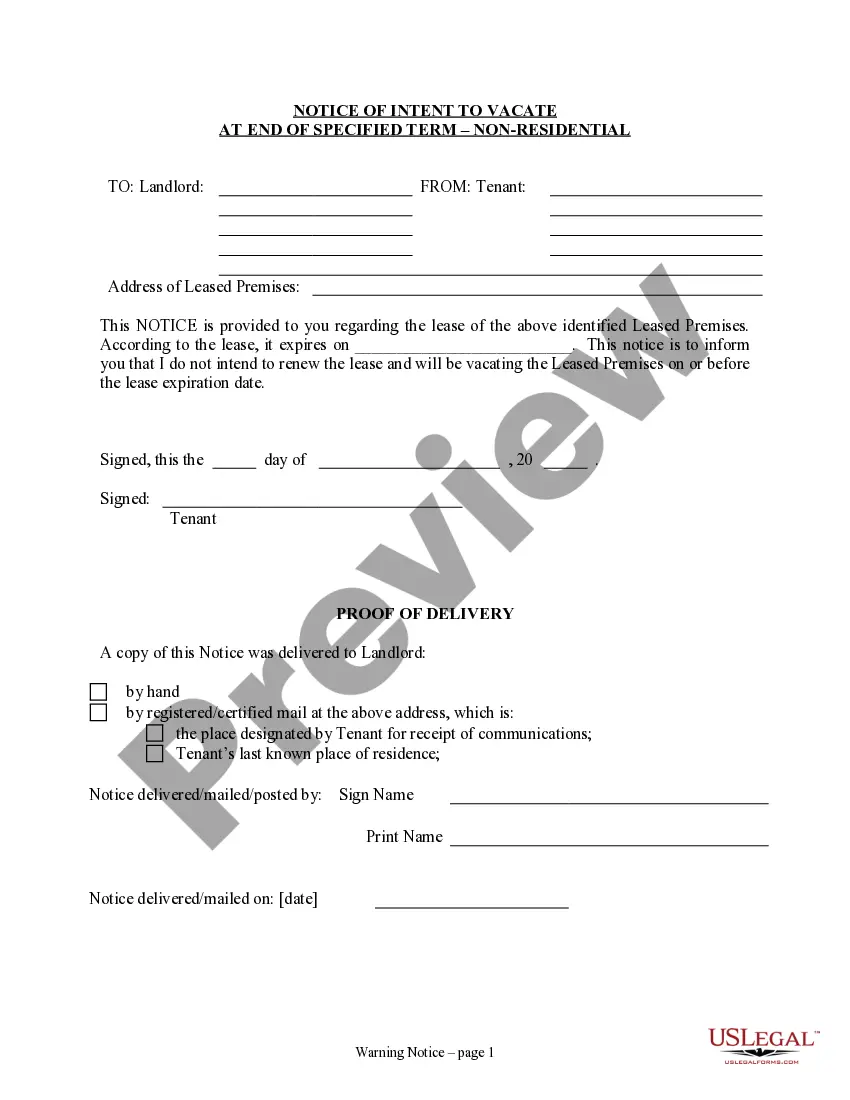
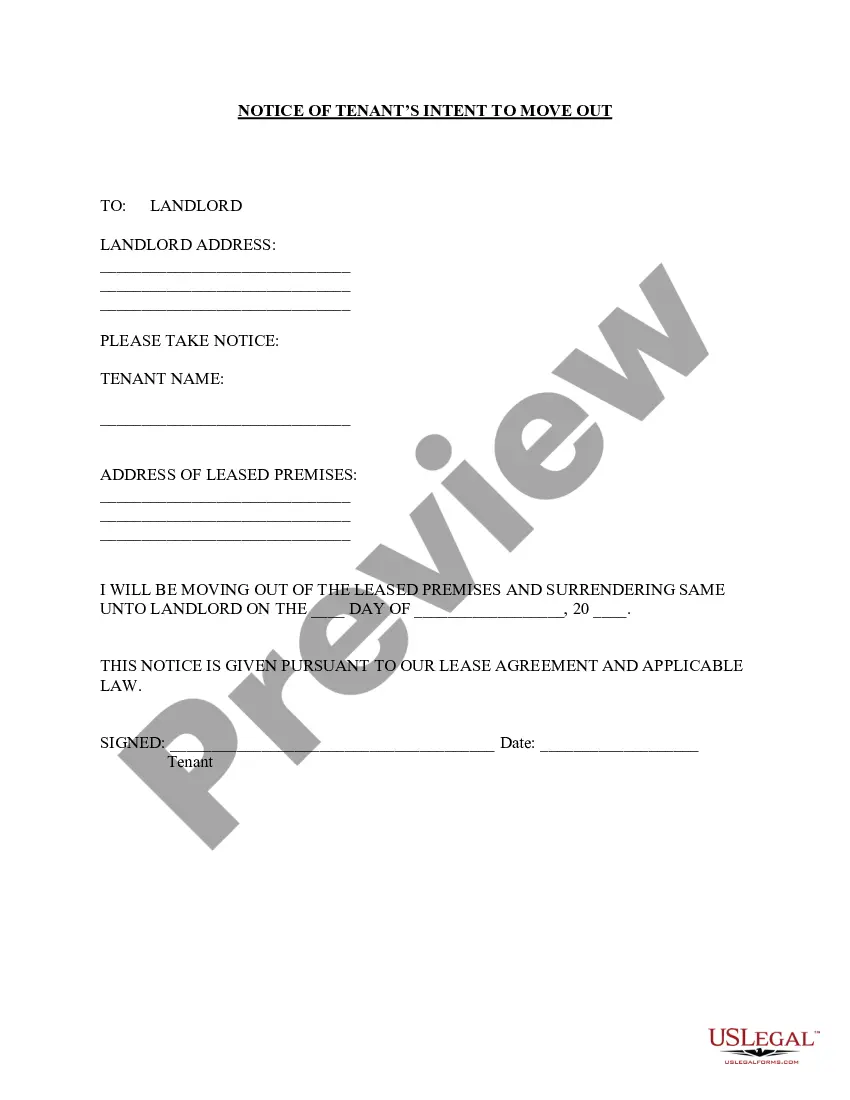
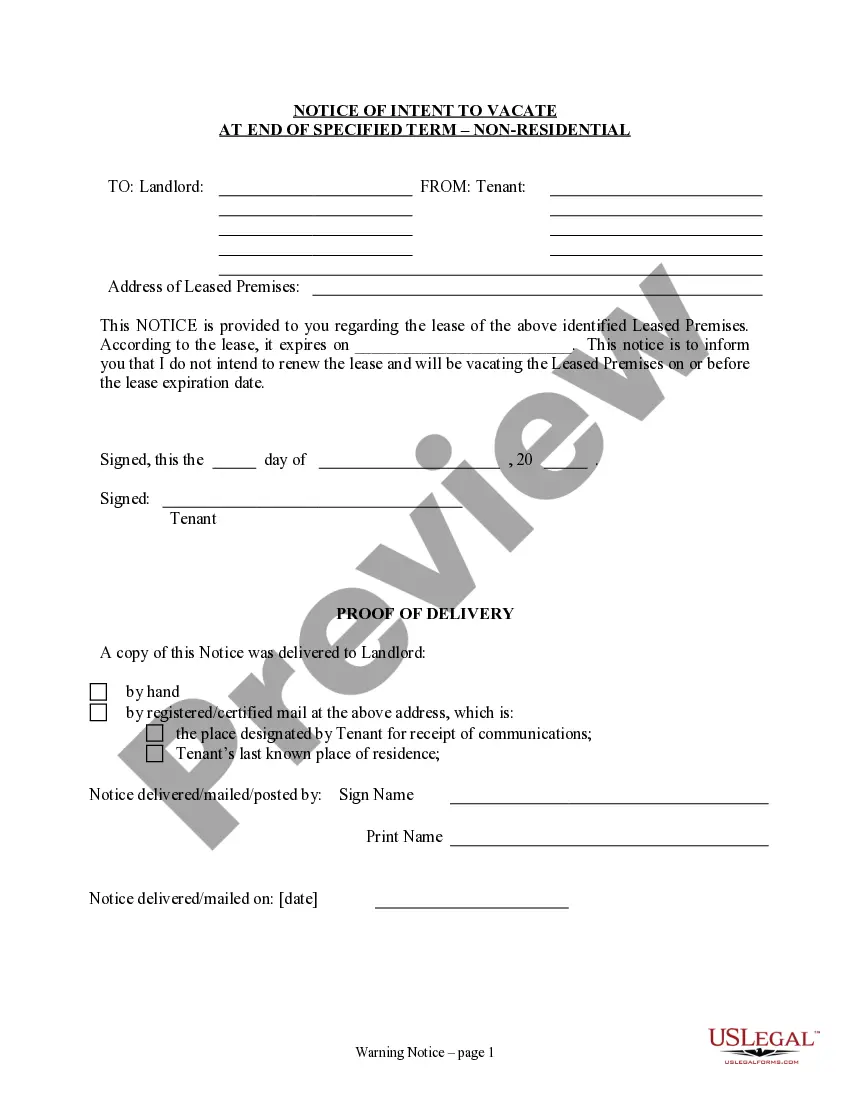
The Notice of Intent to Vacate at End of Specified Lease Term from Tenant to Landlord - Nonresidential is a legal document that allows tenants of nonresidential properties to formally notify their landlords of their intention not to renew their lease at the end of its specified term. Unlike general termination notices, which may require advanced notification, this form is specifically used for leases that conclude on a predetermined date, making it clear that the tenant plans to vacate the premises on or before that rent agreement's expiration date.
What’s included in this form
- Identification of the tenant and landlord.
- Address of the leased premises.
- Specific expiration date of the lease.
- Declaration of intent not to renew the lease.
- Signature of the tenant to finalize the notice.
- Proof of delivery method to the landlord.

When this form is needed
This form should be used when a tenant knows they will not be renewing their nonresidential lease at the end of its specified term. Common scenarios include businesses relocating, downsizing, or choosing not to extend their commercial lease due to changes in business conditions. It helps to ensure that the landlord is formally notified, fulfilling any contractual obligations related to lease termination.
Intended users of this form
- Tenants currently leasing nonresidential properties.
- Business owners planning to vacate a commercial space.
- Individuals engaged in nonresidential leases that expire on a set date.
How to prepare this document
- Identify the tenant and landlord's full names and contact addresses.
- Specify the address of the leased premises clearly.
- Indicate the expiration date of the lease as stated in the agreement.
- Include a statement declaring the intent not to renew the lease.
- Sign and date the notice to authenticate it.
- Deliver the notice through a designated method and document the delivery.
Is notarization required?
This form usually doesn’t need to be notarized. However, local laws or specific transactions may require it. Our online notarization service, powered by Notarize, lets you complete it remotely through a secure video session, available 24/7.
Get your form ready online
Our built-in tools help you complete, sign, share, and store your documents in one place.
Make edits, fill in missing information, and update formatting in US Legal Forms—just like you would in MS Word.
Download a copy, print it, send it by email, or mail it via USPS—whatever works best for your next step.
Sign and collect signatures with our SignNow integration. Send to multiple recipients, set reminders, and more. Go Premium to unlock E-Sign.
If this form requires notarization, complete it online through a secure video call—no need to meet a notary in person or wait for an appointment.
We protect your documents and personal data by following strict security and privacy standards.

Make edits, fill in missing information, and update formatting in US Legal Forms—just like you would in MS Word.

Download a copy, print it, send it by email, or mail it via USPS—whatever works best for your next step.

Sign and collect signatures with our SignNow integration. Send to multiple recipients, set reminders, and more. Go Premium to unlock E-Sign.

If this form requires notarization, complete it online through a secure video call—no need to meet a notary in person or wait for an appointment.

We protect your documents and personal data by following strict security and privacy standards.
Mistakes to watch out for
- Failing to provide sufficient notice before the lease termination date.
- Not specifying the complete address of the leased premises.
- Omitting the signature or date of the notice.
- Using informal delivery methods that are not documented.
Advantages of online completion
- Convenient access to a professionally drafted form.
- Editability allows customization based on specific lease agreements.
- Instant download ensures a fast solution for legal needs.
- Reliability, knowing it is created by licensed attorneys.
Looking for another form?
Form popularity
FAQ
A Notice to Vacate is a notice written by the landlord or property manager giving a notice to leave the premises within a specified time frame. This type of notice is typically given during the end of a lease period, or due to an infringement of the lease agreement.
A landlord CAN evict you by giving you 3 days notice to leave the property. This could be for not paying rent or staying after your lease ends. If you do not leave or pay the rent within 3 days, the landlord will start the eviction lawsuit.
Kansas landlords must provide tenants with a 30-Day Notice to Comply, giving the tenant 14 days to correct the issue. If the issue isn't corrected within 14 days, the tenant will be required to move out at the end of the 30 day notice period.
An eviction is a legal proceeding in which a landlord asks a court to order the tenant to leave the property. Giving a tenant a notice to terminate is often a first step in the eviction process, but it isn't the same as an eviction.
In Colorado, evictions are sometimes referred to as forcible entry & detainer (FED). Before you can file for eviction, you must generally provide 10 days' notice (increased from 3 days prior) for tenants to correct a deficiency or leave the property, except in certain circumstances.
Step 1: Notice is Posted. Step 2: Complaint is Filed and Served. Step 3: Court Hearing and Judgment. Step 4: Writ of Restitution Is Issued. Step 5: Possession of Property is Returned.
A landlord cannot legally evict you without a court order, whether or not you have a lease.) How long does it take for a landlord to evict a tenant? A landlord can evict a tenant only by going through a formal eviction proceeding, which can take a few weeks from start to finish.
When responding to the notice to quit, there are several options available to the tenant: Pay any delinquent rent that is due to the landlord within the allotted time of the notice. Move out of the premises within the allotted time of the notice. File an answer with the judicial court.
Eviction notices When written by a landlord, a notice to vacate is commonly known as an "eviction notice," which tells the tenant they must move out of the rental property.