Arkansas Brood Mare Lease Agreement
What is this form?
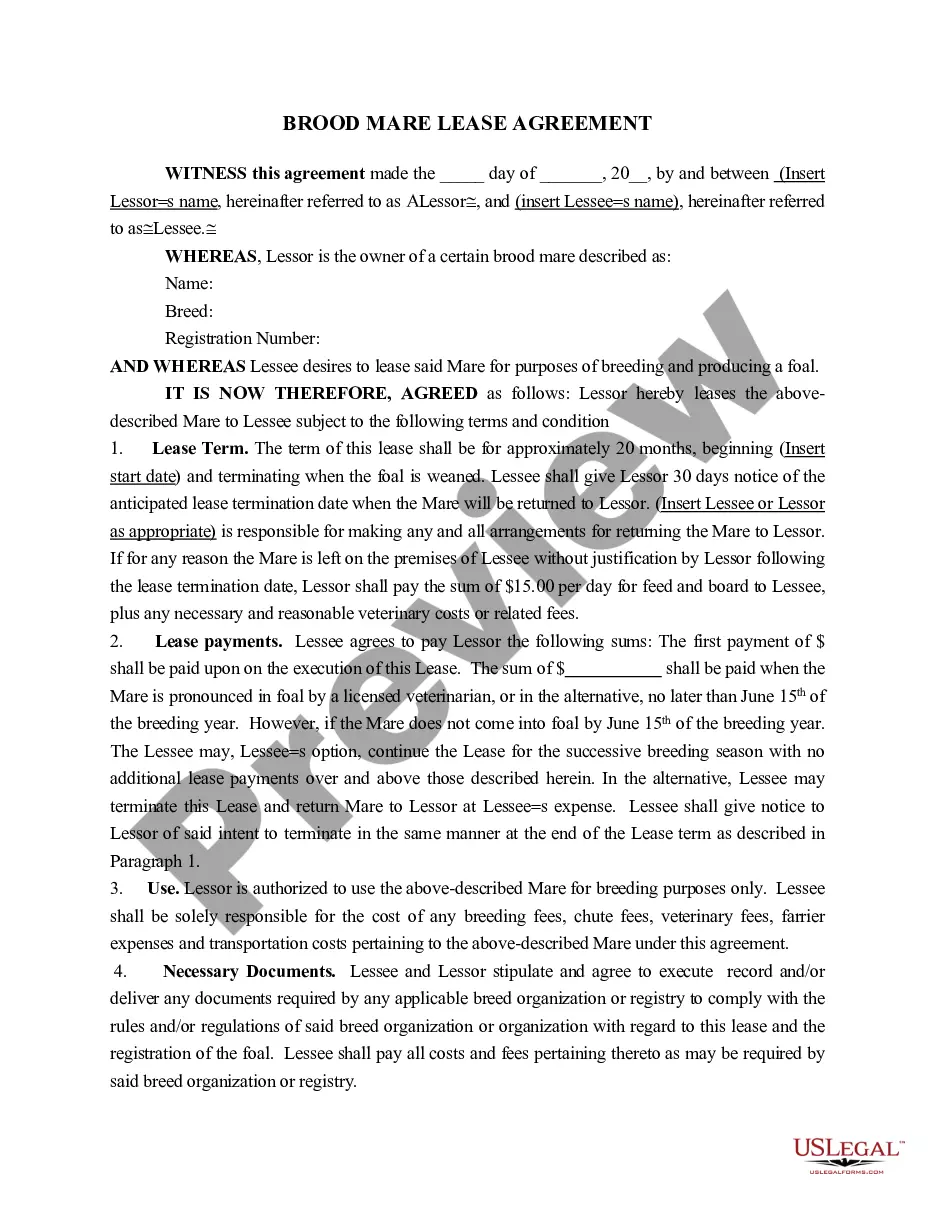
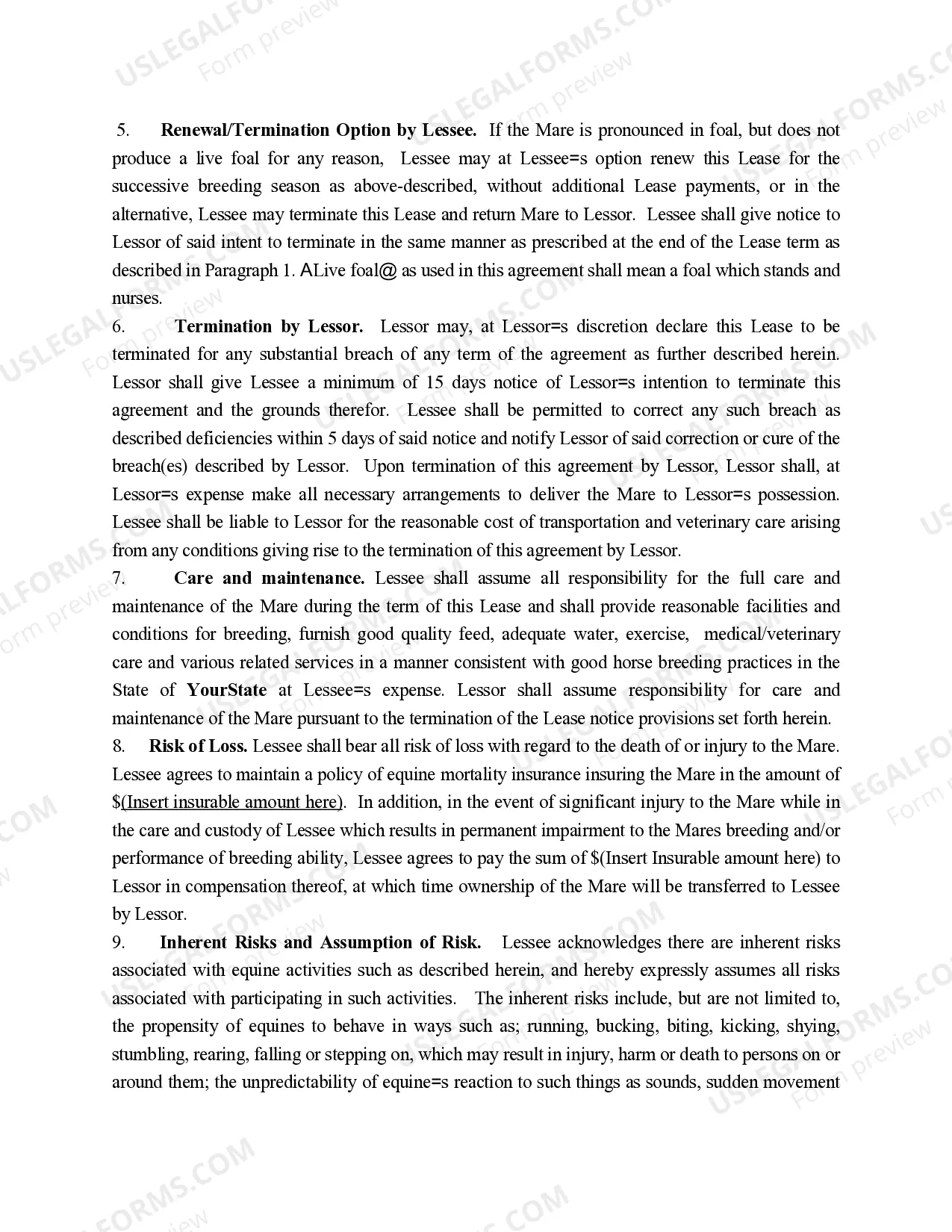
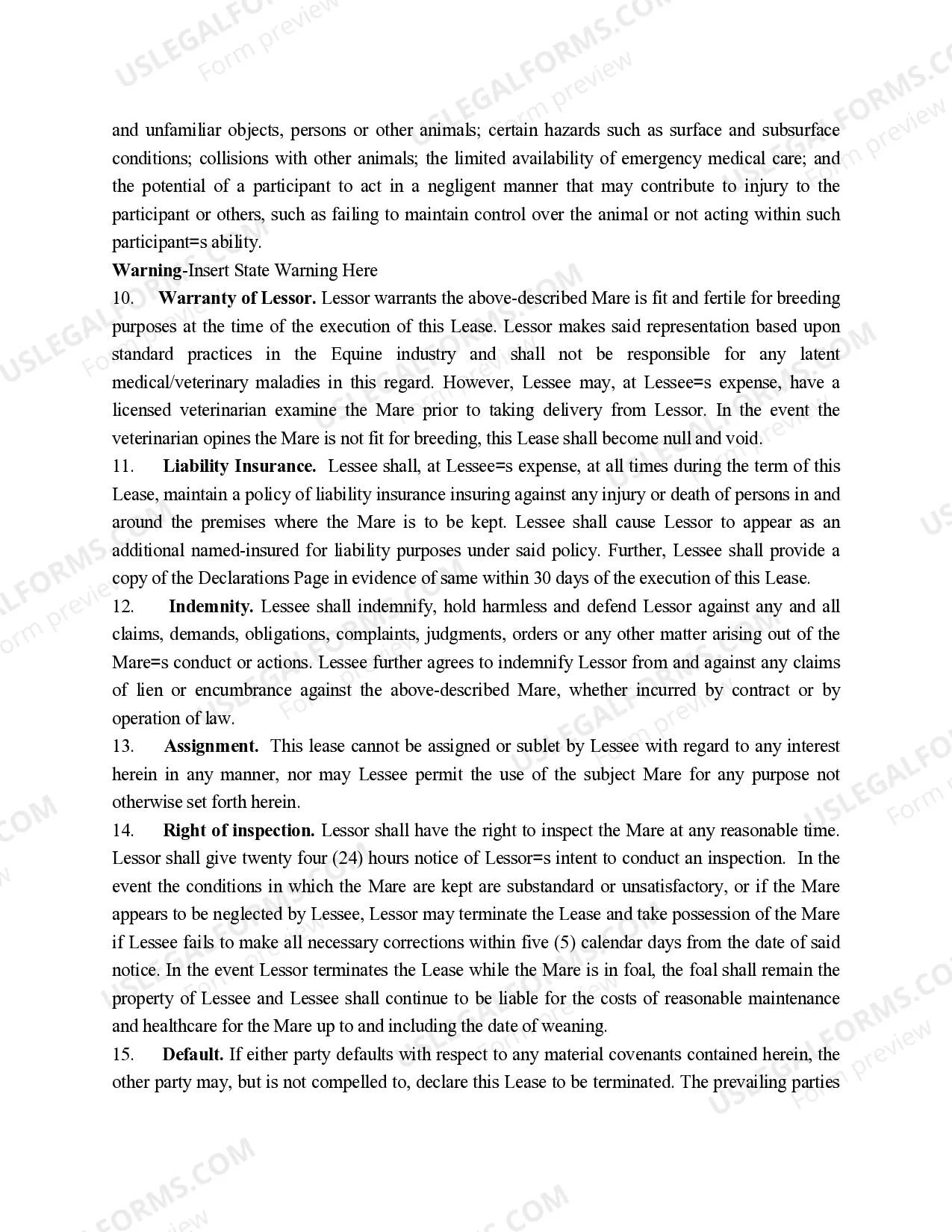
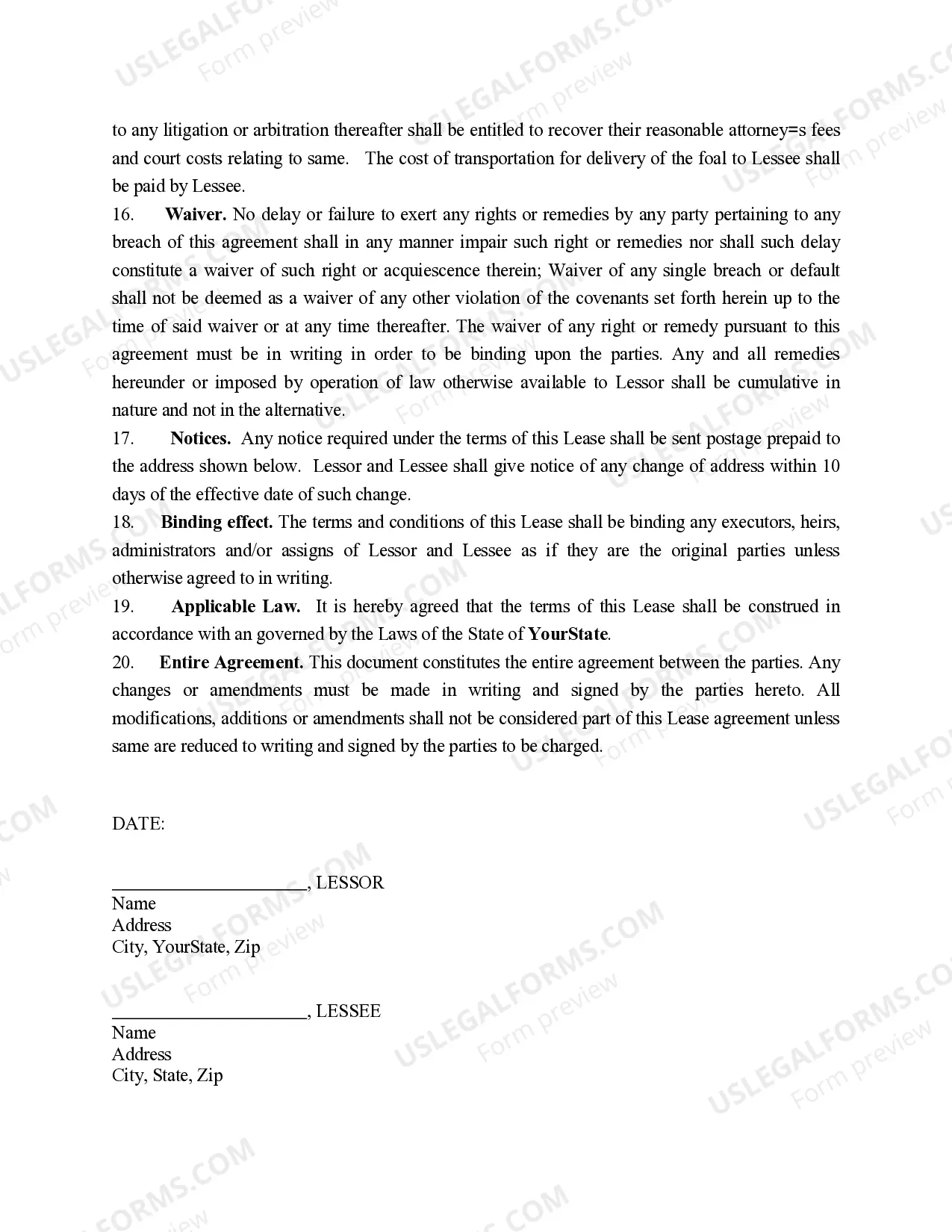
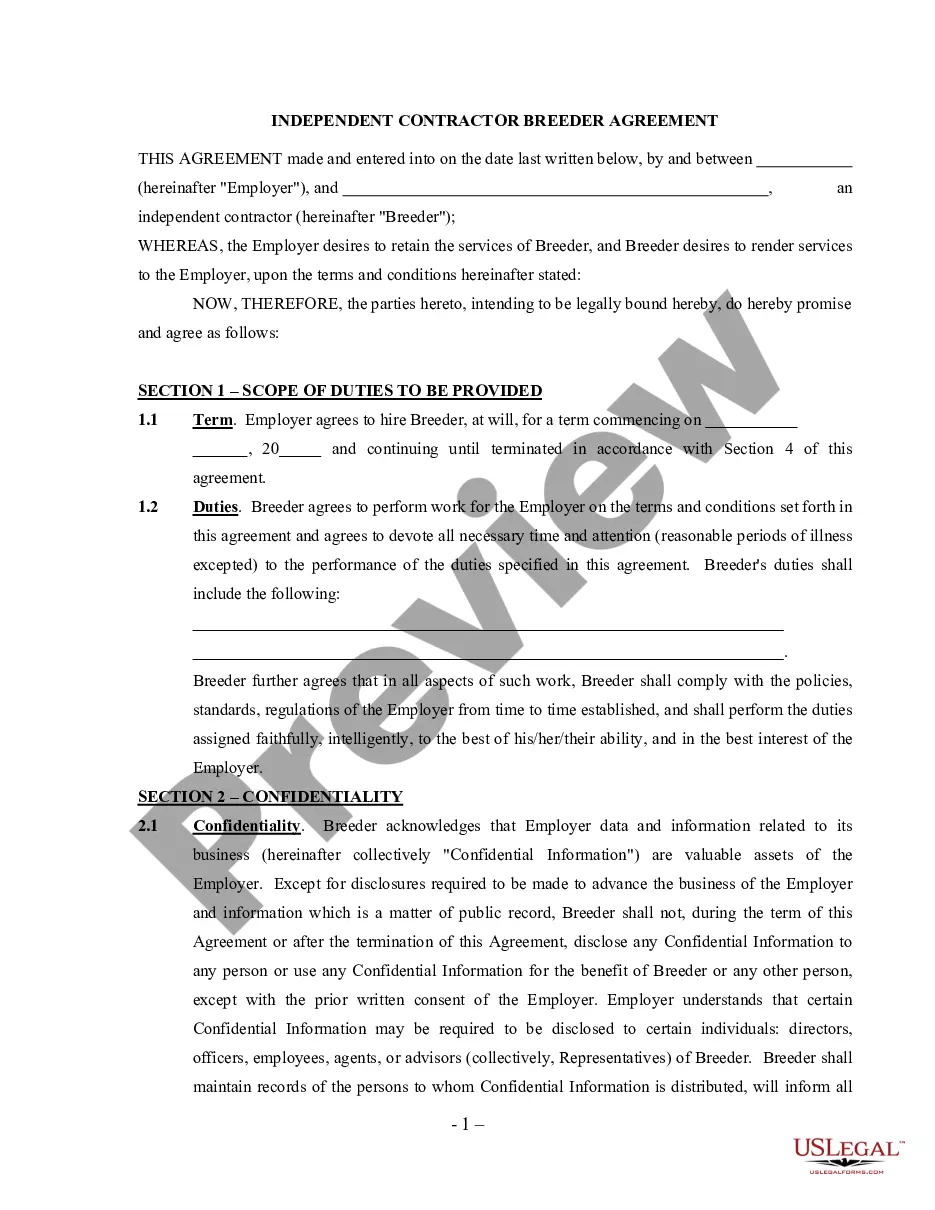
The Arkansas Brood Mare Lease Agreement is a legal document used to establish a performance lease for a brood mare. This form is specifically tailored for situations where the lessee wants to lease a horse for breeding and producing a foal, differentiating it from other horse lease agreements that might focus on riding or showing purposes. It outlines the responsibilities of both the lessor and lessee, including lease payments, care, and maintenance of the mare, along with provisions for insurance and risk management.
Main sections of this form
- Lease term: Length and initiation of the lease period, including return notice requirements.
- Permitted use: Specific authorization for breeding purposes only.
- Financial responsibilities: Outlines costs for breeding fees, veterinary expenses, and additional fees incurred during the lease.
- Document requirements: Stipulations for necessary paperwork related to breed registration and compliance with breed organization rules.
- Assignment clauses: Restrictions on the ability to assign or sublet the lease.
- Notices: Requirements for informing parties of address changes.

Situations where this form applies
This form should be used when an individual or entity, the lessee, wishes to lease a brood mare for breeding. It is applicable in situations such as when a breeder needs to find a mare for specific breeding programs, or when an owner wants to lease a mare temporarily without relinquishing ownership. It is crucial to have a formalized agreement to avoid disputes about the mare's care and the terms of the lease.
Who should use this form
- Horse owners who are leasing out a brood mare for breeding purposes.
- Individuals or entities looking to lease a brood mare to produce foals.
- Breeders who require a formal agreement outlining the terms of a mare lease.
Completing this form step by step
- Identify the parties: Enter the names and addresses of both the lessor and lessee.
- Specify the mare: Provide details about the mare, including breed and registration number.
- Set the lease term: Insert the start date and duration of the lease, as well as termination notice details.
- Outline financial obligations: Clearly state who is responsible for breeding and veterinary costs.
- Sign the agreement: Ensure both parties sign and date the document to finalize the lease.
Is notarization required?
This form usually doesn’t need to be notarized. However, local laws or specific transactions may require it. Our online notarization service, powered by Notarize, lets you complete it remotely through a secure video session, available 24/7.
Get your form ready online
Our built-in tools help you complete, sign, share, and store your documents in one place.
Make edits, fill in missing information, and update formatting in US Legal Forms—just like you would in MS Word.
Download a copy, print it, send it by email, or mail it via USPS—whatever works best for your next step.
Sign and collect signatures with our SignNow integration. Send to multiple recipients, set reminders, and more. Go Premium to unlock E-Sign.
If this form requires notarization, complete it online through a secure video call—no need to meet a notary in person or wait for an appointment.
We protect your documents and personal data by following strict security and privacy standards.

Make edits, fill in missing information, and update formatting in US Legal Forms—just like you would in MS Word.

Download a copy, print it, send it by email, or mail it via USPS—whatever works best for your next step.

Sign and collect signatures with our SignNow integration. Send to multiple recipients, set reminders, and more. Go Premium to unlock E-Sign.

If this form requires notarization, complete it online through a secure video call—no need to meet a notary in person or wait for an appointment.

We protect your documents and personal data by following strict security and privacy standards.
Common mistakes
- Failing to clearly specify the start and end dates of the lease.
- Not detailing financial responsibilities, leading to potential disputes.
- Overlooking necessary documents required for breed registration.
- Allowing subleasing without appropriate clauses in the agreement.
Benefits of completing this form online
- Convenience: Easily access and download the form whenever needed.
- Editability: Customize the form to meet specific leasing requirements.
- Reliability: Get access to forms drafted by licensed attorneys, ensuring legal compliance.
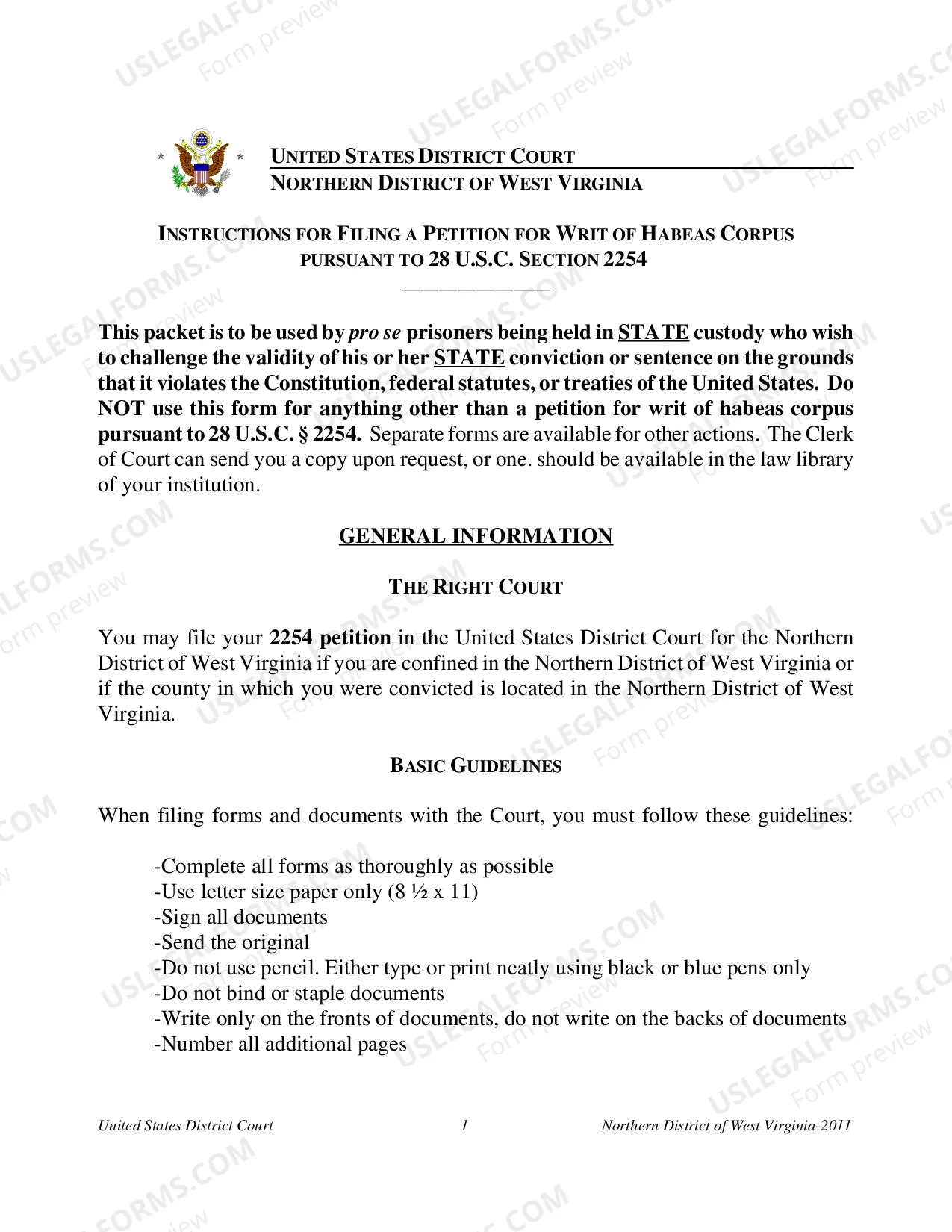
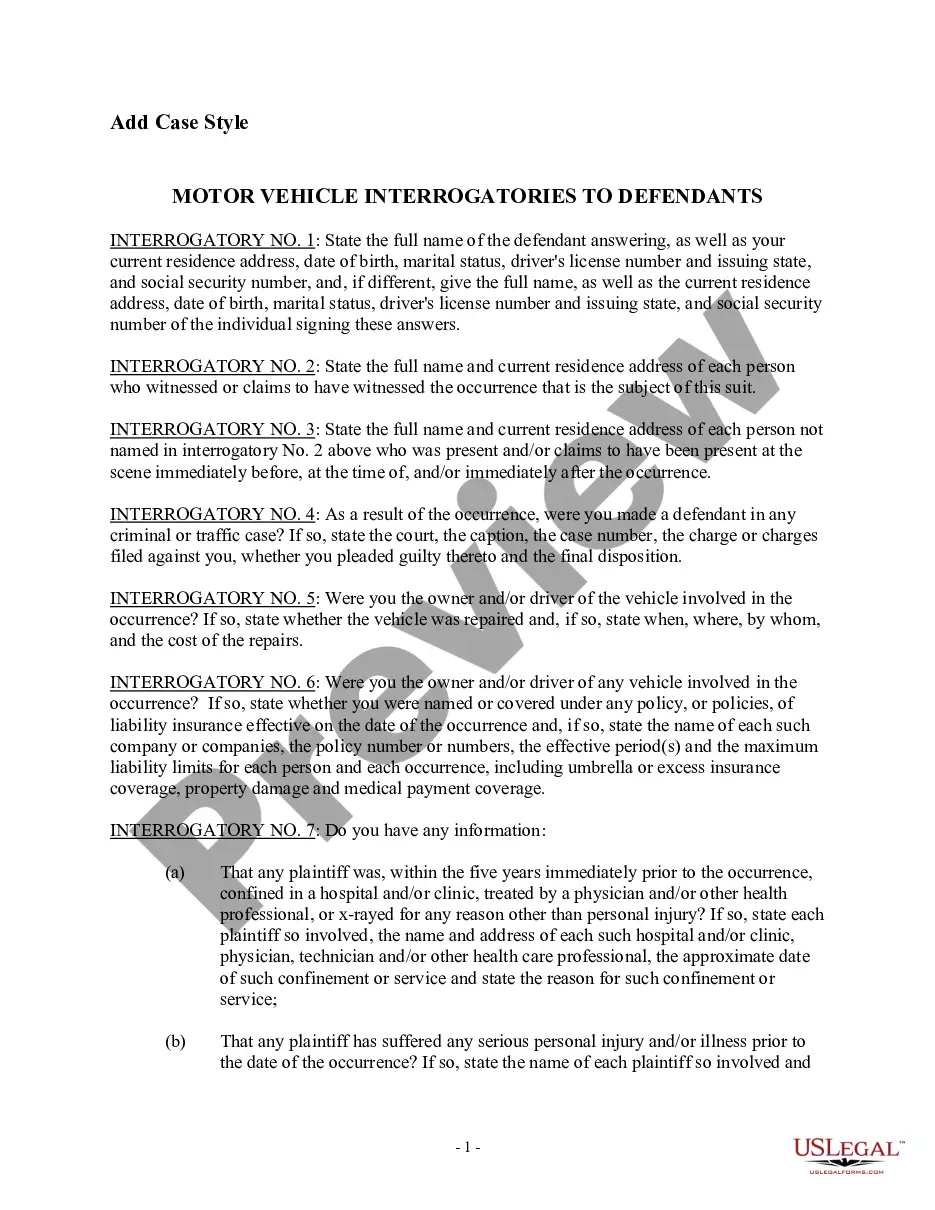
Looking for another form?

Form popularity
FAQ
A brood mare lease is a legal agreement that allows one party to use another party's mare for breeding purposes. The Arkansas Brood Mare Lease Agreement outlines the terms, conditions, and responsibilities involved in such an arrangement. This document is essential for protecting the interests of both the mare's owner and the lessee, ensuring a clear understanding of financial obligations and care requirements. Utilizing U.S. Legal Forms can help you create a comprehensive Arkansas Brood Mare Lease Agreement tailored to your specific needs.
When leasing a horse, you must be prepared for various responsibilities, including feeding, grooming, and providing ongoing training. Ensuring proper veterinary care is also essential to keep the horse healthy and happy. The Arkansas Brood Mare Lease Agreement will outline your specific responsibilities, allowing for clear communication between you and the horse's owner. Being diligent in your responsibilities fosters a successful and enjoyable leasing arrangement.
Leasing a horse involves several steps to ensure clarity and mutual agreement. First, you should define your needs and expectations, then search for a suitable horse that fits those criteria. Once you've found your match, it's essential to create a formal Arkansas Brood Mare Lease Agreement to outline the terms and conditions. This agreement protects both parties and ensures a smooth leasing experience.
To write a lease agreement for a horse, begin by defining the terms clearly, including duration, costs, and responsibilities. Include specific clauses that address care, use, and any breeding rights if relevant to the Arkansas Brood Mare Lease Agreement. Utilizing templates from platforms like uslegalforms can simplify this process by providing structured guidance. Remember to consult legal advice if necessary to ensure all elements comply with local laws.
An equine care lease is an arrangement where one party manages the care of a horse, while another handles the financial responsibilities or breeding rights. This agreement can be particularly beneficial in an Arkansas Brood Mare Lease Agreement, as it clearly allocates responsibilities between the owner and the lessee. This type of lease ensures that both parties understand their obligations, which helps maintain the health and welfare of the mare. Open communication is essential to make this lease a success.
Yes, you can lease a broodmare, and many horse owners prefer this option for various reasons. By utilizing an Arkansas Brood Mare Lease Agreement, individuals can access high-quality genetics for breeding without the long-term commitment of ownership. Leasing allows flexibility in breeding decisions, and in many cases, the lease terms can be tailored to fit individual needs and goals. This strategy can lead to successful breeding outcomes while managing costs.
The ideal age for a broodmare generally falls between three and fifteen years. This age range allows the mare to achieve peak breeding performance while still being in good health. In an Arkansas Brood Mare Lease Agreement, identifying the age of the broodmare helps both parties understand her fertility potential and overall productivity. Ensuring the mare is within this age range can lead to better outcomes for all involved.
The terms of leasing a horse typically cover the length of the lease, responsibilities for care, and usage rights. In an Arkansas Brood Mare Lease Agreement, both parties should clearly define who pays for feed, veterinary care, and any additional costs associated with the mare. Additionally, it’s crucial to outline the conditions under which the mare may be used for breeding or riding. Clear communication helps prevent misunderstandings.