Indiana Last Will and Testament for Married person with Adult Children from Prior Marriage
About this form
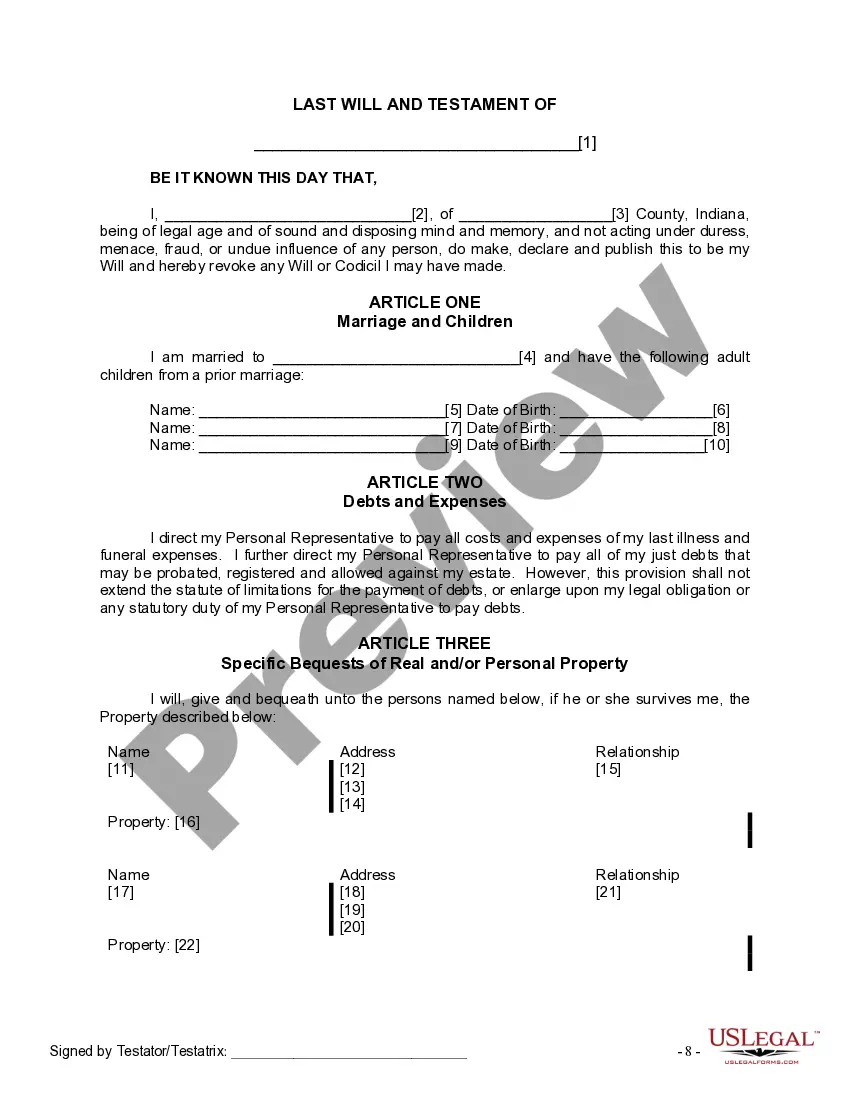
The Last Will and Testament for a married person with adult children from a prior marriage outlines how your assets will be distributed after your death. This type of will specifically considers your current marriage while addressing the rights and interests of your adult children from a previous relationship. It allows you to appoint a personal representative, specify your wishes regarding property distribution, and include other personalized provisions.
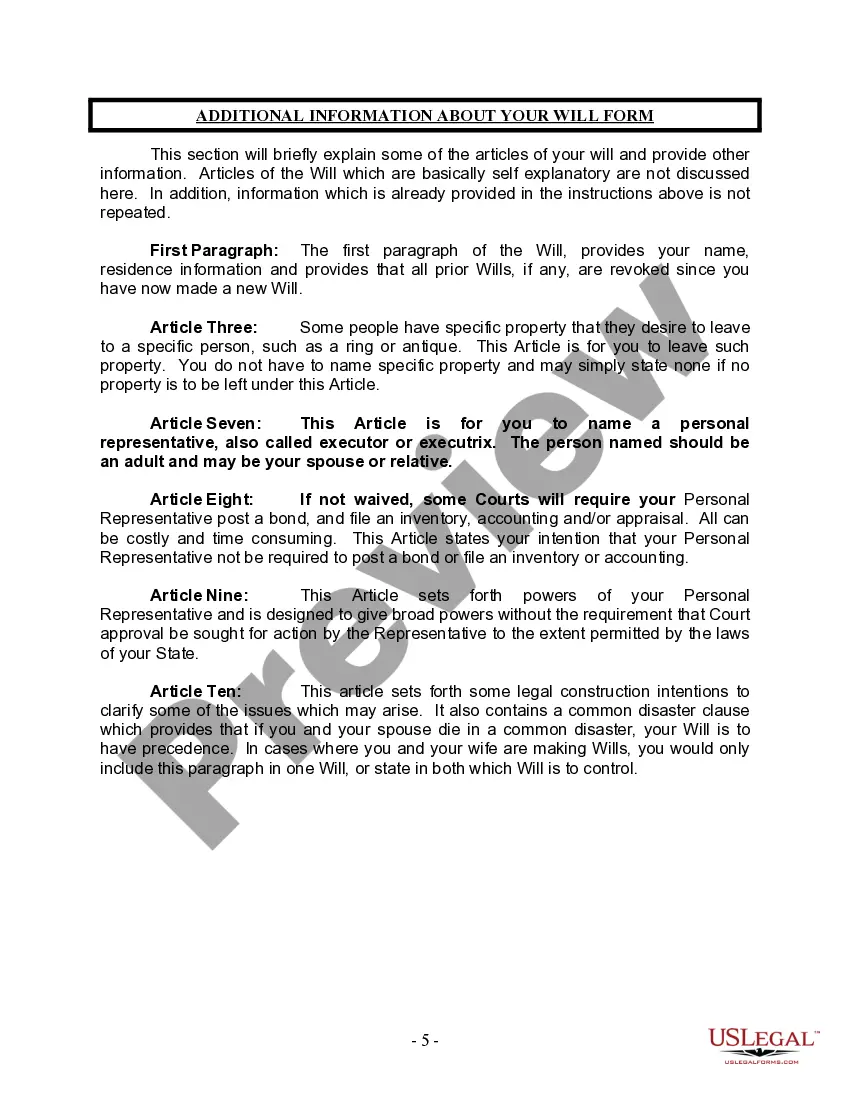
Key parts of this document
- Article detailing your marriage and the names of adult children from a previous marriage.
- Provisions for debts and funeral expenses, instructing the personal representative on payments.
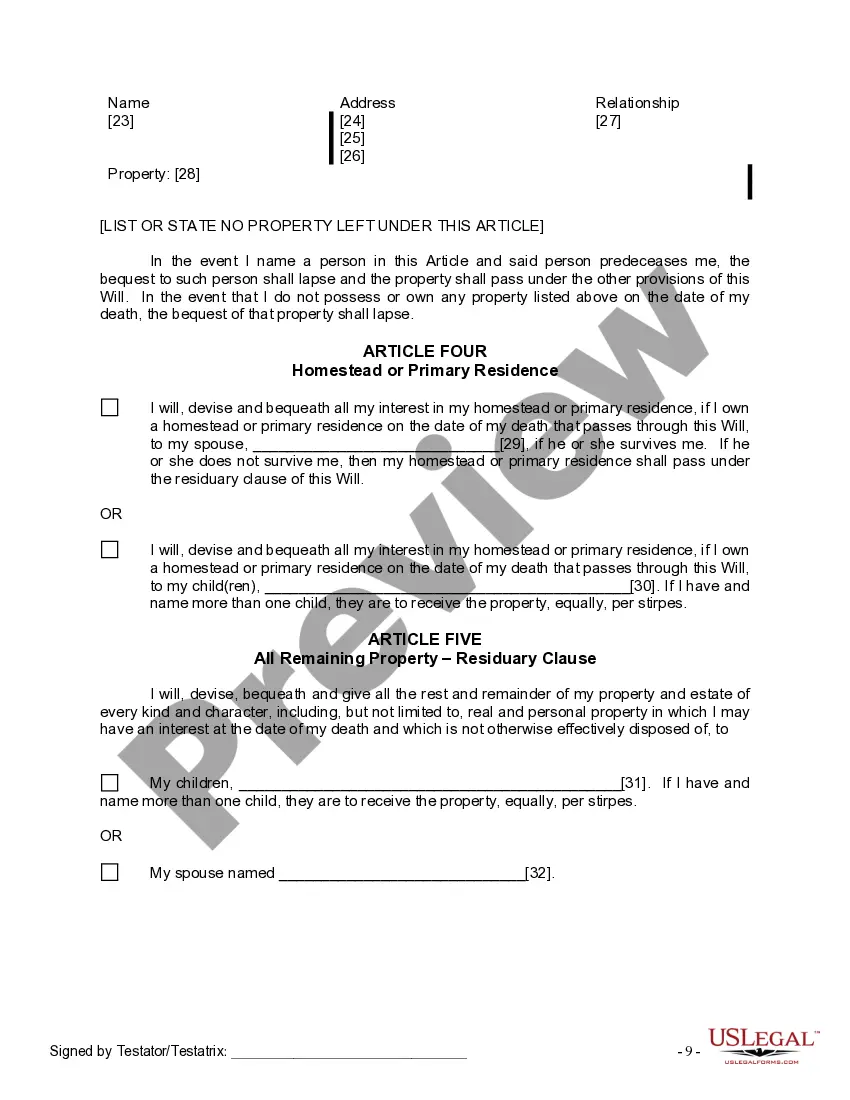
- Specific bequests section to detail who receives your property and assets.
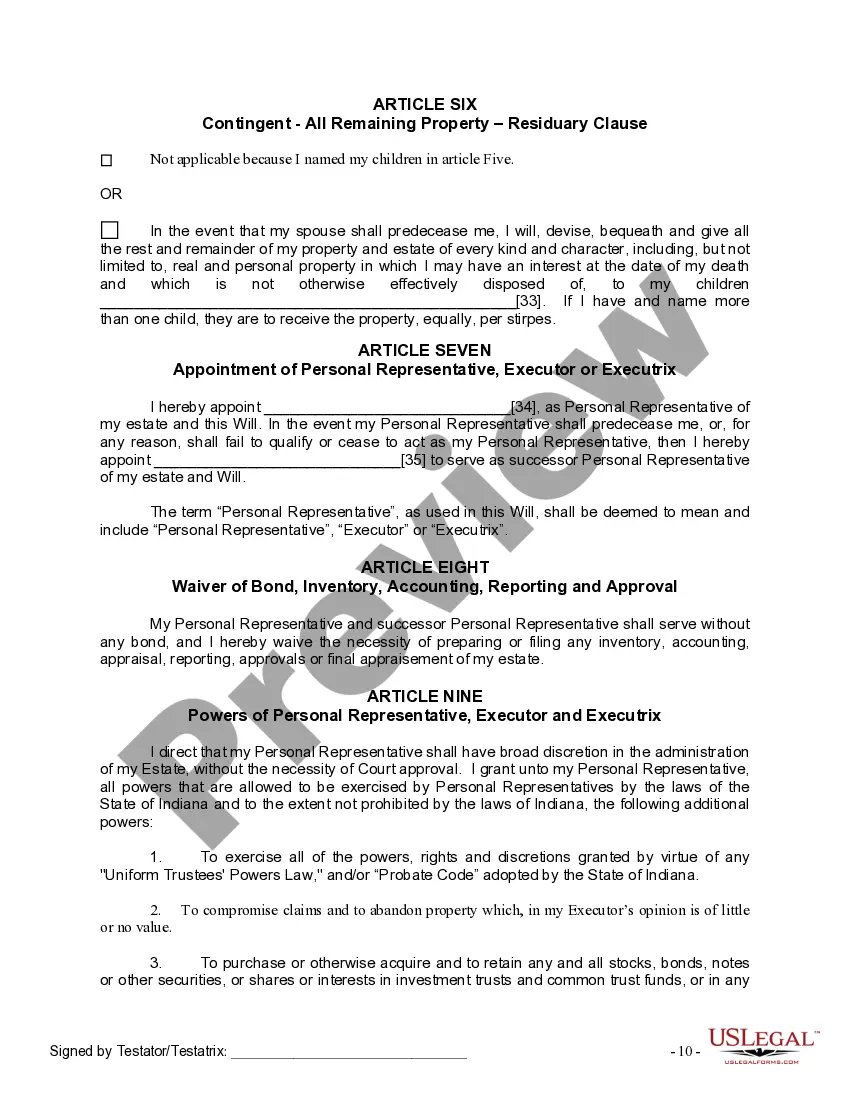
- Residuary clause for the remaining property not explicitly addressed in the will.
- Appointment of a personal representative to manage your estate after your death.





When this form is needed
This will should be used when a married individual with adult children from a prior marriage wishes to ensure that their estate is divided according to their specific wishes. It is particularly useful for individuals who want to provide for both their spouse and their children from a previous relationship, ensuring clarity and avoiding potential disputes after their passing.
Who should use this form
This form is intended for:
- Married individuals who have adult children from a previous marriage.
- Those who seek to address complex family dynamics in their estate planning.
- Anyone wanting to ensure that specific individuals are provided for in their estate after death.
Completing this form step by step
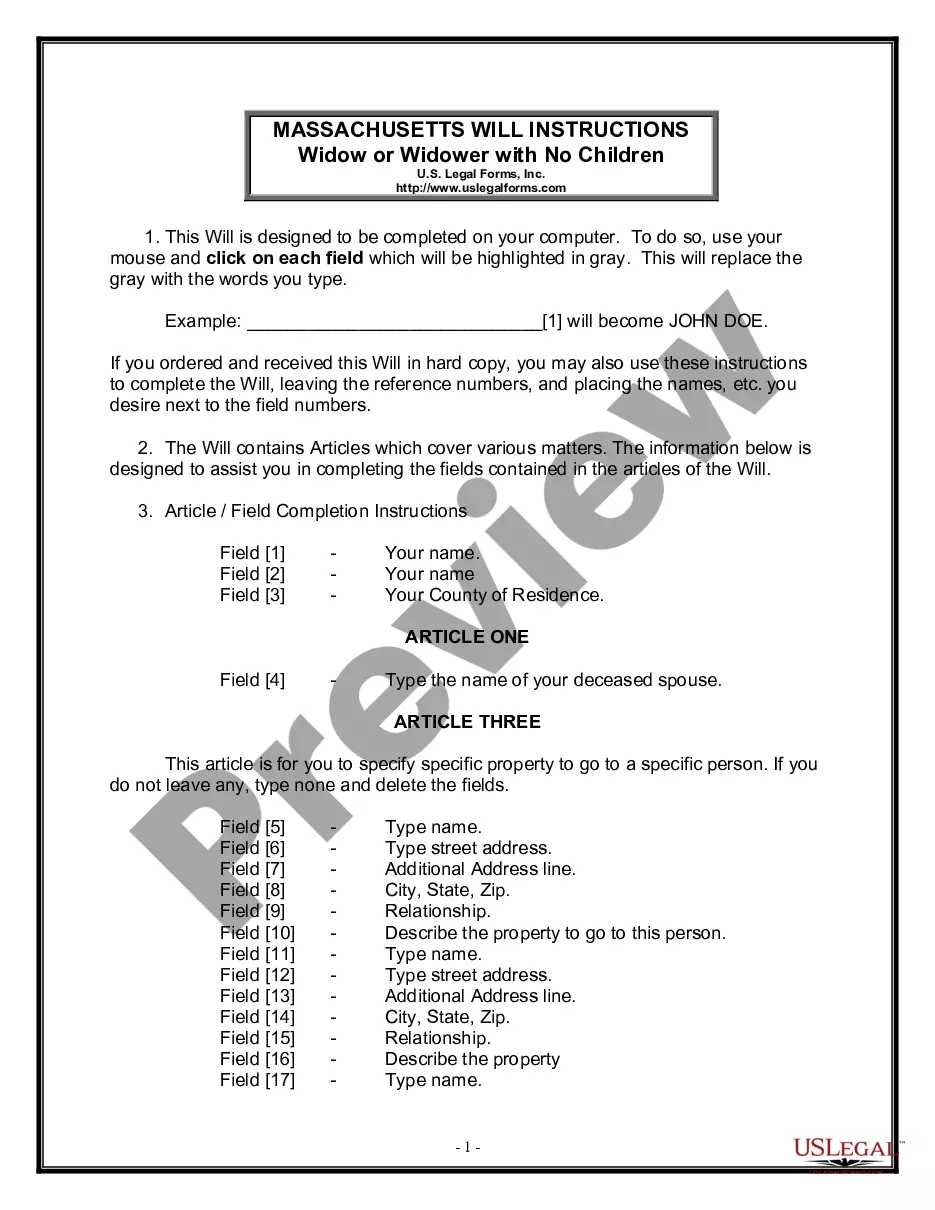
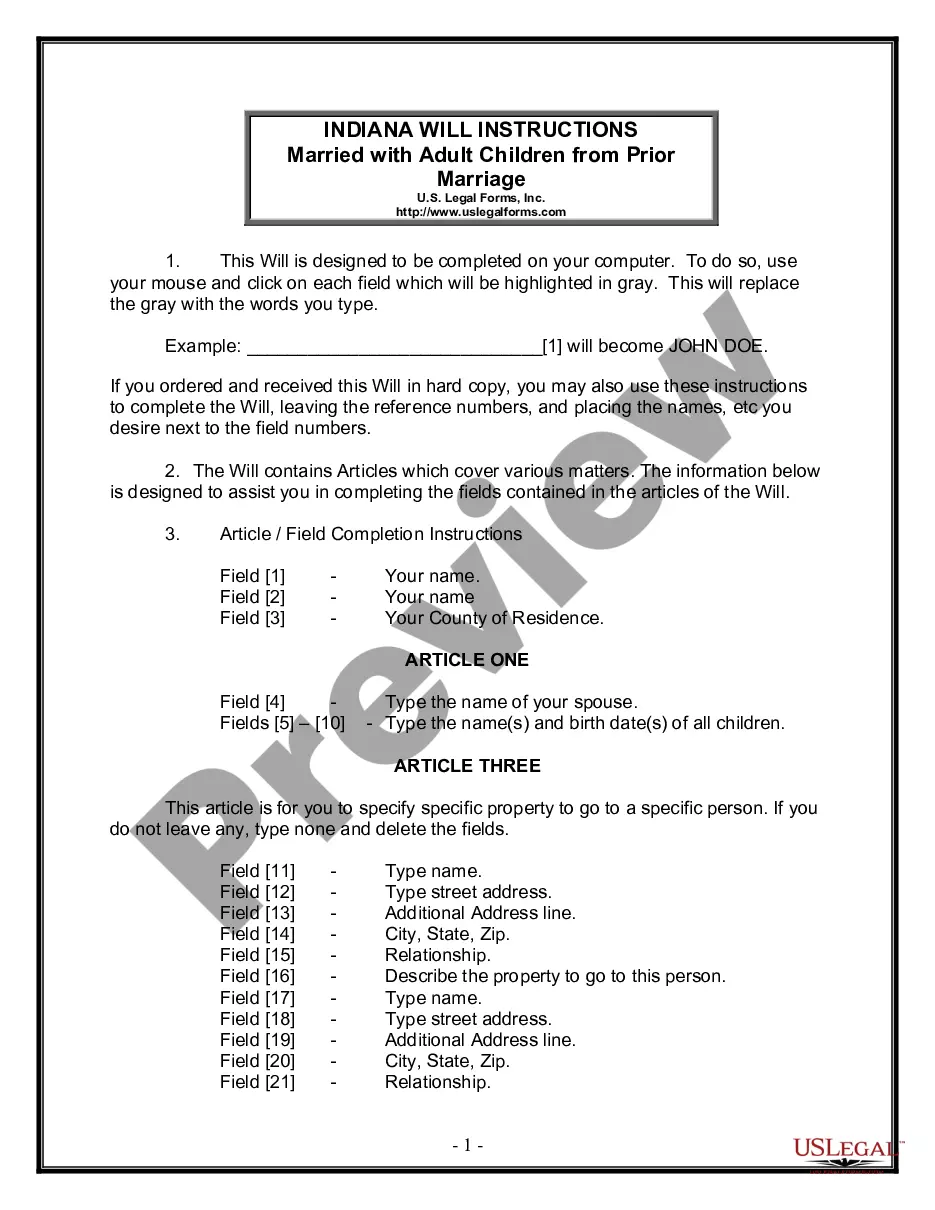
- Enter your full name and county at the beginning of the document.
- List your spouseâs name and detail your adult children from the previous marriage.
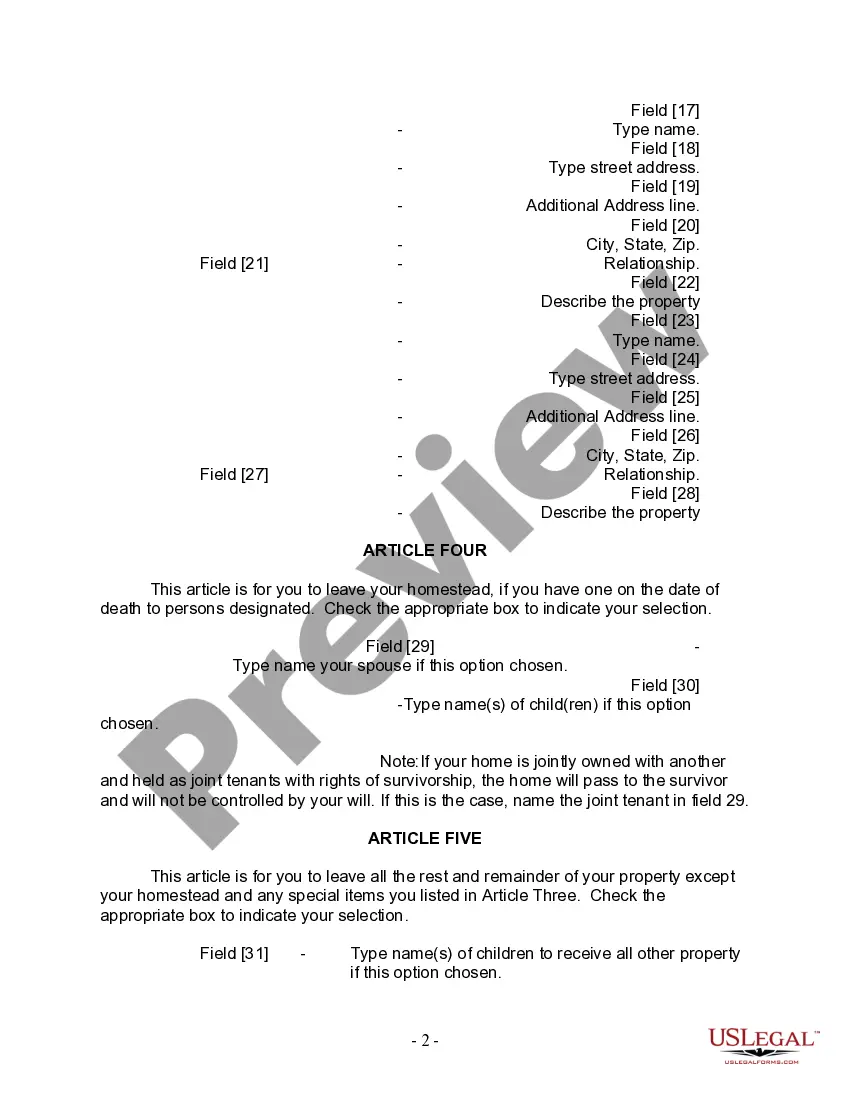
- Specify any specific bequests, detailing who receives particular properties.
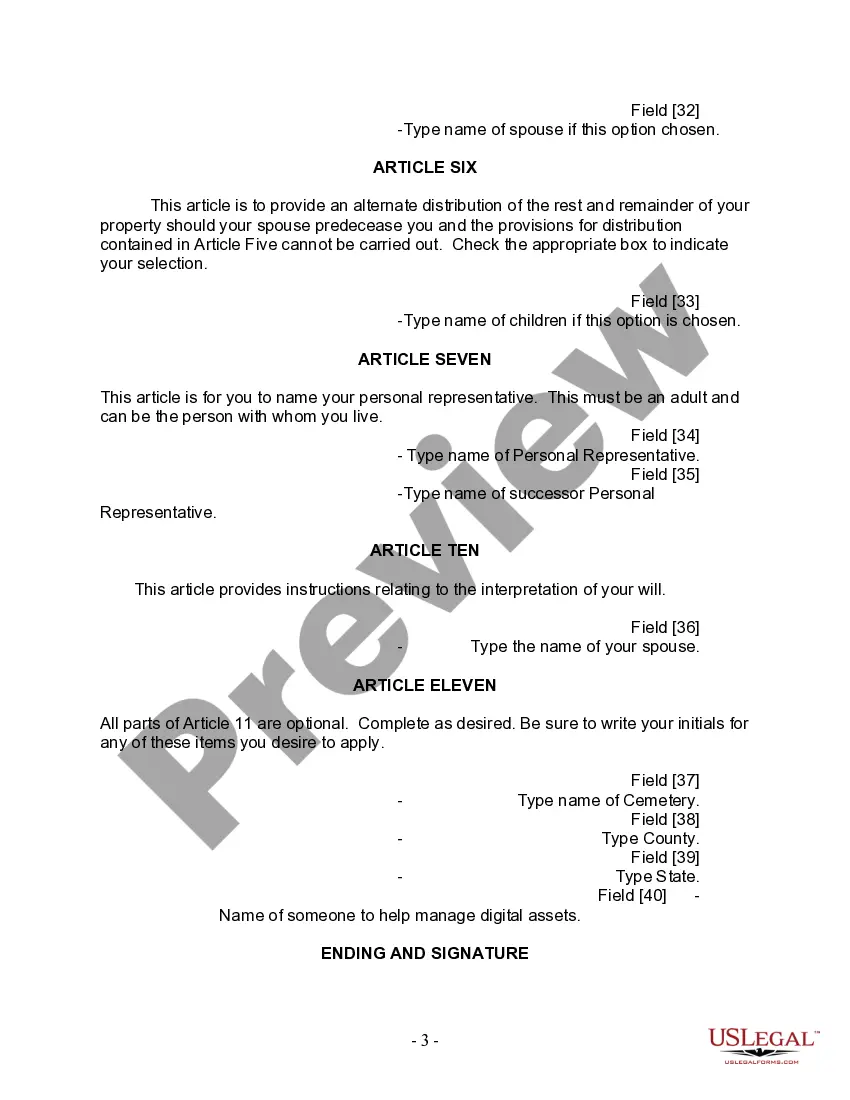
- Designate your personal representative, who will manage your estate.
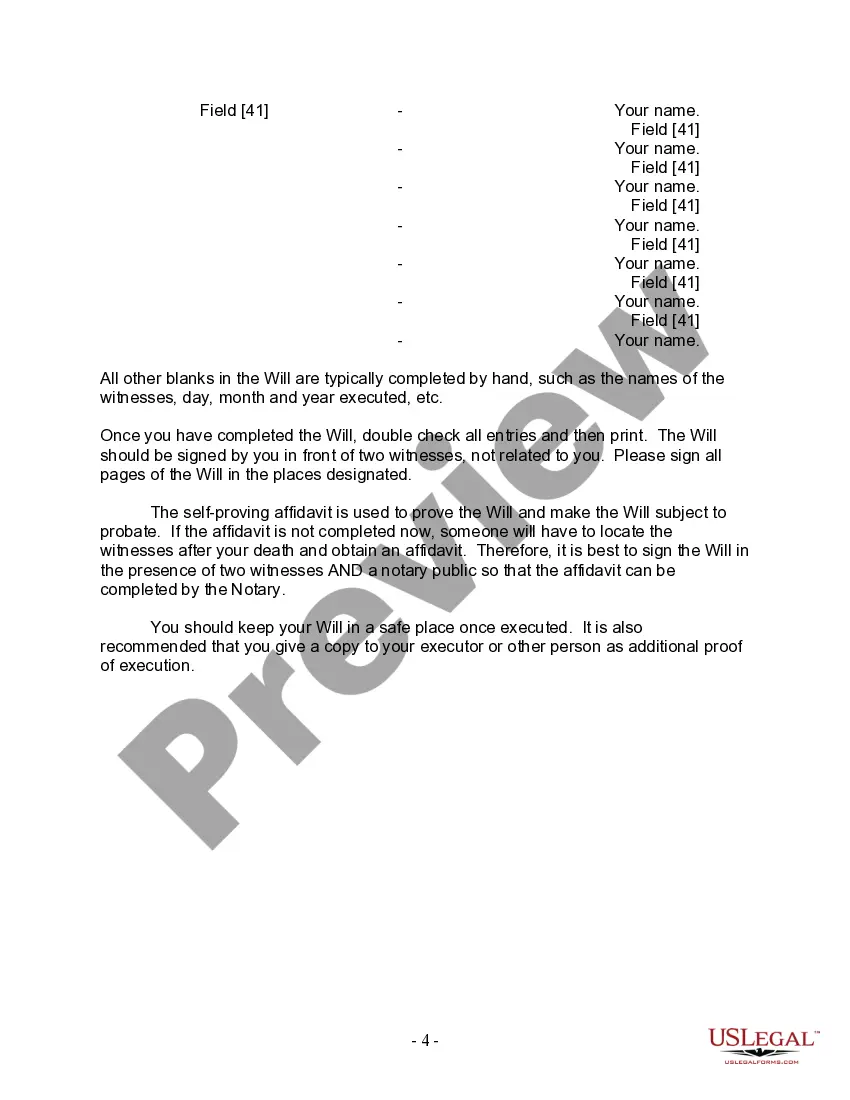
- Sign the will in the presence of two witnesses who are not beneficiaries.
Notarization requirements for this form
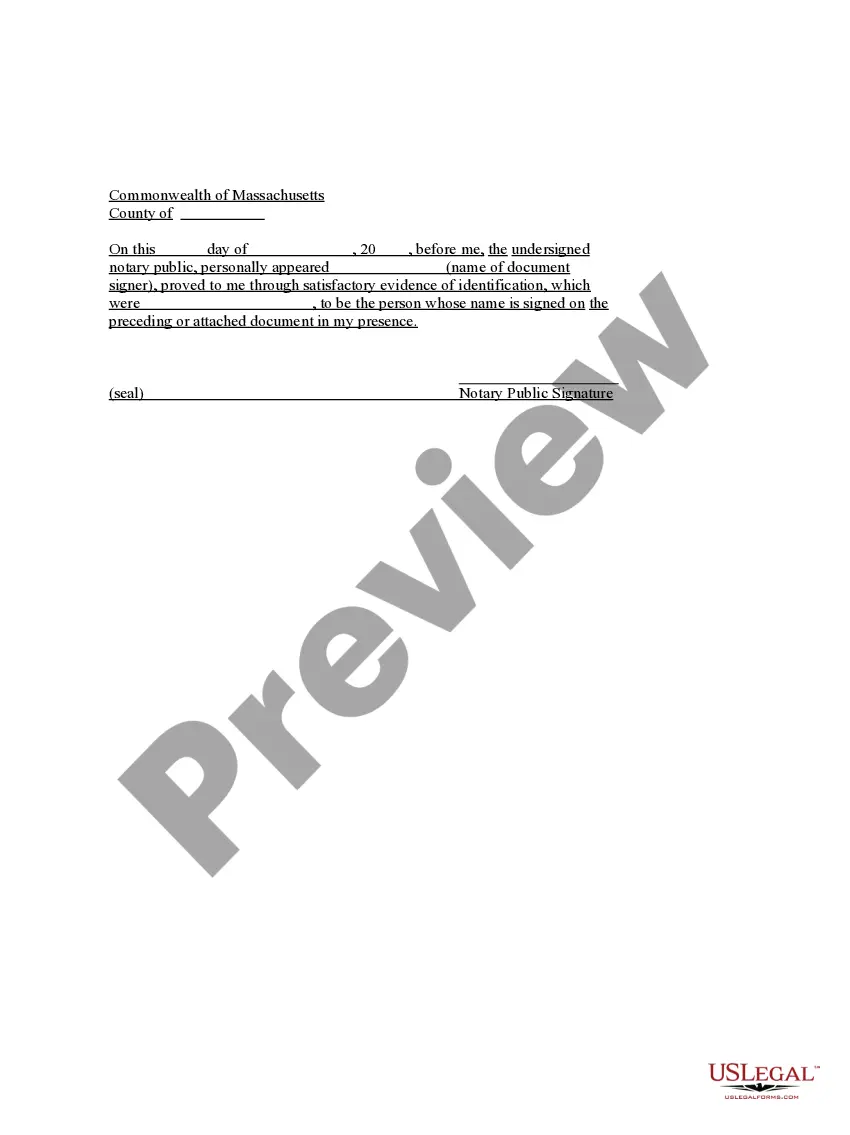
Yes, this form must be notarized to be legally valid. It is essential to have a notary public sign the will, which can help confirm the authenticity of the document and the identity of the signers.
Get your form ready online
Our built-in tools help you complete, sign, share, and store your documents in one place.
Make edits, fill in missing information, and update formatting in US Legal Forms—just like you would in MS Word.
Download a copy, print it, send it by email, or mail it via USPS—whatever works best for your next step.
Sign and collect signatures with our SignNow integration. Send to multiple recipients, set reminders, and more. Go Premium to unlock E-Sign.
If this form requires notarization, complete it online through a secure video call—no need to meet a notary in person or wait for an appointment.
We protect your documents and personal data by following strict security and privacy standards.

Make edits, fill in missing information, and update formatting in US Legal Forms—just like you would in MS Word.

Download a copy, print it, send it by email, or mail it via USPS—whatever works best for your next step.

Sign and collect signatures with our SignNow integration. Send to multiple recipients, set reminders, and more. Go Premium to unlock E-Sign.

If this form requires notarization, complete it online through a secure video call—no need to meet a notary in person or wait for an appointment.

We protect your documents and personal data by following strict security and privacy standards.
Common mistakes to avoid
- Failing to sign the will in front of required witnesses.
- Not clearly specifying distributions to children from a prior marriage.
- Neglecting to revoke any prior wills which may cause conflicts.
Why complete this form online
- Convenience of downloading immediately after filling out the necessary information.
- Easy customization to fit individual circumstances and preferences.
- Access to reliable legal templates created by licensed attorneys.
Legal use & context
- This will is a legally binding document which specifies the distribution of assets upon death.
- It provides clarity on family dynamics by ensuring all parties know their roles and expectations.
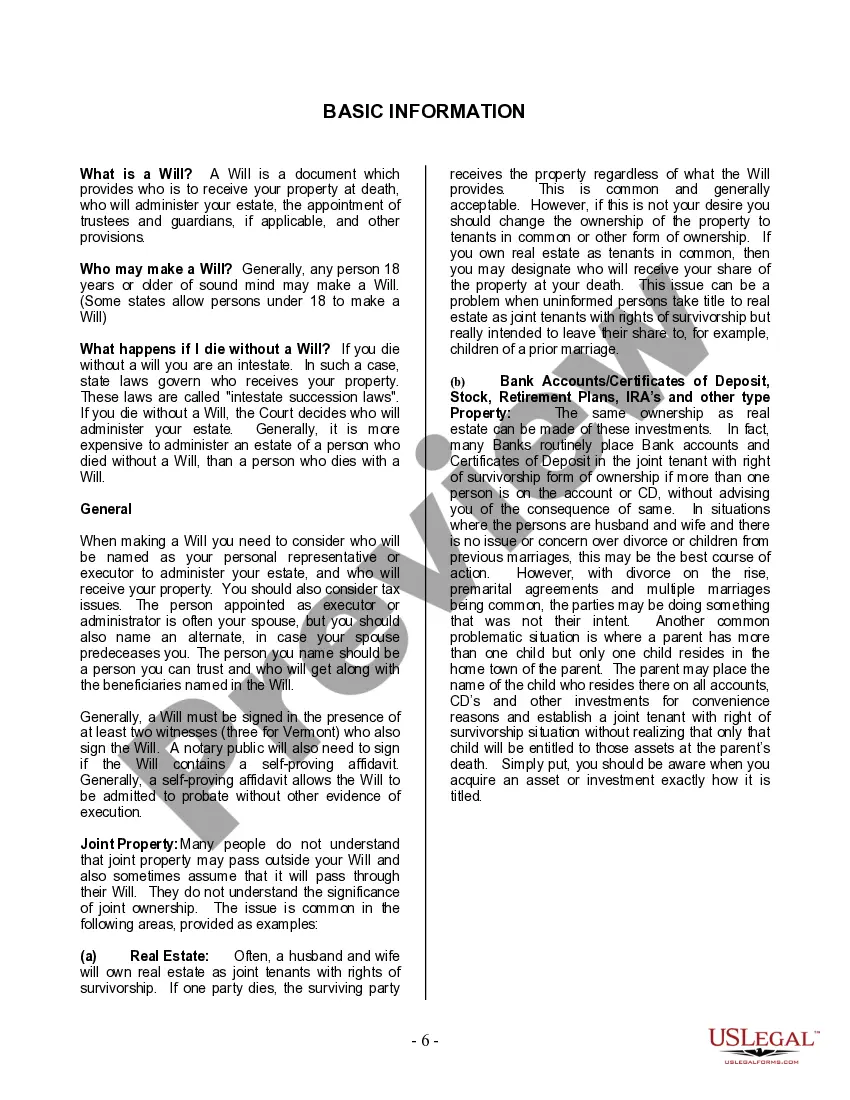
- Failure to create a valid will can result in state laws determining the distribution of assets, potentially leading to unintended heirs receiving property.
Quick recap
- The form serves as an important legal tool to outline how your estate will be managed and distributed.
- Clearly designating your spouse and adult children from a previous marriage helps mitigate potential conflicts.
- Proper notarization and witnessing are critical for the will's validity.
Looking for another form?





Form popularity
FAQ
Probate is required when an estate's assets are solely in the deceased's name. In most cases, if the deceased owned property that had no other names attached, an estate must go through probate in order to transfer the property into the name(s) of any beneficiaries.
Probate is the only legal way to transfer the assets of someone who has died. Without probate, titled assets like homes and cars remain in the deceased's name indefinitely. You won't be able to sell them or keep registrations current because you won't have access to the individual's signature and consent.
In Indiana, you can make a living trust to avoid probate for virtually any asset you ownreal estate, bank accounts, vehicles, and so on. You need to create a trust document (it's similar to a will), naming someone to take over as trustee after your death (called a successor trustee).
Some people don't want to probate a will. There is no requirement that a will or property go through probate, but if the decedent owned property that is not arranged specifically to avoid probate, there is no way for the beneficiaries to obtain legal ownership without it. There are some exceptions to this.
While the probate process isn't necessary for every estate in Indiana, a sizable portion of them will be forced to go before the court. However, there are certain assets of a decedent that will skip past this process, as they already have heirs or beneficiaries chosen. These include: Life insurance.
There is no requirement that a will or property go through probate, but if the decedent owned property that is not arranged specifically to avoid probate, there is no way for the beneficiaries to obtain legal ownership without it.
Although a state's laws might not technically require the filing of a will, the probate process cannot beginand thus any heirs or beneficiaries cannot inherit any of the deceased individual's assetsuntil someone submits the document to the probate court.
There is no need for probate or letters of administration unless there are other assets that are not jointly owned.Probate or letters of administration will be needed so the personal representative can pass it whoever will inherit the share of the property, according to the will or the rules of intestacy.